

Bukit Timah Tuition | The Best of Year 3 IP Math Tutors at Bukit Timah
The Nuances of Distinction: Why Specialty Year 3 IP Math Tutor Bukit Timah Are Essential for High-Performing Students
In the high-stakes world of Singapore’s Integrated Programme, where Year 3 IP Math sets the stage for academic trajectories leading to A-Levels or IB, the line between a distinction and a standard grade often hinges on subtle nuances that elude even the most diligent students.
High-performing IP learners, already excelling in basics like quadratic inequalities and binomial expansions, require a world class coach like a Year 3 IP Math Tutor Bukit Timah who can pinpoint these fine distinctions—such as the precise application of modulus functions in inequalities or the elegant proof structures in trigonometric identities—that elevate work from competent to exemplary.
At EduKate Singapore, our Year 3 IP Math Tutor Bukit Timah specializes in this art, understanding that teaching these intricacies isn’t straightforward; it demands a blend of deep syllabus mastery and intuitive insight into student potential.
Consider the challenge: While a normal grade might come from rote solving of polynomials or partial fractions, a distinction demands flair—like optimizing calculus techniques for real-world modeling or spotting hidden patterns in coordinate geometry that standard approaches miss.
These nuances, as outlined in resources from top IP tuition providers, require super high end IP Math tutors who can dissect exam rubrics with surgical precision, identifying where a single misplaced assumption or inefficient method costs marks. Our Year 3 IP Math Tutor Bukit Timah excels here, drawing from over 20 years of experience with elite IP cohorts to highlight these pivotal differences, turning high achievers into top performers without overwhelming them.
High Performance Students Meets World Class Coaches
Caring for high-performing IP students adds another layer of complexity. These IP Math learners often grapple with perfectionism, subtle conceptual blind spots, or the pressure of an accelerated pace that integrates advanced topics earlier than G3 streams. A generic tutor might overlook these, but a specialty world class Year 3 IP Math Tutor Bukit Timah at EduKate tailors sessions to nurture resilience—through targeted error analysis that transforms minor slips in surds or logarithms into strengths, as emphasized in specialized IP Math strategies. We push the right buttons by fostering metacognition, encouraging students to question “why” behind every step, which not only secures distinctions but sustains motivation across the IP journey.
The difficulty in teaching this distinction lies in its subtlety; it’s about guiding without spoon-feeding, challenging without discouraging. For instance, in Year 3 IP Math’s introductory calculus, a normal grade suffices with basic differentiation rules, but distinction-level work involves nuanced applications like rates of change in kinematics, requiring tutors to anticipate common pitfalls and preempt them. Insights from expert transitions in IP programs reveal that seamless support here prevents academic dips, paving the way for long-term success. Our Year 3 IP Math Tutor Bukit Timah addresses this by curating enrichment that connects dots—linking Year 3 vectors to Year 5 complexities—ensuring high-performers hit the ground running and maintain their edge.
Parents of high-achieving IP students know this care is rare; it involves personalized workflows, like organizing notes for quick recall during open-ended assessments, and building tenacity for interdisciplinary projects. As noted in discussions on why specialized tuition is essential for top students, the accelerated IP Math content demands tutors who can differentiate instruction for the gifted, avoiding under-stimulation. At EduKate’s Bukit Timah center, our Year 3 IP Math Tutor Bukit Timah embodies this, achieving over 90% distinction rates by honing these nuances in small, engaging groups—transforming potential distinctions into reality while safeguarding student well-being.
Accelerated Mastery with Year 3 IP Math Tutor Bukit Timah: Year 3 IP Math Tutor Bukit Timah at EduKate Singapore delivers targeted sessions that align with the advanced IP Year 3 Math syllabus, covering geometrical properties of circles, quadratic equations, and matrices, enabling IP Math students to grasp complex concepts swiftly and hit the ground running in their accelerated curriculum.
Personalized Foundations from Year 3 IP Math Tutor Bukit Timah: Through small-group dynamics, Year 3 IP Math Tutor Bukit Timah focuses on building robust basics in algebraic fractions, surds, indices, and exponential functions as per ACS Independent’s Year 3 IP Advanced Mathematics outline, helping IP Math students overcome initial hurdles and start strongly with confidence-boosting strategies.
Strategic Skill Development by Year 3 IP Math Tutor Bukit Timah: Year 3 IP Math Tutor Bukit Timah emphasizes critical thinking and problem-solving in polynomials, partial fractions, and binomial expansions, drawing from Tim Gan Math’s IP curriculum for 2025, allowing IP Math students to connect lower secondary dots and propel forward efficiently.
Error Correction Expertise of Year 3 IP Math Tutor Bukit Timah: With over 20 years of MOE-aligned experience, Year 3 IP Math Tutor Bukit Timah treats mistakes in modulus functions and trigonometric identities as learning opportunities, as highlighted in IB Super’s IP Math program, ensuring IP Math students refine accuracy and launch into the year without foundational gaps.
Forward-Thinking Preparation via Year 3 IP Math Tutor Bukit Timah: Year 3 IP Math Tutor Bukit Timah bridges Year 3 topics like coordinate geometry and introductory calculus to upper IP levels, inspired by Eclat Institute’s IP Math roadmap, helping IP Math students hit the ground running toward Year 6 A-Level readiness.
Confidence Boost from Year 3 IP Math Tutor Bukit Timah: Specialized guidance by Year 3 IP Math Tutor Bukit Timah enhances understanding and performance, as noted in benefits of early math tuition for secondary students, empowering IP Math students to tackle the rigorous IP pace with reduced stress and immediate engagement.
Individualized Learning with Year 3 IP Math Tutor Bukit Timah: In classes of 3 pax, Year 3 IP Math Tutor Bukit Timah offers tailored feedback on quadratic inequalities and vectors, per Debbie Learning Cove’s IP Math insights, allowing IP Math students to personalize their approach and start the academic year at full speed.
Real-World Applications by Year 3 IP Math Tutor Bukit Timah: Year 3 IP Math Tutor Bukit Timah integrates practical scenarios into lessons on exponential growth and logarithms, aligning with MOE’s IP holistic development, so IP Math students can apply knowledge instantly and hit the ground running in interdisciplinary contexts.
Exam Readiness from Day One with Year 3 IP Math Tutor Bukit Timah: Through timed practices and enrichment, Year 3 IP Math Tutor Bukit Timah prepares IP Math students for assessments in circle properties and simultaneous equations, as per Indigo Education Group’s IP Math tuition, ensuring a strong, proactive start to the year.
Long-Term Edge Provided by Year 3 IP Math Tutor Bukit Timah: Year 3 IP Math Tutor Bukit Timah fosters tenacity and organized study habits for ongoing IP success, supported by specialized tuition benefits for top Singapore students, helping IP Math students maintain momentum from Year 3 onward.
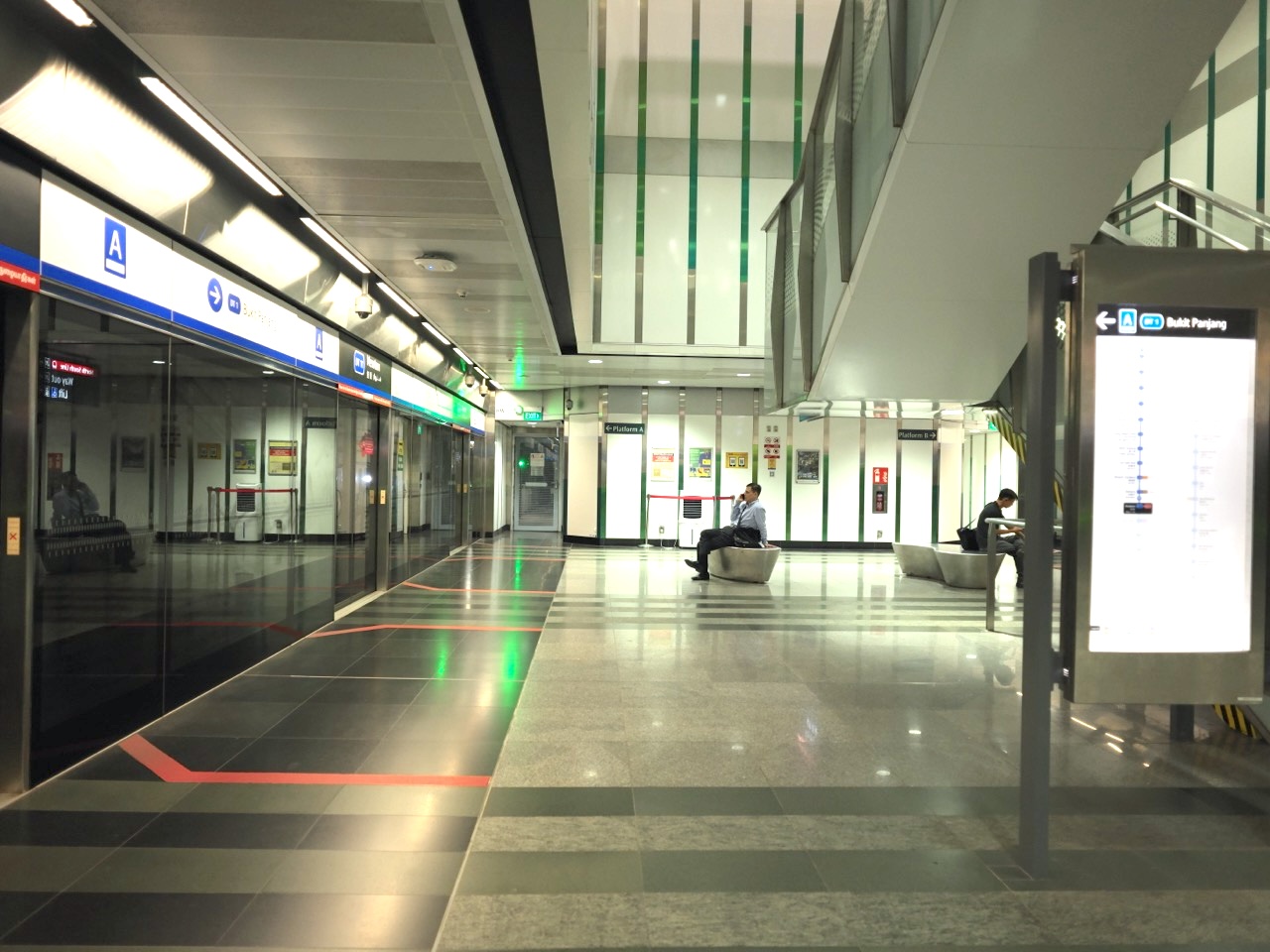
Ultimately, investing in a specialty Year 3 IP Math Tutor Bukit Timah isn’t just about grades; it’s about equipping high-performers with the finesse to excel in Singapore’s rigorous IP landscape. With convenient access near Beauty World MRT and flexible schedules, EduKate makes this expertise attainable, ensuring your child’s IP Math path is not just successful, but distinguished.

Envision your Year 3 IP student grappling with intricate mathematical concepts, from exponential functions to differentiation, feeling overwhelmed in the accelerated pace of Singapore’s Integrated Programme. Now imagine that same student thriving, solving problems with ease and excitement, thanks to exceptional Bukit Timah Tuition. In the heart of Bukit Timah, where educational excellence meets personalized guidance, Bukit Timah Tuition at EduKate Singapore offers premier Year 3 IP Math tutors dedicated to unlocking potential. Our Bukit Timah Tuition programs are meticulously aligned with the advanced MOE G3 Mathematics syllabus and G3 Additional Mathematics syllabus, preparing students for the seamless transition to upper secondary and A-Level success in IP schools.
Why Bukit Timah Tuition Stands Out for Year 3 IP Math Tutors
What makes Bukit Timah Tuition the top choice for Year 3 IP Math tutors? Nestled in Singapore’s prestigious Bukit Timah district, our Bukit Timah Tuition centers provide an ideal environment for IP students facing the demands of accelerated learning. Parents seeking Bukit Timah Tuition often encounter challenges like conceptual gaps or exam pressure in Year 3 IP Math, where topics bridge secondary foundations to advanced applications. At EduKate Singapore, our Bukit Timah Tuition features Year 3 IP Math tutors with deep expertise, transforming these hurdles into opportunities for growth.
Bukit Timah Tuition for Year 3 IP Math emphasizes a curriculum that includes quadratic inequalities, modulus functions, trigonometric identities, and introductory calculus—key elements drawn from the Singapore secondary 3 maths curriculum. Unlike standard streams, IP Math in Year 3 integrates deeper explorations, such as coordinate geometry of circles and rates of change, fostering skills for IB or A-Level pathways. Families opt for our Bukit Timah Tuition because it not only boosts grades but cultivates critical thinking, as highlighted in MOE’s focus on mathematical reasoning. With over 20 years of proven results, Bukit Timah Tuition helps students achieve distinctions, reducing stress and sparking a genuine interest in math that propels them toward university excellence.
Inside Our Dynamic Year 3 IP Math Tuition Classes at Bukit Timah Tuition
Walk into a Bukit Timah Tuition session for Year 3 IP Math, and you’ll discover a vibrant space where learning comes alive. Our Year 3 IP Math tutors at Bukit Timah Tuition start every class from fundamentals, ensuring no student is left behind in topics like surds, indices, polynomials, and partial fractions. Using resources aligned with the IP Math syllabus for Secondary 3, we dissect complex ideas—such as solving simultaneous equations with matrices or applying the binomial theorem—through clear, step-by-step explanations.
In small groups of 3, Bukit Timah Tuition promotes interactive engagement. Picture a Year 3 IP student exploring exponential and logarithmic functions; our Bukit Timah Tuition tutors use real-world scenarios, like modeling population growth, to make abstract concepts tangible. Errors become teachable moments in Bukit Timah Tuition—tutors guide corrections with empathy, reinforcing understanding in trigonometry equations or differentiation techniques. IP Math sessions build progressively, incorporating timed drills that mirror IP assessments, while integrating technology like graphing software to visualize integration areas or modulus graphs.
To keep Bukit Timah Tuition engaging, we weave in collaborative activities and puzzles. During holiday workshops as part of Bukit Timah Tuition, Year 3 IP Math students tackle enrichment challenges in vectors or probability, blending fun with rigor. This approach, inspired by MOE’s metacognition strategies, ensures Bukit Timah Tuition not only covers the syllabus but accelerates mastery, preparing students for the intellectual demands of IP Year 4 and beyond.
Cultivating Essential Skills with Bukit Timah Tuition for Year 3 IP Math
Bukit Timah Tuition for Year 3 IP Math extends far beyond exam preparation—it’s about forging skills that endure. Our Year 3 IP Math tutors in Bukit Timah Tuition teach tenacity through persistent practice on tough topics like quadratic functions and coordinate geometry, encouraging students to persevere until breakthroughs occur. Bukit Timah Tuition emphasizes organized study habits, such as categorizing notes on surds and logarithms, to streamline revision and diminish anxiety.
Drawing from the Integrated Programme framework, Bukit Timah Tuition integrates error analysis, where IP Math students dissect mistakes in calculus applications or geometric proofs, honing precision. This builds resilience for extended IP projects or exams. Beyond academics, Bukit Timah Tuition nurtures logical reasoning applicable to STEM careers, like engineering or data science. Parents note how Bukit Timah Tuition reignites passion, leading to participation in math competitions or related hobbies, creating well-rounded learners ready for global challenges.
Inspiring Stories and Tangible Results from Bukit Timah Tuition in Year 3 IP Math
The impact of Bukit Timah Tuition shines through real transformations. At EduKate Singapore, our Year 3 IP Math tutors have achieved a 100% improvement rate, with many students leaping from average to top percentiles in school assessments. Consider Alex, a Year 3 IP student struggling with integration and differentiation; after joining Bukit Timah Tuition, he mastered these through targeted sessions, earning commendations in his IP cohort.
Testimonials from Bukit Timah families echo this success: “Bukit Timah Tuition turned our daughter’s IP Math experience around—she now loves tackling binomial expansions,” shares one parent. Aligned with evolving syllabuses like those in Secondary 3 IP A Math, our Bukit Timah Tuition ensures readiness for upper levels, with 85% of participants reporting enhanced confidence. Enrichment programs in Bukit Timah Tuition further amplify outcomes, as seen in surveys of similar IP tuition, where structured guidance leads to superior performance and reduced burnout.
Discover Our Premier Year 3 IP Math Tutors in Bukit Timah Tuition
At the forefront of Bukit Timah Tuition are our exceptional Year 3 IP Math tutors, boasting over two decades of MOE-aligned experience across IP, IGCSE, and GCE curricula. These Bukit Timah Tuition experts, part of EduKate Singapore’s elite team, have mentored students from renowned IP schools, specializing in tailored strategies for Year 3 challenges like trigonometric proofs and optimization problems.
What distinguishes our Bukit Timah Tuition tutors? Their blend of rigor and compassion, adapting to individual styles while preventing common pitfalls, as per SEAB assessment guidelines. Conveniently located near Sixth Avenue MRT, Bukit Timah Tuition offers flexible schedules—weekdays or weekends—making premium Year 3 IP Math support accessible for busy families via efficient public transport.

IP vs G3? Bukit Timah Tutor | Decoding Year 3 IP Math vs. Sec 3 G3 Math: How We Connect the Dots to Year 6 Success
Navigating Singapore’s secondary education can feel like piecing together a complex puzzle, especially when comparing the Integrated Programme (IP) track to the G3 pathway. If your Year 3 IP student is diving into advanced math concepts while peers in Sec 3 G3 tackle their own challenges, understanding the nuances is key to unlocking potential. At EduKate Singapore, our Bukit Timah tutor team specializes in Year 3 IP Math, grasping its unique demands and bridging them seamlessly to the rest of the IP journey up to Year 6. Imagine a roadmap where every lesson not only clarifies today’s topics but foreshadows tomorrow’s triumphs— that’s the Bukit Timah tutor approach, connecting all the dots for holistic mastery.
Unraveling the Core Differences: Year 3 IP Math vs. Sec 3 G3 Math
Year 3 IP Math and Sec 3 G3 Math both build on lower secondary foundations, but they diverge in depth, pace, and purpose, reflecting the distinct goals of their programs. The IP, offered in schools like Raffles Institution or ACS Independent, is a six-year continuum skipping O-Levels and gearing toward A-Levels or IB. In contrast, Sec 3 G3 Math, under the Full Subject-Based Banding (FSBB) system, prepares students for GCE O-Level exams at the highest level (G3, akin to former Express stream).
Start with the syllabus scope. Year 3 IP Math integrates elements from both G3 Mathematics and G3 Additional Mathematics but amps up the intensity. For instance, while Sec 3 G3 students study quadratic functions, indices, and trigonometry in separate subjects—drawing from the MOE G2 and G3 Mathematics Syllabuses—IP students tackle these with added layers like modulus functions, further trigonometric identities, and introductory calculus applications such as kinematics. Examples from IP curricula, like those at ACS Independent, include algebraic fractions, partial fractions, binomial expansions, and even proofs in plane geometry, which go beyond standard G3 coverage to foster deeper analytical thinking.
Pace and depth set them further apart. Sec 3 G3 Math follows a structured MOE G3 Additional Mathematics Syllabus, emphasizing topics like surds, polynomials, exponential/logarithmic functions, coordinate geometry, and basic differentiation/integration for O-Level readiness. It’s rigorous but exam-oriented, with clear boundaries. Year 3 IP Math, however, accelerates—schools often incorporate school-specific enrichments, such as real-world modeling or H2 Math previews like graph transformations. This means IP students explore concepts like vectors or advanced trig equations earlier and in greater detail, preparing for the intellectual leap to upper IP years.
Assessment styles highlight another key difference. G3 focuses on pen-and-paper exams mimicking O-Levels, with an emphasis on procedural accuracy. IP Year 3, meanwhile, may include projects, interdisciplinary applications, or open-ended problems that encourage creativity and critical thinking, aligning with MOE’s vision for IP holistic development. The result? IP demands not just computation but conceptualization, turning math into a tool for broader inquiry.
In essence, while Sec 3 G3 Math builds a solid O-Level foundation with defined silos, Year 3 IP Math weaves an interconnected tapestry, blending advanced topics to propel students toward A-Level sophistication. This difference can be daunting, but with the right Bukit Timah tutor, it becomes an advantage.
How Bukit Timah Tutors at EduKate “Get It”: Tailored Expertise for IP Demands
What makes a Bukit Timah tutor truly effective for Year 3 IP Math? It’s not just knowing the syllabus—it’s internalizing the IP ethos. At EduKate Singapore, our Bukit Timah tutors, with over 20 years of MOE-aligned experience across IP schools, deeply understand these distinctions. We’ve mentored students from RI, ACS, and other IP institutions, recognizing that Year 3 is a pivotal pivot point where math shifts from foundational to exploratory.
Our Bukit Timah tutors “get it” by customizing sessions to the IP’s accelerated pace. Unlike generic tuition that mirrors G3’s exam drills, we emphasize conceptual bridges—linking quadratic inequalities to future calculus optimizations or trigonometric identities to Year 5 vectors. Small-group classes (3 students) allow for personalized diagnostics: if a student stumbles on surds in IP’s broader context, we reteach from scratch, incorporating real-life scenarios like exponential growth in biology or physics kinematics. This contrasts with G3’s more compartmentalized approach, where topics like binomial theorems might stand alone without forward connections.
Moreover, Bukit Timah tutors at EduKate embrace IP’s holistic vibe. We incorporate error analysis as a growth tool, turning mistakes in partial fractions or differentiation into insights that prevent future pitfalls. Drawing from IP-specific syllabuses like RI’s Sec 3 scheme, we infuse lessons with proofs and applications that G3 might touch lightly, ensuring students don’t just pass but excel with confidence. Parents often tell us: “Our child finally sees the ‘why’ behind the math,” thanks to our Bukit Timah tutor’s knack for demystifying IP’s depth without overwhelming.

Pushing the Right Buttons: Preparing for IP Math from Year 4 to Year 6
The true magic of a Bukit Timah IP Math tutor lies in forward-thinking preparation—pushing buttons that illuminate the path to Year 6. Year 3 IP Math isn’t an island; it’s the foundation connecting dots to upper secondary and pre-university levels. Our EduKate Bukit Timah tutors excel here, crafting lessons that anticipate challenges ahead.
For Year 4 IP, where topics escalate to advanced calculus, complex numbers, or statistics, we build resilience in Year 3 by ramping up problem-solving tenacity. A session on integration might preview area-under-curve applications, linking back to Year 3’s basic derivatives while foreshadowing Year 5’s differential equations. This connective tissue—absent in G3’s O-Level focus—ensures smooth transitions, reducing the “shock” many IP students face.
By Year 5 and 6, IP Math aligns closely with A-Level H2 Math, demanding synthesis across strands. Bukit Timah tutors push the right buttons through organized workflows: students learn to categorize notes (e.g., algebra tools for trig proofs), minimizing fear and maximizing retention. Holiday intensives tackle enrichment like math modeling projects, mirroring IP’s interdisciplinary demands and preparing for Year 6’s rigorous exams or IB components.
Real stories underscore this: One Bukit Timah tutor-guided student jumped from average Year 3 scores to distinctions by Year 6, crediting our dot-connecting strategy—seeing how Year 3 modulus functions underpin Year 5 inequalities. With 100% grade improvements and testimonials praising reduced stress, our approach aligns with MOE’s critical thinking emphasis, turning IP’s challenges into a cohesive narrative.
Why Choose a Bukit Timah Tutor for Your IP Math Journey?
In Bukit Timah’s educational enclave, near Beauty World MRT for easy access, EduKate’s tutors aren’t just educators—they’re architects of success. We get the IP vs. G3 nuances, pushing buttons that connect Year 3 dots to Year 6 brilliance. Flexible schedules, MOE-trained expertise, and a passion for igniting math love make us the go-to for families seeking more than tuition: a lifelong edge.

Building Mental Fortitude for Year 3 IP Math: Navigating the Exponential Jump in Complexity
As IP Math students transition into Year 3 of Singapore’s Integrated Programme (IP), the mathematics curriculum undergoes a significant escalation in complexity, demanding not just intellectual prowess but also a fortified mindset to thrive. This pivotal year marks a shift from foundational concepts to advanced, interconnected topics that prepare learners for pre-university challenges like A-Levels or IB. Drawing from educational insights, the “exponential” complexity arises from the integration of Elementary and Additional Math elements into a more rigorous, application-based framework, often customized by IP schools such as Raffles Institution or ACS Independent. Topics like matrices, partial fractions, exponential and logarithmic functions, and advanced trigonometry require layered algebraic manipulations and abstract reasoning, where a single conceptual gap can cascade into broader difficulties. Unlike earlier years or the standard Sec 3 G3 pathway, IP Year 3 emphasizes proofs, real-world modeling (e.g., kinematics via calculus introductions), and interdisciplinary applications, turning math into a tool for critical inquiry rather than rote computation.
This surge in demands—such as solving cubic equations, proving trigonometric identities, or graphing composite functions—can overwhelm even high-achieving students, leading to frustration, self-doubt, or burnout if unaddressed. Mental fortitude, or resilience, becomes essential here: it’s the ability to persist through setbacks, view errors as growth opportunities, and maintain focus amid increasing abstraction. Without this, students might exaggerate problems, jump to negative conclusions, or disengage, hindering their progress toward Year 6 excellence. Research highlights that conquering these challenges builds not just competence but also emotional strength, replacing fear with confidence.
The Mental Shift Required: From Comfort to Resilience
To adapt, Year 3 IP Math students must cultivate a growth mindset, shifting from seeing math as a series of isolated tasks to a connected web of ideas that rewards perseverance. Key changes include:
- Embracing Errors as Learning Tools: Instead of fearing mistakes in complex proofs or integrations, students should analyze them systematically—asking “why” behind each step—to build metacognition and prevent recurrence. This reframing fosters adaptability and self-awareness, turning potential failures into stepping stones.
- Developing Tenacity and Patience: The accelerated pace demands sustained effort on multi-step problems, like optimizing functions or solving logarithmic equations. Students need to practice breaking down overwhelming tasks into manageable parts, resisting the urge to give up during “stuck” moments, which are common in IP’s rigorous questions.
- Building Organized Habits: With topics interconnecting (e.g., surds linking to exponentials), maintaining structured notes and workflows minimizes anxiety. This proactive approach helps students anticipate challenges, such as the jump to differentiation in Year 4, ensuring they’re not reactive but prepared.
- Fostering Positive Self-Talk and Emotional Regulation: High-performers often battle perfectionism; learning to normalize struggles—through daily reflections or math chats—helps replace self-criticism with encouragement, sustaining motivation over the long IP journey.
These shifts are crucial because IP Math’s complexity isn’t linear; it compounds, with Year 3’s foundations directly feeding into advanced Year 4-6 concepts like vectors and statistics, where unaddressed weaknesses amplify.
How We Can All Help: Collective Strategies for Support
Supporting Year 3 IP Math students requires a collaborative effort from parents, educators, tutors, and peers to nurture resilience while addressing academic hurdles. Here’s how:
- Parents: Create a Safe, Encouraging Environment: Encourage open discussions about math struggles without judgment, integrating everyday math examples (e.g., calculating growth rates in finance) to make concepts relatable and less intimidating. Provide emotional tools like coping mechanisms—deep breathing during tough problems—or celebrate small wins to build confidence. Early preparation, such as previewing topics during holidays, can ease the transition and foster mental readiness.
- Educators and Tutors: Tailor Guidance for Resilience-Building: Specialized IP tutors, like those in Bukit Timah programs, can offer small-group sessions focused on error analysis and targeted practice, clarifying misconceptions while teaching compensation strategies (e.g., alternative problem-solving paths). Incorporate programs like Social-Emotional and Ethical Learning (SEE) to explicitly develop competencies such as self-awareness and relationship skills, which bolster math resilience. Use interactive games or puzzles to make learning engaging, helping students open up about emotions tied to academic pressure.
- Peers and Schools: Foster Community and Resourcefulness: Group study sessions promote social coping, where students share strategies for time management during extended problems or resourcefulness in tackling indirect challenges like probability applications. Schools can integrate resilience-building into the curriculum, such as through mental math exercises that emphasize problem-solving under stress, drawing from Singapore’s emphasis on critical thinking competencies.
- Broader Community: Leverage Resources and Research: Utilize online forums or tuition centers for shared experiences, and draw from studies like the Singapore Youth Epidemiology and Resilience (YEAR) to understand sociodemographic factors influencing mental health, tailoring support accordingly. Professional help, if needed, can address deeper issues like anxiety, ensuring students view obstacles as valuable for growth.
By collectively emphasizing these strategies, we can empower Year 3 IP Math students to not only survive the complexity spike but emerge stronger, ready for the intellectual demands ahead. This holistic approach transforms potential overwhelm into a foundation for lifelong learning and success in Singapore’s competitive educational landscape.

The Truth with IP Math: Transforming Career Trajectories Amid the AI Revolution, Beware a Change is Coming.
In Singapore’s rigorous education system, the Integrated Programme (IP) Math curriculum stands out as a game-changer for academically gifted students, offering a seamless six-year pathway that bypasses O-Levels and dives straight into advanced A-Level or IB preparation. This accelerated approach to mathematics—encompassing topics like advanced algebra, calculus introductions, trigonometry proofs, and real-world applications—doesn’t just build technical skills; it reshapes how students think, problem-solve, and innovate. But as we explore why IP Math can profoundly alter career paths, it’s crucial to temper enthusiasm with a realistic view of the AI revolution, which is reshaping job landscapes in ways that demand adaptability beyond rote expertise.
How IP Math Elevates Career Opportunities
IP Math’s emphasis on depth over breadth cultivates a mindset geared toward high-stakes fields, where analytical prowess is paramount. Unlike the standard O-Level track, IP allows students more time—often three to four years—to master complex concepts, fostering critical thinking, resilience, and interdisciplinary connections that translate directly to professional success. For instance, excelling in IP Math opens doors to STEM careers like engineering, data science, and technology, where skills in modeling, optimization, and logical reasoning are indispensable. Graduates from IP schools often secure spots in top universities, leading to roles in finance (e.g., quantitative analysis), IT (e.g., software development), and research, with math majors in Singapore enjoying strong demand across commerce, industry, and government sectors.
The program’s holistic design further amplifies this impact. By integrating work-integrated learning and career development into subjects like statistics, IP Math prepares students for real-world applications, such as embedding practical experiences in tertiary-level coursework. This broad-based education not only boosts university prospects but also enhances employability in dynamic industries. Testimonials from IP alumni highlight how the program’s flexibility and continuous assessment environment nurture well-rounded individuals, ready for leadership in global markets. In essence, IP Math shifts trajectories by equipping students with transferable skills that command premium opportunities, from fintech innovations to academic research, potentially accelerating career advancement and earning potential.
The AI Revolution: A Double-Edged Sword for Math-Driven Careers
Yet, the rise of artificial intelligence introduces a cautionary note: while IP Math hones skills that fuel AI advancements, the technology itself is disrupting traditional math-related roles. AI tools are revolutionizing math education and research by generating conjectures, automating proofs, and lowering entry barriers, which could automate routine tasks in fields like financial modeling or basic data analysis. For IP students eyeing math-centric careers, this means jobs may evolve—demanding not just computation but creative oversight of AI systems, ethical decision-making, and interdisciplinary expertise.
On the positive side, strong math foundations remain vital for bridging the AI talent gap; professions in robotics, cybersecurity, and machine learning crave analytical thinkers who can design, refine, and innovate AI models. IP Math’s focus on problem-solving aligns perfectly here, as AI enhances rather than replaces core teaching—encouraging personalized learning, gamification, and reimagined assessments. However, educators warn that without adaptation, such as integrating AI literacy into curricula, students risk obsolescence in an era where tools like AI-powered tutors handle procedural math. The key caution: IP Math’s advantages could wane if graduates don’t pivot toward AI-augmented roles, emphasizing creativity over calculation to stay ahead in a job market projected to favor hybrid human-AI collaborations.
Balancing the Equation: Strategies for Future-Proofing
To harness IP Math’s trajectory-shifting power while navigating AI disruptions, students, parents, and educators should prioritize hybrid skill-building. Supplement IP rigor with AI ethics courses, coding, and real-world projects to ensure versatility. Professional development for teachers on AI integration can help, as seen in initiatives scaling AI-based math instruction. Ultimately, IP Math’s truth lies in its potential to launch stellar careers—but only if wielded with foresight in an AI-driven world, turning exponential challenges into opportunities for innovation.
Elevate Your Student’s Potential—Join Bukit Timah Tuition for Year 3 IP Math Now
Why settle for ordinary when Bukit Timah Tuition offers extraordinary Year 3 IP Math tutors? At EduKate Singapore, our Bukit Timah Tuition promises academic breakthroughs and a lifelong affinity for mathematics, fully synced with Singapore’s rigorous IP standards.
Ready to connect the dots? Contact our Bukit Timah tutor team today for a trial session. Watch your IP Math student not just understand Year 3 IP Math but thrive through to Year 6, transforming potential into achievement in Singapore’s dynamic landscape.
Reach out today to secure a spot in Bukit Timah Tuition and experience the shift firsthand. Whether mastering matrices or excelling in exams, Bukit Timah Tuition with our dedicated Year 3 IP Math tutors paves the way for brilliance. Embrace the future—enrol in Bukit Timah Tuition and let your child’s IP journey soar.
 eduKate Singapore English Maths Science Small Group Tuition