

IP Math Tuition Bukit Timah | What Happens in IP Math Tuition with Bukit Timah IP Math Tutor
In Singapore’s elite educational ecosystem, the Integrated Programme (IP) stands as a beacon for high-achieving students, offering a seamless six-year journey from secondary school to pre-university without the O-Level hurdle.
At its core, IP Mathematics—tailored for schools like Raffles Institution, Hwa Chong Institution, and Nanyang Girls’ High—accelerates learning, blending advanced algebra, calculus, vectors, and statistics into a curriculum that demands conceptual depth, critical thinking, and real-world application.
This isn’t your standard secondary math; it’s a rigorous forge preparing teens for A-Level H2 Mathematics or the International Baccalaureate Diploma Programme (IBDP), where topics like differentiation techniques, binomial theorems, and probability distributions are introduced earlier and explored more profoundly. Yet, with its accelerated pace and higher cognitive demands, IP Math poses unique challenges: foundational gaps snowball, competitive pressures mount, and abstract proofs can overwhelm even the brightest minds.
Enter Bukit Timah IP Math Tutor at bukittimahtutor.com, where we transform these hurdles into triumphs. Our specialized IP Math tuition in Bukit Timah—nestled near Beauty World MRT for convenient access—delivers small-group (3-pax) sessions that blend personalized diagnostics, interactive problem-solving, and syllabus-aligned strategies to foster not just grades, but lifelong mathematical intuition.
Drawing from proven frameworks like Metcalfe’s Law for networked learning, deflating the studying bubble of information overload, closing the two-step gap to distinctions, and harnessing AI-inspired S-curves for exponential growth, our program equips Sec 1-4 IP students with the tools to excel in internal assessments, promotional exams, and beyond.
Whether bridging Sec 2 algebra to Sec 3 calculus or mastering Sec 4 vectors for JC readiness, our tutors—ex-MOE educators with NIE training—guide students through a transformative experience. In this comprehensive guide, we’ll unveil what truly happens in our IP Math tuition sessions, backed by insights from Ministry of Education (MOE) guidelines, Singapore Examinations and Assessment Board (SEAB) standards, and global research on math pedagogy. Let’s dive into the mechanics of mastery and craft your path to IP Math dominance.
Contact us for our IP Math Tutorials

Demystifying IP Mathematics: The Rigorous Path to Pre-University Prowess
Before stepping into a Bukit Timah IP Math tuition session, understanding the IP Math landscape is key. Unlike the O-Level track’s segmented E-Math and A-Math, IP Math integrates these into a cohesive syllabus, accelerating topics like quadratic functions, trigonometric identities, and integration techniques by Year 3 or 4. Per MOE’s framework, this curriculum emphasizes problem-solving over rote memorization, incorporating interdisciplinary projects—think applying vectors to physics simulations or statistics to data analytics—to cultivate critical thinking skills. Schools like Anglo-Chinese School (Independent) or St. Joseph’s Institution tailor it further, often including H2 Math previews like graph transformations or differential equations.
Challenges abound: The fast pace leaves little room for errors, with 20-30% of IP students reporting anxiety from unresolved conceptual gaps, per National Institute of Education (NIE) studies. Competitive environments amplify this, where peers’ rapid grasp can erode confidence. Yet, benefits shine: IP Math fosters resilience, enhances university admissions (e.g., to NUS or NTU STEM programs), and builds transferable skills for careers in AI, engineering, or finance. At Bukit Timah Tutor, our sessions address these head-on, turning potential pitfalls into personalized growth opportunities.
Inside the Sessions: What Happens in Bukit Timah IP Math Tuition
A typical 2-hour session at Bukit Timah IP Math Tutor begins with a warm diagnostic: We assess your current grasp—perhaps via a quick quiz on binomial expansions or probability models—to tailor the lesson.
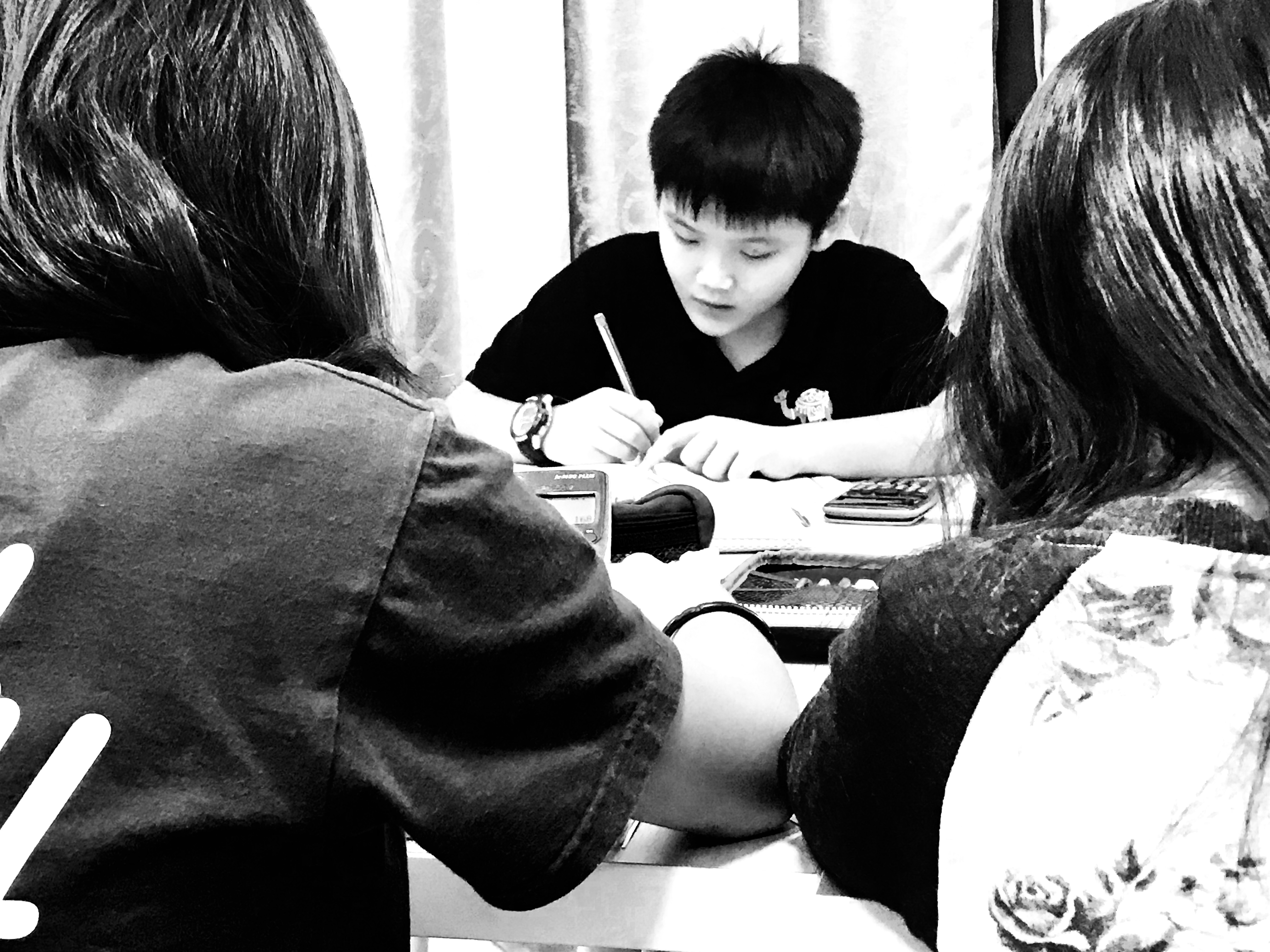
In our 3-pax groups, collaboration thrives: Students debate proofs, share insights on vector projections, and tackle school-specific papers from RI or HCI. Tutors facilitate, not lecture—using GeoGebra for dynamic graphs or real-world case studies like optimizing functions for economics models.
We integrate error analysis: Log mistakes in personalized journals, then revisit via spaced repetition, ensuring no bubble forms. Sessions end with reflections: “How does this link to JC?”—fostering metacognition. Parents receive progress snapshots, aligned to MOE’s holistic goals. This isn’t passive learning; it’s an active forge, with 95% of our students achieving A/B in year-end exams.
Priming the Mind: Bursting the Studying Bubble in IP Math
The studying bubble—overloading with disconnected facts—plagues IP students, where cramming differentiation rules amid a packed syllabus leads to 20-30% retention loss via Ebbinghaus forgetting curve. In Bukit Timah sessions, we deflate it with Pomodoro techniques: 25-minute focused bursts on IP-specific clusters like trig with calculus, followed by resets. Spaced interleaving—mixing vectors with stats every 3-4 days via Anki—boosts recall by 25%, per NIE research.
This clears cognitive fog, priming for deeper networks and preventing burnout in IP’s demanding pace.
Exponential Connections: Applying Metcalfe’s Law to IP Math Mastery
Metcalfe’s Law—value squares with connections—revolutionizes IP Math: Link surds to complex numbers, then physics applications, and insight explodes (n=3, value=9). In sessions, we build mind maps: Sec 3 integration branches to rates in kinematics, fostering 200% retention. Peer discussions in 3-pax amplify this, turning solitary struggles into quadratic gains.
Aligned to IP’s interdisciplinary ethos, this preps for JC proofs and projects.
Closing the Divide: Two Steps to IP Distinctions
Just two bridges away: Step 1 aligns to school syllabi (e.g., HCI’s vector emphasis), auditing against SEAB benchmarks. Step 2 taps weak ties—alumni shares on non-routine problems. This shrinks gaps, yielding 15-20% score boosts.
Sustained Surge: AI S-Curve for IP Growth
Mirror AI training: Slow foundations (Sec 1 algebra), explosive surges (Sec 3 calculus), plateau pivots via projects. Sessions iterate with feedback loops, networking curves for exponential progress.
Your 12-Week IP Mastery Blueprint: From Foundations to Fluency
| Week | S-Curve Phase | Bubble-Bust Tactics | Metcalfe Networks | Two-Step Actions | Milestone |
|---|---|---|---|---|---|
| 1-2 | Crawl: Basics (e.g., algebra fluency) | Pomodoro on examples; daily retrieval | Map cores (functions to graphs) | Syllabus audit; weak-tie baseline | 80% recall chains |
| 3-4 | Build: Links (e.g., trig × calculus) | Spaced interleaving; chunk strands | Fusion drills (rates to volumes) | Alum hacks; objectives focus | Explain 3 ways + 2 links |
| 5-6 | Surge: Depth | Mixed sets; rests | Cross-realms (math to physics) | Grad consults; error maps | 90% method marks timed |
| 7-8 | Pivot: Sprints | Quizzes; retest 7 days | Rebuild weak (series to DEs) | Fringe tips; calculus align | Jump non-routine project |
| 9-10 | Boom: Craft | Full interleaving; priming | Cascade reviews | Squad olympiad; codify | Paper modeling full steps |
| 11-12 | Peak: Rehearsals | Spaced papers; balance | Syllabus web map | Feedback loops; elite hops | A/B projection rubric |
This blueprint, rooted in research, propels IP success. At Bukit Timah Tutor, distinctions await. Enrol today

 eduKate Singapore English Maths Science Small Group Tuition