

Primary 1 Math Tuition | Primary 1 Mathematics Tutor (MOE SEAB Math Syllabus)
Start here for our Primary Tutorial main hub.
Why Start Primary 1 Math Tuition Early at eduKateSG?
Starting Primary 1 Math tuition right from the beginning gives your child a huge advantage in Singapore’s education system.
We teach using the proven Concrete-Pictorial-Abstract (CPA) method, building deep understanding of basics like numbers to 20, addition, subtraction, shapes, measurement and simple graphs.
This strong foundation prevents gaps that can grow bigger over the years, making it easier to excel in higher levels and aim for top PSLE scores.
Many parents choose our Primary 1 Mathematics Tutor programmes because early mastery leads to confidence and better long-term results.
A solid start in Primary 1 Math directly impacts PSLE performance – strong basics help children handle advanced topics like fractions, ratios and algebra by Primary 6.
With our small-group Primary 1 Math Tuition, students develop critical thinking early, setting them up for AL1 potential in PSLE Math and a low overall PSLE score (best is 4). This opens doors to choice secondary schools.
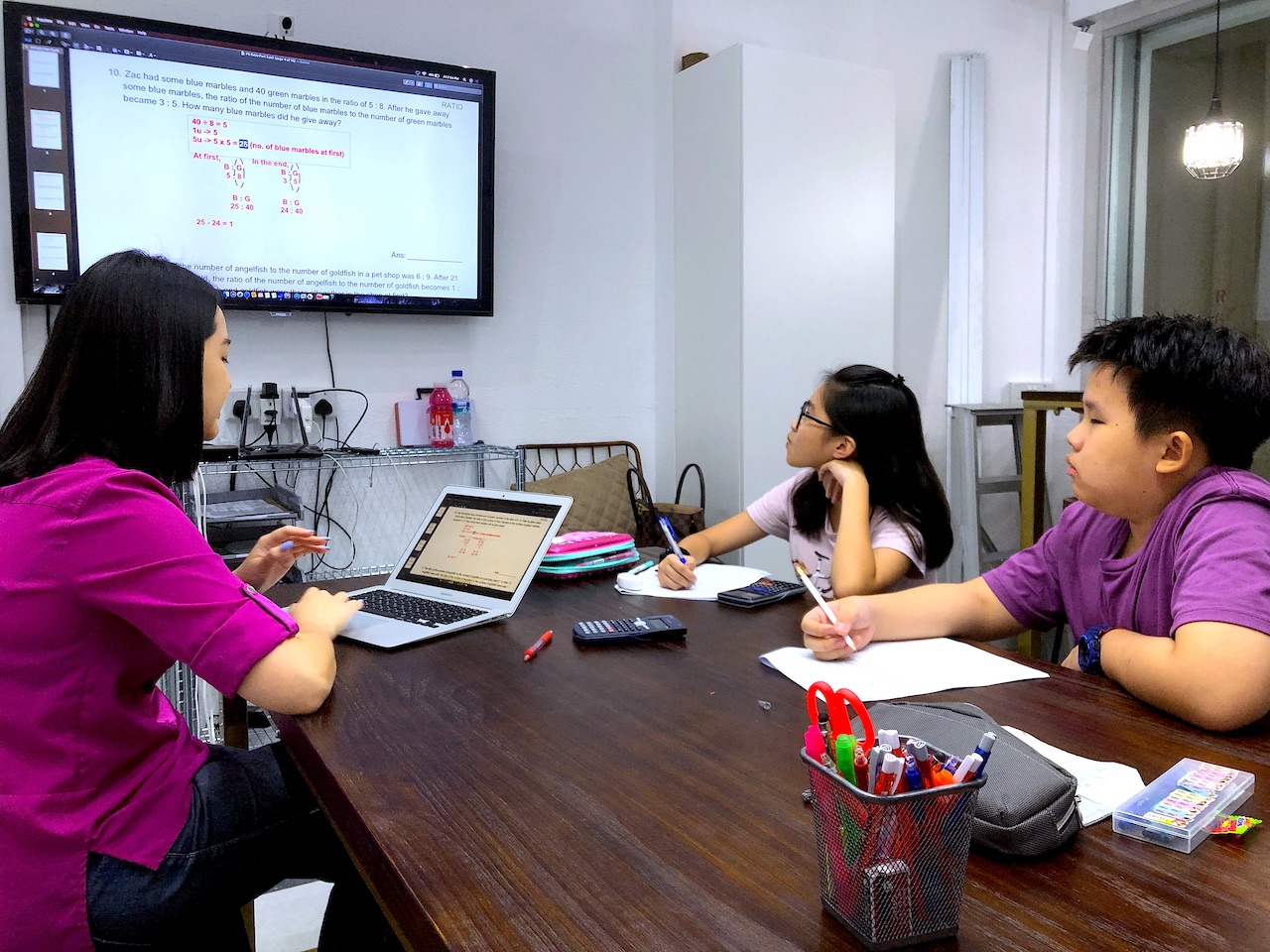
Quick Benefits at a Glance – Why Parents Sign Up for Our Primary 1 Math Tuition
- Builds unbreakable foundations: Hands-on learning with manipulatives, pictures and numbers – no rote memorisation.
- Prevents future struggles: Closes gaps early so PSLE preparation is smoother and less stressful.
- Boosts confidence and love for Math: Fun, engaging sessions make children excited about learning.
- Long-term advantages: Strong Primary 1 performance leads to better PSLE scores, unlocking top Posting Group 3 schools (scores ~4-20) and elite Integrated Programme (IP) options (often 4-8).
- Access to choice secondary schools: Low PSLE totals mean more options for prestigious schools with better resources, CCAs and pathways to JC/polytechnic.
- Personalised small groups: Experienced tutors tailor lessons to your child’s pace, fostering early critical thinking.
- Proven track record: Parents see quick improvements, positioning kids for AL1 success down the road.
Give your child the best start – enquire about our Primary 1 Math Tuition today and secure their path to top secondary schools!
Complete Guide to PSLE Math Syllabus: SEAB MOE PSLE Mathematics Guide for 2025
The PSLE Mathematics Syllabus follows the MOE Primary Math Syllabus, with Primary 6 students in 2025 using the established framework focused on conceptual understanding and real-world application.
This Singapore PSLE Syllabus Guide helps parents support their child’s PSLE Math Preparation Guide effectively.
Here’s a free downloadable pdf guide for Primary 1 Math:
PSLE Math Exam Format Overview
The PSLE Math Exam Format consists of two papers totaling 100 marks:
- Paper 1 (45 marks, 1 hour, no calculator):
- Booklet A: 15 multiple-choice questions (20 marks)
- Booklet B: 15 short-answer questions (25 marks)
- Paper 2 (55 marks, 1 hour 30 minutes, calculator allowed):
- 5 short-answer questions (10 marks)
- 12 structured/long-answer questions (45 marks)
Challenging questions make up about 15% of marks, testing PSLE Math Critical Thinking without exceeding the syllabus.
Key Topics in Primary 6 Math Syllabus
The syllabus covers three strands:
- Numbers and Algebra:
- Advanced fractions and operations
- Percentages (including increase/decrease)
- Ratios (equivalent, dividing quantities)
- Basic algebra (expressions, equations)
- Measurement and Geometry:
- Area and circumference of circles (including composites)
- Volume of cubes/cuboids
- Angles in composite figures
- Statistics:
- Average (total ÷ number)
- Data interpretation
Topics like PSLE Math Algebra Ratio Circles are heavily tested in problem sums.
PSLE Math Syllabus Changes 2026
For PSLE Syllabus 2025, no major changes apply to P6. From 2026, the updated 2021 syllabus fully implements at P6, emphasizing big ideas (e.g., proportionality), metacognition, and smoother topic progression (e.g., some shifts in averages, removal of certain geometry elements). Preparation now builds a strong foundation for future adjustments.
How to Achieve AL1 in PSLE Math: PSLE AL1 Tips
Achieving AL1 requires mastery of concepts and strong problem-solving.
Essential PSLE Math Problem-Solving Strategies and Heuristics for AL1
Focus on these proven PSLE Math Heuristics AL1 techniques:
- Model Drawing: Visualize relationships in ratio, fraction, and percentage problems.
- Guess and Check: Systematic trial for unknown values.
- Working Backwards: Start from the end for before-after scenarios.
- Assume Everything Changes: Handle percentage increase/decrease effectively.
- Branching/Equal Concept: Solve grouping or remainder problems.
Practice regularly with past papers. Key tips:
- Master high-weightage topics (fractions, ratios, algebra).
- Show clear workings to earn method marks.
- Review mistakes in a journal.
- Time management: Allocate wisely in Paper 2.
- Build speed and accuracy in Paper 1 basics.
Consistent practice with heuristics boosts confidence for non-routine questions. For PSLE Foundation Mathematics, focus on core skills without advanced extensions.
How We Teach Primary 1 Math Students from First Principles
At eduKateSG, our Primary 1 Mathematics Tutor approach builds a strong foundation aligned with the MOE Primary Math Syllabus, starting from first principles to ensure deep relational understanding rather than rote learning.
Starting with the Concrete Phase
We begin every concept using the Concrete-Pictorial-Abstract (CPA) method recommended by MOE. For addition and subtraction within 20, students handle real manipulatives like counters, blocks, or toys.
This hands-on experience helps young learners grasp part-whole relationships and number bonds intuitively, answering “why” numbers combine or separate, preventing future gaps in the Primary 1 Math syllabus.
Transitioning to Pictorial Representations
Once comfortable with concrete objects, we move to pictorial stage. Students draw pictures, dots, or simple bar models to represent problems—such as illustrating 8 + 5 = 13 with groups of circles.
For shapes (rectangle, square, triangle, circle), they compose figures on grids. This bridges tangible experiences to visual thinking, reinforcing concepts like ordinal numbers, length measurement in cm, and basic picture graphs.
Mastering the Abstract Level
In the abstract phase, we introduce symbols and equations only after solid concrete and pictorial mastery. Children write number sentences confidently, solve mental calculations within 20, tell time to 5 minutes, and handle money up to $100.
Throughout, we teach from first principles—breaking down to fundamental truths—so students understand relationships between addition and subtraction, or patterns in data interpretation.
Integrating Critical Thinking and Reflection
Our small-group sessions encourage metacognition: students explain their reasoning, reflect on mistakes, and connect topics like measurement to real life.
This fosters PSLE Math Critical Thinking early, builds confidence, and prepares for progressive topics in higher levels, ensuring long-term success in Singapore’s mathematics curriculum.
The Long-Term Impact of Primary 1 Math Performance on Secondary School Options
A child’s performance in Primary 1 Math lays the groundwork for future success in the MOE Primary Math Syllabus, directly influencing their PSLE Mathematics score and overall PSLE total (sum of four subjects, ranging from 4 best to 32).
Strong early mastery prevents knowledge gaps that compound over years, enabling higher AL scores in Math—often AL1 to AL4 for top performers—which contributes significantly to lower total PSLE scores needed for choice secondary schools.
How PSLE Scores Determine Secondary Pathways
Under the current system, PSLE scores place students into Posting Groups: Group 3 (formerly Express) for scores around 4-20, offering the most demanding curriculum; Group 2 (around 21-25); and Group 1 (26-30). Integrated Programme (IP) schools, which provide a seamless six-year path to A-Levels bypassing O-Levels, typically require scores of 4-9.
Benefits of Choice Secondary Schools
Students entering top schools via low PSLE scores gain access to enriched CCAs, leadership opportunities, and higher likelihood of progressing to premier junior colleges or polytechnics.
This trajectory enhances university admissions and career prospects in competitive fields.
Conversely, weaker foundations leading to higher PSLE scores limit options to mid-tier schools, potentially restricting subject choices under Full Subject-Based Banding and long-term academic pathways.
Why Early Intervention at Primary 1 Matters Most
At eduKateSG, our Primary 1 Mathematics Tutor programmes focus on building relational understanding from first principles using the CPA approach, fostering PSLE Math Critical Thinking early.
Proper tutorials prevent early struggles from snowballing, ensuring Primary Math students develop confidence and skills that translate to AL1 potential by Primary 6. Parents aiming for choice secondary schools invest here—strong Primary 1 results create exponential advantages, maximising options and future success in Singapore’s education landscape.
Resources
High-Authority External Links
- SEAB PSLE Mathematics Syllabus and Exam Format
- MOE Primary Mathematics Syllabus (Updated Dec 2024)
- SEAB PSLE Formats Examined in 2025
Internal eduKateSG Links
- Primary 6 PSLE Math Tuition
- PSLE Math Preparation Strategies
- Achieve AL1 in PSLE Guide
- Primary Math Heuristics Lessons
- PSLE Exam Tips and Resources

 eduKate Singapore English Maths Science Small Group Tuition