

PSLE Mathematics Tuition | PSLE Math Tutor
Start Here for our Singapore Math Tuition
With a skilled Primary Math Tutor, children can navigate the PSLE Mathematics Syllabus with confidence and clarity. Foster PSLE Math Critical Thinking skills with interactive approaches from a Primary Math Tutor.
In the competitive landscape of Singapore’s education system, mastering mathematics from an early stage is crucial for long-term success. At eduKateSG, our PSLE Math Tutor services are designed to provide personalized guidance, helping students build a strong foundation starting from Primary 4. Whether you’re navigating the PSLE Math Syllabus or aiming to achieve AL1 in PSLE Math, our experienced tutors offer tailored strategies to make complex concepts accessible and engaging.
Unlock PSLE Math Heuristics AL1 techniques with the personalized expertise of a Primary Math Tutor.
Primary 6 PSLE Math Tutorials: Syllabus Outline and What to Expect
In Singapore’s rigorous education system, Primary 6 marks a pivotal year as students prepare for the PSLE Mathematics examination. At eduKateSG, our PSLE Math Tutor programs are tailored to guide students through this critical phase, focusing on the PSLE Math Syllabus to build confidence and mastery. Refer to the Singapore PSLE Syllabus Guide while working with a Primary Math Tutor for aligned progress. A dedicated Primary Math Tutor can demystify the PSLE Math Syllabus, ensuring students grasp foundational concepts early on.
Whether you’re exploring the SEAB PSLE Math requirements or seeking effective PSLE Math Preparation Guide strategies, understanding the Primary 6 Math Syllabus is essential. This outline draws from the official MOE Primary Math Syllabus, highlighting key topics, learning objectives, and what to expect in the PSLE Math Exam Format. For the most up-to-date details, refer to the Ministry of Education’s syllabus document.
Note that for students taking the PSLE in 2025, Primary 6 follows the 2013 syllabus, with the updated 2021 syllabus applying to Primary 6 from 2026 onward. This ensures a smooth transition while maintaining focus on core mathematical competencies. Our PSLE Math Tutor sessions incorporate these elements, emphasizing PSLE Math Critical Thinking and problem-solving to help students achieve AL1 in PSLE Math.
Engaging a Primary Math Tutor helps students align with the SEAB PSLE Math guidelines for optimal exam preparation.
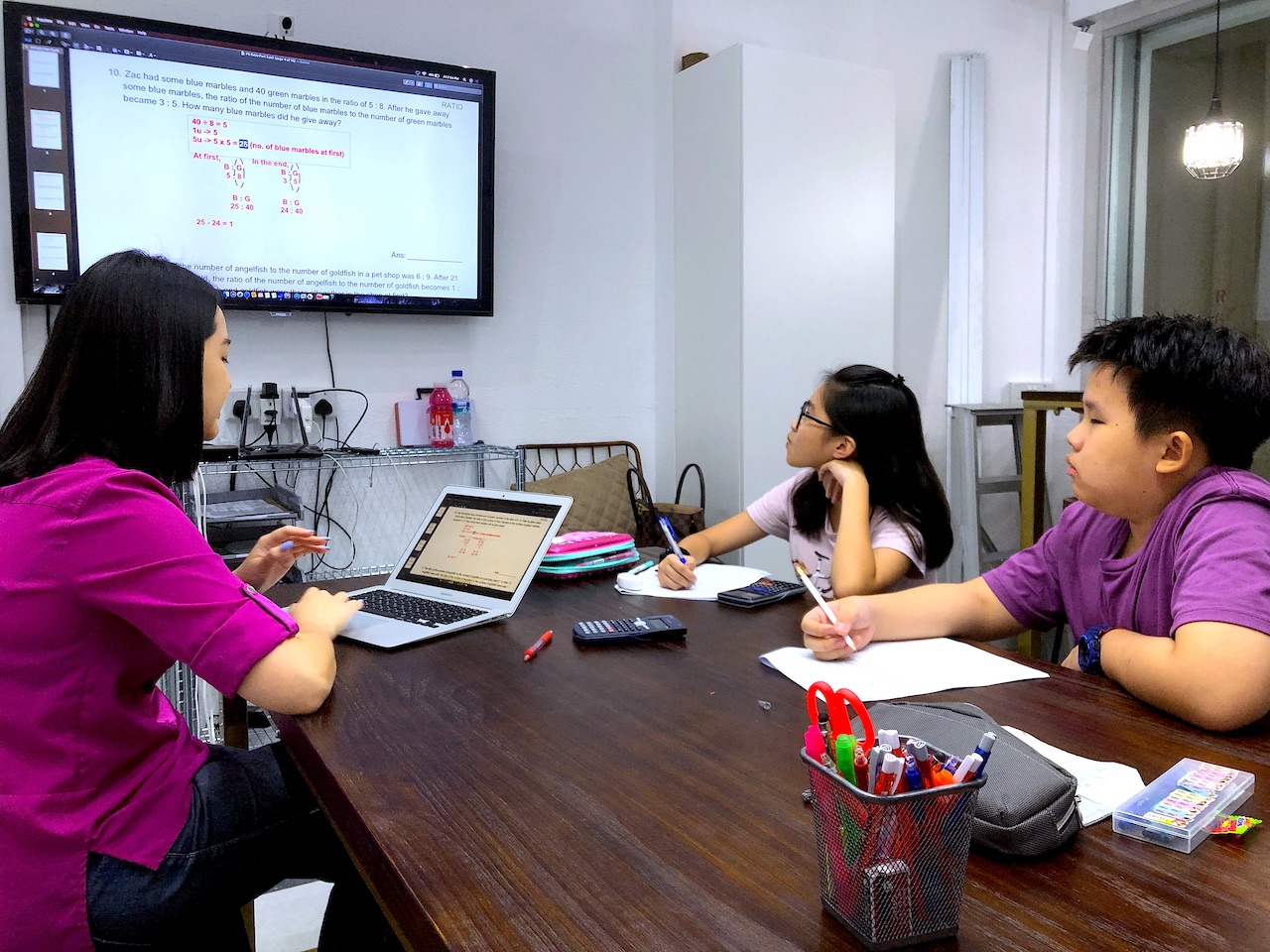
Overview of the Primary 6 Math Syllabus
The PSLE Mathematics Syllabus for Primary 6 emphasizes conceptual depth, application, and integration of topics from earlier years. It is structured into three main strands: Number and Algebra, Measurement and Geometry, and Statistics. Our Primary Math Tutor specializes in the MOE Primary Math Syllabus, tailoring lessons to individual learning paces.
The curriculum fosters big ideas like equivalence, proportionality, and invariance, while developing skills in abstraction, reasoning, and real-world modeling. Students are encouraged to use heuristics and metacognitive strategies for tackling both routine and non-routine problems, aligning with the Singapore PSLE Syllabus Guide.
Key learning objectives include:
- Applying mathematical concepts to solve real-world problems.
- Developing reasoning and communication skills through notations and representations.
- Building attitudes like perseverance and confidence in mathematics.
For official guidelines, visit the SEAB website, which details the PSLE Syllabus 2025 and exam expectations.
Here’s a free P6/PSLE Readiness Checklist pdf download:
Number and Algebra Strand
This strand builds on foundational topics, introducing more advanced operations and algebraic thinking. It covers PSLE Math Algebra Ratio Circles indirectly through related concepts, preparing students for secondary-level mathematics.
- Fractions: Focus on four operations, including dividing whole numbers or proper fractions by proper fractions. Objectives include understanding quotients as fractions and applying these in problem-solving scenarios.
- Percentage: Learning to find the whole given a part and percentage, as well as calculating percentage increase or decrease. This ties into proportional reasoning, a key for PSLE Math Heuristics AL1.
- Ratio: Interpreting ratios like a:b or a:b:c, finding equivalent ratios, dividing quantities, and relating ratios to fractions. Students learn to simplify ratios and solve for missing terms.
- Algebra: Using letters for unknowns, interpreting simple expressions (e.g., a ± 3, 3a), simplifying linear expressions, evaluating by substitution, and solving simple linear equations with whole number coefficients.
Our PSLE Math Tutor at eduKateSG uses targeted exercises to reinforce these areas, helping students master PSLE Math Problem-Solving Strategies.
Measurement and Geometry Strand
Here, the emphasis is on practical applications, including calculations for shapes and volumes, which often appear in composite problems on the PSLE.
- Area and Volume: Covering area and circumference of circles, including semicircles and quarter circles. Students calculate areas and perimeters of composite figures (squares, rectangles, triangles). For volumes, objectives include finding dimensions of cubes and cuboids given volume, using formulas like V = l × w × h.
- Geometry: Identifying and finding unknown angles in composite figures involving special quadrilaterals (squares, rectangles, triangles, parallelograms, rhombuses, trapeziums) without additional constructions.
These topics promote spatial reasoning and are integral to achieving high scores. Resources like Khan Academy’s geometry section can supplement our tutorials.
Statistics Strand
This area focuses on data interpretation, a growing component in modern curricula.
- Data Analysis: Understanding averages as total value divided by number of data points, and exploring relationships between average, total value, and data count.
For PSLE Foundation Mathematics students, the syllabus offers adapted content with similar objectives but at a foundational level, ensuring accessibility.
PSLE Math Preparation Guide: What to Expect
The PSLE Math Exam Format typically includes two papers: Paper 1 (multiple-choice and short-answer questions) and Paper 2 (structured and long-answer questions), testing a mix of basic skills and higher-order thinking. Expect questions that integrate topics, such as using ratios in geometry or percentages in data analysis. Non-routine problems may require creative application of heuristics like model drawing or pattern recognition.
To achieve AL1 in PSLE Math, students should focus on:
- Consistent practice with past papers from SEAB’s resources.
- Developing metacognition to reflect on problem-solving approaches.
- Addressing common pitfalls, like misinterpreting ratios or algebraic expressions.
Our Complete Guide to PSLE Math Syllabus at eduKateSG includes PSLE AL1 Tips, such as time management and error-checking strategies. With potential PSLE Math Syllabus Changes 2026 introducing the 2021 framework, early preparation with a dedicated PSLE Math Tutor is key. A Primary Math Tutor is essential for staying ahead of the PSLE Syllabus 2025 updates and requirements.
Why Join eduKateSG’s PSLE Mathematics Tuition
At eduKateSG, our Primary 6 PSLE Tutorials are designed to align perfectly with the SEAB MOE PSLE Mathematics Guide. Experienced tutors provide personalized sessions, incorporating interactive tools and real-time feedback to enhance PSLE Math Critical Thinking. Whether your child needs support in PSLE Math Algebra Ratio Circles or overall exam readiness, we help turn challenges into successes.
Through personalized sessions, a Primary Math Tutor provides a comprehensive PSLE Math Preparation Guide.
Enrol today at eduKateSG.com to explore our programs and schedule a trial. With our expertise, students not only meet but exceed PSLE expectations, paving the way for future academic achievements. For more on the MOE Primary Math Syllabus, check the official MOE primary curriculum page.
Aspiring for top scores? A Primary Math Tutor offers strategies to achieve AL1 PSLE Math.
Understanding the PSLE Mathematics Syllabus
The PSLE Mathematics Syllabus forms the backbone of the examination, outlining key topics that students must grasp. This syllabus, aligned with the MOE Primary Math Syllabus, emphasizes conceptual understanding over rote learning. For Primary 4 students, it’s an ideal time to start familiarizing themselves with foundational elements that will evolve into more advanced areas by Primary 6.
According to the Singapore Examinations and Assessment Board, the SEAB PSLE Math framework includes topics like numbers, geometry, and data analysis. Parents and students can explore the official details on the SEAB website, which provides comprehensive resources on exam structures and expectations.
Key Components of the Primary 6 Math Syllabus
As students progress, the Primary 6 Math Syllabus introduces more intricate topics such as PSLE Math Algebra Ratio Circles, which require a blend of logical reasoning and application. This stage builds directly on earlier years, making early intervention through a dedicated PSLE Math Tutor invaluable. Benefit from a Primary Math Tutor’s expert PSLE AL1 Tips to excel in challenging topics.
The syllabus also covers PSLE Foundation Mathematics for those needing additional support, ensuring inclusivity across varying proficiency levels. To stay updated, refer to the Ministry of Education’s syllabus page, where you can find detailed breakdowns of learning outcomes. The Primary Math Tutor covers the entire Primary 6 Math Syllabus, building on earlier years’ knowledge.
PSLE Math Preparation Guide for Success
Our PSLE Math Preparation Guide at eduKateSG focuses on holistic development, incorporating PSLE Math Critical Thinking and problem-solving skills. Starting from Primary 4, we introduce techniques that align with the PSLE Math Exam Format, including multiple-choice questions, short-answer items, and structured problems. Understanding the PSLE Math Exam Format becomes straightforward with guidance from a Primary Math Tutor.
For those targeting top scores, our guide includes PSLE AL1 Tips, such as mastering time management and error analysis. These strategies are essential for students aspiring to achieve AL1 PSLE Math, turning potential challenges into opportunities for growth. Explore the Complete Guide to PSLE Math Syllabus with the help of an experienced Primary Math Tutor.
Complete Guide to PSLE Math Syllabus
This Complete Guide to PSLE Math Syllabus serves as a roadmap for families. It integrates the SEAB MOE PSLE Mathematics Guide, highlighting core themes like measurement and statistics. By understanding these, Primary 4 learners can anticipate the progression toward PSLE-level proficiency.
Additionally, we address PSLE Math Syllabus Changes 2026, which may introduce refinements to assessment methods. Staying informed through reliable sources ensures your child’s preparation remains current and effective. A Primary Math Tutor integrates the SEAB MOE PSLE Mathematics Guide into everyday lessons for better retention.
How to Achieve AL1 in PSLE Math
Wondering how to achieve AL1 in PSLE Math? It begins with consistent practice and expert guidance. Our PSLE Math Tutor program emphasizes PSLE Math Heuristics AL1, teaching methods like model drawing and pattern recognition to tackle diverse questions.
Incorporating PSLE Math Problem-Solving Strategies, we encourage students to approach problems systematically. Resources from educational platforms like Khan Academy can complement our sessions, offering interactive exercises on topics such as ratios and circles.
Exploring the Singapore PSLE Syllabus Guide
The Singapore PSLE Syllabus Guide underscores the importance of real-world application in mathematics. From Primary 4 onward, concepts in the PSLE Syllabus 2025 build toward a well-rounded skill set, preparing students not just for exams but for future academic pursuits. Learn how to achieve AL1 in PSLE Math through targeted coaching from a Primary Math Tutor.
At eduKateSG, we align our tutoring with this guide, fostering PSLE Math Critical Thinking through engaging activities and personalized feedback. For official updates, visit the MOE’s primary education resources.
PSLE Math Tuition: Essential Resources for Parents
At eduKateSG, we understand the importance of guiding your child through the PSLE Mathematics journey. To complement our PSLE Math Tutor services, we’ve compiled summaries of valuable resources from Bukit Timah Tutor. These articles provide in-depth insights into the PSLE Math Syllabus, preparation tips, and strategies to achieve top scores like AL1. Explore them via the clickable links below to enhance your understanding and support your child’s success in SEAB PSLE Math.
Syllabus Overviews
These resources break down the core elements of the MOE Primary Math Syllabus, helping parents grasp the foundational topics and their progression toward PSLE. Stay informed about PSLE Math Syllabus Changes 2026 with insights from a knowledgeable Primary Math Tutor.
What is the PSLE Mathematics Syllabus?
This article explains the PSLE Mathematics Syllabus, focusing on strands like Numbers and Algebra, Measurement and Geometry, and Statistics. It highlights key Primary 6 topics such as algebra, ratios, circles, and heuristics like model drawing. Parents learn about the exam format (two papers totaling 100 marks) and tuition advice, including early mastery, extensive practice with past papers, and targeting weaknesses for AL1 success. Read more
Complete Guide to PSLE Math Syllabus 2025
Covering the 2025 syllabus with emphasis on Numbers and Algebra, Measurement and Geometry, Statistics, heuristics, and critical thinking, this guide details the exam structure and weights key areas like algebra (15-20%). Tips for parents include building fundamentals, weekly heuristic practice, timed drills, error analysis, and using past papers to prepare for multi-step problems. Read more
Achieving Excellence in PSLE Math
Aiming for the highest achievement level? This section offers targeted strategies aligned with the syllabus. Master PSLE Math Problem-Solving Strategies under the tutelage of a proficient Primary Math Tutor.
Your Complete Guide to Achieving AL1
This guide outlines the 2021 syllabus strands, big ideas like proportionality, and PSLE exam details (100 marks across two papers). Tutor tips include structured time management, energy-building habits, and resources like past papers. Parents get advice on creating long-term plans, using tools like Khan Academy, and fostering metacognition for resilience and top scores. Read more
Year-by-Year Mathematics Tutorials
Tailored tutorials for Primary 4 to 6 help parents track progression and identify when tuition can make a difference.
Primary 4 Mathematics Tutorials
Aligned with the syllabus, this covers Numbers and Algebra (up to 100,000, fractions, decimals), Measurement and Geometry (areas, angles, symmetry), and Statistics (graphs). Tuition benefits include deep comprehension via visuals and heuristics, bridging gaps for PSLE readiness, and fostering critical thinking for long-term success. Read more
Primary 5 Mathematics Tutorials
Focusing on advanced operations, fractions/decimals/percentages, geometry, ratios, and data analysis, strategies emphasize daily routines, past paper practice, error logs, and time management. Parents are advised to seek tutorials for personalized guidance, assessments, and collaborative learning to prevent gaps ahead of PSLE. Read more
Primary 6 Mathematics Tutorials
This aligns with the 2013 syllabus for 2025, covering advanced algebra, ratios, circles, volume, and statistics. Teaching uses first-principles, heuristics, and metacognition; exam tips include timed practice and error avoidance. Parents should revisit basics, use formula banks, and encourage real-life applications for deeper understanding. Read more
Preparation and Exam Strategies
Practical guides to equip parents with tools for effective PSLE preparation. A Primary Math Tutor breaks down PSLE Math Algebra Ratio Circles into manageable, engaging modules.
How to Prepare for PSLE Primary Mathematics
Detailing syllabus strands and 2025/2026 changes (e.g., removing speed, enhancing algebra), it stresses heuristics and conceptual learning. Preparation involves daily practice, mock exams, and managing time, energy, and resources like apps and tuition. Parents learn to monitor progress, apply real-life math, and build positive attitudes for AL1. Read more
Complete Guide to PSLE Math Exam Format
This explains the two-paper format (Paper 1: no calculator, quick questions; Paper 2: problem-solving with explanations) and syllabus focus on conceptual fluency. Insights include using heuristics for efficiency, practicing past papers, and real-world applications. Parents can use this for targeted tuition to boost confidence and scores. Read more
Why Choose a PSLE Math Tutor at eduKateSG
Enrolling in PSLE Mathematics Tuition with a specialized PSLE Math Tutor can make all the difference. Our tutors, well-versed in the PSLE Math Syllabus, provide one-on-one support to address individual needs, whether it’s reinforcing basics or advancing to complex topics like algebra and geometry. Foster PSLE Math Critical Thinking skills with interactive approaches from a Primary Math Tutor.
Parents often see remarkable improvements in confidence and performance, especially when starting early in Primary 4. To learn more about our programs or schedule a session, contact us at eduKateSG.com. With our commitment to excellence, your child is equipped to excel in SEAB PSLE Math and beyond.
For our Primary Math Tutorials, read more here:
Unlock PSLE Math Heuristics AL1 techniques with the personalized expertise of a Primary Math Tutor.
Contact us for our PSLE Math Tutorials here:

 eduKate Singapore English Maths Science Small Group Tuition