

Bukit Timah Tuition | Primary Math Tutor Bukit Timah
Small 3-pax classes • P1–P6 • Built for PSLE 2025 and the updated MOE syllabus
Primary Math Tuition Bukit Timah 2026
eduKate Singapore – The Smart Parents’ Choice for Real PSLE AL1 Results (Maximum 3 Students Per Class)
If you live in Bukit Timah and want your child to score AL1 in PSLE Math and get into Raffles, Nanyang, HCI, RGS, ACS or MGS without stress or burnout, you are in the right place.
Since 2009, eduKate Singapore has been the quiet, trusted Primary Math tuition centre that top Bukit Timah parents choose — because we keep classes tiny (only 3 students max), teach the right way from first principles, and make children genuinely love math.
87–94% of our P6 students score AL1–AL3 every single year. Many join us in Primary 1 and never need another math tutor again — even in secondary school.
For our other Math Classes:
Bukit Timah P6 PSLE Math Tutorials
Primary Mathematics in Singapore isn’t guesswork—it’s a clearly defined curriculum with explicit outcomes and an exam format that rewards clean methods, reasoning, and stamina. Our Bukit Timah programme is designed straight from the MOE Primary Mathematics Syllabus (2021; updated 2024/2025) and the PSLE Mathematics 2025 format (0008), so every lesson maps to what pupils are expected to learn and how they’ll be examined. MOE Primary Mathematics Syllabus (Ministry of Education), PSLE Formats Examined in 2025 (seab.gov.sg), PSLE Mathematics 0008 (2025) PDF. (seab.gov.sg)
Enquire: BukitTimahTutor.com • Learn more about our approach at EduKate Singapore.
What parents in Bukit Timah really want fixed
- Concept clarity (place value, fractions, ratio, geometry) aligned to the latest MOE content map for each level P1–P6. See the official strand structure—Number & Algebra, Measurement & Geometry, Statistics—and “Processes, Attitudes, Metacognition” at the core. MOE Primary Mathematics Syllabus (updated) (Ministry of Education)
- Exam-type fluency for the 2025 PSLE (two written papers across three booklets: MCQ + short-answer + structured problems; with explicit AO2/AO3 reasoning demands). PSLE Mathematics 0008 (2025). (seab.gov.sg)
- Right routines: pacing, calculator discipline (where relevant later in primary/transition), and presentation that secures method marks. Official PSLE information hub: SEAB PSLE. (seab.gov.sg)
Simple Truth Every Bukit Timah Parent Needs to Know
- Math in Singapore is built like a tower: Everything in P6 PSLE rests on what happens in Primary 1–2.
- Weak foundation in P1 → struggle forever. Strong, proper foundation in P1 → easy 95+ in PSLE and top secondary school.
- We fix (or build) that foundation properly — using real objects, drawings, and deep understanding (not rote memorisation). Children understand why the method works, so they can solve any new problem confidently.
- And we make the whole process fun — so your child actually looks forward to tuition every week.
Our lesson design (3-pax, high-feedback)
- Diagnose precisely against MOE strands and level descriptors (not just “more practice”). We profile gaps by topic (e.g., P4 fraction equivalence; P5 ratio with fractions; P6 nets/volume). MOE Primary Mathematics Syllabus. (Ministry of Education)
- Teach from first principles using concrete→pictorial→abstract progressions and model methods (e.g., bar models for comparison/part-whole; unitary for rate/ratio) to meet AO2/AO3. PSLE 0008 AO2/AO3. (seab.gov.sg)
- Deliberate practice that sticks: short, spaced, mixed sets (not one long cram). Decades of research show distributed practice and practice testing deliver the largest learning gains. Meta-analyses overview (Donoghue & Hattie, 2021) (Frontiers), Dunlosky et al., techniques review (whz.de), Classroom distributed-practice meta-analysis, 2025. (PMC)
- Timed exam habits every week: mini-Paper 1 segments for speed/accuracy; structured Paper 2 problems for reasoning and full-method working guided by the 2025 scheme. PSLE Mathematics 0008. (seab.gov.sg)
- Parent visibility: quick snapshots on topic mastery, error patterns, and PSLE-style stamina.
How We Make Learning Math Pure Joy at eduKate Singapore
(Yes, Your Child Will Actually Beg to Come to Class)
At eduKate Singapore Bukit Timah, every single Primary Math lesson is deliberately built on Maslow’s Hierarchy of Needs for High-Performance Studying because we know that when a child’s basic needs are perfectly met, learning stops being “work” and becomes play.
We start right at the bottom: bright air-conditioned room, cold water always ready, healthy snacks allowed, Pomodoro-timed bursts so they never get tired or hungry (physiological needs ✓), same cosy seat, same small group of three friends, same caring tutor who knows their favourite computer games (safety & routine ✓), and an atmosphere where every child is genuinely seen, cheered on, and never laughed at for mistakes (belonging ✓).
Only when these foundations are rock-solid do we move up the pyramid — and that’s when the magic happens.
Once the lower needs are satisfied, confidence and pride explode. We use our Fencing Method to give every child multiple small wins every lesson, progress charts on the wall, and constant specific praise for effort (“Wow, you found a new way to solve that!”).
Children feel capable and proud (esteem needs ✓), and then we let them invent their own math games, teach the group, or apply fractions to real-life investing or baking — suddenly they’re doing self-directed, creative mathematics because they want to (self-actualisation ✓).
This is when they hit true flow state: eyes light up, time disappears, and they literally don’t want to leave when the class ends.
That’s why our Primary Math students consistently score 90+ in PSLE while still loving the subject for life — because we follow Maslow perfectly, learning becomes effortless fun instead of stressful grinding.
Read the full framework here → High-Performance Studying: Maslow’s Hierarchy of Needs
(We built our entire teaching system around this. It works.)
Primary by stages: how we build from P1 → P6
P1–P2: foundations that don’t crack later
- Whole numbers, addition/subtraction strategies, early multiplication ideas, length/time, simple graphs.
- Emphasis on mathematical language and representation so later algorithms make sense. Content map: see P1/P2 pages in MOE’s official syllabus. MOE Syllabus PDF (updated Dec 2024). (Ministry of Education)
P3–P4: fluency with fractions & geometry
- Equivalent fractions, mixed numbers, area/perimeter, angles, factors/multiples, 4-operation word problems.
- Start exam-style short-answer routines, while keeping weekly spaced reviews. Research backs small, frequent sessions over massed study. Donoghue & Hattie, 2021. (Frontiers)
P5: the PSLE runway
- Ratio, percentage with multi-step contexts, average, volume, speed.
- Introduce mixed, interleaved sets forcing method choice (ratio vs. percentage; nets vs. volume). Spaced + testing beats restudying alone. Dunlosky et al. overview. (whz.de)
P6: performance under the 2025 format
- Weekly Paper-type rehearsals: booklet strategies, error-log cycles, and tight presentation to secure method marks under time. Full paper structure and AOs here: PSLE 0008 (2025) PDF. (seab.gov.sg)
The Bukit Timah 12-week improvement plan (example)
Weeks 1–2: Diagnose & reset
- Level-mapped pre-checks (fractions/ratio/geometry diagnostics).
- First “mini-paper” (Paper 1 subset) to benchmark speed/accuracy.
- Start successive relearning: brief retrieval quizzes across prior topics. Evidence: combining testing with spacing yields durable retention. Successive relearning review. (apa.org)
Weeks 3–5: Rebuild methods, not just answers
- First-principles teaching + worked examples; guided → independent steps.
- Interleaved mixed sets (fractions ⇄ decimals ⇄ ratio).
- Short, timed segments to establish pacing.
Weeks 6–8: Word-problem mastery
- Bar-model reasoning, unitary approach, rate/ratio triangle sense.
- Structured-response training for AO3 (reason mathematically, select strategies). See AOs. PSLE 0008 AOs. (seab.gov.sg)
Weeks 9–10: Geometry, measurement, and graphs
- Nets/volume, angles/similarity, coordinate reasoning, data displays.
- Error-log sprint: convert repeated mistakes into “rules I follow”.
Weeks 11–12: Full dress rehearsals
- Two full papers (48–72h apart) with targeted reteaching in-between.
- Final pacing plan and calm routines using the SEAB readiness checklists hub. SEAB PSLE hub. (seab.gov.sg)
Why 3-pax classes work for Primary Math
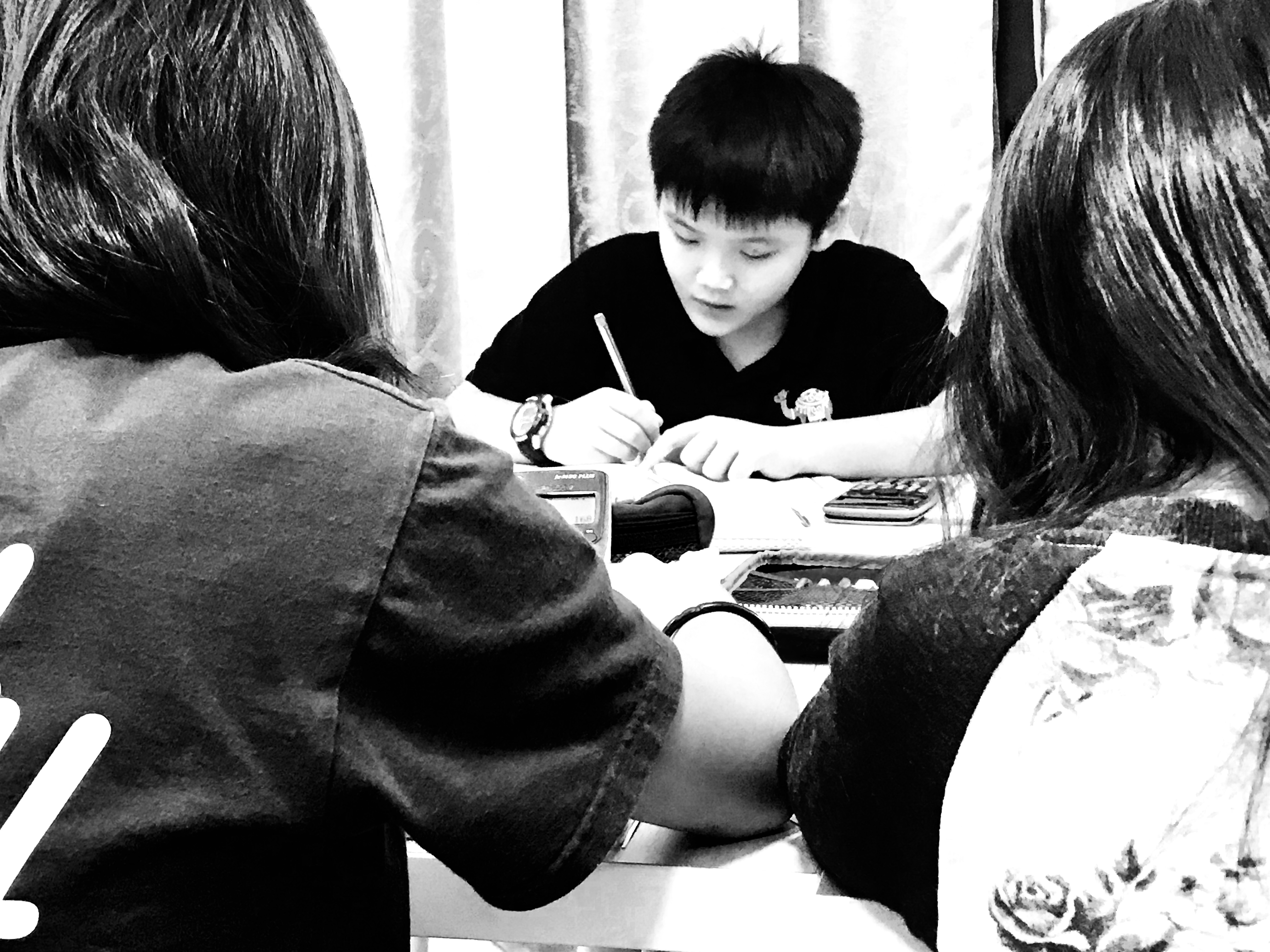
- The tutor can watch every step of a pupil’s working and correct misconceptions instantly—critical for fractions/ratio and geometry.
- Pupils still benefit from peer math talk (explaining strategies aloud improves retention and transfer).
- We can tailor interleaving: each child sees the right mix of topics, rather than one generic worksheet stack.
Avoiding the “study bubble” in Math
More worksheets don’t guarantee more marks. When practice is massed, accuracy can plateau or drop before exams. We explicitly space practice across weeks and start lessons with retrieval (short, closed-book questions) so memory—not just eyes—does the work. The strongest gains consistently come from distributed practice and practice testing in school-age learners. Donoghue & Hattie meta-analysis (Frontiers), Dunlosky review PDF (whz.de), Distributed practice meta-analysis (2025). (PMC)
Bukit Timah Tutor | Primary Math Tuition 2026
The Only Bukit Timah Primary Math Tutor Parents Trust for Real AL1 Results (Maximum 3 Students Per Class)
If you are reading this, you are exactly at the perfect time.
Primary 1–6 seats for 2026 are filling faster than ever, and once they’re gone, they’re gone.
Parents in Bukit Timah who want their child to score 80-90+ in PSLE Math and walk straight into Raffles, Nanyang, HCI, RGS, ACS or MGS don’t gamble with big-class tuition centres.
They choose the tutor who has been quietly producing 87–94% AL1–AL2 results year after year since 2009 — with classes so small (max 3 students) that every child gets semi-private attention at group-class pricing.
That tutor is eduKate Singapore.
Why Bukit Timah Parents Call Us “The AL1 Specialist”
(And Why Your Child Will Love Coming Here)
✓ Smallest classes in Bukit Timah – Maximum 3 students (not the fake “small group” 10–15 you see everywhere else) at our Primary Math Classes
✓ 87–94% of our P6 students score AL1–AL2 every year (2023–2025 cohorts)
✓ First-principles teaching – We rebuild math from the ground up so your child truly understands, never just memorises
✓ Children actually LOVE math here – We use Maslow’s Hierarchy + games + real-life fun (they beg to stay longer)
✓ Prime location – 3-minute walk from Sixth Avenue MRT (drop-off & pick-up is a breeze)
✓ Full-time specialist tutors only – 10–20+ years experience, no part-timers, no fresh grads
How We Turn “Average” Kids into 90+ Scorers
(While Making Math Their Favourite Subject)
We teach differently — deliberately.
- First Principles + Concrete-Pictorial-Abstract (CPA)
We never assume your child “already knows”. We rebuild every concept from absolute zero using real objects (apples, Lego, snacks), then drawings, then numbers.
Result: Rock-solid foundation that makes P4 fractions, P5 ratio, P6 speed problems feel easy and familiar. - Maslow’s Hierarchy for Joyful Learning
Every lesson satisfies comfort → safety → belonging → pride → self-actualisation.
Kids feel safe, celebrated, proud, and challenged exactly right — so they enter “flow state” and fall in love with math.
Read exactly how we do it here → How We Make Kids Love Math Using Maslow’s Hierarchy - Tiny Classes = Massive Attention
With only 3 students, we spot and fix every single misunderstanding instantly.
Advanced kids get stretched with advanced problem sums from Term 2.
Struggling kids get gentle, confidence-building wins every week.
Science-Backed Proof
- MOE Primary Math Syllabus 2021 (Dec 2024 update)
- Skemp (1976) – Why Relational Understanding Beats Rote Learning
- Concrete-Pictorial-Abstract Research Evidence
- Early Math Skills Predict Later Success More Than Reading or IQ
FAQs (Parent-focused)
Q1. How do I know lessons follow what MOE expects at each level?
We map topics to the official P1–P6 scope in MOE’s current syllabus (updated 2024/2025). You can verify strand coverage in the PDF. MOE Primary Mathematics Syllabus. (Ministry of Education)
Q2. What exactly changes in PSLE Math from 2025?
The 0008 syllabus specifies two papers across three booklets, with MCQ, short-answer and structured items, and clear AOs emphasising application and reasoning. PSLE 0008 (2025) PDF. (seab.gov.sg)
Q3. My child makes “careless mistakes”. What helps fastest?
Short, timed Paper-1 style sets for fluency; explicit marking of where working breaks; and an error log that becomes a personal checklist for future attempts—done weekly.
Q4. Do you teach calculator use in Primary?
Calculator use is restricted in primary assessments; what matters is method discipline and neat, step-by-step working. We build calculator discipline later for secondary transitions using SEAB guidance on approved lists and rules (see the PSLE hub). SEAB PSLE resources. (seab.gov.sg)
Q5. How often should my P5/P6 child practise papers?
Weekly mini-papers with spaced full papers (48–72h apart) beat last-minute cramming, according to distributed-practice research. Distributed practice meta-analysis, 2025. (PMC)
Ready for Your Child to Score 90+ and Love Math for Life?
- WhatsApp us right now →
We will send you available slots + book a free assessment. - Seats are strictly limited to 3 per class.
- Don’t wait until it’s too late.
- Message us today. Your child’s AL1 future starts here.
Enrolment & Contact (Bukit Timah)
- Explore our small-group format and schedule: BukitTimahTutor.com
- Broader philosophy and subject pages: EduKate Singapore
- For parents who love reading the originals: MOE Primary Math Syllabus (updated Dec 2024) (Ministry of Education) • PSLE Math 0008 (2025) (seab.gov.sg) • PSLE Formats Examined in 2025. (seab.gov.sg)
eduKate Singapore @ Sixth Avenue
Bukit Timah Primary Math Tutor Since 2009 | Maximum 3 Students | Proven Raffles–Nanyang–HCI Results
Research Every Bukit Timah Parent Must Read
(Why First-Principles, Relational Understanding & Early Foundations = PSLE AL1 + Top Secondary Schools)
Here are the absolute best, most authoritative, parent-friendly research papers and reports on Primary Mathematics education.
- Singapore MOE Primary Mathematics Syllabus 2021–2026 (Latest December 2024 update)
Official curriculum – shows exactly how every topic builds on Primary 1–2 foundations. - Skemp (1976) – Relational Understanding vs Instrumental Understanding
The classic paper that proves why “understanding why” beats rote learning forever. This is why our students still love math in secondary school. - Jerome Bruner – The Process of Education (1960) – Origin of Concrete → Pictorial → Abstract
The original theory behind CPA that Singapore Maths is built on. - Maths — No Problem! Official Research Summary on CPA Approach
Clear evidence that CPA + mastery creates deeper understanding and higher achievement. - Journal of Education (2020) – Effectiveness of Concrete-Pictorial-Abstract in Primary Mathematics (2020)
Study showing CPA dramatically improves problem-solving and long-term retention. - American Psychological Association – Early Math Skills Predict Later Academic Success More Than Reading or Socioeconomic Status (Duncan et al., 2007)
Landmark study: strong Primary 1–2 math is the #1 predictor of overall academic success. - Science (2013) – School Starting Age & Early Math Knowledge Predict Teenage Achievement
Early math beats early reading, attention skills, and family background combined. - Journal of Experimental Child Psychology (2021) – Meta-Analysis of 6 Major Studies on Early Math
Confirms early relational understanding creates unstoppable compound advantage. - NIH/NICHD Longitudinal Study – Preschool Math Predicts High School Math Performance
Children with strong in early math stayed ahead all the way to secondary school. - Frontiers in Education (2019) – Why Singapore Mathematics Textbooks & Mastery Approach Work So Well
Research explaining exactly why Singapore consistently ranks #1 globally. - NCEE – Singapore Education System Overview & Why It Succeeds
Independent US report on why Singapore’s mastery + CPA method produces world-leading results. - TIMSS 2023 International Results – Singapore #1 Again
Latest proof that our method works (Singapore students scored highest in mathematics).
These are the exact studies we live by at eduKate Singapore.
Read any two of them and you’ll understand why starting Primary 1–2 with first-principles, relational teaching in a tiny class is the smartest decision a Bukit Timah parent can make
 eduKate Singapore English Maths Science Small Group Tuition