
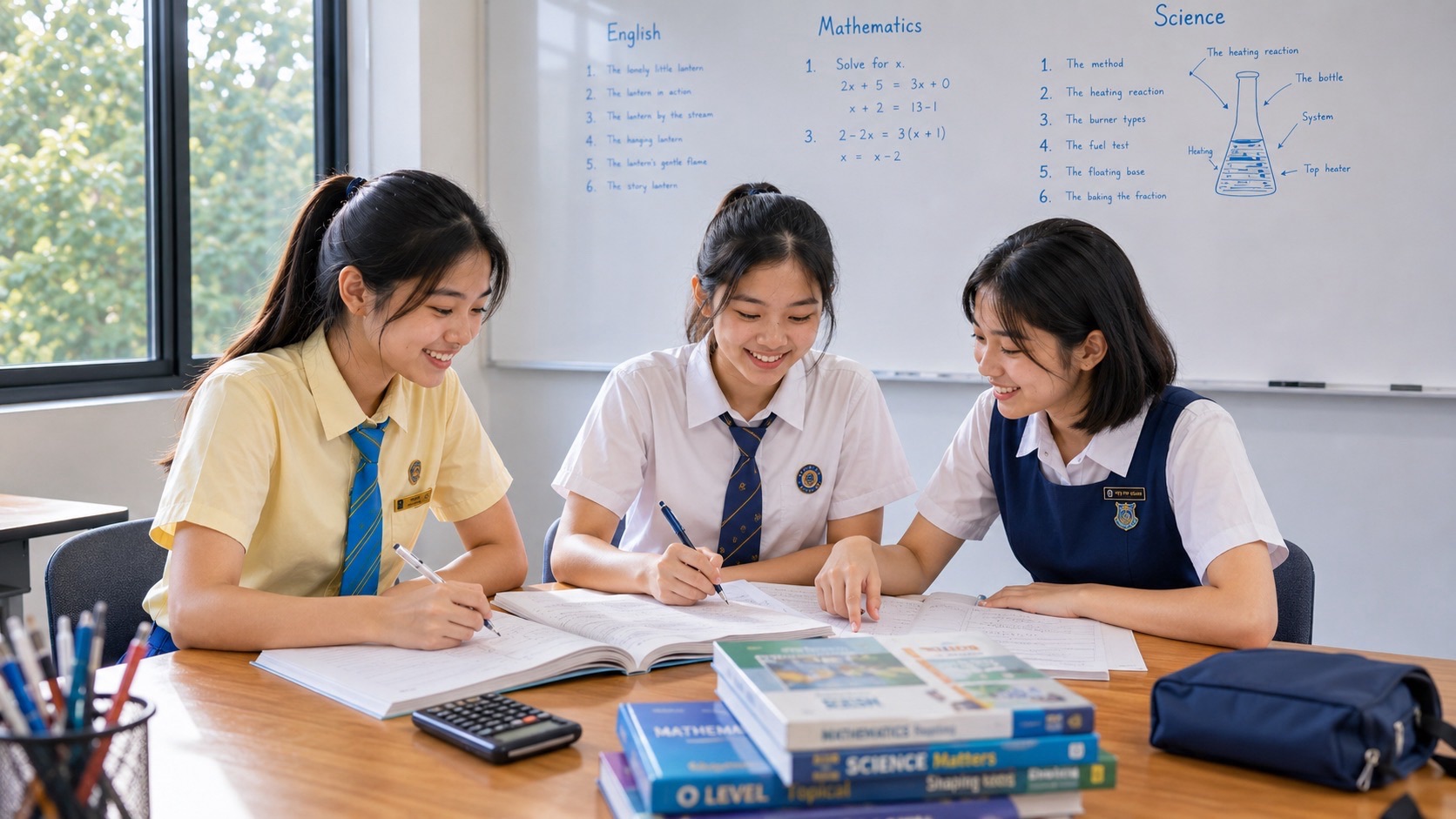
High schools and junior colleges should rethink creativity without confusing a generated artifact with the creative development of the student. Artificial intelligence can rapidly produce variations in writing, visual design, music and other media. The educational opportunity is to help learners develop their own intentions, understand the craft, evaluate alternatives and create work that serves a meaningful purpose.
The objective is not to forbid experimentation with AI or to require every creative project to use it. Students need opportunities to develop independent expression and technical understanding, alongside supervised use of tools where permitted. Teachers can assess the student’s choices, reasoning, revision and communication rather than simply reward the most polished output. Creative agency, authorship, consent and the applicable assessment rules must remain clear.
- Protect independent creative practice and domain-specific craft.
- Begin with a purpose, intended audience and original student choices.
- Use approved AI tools to explore variations and critique, not substitute for learning.
- Teach attribution, permissions, disclosure and responsible representation.
- Evaluate revision, rationale and transfer rather than appearance alone.
Part 19 of 48 · Complete series index · Previous article · Next article.
In this guide
- What is creativity education for if AI can generate an artifact?
- Why does independent craft remain important?
- Worked example: designing a poster for a fictional school exhibition
- How does language engineering support creative choices?
- How can AI expand creativity without making every result similar?
- How should teachers handle authorship and permissions?
- What should students ask when they want creative assistance?
- How can creative growth be assessed fairly?
- How can creativity become useful intelligence projection?
- What should a teacher try first?
What is creativity education for if AI can generate an artifact?
Creative education helps learners notice possibilities, communicate experiences, solve design problems and develop an individual or collaborative voice. Making an artifact is one part of that process. A student also needs to understand why an idea is suitable, what tradeoffs it contains and how it might affect its audience.
An AI-generated design may be compelling without the student understanding composition, contrast or audience needs. A generated story may sound polished without the learner being able to explain its narrative choices. Teachers should preserve the thinking and practice required by the learning objective, while making room for responsible exploration.
Why does independent craft remain important?
A student who has practised drawing, writing, composition or another creative technique can better recognise when an output is inappropriate and communicate what needs to change. Craft gives the learner a vocabulary of possibilities and constraints. It also provides alternative ways to create when a tool is unavailable or unsuitable.
Teachers may distinguish exercises intended to develop a particular technique from broader projects that allow tool-assisted experimentation. The boundaries depend on the subject and qualification. A student should know which work must be independently produced and what kind of assistance may be disclosed and accepted.
Worked example: designing a poster for a fictional school exhibition
A class is asked to create a poster that communicates the date, fictional venue and purpose of a science exhibition. Before using a tool, students sketch a hierarchy: the event title must be recognisable, essential information must be easy to locate and decorative elements must not compete with the message. The teacher supplies fictional event details and accessibility constraints.
With permitted assistance, students may explore alternative layouts or visual concepts. They evaluate each against the brief. A visually impressive image may fail if the date is wrong, text is hard to read or the design implies that an activity is available when it is not. The students independently verify the text and use a suitable contrast and legibility check rather than trusting a generated assertion of accessibility.
Each learner revises a chosen design and explains the reasons for changes. A fresh independent task asks them to organise the same information for a smaller printed notice or a different audience. This tests whether the learner understands visual hierarchy rather than merely selecting an attractive generated result.
How does language engineering support creative choices?
EduKate’s proposed Vocabulary Coding and Engineering framework focuses on preserving meaning as an intention becomes an instruction, an artifact and a communication. Creative terms such as ‘simple’, ‘dramatic’, ‘accessible’ or ‘professional’ can carry different meanings for different people.
Ask students to convert vague preferences into inspectable design goals. ‘Make this poster clearer’ may mean reducing unnecessary text, increasing contrast, moving the date or distinguishing the title from secondary details. Identify the intended change and the elements that must remain stable. Review the actual result against the brief; specificity helps communication but does not guarantee a correct output.
How can AI expand creativity without making every result similar?
Before seeking generated alternatives, have students produce at least one idea independently and describe its purpose. Then compare several distinct approaches, including an option that does not use AI. Encourage learners to identify which features serve the goal and which merely reflect common patterns or visual conventions.
Students should not feel obliged to accept the most conventional or polished suggestion. A creative choice can challenge expectations while remaining appropriate to its intended audience. Ask for reasons, not conformity. Avoid treating a model’s preference as an objective judgement of artistic quality.
How should teachers handle authorship and permissions?
Explain the school’s requirements for disclosure, attribution and permitted assistance before a task begins. If students use generated or third-party content, check the relevant terms, rights and qualification rules. Copyright and authorship rules vary across jurisdictions and depend on the circumstances; do not assume that every generated output is automatically free to use or legally owned by the student.
Avoid using identifiable people, private images or personal stories in unapproved systems without appropriate permission. Do not present a generated representation of a real person’s work or words as authentic evidence. Creative exploration should respect the rights and dignity of people who might be represented or affected.
What should students ask when they want creative assistance?
Try: ‘Here is my own fictional exhibition poster brief and my initial layout. Suggest two alternative approaches to information hierarchy while preserving the confirmed event details. Explain the tradeoffs in readability and audience understanding. Do not invent event details, copy a particular artist’s work or write my final reflection. Ask me to decide which choices serve my goal.’
The student checks the suggestions, revises the artifact and records substantial assistance as required. For a writing or music project, the same approach can be adapted to the relevant craft and rules. The learner remains responsible for understanding and explaining the choices.
How can creative growth be assessed fairly?
Assess the intended learning: technical craft, clarity of purpose, original reasoning, responsiveness to critique, responsible use of resources and communication of choices. Separate the student’s independent work from any permitted assistance. A process record may include sketches, revisions, source notes and an explanation of decisions.
A fresh task or short discussion can reveal whether the student understands principles demonstrated in the artifact. Provide accessible alternatives and avoid rewarding paid tool access. Teachers should not infer misconduct from appearance alone; follow fair procedures and the actual assessment rules.
How can creativity become useful intelligence projection?
In Who Decides Where Expanded Intelligence Goes?, the practical starting point is to identify the receiver and intended improvement. A creative artifact may convey a useful idea, help an audience understand information or enable someone to participate. It is not successful solely because it was generated quickly.
At individual level, the student learns to express intention and evaluate outcomes. At team and school level, clear briefs and reviewed materials can support cooperation. At society level, responsible creative amplification could expand access to knowledge and expression, while careless generation could increase misinformation, infringement or cultural homogenisation. The proposed EnDist framework is a qualitative lens for inspecting useful results after coordination losses, not a physical measure or guaranteed social multiplier.
What should a teacher try first?
Choose a small creative task with a specific purpose and audience. Require an independent sketch, draft or musical exercise appropriate to the learning goal. Permit one bounded AI-supported exploration where appropriate, then assess the student’s reasoning, corrections and fresh application. Offer a non-AI route and check any external publication separately.
The UNESCO student competency framework and OECD/European Commission AI literacy framework both include responsible, creative engagement with AI. This classroom design is a proposal for local testing. See the student-led capstone guide for moving from an artifact to a verified contribution.
Continue the high school and junior college AI education series
View the complete 48-article series index.
Parts 17–24: Access, creativity and subject mastery
- Part 17 — Equitable access and the capability gap
- Part 18 — Career guidance under AI uncertainty
- Part 19 — Creative education and authorship (this article)
- Part 20 — Judgement and foresight
- Part 21 — Mathematical modelling and AI verification
- Part 22 — Language mastery and semantic precision
- Part 23 — Feedback loops and student self-regulation
- Part 24 — School-to-school knowledge transfer