
Small Group Tutorials
Here to help students catch up, keep up, and move ahead. Book a consultation here.
Project Type: War
-
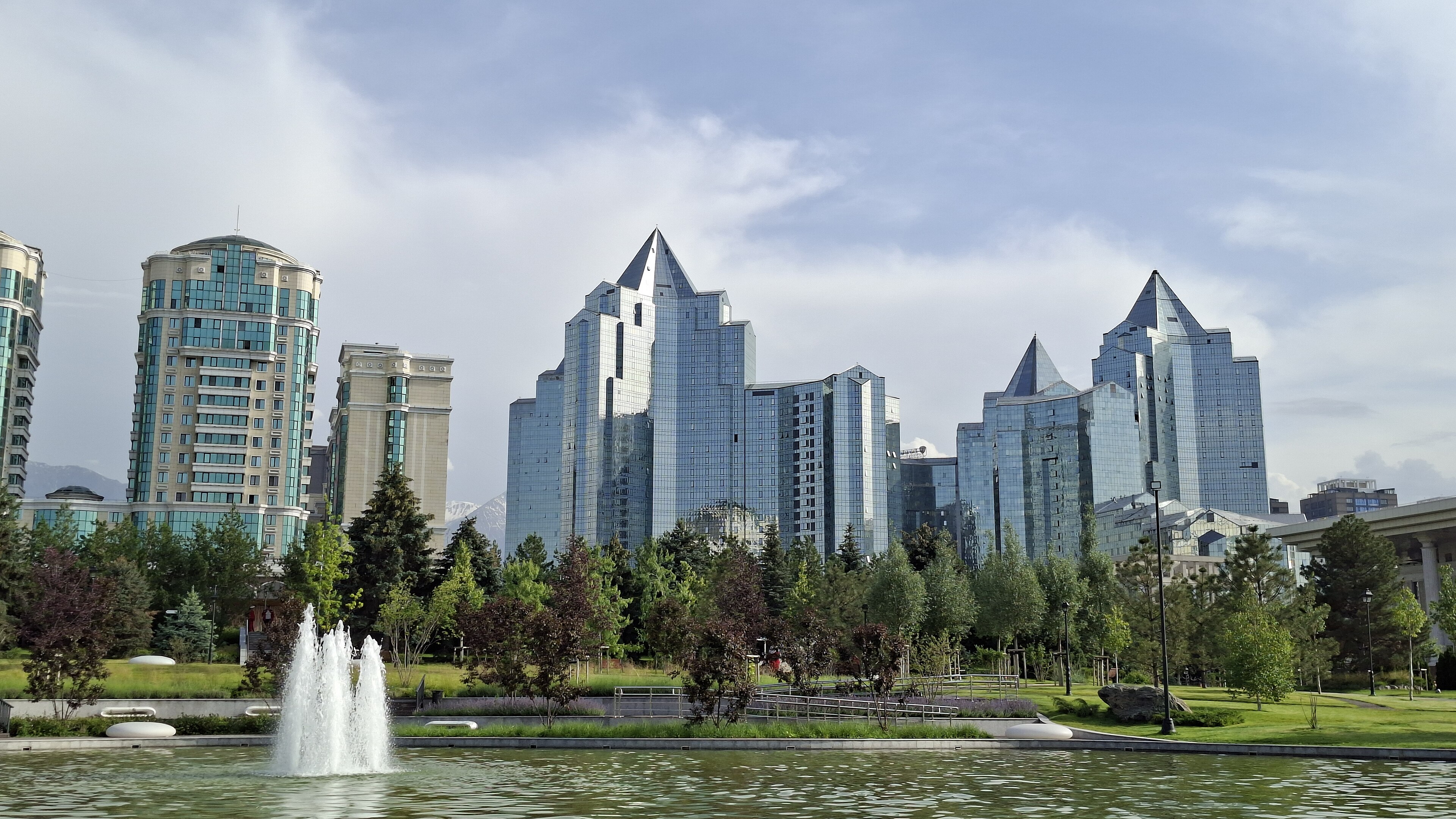
WarOS | Almaty, Kazakhstan Under Pressure | Adversarial and War Warnings
The article discusses the complexities and risks associated with applying various forms of coercion against Kazakhstan, focusing on Almaty as a crucial urban center. It emphasizes that while an actor may initiate pressure, it cannot control resultant reactions, which could lead to unintended consequences and heightened tensions. The piece explores potential failure points, the interconnectedness…
-

How Singapore Works | National Service
Singapore’s National Service (NS) transforms its limited population into a unique defense mechanism, making ordinary citizens part of the national shield. Established in 1967, NS fosters a citizen-soldier model, instilling discipline, leadership, and social cohesion while deterring potential threats. It underscores Singapore’s emphasis on preparedness, unity, and shared responsibility for national security.
-

How Defence Works | The Machine
The article explores the concept of defense, emphasizing that preparation occurs before a crisis, termed “Z-Time.” It discusses how effective defense systems are unseen but crucial, highlighting the importance of readiness, training, and proper positioning. Defense is framed as a necessary systemic buffer against potential catastrophes, promoting resilience in society.
-

WarOS × OS Crosswalk | How War Becomes Readable Across AllOS Stack
The content explores the interconnectedness of war and civilization, emphasizing that war acts as a significant pressure on societal structures, rather than merely a military event. It introduces two frameworks, WarOS and CivOS, to examine the dynamics of war, highlighting that understanding warfare requires insight into its impacts on civilization’s continuity, memory, and future potential.
-

WarOS Core Mechanics 1 | The War Shell System
The War Shell System provides a framework for understanding the complexities of war, emphasizing that conflict unfolds in layers of pressure, each signifying a different stage. Beginning with latent pressure and culminating in post-war residue, it illustrates how early recognition of these stages can prevent escalation and facilitate peaceful resolutions.
-

What Is WarOS?
The WarOS is an educational framework that analyzes war as a complex system affecting civilization beyond military actions. It emphasizes understanding the pressures leading to war, the influence of signals, and the roles of civilians. It seeks to connect various perspectives to create a comprehensive view, enabling better understanding and repair after conflict.
-

How Wars Work | Yom Kippur War Case Study
The Yom Kippur War exemplifies how a surprise attack can reverse battlefield dynamics and create broader strategic changes. Initial Arab momentum challenged Israel’s assumptions, but recovery followed through mobilization and counterattacks. Ultimately, the war reshaped diplomatic alignments and global energy dynamics, reflecting layered outcomes beyond simple military victories or defeats.
-

How Wars Work | Korean War Case Study
The Korean War showcased multiple reversals and strategic shifts, beginning with North Korea’s invasion, followed by UN advancements and Chinese intervention. Rather than ending with clear victory, the conflict escalated into a frozen state post-armistice, reflecting lasting political divisions and unresolved tensions on the peninsula.
-

THE PURPLE REPORT — IRAN WAR UPDATE | Date: 10 June 2026 | Timezone: Asia/Singapore
As of June 10, 2026, the Iran War has transitioned into a precarious strategic freeze rather than a clear resolution. Despite some recovery in oil flow, key issues such as Hormuz control, U.S.–Iran tensions, and nuclear verification remain unresolved, indicating the situation is unstable but not actively escalating.
-

How Wars Work | The Turning Point
A war’s turning point occurs when its internal dynamics shift, signaling a strategic reversal rather than a simple military defeat. This change involves the interplay of logistics, public perception, command, and technology. Recognizing these subtle shifts is crucial, as they often precede visible outcomes on the battlefield, indicating impending challenges.
-

How War Grows | From Pressure to Dispute
The content explores the complex dynamics of war escalation, emphasizing that conflicts often begin with latent pressures rather than overt violence. It details how disputes can evolve into militarized crises and armed conflicts, with numerous factors influencing escalation, including political, economic, and social pressures. War does not end merely through ceasefires; unresolved issues can lead…
-

How War Works | The Defence Machine
The article discusses the complex machinery behind warfare, highlighting that war starts with political purpose and requires an organized defense system to translate that into military capability. It addresses how war affects various levels of society, legality, and global systems, ultimately emphasizing the need for clear policy, strategy, and governance to sustain legitimacy and prevent…
War by eduKateSG is a Civilisation, Society and Strategy branch that studies war not only as armed conflict, but as a pressure system that affects people, governments, culture, infrastructure, truth, trust, time, resources and the future direction of civilisation.
This project explains war as more than battles, weapons or military victory. It studies how war begins, how it spreads, how it is seen by different actors, how societies are damaged by it, and how civilisation can understand war without simplifying it into one side, one picture or one headline.
Across the War articles, eduKateSG explores war through the WarOS and CivilisationOS lens. War is treated as a layered shell system made of fear, grievance, resources, territory, politics, command, logistics, information, public belief, culture, escalation, retreat and repair. A war does not operate only at the battlefield. It also moves through homes, schools, economies, media, borders, supply chains, national memory, alliances and future planning.
This makes war one of the most serious civilisation-level events because it can damage the floor that society depends on while also changing the route of the future.
This project includes the idea of Strategic Relativity of War, where war is not received as one complete picture. A soldier, civilian, commander, government, ally, enemy, journalist, historian, market and outside observer may all see different versions of the same conflict.
Each version may be partly true, but incomplete. War is therefore fought through lenses before it is fought through force. The decisive advantage may belong not only to the side with more power, but to the side that receives the right signal, understands the right layer, identifies the load-bearing node, and acts before the corridor closes.
The War branch also studies fog of war, propaganda, observer position, signal delay, emotional pressure, strategic framing, civilian impact, moral boundaries, false victory, escalation traps, projection-war and conflict-war. It asks important questions: Who is seeing which version of the war? What does the public see? What does command see? What is hidden? Which part of the system is truly load-bearing? What breaks first? What must be protected? When does force create repair, and when does it create deeper collapse?
As part of eduKateSG’s wider CultureOS, SocietyOS, CivilisationOS, PlanetOS and The Purple Report framework, the War project helps students, parents, educators, readers and leaders understand war as a civilisation event, not only a military event.
It connects strategy with culture, society, education, media literacy, infrastructure, morality and future survival. The purpose is not to glorify war, but to make war more understandable, less romanticised, and more accurately read as a system of damage, pressure, decision, consequence and repair.