
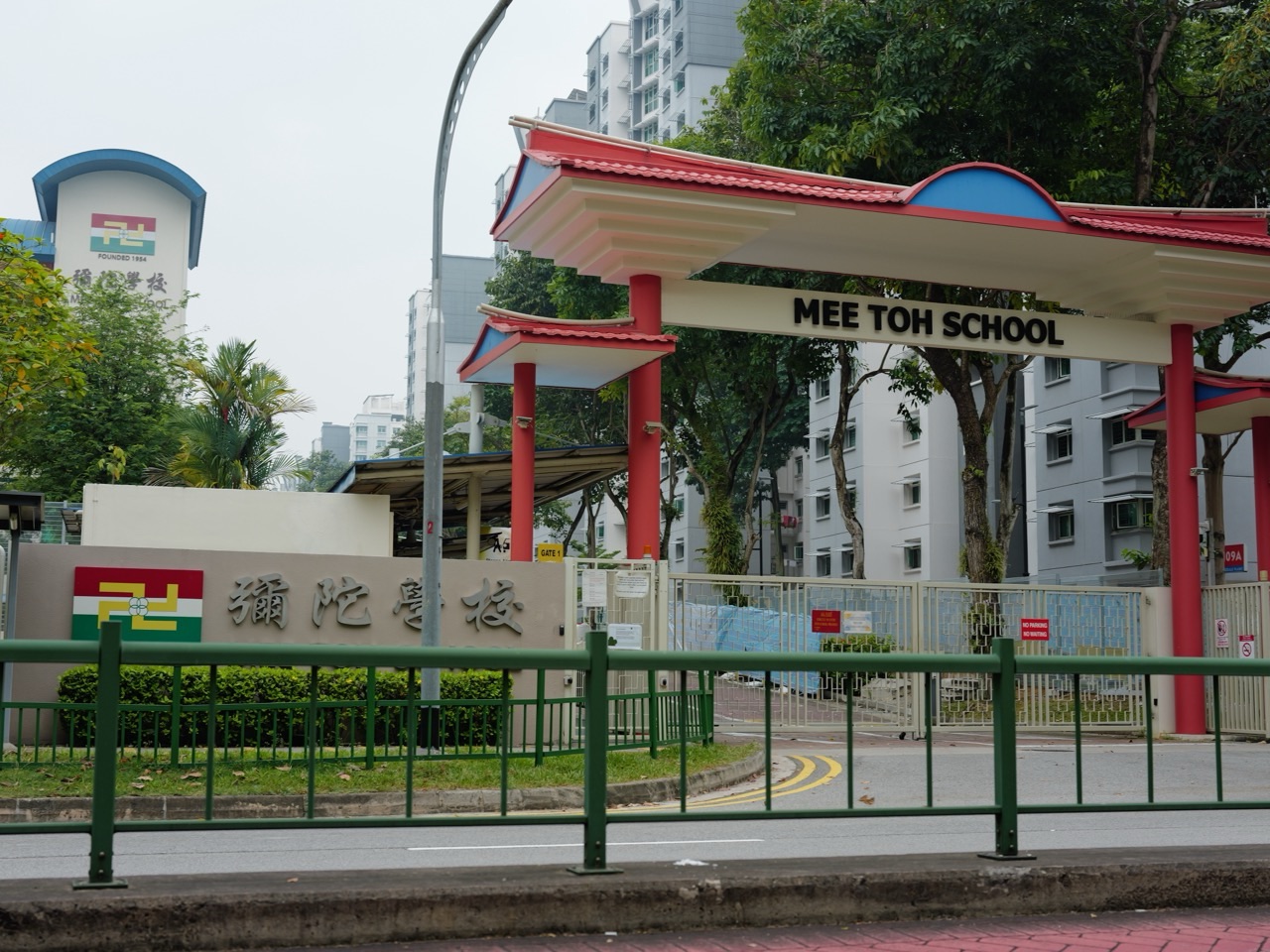
Checked: 31 August 2026. Current Primary English, Mathematics and Science references have been checked against MOE/SEAB. eduKateSG is not affiliated with Mee Toh School.
PSLE preparation becomes inefficient when every subject reacts to pressure by assigning more work. English wants another paper, Mathematics wants more problem solving, Science wants more open-ended practice—and the child still has school, sleep and ordinary life. For Mee Toh Primary families and other Punggol families, this page explains how to allocate finite revision time across English, Mathematics and Science without pretending the three subjects need equal treatment every week.
Quick read
- Allocate time by current weakness, exam proximity and dependency cost—not equal percentages by habit.
- Protect stable subjects with retrieval while concentrating repair on the highest-value gap.
- Separate learning from full-paper execution.
- Use school papers and tuition diagnostics to update the weekly allocation.
- Coordinate homework so the total week remains sustainable.
- The closer the PSLE gets, the more selective and execution-focused the plan should become.
Why equal time is often wrong
A child may be stable in English, shaky in Mathematics fractions and struggling to explain Science evidence. Giving each subject the same two hours feels fair but may not be efficient. Revision time should follow the learner’s current state.
A strong subject still needs retrieval so it does not decay. It simply does not need the same intensity as the urgent bottleneck.
Start with a three-subject diagnostic
Use recent school papers, school feedback and a small number of current tasks. For each subject, classify the problem:
- foundation: core knowledge or skill is missing;
- retrieval: it was learned but is not reliably available;
- transfer: familiar questions work but unfamiliar ones fail;
- execution: knowledge is present but time, attention or checking breaks under paper conditions.
This classification tells you what kind of revision time is needed.
English: protect the integrated language system
PSLE English assesses writing, language use and comprehension, listening and oral communication. The 2026 English syllabus states that students are assessed on purpose, audience and context in writing; literal, inferential and evaluative understanding in reading; listening comprehension; and fluent, appropriate oral communication.
English revision should therefore not become only composition writing or comprehension papers. The child may need targeted grammar, vocabulary, evidence selection, oral rehearsal or timed writing depending on the error profile.
Mathematics: repair high-traffic dependencies
Mathematics can improve quickly when the true dependency is found. Fractions, ratio, percentage, units and representation can affect many later questions. If one of these is unstable, another full paper may merely reproduce the same losses.
Use targeted repair first, then mixed questions, then full-paper execution when the dependency holds.
Science: separate knowledge from explanation
A Science student may know the topic and still lose marks because the causal chain, evidence or experimental reasoning is incomplete. Revision time should distinguish content recall from open-ended explanation and inquiry skills.
A smaller number of well-analysed questions can outperform a large volume of model-answer copying.
The Catch Up, Keep Up, Move Ahead allocation
Across the three subjects, label the current mode:
- Catch Up: intensive repair of a blocking dependency;
- Keep Up: regular retrieval, current school work and representative practice;
- Move Ahead: transfer, unfamiliar questions, stronger reasoning and efficient execution.
A PSLE learner might be Catch Up in Science explanations, Keep Up in English and Move Ahead in Mathematics. The weekly timetable should reflect that reality.
A sample finite-time model
Suppose the child has six tuition/self-study hours available outside school that week. Rather than allocating two hours to each subject automatically, a temporary split might be three hours to the urgent Science repair, two hours to Mathematics mixed retrieval and one hour to English maintenance.
Next week the allocation may change if the Science repair transfers and a Mathematics school paper exposes a new issue.
Do not confuse “more papers” with “more prepared”
Full papers are useful for integration, timing and examination stamina. They are expensive diagnostic instruments. If a paper reveals a recurring error, the next step should often be targeted repair rather than immediately doing another full paper.
A paper should change the plan.
When to increase timed work
As foundational gaps shrink, timed sections and full papers become more valuable. Students need a policy for when to move on, how to check, how to manage writing time and how to recover after a difficult question.
Timing should compress an already functioning process, not conceal a weak one.
Three-student groups and PSLE allocation
In a three-student class, not every child needs the same PSLE task. One may work on English evidence selection, another on Mathematics ratio and another on Science experimental reasoning depending on the subject session and learner plan.
The small-group architecture allows targeted feedback while preserving peer explanation inside each subject.
March, June and the final stretch
The old 2017 page spoke about accelerating students who joined after March. A modern plan should be more careful. Joining later does not justify indiscriminate acceleration. The closer the exam, the more important triage becomes: identify what can still be repaired at high return, what should be maintained, and what low-value work should be dropped.
Near the final stretch, stability and execution often matter more than introducing new complexity.
Protect sleep and cognitive capacity
A revision plan that removes sleep can reduce the very attention and retrieval the child needs. Finite time means making trade-offs, not extending the day indefinitely.
Parents should watch the whole system: school, CCA, travel, homework, meals and recovery.
What parents should review weekly
- Which subject has the highest-cost current weakness?
- Which subject is stable enough for maintenance?
- What repeated error appeared this week?
- Did last week’s repair transfer to school work?
- Is homework volume sustainable?
- Does the child know what each practice task is for?
Current official sources
Primary English is governed by MOE’s English Language Syllabus 2020 Primary, and the 2026 PSLE English syllabus sets the current assessment objectives. Primary Mathematics uses the 2021 syllabus, and Primary Science uses the 2023 syllabus.
What we removed from the old 2017 page
The historical page promised to “do everything to get those grades”, promoted tricks and 24/7 assistance, and included unrelated travel photographs. The useful seed was the problem of students joining later in the PSLE year. This rebuild turns that into finite-time triage rather than panic acceleration.
Boundary and school affiliation
This guide is written for Mee Toh School families and nearby Punggol families. eduKateSG is not affiliated with, endorsed by or part of Mee Toh School. Current class locations and availability are on the contact page.
Frequently asked questions
Should all three PSLE subjects get equal tuition time?
No. Allocate by evidence. Protect stable subjects with retrieval while concentrating time on the highest-value weakness.
When should full papers dominate revision?
Later, when coverage is sufficient and the main job is integration, timing and execution. Earlier, targeted repair may have higher return.
What if my child joins tuition late?
Use triage. Diagnose the highest-cost gaps and prioritise what can still produce meaningful transfer. Do not simply compress an entire year into more homework.
How do we avoid losing a strong subject?
Maintain it with delayed retrieval and representative questions while another subject receives concentrated repair.
What is the end goal?
A learner who enters the PSLE able to allocate attention, retrieve core learning, execute under time and recover independently when a question is difficult.
The larger point
PSLE preparation is an allocation problem as much as a content problem. The child’s time is finite. Good tuition uses that constraint intelligently—repair what matters, maintain what works, practise execution at the right time and stop adding work that no longer earns its cost.
How to Divide a Limited PSLE Week Across English, Mathematics and Science
PSLE revision becomes clearer when families stop trying to make every subject equally busy. A child has limited time and attention. The useful question is which subject needs repair, which needs maintenance and which is ready for more examination-style practice this week.
1. Begin from current evidence, not last term’s reputation
A subject that used to be weak may now be stable. A previously strong subject may show a new problem in a recent school paper. Use current work to decide the week’s priorities rather than keeping an old label such as “Math is the weak subject”.
2. Separate foundation repair from paper practice
If a Mathematics dependency is missing, if Science knowledge is incomplete or if English grammar is repeatedly failing, targeted repair may have higher value than another full paper. Full papers are most useful when they can reveal integration and timing rather than simply reproduce known gaps.
3. Protect strong subjects with short retrieval
A strong subject should not disappear from the timetable. Use brief mixed questions, vocabulary retrieval, a short writing task or a few Science explanations to keep important skills available while another subject receives more intensive work.
4. Give the urgent weakness enough concentrated time to change
Spreading attention thinly can leave the main problem untouched. If Science open-ended explanation is currently the largest weakness, several focused sessions on evidence and causal reasoning may be more useful than equal subject hours for appearance.
5. Reallocate after the repair transfers
The timetable should not remain fixed once the problem improves. When the child can use the repaired skill in new questions and later school work, reduce that subject’s intensity and move time to the next high-value need.
6. Use small-group tuition to keep individual priorities visible
Three students preparing for PSLE may need different weekly priorities. Within each subject class, the tutor should know which learner is repairing a foundation, which is maintaining current performance and which is working on unfamiliar transfer or timing.
7. Increase full-paper work when the remaining problems are about execution
As coverage and foundations stabilise, timed sections and full papers become more useful. Students need to practise switching, allocating time, recovering after a difficult question and checking strategically. That is a different job from learning the underlying content.
8. Protect sleep and recovery as part of the revision plan
An extra hour is not useful if it removes enough sleep to damage attention and retrieval the next day. The revision plan should fit around school, travel, meals and recovery rather than assume the day can expand indefinitely.
A weekly allocation review
- Which subject currently has the highest-cost weakness?
- Which subject is stable enough for maintenance?
- What type of work does each subject need: repair, retrieval, transfer or execution?
- Did last week’s repair survive a changed task?
- Are full papers producing useful follow-up work?
- Is the total workload sustainable?
- Should next week’s allocation change?
Good PSLE planning is flexible because the learner is changing. The objective is not equal subject time. It is to spend the child’s limited attention where it has the highest educational return, while keeping the whole system stable enough to perform on examination day.