
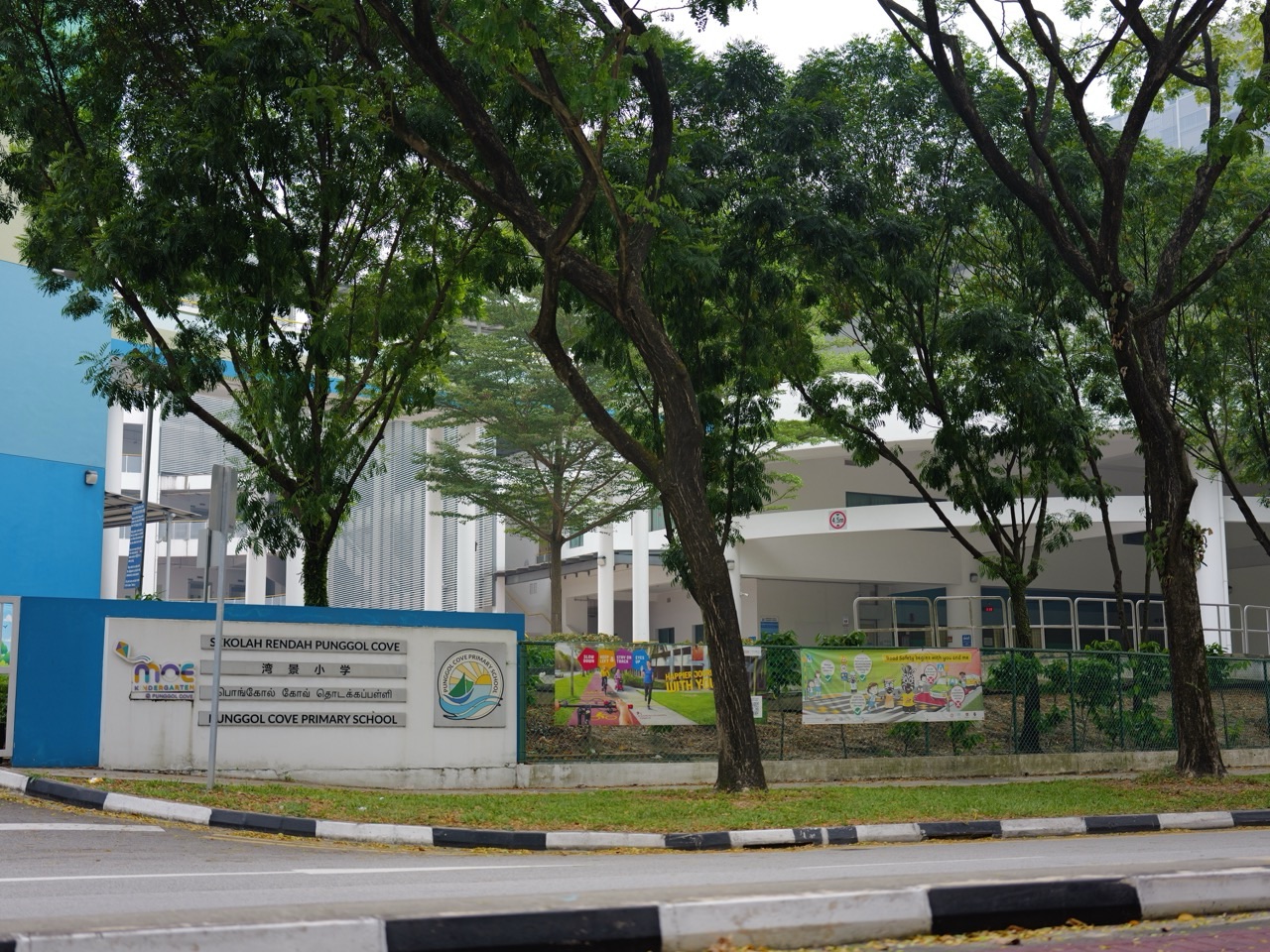
Checked: 31 August 2026. This guide follows the current 2026 PSLE English, Mathematics and Science framework. eduKateSG is not affiliated with Punggol Cove Primary School.
Topic practice and mixed papers solve different learning problems. Topic sets are useful when a child is acquiring or repairing a method because the practice keeps attention on one relationship. Mixed papers are useful when the learner must decide what kind of problem is in front of them and retrieve the right response without a chapter label. For Punggol Cove Primary families, this page explains when to use each mode across PSLE English, Mathematics and Science.
Quick read
- Use topic sets to acquire, isolate and repair a specific skill.
- Use mixed sets to test method selection and transfer.
- Use full papers to test integration, pacing and exam execution.
- Do not remain in topic mode so long that the chapter title becomes a hidden cue.
- Do not jump into full papers before major dependencies are stable enough to make the paper informative.
- Three-student tutorials can move different learners between practice modes based on evidence.
Why topic practice works
During acquisition, reducing uncertainty helps the learner focus on the new structure. A set of ratio problems lets a child see repeated multiplicative relationships. A set of inference questions lets an English learner compare evidence patterns. A set of Science fair-test questions makes variables and control logic explicit.
Repeated focused attempts build fluency and reveal the fine distinctions inside one skill.
Why topic practice eventually becomes misleading
If the worksheet says “Ratio”, the learner has already been given an important part of the solution: which method family to search. Examinations remove that cue. A student can therefore look excellent in chapter practice and struggle in a mixed paper.
The missing capability is method or concept selection.
Why mixed practice works
Mixed practice asks the learner to discriminate. Is this a ratio problem or percentage problem? Is this English question asking for literal information, inference or evaluation? Is this Science scenario testing a known concept or the validity of the experimental method?
That selection process is part of exam readiness.
Mathematics: topic → mixed → paper
The 2026 PSLE Mathematics assessment includes recall/procedures, application in different contexts, and reasoning/strategy selection. A sensible progression is:
- learn or repair the concept;
- complete focused examples;
- delay and retrieve;
- mix with nearby concepts;
- mix broadly across the syllabus;
- use timed sections;
- use full papers for integration.
If the learner fails at step four, another full paper is unlikely to be the cleanest repair.
English: mix question demands, not only passages
In English, topic practice can isolate grammar, vocabulary, inference, synthesis or writing structure. Mixed practice then combines those demands so the learner must interpret the task rather than apply one repeated routine.
Writing also needs mixing. A student should not depend on one familiar narrative shape or one argument template. Change purpose, audience and context.
Science: mix concepts and inquiry
Science topic sets help establish concepts, but the 2026 assessment also includes scientific inquiry. Mixed practice should combine content with interpreting diagrams, evaluating methods, explaining mechanisms and analysing data.
A question about plants may actually be testing experiment design. The learner must identify the deeper job.
The near-neighbour principle
Before mixing the whole syllabus, mix concepts that are easy to confuse. In Mathematics, compare percentage change with ratio or average with rate. In English, compare literal versus inferential questions. In Science, compare observation, inference and conclusion.
Near-neighbour contrast teaches discrimination without overwhelming the learner.
Three students can occupy different practice modes
One student may still need focused Catch Up work while another is ready for mixed transfer and a third is ready for full timed execution. A 3-pax class allows those modes to coexist.
The class can reconverge around error analysis: what clue identified the method, what tempting alternative was rejected, and why?
Catch Up, Keep Up, Move Ahead
Catch Up uses more focused practice to repair dependencies. Keep Up combines current school topics with regular mixed retrieval. Move Ahead increases ambiguity, transfer and execution.
The goal is not to remain in the hardest mode permanently. Difficulty should serve a learning purpose.
When full papers become the right tool
Full papers are strongest when the student needs to integrate many capabilities over time: pacing, section switching, stamina, checking and recovery. They also provide a realistic distribution of uncertainty.
After a paper, the child should return to targeted practice for the high-value errors rather than simply beginning the next paper.
The practice loop
A robust PSLE cycle is:
Focused repair → delayed retrieval → near-neighbour mix → broad mix → timed section → full paper → error classification → focused repair.
The loop moves in both directions. Full-paper evidence can send the learner back to a very specific topic repair.
How parents can recognise worksheet overfitting
- The child performs strongly only when the chapter is named.
- The learner asks “What topic is this?” before attempting.
- Similar-looking problems with different structures are confused.
- Old skills disappear when current chapters change.
- Full-paper scores remain inconsistent despite excellent assessment-book pages.
How to avoid paper addiction
Completing papers feels productive because there is a score at the end. But if the same errors recur, the paper is measuring the problem more often than fixing it. Use the score to decide what repair comes next.
Paper volume is not a substitute for a learning loop.
A 90-minute mixed-practice lesson
The lesson can retrieve two older concepts, repair one current weakness and then present a mixed set where topic labels are removed. The tutor watches selection before calculation or writing. A short timed segment closes the lesson when the learner is ready.
Three students can compare the clue that made each choose a particular method.
Current official sources
SEAB’s 2026 PSLE formats list English Language 0001, revised Mathematics 0008 and revised Science 0009. The Mathematics and Science assessment objectives explicitly include application and reasoning/inquiry, which is why transfer beyond chapter labels matters.
What we removed from the old 2017 page
The old Punggol Cove page was a generic PSLE service listing. The useful word in the original was “practice”, but it did not distinguish types of practice. This rebuild gives the URL ownership of practice architecture.
Boundary and school affiliation
This article is for Punggol Cove Primary School families and nearby Punggol families. eduKateSG is not affiliated with, endorsed by or part of Punggol Cove Primary School. Current class locations and availability are on the contact page.
Frequently asked questions
When should my child stop topic worksheets?
Do not stop entirely. Reduce focused volume once the skill is stable and increase mixed retrieval so method selection is tested.
Should P6 students do full papers from January?
Selected papers or sections can be useful, but the balance should follow syllabus coverage and learner state. Full papers are most informative when enough content is available.
Are hard mixed questions always better?
No. Representative uncertainty is useful; difficulty for its own sake can waste time.
How do I know a repair transferred?
The learner can recognise and use the skill after a delay when the topic is not labelled and the surface context has changed.
What is the final goal?
A learner who can open a PSLE paper, decide what each task requires and select a valid response without needing the worksheet title to tell them what to do.
The larger point
Practice is not one thing. Focus builds the tool; mixing teaches when to use it; papers test whether the whole system works under examination conditions. Strong PSLE preparation needs all three at the right time.
When Should a PSLE Student Move from Topic Practice to Mixed Papers?
The right time to change practice mode is not determined only by the calendar. It depends on what the learner can already do. Topic practice is useful while a skill is being learned or repaired. Mixed work becomes useful when the student needs to choose among several possible methods. Full papers become useful when integration, pacing and recovery are the main questions left.
1. Stay in topic mode while the core relationship is still unstable
If the child cannot explain the Mathematics relationship, distinguish the English question type or reconstruct the Science mechanism, mixed practice may add too much uncertainty too early. Focused examples keep attention on the missing distinction.
2. Add near-neighbour mixing before broad mixing
Mix concepts that are easy to confuse. Mathematics can contrast ratio and percentage. English can contrast literal and inferential questions. Science can contrast observation and inference. This teaches discrimination without immediately loading the whole syllabus.
3. Move to broad mixed sets when the student can choose without chapter labels
A learner ready for broader mixing can inspect an unfamiliar task, identify the underlying structure and select a sensible response with limited prompting. The absence of a worksheet title no longer causes complete uncertainty.
4. Use errors to decide whether to move forward or back
If mixed work reveals that the learner knows the methods but chooses them poorly, remain in mixed mode and practise discrimination. If it reveals that a foundation has disappeared, return briefly to focused repair. Practice mode should move in both directions.
5. Introduce timed sections before relying on full papers
Short timed sections test pacing without consuming the time of a full examination. They are especially useful when the learner needs to practise starting, switching, checking or recovering after one difficult item.
6. Let three students occupy different practice modes
One learner may still need focused repair while another is ready for broad mixed practice and a third needs timed execution. A three-student class can share a central concept or review discussion while the actual practice differs.
7. Use full papers when the whole-paper behaviour is worth observing
Full papers are valuable when the student needs evidence about stamina, time allocation, switching between sections, checking and recovery. The paper should reveal something that shorter tasks cannot.
8. Return to targeted repair after every important paper finding
A full paper should not automatically be followed by another full paper. If the same error repeats, isolate it, repair it and then bring it back into mixed or timed work. The paper is most useful when it changes the next practice mode.
Practice-mode readiness signs
- Focused practice: the learner is still acquiring or repairing the core skill.
- Near-neighbour mix: the learner knows the skill but confuses it with close alternatives.
- Broad mix: the learner can retrieve several methods and needs practice selecting among them.
- Timed section: quality is reasonable and pacing now deserves attention.
- Full paper: integration, stamina, switching and checking need realistic testing.
Strong PSLE practice does not move in a straight line from easy worksheets to endless papers. It changes mode according to the learner’s evidence, using focus to build tools, mixing to teach selection and papers to test whether the whole system holds together.