
Checked: 31 August 2026. This Primary Creative Writing guide is aligned to MOE’s English Language Syllabus 2020. eduKateSG is not affiliated with Fernvale Primary School.
Children are often told to “write from experience”, and the advice is useful. Real experiences give writers accurate places, routines, sounds, mistakes, conversations and emotions. But a composition is not automatically stronger because it happened in real life. Real events often contain too much irrelevant detail and weak narrative shape. For Fernvale Primary families, this preserved 2017 URL now owns a distinct Creative Writing craft: how to use lived experience as raw material while transforming it into fiction rather than writing a diary entry.
Quick read
- Experience provides fidelity; fiction provides selection and structure.
- Extract useful details, relationships and moments rather than retelling the whole day.
- Change people, place, sequence or consequence when the story needs it.
- Protect privacy by avoiding unnecessary real names and personal details.
- Build one central conflict and causal spine from the experience.
- Three-student tutorials let learners compare how the same kind of experience can become very different stories.
Why real events are useful
A child who has visited a market, travelled on public transport, attended a school event, lost an item, argued with a friend or helped someone already knows something about the environment and emotions involved.
That knowledge can make fiction more convincing because the writer is not inventing every detail from zero.
Why real events are often poor stories without editing
Real life contains long periods where nothing changes. People wait, travel, eat and repeat routines. A diary may record those events because they happened. A story selects only what matters to the narrative.
Writing therefore requires distortion in the service of coherence.
Extract the story seed
Ask the learner:
- What moment do you remember most clearly?
- What changed?
- What did someone want?
- What made that difficult?
- What decision was made?
- What detail from the real place still feels vivid?
Those answers are raw story seeds.
Keep the detail, change the plot
A real bus journey may contribute the sound of the doors, the crowd at the interchange and the feeling of searching through a bag. The fictional story might be about a lost card rather than the actual event.
The sensory and procedural fidelity remains while the plot becomes more purposeful.
Keep the emotion, change the event
A student may remember feeling embarrassed during a class presentation. The exact presentation does not need to appear. The emotional pattern can be transferred to another story where a character must admit a mistake or speak in front of a group.
Emotional truth can survive fictional transformation.
Keep the relationship, change the people
A disagreement with a sibling may teach the writer how blame, silence or apology feels. The fictional story can use different characters and circumstances.
This protects privacy and prevents the composition from becoming a report about real family members.
Compress real time
A real outing may last five hours. The story may need only twenty minutes of narrative time around the central event.
Skip routine travel, meals and waiting unless they directly affect the conflict.
Combine several experiences
Writers can combine a setting from one memory, an emotion from another and a story problem invented for the prompt.
This is one of the simplest ways to create original fiction: recombine accurate pieces in a new causal structure.
Change the setting when necessary
A real event at a shopping centre may fit a school setting better for the examination topic. The writer can preserve the underlying mechanism—lost item, time pressure, disagreement—while moving the action.
Fidelity to the story matters more than literal fidelity to the memory.
Real dialogue should be transformed
Students do not need to remember exact conversations. They should reconstruct only the lines needed to reveal intention or conflict.
Real speech contains repetition and filler that usually makes written dialogue slow.
Do not use real people as shortcuts
Writing “my best friend John, who is always careless” may rely on private knowledge the reader does not have. Fictional characters need enough information on the page for their actions to make sense.
Change names and details, and build character through action rather than personal labelling.
The memory-to-fiction chain
- Recall: identify one vivid moment.
- Extract: keep the useful place, action, emotion or relationship.
- Transform: change details to fit the prompt.
- Structure: build condition → disruption → decision → consequence → resolution.
- Represent: choose only the details the fictional viewpoint would notice.
- Revise: remove diary-like information that does not serve the story.
Experience and picture prompts
An unseen picture can trigger a memory without requiring the exact real event. A photograph of a bag might remind the learner of forgetting an item. A picture of a queue might recall waiting at an attraction.
The memory supplies material; the topic and story architecture control the response.
Experience and theme banks
Theme content banks become richer when they include lived knowledge. A transport theme can contain real observations about queues, cards, announcements and movement.
Students should then generalise those details so they remain useful across different prompts.
Travel and outing experiences
The old eduKate Creative Writing estate used many travel images. Those images are not evidence of teaching quality, but the underlying idea can still be educationally useful: unfamiliar places expand the child’s bank of environments, objects, routines and observations.
The writing benefit appears only when the learner later selects and transforms those experiences.
Three students, three transformations
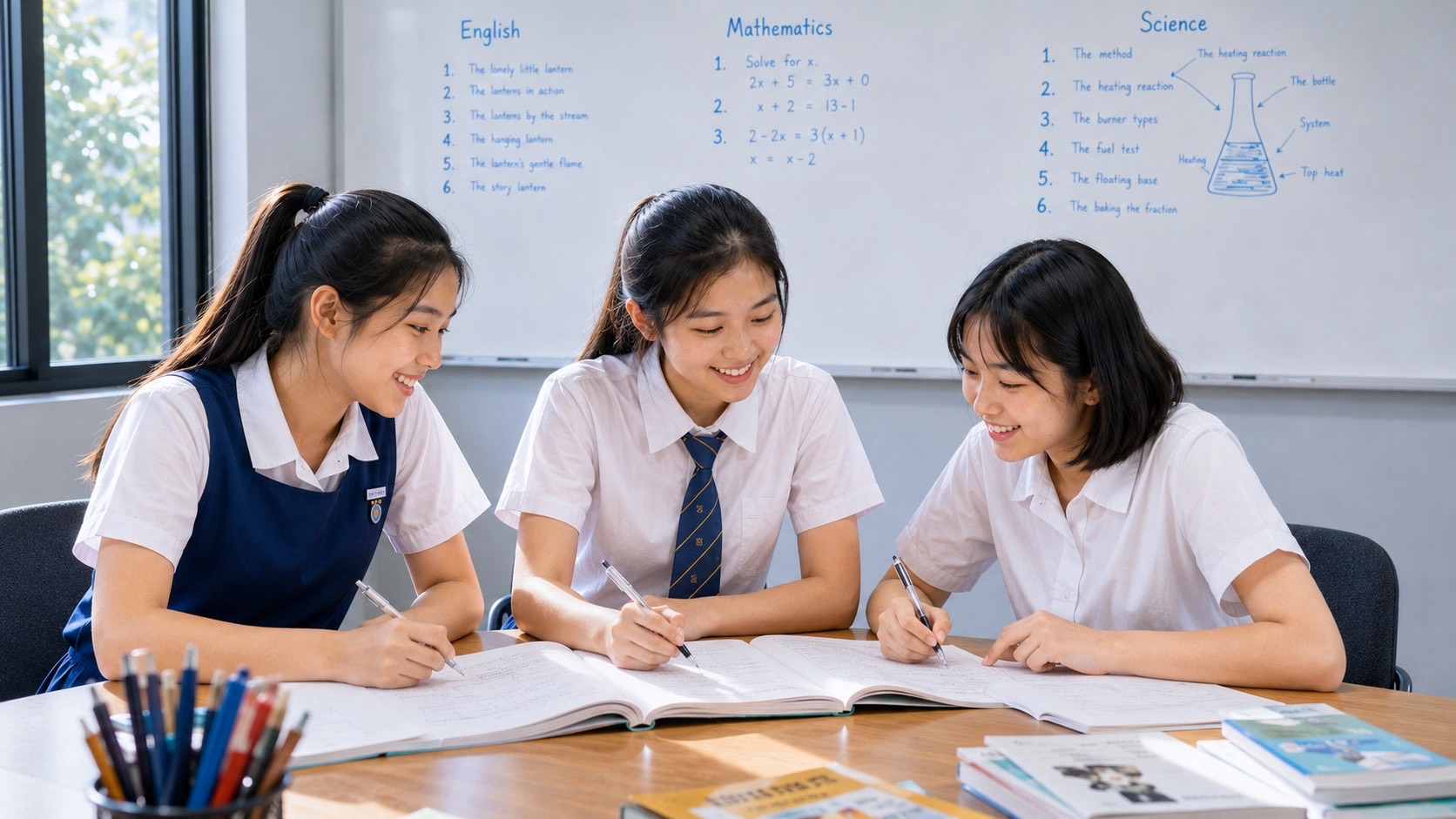
In a 3-pax class, students can begin with the same broad experience category—school event, outing, transport problem—and transform it differently. One changes setting, another changes viewpoint, another changes the consequence.
The comparison teaches that “write from experience” does not mean “write the same story that really happened”.
Catch Up, Keep Up, Move Ahead
Catch Up may use one real memory to support concrete vocabulary and simple sequence. Keep Up transforms the memory into a causal fictional story. Move Ahead combines several experiences, changes viewpoint and uses selective detail more subtly.
Privacy and relevance remain common boundaries.
A 90-minute memory-to-fiction lesson
A lesson can ask students for a two-minute memory sketch: place, object, action, feeling. They then change two elements and build a new fictional conflict. The draft focuses on the turning point rather than retelling the original day.
Revision highlights diary sentences—details included only because they happened—and removes them unless they serve the story.
How to revise diary-like writing
- Did I include this because it matters or only because it happened?
- Can I start later?
- Can several routine events be compressed?
- Does the character have a clear intention?
- Did I change enough details to protect privacy and fit the prompt?
- Does the ending resolve the fictional conflict rather than merely say the day ended?
Common failure patterns
- Chronological diary: choose one central conflict and compress the rest.
- Too many real names/details: fictionalise and protect privacy.
- No story change: add a meaningful disruption and decision.
- Experience forced onto wrong prompt: keep the useful mechanism, change the surface.
- Travel report: select only details affecting character and action.
Home practice
Ask the child to describe one small real event in three factual sentences. Then change one setting and one consequence to create a fictional story idea.
This shows that experience is material, not a cage.
Current curriculum source
MOE’s English Language Syllabus 2020 Primary emphasises generating, selecting, organising and developing ideas for purpose and audience. Transforming experience into fiction requires exactly those selection and organisation decisions.
What we removed from the old 2017 page
The historical Fernvale page was another cloned Creative Writing school-family landing page. The wider 2017 estate also used large travel galleries. The preserved URL now turns that history into a genuine craft lesson: transforming real experience into fiction.
Boundary and school affiliation
This guide is written for Fernvale Primary School families and nearby families. eduKateSG is not affiliated with, endorsed by or part of Fernvale Primary School. Current locations and availability are on the contact page.
Frequently asked questions
Should children write stories that really happened?
They can, but still need selection and structure. Real events are not automatically good narratives.
Can students change facts?
Yes. Creative Writing is not a factual report. Change details to fit the topic, protect privacy and strengthen the story.
Do trips and outings improve writing?
They can expand observation and knowledge, but only when students later transform those experiences into usable language and story material.
Should children use real friends’ names?
It is usually better to fictionalise names and unnecessary personal details.
What is the long-term goal?
A writer who can draw on real life for convincing material while shaping that material freely into an original relevant story.
The larger point
Experience gives fiction weight, but selection gives it shape. The writer does not owe the page everything that happened—only the parts that help the imagined story become true enough to believe.
How to Turn Real Experience into Fiction Without Writing a Diary
Real experience gives writers useful detail, sequence and emotional truth, but a composition does not need to reproduce the event exactly. Fiction begins when the learner selects, changes and recombines parts of experience to fit a new topic, conflict and character.
1. Extract the reusable detail
From a real event, keep details that can travel: the sound of a station, the feeling of waiting, the way someone hesitated, the confusion of a crowded queue. These are more flexible than copying the entire incident.
2. Change the character’s intention
A real trip to a market may become fiction about returning a lost item, meeting an unexpected person or making a difficult choice. Changing what the character wants creates a new story even when the setting remains familiar.
3. Change one condition
Move the event to a different time, weather condition or relationship. A familiar place can produce a new conflict when the writer changes who is present or what goes wrong.
4. Keep emotional truth, not factual completeness
The writer may remember the uncertainty of being separated from a group without reproducing the exact people, location or outcome. Fiction can preserve the feeling while building a different causal chain.
5. Remove diary-style sequencing
Real life contains many routine events. Fiction selects. Compress meals, travel and waiting unless they affect the conflict, and expand the decision or turning point that gives the story meaning.
6. Use three-student tuition to compare transformations
Students can begin from the same ordinary experience and create different fictional routes. The group compares what each writer kept, changed and invented, reinforcing that originality can grow from selective transformation.
7. Protect privacy and appropriateness
Children do not need to reproduce sensitive family details or identify real people. Change names, relationships and circumstances freely. The educational aim is narrative control, not disclosure.
Experience-to-fiction checklist
- Which detail from real life is worth keeping?
- What will the fictional character want?
- Which condition can I change?
- What emotional truth can survive the change?
- What routine real-life events should be deleted?
- Does the new story fit the actual prompt?
Experience is valuable because it gives young writers something concrete to draw from. Fiction begins when they stop asking “What exactly happened to me?” and start asking “What can I build from what I noticed?”