
Checked: 31 August 2026. This Primary Creative Writing guide is aligned to MOE’s English Language Syllabus 2020. eduKateSG is not affiliated with Punggol Cove Primary School.
Primary writers often assume that a story becomes interesting only when something dramatic happens: an accident, a thief, a sudden emergency or a large disaster. Those plots can work, but they are not necessary. Small conflicts are often easier to control and more believable: a promise is broken, an item is lost, a friend is misunderstood, a rule is ignored, a child is late, someone is excluded or a mistake must be admitted. For Punggol Cove Primary families, this page explains how to design a conflict that is modest in scale but meaningful enough to drive the story.
Quick read
- Conflict is a gap between what a character wants and what reality allows.
- Small believable problems are often stronger than dramatic accidents.
- The conflict should force a choice, not merely create noise.
- Good conflict grows from the character and setting.
- Consequences should follow from decisions, not random coincidence.
- Three-student tutorials let learners compare different conflicts for the same prompt.
What conflict really is
A story problem becomes meaningful when it interferes with the character’s intention. If the character wants to return home on time, a lost transport card matters. If the character wants to earn a friend’s trust, a dishonest choice matters. If the character wants to avoid embarrassment, being asked to admit a mistake matters.
The scale can be small. The relationship is what creates narrative pressure.
Start with intention first
Before inventing the problem, ask:
What does the character want right now?
Then create something that makes that goal harder.
This prevents random conflict. A lost item matters more when the writer knows why the character needs it.
Conflict type 1: obstacle
The character wants something, but an external obstacle gets in the way:
- a gate is locked;
- the bus leaves;
- an important object is missing;
- rain changes the plan;
- a rule prevents the easy solution.
The obstacle should force the character to act differently.
Conflict type 2: relationship
A disagreement or misunderstanding can create strong Primary-level conflict:
- friends blame each other;
- a sibling refuses to help;
- a classmate misinterprets an action;
- a promise is not kept;
- a character feels unfairly treated.
Relationship conflict gives dialogue a real purpose.
Conflict type 3: internal choice
Sometimes the problem is the decision itself:
- tell the truth or hide the mistake;
- help someone or continue with the original plan;
- follow a friend or follow the rule;
- admit fear or pretend confidence.
Internal conflict can remain simple while still producing meaningful consequence.
Conflict type 4: time pressure
A deadline or limited window creates natural tension:
- the performance is about to start;
- the bus will leave;
- the shop is closing;
- a parent is waiting;
- the school bell is about to ring.
Time pressure works well because it gives the character less room to delay the decision.
Conflict should arrive from the story world
If the story takes place at a school event, the conflict should feel plausible there. If it is at a park, bus interchange or shopping centre, the problem should emerge naturally from that setting.
This makes the story coherent and reduces dependence on random accidents.
Why dramatic conflict often goes wrong
Large emergencies create consequences that are difficult for young writers to resolve convincingly. A serious accident may require adults, police, hospitals or consequences far beyond the child’s control.
Writers then rush the ending with “everything was fine”. A smaller problem gives the character more agency and the writer more control.
The conflict ladder
Before writing, test the proposed problem:
- Does it interfere with what the character wants?
- Does it force a decision?
- Can the character plausibly influence the outcome?
- Can the consequence be resolved within the story’s scale?
- Does it fit the prompt and setting?
If the answer to several questions is no, redesign the conflict.
Conflict should create consequence
A problem is not enough. The character’s response should change what happens next.
For example:
Wants to impress friend → ignores a rule → creates a problem → must choose whether to admit responsibility → relationship changes.
This turns conflict into story architecture.
Use escalation sparingly
The problem can become slightly harder over time. A lost item becomes urgent because it contains something important. A misunderstanding worsens because the character stays silent.
But escalation should remain connected to earlier choices rather than adding unrelated trouble.
Dialogue inside conflict
Dialogue is strongest when characters want different things. One wants to leave; another wants to continue searching. One wants to hide the mistake; another insists on telling the truth.
The words become part of the conflict rather than decoration.
Setting can increase conflict
A crowded place, noisy environment, unfamiliar route or closing time can make a small problem harder. The setting should affect what the character can do.
This is different from generic description. Setting becomes a constraint.
Picture prompts and conflict
A picture can suggest the object or situation that creates the problem. A phone, bag, sign, invitation or key can become the pressure point.
The writer should ask not only “What is this picture?” but “What could this make harder for my character?”
Three students, one prompt, three conflicts
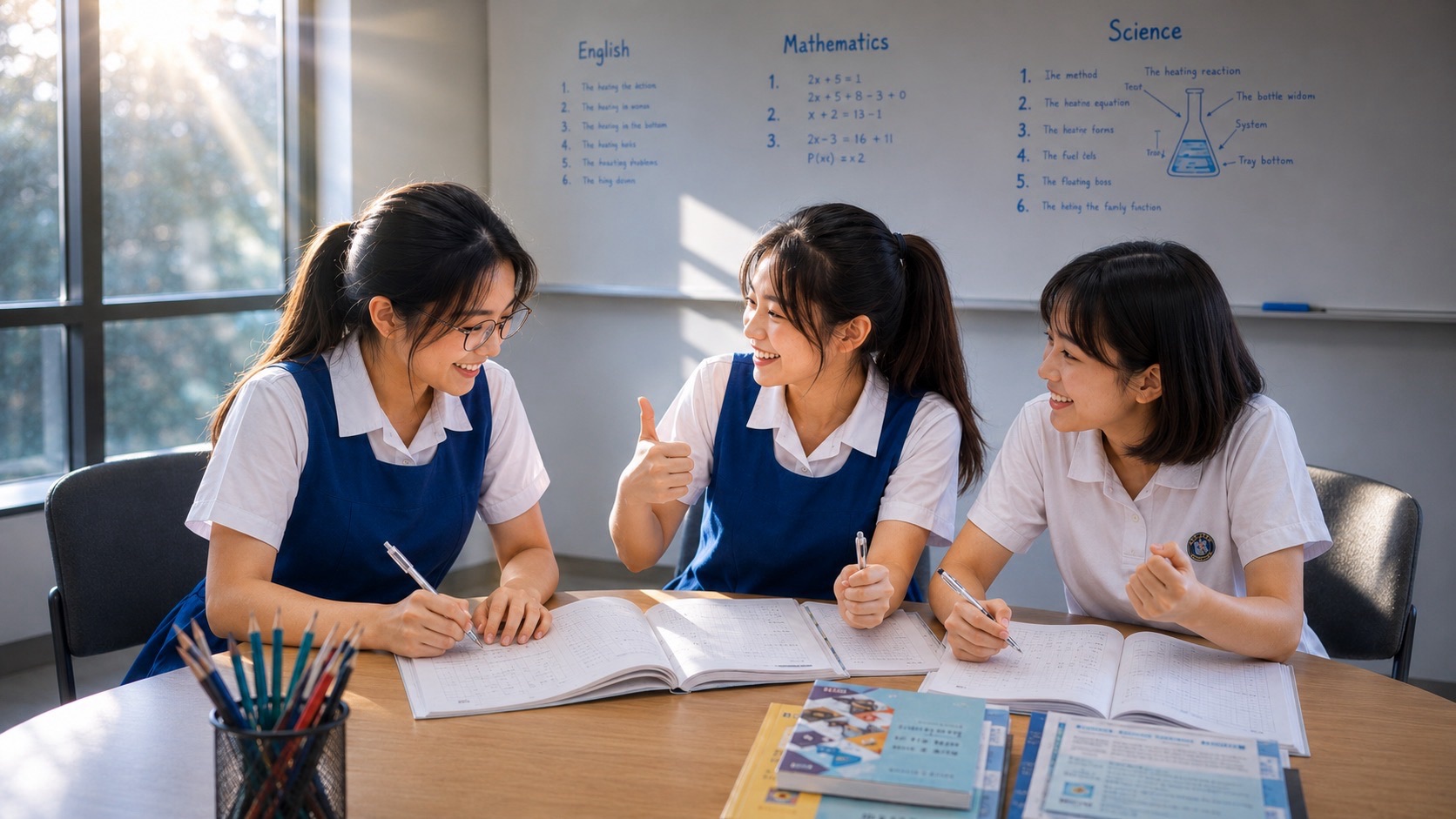
In a 3-pax class, students can use the same topic and design different conflicts. The tutor asks which is most believable, which creates the clearest decision and which can be resolved within the available writing time.
Students learn that originality comes from relationship and choice, not only from dramatic events.
Catch Up, Keep Up, Move Ahead
Catch Up may use one simple external obstacle and a direct solution. Keep Up adds a decision and consequence. Move Ahead can combine external pressure with a more subtle internal or relationship conflict.
The common standard is coherence.
A 90-minute conflict-design lesson
Give students one character intention and ask for five possible problems. They rank them by plausibility and consequence, choose one, build a causal chain and draft the scene where the character must decide.
The final revision removes any unrelated extra problem.
How to revise conflict
- What does the character want?
- How exactly does the problem interfere?
- What decision becomes necessary?
- Does the consequence follow from the decision?
- Can the conflict be resolved within this story?
- Did I add any dramatic event that is not needed?
Common failure patterns
- Random accident: connect the problem to character intention.
- No real consequence: make the response change the next event.
- Too many problems: choose one central conflict.
- Character has no agency: give the learner a meaningful decision.
- Unrealistic resolution: reduce the scale of the problem.
Home practice
Take an ordinary situation—missing homework, late bus, borrowed item, misunderstood message—and ask the child to name three different conflicts that could grow from it.
No full story is necessary. The practice is in designing pressure that creates a choice.
Current curriculum source
MOE’s English Language Syllabus 2020 Primary emphasises generating, selecting, organising and developing ideas. Conflict design is one way to give those ideas causal direction.
What we removed from the old 2017 page
The historical Punggol Cove page was another school-name clone with fixed grade-improvement claims and 4–6-pax marketing. The preserved URL now owns conflict design as a distinct Creative Writing craft.
Boundary and school affiliation
This guide is written for Punggol Cove Primary School families and nearby Punggol families. eduKateSG is not affiliated with, endorsed by or part of Punggol Cove Primary School. Current class locations and availability are on the contact page.
Frequently asked questions
Does every story need conflict?
Narrative writing usually needs some meaningful change or tension. It can be small and does not need to be dramatic.
Are accidents bad story ideas?
No, but they are often difficult for young writers to control. Use them only when the consequences can be handled plausibly.
How can children make simple stories interesting?
Give the character a clear intention, a believable obstacle and a meaningful choice.
Should the conflict happen immediately?
It should arrive early enough to leave room for development, but the reader may need some context first.
What is the long-term goal?
A writer who can create a story problem that matters because it interferes with a character’s intention and leads naturally to choice and consequence.
The larger point
Good conflict is not noise. It is pressure applied to something the character cares about. Once that pressure creates a decision, the story begins to move by itself.
How to Build a Small Conflict That Actually Changes the Story
Primary compositions do not need disasters to feel meaningful. A conflict becomes useful when it forces a character to choose, adapt or reveal something. Small conflicts are often easier to control because the writer has enough space to develop cause, decision and consequence instead of rushing through spectacle.
1. Start from what the character wants
Conflict is the obstacle between intention and outcome. A child wants to arrive on time but loses a card. A student wants to avoid embarrassment but has made a mistake. A friend wants to help but misunderstands what is needed.
2. Make the obstacle specific
“Everything went wrong” is too broad. Choose one obstacle the reader can understand and the writer can develop: missing information, a broken promise, limited time, conflicting instructions or a difficult choice.
3. Require a decision
If the character can wait passively until someone else solves the problem, the conflict may be weak. Ask what choice the character must make and what risk or trade-off comes with it.
4. Let the consequence grow from the choice
The story gains causal strength when the result follows from what the character did. Hiding a mistake may create a larger misunderstanding; telling the truth may create an uncomfortable but repairable moment.
5. Keep the conflict proportional to the available writing time
A complex crime plot, multiple locations and many characters can overwhelm a short composition. Choose a conflict that can be introduced, developed and resolved convincingly within the learner’s available time and word budget.
6. Use three-student tuition to compare conflict quality
Three learners can propose different conflicts for the same theme and compare which creates the clearest choice and consequence. This helps students see that a “bigger” problem is not automatically a better one.
7. Revise by deleting unnecessary complications
If a secondary conflict does not deepen the central choice, remove it. One well-developed problem usually produces a stronger Primary composition than three loosely connected incidents.
Conflict checklist
- What does the character want?
- What specific obstacle interferes?
- What choice must the character make?
- What consequence follows?
- Can the conflict be fully developed and resolved?
- What complication can be removed?
Small conflicts work because they give the writer room to make decisions matter. The story does not need to become bigger; it needs to become more connected.