
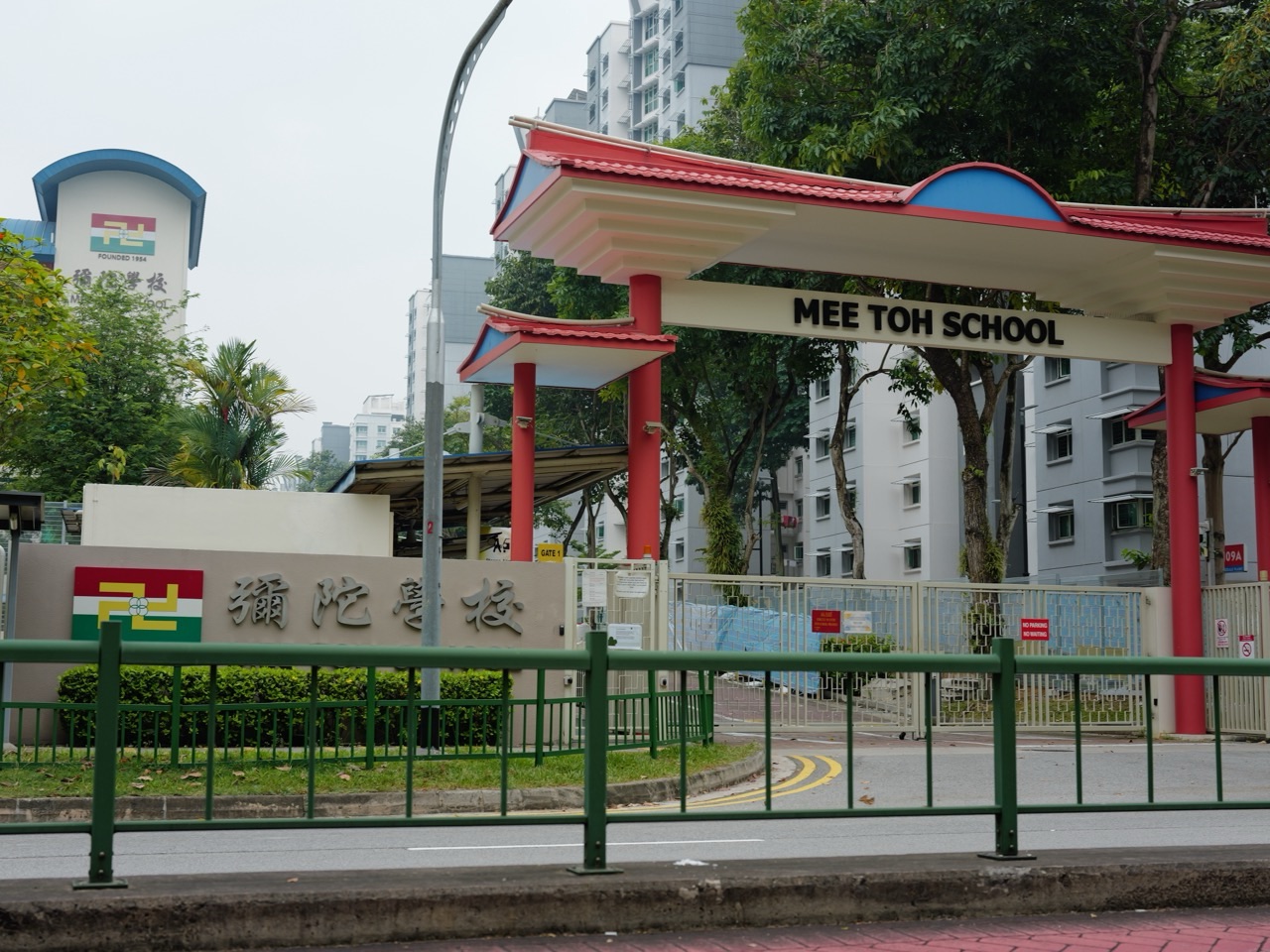
Primary English tuition for Mee Toh School families should help students compress information without damaging meaning. eduKateSG is not affiliated with, endorsed by, or part of Mee Toh School; this is an independent tuition resource for families.
This rebuilt legacy URL now owns one distinct job: summary compression—identify the core → preserve relationships → remove examples/repetition → reconstruct clearly. It replaces the old school-teacher wording, stale contact details and generic 2017 claims.
eduKateSG currently teaches selected Primary English students in focused 3-pax small groups, typically 1.5 hours, at 83 Punggol Central, Singapore 828761 and 8 Fourth Avenue, Singapore 268674.
The Direct Answer
To compress safely:
- Select: keep only ideas required by the task.
- Group: combine details that express the same point.
- Preserve: keep cause, condition, comparison and sequence if they matter.
- Remove: examples, repetition and decorative detail when they are not needed.
- Rebuild: write concise, natural sentences in the student’s own wording.
A good summary is shorter because low-value material was removed—not because meaning was lost.
Why Shorter Can Become Wrong
Students may delete qualifiers such as may, only when or because. The sentence becomes shorter but stronger or different in meaning.
Original: “The programme may help students when reliable internet access is available.”
Unsafe compression: “The programme helps students.”
The condition and uncertainty disappeared.
Core Idea Versus Example
A paragraph may explain that regular exercise supports well-being, then list walking, swimming and cycling. If the task asks for the general benefit, the examples can often be compressed.
If the task asks for two activities, the examples become the required content.
Importance depends on the task.
Combine Repeated Meaning
“The path was narrow. There was very little space. Walkers had to move carefully.” can often become “Because the path was narrow, walkers had to move carefully.”
The repeated explanation is compressed while cause remains.
Preserve Cause and Result
Original: “Heavy rain flooded the road, so the bus had to use a longer route.”
Good compression: “Flooding forced the bus onto a longer route.”
The wording changes but the causal direction survives.
Preserve Comparison
If a paragraph contrasts two options, a summary should not retain only one side if the contrast is the main point.
“Route A is cheaper but slower, while Route B costs more but saves time” can be compressed, but both trade-offs must remain.
Preserve Sequence When Order Matters
In processes and narratives, order can be load-bearing. “After the alarm sounded, the staff guided visitors outside” is not equivalent to “Staff guided visitors outside before the alarm sounded.”
Compression must not reverse chronology.
The One-Sentence Test
After each paragraph, students can state the central point in one sentence. This is not always the final summary sentence; it is a test of whether the paragraph has been understood.
If the student can only repeat several details, the hierarchy may still be unclear.
The Deletion Test
Remove a detail. Does the central meaning or required relationship change?
If no, the detail may be expendable. If yes, restore it or replace it with a more compact expression.
The Paraphrase Check
After compressing, compare source and summary:
- same main claim?
- same cause/result?
- same condition?
- same degree of certainty?
- same comparison direction?
If one changed accidentally, the summary is not faithful.
Worked Example: Information Paragraph
Source: a school garden programme lets students observe plant growth, work in teams and use food scraps as compost. The paragraph also describes the colour of the bins and the day volunteers meet.
Possible summary: “The garden programme combines hands-on plant learning, teamwork and composting of food waste.”
Decorative/logistical details are removed because they do not carry the main point.
Worked Example: Narrative Retell
Instead of retelling breakfast, travel, conversation and every action, preserve the causal spine: character finds lost item → faces a decision → chooses to return it → experiences consequence.
Retelling becomes a form of narrative compression.
Summary Supports Study Across Subjects
The skill transfers beyond English. Students need to extract key ideas from Science explanations, Mathematics word problems and school instructions.
English tuition can strengthen the language mechanism without pretending to replace subject teaching.
P1–P2: Retell the Important Events
Young learners can identify who, what happened first/next and what the story was mainly about.
P3–P4: Main Idea and Supporting Detail
Middle-primary students can separate examples from claims and compress several related sentences into one accurate statement.
P5–P6: Preserve Conditions and Claim Strength
Upper-primary students need more precise compression across longer texts and timed comprehension. The MOE Primary English syllabus emphasises increasingly independent interpretation and communication across texts. Official reference: MOE English Language Syllabus 2020 Primary.
Common Summary Failure Modes
| Symptom | Issue | Repair |
|---|---|---|
| Summary almost as long as source | No hierarchy | Separate core from examples |
| Very short but inaccurate | Load-bearing relation deleted | Preserve cause/condition/comparison |
| Copies source phrases | No reconstruction | Hide, explain, rewrite |
| Examples dominate | Illustration confused with point | State general claim first |
| Certainty changes | Qualifier lost | Keep may/can/only/if |
Why Three Students Helps
Three students can compress the same paragraph differently. The tutor compares which version preserves the core relationships with the least unnecessary material.
When Mee Toh School Families May Consider This Support
- The child retells almost every detail.
- Main ideas are confused with examples.
- Answers copy long source sentences.
- Short summaries delete important conditions.
- Upper-primary reading needs stronger information hierarchy.
What Progress Should Look Like
A stronger learner can compress information while preserving the central claim and all relationships needed for accurate meaning.
Independent tuition notice: eduKateSG is not affiliated with Mee Toh School. Current eduKateSG centres: 83 Punggol Central, Singapore 828761 and 8 Fourth Avenue, Singapore 268674. Contact +65 8823 1234.