
Primary 1 English changes when a child moves from naming things to expressing complete relationships. “Dog.” “Run.” “Boy happy.” These fragments can contain meaning, but school English increasingly asks the learner to turn meaning into a sentence another reader can reconstruct: who is doing something, what action is happening, what object or detail matters, and how the words fit together.
This rebuilt 2019 page owns one distinct Yishun Primary 1 job: sentence expansion and Who–Did–What control. It does not duplicate the separate Primary 1 Oral-to-Written Transfer page, which owns the Hear → Say → Segment → Write → Reread bridge. This page begins once a child can produce short written units and focuses on making those units complete, clear and expandable.
Location note: This is a legacy Yishun URL preserved as an educational resource for Yishun families. It does not claim that eduKateSG currently operates a Yishun branch. For current locations, class availability and enrolment information, use eduKateSG’s current contact and Punggol service pages.
The aim is not to make six-year-olds write long sentences. It is to help them understand a sentence as a small meaning machine. A strong Primary 1 sentence should tell the reader enough to know who or what the sentence is about and what is happening.
Quick Read: Who → Did What → To What → Extra Detail
- Who/what? Identify the person, animal, object or group.
- Did what? Choose the main action or state.
- To what/whom? Add the object when the verb needs one.
- Where/when? Add one useful detail when appropriate.
- Check: Does the sentence begin, continue and end clearly?
- Read aloud: Does it sound complete?
- Expand carefully: Add meaning, not clutter.
- Transfer: Build the same structure with new words.
1. Primary 1 Sentences Begin With Meaning
We do not begin with terminology alone. We begin with a picture, action or idea the child can describe.
If the child can say what is happening, we can map that meaning into a written sentence.
2. Find the “Who” First
Many early sentence fragments lack a clear subject. We ask, “Who is doing this?” or “What is this sentence about?”
The learner begins to understand that a sentence needs an anchor.
3. Find the Main Action
Next comes the action or state. “The boy” is not yet enough. “The boy runs” tells us what happens.
We use familiar verbs first so grammar grows from known meaning.
4. Some Actions Need an Object
“Mina opened” may feel incomplete if the intended meaning is “Mina opened the box.” We ask whether the action needs something after it.
This creates an intuitive bridge into object awareness before formal grammar terms become necessary.
5. Add One Useful Detail at a Time
After the core is stable, we may add where, when or how. “The boy ran.” becomes “The boy ran across the playground.”
The detail should change what the reader can imagine, not simply make the sentence longer.
6. Expansion Is Not Decoration
Children can become excited about adjectives and add many of them. We teach that detail should support meaning.
“The red, nice, pretty, lovely ball” is not automatically stronger than “the bright red ball beside the gate”.
7. Use Pictures to Make Sentence Roles Visible
A picture can be annotated with simple prompts: WHO? ACTION? WHAT? WHERE?
The child learns to inspect the scene before writing rather than guessing a sentence from the first visible noun.
8. Use Oral Rehearsal Before Writing
For young learners, saying the sentence first can reduce working-memory load. The child hears whether the sentence feels complete.
Oral rehearsal is gradually reduced as written control increases.
9. Capital Letters Mark the Start
Capital letters are taught as part of sentence identity, not as an isolated worksheet rule.
The child learns: a complete sentence has a clear beginning.
10. Punctuation Marks the End
Full stops, question marks and exclamation marks help the reader know what kind of sentence has been completed.
We connect punctuation to the sentence’s communicative job rather than treating it as decoration.
11. Word Order Protects Meaning
Young writers may produce all the correct words in a confused order. We rebuild the sentence around the relationship: who → action → object/detail.
The child sees that word order helps the reader recover meaning.
12. Sentence Scrambles Can Teach Structure
We sometimes give word cards or a scrambled sentence and ask the learner to restore the most natural order.
The student then explains why the new order is easier to understand.
13. Pronouns Enter Only After the Noun Is Clear
Primary 1 students can use he, she and it, but the reader must know who those words refer to.
We first establish the noun, then replace it where repetition becomes unnecessary.
14. Build Two Sentences Before a Paragraph
Paragraph writing begins with the ability to produce two or three sentences that refer to the same event without contradicting each other.
We may write: “Sara found a kitten. She carried it home.” The second sentence depends on the first.
15. Sentence Expansion Helps Comprehension Too
When students can identify who did what in their own writing, they become better at unpacking simple sentences in reading passages.
Writing and reading reinforce the same relationship map.
16. Use the Deletion Test
We remove a word or phrase and ask whether the sentence still means the same thing. If the main relationship breaks, the deleted part was important.
This teaches children that some words carry the core and others add detail.
17. Use the Substitution Test
We replace the subject, verb or object while keeping the sentence pattern. “The girl kicks the ball” becomes “The boy carries the bag.”
The child learns the reusable structure rather than memorising one model sentence.
18. The Primary 1 Sentence Diagnostic
- Noun-only writing: the child names objects but does not build a sentence.
- Missing subject: action is written without who performed it.
- Missing action: sentence has a person or object but no clear event.
- Incomplete object: verb needs more information to complete the intended meaning.
- Word-order confusion: the right words appear in an unclear sequence.
- Detail overload: extra words make the sentence harder rather than clearer.
- Pronoun ambiguity: he/she/it appears before the reader knows the referent.
- Punctuation omission: sentence boundaries are unclear.
- Copy dependence: child reproduces model sentences but cannot generate a new one.
- Oral–written gap: spoken sentence is complete but written version loses words.
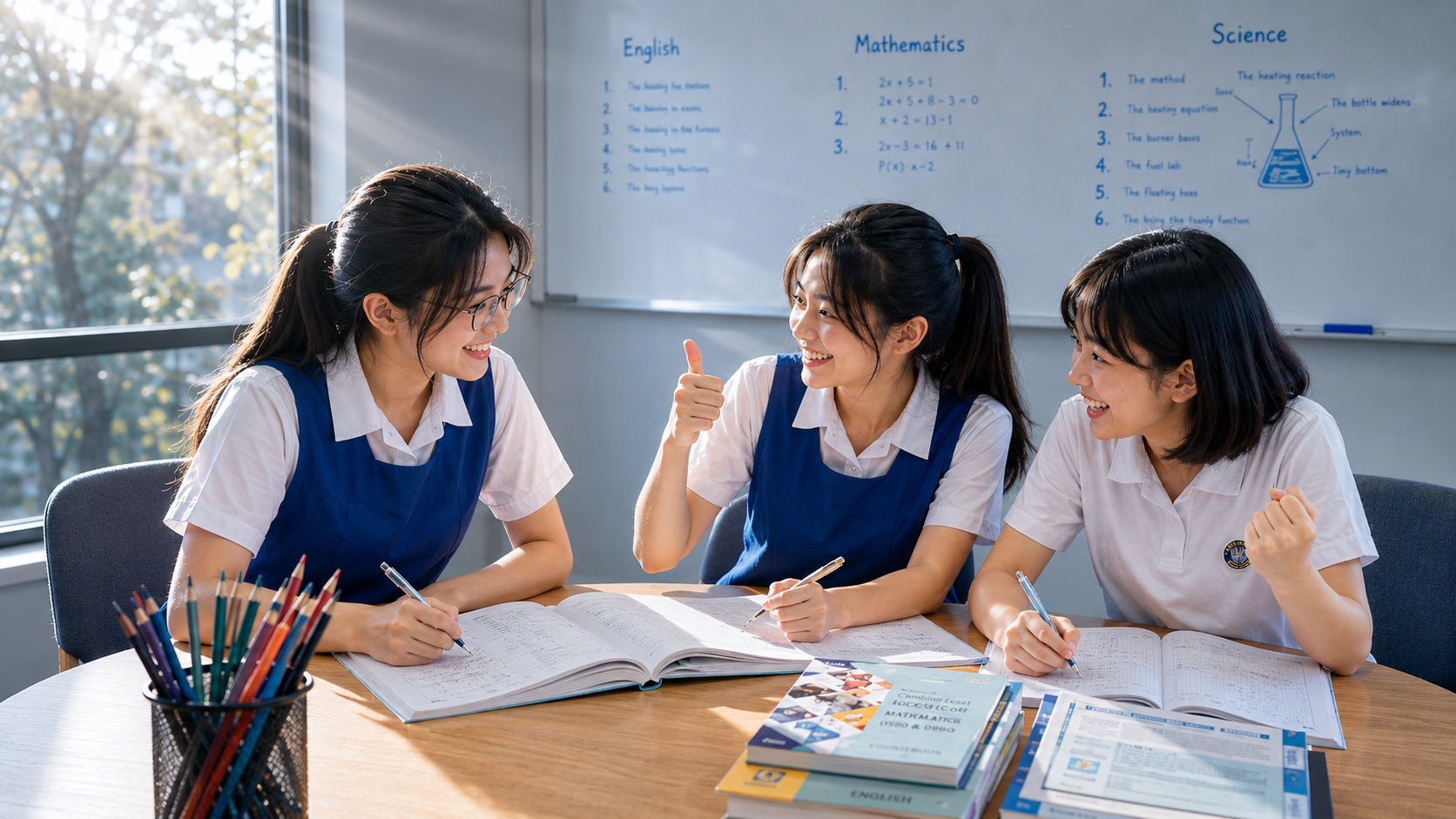
19. Why Three Students Works for Primary 1
- Every child gets frequent oral turns.
- Three different sentences show that one picture can support several valid descriptions.
- Peers can hear whether a sentence sounds complete.
- The tutor can correct word order immediately.
- Each learner still produces an independent written sentence.
- Small-group interaction feels social without becoming noisy.
20. A 90-Minute Yishun P1 Runtime
- 10 minutes — Read/retrieve: simple sentence recognition.
- 10 minutes — Picture talk: identify who and what is happening.
- 15 minutes — Core sentence: build who + action.
- 15 minutes — Expansion: add object or useful detail.
- 10 minutes — Word order: rebuild scrambled sentences.
- 10 minutes — Pronoun bridge: link two simple sentences.
- 10 minutes — Independent write: clean picture, no model.
- 5 minutes — Reread: capital, punctuation and sense.
- 5 minutes — Parent-visible takeaway: one target for home practice.
21. Catch Up: Keep the Core Small
A struggling learner may work mainly with who + action until complete sentence identity becomes reliable.
We add objects and details only after the core survives independently.
22. Keep Up: Add Sentence Variety
Students keeping pace can practise statements, questions and simple exclamations while preserving correct sentence structure.
The focus remains meaning, not terminology for its own sake.
23. Move Ahead: Link Sentences
Advanced Primary 1 students can connect two related ideas with because, but or so where appropriate.
We teach what relationship the connector adds instead of asking the child to insert it mechanically.
24. Parent Guide
- Ask “Who is this sentence about?”
- Ask “What happened?”
- If the sentence is unclear, ask one question rather than rewriting it for the child.
- Let the child say the sentence before writing when needed.
- Encourage one useful detail rather than many decorative adjectives.
- Look for increasingly independent sentence generation.
25. What Real Primary 1 Progress Looks Like
- Fragments become complete sentences more often.
- The subject and action are easier to identify.
- Word order becomes more natural.
- Objects and details are added purposefully.
- Pronouns refer clearly to introduced nouns.
- Capital letters and punctuation are more consistent.
- Oral sentences transfer to paper with fewer missing words.
- Model sentences are needed less often.
- Two-sentence sequences become coherent.
- Reading comprehension benefits from clearer relationship tracking.
26. When Yishun Primary 1 English Tuition Is Worth Considering
This approach can be useful when a child speaks in understandable ideas but writes fragments, loses words between speech and paper, struggles with word order or depends heavily on copied sentence frames.
It may be unnecessary when sentence generation is developing smoothly and school feedback shows no active difficulty. Tuition should solve a real learning problem, not exist merely because Primary 1 has begun.
No responsible tutor can guarantee future PSLE outcomes. Early sentence control strengthens the foundation while later progress depends on reading, vocabulary, school learning, practice and development over time.
27. How This Page Fits the Yishun Primary English Estate
Oral-to-Written Transfer in Primary 1 English owns the hear–say–segment–write bridge. This page owns sentence expansion, word-order control and Who–Did–What completeness. The two jobs are deliberately separated so both URLs teach something distinct.
Frequently Asked Questions
Should Primary 1 students memorise model sentences?
Models can help, but the important test is whether the child can build a new sentence when the nouns, actions and picture change.
How long should a Primary 1 sentence be?
Long enough to communicate the intended meaning clearly. Completeness matters more than word count.
Why 3-pax?
Three learners allow frequent individual speaking and writing while providing enough peer examples to make sentence structure visible.
Conclusion: A Sentence Is a Small Relationship
Primary 1 English becomes easier to teach when the sentence is not treated as a mysterious block of words.
Who is this about? What happened? What received the action? Which detail helps the reader? Does the sentence begin and end clearly?
When the child can answer those questions independently, writing has moved from copying words to representing meaning—and that is a strong place for Primary English to begin.