
Secondary 2 students can accumulate pages of corrections without becoming much better at predicting their own mistakes.
The problem is often classification. If every error is treated as a separate event, the student never sees the larger pattern connecting them.
For Yishun families, this page focuses on one useful small-group job: learning to recognise error families rather than fixing isolated mistakes one by one.
Quick Read
- Several mistakes may belong to one underlying family.
- Classification makes self-checking easier.
- Peer examples can reveal different versions of the same weakness.
- The goal is earlier recognition, not more red ink.
The One-Sentence Answer
A strong Secondary 2 small-group English class should help students group recurring mistakes by underlying cause so they can recognise and prevent them earlier.
What an Error Family Looks Like
Three different comprehension answers may all fail because the student does not explain the relationship between evidence and conclusion. Several writing errors may all come from weak sentence boundaries. Repeated task losses may all begin with misreading the command word.
Different surfaces can share one cause.
Why Classification Matters
“Do not make this mistake again” gives the student very little to monitor.
“This belongs to your evidence-without-explanation pattern” gives the student a category and a trigger.
Why Three Students Help
One student’s error can reveal a cleaner version of another student’s problem. The class can compare the surface differences and ask what underlying weakness connects them.
This turns peer comparison into diagnosis rather than answer sharing.
Build a Short Error Map
Students do not need to record every mistake. They need a small map of recurring families: task recognition, evidence selection, explanation, paragraph control, vocabulary precision, grammar or checking.
The map should change as patterns stabilise.
What Parents Can Ask
- “What family does this mistake belong to?”
- “Have you seen this pattern before?”
- “What cue should make you notice it next time?”
- “Which error family is becoming less frequent?”
How eduKate Approaches Secondary 2 English in Yishun
eduKate groups recurring errors by underlying process, then teaches students to recognise the trigger before the mistake reaches the page.
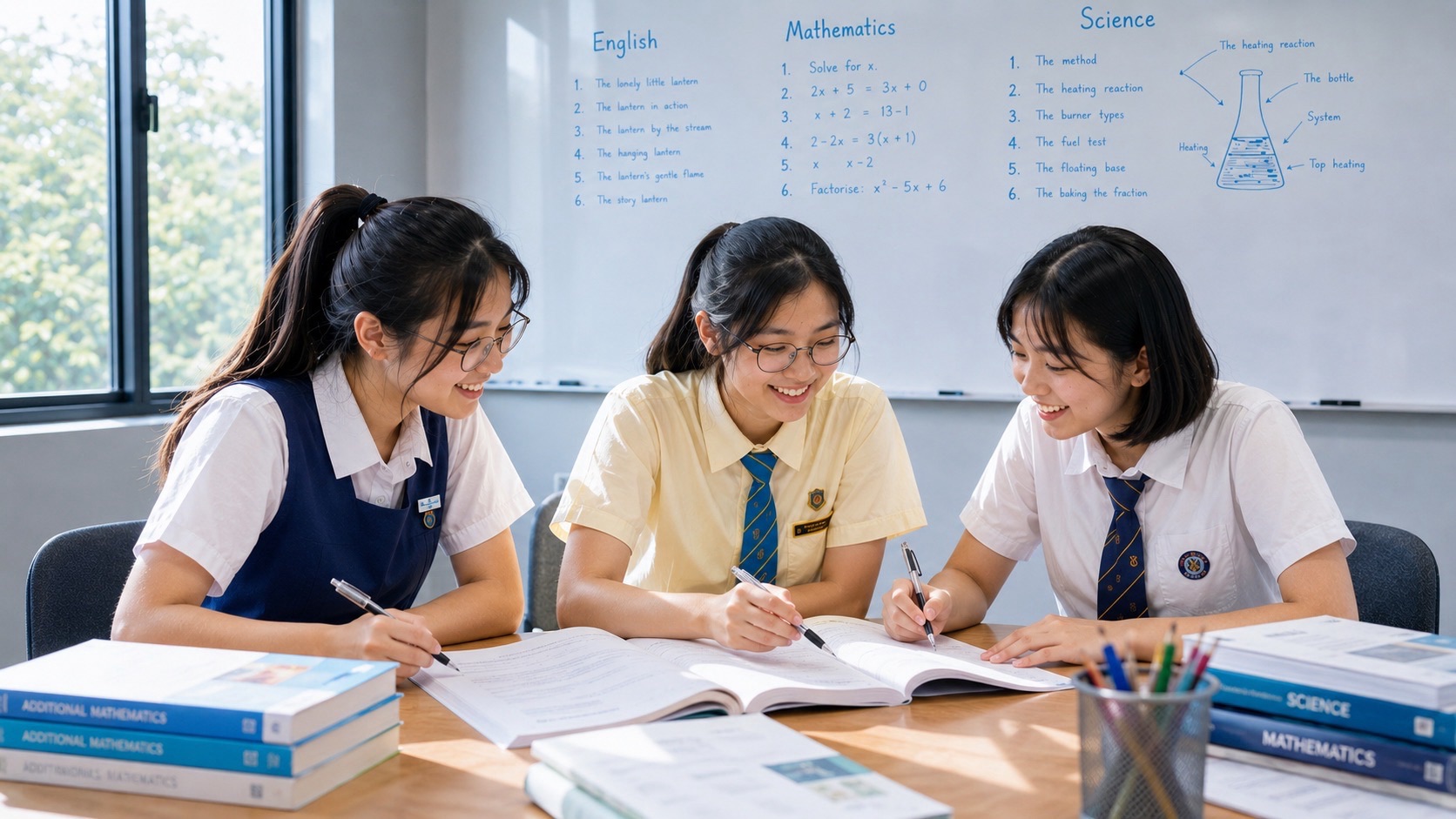
In a group of three, different examples make the category clearer while each student maintains an individual error map.
Secondary 2 Should Make Errors More Predictable
Once a student can see the family, a mistake stops looking random. That makes correction more efficient and self-checking more intelligent.