
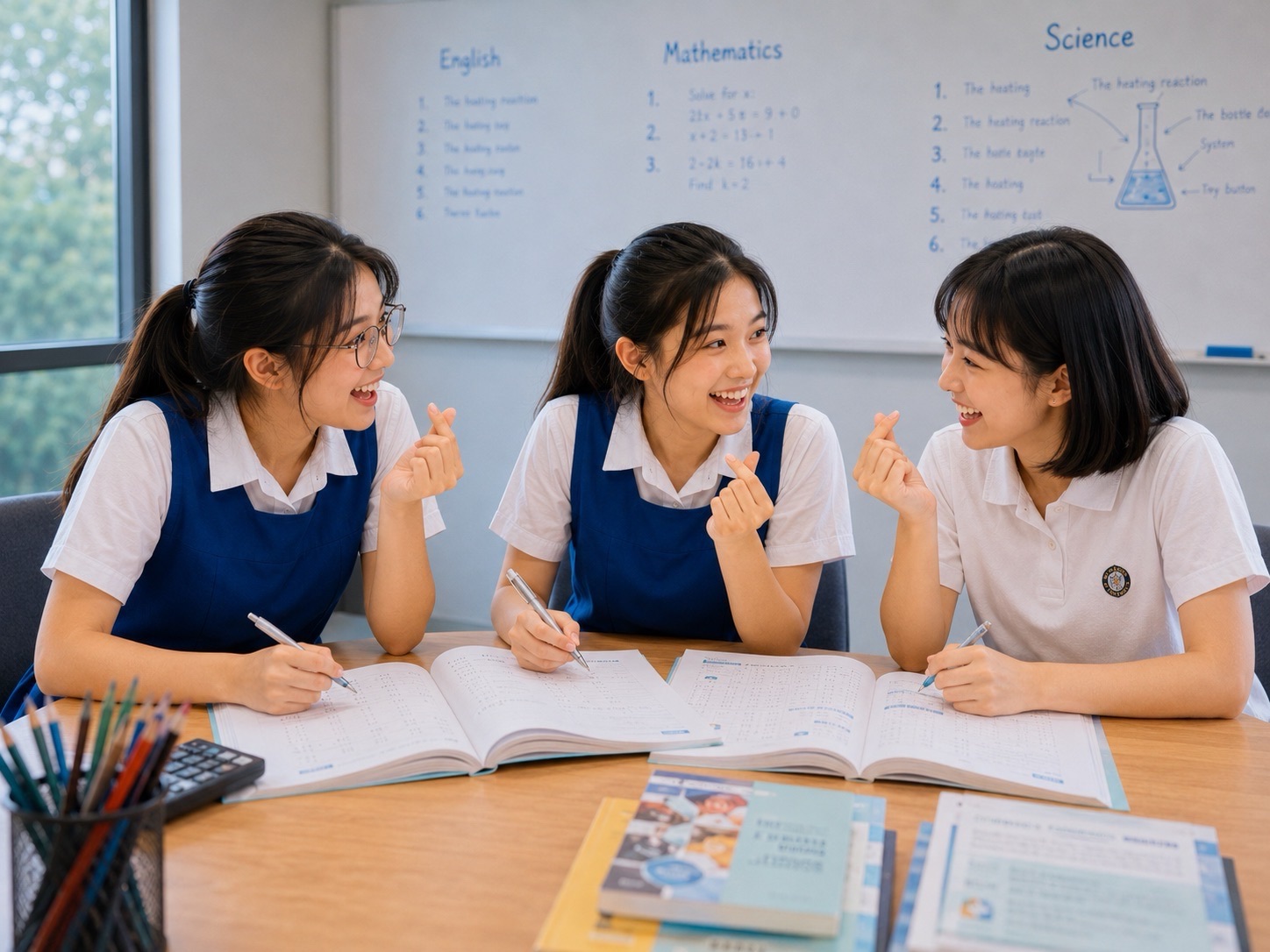
Primary 5 students can sometimes explain Science well in conversation and still lose marks when the same understanding has to fit into a short written answer. Spoken explanations can include pauses, gestures, self-corrections and several extra sentences. Written Science needs compression: preserve the mechanism, remove the repetition and make the causal chain visible on the page.
This rebuilt 2020 page owns one distinct Online Yishun P5 job: oral-to-written causal compression. It does not duplicate the Online Punggol P5 inquiry-mapping page or the Online Sengkang P5 interleaving page. It also stays separate from the physical Yishun P5 mechanism, misconception, experimental-reasoning and application pages. Here the dominant problem is representation: the child knows more than they successfully write.
Remote tuition gives this gap unusual visibility because the tutor can hear a student’s full verbal model and immediately compare it with the written version. The lesson can then ask exactly what was lost during compression: the scientific term, the causal middle, the comparison, the evidence or the final consequence.
Quick Read: Say → Map → Compress → Write
- Say: explain the Science aloud in the student’s own words.
- Map: identify condition, process, intermediate effect and outcome.
- Select: decide which parts are required by the question.
- Compress: remove repetition without removing mechanism.
- Write: produce the minimum complete scientific answer.
- Compare: check what the written answer lost from the spoken model.
- Retest: use a changed question without verbal rehearsal.
- Retrieve later: test whether the compressed explanation remains available.
1. Spoken Science and Written Science Have Different Constraints
In conversation, a student can repair meaning halfway through a sentence. The tutor can ask follow-up questions. In written work, the answer must carry enough information by itself.
We therefore treat spoken explanation as diagnostic evidence, not as the final product.
2. Start With a Full Verbal Model
When a child struggles to write, we first ask them to explain the answer aloud without worrying about perfect wording.
This reveals whether the underlying Science is present. If the verbal model is also weak, the problem is not merely writing.
3. Identify the Causal Spine
We extract the smallest mechanism that still explains the outcome: starting condition → scientific process → intermediate effect → observed result.
Not every answer needs four visible clauses, but the logic should remain intact after compression.
4. Separate Required Meaning From Conversational Extras
Spoken answers may include “I think”, repeated explanations, examples and restarts. These help thinking but may not belong in the final response.
Students learn to distinguish thinking language from answer language.
5. Preserve the Scientific Nouns and Verbs
Compression should not delete the terms that carry the mechanism. We identify which scientific entities and processes must remain explicit.
The answer may become shorter while becoming more precise.
6. Avoid Keyword Piles
Students sometimes over-correct by squeezing many scientific terms into one sentence without showing their relationship.
We ask what each verb connects. Keywords need a causal grammar.
7. Use Arrow Maps Before Writing
A quick arrow map can hold the causal structure between speaking and writing. It reduces the risk that the student forgets the middle while trying to build a polished sentence.
The map is gradually removed as the student learns to compress mentally.
8. One Sentence Is Not Always Better Than Two
Students may force an entire mechanism into one overloaded sentence. If two short sentences express the relationship more clearly, that can be the better answer.
Compression is about information efficiency, not minimum sentence count.
9. Answer the Exact Question
A full spoken explanation may include several true facts. The written answer should contain the subset required by the question.
We underline the command and target before compressing so relevant information is protected while interesting extras are removed.
10. Compare Spoken and Written Versions Side by Side
After writing, we ask what information from the verbal model disappeared. Was it unnecessary, or did the answer lose a required causal link?
This side-by-side comparison makes the writing gap visible instead of labelling the student “weak in open-ended”.
11. Use the Minimum Complete Answer Test
We delete a phrase and ask whether the scientific explanation is still complete. If yes, the phrase may be redundant. If no, it carries required meaning.
This deletion test trains answer economy while protecting completeness.
12. Comparison Questions Need Both Sides
Students may explain only why A changes and forget that the question asks why A differs from B.
We preserve comparison language and make sure the written answer carries the relationship between conditions, not just one isolated mechanism.
13. Data Questions Need the Evidence Link
A good verbal explanation may discuss the concept without referring to the table or graph. If the question requires evidence from the data, the written answer needs that anchor.
We distinguish concept explanation from evidence-supported explanation.
14. Oral Confidence Can Hide Written Fragility
Some articulate students sound very strong in discussion and assume the written answer will automatically follow. We test that assumption directly.
Verbal fluency is useful, but the examination requires written precision.
15. Written Silence Can Hide Good Science
The reverse also happens: a quiet student may understand the Science but struggle to start the sentence. Spoken rehearsal can reveal the model and provide a bridge into writing.
The goal is not to make the student permanently dependent on oral rehearsal. It is a scaffold that fades.
16. Retest Without Speaking First
Once the bridge works, the next changed question is answered directly in writing. If the causal chain remains complete, the student is beginning to internalise the compression process.
If the answer collapses, oral-to-written transfer remains active.
17. Use Delayed Retrieval
Important explanation patterns return after several days. We test whether the student can rebuild a concise answer without the earlier arrow map or model answer.
Durability matters more than one successful lesson.
18. The Online P5 Oral-to-Written Diagnostic
- Verbal–written gap: spoken model is stronger than the final answer.
- Causal-middle loss: compression deletes the mechanism.
- Keyword pile: terms remain but relationships disappear.
- Conversational clutter: written answer includes restarts and unnecessary framing.
- Over-compression: answer is short but incomplete.
- Under-compression: answer contains repeated or irrelevant detail.
- Comparison loss: one side of the relationship disappears.
- Evidence loss: data are not connected to the explanation.
- Oral scaffold dependence: writing works only after discussion.
- Delayed-transfer failure: concise explanation disappears after time.
19. Why Three Students Works for Oral-to-Written Transfer
- Each learner can explain orally before writing.
- Peers can identify which causal link is missing.
- Different compressed answers can be compared.
- Students see that concise answers need not be identical.
- The tutor can diagnose whether the gap is Science or language.
- Oral rehearsal can be faded individually.
20. A 90-Minute Online Yishun P5 Runtime
- 10 minutes — Retrieval: reconstruct one earlier causal chain.
- 10 minutes — Question decode: identify the exact required output.
- 10 minutes — Oral model: explain fully in the student’s own words.
- 10 minutes — Map: extract the causal spine.
- 15 minutes — Compress: remove non-essential language.
- 10 minutes — Write: produce the minimum complete answer.
- 10 minutes — Compare: spoken versus written information.
- 10 minutes — No-oral transfer: answer a changed question directly in writing.
- 5 minutes — Error ledger: record the current loss point.
21. Catch Up: Use Sentence Frames Temporarily
A struggling learner may begin with a causal frame such as “Because…, therefore…”. The frame makes the relationship visible.
As control improves, the frame is removed and the student chooses natural wording.
22. Keep Up: Remove Oral Rehearsal More Often
Students keeping pace receive more questions that must go directly from evidence to writing. Oral explanation remains available when a new misconception needs diagnosis.
The bridge becomes an intervention rather than a permanent step.
23. Move Ahead: Compress Competing Explanations
Advanced Primary 5 students can compare two scientifically plausible explanations and write one concise sentence identifying which evidence supports the stronger model.
This adds evaluation without sacrificing answer economy.
24. Offline Transfer Matters
Selected written tasks are completed on paper without live conversation. The result tells us whether the online oral scaffold has genuinely transferred.
The remote format should strengthen independent school performance, not create a need to talk every answer through with a tutor.
25. Parent Guide
- If the child says “I know it but cannot write it”, ask them to explain aloud first.
- Then ask what the minimum causal chain is.
- Look for answers that are short but still scientifically complete.
- Do not encourage keyword stuffing.
- Use paper work to test whether oral support is fading.
- Confirm current online availability, schedule, platform and class arrangement directly.
26. What Real Online P5 Progress Looks Like
- Spoken explanations become more structured.
- The causal spine is identified faster.
- Written answers lose less required meaning.
- Keyword piles decrease.
- Comparison language is preserved.
- Evidence is linked to the mechanism where needed.
- Answers become shorter without becoming incomplete.
- Oral rehearsal is needed less often.
- Direct-to-writing transfer improves.
- Delayed retrieval preserves the concise explanation.
27. When Online Tuition Is Worth Considering
Online Yishun P5 Science can be useful when the student communicates comfortably in live discussion and the tutor can use that verbal evidence to diagnose why written open-ended answers are weaker.
It may be less useful when the scientific model itself is missing and needs deeper concept rebuilding before compression. Current online arrangements should be confirmed directly.
No responsible programme can guarantee future PSLE results. Oral-to-written training improves communication of scientific reasoning, while later outcomes also depend on content knowledge, inquiry, school learning, practice and language development.
28. How This Page Fits the Online Primary Science Estate
Online Punggol P5 owns remote inquiry mapping. Online Sengkang P5 owns mixed-topic retrieval and interleaving. This Online Yishun P5 page owns the oral-to-written compression bridge for causal Science explanations.
Frequently Asked Questions
Is speaking the answer first always necessary?
No. It is a diagnostic scaffold for students whose spoken understanding is stronger than their writing. The aim is to remove it as direct written control improves.
Should Science answers be as short as possible?
No. They should be as concise as possible while still carrying every required scientific relationship and piece of evidence.
Why 3-pax online?
Three students give enough speaking time for individual diagnosis and enough peer contrast to compare different valid compressed answers.
Are online Yishun P5 classes currently available?
Schedules, platforms and class arrangements can change. Families should confirm present availability directly.
Conclusion: Keep the Science, Lose the Waste
Many Primary 5 students know more Science than appears in their written answers. The problem is the transformation.
Say the full idea. Map the mechanism. Identify what the question actually needs. Remove repetition. Preserve the causal middle. Write the minimum complete answer and compare it with what you intended to say.
When the same result appears without oral rehearsal and after a delay, the child is no longer merely explaining Science to the tutor. They are learning to carry the Science onto the page independently.