
Choosing a Science tutor in Punggol should not begin with the question, “Who can give my child more Science worksheets?” A better starting point is: Who can see whether my child’s difficulty is conceptual, evidential, linguistic, procedural or simply a retrieval problem—and teach accordingly?
Primary Science is not only a collection of facts. Students need to observe, compare, classify, identify relationships, interpret evidence, explain cause and effect, apply concepts to unfamiliar situations and express reasoning clearly enough for another person to follow it. A child can memorise many keywords and still struggle when the question changes.
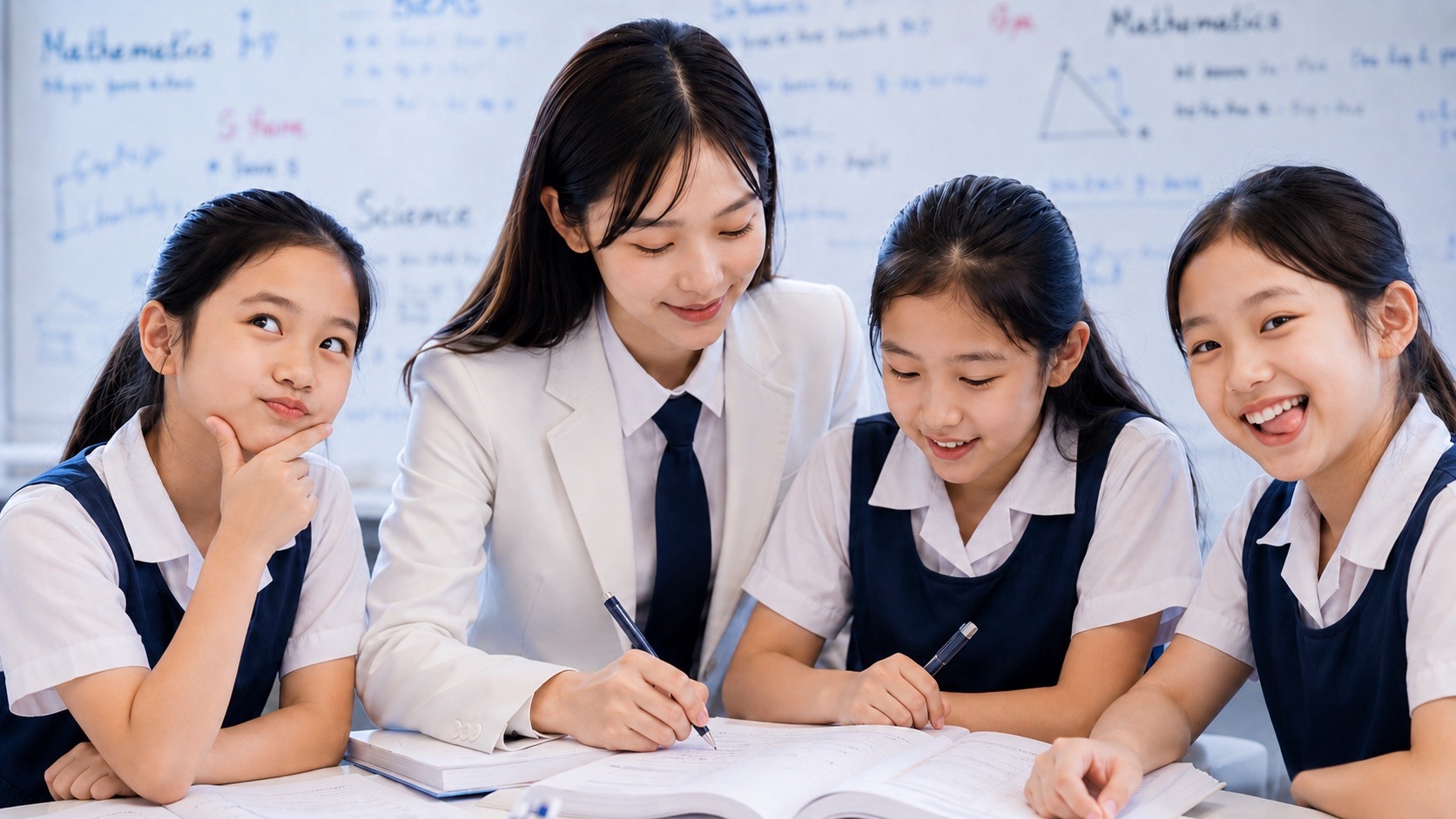
At eduKateSG, our Punggol Science tutoring approach uses small-group visibility to diagnose where reasoning first breaks, repair that weak link, retrieve the correction later and test whether the concept transfers to a changed situation.
What parents should look for in a Primary Science tutor
| Quality | What it should look like |
|---|---|
| Concept diagnosis | The tutor can distinguish a missing concept from a language or application problem. |
| Evidence reasoning | The child learns to connect observations and data to claims. |
| Open-ended explanation | Answers show cause, mechanism and relevant evidence instead of keyword dumping. |
| Transfer | The same concept works when the organism, material, apparatus or scenario changes. |
| Retrieval | Previously learned ideas can be recalled after delay without re-teaching first. |
| Small-group visibility | The tutor can hear each learner explain and identify different reasoning failures. |
Why “knows the topic” is not enough
A student may know that plants need water, that forces affect motion, or that living things interact with their environment. Yet an unfamiliar question can still produce a weak answer. The gap often lies between recognising a fact and using a concept as a reasoning tool.
Science tutoring should therefore ask what the child does with knowledge. Can the learner identify which concept matters? Can the learner select relevant evidence? Can the learner state a causal relationship accurately? Can the learner distinguish what is observed from what is inferred? Can the explanation survive when the familiar example is replaced?
The five common Science failure modes
- Concept failure: the student does not yet understand the scientific relationship.
- Language failure: the student understands the idea but cannot express it precisely enough.
- Evidence failure: the student makes a claim without linking it to the observations or data provided.
- Transfer failure: the student can answer familiar textbook examples but not changed conditions.
- Retrieval failure: the concept was learned before but is unavailable when needed.
These failures can look similar on a marked paper. That is why diagnosis matters. Giving all five students the same correction because they lost the same mark can preserve the underlying problem.
P3 Science: turn everyday words into scientific distinctions
Primary 3 is often where children begin moving from everyday description towards more disciplined scientific thinking. Words such as “same”, “different”, “alive”, “material”, “property”, “change” and “observe” need increasingly precise meanings.
A good P3 Science tutor should protect curiosity while teaching distinctions. The child learns to look carefully, state what is actually observed, compare using a clear property and avoid jumping immediately to a memorised answer.
P4 Science: knowing the parts is not yet understanding the system
As topics become more structured, students may memorise parts, labels and definitions without understanding relationships. A system is not just a list of components; it is also how those components interact and what changes when one condition changes.
Tuition should therefore ask students to explain links, predict consequences and compare cases. This makes the concept more usable than memorising one canonical diagram.
P5 Science: reasoning and retrieval start carrying more weight
By Primary 5, students often face a wider network of concepts and more opportunities for interference. They may remember the right keyword but attach it to the wrong relationship. They may understand a process when it is taught but fail to retrieve it several weeks later.
A strong P5 tutoring system should therefore include delayed retrieval and mixed practice. Old concepts reappear alongside new ones so the learner must select the correct model rather than follow the chapter heading.
P6 Science: concept-to-answer conversion becomes critical
Primary 6 students can lose marks even when they know the science. The answer may omit the mechanism, fail to compare the correct variables, state a claim without evidence, or use language that is too broad for the question.
P6 tuition should therefore train the full conversion route: read the scenario → identify the concept → select the evidence → build the causal explanation → answer the exact demand → verify. Full papers are useful for testing this system, but targeted repair is still needed when one step fails.
The eduKateSG Science repair loop
| Stage | Science teaching question |
|---|---|
| Diagnose | What did the child think the question was asking? |
| Localise | Did the failure begin at concept, evidence, language, retrieval or transfer? |
| Repair | What scientific relationship needs to be rebuilt? |
| Explain | Can the learner state the mechanism in clear cause-and-effect language? |
| Retrieve | Can the learner recall the concept later without the original example? |
| Transfer | Can the concept handle a changed organism, material, variable or scenario? |
| Monitor | Does the correction survive mixed and longer tasks? |
Why keywords alone do not produce strong Science answers
Keywords are useful because Science requires precise language. But keywords are not a substitute for reasoning. An answer can contain the expected term and still fail to show why the result occurred.
We teach students to connect the parts of an explanation: what changed, which concept applies, what mechanism connects cause to effect, and what evidence in the question supports the conclusion. This produces answers that are more robust when the surface wording changes.
Observation versus inference
One important scientific habit is separating what can be directly observed from what is inferred. If a graph rises, the rise is evidence. Why it rises may require a model. If an object moves differently after a variable changes, the movement is observed; the explanation requires scientific reasoning.
This distinction helps students avoid unsupported claims and makes open-ended answers more disciplined.
What transfer looks like in Science
- A concept learned with one plant can be applied to a different plant scenario.
- A forces relationship survives when the object and direction change.
- A heat concept works in an unfamiliar everyday context.
- A systems idea can be used when one component is removed or altered.
- A data-reading method works on a new table or graph.
- An explanation structure survives even when the keywords are different.
Why a 3-pax Science class changes diagnostic visibility
Science reasoning becomes visible when students explain. In a 3-pax class, the tutor can hear three different models for the same question. One child may choose the wrong concept, another may have the right concept but weak evidence, and another may reason correctly but write an incomplete answer.
The small group makes those differences easier to detect while giving students the benefit of comparing alternative explanations. The tutor can ask, “Which part of this answer is evidence? Which part is the mechanism? What would change if this variable changed?”
What parents should see when Science tuition is working
- The child explains more and guesses less.
- Answers use evidence more deliberately.
- Old concepts are retrieved without needing the chapter title as a cue.
- The learner can handle changed scenarios with less panic.
- Open-ended answers contain clearer cause-and-effect relationships.
- The student notices when an answer is too vague.
- Marked school work shows fewer repeated error patterns.
Questions parents can ask a Science tutor
- How do you distinguish a concept gap from an answering-language gap?
- How do you teach students to use evidence?
- How do you test whether a concept transfers to an unfamiliar question?
- How do you revisit old topics so they remain retrievable?
- How does your approach change from P3 to P6?
- How do you use marked school papers diagnostically?
- What signs show that the child is becoming more independent?
When Science tuition may not be the right intervention
If the child already understands the concepts, applies them accurately and simply needs routine school practice, adding another intensive programme may produce little return. Tuition is most useful when there is a specific job: repairing misconceptions, improving evidence-based reasoning, strengthening retrieval, supporting open-ended expression or stabilising performance under assessment conditions.
How eduKateSG approaches Science tutoring in Punggol
We want the child to leave with more than correct answers. The learner should carry a better scientific operating method: observe carefully, identify the relevant relationship, separate evidence from inference, explain mechanism, test the idea against changed conditions and revise when the evidence does not fit.
That is why we use diagnosis before volume and transfer before declaring mastery. The long-term aim is a student who can reason when the question no longer looks like the worksheet.
Frequently asked questions
Should Primary Science tuition focus on memorising keywords?
Keywords matter, but they should sit inside correct scientific relationships. Students need to know what the term means, when it applies and how it supports an explanation.
Are full papers the best way to improve P6 Science?
Full papers are useful system tests, especially for timing and integration. When they reveal a recurring failure, targeted repair is usually more efficient than immediately doing another full paper.
What should a child bring to the first Science lesson?
Recent marked work is valuable because it shows the child’s current reasoning patterns. School worksheets, tests and open-ended responses can help the tutor identify the first useful weak link.
Properly Taught Kids Shine a Bright Light Into the Future.