
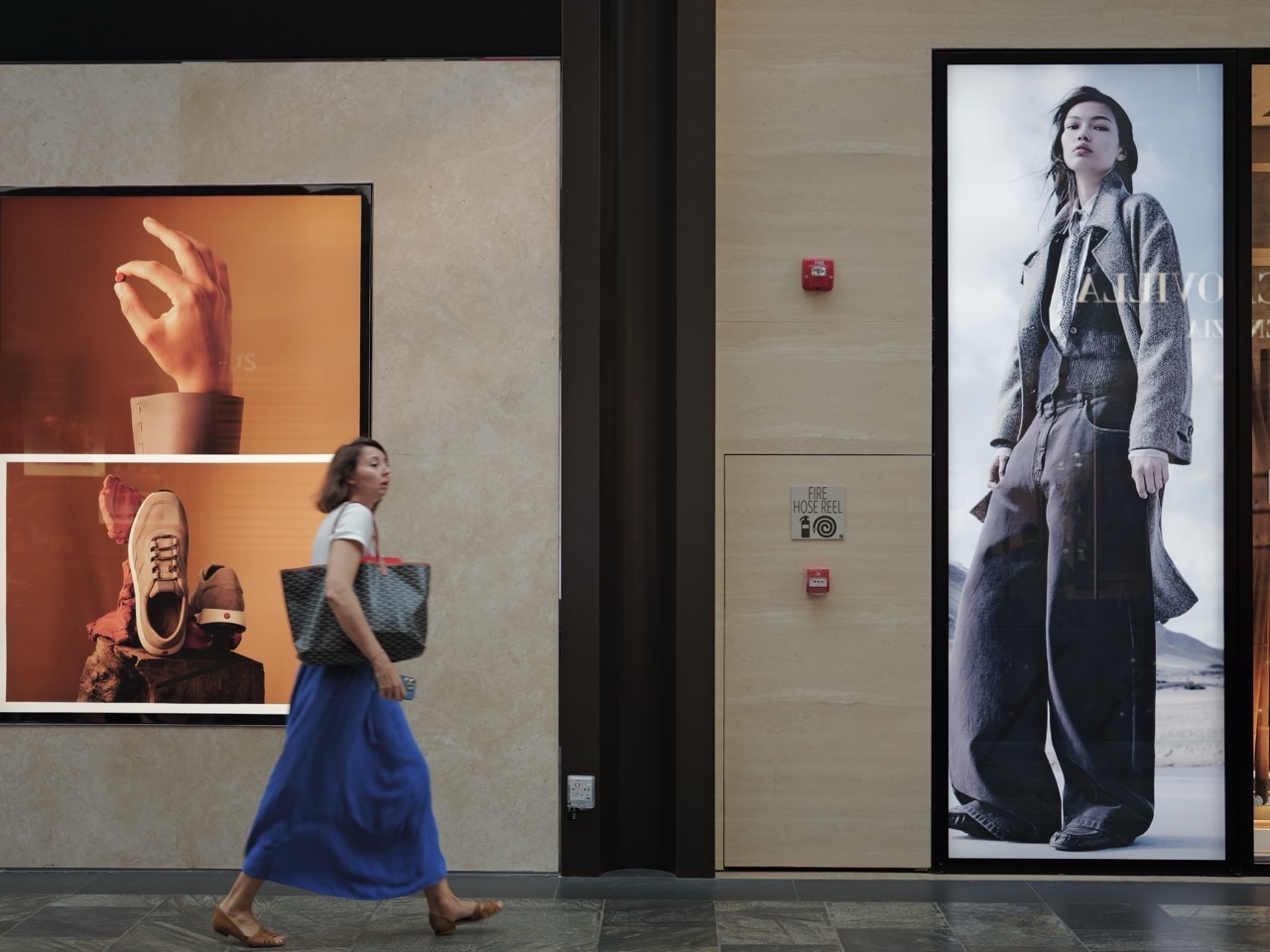
Quick Read: Most people meet fashion before they touch it. They meet it as an image: a campaign, runway photograph, magazine editorial, product page, celebrity post or social feed. That matters because photographs do not transmit garments neutrally. Lighting changes texture. Pose changes proportion. Styling changes meaning. Framing changes context. The image therefore becomes part of the fashion system itself.
The dress in the photograph is not the dress in the room
Imagine a black jacket hanging on a plain rack.
Now imagine the same jacket on a model walking through rain at night under hard streetlight. Then imagine it in a bright studio against white. Then imagine it worn over a school shirt, or with evening trousers, or with ripped denim.
The physical jacket has barely changed. The fashion message has.
Fashion photography does not simply show clothing. It builds a world in which the clothing makes sense.
##### Representation comes before desire
Before a shopper wants a garment, they often need to imagine it on a body, in a life, at an occasion or inside an identity.
Photography helps perform that translation.
A product photograph says, “Here is the object.” An editorial photograph can say, “Here is a way of being.” A campaign can say, “People like this inhabit a world like this.”
That is why image-making is not a decorative afterthought. It connects product to imagination.
##### The model is part of the message
A garment never looks identical on every body.
Height, posture, movement, age, body proportions, hairstyle and expression all influence perception. Casting therefore changes the social meaning of clothing.
A tailored suit on a teenager tells a different story from the same suit on an older executive. Sportswear on an athlete feels different from sportswear styled as high fashion. A traditional garment photographed ceremonially differs from the same garment placed in a deliberately disruptive editorial.
The model is not an empty hanger. The model supplies identity cues.
##### Pose redraws the garment
Stand completely still with your arms by your side. Now twist, lean, stride or sit.
Cloth folds differently. Hems rise. seams rotate. silhouettes narrow or expand. A jacket opens. A sleeve compresses. A skirt gains movement.
Pose therefore edits the visible geometry of fashion.
A strong pose can make a garment feel architectural, relaxed, sensual, aggressive, playful or practical without changing the pattern itself.
##### Lighting writes texture
Soft light can smooth surfaces and reduce contrast. Hard light can reveal weave, shine, wrinkles and relief. Backlight can make translucent materials glow. Directional light can sharpen tailoring and exaggerate volume.
This is especially important for black and white garments, where shape may be carried by subtle highlight and shadow rather than colour contrast.
material + light angle + exposure = visible texture
The camera therefore does not merely capture material properties. It selects which properties become legible.
##### Styling creates relationships
One item rarely appears alone in fashion imagery.
Shoes, jewellery, hair, makeup, bags, layers and props change the way the central garment is interpreted. Styling can place the same shirt in a corporate, streetwear, nostalgic, futuristic or ceremonial frame.
This is why styling is a form of visual argument.
It proposes connections: this goes with that; this kind of person might wear these things together; this object belongs in this cultural neighbourhood.
##### Background changes foreground
A white studio background removes much of the world. That can make form, colour and product detail easier to inspect.
A location adds information.
A palace, industrial site, school corridor, beach, forest, subway, hotel or ordinary HDB void deck can place clothing inside very different narratives. Architecture becomes a supporting character.
The background answers an unspoken question: Where does this fashion imagine itself living?
##### Editorial photography is not the same as product photography
Product photography usually prioritises clarity. The shopper needs to inspect shape, colour, details and perhaps fit.
Editorial photography can prioritise mood, concept or narrative. It may crop strangely, obscure details, use dramatic lighting or make the garment only one element of a larger story.
The two forms solve different problems.
product image → reduce uncertainty
editorial image → expand imagination
##### Advertising adds persuasion
A fashion advertisement does not simply ask whether you like a garment.
It may ask whether you want to inhabit the status, freedom, beauty, confidence or cultural relevance represented by the image.
This is why campaigns sometimes show products only partially. The goal is not always to explain the object. It can be to strengthen the mythology around the brand.
##### Runway photography freezes what was designed to move
A runway show is temporal. The garment approaches, passes, turns and disappears. Music, audience, venue and sequence shape perception.
A still photograph extracts one fraction of a second.
That extraction can become the version of the look that circulates globally. A particular stride or fabric movement may define public memory of a collection more than the live show itself.
Representation therefore edits an event into an archive.
##### The fashion image can become more famous than the garment
Some photographs enter cultural memory even after the clothes are no longer commercially available.
The image may define an era, a celebrity, a magazine or a designer. In that case the photograph becomes an independent cultural object.
This creates an interesting reversal: fashion originally needed the image for distribution, but eventually the image can outlive the fashion.
##### Cropping is power
Every photograph excludes more than it includes.
Cropping can remove shoes, environment, other people, evidence of discomfort or parts of the garment itself. It directs attention by deciding what does not exist inside the frame.
This is a basic lesson in media literacy: the frame is not neutral.
##### Retouching and image processing change the evidence
Fashion photographs have always involved interpretation through lenses, film choices, printing, lighting and darkroom processes. Digital tools increase the range and speed of alteration.
Skin can be smoothed. proportions can be adjusted. colours can shift. wrinkles can disappear. backgrounds can be replaced. Garments can look more saturated or pristine than they do in ordinary conditions.
This matters because viewers may treat an aspirational image as evidence of physical reality.
Good visual literacy asks: What part of what I see belongs to the garment, and what part belongs to the image-making process?
##### Social media turns everyone into a small fashion publisher
Fashion distribution once depended heavily on magazines, newspapers, advertising agencies, television and retail displays.
Now an ordinary person can style an outfit, photograph it and distribute it globally in seconds.
This changes authority. Editors and brands still matter, but consumers, influencers, niche communities and creators participate directly in image circulation.
The fashion audience has become part of fashion media.
##### Algorithms decide which fashion images get a second life
Digital platforms cannot show every image equally.
Ranking systems select what appears. Images that generate engagement may receive more distribution. Creators observe these patterns and adapt composition, styling, timing and format.
This means fashion photography is now shaped not only by human editors but also by optimisation for machine-mediated visibility.
image → engagement → ranking → visibility → imitation → more images
##### The selfie changes who controls the fashion image
Historically, being photographed for fashion was often controlled by institutions.
The selfie allows wearers to become photographer, model, stylist, editor and publisher at once.
That increases agency but also creates pressure. The wearer may begin selecting clothes partly for how they perform in images rather than how they perform in physical life.
The wardrobe starts serving two bodies: the body in the room and the body on the screen.
##### Photogenic is not the same as wearable
A garment can produce a dramatic photograph and be difficult to live in.
Extreme volume, transparent fabrics, restrictive shoes and fragile surfaces may perform beautifully for seconds under controlled conditions but poorly across an ordinary day.
That does not make them bad fashion. It means we should distinguish the job.
Some fashion is designed for daily use. Some for performance. Some for ceremony. Some to advance an idea. The image can blur these categories if viewers assume every photographed look is a practical recommendation.
##### Fashion photography and body ideals
Repeated images influence what bodies appear normal, desirable or worthy of attention.
Casting decisions therefore have cultural consequences. If fashion media repeatedly presents only a narrow range of bodies, viewers may confuse editorial selection with population reality.
Broader representation changes not only who is seen but how garments are understood across different bodies and ages.
##### The product page is a technical document disguised as a photograph
Online retail photography has to solve practical information problems.
What is the front? What is the back? How long is the garment? How does the fabric hang? Is it transparent? Where are the pockets? How does the collar sit?
Good product imagery reduces uncertainty by showing multiple angles, scale and detail. Poor imagery forces the consumer to infer too much, increasing disappointment and returns.
Photography therefore affects logistics as well as aesthetics.
##### Colour accuracy is a representation problem
Physical cloth is illuminated by the world. Screens emit light.
Between garment and viewer sit camera sensor, lens, white balance, editing software, compression, website processing, screen calibration and ambient room light.
That is why a shopper can receive an item and say, “This is not the colour I saw.” The system translated the colour through several representations.
##### How to read a fashion photograph critically
- Garment: What can I actually observe about the clothing?
- Body: How does the model shape my interpretation?
- Pose: Which parts of the garment are being emphasised or hidden?
- Light: What textures and volumes are lighting choices creating?
- Styling: Which other objects are changing the message?
- Setting: What world has been built around the clothes?
- Frame: What has been excluded?
- Processing: What may have been altered?
- Purpose: Is this product information, editorial expression or persuasion?
- Distribution: Why did this particular image reach me?
These questions do not ruin the pleasure of fashion photography. They make the pleasure more intelligent.
##### The larger idea
Fashion works partly because clothing can travel without physically travelling.
An image carries silhouette, colour, status, mood and styling across enormous distances before the garment itself arrives—if it ever does.
That makes photography one of fashion’s great transport systems.
The photograph wears the clothes too, because every image dresses the garment in another layer of meaning.
Photography route: For the camera-side mechanics of framing, lighting, colour, cropping, evidence and image circulation discussed here, return to the canonical Photography Knowledge Map.