
A lift is a small room suspended inside a moving machine.
That is why Singapore regulates it like safety-critical infrastructure rather than ordinary building furniture.
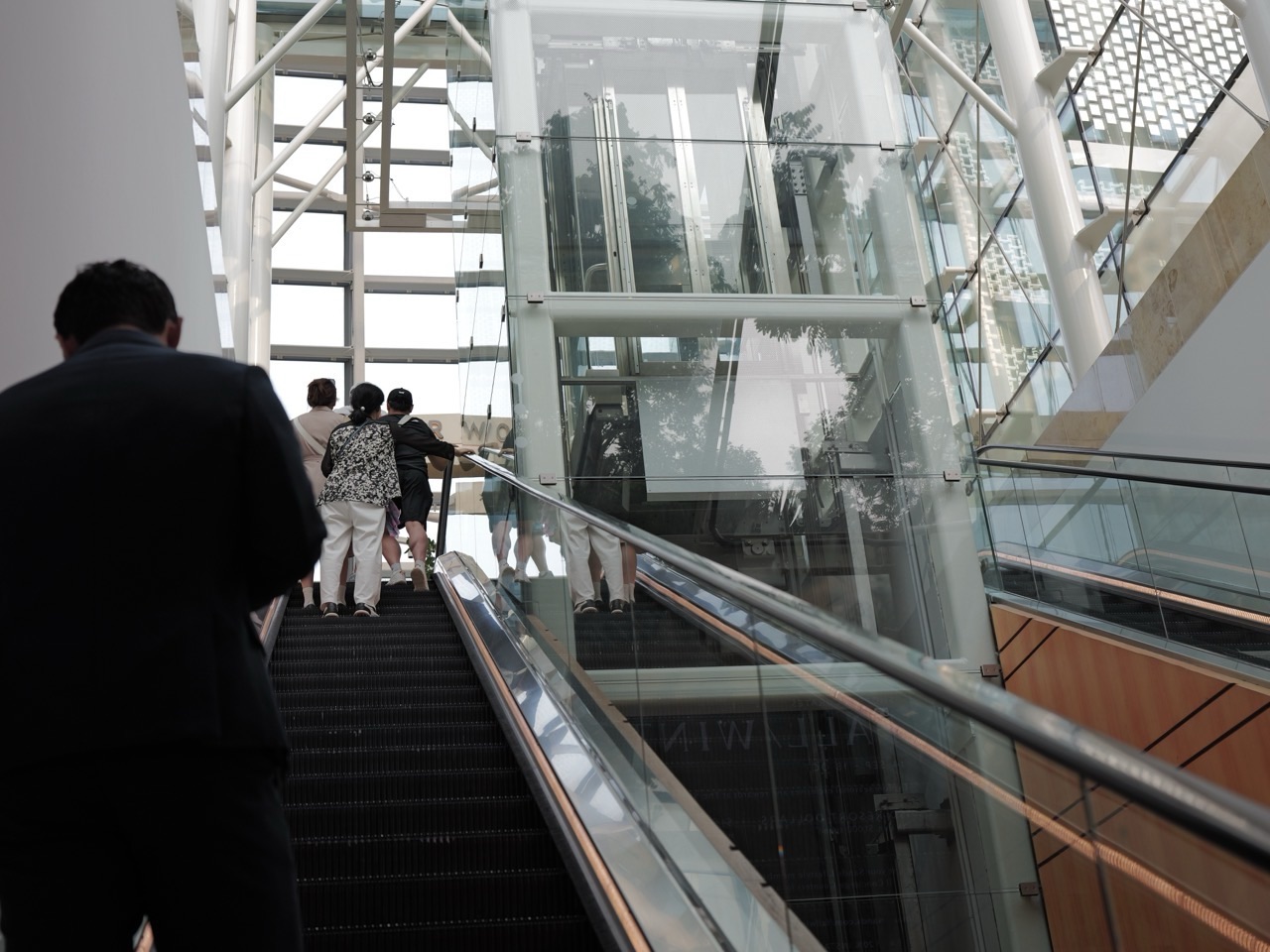
The same applies to escalators: they move thousands of people through public buildings and transport nodes while exposing users to moving steps, comb plates, handrails, braking systems and machinery that most passengers never see.
Direct answer: BCA regulates lifts and escalators as “fixed installations”. Owners need a valid Permit to Operate, must use BCA-registered contractors for installation and maintenance, and must follow prescribed maintenance and testing schedules. Under the Building Control (Fixed Installations) Regulations 2025, ordinary lifts generally receive maintenance at least monthly unless an approved Remote Monitoring and Diagnostics schedule applies, all escalators are maintained monthly, and all lifts and escalators undergo annual inspection and testing.
The safety loop is: design and install → test and commission → obtain Permit to Operate → maintain at prescribed frequency → monitor faults → inspect and test annually → report specified incidents → repair or alter through registered parties → renew operating approval → rescue passengers safely if a lift stops unexpectedly.
1. The owner is the first statutory safety owner
Building owners are responsible for ensuring lifts and escalators under their control are safe and properly maintained.
That includes appointing qualified registered contractors, maintaining a valid Permit to Operate and complying with testing and reporting requirements.
The maintenance contractor performs technical work. The owner remains accountable for ensuring the regulated system is in place.
2. A Permit to Operate is the legal gateway to public use
A lift or escalator is not supposed to enter service simply because installation is physically complete.
The fixed installation must satisfy the required regulatory process and have a valid Permit to Operate.
Major alteration or replacement works can cause the existing PTO to cease, after which the owner must complete the prescribed certification and apply for a new permit before operation resumes.
3. Installation and maintenance are registrable activities
BCA requires parties carrying out lift and escalator installation, maintenance, inspection and testing work to hold the appropriate registration.
This matters because the equipment combines electrical, mechanical, structural and control-system risks.
Public safety depends on work being carried out by people and firms operating inside a defined competence and accountability framework.
4. Ordinary passenger lifts are maintained at least monthly
BCA’s 2026 maintenance schedule requires ordinary lifts to be maintained according to the manufacturer’s recommended frequency or at least once every month, whichever is more frequent, unless a Commissioner-approved Remote Monitoring and Diagnostics arrangement provides a different approved schedule.
The monthly rhythm matters because small changes—door alignment, brake condition, sensors, ropes, rollers, lubrication and control faults—can accumulate between annual inspections.
5. All escalators are maintained monthly
Escalators operate continuously in many high-footfall environments.
BCA requires monthly maintenance by a registered fixed-installation service contractor.
The work can include checks on braking, step chains, comb plates, handrail systems, sensors and other components prescribed by the maintenance framework.
6. Annual inspection and testing provide an independent checkpoint
All lifts and escalators undergo annual inspection and testing.
BCA’s current requirements call for the test to be carried out by the registered service contractor with an independent Specialist Professional Engineer present.
Routine maintenance therefore does not mark its own homework indefinitely.
A separate professional verification layer checks that the installation remains fit for continued operation.
7. Remote monitoring changes how faults are seen between visits
Remote Monitoring and Diagnostics systems can track selected operating conditions continuously rather than waiting for the next physical visit.
BCA supports outcome-based maintenance approaches where approved, using performance and remote diagnostics to improve reliability and maintenance productivity.
The principle is not fewer checks by default.
It is better evidence between checks.
8. A safety incident becomes a reportable regulatory event
Certain fixed-installation incidents and safety risks must be reported to the Commissioner of Building Control within specified timeframes.
That requirement preserves evidence and allows the regulator to see patterns beyond one building.
An incident can therefore produce both a local repair and wider regulatory learning.
9. Repairs after serious incidents have to preserve evidence
BCA enforcement records show why post-incident controls matter: contractors can face enforcement for carrying out repairs to equipment that may have contributed to an incident without the required consent.
The reason is simple.
Repairing the suspected component too early can destroy information needed to determine why the incident occurred.
10. A trapped passenger should not self-rescue through the doors
If a lift stops between floors, the safest passenger action is to stay inside, press the alarm, use the emergency contact number and wait for trained help.
BCA explicitly warns passengers not to pry open the lift doors.
The reason is the shaft.
A stopped car can sit above or below the landing level, and opening doors without controlled rescue can expose passengers to a dangerous fall or moving equipment.
11. The emergency alarm creates the rescue return path
The alarm button and emergency contact are not convenience features.
They connect the trapped passenger to the building owner, managing agent or maintenance response system capable of arranging safe release.
In HDB blocks, residents may also rely on the Essential Maintenance Service Unit arrangement identified at the lift.
The stopped lift becomes manageable because the passenger can communicate without leaving the car.
12. Rescue is a controlled mechanical operation
Qualified responders determine the car position, isolate or control the lift system and bring passengers to a safe landing according to the equipment and rescue procedure.
The exact method depends on lift design and failure condition.
That is why passenger improvisation is dangerous: the visible symptom—doors not opening—does not reveal the mechanical state behind the wall.
13. Escalator rescue is a different problem
Escalators do not trap passengers in an enclosed car, but they create pinch, entrapment and fall hazards at moving interfaces.
Emergency stop functions allow the equipment to be halted when necessary, after which trained personnel manage the incident and inspect the machine before return to service.
The common safety rule is controlled isolation before intervention.
14. Modernisation is part of lifecycle safety
Lifts can remain in service for decades while components and safety standards evolve.
Owners therefore have to consider major alteration, component replacement and modernisation rather than treating continued operation as proof that every subsystem should remain original forever.
Lifecycle safety means knowing when maintenance is enough and when renewal is the more responsible intervention.
15. A worked example: lift stops between floors
Imagine a passenger lift detects a fault and stops between levels.
The passenger presses the alarm and calls the emergency number. Building management and the maintenance response team confirm the lift identity and location. Trained personnel secure the equipment, assess the car position and carry out the appropriate rescue procedure. The lift remains out of normal service until the fault is investigated and repaired, after which required testing or reporting follows before the installation returns to ordinary operation.
The safest rescue begins by preventing the passenger from turning a controlled equipment fault into an uncontrolled shaft hazard.
16. Common misconceptions
A lift is safe if it passes its annual test.
No. annual testing is one checkpoint; ordinary lifts and escalators also require recurring maintenance between annual tests.
Any elevator company can legally maintain a lift.
No. the relevant fixed-installation work requires BCA registration.
If a trapped passenger can force the doors open, leaving is safer.
No. BCA explicitly advises passengers not to pry open lift doors; the car may not be level with the landing.
A malfunction means the regulator failed.
No. mechanical systems can still fail; regulation reduces risk through competence, maintenance, testing, reporting and controlled recovery.
17. The deeper idea: vertical transport is trusted because failure has a procedure
People enter lifts because they assume the machine will move.
Public safety depends on something more demanding: the system must still know what to do when the machine does not move.
Registration establishes competence. Maintenance looks for deterioration. Annual testing challenges the system. Incident reporting preserves learning. Rescue procedures protect passengers during the abnormal state.
Reliability earns convenience.
Prepared failure management earns trust.
Official sources and further reading
- Building and Construction Authority — Lifts, Escalators and Mechanised Car Parking Systems
- BCA — Periodic Maintenance Requirements, March 2026
- BCA — Lift and Escalator Safety
- BCA — Building Control (Fixed Installations) Regulations 2025
- How Periodic Structural Inspections Find Building Risk
- eduKateSG — 500 Singapore