
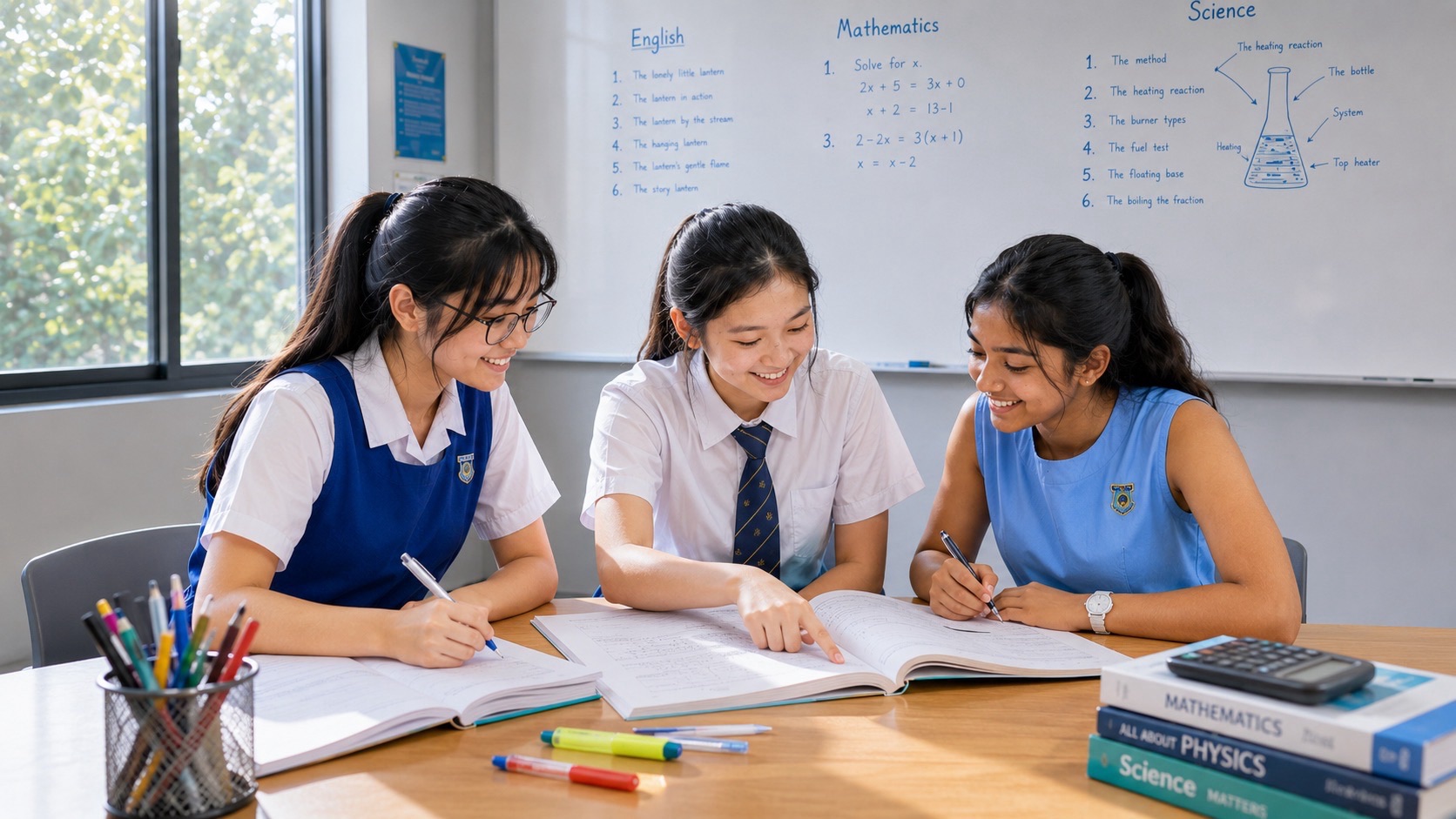
Confidence is important for students because learners need enough belief in their ability to attempt difficult work, expose uncertainty and keep participating while competence is still developing. The importance of confidence in education reaches across learning, academic performance, study habits, communication, problem solving and lifelong development. Students benefit when confidence is treated not as a personality label but as a capability that can be built through knowledge, practice, feedback and increasingly independent action.
For students and parents searching for why confidence is important, the practical answer is that school performance depends on what learners repeatedly do. Strong confidence helps students begin worthwhile tasks, continue through difficulty, use feedback and return after setbacks. It works with vocabulary, memory, reading, writing, critical thinking and problem solving rather than replacing them.
The importance of confidence therefore lies in turning intention into usable capability. This guide develops confidence as an educational system: what it means, what supports it, what can undermine it, how teachers and parents can help, and how students can build routines that survive changing subjects, examinations and real-life demands.
50-second route: confidence in action
Know the goal. Make the next action small and clear. Begin. Use evidence from the work rather than mood alone. Check progress. Correct the method. Continue or recover after interruption. Strong confidence is not a permanent feeling. It is a repeatable way of converting purpose into action.
The central proposition
Confidence becomes educationally useful when it is grounded in real capability and good systems. Students do not need to wait for ideal feelings before acting, and they should not mistake positive feelings for mastery. Knowledge, practice, feedback, routines and reflection create evidence that the learner can use to regulate future action.
Self-confidence
self-confidence matters to confidence because student performance is produced by a chain of decisions made before, during and after learning. The learner must understand the task, decide that it is worth attempting, select a workable next step and remain responsive to evidence. When difficulty appears, the useful question is not whether the learner possesses enough character. It is which part of the system now needs support.
Knowledge and vocabulary affect this process. Students act more effectively when they understand the concepts, instructions and command words in front of them. Confusion can look like low confidence when the real barrier is missing background knowledge or language. Diagnosis matters because encouragement cannot substitute for teaching, and teaching cannot substitute for a routine that gives the learner repeated opportunities to use what was taught.
Practice changes self-confidence by creating evidence. A learner who repeatedly retrieves knowledge, solves progressively harder questions, receives feedback and corrects errors develops a history of successful action. That history is more dependable than slogans. It tells the student which strategies work, where support is still needed and what kind of effort produces improvement.
Feedback should be specific and actionable. “Try harder” gives little information. Better feedback identifies the gap: perhaps the learner misunderstood the question, used an inefficient method, lacked a prerequisite concept, rushed verification or stopped after the first error. Specific diagnosis protects confidence because difficulty becomes a problem to solve rather than a verdict on the person.
Habits reduce the number of decisions that depend on momentary emotion. A stable place, a clear start cue, prepared materials, a defined first task and a planned stopping point can make productive action easier to repeat. Good routines are not rigid for their own sake. They preserve attention for the learning itself and can be adapted when circumstances change.
Metacognition keeps confidence calibrated. Students should ask what they know, what evidence supports that judgment, what strategy they are using and whether it is working. A learner can feel confident and be wrong, or feel uncertain while performing accurately. Objective checks such as retrieval, worked problems, explanations and feedback help align self-perception with actual competence.
Teachers can support self-confidence by combining high expectations with usable pathways. Break complex tasks into meaningful stages without removing the intellectual work. Model how an expert begins, checks and recovers. Make progress visible. Give students chances to make decisions and experience the consequences of those decisions. Gradually reduce support as capability becomes more reliable.
Parents can help by focusing conversation on process and evidence. Ask what the task requires, what the learner has tried, what is currently blocking progress and what the next controllable action could be. Praise can acknowledge genuine effort and improvement, but the strongest long-term message is that capability grows through learning, practice, correction and responsible follow-through.
Transfer is the long-term goal. self-confidence should not exist only in one subject or under one teacher. Students need to recognise the same underlying moves in English, Mathematics, Science, Humanities, projects and everyday responsibilities: understand, begin, monitor, correct, verify and continue. Repeated transfer turns confidence into a portable capability.
Progress becomes visible when students need fewer external prompts, recover more quickly after disruption, choose more effective strategies and use evidence to judge their own performance. The goal is not perfect consistency. Human attention and energy vary. The goal is a learner who knows how to return to productive action and can increasingly manage that return independently.
Self-efficacy
self-efficacy matters to confidence because student performance is produced by a chain of decisions made before, during and after learning. The learner must understand the task, decide that it is worth attempting, select a workable next step and remain responsive to evidence. When difficulty appears, the useful question is not whether the learner possesses enough character. It is which part of the system now needs support.
Knowledge and vocabulary affect this process. Students act more effectively when they understand the concepts, instructions and command words in front of them. Confusion can look like low confidence when the real barrier is missing background knowledge or language. Diagnosis matters because encouragement cannot substitute for teaching, and teaching cannot substitute for a routine that gives the learner repeated opportunities to use what was taught.
Practice changes self-efficacy by creating evidence. A learner who repeatedly retrieves knowledge, solves progressively harder questions, receives feedback and corrects errors develops a history of successful action. That history is more dependable than slogans. It tells the student which strategies work, where support is still needed and what kind of effort produces improvement.
Feedback should be specific and actionable. “Try harder” gives little information. Better feedback identifies the gap: perhaps the learner misunderstood the question, used an inefficient method, lacked a prerequisite concept, rushed verification or stopped after the first error. Specific diagnosis protects confidence because difficulty becomes a problem to solve rather than a verdict on the person.
Habits reduce the number of decisions that depend on momentary emotion. A stable place, a clear start cue, prepared materials, a defined first task and a planned stopping point can make productive action easier to repeat. Good routines are not rigid for their own sake. They preserve attention for the learning itself and can be adapted when circumstances change.
Metacognition keeps confidence calibrated. Students should ask what they know, what evidence supports that judgment, what strategy they are using and whether it is working. A learner can feel confident and be wrong, or feel uncertain while performing accurately. Objective checks such as retrieval, worked problems, explanations and feedback help align self-perception with actual competence.
Teachers can support self-efficacy by combining high expectations with usable pathways. Break complex tasks into meaningful stages without removing the intellectual work. Model how an expert begins, checks and recovers. Make progress visible. Give students chances to make decisions and experience the consequences of those decisions. Gradually reduce support as capability becomes more reliable.
Parents can help by focusing conversation on process and evidence. Ask what the task requires, what the learner has tried, what is currently blocking progress and what the next controllable action could be. Praise can acknowledge genuine effort and improvement, but the strongest long-term message is that capability grows through learning, practice, correction and responsible follow-through.
Transfer is the long-term goal. self-efficacy should not exist only in one subject or under one teacher. Students need to recognise the same underlying moves in English, Mathematics, Science, Humanities, projects and everyday responsibilities: understand, begin, monitor, correct, verify and continue. Repeated transfer turns confidence into a portable capability.
Progress becomes visible when students need fewer external prompts, recover more quickly after disruption, choose more effective strategies and use evidence to judge their own performance. The goal is not perfect consistency. Human attention and energy vary. The goal is a learner who knows how to return to productive action and can increasingly manage that return independently.
Competence
competence matters to confidence because student performance is produced by a chain of decisions made before, during and after learning. The learner must understand the task, decide that it is worth attempting, select a workable next step and remain responsive to evidence. When difficulty appears, the useful question is not whether the learner possesses enough character. It is which part of the system now needs support.
Knowledge and vocabulary affect this process. Students act more effectively when they understand the concepts, instructions and command words in front of them. Confusion can look like low confidence when the real barrier is missing background knowledge or language. Diagnosis matters because encouragement cannot substitute for teaching, and teaching cannot substitute for a routine that gives the learner repeated opportunities to use what was taught.
Practice changes competence by creating evidence. A learner who repeatedly retrieves knowledge, solves progressively harder questions, receives feedback and corrects errors develops a history of successful action. That history is more dependable than slogans. It tells the student which strategies work, where support is still needed and what kind of effort produces improvement.
Feedback should be specific and actionable. “Try harder” gives little information. Better feedback identifies the gap: perhaps the learner misunderstood the question, used an inefficient method, lacked a prerequisite concept, rushed verification or stopped after the first error. Specific diagnosis protects confidence because difficulty becomes a problem to solve rather than a verdict on the person.
Habits reduce the number of decisions that depend on momentary emotion. A stable place, a clear start cue, prepared materials, a defined first task and a planned stopping point can make productive action easier to repeat. Good routines are not rigid for their own sake. They preserve attention for the learning itself and can be adapted when circumstances change.
Metacognition keeps confidence calibrated. Students should ask what they know, what evidence supports that judgment, what strategy they are using and whether it is working. A learner can feel confident and be wrong, or feel uncertain while performing accurately. Objective checks such as retrieval, worked problems, explanations and feedback help align self-perception with actual competence.
Teachers can support competence by combining high expectations with usable pathways. Break complex tasks into meaningful stages without removing the intellectual work. Model how an expert begins, checks and recovers. Make progress visible. Give students chances to make decisions and experience the consequences of those decisions. Gradually reduce support as capability becomes more reliable.
Parents can help by focusing conversation on process and evidence. Ask what the task requires, what the learner has tried, what is currently blocking progress and what the next controllable action could be. Praise can acknowledge genuine effort and improvement, but the strongest long-term message is that capability grows through learning, practice, correction and responsible follow-through.
Transfer is the long-term goal. competence should not exist only in one subject or under one teacher. Students need to recognise the same underlying moves in English, Mathematics, Science, Humanities, projects and everyday responsibilities: understand, begin, monitor, correct, verify and continue. Repeated transfer turns confidence into a portable capability.
Progress becomes visible when students need fewer external prompts, recover more quickly after disruption, choose more effective strategies and use evidence to judge their own performance. The goal is not perfect consistency. Human attention and energy vary. The goal is a learner who knows how to return to productive action and can increasingly manage that return independently.
Courage
courage matters to confidence because student performance is produced by a chain of decisions made before, during and after learning. The learner must understand the task, decide that it is worth attempting, select a workable next step and remain responsive to evidence. When difficulty appears, the useful question is not whether the learner possesses enough character. It is which part of the system now needs support.
Knowledge and vocabulary affect this process. Students act more effectively when they understand the concepts, instructions and command words in front of them. Confusion can look like low confidence when the real barrier is missing background knowledge or language. Diagnosis matters because encouragement cannot substitute for teaching, and teaching cannot substitute for a routine that gives the learner repeated opportunities to use what was taught.
Practice changes courage by creating evidence. A learner who repeatedly retrieves knowledge, solves progressively harder questions, receives feedback and corrects errors develops a history of successful action. That history is more dependable than slogans. It tells the student which strategies work, where support is still needed and what kind of effort produces improvement.
Feedback should be specific and actionable. “Try harder” gives little information. Better feedback identifies the gap: perhaps the learner misunderstood the question, used an inefficient method, lacked a prerequisite concept, rushed verification or stopped after the first error. Specific diagnosis protects confidence because difficulty becomes a problem to solve rather than a verdict on the person.
Habits reduce the number of decisions that depend on momentary emotion. A stable place, a clear start cue, prepared materials, a defined first task and a planned stopping point can make productive action easier to repeat. Good routines are not rigid for their own sake. They preserve attention for the learning itself and can be adapted when circumstances change.
Metacognition keeps confidence calibrated. Students should ask what they know, what evidence supports that judgment, what strategy they are using and whether it is working. A learner can feel confident and be wrong, or feel uncertain while performing accurately. Objective checks such as retrieval, worked problems, explanations and feedback help align self-perception with actual competence.
Teachers can support courage by combining high expectations with usable pathways. Break complex tasks into meaningful stages without removing the intellectual work. Model how an expert begins, checks and recovers. Make progress visible. Give students chances to make decisions and experience the consequences of those decisions. Gradually reduce support as capability becomes more reliable.
Parents can help by focusing conversation on process and evidence. Ask what the task requires, what the learner has tried, what is currently blocking progress and what the next controllable action could be. Praise can acknowledge genuine effort and improvement, but the strongest long-term message is that capability grows through learning, practice, correction and responsible follow-through.
Transfer is the long-term goal. courage should not exist only in one subject or under one teacher. Students need to recognise the same underlying moves in English, Mathematics, Science, Humanities, projects and everyday responsibilities: understand, begin, monitor, correct, verify and continue. Repeated transfer turns confidence into a portable capability.
Progress becomes visible when students need fewer external prompts, recover more quickly after disruption, choose more effective strategies and use evidence to judge their own performance. The goal is not perfect consistency. Human attention and energy vary. The goal is a learner who knows how to return to productive action and can increasingly manage that return independently.
Calibration
calibration matters to confidence because student performance is produced by a chain of decisions made before, during and after learning. The learner must understand the task, decide that it is worth attempting, select a workable next step and remain responsive to evidence. When difficulty appears, the useful question is not whether the learner possesses enough character. It is which part of the system now needs support.
Knowledge and vocabulary affect this process. Students act more effectively when they understand the concepts, instructions and command words in front of them. Confusion can look like low confidence when the real barrier is missing background knowledge or language. Diagnosis matters because encouragement cannot substitute for teaching, and teaching cannot substitute for a routine that gives the learner repeated opportunities to use what was taught.
Practice changes calibration by creating evidence. A learner who repeatedly retrieves knowledge, solves progressively harder questions, receives feedback and corrects errors develops a history of successful action. That history is more dependable than slogans. It tells the student which strategies work, where support is still needed and what kind of effort produces improvement.
Feedback should be specific and actionable. “Try harder” gives little information. Better feedback identifies the gap: perhaps the learner misunderstood the question, used an inefficient method, lacked a prerequisite concept, rushed verification or stopped after the first error. Specific diagnosis protects confidence because difficulty becomes a problem to solve rather than a verdict on the person.
Habits reduce the number of decisions that depend on momentary emotion. A stable place, a clear start cue, prepared materials, a defined first task and a planned stopping point can make productive action easier to repeat. Good routines are not rigid for their own sake. They preserve attention for the learning itself and can be adapted when circumstances change.
Metacognition keeps confidence calibrated. Students should ask what they know, what evidence supports that judgment, what strategy they are using and whether it is working. A learner can feel confident and be wrong, or feel uncertain while performing accurately. Objective checks such as retrieval, worked problems, explanations and feedback help align self-perception with actual competence.
Teachers can support calibration by combining high expectations with usable pathways. Break complex tasks into meaningful stages without removing the intellectual work. Model how an expert begins, checks and recovers. Make progress visible. Give students chances to make decisions and experience the consequences of those decisions. Gradually reduce support as capability becomes more reliable.
Parents can help by focusing conversation on process and evidence. Ask what the task requires, what the learner has tried, what is currently blocking progress and what the next controllable action could be. Praise can acknowledge genuine effort and improvement, but the strongest long-term message is that capability grows through learning, practice, correction and responsible follow-through.
Transfer is the long-term goal. calibration should not exist only in one subject or under one teacher. Students need to recognise the same underlying moves in English, Mathematics, Science, Humanities, projects and everyday responsibilities: understand, begin, monitor, correct, verify and continue. Repeated transfer turns confidence into a portable capability.
Progress becomes visible when students need fewer external prompts, recover more quickly after disruption, choose more effective strategies and use evidence to judge their own performance. The goal is not perfect consistency. Human attention and energy vary. The goal is a learner who knows how to return to productive action and can increasingly manage that return independently.
Practice
practice matters to confidence because student performance is produced by a chain of decisions made before, during and after learning. The learner must understand the task, decide that it is worth attempting, select a workable next step and remain responsive to evidence. When difficulty appears, the useful question is not whether the learner possesses enough character. It is which part of the system now needs support.
Knowledge and vocabulary affect this process. Students act more effectively when they understand the concepts, instructions and command words in front of them. Confusion can look like low confidence when the real barrier is missing background knowledge or language. Diagnosis matters because encouragement cannot substitute for teaching, and teaching cannot substitute for a routine that gives the learner repeated opportunities to use what was taught.
Practice changes practice by creating evidence. A learner who repeatedly retrieves knowledge, solves progressively harder questions, receives feedback and corrects errors develops a history of successful action. That history is more dependable than slogans. It tells the student which strategies work, where support is still needed and what kind of effort produces improvement.
Feedback should be specific and actionable. “Try harder” gives little information. Better feedback identifies the gap: perhaps the learner misunderstood the question, used an inefficient method, lacked a prerequisite concept, rushed verification or stopped after the first error. Specific diagnosis protects confidence because difficulty becomes a problem to solve rather than a verdict on the person.
Habits reduce the number of decisions that depend on momentary emotion. A stable place, a clear start cue, prepared materials, a defined first task and a planned stopping point can make productive action easier to repeat. Good routines are not rigid for their own sake. They preserve attention for the learning itself and can be adapted when circumstances change.
Metacognition keeps confidence calibrated. Students should ask what they know, what evidence supports that judgment, what strategy they are using and whether it is working. A learner can feel confident and be wrong, or feel uncertain while performing accurately. Objective checks such as retrieval, worked problems, explanations and feedback help align self-perception with actual competence.
Teachers can support practice by combining high expectations with usable pathways. Break complex tasks into meaningful stages without removing the intellectual work. Model how an expert begins, checks and recovers. Make progress visible. Give students chances to make decisions and experience the consequences of those decisions. Gradually reduce support as capability becomes more reliable.
Parents can help by focusing conversation on process and evidence. Ask what the task requires, what the learner has tried, what is currently blocking progress and what the next controllable action could be. Praise can acknowledge genuine effort and improvement, but the strongest long-term message is that capability grows through learning, practice, correction and responsible follow-through.
Transfer is the long-term goal. practice should not exist only in one subject or under one teacher. Students need to recognise the same underlying moves in English, Mathematics, Science, Humanities, projects and everyday responsibilities: understand, begin, monitor, correct, verify and continue. Repeated transfer turns confidence into a portable capability.
Progress becomes visible when students need fewer external prompts, recover more quickly after disruption, choose more effective strategies and use evidence to judge their own performance. The goal is not perfect consistency. Human attention and energy vary. The goal is a learner who knows how to return to productive action and can increasingly manage that return independently.
Mastery
mastery matters to confidence because student performance is produced by a chain of decisions made before, during and after learning. The learner must understand the task, decide that it is worth attempting, select a workable next step and remain responsive to evidence. When difficulty appears, the useful question is not whether the learner possesses enough character. It is which part of the system now needs support.
Knowledge and vocabulary affect this process. Students act more effectively when they understand the concepts, instructions and command words in front of them. Confusion can look like low confidence when the real barrier is missing background knowledge or language. Diagnosis matters because encouragement cannot substitute for teaching, and teaching cannot substitute for a routine that gives the learner repeated opportunities to use what was taught.
Practice changes mastery by creating evidence. A learner who repeatedly retrieves knowledge, solves progressively harder questions, receives feedback and corrects errors develops a history of successful action. That history is more dependable than slogans. It tells the student which strategies work, where support is still needed and what kind of effort produces improvement.
Feedback should be specific and actionable. “Try harder” gives little information. Better feedback identifies the gap: perhaps the learner misunderstood the question, used an inefficient method, lacked a prerequisite concept, rushed verification or stopped after the first error. Specific diagnosis protects confidence because difficulty becomes a problem to solve rather than a verdict on the person.
Habits reduce the number of decisions that depend on momentary emotion. A stable place, a clear start cue, prepared materials, a defined first task and a planned stopping point can make productive action easier to repeat. Good routines are not rigid for their own sake. They preserve attention for the learning itself and can be adapted when circumstances change.
Metacognition keeps confidence calibrated. Students should ask what they know, what evidence supports that judgment, what strategy they are using and whether it is working. A learner can feel confident and be wrong, or feel uncertain while performing accurately. Objective checks such as retrieval, worked problems, explanations and feedback help align self-perception with actual competence.
Teachers can support mastery by combining high expectations with usable pathways. Break complex tasks into meaningful stages without removing the intellectual work. Model how an expert begins, checks and recovers. Make progress visible. Give students chances to make decisions and experience the consequences of those decisions. Gradually reduce support as capability becomes more reliable.
Parents can help by focusing conversation on process and evidence. Ask what the task requires, what the learner has tried, what is currently blocking progress and what the next controllable action could be. Praise can acknowledge genuine effort and improvement, but the strongest long-term message is that capability grows through learning, practice, correction and responsible follow-through.
Transfer is the long-term goal. mastery should not exist only in one subject or under one teacher. Students need to recognise the same underlying moves in English, Mathematics, Science, Humanities, projects and everyday responsibilities: understand, begin, monitor, correct, verify and continue. Repeated transfer turns confidence into a portable capability.
Progress becomes visible when students need fewer external prompts, recover more quickly after disruption, choose more effective strategies and use evidence to judge their own performance. The goal is not perfect consistency. Human attention and energy vary. The goal is a learner who knows how to return to productive action and can increasingly manage that return independently.
Feedback
feedback matters to confidence because student performance is produced by a chain of decisions made before, during and after learning. The learner must understand the task, decide that it is worth attempting, select a workable next step and remain responsive to evidence. When difficulty appears, the useful question is not whether the learner possesses enough character. It is which part of the system now needs support.
Knowledge and vocabulary affect this process. Students act more effectively when they understand the concepts, instructions and command words in front of them. Confusion can look like low confidence when the real barrier is missing background knowledge or language. Diagnosis matters because encouragement cannot substitute for teaching, and teaching cannot substitute for a routine that gives the learner repeated opportunities to use what was taught.
Practice changes feedback by creating evidence. A learner who repeatedly retrieves knowledge, solves progressively harder questions, receives feedback and corrects errors develops a history of successful action. That history is more dependable than slogans. It tells the student which strategies work, where support is still needed and what kind of effort produces improvement.
Feedback should be specific and actionable. “Try harder” gives little information. Better feedback identifies the gap: perhaps the learner misunderstood the question, used an inefficient method, lacked a prerequisite concept, rushed verification or stopped after the first error. Specific diagnosis protects confidence because difficulty becomes a problem to solve rather than a verdict on the person.
Habits reduce the number of decisions that depend on momentary emotion. A stable place, a clear start cue, prepared materials, a defined first task and a planned stopping point can make productive action easier to repeat. Good routines are not rigid for their own sake. They preserve attention for the learning itself and can be adapted when circumstances change.
Metacognition keeps confidence calibrated. Students should ask what they know, what evidence supports that judgment, what strategy they are using and whether it is working. A learner can feel confident and be wrong, or feel uncertain while performing accurately. Objective checks such as retrieval, worked problems, explanations and feedback help align self-perception with actual competence.
Teachers can support feedback by combining high expectations with usable pathways. Break complex tasks into meaningful stages without removing the intellectual work. Model how an expert begins, checks and recovers. Make progress visible. Give students chances to make decisions and experience the consequences of those decisions. Gradually reduce support as capability becomes more reliable.
Parents can help by focusing conversation on process and evidence. Ask what the task requires, what the learner has tried, what is currently blocking progress and what the next controllable action could be. Praise can acknowledge genuine effort and improvement, but the strongest long-term message is that capability grows through learning, practice, correction and responsible follow-through.
Transfer is the long-term goal. feedback should not exist only in one subject or under one teacher. Students need to recognise the same underlying moves in English, Mathematics, Science, Humanities, projects and everyday responsibilities: understand, begin, monitor, correct, verify and continue. Repeated transfer turns confidence into a portable capability.
Progress becomes visible when students need fewer external prompts, recover more quickly after disruption, choose more effective strategies and use evidence to judge their own performance. The goal is not perfect consistency. Human attention and energy vary. The goal is a learner who knows how to return to productive action and can increasingly manage that return independently.
Errors
errors matters to confidence because student performance is produced by a chain of decisions made before, during and after learning. The learner must understand the task, decide that it is worth attempting, select a workable next step and remain responsive to evidence. When difficulty appears, the useful question is not whether the learner possesses enough character. It is which part of the system now needs support.
Knowledge and vocabulary affect this process. Students act more effectively when they understand the concepts, instructions and command words in front of them. Confusion can look like low confidence when the real barrier is missing background knowledge or language. Diagnosis matters because encouragement cannot substitute for teaching, and teaching cannot substitute for a routine that gives the learner repeated opportunities to use what was taught.
Practice changes errors by creating evidence. A learner who repeatedly retrieves knowledge, solves progressively harder questions, receives feedback and corrects errors develops a history of successful action. That history is more dependable than slogans. It tells the student which strategies work, where support is still needed and what kind of effort produces improvement.
Feedback should be specific and actionable. “Try harder” gives little information. Better feedback identifies the gap: perhaps the learner misunderstood the question, used an inefficient method, lacked a prerequisite concept, rushed verification or stopped after the first error. Specific diagnosis protects confidence because difficulty becomes a problem to solve rather than a verdict on the person.
Habits reduce the number of decisions that depend on momentary emotion. A stable place, a clear start cue, prepared materials, a defined first task and a planned stopping point can make productive action easier to repeat. Good routines are not rigid for their own sake. They preserve attention for the learning itself and can be adapted when circumstances change.
Metacognition keeps confidence calibrated. Students should ask what they know, what evidence supports that judgment, what strategy they are using and whether it is working. A learner can feel confident and be wrong, or feel uncertain while performing accurately. Objective checks such as retrieval, worked problems, explanations and feedback help align self-perception with actual competence.
Teachers can support errors by combining high expectations with usable pathways. Break complex tasks into meaningful stages without removing the intellectual work. Model how an expert begins, checks and recovers. Make progress visible. Give students chances to make decisions and experience the consequences of those decisions. Gradually reduce support as capability becomes more reliable.
Parents can help by focusing conversation on process and evidence. Ask what the task requires, what the learner has tried, what is currently blocking progress and what the next controllable action could be. Praise can acknowledge genuine effort and improvement, but the strongest long-term message is that capability grows through learning, practice, correction and responsible follow-through.
Transfer is the long-term goal. errors should not exist only in one subject or under one teacher. Students need to recognise the same underlying moves in English, Mathematics, Science, Humanities, projects and everyday responsibilities: understand, begin, monitor, correct, verify and continue. Repeated transfer turns confidence into a portable capability.
Progress becomes visible when students need fewer external prompts, recover more quickly after disruption, choose more effective strategies and use evidence to judge their own performance. The goal is not perfect consistency. Human attention and energy vary. The goal is a learner who knows how to return to productive action and can increasingly manage that return independently.
Failure
failure matters to confidence because student performance is produced by a chain of decisions made before, during and after learning. The learner must understand the task, decide that it is worth attempting, select a workable next step and remain responsive to evidence. When difficulty appears, the useful question is not whether the learner possesses enough character. It is which part of the system now needs support.
Knowledge and vocabulary affect this process. Students act more effectively when they understand the concepts, instructions and command words in front of them. Confusion can look like low confidence when the real barrier is missing background knowledge or language. Diagnosis matters because encouragement cannot substitute for teaching, and teaching cannot substitute for a routine that gives the learner repeated opportunities to use what was taught.
Practice changes failure by creating evidence. A learner who repeatedly retrieves knowledge, solves progressively harder questions, receives feedback and corrects errors develops a history of successful action. That history is more dependable than slogans. It tells the student which strategies work, where support is still needed and what kind of effort produces improvement.
Feedback should be specific and actionable. “Try harder” gives little information. Better feedback identifies the gap: perhaps the learner misunderstood the question, used an inefficient method, lacked a prerequisite concept, rushed verification or stopped after the first error. Specific diagnosis protects confidence because difficulty becomes a problem to solve rather than a verdict on the person.
Habits reduce the number of decisions that depend on momentary emotion. A stable place, a clear start cue, prepared materials, a defined first task and a planned stopping point can make productive action easier to repeat. Good routines are not rigid for their own sake. They preserve attention for the learning itself and can be adapted when circumstances change.
Metacognition keeps confidence calibrated. Students should ask what they know, what evidence supports that judgment, what strategy they are using and whether it is working. A learner can feel confident and be wrong, or feel uncertain while performing accurately. Objective checks such as retrieval, worked problems, explanations and feedback help align self-perception with actual competence.
Teachers can support failure by combining high expectations with usable pathways. Break complex tasks into meaningful stages without removing the intellectual work. Model how an expert begins, checks and recovers. Make progress visible. Give students chances to make decisions and experience the consequences of those decisions. Gradually reduce support as capability becomes more reliable.
Parents can help by focusing conversation on process and evidence. Ask what the task requires, what the learner has tried, what is currently blocking progress and what the next controllable action could be. Praise can acknowledge genuine effort and improvement, but the strongest long-term message is that capability grows through learning, practice, correction and responsible follow-through.
Transfer is the long-term goal. failure should not exist only in one subject or under one teacher. Students need to recognise the same underlying moves in English, Mathematics, Science, Humanities, projects and everyday responsibilities: understand, begin, monitor, correct, verify and continue. Repeated transfer turns confidence into a portable capability.
Progress becomes visible when students need fewer external prompts, recover more quickly after disruption, choose more effective strategies and use evidence to judge their own performance. The goal is not perfect consistency. Human attention and energy vary. The goal is a learner who knows how to return to productive action and can increasingly manage that return independently.
Persistence
persistence matters to confidence because student performance is produced by a chain of decisions made before, during and after learning. The learner must understand the task, decide that it is worth attempting, select a workable next step and remain responsive to evidence. When difficulty appears, the useful question is not whether the learner possesses enough character. It is which part of the system now needs support.
Knowledge and vocabulary affect this process. Students act more effectively when they understand the concepts, instructions and command words in front of them. Confusion can look like low confidence when the real barrier is missing background knowledge or language. Diagnosis matters because encouragement cannot substitute for teaching, and teaching cannot substitute for a routine that gives the learner repeated opportunities to use what was taught.
Practice changes persistence by creating evidence. A learner who repeatedly retrieves knowledge, solves progressively harder questions, receives feedback and corrects errors develops a history of successful action. That history is more dependable than slogans. It tells the student which strategies work, where support is still needed and what kind of effort produces improvement.
Feedback should be specific and actionable. “Try harder” gives little information. Better feedback identifies the gap: perhaps the learner misunderstood the question, used an inefficient method, lacked a prerequisite concept, rushed verification or stopped after the first error. Specific diagnosis protects confidence because difficulty becomes a problem to solve rather than a verdict on the person.
Habits reduce the number of decisions that depend on momentary emotion. A stable place, a clear start cue, prepared materials, a defined first task and a planned stopping point can make productive action easier to repeat. Good routines are not rigid for their own sake. They preserve attention for the learning itself and can be adapted when circumstances change.
Metacognition keeps confidence calibrated. Students should ask what they know, what evidence supports that judgment, what strategy they are using and whether it is working. A learner can feel confident and be wrong, or feel uncertain while performing accurately. Objective checks such as retrieval, worked problems, explanations and feedback help align self-perception with actual competence.
Teachers can support persistence by combining high expectations with usable pathways. Break complex tasks into meaningful stages without removing the intellectual work. Model how an expert begins, checks and recovers. Make progress visible. Give students chances to make decisions and experience the consequences of those decisions. Gradually reduce support as capability becomes more reliable.
Parents can help by focusing conversation on process and evidence. Ask what the task requires, what the learner has tried, what is currently blocking progress and what the next controllable action could be. Praise can acknowledge genuine effort and improvement, but the strongest long-term message is that capability grows through learning, practice, correction and responsible follow-through.
Transfer is the long-term goal. persistence should not exist only in one subject or under one teacher. Students need to recognise the same underlying moves in English, Mathematics, Science, Humanities, projects and everyday responsibilities: understand, begin, monitor, correct, verify and continue. Repeated transfer turns confidence into a portable capability.
Progress becomes visible when students need fewer external prompts, recover more quickly after disruption, choose more effective strategies and use evidence to judge their own performance. The goal is not perfect consistency. Human attention and energy vary. The goal is a learner who knows how to return to productive action and can increasingly manage that return independently.
Participation
participation matters to confidence because student performance is produced by a chain of decisions made before, during and after learning. The learner must understand the task, decide that it is worth attempting, select a workable next step and remain responsive to evidence. When difficulty appears, the useful question is not whether the learner possesses enough character. It is which part of the system now needs support.
Knowledge and vocabulary affect this process. Students act more effectively when they understand the concepts, instructions and command words in front of them. Confusion can look like low confidence when the real barrier is missing background knowledge or language. Diagnosis matters because encouragement cannot substitute for teaching, and teaching cannot substitute for a routine that gives the learner repeated opportunities to use what was taught.
Practice changes participation by creating evidence. A learner who repeatedly retrieves knowledge, solves progressively harder questions, receives feedback and corrects errors develops a history of successful action. That history is more dependable than slogans. It tells the student which strategies work, where support is still needed and what kind of effort produces improvement.
Feedback should be specific and actionable. “Try harder” gives little information. Better feedback identifies the gap: perhaps the learner misunderstood the question, used an inefficient method, lacked a prerequisite concept, rushed verification or stopped after the first error. Specific diagnosis protects confidence because difficulty becomes a problem to solve rather than a verdict on the person.
Habits reduce the number of decisions that depend on momentary emotion. A stable place, a clear start cue, prepared materials, a defined first task and a planned stopping point can make productive action easier to repeat. Good routines are not rigid for their own sake. They preserve attention for the learning itself and can be adapted when circumstances change.
Metacognition keeps confidence calibrated. Students should ask what they know, what evidence supports that judgment, what strategy they are using and whether it is working. A learner can feel confident and be wrong, or feel uncertain while performing accurately. Objective checks such as retrieval, worked problems, explanations and feedback help align self-perception with actual competence.
Teachers can support participation by combining high expectations with usable pathways. Break complex tasks into meaningful stages without removing the intellectual work. Model how an expert begins, checks and recovers. Make progress visible. Give students chances to make decisions and experience the consequences of those decisions. Gradually reduce support as capability becomes more reliable.
Parents can help by focusing conversation on process and evidence. Ask what the task requires, what the learner has tried, what is currently blocking progress and what the next controllable action could be. Praise can acknowledge genuine effort and improvement, but the strongest long-term message is that capability grows through learning, practice, correction and responsible follow-through.
Transfer is the long-term goal. participation should not exist only in one subject or under one teacher. Students need to recognise the same underlying moves in English, Mathematics, Science, Humanities, projects and everyday responsibilities: understand, begin, monitor, correct, verify and continue. Repeated transfer turns confidence into a portable capability.
Progress becomes visible when students need fewer external prompts, recover more quickly after disruption, choose more effective strategies and use evidence to judge their own performance. The goal is not perfect consistency. Human attention and energy vary. The goal is a learner who knows how to return to productive action and can increasingly manage that return independently.
Questions
questions matters to confidence because student performance is produced by a chain of decisions made before, during and after learning. The learner must understand the task, decide that it is worth attempting, select a workable next step and remain responsive to evidence. When difficulty appears, the useful question is not whether the learner possesses enough character. It is which part of the system now needs support.
Knowledge and vocabulary affect this process. Students act more effectively when they understand the concepts, instructions and command words in front of them. Confusion can look like low confidence when the real barrier is missing background knowledge or language. Diagnosis matters because encouragement cannot substitute for teaching, and teaching cannot substitute for a routine that gives the learner repeated opportunities to use what was taught.
Practice changes questions by creating evidence. A learner who repeatedly retrieves knowledge, solves progressively harder questions, receives feedback and corrects errors develops a history of successful action. That history is more dependable than slogans. It tells the student which strategies work, where support is still needed and what kind of effort produces improvement.
Feedback should be specific and actionable. “Try harder” gives little information. Better feedback identifies the gap: perhaps the learner misunderstood the question, used an inefficient method, lacked a prerequisite concept, rushed verification or stopped after the first error. Specific diagnosis protects confidence because difficulty becomes a problem to solve rather than a verdict on the person.
Habits reduce the number of decisions that depend on momentary emotion. A stable place, a clear start cue, prepared materials, a defined first task and a planned stopping point can make productive action easier to repeat. Good routines are not rigid for their own sake. They preserve attention for the learning itself and can be adapted when circumstances change.
Metacognition keeps confidence calibrated. Students should ask what they know, what evidence supports that judgment, what strategy they are using and whether it is working. A learner can feel confident and be wrong, or feel uncertain while performing accurately. Objective checks such as retrieval, worked problems, explanations and feedback help align self-perception with actual competence.
Teachers can support questions by combining high expectations with usable pathways. Break complex tasks into meaningful stages without removing the intellectual work. Model how an expert begins, checks and recovers. Make progress visible. Give students chances to make decisions and experience the consequences of those decisions. Gradually reduce support as capability becomes more reliable.
Parents can help by focusing conversation on process and evidence. Ask what the task requires, what the learner has tried, what is currently blocking progress and what the next controllable action could be. Praise can acknowledge genuine effort and improvement, but the strongest long-term message is that capability grows through learning, practice, correction and responsible follow-through.
Transfer is the long-term goal. questions should not exist only in one subject or under one teacher. Students need to recognise the same underlying moves in English, Mathematics, Science, Humanities, projects and everyday responsibilities: understand, begin, monitor, correct, verify and continue. Repeated transfer turns confidence into a portable capability.
Progress becomes visible when students need fewer external prompts, recover more quickly after disruption, choose more effective strategies and use evidence to judge their own performance. The goal is not perfect consistency. Human attention and energy vary. The goal is a learner who knows how to return to productive action and can increasingly manage that return independently.
Speaking
speaking matters to confidence because student performance is produced by a chain of decisions made before, during and after learning. The learner must understand the task, decide that it is worth attempting, select a workable next step and remain responsive to evidence. When difficulty appears, the useful question is not whether the learner possesses enough character. It is which part of the system now needs support.
Knowledge and vocabulary affect this process. Students act more effectively when they understand the concepts, instructions and command words in front of them. Confusion can look like low confidence when the real barrier is missing background knowledge or language. Diagnosis matters because encouragement cannot substitute for teaching, and teaching cannot substitute for a routine that gives the learner repeated opportunities to use what was taught.
Practice changes speaking by creating evidence. A learner who repeatedly retrieves knowledge, solves progressively harder questions, receives feedback and corrects errors develops a history of successful action. That history is more dependable than slogans. It tells the student which strategies work, where support is still needed and what kind of effort produces improvement.
Feedback should be specific and actionable. “Try harder” gives little information. Better feedback identifies the gap: perhaps the learner misunderstood the question, used an inefficient method, lacked a prerequisite concept, rushed verification or stopped after the first error. Specific diagnosis protects confidence because difficulty becomes a problem to solve rather than a verdict on the person.
Habits reduce the number of decisions that depend on momentary emotion. A stable place, a clear start cue, prepared materials, a defined first task and a planned stopping point can make productive action easier to repeat. Good routines are not rigid for their own sake. They preserve attention for the learning itself and can be adapted when circumstances change.
Metacognition keeps confidence calibrated. Students should ask what they know, what evidence supports that judgment, what strategy they are using and whether it is working. A learner can feel confident and be wrong, or feel uncertain while performing accurately. Objective checks such as retrieval, worked problems, explanations and feedback help align self-perception with actual competence.
Teachers can support speaking by combining high expectations with usable pathways. Break complex tasks into meaningful stages without removing the intellectual work. Model how an expert begins, checks and recovers. Make progress visible. Give students chances to make decisions and experience the consequences of those decisions. Gradually reduce support as capability becomes more reliable.
Parents can help by focusing conversation on process and evidence. Ask what the task requires, what the learner has tried, what is currently blocking progress and what the next controllable action could be. Praise can acknowledge genuine effort and improvement, but the strongest long-term message is that capability grows through learning, practice, correction and responsible follow-through.
Transfer is the long-term goal. speaking should not exist only in one subject or under one teacher. Students need to recognise the same underlying moves in English, Mathematics, Science, Humanities, projects and everyday responsibilities: understand, begin, monitor, correct, verify and continue. Repeated transfer turns confidence into a portable capability.
Progress becomes visible when students need fewer external prompts, recover more quickly after disruption, choose more effective strategies and use evidence to judge their own performance. The goal is not perfect consistency. Human attention and energy vary. The goal is a learner who knows how to return to productive action and can increasingly manage that return independently.
Writing
writing matters to confidence because student performance is produced by a chain of decisions made before, during and after learning. The learner must understand the task, decide that it is worth attempting, select a workable next step and remain responsive to evidence. When difficulty appears, the useful question is not whether the learner possesses enough character. It is which part of the system now needs support.
Knowledge and vocabulary affect this process. Students act more effectively when they understand the concepts, instructions and command words in front of them. Confusion can look like low confidence when the real barrier is missing background knowledge or language. Diagnosis matters because encouragement cannot substitute for teaching, and teaching cannot substitute for a routine that gives the learner repeated opportunities to use what was taught.
Practice changes writing by creating evidence. A learner who repeatedly retrieves knowledge, solves progressively harder questions, receives feedback and corrects errors develops a history of successful action. That history is more dependable than slogans. It tells the student which strategies work, where support is still needed and what kind of effort produces improvement.
Feedback should be specific and actionable. “Try harder” gives little information. Better feedback identifies the gap: perhaps the learner misunderstood the question, used an inefficient method, lacked a prerequisite concept, rushed verification or stopped after the first error. Specific diagnosis protects confidence because difficulty becomes a problem to solve rather than a verdict on the person.
Habits reduce the number of decisions that depend on momentary emotion. A stable place, a clear start cue, prepared materials, a defined first task and a planned stopping point can make productive action easier to repeat. Good routines are not rigid for their own sake. They preserve attention for the learning itself and can be adapted when circumstances change.
Metacognition keeps confidence calibrated. Students should ask what they know, what evidence supports that judgment, what strategy they are using and whether it is working. A learner can feel confident and be wrong, or feel uncertain while performing accurately. Objective checks such as retrieval, worked problems, explanations and feedback help align self-perception with actual competence.
Teachers can support writing by combining high expectations with usable pathways. Break complex tasks into meaningful stages without removing the intellectual work. Model how an expert begins, checks and recovers. Make progress visible. Give students chances to make decisions and experience the consequences of those decisions. Gradually reduce support as capability becomes more reliable.
Parents can help by focusing conversation on process and evidence. Ask what the task requires, what the learner has tried, what is currently blocking progress and what the next controllable action could be. Praise can acknowledge genuine effort and improvement, but the strongest long-term message is that capability grows through learning, practice, correction and responsible follow-through.
Transfer is the long-term goal. writing should not exist only in one subject or under one teacher. Students need to recognise the same underlying moves in English, Mathematics, Science, Humanities, projects and everyday responsibilities: understand, begin, monitor, correct, verify and continue. Repeated transfer turns confidence into a portable capability.
Progress becomes visible when students need fewer external prompts, recover more quickly after disruption, choose more effective strategies and use evidence to judge their own performance. The goal is not perfect consistency. Human attention and energy vary. The goal is a learner who knows how to return to productive action and can increasingly manage that return independently.
Reading
reading matters to confidence because student performance is produced by a chain of decisions made before, during and after learning. The learner must understand the task, decide that it is worth attempting, select a workable next step and remain responsive to evidence. When difficulty appears, the useful question is not whether the learner possesses enough character. It is which part of the system now needs support.
Knowledge and vocabulary affect this process. Students act more effectively when they understand the concepts, instructions and command words in front of them. Confusion can look like low confidence when the real barrier is missing background knowledge or language. Diagnosis matters because encouragement cannot substitute for teaching, and teaching cannot substitute for a routine that gives the learner repeated opportunities to use what was taught.
Practice changes reading by creating evidence. A learner who repeatedly retrieves knowledge, solves progressively harder questions, receives feedback and corrects errors develops a history of successful action. That history is more dependable than slogans. It tells the student which strategies work, where support is still needed and what kind of effort produces improvement.
Feedback should be specific and actionable. “Try harder” gives little information. Better feedback identifies the gap: perhaps the learner misunderstood the question, used an inefficient method, lacked a prerequisite concept, rushed verification or stopped after the first error. Specific diagnosis protects confidence because difficulty becomes a problem to solve rather than a verdict on the person.
Habits reduce the number of decisions that depend on momentary emotion. A stable place, a clear start cue, prepared materials, a defined first task and a planned stopping point can make productive action easier to repeat. Good routines are not rigid for their own sake. They preserve attention for the learning itself and can be adapted when circumstances change.
Metacognition keeps confidence calibrated. Students should ask what they know, what evidence supports that judgment, what strategy they are using and whether it is working. A learner can feel confident and be wrong, or feel uncertain while performing accurately. Objective checks such as retrieval, worked problems, explanations and feedback help align self-perception with actual competence.
Teachers can support reading by combining high expectations with usable pathways. Break complex tasks into meaningful stages without removing the intellectual work. Model how an expert begins, checks and recovers. Make progress visible. Give students chances to make decisions and experience the consequences of those decisions. Gradually reduce support as capability becomes more reliable.
Parents can help by focusing conversation on process and evidence. Ask what the task requires, what the learner has tried, what is currently blocking progress and what the next controllable action could be. Praise can acknowledge genuine effort and improvement, but the strongest long-term message is that capability grows through learning, practice, correction and responsible follow-through.
Transfer is the long-term goal. reading should not exist only in one subject or under one teacher. Students need to recognise the same underlying moves in English, Mathematics, Science, Humanities, projects and everyday responsibilities: understand, begin, monitor, correct, verify and continue. Repeated transfer turns confidence into a portable capability.
Progress becomes visible when students need fewer external prompts, recover more quickly after disruption, choose more effective strategies and use evidence to judge their own performance. The goal is not perfect consistency. Human attention and energy vary. The goal is a learner who knows how to return to productive action and can increasingly manage that return independently.
Vocabulary
vocabulary matters to confidence because student performance is produced by a chain of decisions made before, during and after learning. The learner must understand the task, decide that it is worth attempting, select a workable next step and remain responsive to evidence. When difficulty appears, the useful question is not whether the learner possesses enough character. It is which part of the system now needs support.
Knowledge and vocabulary affect this process. Students act more effectively when they understand the concepts, instructions and command words in front of them. Confusion can look like low confidence when the real barrier is missing background knowledge or language. Diagnosis matters because encouragement cannot substitute for teaching, and teaching cannot substitute for a routine that gives the learner repeated opportunities to use what was taught.
Practice changes vocabulary by creating evidence. A learner who repeatedly retrieves knowledge, solves progressively harder questions, receives feedback and corrects errors develops a history of successful action. That history is more dependable than slogans. It tells the student which strategies work, where support is still needed and what kind of effort produces improvement.
Feedback should be specific and actionable. “Try harder” gives little information. Better feedback identifies the gap: perhaps the learner misunderstood the question, used an inefficient method, lacked a prerequisite concept, rushed verification or stopped after the first error. Specific diagnosis protects confidence because difficulty becomes a problem to solve rather than a verdict on the person.
Habits reduce the number of decisions that depend on momentary emotion. A stable place, a clear start cue, prepared materials, a defined first task and a planned stopping point can make productive action easier to repeat. Good routines are not rigid for their own sake. They preserve attention for the learning itself and can be adapted when circumstances change.
Metacognition keeps confidence calibrated. Students should ask what they know, what evidence supports that judgment, what strategy they are using and whether it is working. A learner can feel confident and be wrong, or feel uncertain while performing accurately. Objective checks such as retrieval, worked problems, explanations and feedback help align self-perception with actual competence.
Teachers can support vocabulary by combining high expectations with usable pathways. Break complex tasks into meaningful stages without removing the intellectual work. Model how an expert begins, checks and recovers. Make progress visible. Give students chances to make decisions and experience the consequences of those decisions. Gradually reduce support as capability becomes more reliable.
Parents can help by focusing conversation on process and evidence. Ask what the task requires, what the learner has tried, what is currently blocking progress and what the next controllable action could be. Praise can acknowledge genuine effort and improvement, but the strongest long-term message is that capability grows through learning, practice, correction and responsible follow-through.
Transfer is the long-term goal. vocabulary should not exist only in one subject or under one teacher. Students need to recognise the same underlying moves in English, Mathematics, Science, Humanities, projects and everyday responsibilities: understand, begin, monitor, correct, verify and continue. Repeated transfer turns confidence into a portable capability.
Progress becomes visible when students need fewer external prompts, recover more quickly after disruption, choose more effective strategies and use evidence to judge their own performance. The goal is not perfect consistency. Human attention and energy vary. The goal is a learner who knows how to return to productive action and can increasingly manage that return independently.
Problem solving
problem solving matters to confidence because student performance is produced by a chain of decisions made before, during and after learning. The learner must understand the task, decide that it is worth attempting, select a workable next step and remain responsive to evidence. When difficulty appears, the useful question is not whether the learner possesses enough character. It is which part of the system now needs support.
Knowledge and vocabulary affect this process. Students act more effectively when they understand the concepts, instructions and command words in front of them. Confusion can look like low confidence when the real barrier is missing background knowledge or language. Diagnosis matters because encouragement cannot substitute for teaching, and teaching cannot substitute for a routine that gives the learner repeated opportunities to use what was taught.
Practice changes problem solving by creating evidence. A learner who repeatedly retrieves knowledge, solves progressively harder questions, receives feedback and corrects errors develops a history of successful action. That history is more dependable than slogans. It tells the student which strategies work, where support is still needed and what kind of effort produces improvement.
Feedback should be specific and actionable. “Try harder” gives little information. Better feedback identifies the gap: perhaps the learner misunderstood the question, used an inefficient method, lacked a prerequisite concept, rushed verification or stopped after the first error. Specific diagnosis protects confidence because difficulty becomes a problem to solve rather than a verdict on the person.
Habits reduce the number of decisions that depend on momentary emotion. A stable place, a clear start cue, prepared materials, a defined first task and a planned stopping point can make productive action easier to repeat. Good routines are not rigid for their own sake. They preserve attention for the learning itself and can be adapted when circumstances change.
Metacognition keeps confidence calibrated. Students should ask what they know, what evidence supports that judgment, what strategy they are using and whether it is working. A learner can feel confident and be wrong, or feel uncertain while performing accurately. Objective checks such as retrieval, worked problems, explanations and feedback help align self-perception with actual competence.
Teachers can support problem solving by combining high expectations with usable pathways. Break complex tasks into meaningful stages without removing the intellectual work. Model how an expert begins, checks and recovers. Make progress visible. Give students chances to make decisions and experience the consequences of those decisions. Gradually reduce support as capability becomes more reliable.
Parents can help by focusing conversation on process and evidence. Ask what the task requires, what the learner has tried, what is currently blocking progress and what the next controllable action could be. Praise can acknowledge genuine effort and improvement, but the strongest long-term message is that capability grows through learning, practice, correction and responsible follow-through.
Transfer is the long-term goal. problem solving should not exist only in one subject or under one teacher. Students need to recognise the same underlying moves in English, Mathematics, Science, Humanities, projects and everyday responsibilities: understand, begin, monitor, correct, verify and continue. Repeated transfer turns confidence into a portable capability.
Progress becomes visible when students need fewer external prompts, recover more quickly after disruption, choose more effective strategies and use evidence to judge their own performance. The goal is not perfect consistency. Human attention and energy vary. The goal is a learner who knows how to return to productive action and can increasingly manage that return independently.
Critical thinking
critical thinking matters to confidence because student performance is produced by a chain of decisions made before, during and after learning. The learner must understand the task, decide that it is worth attempting, select a workable next step and remain responsive to evidence. When difficulty appears, the useful question is not whether the learner possesses enough character. It is which part of the system now needs support.
Knowledge and vocabulary affect this process. Students act more effectively when they understand the concepts, instructions and command words in front of them. Confusion can look like low confidence when the real barrier is missing background knowledge or language. Diagnosis matters because encouragement cannot substitute for teaching, and teaching cannot substitute for a routine that gives the learner repeated opportunities to use what was taught.
Practice changes critical thinking by creating evidence. A learner who repeatedly retrieves knowledge, solves progressively harder questions, receives feedback and corrects errors develops a history of successful action. That history is more dependable than slogans. It tells the student which strategies work, where support is still needed and what kind of effort produces improvement.
Feedback should be specific and actionable. “Try harder” gives little information. Better feedback identifies the gap: perhaps the learner misunderstood the question, used an inefficient method, lacked a prerequisite concept, rushed verification or stopped after the first error. Specific diagnosis protects confidence because difficulty becomes a problem to solve rather than a verdict on the person.
Habits reduce the number of decisions that depend on momentary emotion. A stable place, a clear start cue, prepared materials, a defined first task and a planned stopping point can make productive action easier to repeat. Good routines are not rigid for their own sake. They preserve attention for the learning itself and can be adapted when circumstances change.
Metacognition keeps confidence calibrated. Students should ask what they know, what evidence supports that judgment, what strategy they are using and whether it is working. A learner can feel confident and be wrong, or feel uncertain while performing accurately. Objective checks such as retrieval, worked problems, explanations and feedback help align self-perception with actual competence.
Teachers can support critical thinking by combining high expectations with usable pathways. Break complex tasks into meaningful stages without removing the intellectual work. Model how an expert begins, checks and recovers. Make progress visible. Give students chances to make decisions and experience the consequences of those decisions. Gradually reduce support as capability becomes more reliable.
Parents can help by focusing conversation on process and evidence. Ask what the task requires, what the learner has tried, what is currently blocking progress and what the next controllable action could be. Praise can acknowledge genuine effort and improvement, but the strongest long-term message is that capability grows through learning, practice, correction and responsible follow-through.
Transfer is the long-term goal. critical thinking should not exist only in one subject or under one teacher. Students need to recognise the same underlying moves in English, Mathematics, Science, Humanities, projects and everyday responsibilities: understand, begin, monitor, correct, verify and continue. Repeated transfer turns confidence into a portable capability.
Progress becomes visible when students need fewer external prompts, recover more quickly after disruption, choose more effective strategies and use evidence to judge their own performance. The goal is not perfect consistency. Human attention and energy vary. The goal is a learner who knows how to return to productive action and can increasingly manage that return independently.
Creativity
creativity matters to confidence because student performance is produced by a chain of decisions made before, during and after learning. The learner must understand the task, decide that it is worth attempting, select a workable next step and remain responsive to evidence. When difficulty appears, the useful question is not whether the learner possesses enough character. It is which part of the system now needs support.
Knowledge and vocabulary affect this process. Students act more effectively when they understand the concepts, instructions and command words in front of them. Confusion can look like low confidence when the real barrier is missing background knowledge or language. Diagnosis matters because encouragement cannot substitute for teaching, and teaching cannot substitute for a routine that gives the learner repeated opportunities to use what was taught.
Practice changes creativity by creating evidence. A learner who repeatedly retrieves knowledge, solves progressively harder questions, receives feedback and corrects errors develops a history of successful action. That history is more dependable than slogans. It tells the student which strategies work, where support is still needed and what kind of effort produces improvement.
Feedback should be specific and actionable. “Try harder” gives little information. Better feedback identifies the gap: perhaps the learner misunderstood the question, used an inefficient method, lacked a prerequisite concept, rushed verification or stopped after the first error. Specific diagnosis protects confidence because difficulty becomes a problem to solve rather than a verdict on the person.
Habits reduce the number of decisions that depend on momentary emotion. A stable place, a clear start cue, prepared materials, a defined first task and a planned stopping point can make productive action easier to repeat. Good routines are not rigid for their own sake. They preserve attention for the learning itself and can be adapted when circumstances change.
Metacognition keeps confidence calibrated. Students should ask what they know, what evidence supports that judgment, what strategy they are using and whether it is working. A learner can feel confident and be wrong, or feel uncertain while performing accurately. Objective checks such as retrieval, worked problems, explanations and feedback help align self-perception with actual competence.
Teachers can support creativity by combining high expectations with usable pathways. Break complex tasks into meaningful stages without removing the intellectual work. Model how an expert begins, checks and recovers. Make progress visible. Give students chances to make decisions and experience the consequences of those decisions. Gradually reduce support as capability becomes more reliable.
Parents can help by focusing conversation on process and evidence. Ask what the task requires, what the learner has tried, what is currently blocking progress and what the next controllable action could be. Praise can acknowledge genuine effort and improvement, but the strongest long-term message is that capability grows through learning, practice, correction and responsible follow-through.
Transfer is the long-term goal. creativity should not exist only in one subject or under one teacher. Students need to recognise the same underlying moves in English, Mathematics, Science, Humanities, projects and everyday responsibilities: understand, begin, monitor, correct, verify and continue. Repeated transfer turns confidence into a portable capability.
Progress becomes visible when students need fewer external prompts, recover more quickly after disruption, choose more effective strategies and use evidence to judge their own performance. The goal is not perfect consistency. Human attention and energy vary. The goal is a learner who knows how to return to productive action and can increasingly manage that return independently.
Examinations
examinations matters to confidence because student performance is produced by a chain of decisions made before, during and after learning. The learner must understand the task, decide that it is worth attempting, select a workable next step and remain responsive to evidence. When difficulty appears, the useful question is not whether the learner possesses enough character. It is which part of the system now needs support.
Knowledge and vocabulary affect this process. Students act more effectively when they understand the concepts, instructions and command words in front of them. Confusion can look like low confidence when the real barrier is missing background knowledge or language. Diagnosis matters because encouragement cannot substitute for teaching, and teaching cannot substitute for a routine that gives the learner repeated opportunities to use what was taught.
Practice changes examinations by creating evidence. A learner who repeatedly retrieves knowledge, solves progressively harder questions, receives feedback and corrects errors develops a history of successful action. That history is more dependable than slogans. It tells the student which strategies work, where support is still needed and what kind of effort produces improvement.
Feedback should be specific and actionable. “Try harder” gives little information. Better feedback identifies the gap: perhaps the learner misunderstood the question, used an inefficient method, lacked a prerequisite concept, rushed verification or stopped after the first error. Specific diagnosis protects confidence because difficulty becomes a problem to solve rather than a verdict on the person.
Habits reduce the number of decisions that depend on momentary emotion. A stable place, a clear start cue, prepared materials, a defined first task and a planned stopping point can make productive action easier to repeat. Good routines are not rigid for their own sake. They preserve attention for the learning itself and can be adapted when circumstances change.
Metacognition keeps confidence calibrated. Students should ask what they know, what evidence supports that judgment, what strategy they are using and whether it is working. A learner can feel confident and be wrong, or feel uncertain while performing accurately. Objective checks such as retrieval, worked problems, explanations and feedback help align self-perception with actual competence.
Teachers can support examinations by combining high expectations with usable pathways. Break complex tasks into meaningful stages without removing the intellectual work. Model how an expert begins, checks and recovers. Make progress visible. Give students chances to make decisions and experience the consequences of those decisions. Gradually reduce support as capability becomes more reliable.
Parents can help by focusing conversation on process and evidence. Ask what the task requires, what the learner has tried, what is currently blocking progress and what the next controllable action could be. Praise can acknowledge genuine effort and improvement, but the strongest long-term message is that capability grows through learning, practice, correction and responsible follow-through.
Transfer is the long-term goal. examinations should not exist only in one subject or under one teacher. Students need to recognise the same underlying moves in English, Mathematics, Science, Humanities, projects and everyday responsibilities: understand, begin, monitor, correct, verify and continue. Repeated transfer turns confidence into a portable capability.
Progress becomes visible when students need fewer external prompts, recover more quickly after disruption, choose more effective strategies and use evidence to judge their own performance. The goal is not perfect consistency. Human attention and energy vary. The goal is a learner who knows how to return to productive action and can increasingly manage that return independently.
Oral communication
oral communication matters to confidence because student performance is produced by a chain of decisions made before, during and after learning. The learner must understand the task, decide that it is worth attempting, select a workable next step and remain responsive to evidence. When difficulty appears, the useful question is not whether the learner possesses enough character. It is which part of the system now needs support.
Knowledge and vocabulary affect this process. Students act more effectively when they understand the concepts, instructions and command words in front of them. Confusion can look like low confidence when the real barrier is missing background knowledge or language. Diagnosis matters because encouragement cannot substitute for teaching, and teaching cannot substitute for a routine that gives the learner repeated opportunities to use what was taught.
Practice changes oral communication by creating evidence. A learner who repeatedly retrieves knowledge, solves progressively harder questions, receives feedback and corrects errors develops a history of successful action. That history is more dependable than slogans. It tells the student which strategies work, where support is still needed and what kind of effort produces improvement.
Feedback should be specific and actionable. “Try harder” gives little information. Better feedback identifies the gap: perhaps the learner misunderstood the question, used an inefficient method, lacked a prerequisite concept, rushed verification or stopped after the first error. Specific diagnosis protects confidence because difficulty becomes a problem to solve rather than a verdict on the person.
Habits reduce the number of decisions that depend on momentary emotion. A stable place, a clear start cue, prepared materials, a defined first task and a planned stopping point can make productive action easier to repeat. Good routines are not rigid for their own sake. They preserve attention for the learning itself and can be adapted when circumstances change.
Metacognition keeps confidence calibrated. Students should ask what they know, what evidence supports that judgment, what strategy they are using and whether it is working. A learner can feel confident and be wrong, or feel uncertain while performing accurately. Objective checks such as retrieval, worked problems, explanations and feedback help align self-perception with actual competence.
Teachers can support oral communication by combining high expectations with usable pathways. Break complex tasks into meaningful stages without removing the intellectual work. Model how an expert begins, checks and recovers. Make progress visible. Give students chances to make decisions and experience the consequences of those decisions. Gradually reduce support as capability becomes more reliable.
Parents can help by focusing conversation on process and evidence. Ask what the task requires, what the learner has tried, what is currently blocking progress and what the next controllable action could be. Praise can acknowledge genuine effort and improvement, but the strongest long-term message is that capability grows through learning, practice, correction and responsible follow-through.
Transfer is the long-term goal. oral communication should not exist only in one subject or under one teacher. Students need to recognise the same underlying moves in English, Mathematics, Science, Humanities, projects and everyday responsibilities: understand, begin, monitor, correct, verify and continue. Repeated transfer turns confidence into a portable capability.
Progress becomes visible when students need fewer external prompts, recover more quickly after disruption, choose more effective strategies and use evidence to judge their own performance. The goal is not perfect consistency. Human attention and energy vary. The goal is a learner who knows how to return to productive action and can increasingly manage that return independently.
Presentations
presentations matters to confidence because student performance is produced by a chain of decisions made before, during and after learning. The learner must understand the task, decide that it is worth attempting, select a workable next step and remain responsive to evidence. When difficulty appears, the useful question is not whether the learner possesses enough character. It is which part of the system now needs support.
Knowledge and vocabulary affect this process. Students act more effectively when they understand the concepts, instructions and command words in front of them. Confusion can look like low confidence when the real barrier is missing background knowledge or language. Diagnosis matters because encouragement cannot substitute for teaching, and teaching cannot substitute for a routine that gives the learner repeated opportunities to use what was taught.
Practice changes presentations by creating evidence. A learner who repeatedly retrieves knowledge, solves progressively harder questions, receives feedback and corrects errors develops a history of successful action. That history is more dependable than slogans. It tells the student which strategies work, where support is still needed and what kind of effort produces improvement.
Feedback should be specific and actionable. “Try harder” gives little information. Better feedback identifies the gap: perhaps the learner misunderstood the question, used an inefficient method, lacked a prerequisite concept, rushed verification or stopped after the first error. Specific diagnosis protects confidence because difficulty becomes a problem to solve rather than a verdict on the person.
Habits reduce the number of decisions that depend on momentary emotion. A stable place, a clear start cue, prepared materials, a defined first task and a planned stopping point can make productive action easier to repeat. Good routines are not rigid for their own sake. They preserve attention for the learning itself and can be adapted when circumstances change.
Metacognition keeps confidence calibrated. Students should ask what they know, what evidence supports that judgment, what strategy they are using and whether it is working. A learner can feel confident and be wrong, or feel uncertain while performing accurately. Objective checks such as retrieval, worked problems, explanations and feedback help align self-perception with actual competence.
Teachers can support presentations by combining high expectations with usable pathways. Break complex tasks into meaningful stages without removing the intellectual work. Model how an expert begins, checks and recovers. Make progress visible. Give students chances to make decisions and experience the consequences of those decisions. Gradually reduce support as capability becomes more reliable.
Parents can help by focusing conversation on process and evidence. Ask what the task requires, what the learner has tried, what is currently blocking progress and what the next controllable action could be. Praise can acknowledge genuine effort and improvement, but the strongest long-term message is that capability grows through learning, practice, correction and responsible follow-through.
Transfer is the long-term goal. presentations should not exist only in one subject or under one teacher. Students need to recognise the same underlying moves in English, Mathematics, Science, Humanities, projects and everyday responsibilities: understand, begin, monitor, correct, verify and continue. Repeated transfer turns confidence into a portable capability.
Progress becomes visible when students need fewer external prompts, recover more quickly after disruption, choose more effective strategies and use evidence to judge their own performance. The goal is not perfect consistency. Human attention and energy vary. The goal is a learner who knows how to return to productive action and can increasingly manage that return independently.
Comparison
comparison matters to confidence because student performance is produced by a chain of decisions made before, during and after learning. The learner must understand the task, decide that it is worth attempting, select a workable next step and remain responsive to evidence. When difficulty appears, the useful question is not whether the learner possesses enough character. It is which part of the system now needs support.
Knowledge and vocabulary affect this process. Students act more effectively when they understand the concepts, instructions and command words in front of them. Confusion can look like low confidence when the real barrier is missing background knowledge or language. Diagnosis matters because encouragement cannot substitute for teaching, and teaching cannot substitute for a routine that gives the learner repeated opportunities to use what was taught.
Practice changes comparison by creating evidence. A learner who repeatedly retrieves knowledge, solves progressively harder questions, receives feedback and corrects errors develops a history of successful action. That history is more dependable than slogans. It tells the student which strategies work, where support is still needed and what kind of effort produces improvement.
Feedback should be specific and actionable. “Try harder” gives little information. Better feedback identifies the gap: perhaps the learner misunderstood the question, used an inefficient method, lacked a prerequisite concept, rushed verification or stopped after the first error. Specific diagnosis protects confidence because difficulty becomes a problem to solve rather than a verdict on the person.
Habits reduce the number of decisions that depend on momentary emotion. A stable place, a clear start cue, prepared materials, a defined first task and a planned stopping point can make productive action easier to repeat. Good routines are not rigid for their own sake. They preserve attention for the learning itself and can be adapted when circumstances change.
Metacognition keeps confidence calibrated. Students should ask what they know, what evidence supports that judgment, what strategy they are using and whether it is working. A learner can feel confident and be wrong, or feel uncertain while performing accurately. Objective checks such as retrieval, worked problems, explanations and feedback help align self-perception with actual competence.
Teachers can support comparison by combining high expectations with usable pathways. Break complex tasks into meaningful stages without removing the intellectual work. Model how an expert begins, checks and recovers. Make progress visible. Give students chances to make decisions and experience the consequences of those decisions. Gradually reduce support as capability becomes more reliable.
Parents can help by focusing conversation on process and evidence. Ask what the task requires, what the learner has tried, what is currently blocking progress and what the next controllable action could be. Praise can acknowledge genuine effort and improvement, but the strongest long-term message is that capability grows through learning, practice, correction and responsible follow-through.
Transfer is the long-term goal. comparison should not exist only in one subject or under one teacher. Students need to recognise the same underlying moves in English, Mathematics, Science, Humanities, projects and everyday responsibilities: understand, begin, monitor, correct, verify and continue. Repeated transfer turns confidence into a portable capability.
Progress becomes visible when students need fewer external prompts, recover more quickly after disruption, choose more effective strategies and use evidence to judge their own performance. The goal is not perfect consistency. Human attention and energy vary. The goal is a learner who knows how to return to productive action and can increasingly manage that return independently.
Perfectionism
perfectionism matters to confidence because student performance is produced by a chain of decisions made before, during and after learning. The learner must understand the task, decide that it is worth attempting, select a workable next step and remain responsive to evidence. When difficulty appears, the useful question is not whether the learner possesses enough character. It is which part of the system now needs support.
Knowledge and vocabulary affect this process. Students act more effectively when they understand the concepts, instructions and command words in front of them. Confusion can look like low confidence when the real barrier is missing background knowledge or language. Diagnosis matters because encouragement cannot substitute for teaching, and teaching cannot substitute for a routine that gives the learner repeated opportunities to use what was taught.
Practice changes perfectionism by creating evidence. A learner who repeatedly retrieves knowledge, solves progressively harder questions, receives feedback and corrects errors develops a history of successful action. That history is more dependable than slogans. It tells the student which strategies work, where support is still needed and what kind of effort produces improvement.
Feedback should be specific and actionable. “Try harder” gives little information. Better feedback identifies the gap: perhaps the learner misunderstood the question, used an inefficient method, lacked a prerequisite concept, rushed verification or stopped after the first error. Specific diagnosis protects confidence because difficulty becomes a problem to solve rather than a verdict on the person.
Habits reduce the number of decisions that depend on momentary emotion. A stable place, a clear start cue, prepared materials, a defined first task and a planned stopping point can make productive action easier to repeat. Good routines are not rigid for their own sake. They preserve attention for the learning itself and can be adapted when circumstances change.
Metacognition keeps confidence calibrated. Students should ask what they know, what evidence supports that judgment, what strategy they are using and whether it is working. A learner can feel confident and be wrong, or feel uncertain while performing accurately. Objective checks such as retrieval, worked problems, explanations and feedback help align self-perception with actual competence.
Teachers can support perfectionism by combining high expectations with usable pathways. Break complex tasks into meaningful stages without removing the intellectual work. Model how an expert begins, checks and recovers. Make progress visible. Give students chances to make decisions and experience the consequences of those decisions. Gradually reduce support as capability becomes more reliable.
Parents can help by focusing conversation on process and evidence. Ask what the task requires, what the learner has tried, what is currently blocking progress and what the next controllable action could be. Praise can acknowledge genuine effort and improvement, but the strongest long-term message is that capability grows through learning, practice, correction and responsible follow-through.
Transfer is the long-term goal. perfectionism should not exist only in one subject or under one teacher. Students need to recognise the same underlying moves in English, Mathematics, Science, Humanities, projects and everyday responsibilities: understand, begin, monitor, correct, verify and continue. Repeated transfer turns confidence into a portable capability.
Progress becomes visible when students need fewer external prompts, recover more quickly after disruption, choose more effective strategies and use evidence to judge their own performance. The goal is not perfect consistency. Human attention and energy vary. The goal is a learner who knows how to return to productive action and can increasingly manage that return independently.
Uncertainty
uncertainty matters to confidence because student performance is produced by a chain of decisions made before, during and after learning. The learner must understand the task, decide that it is worth attempting, select a workable next step and remain responsive to evidence. When difficulty appears, the useful question is not whether the learner possesses enough character. It is which part of the system now needs support.
Knowledge and vocabulary affect this process. Students act more effectively when they understand the concepts, instructions and command words in front of them. Confusion can look like low confidence when the real barrier is missing background knowledge or language. Diagnosis matters because encouragement cannot substitute for teaching, and teaching cannot substitute for a routine that gives the learner repeated opportunities to use what was taught.
Practice changes uncertainty by creating evidence. A learner who repeatedly retrieves knowledge, solves progressively harder questions, receives feedback and corrects errors develops a history of successful action. That history is more dependable than slogans. It tells the student which strategies work, where support is still needed and what kind of effort produces improvement.
Feedback should be specific and actionable. “Try harder” gives little information. Better feedback identifies the gap: perhaps the learner misunderstood the question, used an inefficient method, lacked a prerequisite concept, rushed verification or stopped after the first error. Specific diagnosis protects confidence because difficulty becomes a problem to solve rather than a verdict on the person.
Habits reduce the number of decisions that depend on momentary emotion. A stable place, a clear start cue, prepared materials, a defined first task and a planned stopping point can make productive action easier to repeat. Good routines are not rigid for their own sake. They preserve attention for the learning itself and can be adapted when circumstances change.
Metacognition keeps confidence calibrated. Students should ask what they know, what evidence supports that judgment, what strategy they are using and whether it is working. A learner can feel confident and be wrong, or feel uncertain while performing accurately. Objective checks such as retrieval, worked problems, explanations and feedback help align self-perception with actual competence.
Teachers can support uncertainty by combining high expectations with usable pathways. Break complex tasks into meaningful stages without removing the intellectual work. Model how an expert begins, checks and recovers. Make progress visible. Give students chances to make decisions and experience the consequences of those decisions. Gradually reduce support as capability becomes more reliable.
Parents can help by focusing conversation on process and evidence. Ask what the task requires, what the learner has tried, what is currently blocking progress and what the next controllable action could be. Praise can acknowledge genuine effort and improvement, but the strongest long-term message is that capability grows through learning, practice, correction and responsible follow-through.
Transfer is the long-term goal. uncertainty should not exist only in one subject or under one teacher. Students need to recognise the same underlying moves in English, Mathematics, Science, Humanities, projects and everyday responsibilities: understand, begin, monitor, correct, verify and continue. Repeated transfer turns confidence into a portable capability.
Progress becomes visible when students need fewer external prompts, recover more quickly after disruption, choose more effective strategies and use evidence to judge their own performance. The goal is not perfect consistency. Human attention and energy vary. The goal is a learner who knows how to return to productive action and can increasingly manage that return independently.
Verification
verification matters to confidence because student performance is produced by a chain of decisions made before, during and after learning. The learner must understand the task, decide that it is worth attempting, select a workable next step and remain responsive to evidence. When difficulty appears, the useful question is not whether the learner possesses enough character. It is which part of the system now needs support.
Knowledge and vocabulary affect this process. Students act more effectively when they understand the concepts, instructions and command words in front of them. Confusion can look like low confidence when the real barrier is missing background knowledge or language. Diagnosis matters because encouragement cannot substitute for teaching, and teaching cannot substitute for a routine that gives the learner repeated opportunities to use what was taught.
Practice changes verification by creating evidence. A learner who repeatedly retrieves knowledge, solves progressively harder questions, receives feedback and corrects errors develops a history of successful action. That history is more dependable than slogans. It tells the student which strategies work, where support is still needed and what kind of effort produces improvement.
Feedback should be specific and actionable. “Try harder” gives little information. Better feedback identifies the gap: perhaps the learner misunderstood the question, used an inefficient method, lacked a prerequisite concept, rushed verification or stopped after the first error. Specific diagnosis protects confidence because difficulty becomes a problem to solve rather than a verdict on the person.
Habits reduce the number of decisions that depend on momentary emotion. A stable place, a clear start cue, prepared materials, a defined first task and a planned stopping point can make productive action easier to repeat. Good routines are not rigid for their own sake. They preserve attention for the learning itself and can be adapted when circumstances change.
Metacognition keeps confidence calibrated. Students should ask what they know, what evidence supports that judgment, what strategy they are using and whether it is working. A learner can feel confident and be wrong, or feel uncertain while performing accurately. Objective checks such as retrieval, worked problems, explanations and feedback help align self-perception with actual competence.
Teachers can support verification by combining high expectations with usable pathways. Break complex tasks into meaningful stages without removing the intellectual work. Model how an expert begins, checks and recovers. Make progress visible. Give students chances to make decisions and experience the consequences of those decisions. Gradually reduce support as capability becomes more reliable.
Parents can help by focusing conversation on process and evidence. Ask what the task requires, what the learner has tried, what is currently blocking progress and what the next controllable action could be. Praise can acknowledge genuine effort and improvement, but the strongest long-term message is that capability grows through learning, practice, correction and responsible follow-through.
Transfer is the long-term goal. verification should not exist only in one subject or under one teacher. Students need to recognise the same underlying moves in English, Mathematics, Science, Humanities, projects and everyday responsibilities: understand, begin, monitor, correct, verify and continue. Repeated transfer turns confidence into a portable capability.
Progress becomes visible when students need fewer external prompts, recover more quickly after disruption, choose more effective strategies and use evidence to judge their own performance. The goal is not perfect consistency. Human attention and energy vary. The goal is a learner who knows how to return to productive action and can increasingly manage that return independently.
Metacognition
metacognition matters to confidence because student performance is produced by a chain of decisions made before, during and after learning. The learner must understand the task, decide that it is worth attempting, select a workable next step and remain responsive to evidence. When difficulty appears, the useful question is not whether the learner possesses enough character. It is which part of the system now needs support.
Knowledge and vocabulary affect this process. Students act more effectively when they understand the concepts, instructions and command words in front of them. Confusion can look like low confidence when the real barrier is missing background knowledge or language. Diagnosis matters because encouragement cannot substitute for teaching, and teaching cannot substitute for a routine that gives the learner repeated opportunities to use what was taught.
Practice changes metacognition by creating evidence. A learner who repeatedly retrieves knowledge, solves progressively harder questions, receives feedback and corrects errors develops a history of successful action. That history is more dependable than slogans. It tells the student which strategies work, where support is still needed and what kind of effort produces improvement.
Feedback should be specific and actionable. “Try harder” gives little information. Better feedback identifies the gap: perhaps the learner misunderstood the question, used an inefficient method, lacked a prerequisite concept, rushed verification or stopped after the first error. Specific diagnosis protects confidence because difficulty becomes a problem to solve rather than a verdict on the person.
Habits reduce the number of decisions that depend on momentary emotion. A stable place, a clear start cue, prepared materials, a defined first task and a planned stopping point can make productive action easier to repeat. Good routines are not rigid for their own sake. They preserve attention for the learning itself and can be adapted when circumstances change.
Metacognition keeps confidence calibrated. Students should ask what they know, what evidence supports that judgment, what strategy they are using and whether it is working. A learner can feel confident and be wrong, or feel uncertain while performing accurately. Objective checks such as retrieval, worked problems, explanations and feedback help align self-perception with actual competence.
Teachers can support metacognition by combining high expectations with usable pathways. Break complex tasks into meaningful stages without removing the intellectual work. Model how an expert begins, checks and recovers. Make progress visible. Give students chances to make decisions and experience the consequences of those decisions. Gradually reduce support as capability becomes more reliable.
Parents can help by focusing conversation on process and evidence. Ask what the task requires, what the learner has tried, what is currently blocking progress and what the next controllable action could be. Praise can acknowledge genuine effort and improvement, but the strongest long-term message is that capability grows through learning, practice, correction and responsible follow-through.
Transfer is the long-term goal. metacognition should not exist only in one subject or under one teacher. Students need to recognise the same underlying moves in English, Mathematics, Science, Humanities, projects and everyday responsibilities: understand, begin, monitor, correct, verify and continue. Repeated transfer turns confidence into a portable capability.
Progress becomes visible when students need fewer external prompts, recover more quickly after disruption, choose more effective strategies and use evidence to judge their own performance. The goal is not perfect consistency. Human attention and energy vary. The goal is a learner who knows how to return to productive action and can increasingly manage that return independently.
Independence
independence matters to confidence because student performance is produced by a chain of decisions made before, during and after learning. The learner must understand the task, decide that it is worth attempting, select a workable next step and remain responsive to evidence. When difficulty appears, the useful question is not whether the learner possesses enough character. It is which part of the system now needs support.
Knowledge and vocabulary affect this process. Students act more effectively when they understand the concepts, instructions and command words in front of them. Confusion can look like low confidence when the real barrier is missing background knowledge or language. Diagnosis matters because encouragement cannot substitute for teaching, and teaching cannot substitute for a routine that gives the learner repeated opportunities to use what was taught.
Practice changes independence by creating evidence. A learner who repeatedly retrieves knowledge, solves progressively harder questions, receives feedback and corrects errors develops a history of successful action. That history is more dependable than slogans. It tells the student which strategies work, where support is still needed and what kind of effort produces improvement.
Feedback should be specific and actionable. “Try harder” gives little information. Better feedback identifies the gap: perhaps the learner misunderstood the question, used an inefficient method, lacked a prerequisite concept, rushed verification or stopped after the first error. Specific diagnosis protects confidence because difficulty becomes a problem to solve rather than a verdict on the person.
Habits reduce the number of decisions that depend on momentary emotion. A stable place, a clear start cue, prepared materials, a defined first task and a planned stopping point can make productive action easier to repeat. Good routines are not rigid for their own sake. They preserve attention for the learning itself and can be adapted when circumstances change.
Metacognition keeps confidence calibrated. Students should ask what they know, what evidence supports that judgment, what strategy they are using and whether it is working. A learner can feel confident and be wrong, or feel uncertain while performing accurately. Objective checks such as retrieval, worked problems, explanations and feedback help align self-perception with actual competence.
Teachers can support independence by combining high expectations with usable pathways. Break complex tasks into meaningful stages without removing the intellectual work. Model how an expert begins, checks and recovers. Make progress visible. Give students chances to make decisions and experience the consequences of those decisions. Gradually reduce support as capability becomes more reliable.
Parents can help by focusing conversation on process and evidence. Ask what the task requires, what the learner has tried, what is currently blocking progress and what the next controllable action could be. Praise can acknowledge genuine effort and improvement, but the strongest long-term message is that capability grows through learning, practice, correction and responsible follow-through.
Transfer is the long-term goal. independence should not exist only in one subject or under one teacher. Students need to recognise the same underlying moves in English, Mathematics, Science, Humanities, projects and everyday responsibilities: understand, begin, monitor, correct, verify and continue. Repeated transfer turns confidence into a portable capability.
Progress becomes visible when students need fewer external prompts, recover more quickly after disruption, choose more effective strategies and use evidence to judge their own performance. The goal is not perfect consistency. Human attention and energy vary. The goal is a learner who knows how to return to productive action and can increasingly manage that return independently.
Teacher support
teacher support matters to confidence because student performance is produced by a chain of decisions made before, during and after learning. The learner must understand the task, decide that it is worth attempting, select a workable next step and remain responsive to evidence. When difficulty appears, the useful question is not whether the learner possesses enough character. It is which part of the system now needs support.
Knowledge and vocabulary affect this process. Students act more effectively when they understand the concepts, instructions and command words in front of them. Confusion can look like low confidence when the real barrier is missing background knowledge or language. Diagnosis matters because encouragement cannot substitute for teaching, and teaching cannot substitute for a routine that gives the learner repeated opportunities to use what was taught.
Practice changes teacher support by creating evidence. A learner who repeatedly retrieves knowledge, solves progressively harder questions, receives feedback and corrects errors develops a history of successful action. That history is more dependable than slogans. It tells the student which strategies work, where support is still needed and what kind of effort produces improvement.
Feedback should be specific and actionable. “Try harder” gives little information. Better feedback identifies the gap: perhaps the learner misunderstood the question, used an inefficient method, lacked a prerequisite concept, rushed verification or stopped after the first error. Specific diagnosis protects confidence because difficulty becomes a problem to solve rather than a verdict on the person.
Habits reduce the number of decisions that depend on momentary emotion. A stable place, a clear start cue, prepared materials, a defined first task and a planned stopping point can make productive action easier to repeat. Good routines are not rigid for their own sake. They preserve attention for the learning itself and can be adapted when circumstances change.
Metacognition keeps confidence calibrated. Students should ask what they know, what evidence supports that judgment, what strategy they are using and whether it is working. A learner can feel confident and be wrong, or feel uncertain while performing accurately. Objective checks such as retrieval, worked problems, explanations and feedback help align self-perception with actual competence.
Teachers can support teacher support by combining high expectations with usable pathways. Break complex tasks into meaningful stages without removing the intellectual work. Model how an expert begins, checks and recovers. Make progress visible. Give students chances to make decisions and experience the consequences of those decisions. Gradually reduce support as capability becomes more reliable.
Parents can help by focusing conversation on process and evidence. Ask what the task requires, what the learner has tried, what is currently blocking progress and what the next controllable action could be. Praise can acknowledge genuine effort and improvement, but the strongest long-term message is that capability grows through learning, practice, correction and responsible follow-through.
Transfer is the long-term goal. teacher support should not exist only in one subject or under one teacher. Students need to recognise the same underlying moves in English, Mathematics, Science, Humanities, projects and everyday responsibilities: understand, begin, monitor, correct, verify and continue. Repeated transfer turns confidence into a portable capability.
Progress becomes visible when students need fewer external prompts, recover more quickly after disruption, choose more effective strategies and use evidence to judge their own performance. The goal is not perfect consistency. Human attention and energy vary. The goal is a learner who knows how to return to productive action and can increasingly manage that return independently.
Parent support
parent support matters to confidence because student performance is produced by a chain of decisions made before, during and after learning. The learner must understand the task, decide that it is worth attempting, select a workable next step and remain responsive to evidence. When difficulty appears, the useful question is not whether the learner possesses enough character. It is which part of the system now needs support.
Knowledge and vocabulary affect this process. Students act more effectively when they understand the concepts, instructions and command words in front of them. Confusion can look like low confidence when the real barrier is missing background knowledge or language. Diagnosis matters because encouragement cannot substitute for teaching, and teaching cannot substitute for a routine that gives the learner repeated opportunities to use what was taught.
Practice changes parent support by creating evidence. A learner who repeatedly retrieves knowledge, solves progressively harder questions, receives feedback and corrects errors develops a history of successful action. That history is more dependable than slogans. It tells the student which strategies work, where support is still needed and what kind of effort produces improvement.
Feedback should be specific and actionable. “Try harder” gives little information. Better feedback identifies the gap: perhaps the learner misunderstood the question, used an inefficient method, lacked a prerequisite concept, rushed verification or stopped after the first error. Specific diagnosis protects confidence because difficulty becomes a problem to solve rather than a verdict on the person.
Habits reduce the number of decisions that depend on momentary emotion. A stable place, a clear start cue, prepared materials, a defined first task and a planned stopping point can make productive action easier to repeat. Good routines are not rigid for their own sake. They preserve attention for the learning itself and can be adapted when circumstances change.
Metacognition keeps confidence calibrated. Students should ask what they know, what evidence supports that judgment, what strategy they are using and whether it is working. A learner can feel confident and be wrong, or feel uncertain while performing accurately. Objective checks such as retrieval, worked problems, explanations and feedback help align self-perception with actual competence.
Teachers can support parent support by combining high expectations with usable pathways. Break complex tasks into meaningful stages without removing the intellectual work. Model how an expert begins, checks and recovers. Make progress visible. Give students chances to make decisions and experience the consequences of those decisions. Gradually reduce support as capability becomes more reliable.
Parents can help by focusing conversation on process and evidence. Ask what the task requires, what the learner has tried, what is currently blocking progress and what the next controllable action could be. Praise can acknowledge genuine effort and improvement, but the strongest long-term message is that capability grows through learning, practice, correction and responsible follow-through.
Transfer is the long-term goal. parent support should not exist only in one subject or under one teacher. Students need to recognise the same underlying moves in English, Mathematics, Science, Humanities, projects and everyday responsibilities: understand, begin, monitor, correct, verify and continue. Repeated transfer turns confidence into a portable capability.
Progress becomes visible when students need fewer external prompts, recover more quickly after disruption, choose more effective strategies and use evidence to judge their own performance. The goal is not perfect consistency. Human attention and energy vary. The goal is a learner who knows how to return to productive action and can increasingly manage that return independently.
Peer climate
peer climate matters to confidence because student performance is produced by a chain of decisions made before, during and after learning. The learner must understand the task, decide that it is worth attempting, select a workable next step and remain responsive to evidence. When difficulty appears, the useful question is not whether the learner possesses enough character. It is which part of the system now needs support.
Knowledge and vocabulary affect this process. Students act more effectively when they understand the concepts, instructions and command words in front of them. Confusion can look like low confidence when the real barrier is missing background knowledge or language. Diagnosis matters because encouragement cannot substitute for teaching, and teaching cannot substitute for a routine that gives the learner repeated opportunities to use what was taught.
Practice changes peer climate by creating evidence. A learner who repeatedly retrieves knowledge, solves progressively harder questions, receives feedback and corrects errors develops a history of successful action. That history is more dependable than slogans. It tells the student which strategies work, where support is still needed and what kind of effort produces improvement.
Feedback should be specific and actionable. “Try harder” gives little information. Better feedback identifies the gap: perhaps the learner misunderstood the question, used an inefficient method, lacked a prerequisite concept, rushed verification or stopped after the first error. Specific diagnosis protects confidence because difficulty becomes a problem to solve rather than a verdict on the person.
Habits reduce the number of decisions that depend on momentary emotion. A stable place, a clear start cue, prepared materials, a defined first task and a planned stopping point can make productive action easier to repeat. Good routines are not rigid for their own sake. They preserve attention for the learning itself and can be adapted when circumstances change.
Metacognition keeps confidence calibrated. Students should ask what they know, what evidence supports that judgment, what strategy they are using and whether it is working. A learner can feel confident and be wrong, or feel uncertain while performing accurately. Objective checks such as retrieval, worked problems, explanations and feedback help align self-perception with actual competence.
Teachers can support peer climate by combining high expectations with usable pathways. Break complex tasks into meaningful stages without removing the intellectual work. Model how an expert begins, checks and recovers. Make progress visible. Give students chances to make decisions and experience the consequences of those decisions. Gradually reduce support as capability becomes more reliable.
Parents can help by focusing conversation on process and evidence. Ask what the task requires, what the learner has tried, what is currently blocking progress and what the next controllable action could be. Praise can acknowledge genuine effort and improvement, but the strongest long-term message is that capability grows through learning, practice, correction and responsible follow-through.
Transfer is the long-term goal. peer climate should not exist only in one subject or under one teacher. Students need to recognise the same underlying moves in English, Mathematics, Science, Humanities, projects and everyday responsibilities: understand, begin, monitor, correct, verify and continue. Repeated transfer turns confidence into a portable capability.
Progress becomes visible when students need fewer external prompts, recover more quickly after disruption, choose more effective strategies and use evidence to judge their own performance. The goal is not perfect consistency. Human attention and energy vary. The goal is a learner who knows how to return to productive action and can increasingly manage that return independently.
Preparation
preparation matters to confidence because student performance is produced by a chain of decisions made before, during and after learning. The learner must understand the task, decide that it is worth attempting, select a workable next step and remain responsive to evidence. When difficulty appears, the useful question is not whether the learner possesses enough character. It is which part of the system now needs support.
Knowledge and vocabulary affect this process. Students act more effectively when they understand the concepts, instructions and command words in front of them. Confusion can look like low confidence when the real barrier is missing background knowledge or language. Diagnosis matters because encouragement cannot substitute for teaching, and teaching cannot substitute for a routine that gives the learner repeated opportunities to use what was taught.
Practice changes preparation by creating evidence. A learner who repeatedly retrieves knowledge, solves progressively harder questions, receives feedback and corrects errors develops a history of successful action. That history is more dependable than slogans. It tells the student which strategies work, where support is still needed and what kind of effort produces improvement.
Feedback should be specific and actionable. “Try harder” gives little information. Better feedback identifies the gap: perhaps the learner misunderstood the question, used an inefficient method, lacked a prerequisite concept, rushed verification or stopped after the first error. Specific diagnosis protects confidence because difficulty becomes a problem to solve rather than a verdict on the person.
Habits reduce the number of decisions that depend on momentary emotion. A stable place, a clear start cue, prepared materials, a defined first task and a planned stopping point can make productive action easier to repeat. Good routines are not rigid for their own sake. They preserve attention for the learning itself and can be adapted when circumstances change.
Metacognition keeps confidence calibrated. Students should ask what they know, what evidence supports that judgment, what strategy they are using and whether it is working. A learner can feel confident and be wrong, or feel uncertain while performing accurately. Objective checks such as retrieval, worked problems, explanations and feedback help align self-perception with actual competence.
Teachers can support preparation by combining high expectations with usable pathways. Break complex tasks into meaningful stages without removing the intellectual work. Model how an expert begins, checks and recovers. Make progress visible. Give students chances to make decisions and experience the consequences of those decisions. Gradually reduce support as capability becomes more reliable.
Parents can help by focusing conversation on process and evidence. Ask what the task requires, what the learner has tried, what is currently blocking progress and what the next controllable action could be. Praise can acknowledge genuine effort and improvement, but the strongest long-term message is that capability grows through learning, practice, correction and responsible follow-through.
Transfer is the long-term goal. preparation should not exist only in one subject or under one teacher. Students need to recognise the same underlying moves in English, Mathematics, Science, Humanities, projects and everyday responsibilities: understand, begin, monitor, correct, verify and continue. Repeated transfer turns confidence into a portable capability.
Progress becomes visible when students need fewer external prompts, recover more quickly after disruption, choose more effective strategies and use evidence to judge their own performance. The goal is not perfect consistency. Human attention and energy vary. The goal is a learner who knows how to return to productive action and can increasingly manage that return independently.
Habits
habits matters to confidence because student performance is produced by a chain of decisions made before, during and after learning. The learner must understand the task, decide that it is worth attempting, select a workable next step and remain responsive to evidence. When difficulty appears, the useful question is not whether the learner possesses enough character. It is which part of the system now needs support.
Knowledge and vocabulary affect this process. Students act more effectively when they understand the concepts, instructions and command words in front of them. Confusion can look like low confidence when the real barrier is missing background knowledge or language. Diagnosis matters because encouragement cannot substitute for teaching, and teaching cannot substitute for a routine that gives the learner repeated opportunities to use what was taught.
Practice changes habits by creating evidence. A learner who repeatedly retrieves knowledge, solves progressively harder questions, receives feedback and corrects errors develops a history of successful action. That history is more dependable than slogans. It tells the student which strategies work, where support is still needed and what kind of effort produces improvement.
Feedback should be specific and actionable. “Try harder” gives little information. Better feedback identifies the gap: perhaps the learner misunderstood the question, used an inefficient method, lacked a prerequisite concept, rushed verification or stopped after the first error. Specific diagnosis protects confidence because difficulty becomes a problem to solve rather than a verdict on the person.
Habits reduce the number of decisions that depend on momentary emotion. A stable place, a clear start cue, prepared materials, a defined first task and a planned stopping point can make productive action easier to repeat. Good routines are not rigid for their own sake. They preserve attention for the learning itself and can be adapted when circumstances change.
Metacognition keeps confidence calibrated. Students should ask what they know, what evidence supports that judgment, what strategy they are using and whether it is working. A learner can feel confident and be wrong, or feel uncertain while performing accurately. Objective checks such as retrieval, worked problems, explanations and feedback help align self-perception with actual competence.
Teachers can support habits by combining high expectations with usable pathways. Break complex tasks into meaningful stages without removing the intellectual work. Model how an expert begins, checks and recovers. Make progress visible. Give students chances to make decisions and experience the consequences of those decisions. Gradually reduce support as capability becomes more reliable.
Parents can help by focusing conversation on process and evidence. Ask what the task requires, what the learner has tried, what is currently blocking progress and what the next controllable action could be. Praise can acknowledge genuine effort and improvement, but the strongest long-term message is that capability grows through learning, practice, correction and responsible follow-through.
Transfer is the long-term goal. habits should not exist only in one subject or under one teacher. Students need to recognise the same underlying moves in English, Mathematics, Science, Humanities, projects and everyday responsibilities: understand, begin, monitor, correct, verify and continue. Repeated transfer turns confidence into a portable capability.
Progress becomes visible when students need fewer external prompts, recover more quickly after disruption, choose more effective strategies and use evidence to judge their own performance. The goal is not perfect consistency. Human attention and energy vary. The goal is a learner who knows how to return to productive action and can increasingly manage that return independently.
Progress
progress matters to confidence because student performance is produced by a chain of decisions made before, during and after learning. The learner must understand the task, decide that it is worth attempting, select a workable next step and remain responsive to evidence. When difficulty appears, the useful question is not whether the learner possesses enough character. It is which part of the system now needs support.
Knowledge and vocabulary affect this process. Students act more effectively when they understand the concepts, instructions and command words in front of them. Confusion can look like low confidence when the real barrier is missing background knowledge or language. Diagnosis matters because encouragement cannot substitute for teaching, and teaching cannot substitute for a routine that gives the learner repeated opportunities to use what was taught.
Practice changes progress by creating evidence. A learner who repeatedly retrieves knowledge, solves progressively harder questions, receives feedback and corrects errors develops a history of successful action. That history is more dependable than slogans. It tells the student which strategies work, where support is still needed and what kind of effort produces improvement.
Feedback should be specific and actionable. “Try harder” gives little information. Better feedback identifies the gap: perhaps the learner misunderstood the question, used an inefficient method, lacked a prerequisite concept, rushed verification or stopped after the first error. Specific diagnosis protects confidence because difficulty becomes a problem to solve rather than a verdict on the person.
Habits reduce the number of decisions that depend on momentary emotion. A stable place, a clear start cue, prepared materials, a defined first task and a planned stopping point can make productive action easier to repeat. Good routines are not rigid for their own sake. They preserve attention for the learning itself and can be adapted when circumstances change.
Metacognition keeps confidence calibrated. Students should ask what they know, what evidence supports that judgment, what strategy they are using and whether it is working. A learner can feel confident and be wrong, or feel uncertain while performing accurately. Objective checks such as retrieval, worked problems, explanations and feedback help align self-perception with actual competence.
Teachers can support progress by combining high expectations with usable pathways. Break complex tasks into meaningful stages without removing the intellectual work. Model how an expert begins, checks and recovers. Make progress visible. Give students chances to make decisions and experience the consequences of those decisions. Gradually reduce support as capability becomes more reliable.
Parents can help by focusing conversation on process and evidence. Ask what the task requires, what the learner has tried, what is currently blocking progress and what the next controllable action could be. Praise can acknowledge genuine effort and improvement, but the strongest long-term message is that capability grows through learning, practice, correction and responsible follow-through.
Transfer is the long-term goal. progress should not exist only in one subject or under one teacher. Students need to recognise the same underlying moves in English, Mathematics, Science, Humanities, projects and everyday responsibilities: understand, begin, monitor, correct, verify and continue. Repeated transfer turns confidence into a portable capability.
Progress becomes visible when students need fewer external prompts, recover more quickly after disruption, choose more effective strategies and use evidence to judge their own performance. The goal is not perfect consistency. Human attention and energy vary. The goal is a learner who knows how to return to productive action and can increasingly manage that return independently.
Resilience
resilience matters to confidence because student performance is produced by a chain of decisions made before, during and after learning. The learner must understand the task, decide that it is worth attempting, select a workable next step and remain responsive to evidence. When difficulty appears, the useful question is not whether the learner possesses enough character. It is which part of the system now needs support.
Knowledge and vocabulary affect this process. Students act more effectively when they understand the concepts, instructions and command words in front of them. Confusion can look like low confidence when the real barrier is missing background knowledge or language. Diagnosis matters because encouragement cannot substitute for teaching, and teaching cannot substitute for a routine that gives the learner repeated opportunities to use what was taught.
Practice changes resilience by creating evidence. A learner who repeatedly retrieves knowledge, solves progressively harder questions, receives feedback and corrects errors develops a history of successful action. That history is more dependable than slogans. It tells the student which strategies work, where support is still needed and what kind of effort produces improvement.
Feedback should be specific and actionable. “Try harder” gives little information. Better feedback identifies the gap: perhaps the learner misunderstood the question, used an inefficient method, lacked a prerequisite concept, rushed verification or stopped after the first error. Specific diagnosis protects confidence because difficulty becomes a problem to solve rather than a verdict on the person.
Habits reduce the number of decisions that depend on momentary emotion. A stable place, a clear start cue, prepared materials, a defined first task and a planned stopping point can make productive action easier to repeat. Good routines are not rigid for their own sake. They preserve attention for the learning itself and can be adapted when circumstances change.
Metacognition keeps confidence calibrated. Students should ask what they know, what evidence supports that judgment, what strategy they are using and whether it is working. A learner can feel confident and be wrong, or feel uncertain while performing accurately. Objective checks such as retrieval, worked problems, explanations and feedback help align self-perception with actual competence.
Teachers can support resilience by combining high expectations with usable pathways. Break complex tasks into meaningful stages without removing the intellectual work. Model how an expert begins, checks and recovers. Make progress visible. Give students chances to make decisions and experience the consequences of those decisions. Gradually reduce support as capability becomes more reliable.
Parents can help by focusing conversation on process and evidence. Ask what the task requires, what the learner has tried, what is currently blocking progress and what the next controllable action could be. Praise can acknowledge genuine effort and improvement, but the strongest long-term message is that capability grows through learning, practice, correction and responsible follow-through.
Transfer is the long-term goal. resilience should not exist only in one subject or under one teacher. Students need to recognise the same underlying moves in English, Mathematics, Science, Humanities, projects and everyday responsibilities: understand, begin, monitor, correct, verify and continue. Repeated transfer turns confidence into a portable capability.
Progress becomes visible when students need fewer external prompts, recover more quickly after disruption, choose more effective strategies and use evidence to judge their own performance. The goal is not perfect consistency. Human attention and energy vary. The goal is a learner who knows how to return to productive action and can increasingly manage that return independently.
Adaptability
adaptability matters to confidence because student performance is produced by a chain of decisions made before, during and after learning. The learner must understand the task, decide that it is worth attempting, select a workable next step and remain responsive to evidence. When difficulty appears, the useful question is not whether the learner possesses enough character. It is which part of the system now needs support.
Knowledge and vocabulary affect this process. Students act more effectively when they understand the concepts, instructions and command words in front of them. Confusion can look like low confidence when the real barrier is missing background knowledge or language. Diagnosis matters because encouragement cannot substitute for teaching, and teaching cannot substitute for a routine that gives the learner repeated opportunities to use what was taught.
Practice changes adaptability by creating evidence. A learner who repeatedly retrieves knowledge, solves progressively harder questions, receives feedback and corrects errors develops a history of successful action. That history is more dependable than slogans. It tells the student which strategies work, where support is still needed and what kind of effort produces improvement.
Feedback should be specific and actionable. “Try harder” gives little information. Better feedback identifies the gap: perhaps the learner misunderstood the question, used an inefficient method, lacked a prerequisite concept, rushed verification or stopped after the first error. Specific diagnosis protects confidence because difficulty becomes a problem to solve rather than a verdict on the person.
Habits reduce the number of decisions that depend on momentary emotion. A stable place, a clear start cue, prepared materials, a defined first task and a planned stopping point can make productive action easier to repeat. Good routines are not rigid for their own sake. They preserve attention for the learning itself and can be adapted when circumstances change.
Metacognition keeps confidence calibrated. Students should ask what they know, what evidence supports that judgment, what strategy they are using and whether it is working. A learner can feel confident and be wrong, or feel uncertain while performing accurately. Objective checks such as retrieval, worked problems, explanations and feedback help align self-perception with actual competence.
Teachers can support adaptability by combining high expectations with usable pathways. Break complex tasks into meaningful stages without removing the intellectual work. Model how an expert begins, checks and recovers. Make progress visible. Give students chances to make decisions and experience the consequences of those decisions. Gradually reduce support as capability becomes more reliable.
Parents can help by focusing conversation on process and evidence. Ask what the task requires, what the learner has tried, what is currently blocking progress and what the next controllable action could be. Praise can acknowledge genuine effort and improvement, but the strongest long-term message is that capability grows through learning, practice, correction and responsible follow-through.
Transfer is the long-term goal. adaptability should not exist only in one subject or under one teacher. Students need to recognise the same underlying moves in English, Mathematics, Science, Humanities, projects and everyday responsibilities: understand, begin, monitor, correct, verify and continue. Repeated transfer turns confidence into a portable capability.
Progress becomes visible when students need fewer external prompts, recover more quickly after disruption, choose more effective strategies and use evidence to judge their own performance. The goal is not perfect consistency. Human attention and energy vary. The goal is a learner who knows how to return to productive action and can increasingly manage that return independently.
Lifelong learning
lifelong learning matters to confidence because student performance is produced by a chain of decisions made before, during and after learning. The learner must understand the task, decide that it is worth attempting, select a workable next step and remain responsive to evidence. When difficulty appears, the useful question is not whether the learner possesses enough character. It is which part of the system now needs support.
Knowledge and vocabulary affect this process. Students act more effectively when they understand the concepts, instructions and command words in front of them. Confusion can look like low confidence when the real barrier is missing background knowledge or language. Diagnosis matters because encouragement cannot substitute for teaching, and teaching cannot substitute for a routine that gives the learner repeated opportunities to use what was taught.
Practice changes lifelong learning by creating evidence. A learner who repeatedly retrieves knowledge, solves progressively harder questions, receives feedback and corrects errors develops a history of successful action. That history is more dependable than slogans. It tells the student which strategies work, where support is still needed and what kind of effort produces improvement.
Feedback should be specific and actionable. “Try harder” gives little information. Better feedback identifies the gap: perhaps the learner misunderstood the question, used an inefficient method, lacked a prerequisite concept, rushed verification or stopped after the first error. Specific diagnosis protects confidence because difficulty becomes a problem to solve rather than a verdict on the person.
Habits reduce the number of decisions that depend on momentary emotion. A stable place, a clear start cue, prepared materials, a defined first task and a planned stopping point can make productive action easier to repeat. Good routines are not rigid for their own sake. They preserve attention for the learning itself and can be adapted when circumstances change.
Metacognition keeps confidence calibrated. Students should ask what they know, what evidence supports that judgment, what strategy they are using and whether it is working. A learner can feel confident and be wrong, or feel uncertain while performing accurately. Objective checks such as retrieval, worked problems, explanations and feedback help align self-perception with actual competence.
Teachers can support lifelong learning by combining high expectations with usable pathways. Break complex tasks into meaningful stages without removing the intellectual work. Model how an expert begins, checks and recovers. Make progress visible. Give students chances to make decisions and experience the consequences of those decisions. Gradually reduce support as capability becomes more reliable.
Parents can help by focusing conversation on process and evidence. Ask what the task requires, what the learner has tried, what is currently blocking progress and what the next controllable action could be. Praise can acknowledge genuine effort and improvement, but the strongest long-term message is that capability grows through learning, practice, correction and responsible follow-through.
Transfer is the long-term goal. lifelong learning should not exist only in one subject or under one teacher. Students need to recognise the same underlying moves in English, Mathematics, Science, Humanities, projects and everyday responsibilities: understand, begin, monitor, correct, verify and continue. Repeated transfer turns confidence into a portable capability.
Progress becomes visible when students need fewer external prompts, recover more quickly after disruption, choose more effective strategies and use evidence to judge their own performance. The goal is not perfect consistency. Human attention and energy vary. The goal is a learner who knows how to return to productive action and can increasingly manage that return independently.
Confidence and the eduKate ecosystem
The eduKate Vocabulary hub, Vocabulary Learning Hub and Vocabulary Mastery strengthen the language and knowledge students need for independent action. This article also connects to The Importance of Learning, The Importance of Knowledge, The Importance of Memory and The Importance of Problem Solving.
Alicia, Tricia and Kai Kai
Alicia makes the goal concrete and begins with the highest-value next step. Tricia checks whether language or missing vocabulary is creating hidden friction. Kai Kai tests performance and uses the result to decide what to do next. When progress breaks, they diagnose rather than dramatise: knowledge, method, attention, environment, feedback or recovery. This makes confidence something they can build.
A 12-week programme
Week 1. Focus on courage. Choose one observable behaviour, practise it in two contexts and collect evidence of what happened. Keep the routine small enough to repeat but meaningful enough to matter. At the end of the week, decide what to retain, what to change and what support can now be removed.
Week 2. Focus on mastery. Choose one observable behaviour, practise it in two contexts and collect evidence of what happened. Keep the routine small enough to repeat but meaningful enough to matter. At the end of the week, decide what to retain, what to change and what support can now be removed.
Week 3. Focus on failure. Choose one observable behaviour, practise it in two contexts and collect evidence of what happened. Keep the routine small enough to repeat but meaningful enough to matter. At the end of the week, decide what to retain, what to change and what support can now be removed.
Week 4. Focus on questions. Choose one observable behaviour, practise it in two contexts and collect evidence of what happened. Keep the routine small enough to repeat but meaningful enough to matter. At the end of the week, decide what to retain, what to change and what support can now be removed.
Week 5. Focus on reading. Choose one observable behaviour, practise it in two contexts and collect evidence of what happened. Keep the routine small enough to repeat but meaningful enough to matter. At the end of the week, decide what to retain, what to change and what support can now be removed.
Week 6. Focus on critical thinking. Choose one observable behaviour, practise it in two contexts and collect evidence of what happened. Keep the routine small enough to repeat but meaningful enough to matter. At the end of the week, decide what to retain, what to change and what support can now be removed.
Week 7. Focus on oral communication. Choose one observable behaviour, practise it in two contexts and collect evidence of what happened. Keep the routine small enough to repeat but meaningful enough to matter. At the end of the week, decide what to retain, what to change and what support can now be removed.
Week 8. Focus on perfectionism. Choose one observable behaviour, practise it in two contexts and collect evidence of what happened. Keep the routine small enough to repeat but meaningful enough to matter. At the end of the week, decide what to retain, what to change and what support can now be removed.
Week 9. Focus on metacognition. Choose one observable behaviour, practise it in two contexts and collect evidence of what happened. Keep the routine small enough to repeat but meaningful enough to matter. At the end of the week, decide what to retain, what to change and what support can now be removed.
Week 10. Focus on parent support. Choose one observable behaviour, practise it in two contexts and collect evidence of what happened. Keep the routine small enough to repeat but meaningful enough to matter. At the end of the week, decide what to retain, what to change and what support can now be removed.
Week 11. Focus on habits. Choose one observable behaviour, practise it in two contexts and collect evidence of what happened. Keep the routine small enough to repeat but meaningful enough to matter. At the end of the week, decide what to retain, what to change and what support can now be removed.
Week 12. Focus on adaptability. Choose one observable behaviour, practise it in two contexts and collect evidence of what happened. Keep the routine small enough to repeat but meaningful enough to matter. At the end of the week, decide what to retain, what to change and what support can now be removed.
Research and authoritative reading
Useful foundations include the National Academies’ How People Learn, the Institute of Education Sciences What Works Clearinghouse, and the Self-Determination Theory overview. These resources help place student action within a wider system of knowledge, motivation, competence, autonomy, feedback and learning environments.
Conclusion
The importance of confidence is ultimately the importance of sustained human agency. Students need knowledge and good teaching, but they also need ways to begin, continue, evaluate and return. Confidence becomes durable when it is supported by competence, evidence, routines and reflection. The educational aim is a learner who can act responsibly even when the task is unfamiliar, difficult or temporarily uncomfortable.