
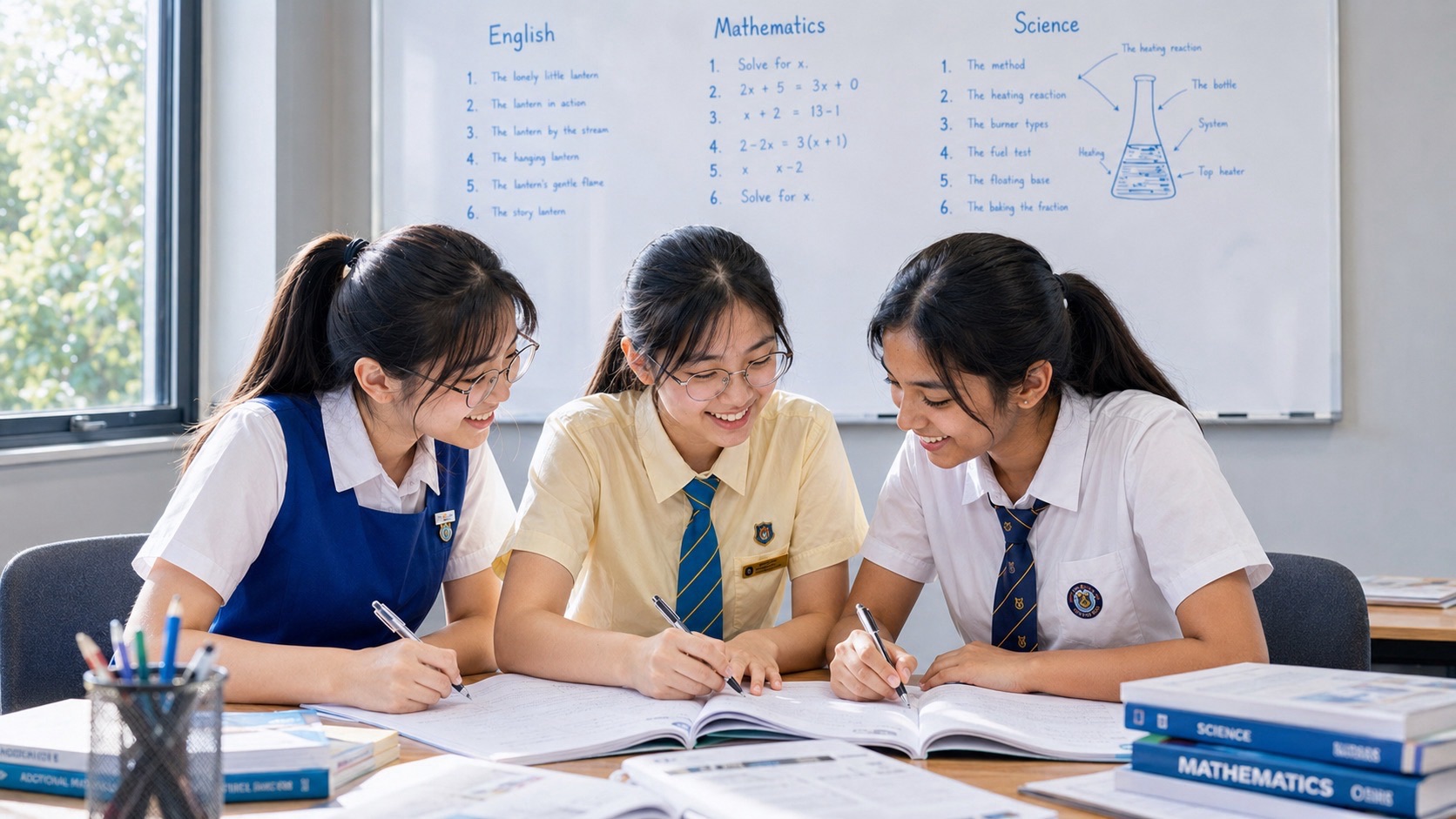
Goal setting is important for students because improvement requires a reliable path from intention to better performance. The importance of goal setting in education reaches across learning, examinations, projects, reading, writing, Mathematics, Science, communication and independent study. Students can strengthen goal setting through clear methods, feedback, reflection and repeated use.
For students and parents searching for why goal setting is important, the practical answer is that academic success rarely comes from one decision made once. Learners need to identify what matters, act on it, check what happened and use the result to shape the next attempt. Strong goal setting makes that cycle more deliberate and less dependent on luck or last-minute urgency.
The importance of goal setting therefore lies in converting effort into capability. Knowledge, vocabulary, memory, attention, feedback and self-regulation all contribute. This guide explains how goal setting works, what weak versions look like, how teachers and parents can support it and how students can make it increasingly independent.
50-second route: goal setting
Define the desired improvement. Identify the next useful action. Do it under realistic conditions. Check the result. Diagnose the gap. Adjust. Repeat after time has passed and in a different context. Goal setting becomes valuable when each cycle changes what the learner can reliably do.
The central proposition
Goal setting is a feedback system. It connects a target with action, evidence and revision. Activity alone is not enough. Students improve when they know what they are trying to achieve, receive information about the gap and make another attempt that responds to that information.
Clear goals
clear goals matters to goal setting because learning improves through sequences of decisions rather than isolated bursts of effort. Students need to understand the target, select an appropriate method and collect evidence about whether the method worked. When progress stalls, diagnosis should identify the failed link instead of assuming that more of the same activity will solve the problem.
Knowledge and vocabulary shape clear goals. Learners cannot execute a good plan or improve a performance if they do not understand the concepts and language involved. Missing prerequisite knowledge can look like weak effort. Precise terms such as criterion, constraint, sequence, retrieval, accuracy, fluency, feedback and transfer help students discuss what improvement actually requires.
Feedback makes goal setting adaptive. Without feedback, repetition can stabilise an error and planning can continue around false assumptions. Students should compare performance with a trustworthy standard, identify the most important discrepancy and make the next attempt different in a way that addresses that discrepancy.
Memory matters because improvement should survive beyond the immediate session. Retrieval after a delay reveals whether knowledge remains accessible. Spaced encounters also prevent a learner from mistaking temporary fluency for durable mastery. Important learning should therefore return after time and under changed conditions.
Difficulty should be calibrated. Work that is always effortless may produce little new learning, while work that is consistently impossible produces noise rather than useful practice. Teachers and students can adjust support, complexity, time pressure and novelty so that the task requires genuine reconstruction while remaining solvable with appropriate effort.
Reflection improves clear goals when it changes the next decision. Students can ask what worked, what failed, which evidence supports that judgment and what one adjustment has the highest expected value. Reflection without a changed action becomes commentary; reflection linked to another attempt becomes learning.
Teachers can model goal setting by exposing the full cycle rather than only polished results. Show how a target is chosen, how a method is selected, how errors are interpreted and how a second attempt differs from the first. Gradually remove prompts so learners take over target setting, monitoring and correction.
Parents can support clear goals by asking about process evidence. What is the goal? What did you try? What result did you get? What will you change? This helps students connect effort to mechanism rather than assuming that time spent automatically produces improvement.
Transfer is the long-term goal. clear goals should remain recognisable across English, Mathematics, Science, Humanities, projects and everyday responsibilities. Students need varied examples so they learn the underlying structure rather than memorising one routine for one worksheet.
Progress appears as better selection, earlier error detection and more efficient correction. Students become able to decide what deserves attention, choose a suitable method, use feedback without waiting for rescue and demonstrate improvement after support is removed.
Learning goals
learning goals matters to goal setting because learning improves through sequences of decisions rather than isolated bursts of effort. Students need to understand the target, select an appropriate method and collect evidence about whether the method worked. When progress stalls, diagnosis should identify the failed link instead of assuming that more of the same activity will solve the problem.
Knowledge and vocabulary shape learning goals. Learners cannot execute a good plan or improve a performance if they do not understand the concepts and language involved. Missing prerequisite knowledge can look like weak effort. Precise terms such as criterion, constraint, sequence, retrieval, accuracy, fluency, feedback and transfer help students discuss what improvement actually requires.
Feedback makes goal setting adaptive. Without feedback, repetition can stabilise an error and planning can continue around false assumptions. Students should compare performance with a trustworthy standard, identify the most important discrepancy and make the next attempt different in a way that addresses that discrepancy.
Memory matters because improvement should survive beyond the immediate session. Retrieval after a delay reveals whether knowledge remains accessible. Spaced encounters also prevent a learner from mistaking temporary fluency for durable mastery. Important learning should therefore return after time and under changed conditions.
Difficulty should be calibrated. Work that is always effortless may produce little new learning, while work that is consistently impossible produces noise rather than useful practice. Teachers and students can adjust support, complexity, time pressure and novelty so that the task requires genuine reconstruction while remaining solvable with appropriate effort.
Reflection improves learning goals when it changes the next decision. Students can ask what worked, what failed, which evidence supports that judgment and what one adjustment has the highest expected value. Reflection without a changed action becomes commentary; reflection linked to another attempt becomes learning.
Teachers can model goal setting by exposing the full cycle rather than only polished results. Show how a target is chosen, how a method is selected, how errors are interpreted and how a second attempt differs from the first. Gradually remove prompts so learners take over target setting, monitoring and correction.
Parents can support learning goals by asking about process evidence. What is the goal? What did you try? What result did you get? What will you change? This helps students connect effort to mechanism rather than assuming that time spent automatically produces improvement.
Transfer is the long-term goal. learning goals should remain recognisable across English, Mathematics, Science, Humanities, projects and everyday responsibilities. Students need varied examples so they learn the underlying structure rather than memorising one routine for one worksheet.
Progress appears as better selection, earlier error detection and more efficient correction. Students become able to decide what deserves attention, choose a suitable method, use feedback without waiting for rescue and demonstrate improvement after support is removed.
Outcome goals
outcome goals matters to goal setting because learning improves through sequences of decisions rather than isolated bursts of effort. Students need to understand the target, select an appropriate method and collect evidence about whether the method worked. When progress stalls, diagnosis should identify the failed link instead of assuming that more of the same activity will solve the problem.
Knowledge and vocabulary shape outcome goals. Learners cannot execute a good plan or improve a performance if they do not understand the concepts and language involved. Missing prerequisite knowledge can look like weak effort. Precise terms such as criterion, constraint, sequence, retrieval, accuracy, fluency, feedback and transfer help students discuss what improvement actually requires.
Feedback makes goal setting adaptive. Without feedback, repetition can stabilise an error and planning can continue around false assumptions. Students should compare performance with a trustworthy standard, identify the most important discrepancy and make the next attempt different in a way that addresses that discrepancy.
Memory matters because improvement should survive beyond the immediate session. Retrieval after a delay reveals whether knowledge remains accessible. Spaced encounters also prevent a learner from mistaking temporary fluency for durable mastery. Important learning should therefore return after time and under changed conditions.
Difficulty should be calibrated. Work that is always effortless may produce little new learning, while work that is consistently impossible produces noise rather than useful practice. Teachers and students can adjust support, complexity, time pressure and novelty so that the task requires genuine reconstruction while remaining solvable with appropriate effort.
Reflection improves outcome goals when it changes the next decision. Students can ask what worked, what failed, which evidence supports that judgment and what one adjustment has the highest expected value. Reflection without a changed action becomes commentary; reflection linked to another attempt becomes learning.
Teachers can model goal setting by exposing the full cycle rather than only polished results. Show how a target is chosen, how a method is selected, how errors are interpreted and how a second attempt differs from the first. Gradually remove prompts so learners take over target setting, monitoring and correction.
Parents can support outcome goals by asking about process evidence. What is the goal? What did you try? What result did you get? What will you change? This helps students connect effort to mechanism rather than assuming that time spent automatically produces improvement.
Transfer is the long-term goal. outcome goals should remain recognisable across English, Mathematics, Science, Humanities, projects and everyday responsibilities. Students need varied examples so they learn the underlying structure rather than memorising one routine for one worksheet.
Progress appears as better selection, earlier error detection and more efficient correction. Students become able to decide what deserves attention, choose a suitable method, use feedback without waiting for rescue and demonstrate improvement after support is removed.
Process goals
process goals matters to goal setting because learning improves through sequences of decisions rather than isolated bursts of effort. Students need to understand the target, select an appropriate method and collect evidence about whether the method worked. When progress stalls, diagnosis should identify the failed link instead of assuming that more of the same activity will solve the problem.
Knowledge and vocabulary shape process goals. Learners cannot execute a good plan or improve a performance if they do not understand the concepts and language involved. Missing prerequisite knowledge can look like weak effort. Precise terms such as criterion, constraint, sequence, retrieval, accuracy, fluency, feedback and transfer help students discuss what improvement actually requires.
Feedback makes goal setting adaptive. Without feedback, repetition can stabilise an error and planning can continue around false assumptions. Students should compare performance with a trustworthy standard, identify the most important discrepancy and make the next attempt different in a way that addresses that discrepancy.
Memory matters because improvement should survive beyond the immediate session. Retrieval after a delay reveals whether knowledge remains accessible. Spaced encounters also prevent a learner from mistaking temporary fluency for durable mastery. Important learning should therefore return after time and under changed conditions.
Difficulty should be calibrated. Work that is always effortless may produce little new learning, while work that is consistently impossible produces noise rather than useful practice. Teachers and students can adjust support, complexity, time pressure and novelty so that the task requires genuine reconstruction while remaining solvable with appropriate effort.
Reflection improves process goals when it changes the next decision. Students can ask what worked, what failed, which evidence supports that judgment and what one adjustment has the highest expected value. Reflection without a changed action becomes commentary; reflection linked to another attempt becomes learning.
Teachers can model goal setting by exposing the full cycle rather than only polished results. Show how a target is chosen, how a method is selected, how errors are interpreted and how a second attempt differs from the first. Gradually remove prompts so learners take over target setting, monitoring and correction.
Parents can support process goals by asking about process evidence. What is the goal? What did you try? What result did you get? What will you change? This helps students connect effort to mechanism rather than assuming that time spent automatically produces improvement.
Transfer is the long-term goal. process goals should remain recognisable across English, Mathematics, Science, Humanities, projects and everyday responsibilities. Students need varied examples so they learn the underlying structure rather than memorising one routine for one worksheet.
Progress appears as better selection, earlier error detection and more efficient correction. Students become able to decide what deserves attention, choose a suitable method, use feedback without waiting for rescue and demonstrate improvement after support is removed.
Success criteria
success criteria matters to goal setting because learning improves through sequences of decisions rather than isolated bursts of effort. Students need to understand the target, select an appropriate method and collect evidence about whether the method worked. When progress stalls, diagnosis should identify the failed link instead of assuming that more of the same activity will solve the problem.
Knowledge and vocabulary shape success criteria. Learners cannot execute a good plan or improve a performance if they do not understand the concepts and language involved. Missing prerequisite knowledge can look like weak effort. Precise terms such as criterion, constraint, sequence, retrieval, accuracy, fluency, feedback and transfer help students discuss what improvement actually requires.
Feedback makes goal setting adaptive. Without feedback, repetition can stabilise an error and planning can continue around false assumptions. Students should compare performance with a trustworthy standard, identify the most important discrepancy and make the next attempt different in a way that addresses that discrepancy.
Memory matters because improvement should survive beyond the immediate session. Retrieval after a delay reveals whether knowledge remains accessible. Spaced encounters also prevent a learner from mistaking temporary fluency for durable mastery. Important learning should therefore return after time and under changed conditions.
Difficulty should be calibrated. Work that is always effortless may produce little new learning, while work that is consistently impossible produces noise rather than useful practice. Teachers and students can adjust support, complexity, time pressure and novelty so that the task requires genuine reconstruction while remaining solvable with appropriate effort.
Reflection improves success criteria when it changes the next decision. Students can ask what worked, what failed, which evidence supports that judgment and what one adjustment has the highest expected value. Reflection without a changed action becomes commentary; reflection linked to another attempt becomes learning.
Teachers can model goal setting by exposing the full cycle rather than only polished results. Show how a target is chosen, how a method is selected, how errors are interpreted and how a second attempt differs from the first. Gradually remove prompts so learners take over target setting, monitoring and correction.
Parents can support success criteria by asking about process evidence. What is the goal? What did you try? What result did you get? What will you change? This helps students connect effort to mechanism rather than assuming that time spent automatically produces improvement.
Transfer is the long-term goal. success criteria should remain recognisable across English, Mathematics, Science, Humanities, projects and everyday responsibilities. Students need varied examples so they learn the underlying structure rather than memorising one routine for one worksheet.
Progress appears as better selection, earlier error detection and more efficient correction. Students become able to decide what deserves attention, choose a suitable method, use feedback without waiting for rescue and demonstrate improvement after support is removed.
Priorities
priorities matters to goal setting because learning improves through sequences of decisions rather than isolated bursts of effort. Students need to understand the target, select an appropriate method and collect evidence about whether the method worked. When progress stalls, diagnosis should identify the failed link instead of assuming that more of the same activity will solve the problem.
Knowledge and vocabulary shape priorities. Learners cannot execute a good plan or improve a performance if they do not understand the concepts and language involved. Missing prerequisite knowledge can look like weak effort. Precise terms such as criterion, constraint, sequence, retrieval, accuracy, fluency, feedback and transfer help students discuss what improvement actually requires.
Feedback makes goal setting adaptive. Without feedback, repetition can stabilise an error and planning can continue around false assumptions. Students should compare performance with a trustworthy standard, identify the most important discrepancy and make the next attempt different in a way that addresses that discrepancy.
Memory matters because improvement should survive beyond the immediate session. Retrieval after a delay reveals whether knowledge remains accessible. Spaced encounters also prevent a learner from mistaking temporary fluency for durable mastery. Important learning should therefore return after time and under changed conditions.
Difficulty should be calibrated. Work that is always effortless may produce little new learning, while work that is consistently impossible produces noise rather than useful practice. Teachers and students can adjust support, complexity, time pressure and novelty so that the task requires genuine reconstruction while remaining solvable with appropriate effort.
Reflection improves priorities when it changes the next decision. Students can ask what worked, what failed, which evidence supports that judgment and what one adjustment has the highest expected value. Reflection without a changed action becomes commentary; reflection linked to another attempt becomes learning.
Teachers can model goal setting by exposing the full cycle rather than only polished results. Show how a target is chosen, how a method is selected, how errors are interpreted and how a second attempt differs from the first. Gradually remove prompts so learners take over target setting, monitoring and correction.
Parents can support priorities by asking about process evidence. What is the goal? What did you try? What result did you get? What will you change? This helps students connect effort to mechanism rather than assuming that time spent automatically produces improvement.
Transfer is the long-term goal. priorities should remain recognisable across English, Mathematics, Science, Humanities, projects and everyday responsibilities. Students need varied examples so they learn the underlying structure rather than memorising one routine for one worksheet.
Progress appears as better selection, earlier error detection and more efficient correction. Students become able to decide what deserves attention, choose a suitable method, use feedback without waiting for rescue and demonstrate improvement after support is removed.
Planning
planning matters to goal setting because learning improves through sequences of decisions rather than isolated bursts of effort. Students need to understand the target, select an appropriate method and collect evidence about whether the method worked. When progress stalls, diagnosis should identify the failed link instead of assuming that more of the same activity will solve the problem.
Knowledge and vocabulary shape planning. Learners cannot execute a good plan or improve a performance if they do not understand the concepts and language involved. Missing prerequisite knowledge can look like weak effort. Precise terms such as criterion, constraint, sequence, retrieval, accuracy, fluency, feedback and transfer help students discuss what improvement actually requires.
Feedback makes goal setting adaptive. Without feedback, repetition can stabilise an error and planning can continue around false assumptions. Students should compare performance with a trustworthy standard, identify the most important discrepancy and make the next attempt different in a way that addresses that discrepancy.
Memory matters because improvement should survive beyond the immediate session. Retrieval after a delay reveals whether knowledge remains accessible. Spaced encounters also prevent a learner from mistaking temporary fluency for durable mastery. Important learning should therefore return after time and under changed conditions.
Difficulty should be calibrated. Work that is always effortless may produce little new learning, while work that is consistently impossible produces noise rather than useful practice. Teachers and students can adjust support, complexity, time pressure and novelty so that the task requires genuine reconstruction while remaining solvable with appropriate effort.
Reflection improves planning when it changes the next decision. Students can ask what worked, what failed, which evidence supports that judgment and what one adjustment has the highest expected value. Reflection without a changed action becomes commentary; reflection linked to another attempt becomes learning.
Teachers can model goal setting by exposing the full cycle rather than only polished results. Show how a target is chosen, how a method is selected, how errors are interpreted and how a second attempt differs from the first. Gradually remove prompts so learners take over target setting, monitoring and correction.
Parents can support planning by asking about process evidence. What is the goal? What did you try? What result did you get? What will you change? This helps students connect effort to mechanism rather than assuming that time spent automatically produces improvement.
Transfer is the long-term goal. planning should remain recognisable across English, Mathematics, Science, Humanities, projects and everyday responsibilities. Students need varied examples so they learn the underlying structure rather than memorising one routine for one worksheet.
Progress appears as better selection, earlier error detection and more efficient correction. Students become able to decide what deserves attention, choose a suitable method, use feedback without waiting for rescue and demonstrate improvement after support is removed.
Milestones
milestones matters to goal setting because learning improves through sequences of decisions rather than isolated bursts of effort. Students need to understand the target, select an appropriate method and collect evidence about whether the method worked. When progress stalls, diagnosis should identify the failed link instead of assuming that more of the same activity will solve the problem.
Knowledge and vocabulary shape milestones. Learners cannot execute a good plan or improve a performance if they do not understand the concepts and language involved. Missing prerequisite knowledge can look like weak effort. Precise terms such as criterion, constraint, sequence, retrieval, accuracy, fluency, feedback and transfer help students discuss what improvement actually requires.
Feedback makes goal setting adaptive. Without feedback, repetition can stabilise an error and planning can continue around false assumptions. Students should compare performance with a trustworthy standard, identify the most important discrepancy and make the next attempt different in a way that addresses that discrepancy.
Memory matters because improvement should survive beyond the immediate session. Retrieval after a delay reveals whether knowledge remains accessible. Spaced encounters also prevent a learner from mistaking temporary fluency for durable mastery. Important learning should therefore return after time and under changed conditions.
Difficulty should be calibrated. Work that is always effortless may produce little new learning, while work that is consistently impossible produces noise rather than useful practice. Teachers and students can adjust support, complexity, time pressure and novelty so that the task requires genuine reconstruction while remaining solvable with appropriate effort.
Reflection improves milestones when it changes the next decision. Students can ask what worked, what failed, which evidence supports that judgment and what one adjustment has the highest expected value. Reflection without a changed action becomes commentary; reflection linked to another attempt becomes learning.
Teachers can model goal setting by exposing the full cycle rather than only polished results. Show how a target is chosen, how a method is selected, how errors are interpreted and how a second attempt differs from the first. Gradually remove prompts so learners take over target setting, monitoring and correction.
Parents can support milestones by asking about process evidence. What is the goal? What did you try? What result did you get? What will you change? This helps students connect effort to mechanism rather than assuming that time spent automatically produces improvement.
Transfer is the long-term goal. milestones should remain recognisable across English, Mathematics, Science, Humanities, projects and everyday responsibilities. Students need varied examples so they learn the underlying structure rather than memorising one routine for one worksheet.
Progress appears as better selection, earlier error detection and more efficient correction. Students become able to decide what deserves attention, choose a suitable method, use feedback without waiting for rescue and demonstrate improvement after support is removed.
Progress
progress matters to goal setting because learning improves through sequences of decisions rather than isolated bursts of effort. Students need to understand the target, select an appropriate method and collect evidence about whether the method worked. When progress stalls, diagnosis should identify the failed link instead of assuming that more of the same activity will solve the problem.
Knowledge and vocabulary shape progress. Learners cannot execute a good plan or improve a performance if they do not understand the concepts and language involved. Missing prerequisite knowledge can look like weak effort. Precise terms such as criterion, constraint, sequence, retrieval, accuracy, fluency, feedback and transfer help students discuss what improvement actually requires.
Feedback makes goal setting adaptive. Without feedback, repetition can stabilise an error and planning can continue around false assumptions. Students should compare performance with a trustworthy standard, identify the most important discrepancy and make the next attempt different in a way that addresses that discrepancy.
Memory matters because improvement should survive beyond the immediate session. Retrieval after a delay reveals whether knowledge remains accessible. Spaced encounters also prevent a learner from mistaking temporary fluency for durable mastery. Important learning should therefore return after time and under changed conditions.
Difficulty should be calibrated. Work that is always effortless may produce little new learning, while work that is consistently impossible produces noise rather than useful practice. Teachers and students can adjust support, complexity, time pressure and novelty so that the task requires genuine reconstruction while remaining solvable with appropriate effort.
Reflection improves progress when it changes the next decision. Students can ask what worked, what failed, which evidence supports that judgment and what one adjustment has the highest expected value. Reflection without a changed action becomes commentary; reflection linked to another attempt becomes learning.
Teachers can model goal setting by exposing the full cycle rather than only polished results. Show how a target is chosen, how a method is selected, how errors are interpreted and how a second attempt differs from the first. Gradually remove prompts so learners take over target setting, monitoring and correction.
Parents can support progress by asking about process evidence. What is the goal? What did you try? What result did you get? What will you change? This helps students connect effort to mechanism rather than assuming that time spent automatically produces improvement.
Transfer is the long-term goal. progress should remain recognisable across English, Mathematics, Science, Humanities, projects and everyday responsibilities. Students need varied examples so they learn the underlying structure rather than memorising one routine for one worksheet.
Progress appears as better selection, earlier error detection and more efficient correction. Students become able to decide what deserves attention, choose a suitable method, use feedback without waiting for rescue and demonstrate improvement after support is removed.
Feedback
feedback matters to goal setting because learning improves through sequences of decisions rather than isolated bursts of effort. Students need to understand the target, select an appropriate method and collect evidence about whether the method worked. When progress stalls, diagnosis should identify the failed link instead of assuming that more of the same activity will solve the problem.
Knowledge and vocabulary shape feedback. Learners cannot execute a good plan or improve a performance if they do not understand the concepts and language involved. Missing prerequisite knowledge can look like weak effort. Precise terms such as criterion, constraint, sequence, retrieval, accuracy, fluency, feedback and transfer help students discuss what improvement actually requires.
Feedback makes goal setting adaptive. Without feedback, repetition can stabilise an error and planning can continue around false assumptions. Students should compare performance with a trustworthy standard, identify the most important discrepancy and make the next attempt different in a way that addresses that discrepancy.
Memory matters because improvement should survive beyond the immediate session. Retrieval after a delay reveals whether knowledge remains accessible. Spaced encounters also prevent a learner from mistaking temporary fluency for durable mastery. Important learning should therefore return after time and under changed conditions.
Difficulty should be calibrated. Work that is always effortless may produce little new learning, while work that is consistently impossible produces noise rather than useful practice. Teachers and students can adjust support, complexity, time pressure and novelty so that the task requires genuine reconstruction while remaining solvable with appropriate effort.
Reflection improves feedback when it changes the next decision. Students can ask what worked, what failed, which evidence supports that judgment and what one adjustment has the highest expected value. Reflection without a changed action becomes commentary; reflection linked to another attempt becomes learning.
Teachers can model goal setting by exposing the full cycle rather than only polished results. Show how a target is chosen, how a method is selected, how errors are interpreted and how a second attempt differs from the first. Gradually remove prompts so learners take over target setting, monitoring and correction.
Parents can support feedback by asking about process evidence. What is the goal? What did you try? What result did you get? What will you change? This helps students connect effort to mechanism rather than assuming that time spent automatically produces improvement.
Transfer is the long-term goal. feedback should remain recognisable across English, Mathematics, Science, Humanities, projects and everyday responsibilities. Students need varied examples so they learn the underlying structure rather than memorising one routine for one worksheet.
Progress appears as better selection, earlier error detection and more efficient correction. Students become able to decide what deserves attention, choose a suitable method, use feedback without waiting for rescue and demonstrate improvement after support is removed.
Measurement
measurement matters to goal setting because learning improves through sequences of decisions rather than isolated bursts of effort. Students need to understand the target, select an appropriate method and collect evidence about whether the method worked. When progress stalls, diagnosis should identify the failed link instead of assuming that more of the same activity will solve the problem.
Knowledge and vocabulary shape measurement. Learners cannot execute a good plan or improve a performance if they do not understand the concepts and language involved. Missing prerequisite knowledge can look like weak effort. Precise terms such as criterion, constraint, sequence, retrieval, accuracy, fluency, feedback and transfer help students discuss what improvement actually requires.
Feedback makes goal setting adaptive. Without feedback, repetition can stabilise an error and planning can continue around false assumptions. Students should compare performance with a trustworthy standard, identify the most important discrepancy and make the next attempt different in a way that addresses that discrepancy.
Memory matters because improvement should survive beyond the immediate session. Retrieval after a delay reveals whether knowledge remains accessible. Spaced encounters also prevent a learner from mistaking temporary fluency for durable mastery. Important learning should therefore return after time and under changed conditions.
Difficulty should be calibrated. Work that is always effortless may produce little new learning, while work that is consistently impossible produces noise rather than useful practice. Teachers and students can adjust support, complexity, time pressure and novelty so that the task requires genuine reconstruction while remaining solvable with appropriate effort.
Reflection improves measurement when it changes the next decision. Students can ask what worked, what failed, which evidence supports that judgment and what one adjustment has the highest expected value. Reflection without a changed action becomes commentary; reflection linked to another attempt becomes learning.
Teachers can model goal setting by exposing the full cycle rather than only polished results. Show how a target is chosen, how a method is selected, how errors are interpreted and how a second attempt differs from the first. Gradually remove prompts so learners take over target setting, monitoring and correction.
Parents can support measurement by asking about process evidence. What is the goal? What did you try? What result did you get? What will you change? This helps students connect effort to mechanism rather than assuming that time spent automatically produces improvement.
Transfer is the long-term goal. measurement should remain recognisable across English, Mathematics, Science, Humanities, projects and everyday responsibilities. Students need varied examples so they learn the underlying structure rather than memorising one routine for one worksheet.
Progress appears as better selection, earlier error detection and more efficient correction. Students become able to decide what deserves attention, choose a suitable method, use feedback without waiting for rescue and demonstrate improvement after support is removed.
Motivation
motivation matters to goal setting because learning improves through sequences of decisions rather than isolated bursts of effort. Students need to understand the target, select an appropriate method and collect evidence about whether the method worked. When progress stalls, diagnosis should identify the failed link instead of assuming that more of the same activity will solve the problem.
Knowledge and vocabulary shape motivation. Learners cannot execute a good plan or improve a performance if they do not understand the concepts and language involved. Missing prerequisite knowledge can look like weak effort. Precise terms such as criterion, constraint, sequence, retrieval, accuracy, fluency, feedback and transfer help students discuss what improvement actually requires.
Feedback makes goal setting adaptive. Without feedback, repetition can stabilise an error and planning can continue around false assumptions. Students should compare performance with a trustworthy standard, identify the most important discrepancy and make the next attempt different in a way that addresses that discrepancy.
Memory matters because improvement should survive beyond the immediate session. Retrieval after a delay reveals whether knowledge remains accessible. Spaced encounters also prevent a learner from mistaking temporary fluency for durable mastery. Important learning should therefore return after time and under changed conditions.
Difficulty should be calibrated. Work that is always effortless may produce little new learning, while work that is consistently impossible produces noise rather than useful practice. Teachers and students can adjust support, complexity, time pressure and novelty so that the task requires genuine reconstruction while remaining solvable with appropriate effort.
Reflection improves motivation when it changes the next decision. Students can ask what worked, what failed, which evidence supports that judgment and what one adjustment has the highest expected value. Reflection without a changed action becomes commentary; reflection linked to another attempt becomes learning.
Teachers can model goal setting by exposing the full cycle rather than only polished results. Show how a target is chosen, how a method is selected, how errors are interpreted and how a second attempt differs from the first. Gradually remove prompts so learners take over target setting, monitoring and correction.
Parents can support motivation by asking about process evidence. What is the goal? What did you try? What result did you get? What will you change? This helps students connect effort to mechanism rather than assuming that time spent automatically produces improvement.
Transfer is the long-term goal. motivation should remain recognisable across English, Mathematics, Science, Humanities, projects and everyday responsibilities. Students need varied examples so they learn the underlying structure rather than memorising one routine for one worksheet.
Progress appears as better selection, earlier error detection and more efficient correction. Students become able to decide what deserves attention, choose a suitable method, use feedback without waiting for rescue and demonstrate improvement after support is removed.
Agency
agency matters to goal setting because learning improves through sequences of decisions rather than isolated bursts of effort. Students need to understand the target, select an appropriate method and collect evidence about whether the method worked. When progress stalls, diagnosis should identify the failed link instead of assuming that more of the same activity will solve the problem.
Knowledge and vocabulary shape agency. Learners cannot execute a good plan or improve a performance if they do not understand the concepts and language involved. Missing prerequisite knowledge can look like weak effort. Precise terms such as criterion, constraint, sequence, retrieval, accuracy, fluency, feedback and transfer help students discuss what improvement actually requires.
Feedback makes goal setting adaptive. Without feedback, repetition can stabilise an error and planning can continue around false assumptions. Students should compare performance with a trustworthy standard, identify the most important discrepancy and make the next attempt different in a way that addresses that discrepancy.
Memory matters because improvement should survive beyond the immediate session. Retrieval after a delay reveals whether knowledge remains accessible. Spaced encounters also prevent a learner from mistaking temporary fluency for durable mastery. Important learning should therefore return after time and under changed conditions.
Difficulty should be calibrated. Work that is always effortless may produce little new learning, while work that is consistently impossible produces noise rather than useful practice. Teachers and students can adjust support, complexity, time pressure and novelty so that the task requires genuine reconstruction while remaining solvable with appropriate effort.
Reflection improves agency when it changes the next decision. Students can ask what worked, what failed, which evidence supports that judgment and what one adjustment has the highest expected value. Reflection without a changed action becomes commentary; reflection linked to another attempt becomes learning.
Teachers can model goal setting by exposing the full cycle rather than only polished results. Show how a target is chosen, how a method is selected, how errors are interpreted and how a second attempt differs from the first. Gradually remove prompts so learners take over target setting, monitoring and correction.
Parents can support agency by asking about process evidence. What is the goal? What did you try? What result did you get? What will you change? This helps students connect effort to mechanism rather than assuming that time spent automatically produces improvement.
Transfer is the long-term goal. agency should remain recognisable across English, Mathematics, Science, Humanities, projects and everyday responsibilities. Students need varied examples so they learn the underlying structure rather than memorising one routine for one worksheet.
Progress appears as better selection, earlier error detection and more efficient correction. Students become able to decide what deserves attention, choose a suitable method, use feedback without waiting for rescue and demonstrate improvement after support is removed.
Confidence
confidence matters to goal setting because learning improves through sequences of decisions rather than isolated bursts of effort. Students need to understand the target, select an appropriate method and collect evidence about whether the method worked. When progress stalls, diagnosis should identify the failed link instead of assuming that more of the same activity will solve the problem.
Knowledge and vocabulary shape confidence. Learners cannot execute a good plan or improve a performance if they do not understand the concepts and language involved. Missing prerequisite knowledge can look like weak effort. Precise terms such as criterion, constraint, sequence, retrieval, accuracy, fluency, feedback and transfer help students discuss what improvement actually requires.
Feedback makes goal setting adaptive. Without feedback, repetition can stabilise an error and planning can continue around false assumptions. Students should compare performance with a trustworthy standard, identify the most important discrepancy and make the next attempt different in a way that addresses that discrepancy.
Memory matters because improvement should survive beyond the immediate session. Retrieval after a delay reveals whether knowledge remains accessible. Spaced encounters also prevent a learner from mistaking temporary fluency for durable mastery. Important learning should therefore return after time and under changed conditions.
Difficulty should be calibrated. Work that is always effortless may produce little new learning, while work that is consistently impossible produces noise rather than useful practice. Teachers and students can adjust support, complexity, time pressure and novelty so that the task requires genuine reconstruction while remaining solvable with appropriate effort.
Reflection improves confidence when it changes the next decision. Students can ask what worked, what failed, which evidence supports that judgment and what one adjustment has the highest expected value. Reflection without a changed action becomes commentary; reflection linked to another attempt becomes learning.
Teachers can model goal setting by exposing the full cycle rather than only polished results. Show how a target is chosen, how a method is selected, how errors are interpreted and how a second attempt differs from the first. Gradually remove prompts so learners take over target setting, monitoring and correction.
Parents can support confidence by asking about process evidence. What is the goal? What did you try? What result did you get? What will you change? This helps students connect effort to mechanism rather than assuming that time spent automatically produces improvement.
Transfer is the long-term goal. confidence should remain recognisable across English, Mathematics, Science, Humanities, projects and everyday responsibilities. Students need varied examples so they learn the underlying structure rather than memorising one routine for one worksheet.
Progress appears as better selection, earlier error detection and more efficient correction. Students become able to decide what deserves attention, choose a suitable method, use feedback without waiting for rescue and demonstrate improvement after support is removed.
Time management
time management matters to goal setting because learning improves through sequences of decisions rather than isolated bursts of effort. Students need to understand the target, select an appropriate method and collect evidence about whether the method worked. When progress stalls, diagnosis should identify the failed link instead of assuming that more of the same activity will solve the problem.
Knowledge and vocabulary shape time management. Learners cannot execute a good plan or improve a performance if they do not understand the concepts and language involved. Missing prerequisite knowledge can look like weak effort. Precise terms such as criterion, constraint, sequence, retrieval, accuracy, fluency, feedback and transfer help students discuss what improvement actually requires.
Feedback makes goal setting adaptive. Without feedback, repetition can stabilise an error and planning can continue around false assumptions. Students should compare performance with a trustworthy standard, identify the most important discrepancy and make the next attempt different in a way that addresses that discrepancy.
Memory matters because improvement should survive beyond the immediate session. Retrieval after a delay reveals whether knowledge remains accessible. Spaced encounters also prevent a learner from mistaking temporary fluency for durable mastery. Important learning should therefore return after time and under changed conditions.
Difficulty should be calibrated. Work that is always effortless may produce little new learning, while work that is consistently impossible produces noise rather than useful practice. Teachers and students can adjust support, complexity, time pressure and novelty so that the task requires genuine reconstruction while remaining solvable with appropriate effort.
Reflection improves time management when it changes the next decision. Students can ask what worked, what failed, which evidence supports that judgment and what one adjustment has the highest expected value. Reflection without a changed action becomes commentary; reflection linked to another attempt becomes learning.
Teachers can model goal setting by exposing the full cycle rather than only polished results. Show how a target is chosen, how a method is selected, how errors are interpreted and how a second attempt differs from the first. Gradually remove prompts so learners take over target setting, monitoring and correction.
Parents can support time management by asking about process evidence. What is the goal? What did you try? What result did you get? What will you change? This helps students connect effort to mechanism rather than assuming that time spent automatically produces improvement.
Transfer is the long-term goal. time management should remain recognisable across English, Mathematics, Science, Humanities, projects and everyday responsibilities. Students need varied examples so they learn the underlying structure rather than memorising one routine for one worksheet.
Progress appears as better selection, earlier error detection and more efficient correction. Students become able to decide what deserves attention, choose a suitable method, use feedback without waiting for rescue and demonstrate improvement after support is removed.
Focus
focus matters to goal setting because learning improves through sequences of decisions rather than isolated bursts of effort. Students need to understand the target, select an appropriate method and collect evidence about whether the method worked. When progress stalls, diagnosis should identify the failed link instead of assuming that more of the same activity will solve the problem.
Knowledge and vocabulary shape focus. Learners cannot execute a good plan or improve a performance if they do not understand the concepts and language involved. Missing prerequisite knowledge can look like weak effort. Precise terms such as criterion, constraint, sequence, retrieval, accuracy, fluency, feedback and transfer help students discuss what improvement actually requires.
Feedback makes goal setting adaptive. Without feedback, repetition can stabilise an error and planning can continue around false assumptions. Students should compare performance with a trustworthy standard, identify the most important discrepancy and make the next attempt different in a way that addresses that discrepancy.
Memory matters because improvement should survive beyond the immediate session. Retrieval after a delay reveals whether knowledge remains accessible. Spaced encounters also prevent a learner from mistaking temporary fluency for durable mastery. Important learning should therefore return after time and under changed conditions.
Difficulty should be calibrated. Work that is always effortless may produce little new learning, while work that is consistently impossible produces noise rather than useful practice. Teachers and students can adjust support, complexity, time pressure and novelty so that the task requires genuine reconstruction while remaining solvable with appropriate effort.
Reflection improves focus when it changes the next decision. Students can ask what worked, what failed, which evidence supports that judgment and what one adjustment has the highest expected value. Reflection without a changed action becomes commentary; reflection linked to another attempt becomes learning.
Teachers can model goal setting by exposing the full cycle rather than only polished results. Show how a target is chosen, how a method is selected, how errors are interpreted and how a second attempt differs from the first. Gradually remove prompts so learners take over target setting, monitoring and correction.
Parents can support focus by asking about process evidence. What is the goal? What did you try? What result did you get? What will you change? This helps students connect effort to mechanism rather than assuming that time spent automatically produces improvement.
Transfer is the long-term goal. focus should remain recognisable across English, Mathematics, Science, Humanities, projects and everyday responsibilities. Students need varied examples so they learn the underlying structure rather than memorising one routine for one worksheet.
Progress appears as better selection, earlier error detection and more efficient correction. Students become able to decide what deserves attention, choose a suitable method, use feedback without waiting for rescue and demonstrate improvement after support is removed.
Discipline
discipline matters to goal setting because learning improves through sequences of decisions rather than isolated bursts of effort. Students need to understand the target, select an appropriate method and collect evidence about whether the method worked. When progress stalls, diagnosis should identify the failed link instead of assuming that more of the same activity will solve the problem.
Knowledge and vocabulary shape discipline. Learners cannot execute a good plan or improve a performance if they do not understand the concepts and language involved. Missing prerequisite knowledge can look like weak effort. Precise terms such as criterion, constraint, sequence, retrieval, accuracy, fluency, feedback and transfer help students discuss what improvement actually requires.
Feedback makes goal setting adaptive. Without feedback, repetition can stabilise an error and planning can continue around false assumptions. Students should compare performance with a trustworthy standard, identify the most important discrepancy and make the next attempt different in a way that addresses that discrepancy.
Memory matters because improvement should survive beyond the immediate session. Retrieval after a delay reveals whether knowledge remains accessible. Spaced encounters also prevent a learner from mistaking temporary fluency for durable mastery. Important learning should therefore return after time and under changed conditions.
Difficulty should be calibrated. Work that is always effortless may produce little new learning, while work that is consistently impossible produces noise rather than useful practice. Teachers and students can adjust support, complexity, time pressure and novelty so that the task requires genuine reconstruction while remaining solvable with appropriate effort.
Reflection improves discipline when it changes the next decision. Students can ask what worked, what failed, which evidence supports that judgment and what one adjustment has the highest expected value. Reflection without a changed action becomes commentary; reflection linked to another attempt becomes learning.
Teachers can model goal setting by exposing the full cycle rather than only polished results. Show how a target is chosen, how a method is selected, how errors are interpreted and how a second attempt differs from the first. Gradually remove prompts so learners take over target setting, monitoring and correction.
Parents can support discipline by asking about process evidence. What is the goal? What did you try? What result did you get? What will you change? This helps students connect effort to mechanism rather than assuming that time spent automatically produces improvement.
Transfer is the long-term goal. discipline should remain recognisable across English, Mathematics, Science, Humanities, projects and everyday responsibilities. Students need varied examples so they learn the underlying structure rather than memorising one routine for one worksheet.
Progress appears as better selection, earlier error detection and more efficient correction. Students become able to decide what deserves attention, choose a suitable method, use feedback without waiting for rescue and demonstrate improvement after support is removed.
Habits
habits matters to goal setting because learning improves through sequences of decisions rather than isolated bursts of effort. Students need to understand the target, select an appropriate method and collect evidence about whether the method worked. When progress stalls, diagnosis should identify the failed link instead of assuming that more of the same activity will solve the problem.
Knowledge and vocabulary shape habits. Learners cannot execute a good plan or improve a performance if they do not understand the concepts and language involved. Missing prerequisite knowledge can look like weak effort. Precise terms such as criterion, constraint, sequence, retrieval, accuracy, fluency, feedback and transfer help students discuss what improvement actually requires.
Feedback makes goal setting adaptive. Without feedback, repetition can stabilise an error and planning can continue around false assumptions. Students should compare performance with a trustworthy standard, identify the most important discrepancy and make the next attempt different in a way that addresses that discrepancy.
Memory matters because improvement should survive beyond the immediate session. Retrieval after a delay reveals whether knowledge remains accessible. Spaced encounters also prevent a learner from mistaking temporary fluency for durable mastery. Important learning should therefore return after time and under changed conditions.
Difficulty should be calibrated. Work that is always effortless may produce little new learning, while work that is consistently impossible produces noise rather than useful practice. Teachers and students can adjust support, complexity, time pressure and novelty so that the task requires genuine reconstruction while remaining solvable with appropriate effort.
Reflection improves habits when it changes the next decision. Students can ask what worked, what failed, which evidence supports that judgment and what one adjustment has the highest expected value. Reflection without a changed action becomes commentary; reflection linked to another attempt becomes learning.
Teachers can model goal setting by exposing the full cycle rather than only polished results. Show how a target is chosen, how a method is selected, how errors are interpreted and how a second attempt differs from the first. Gradually remove prompts so learners take over target setting, monitoring and correction.
Parents can support habits by asking about process evidence. What is the goal? What did you try? What result did you get? What will you change? This helps students connect effort to mechanism rather than assuming that time spent automatically produces improvement.
Transfer is the long-term goal. habits should remain recognisable across English, Mathematics, Science, Humanities, projects and everyday responsibilities. Students need varied examples so they learn the underlying structure rather than memorising one routine for one worksheet.
Progress appears as better selection, earlier error detection and more efficient correction. Students become able to decide what deserves attention, choose a suitable method, use feedback without waiting for rescue and demonstrate improvement after support is removed.
Practice
practice matters to goal setting because learning improves through sequences of decisions rather than isolated bursts of effort. Students need to understand the target, select an appropriate method and collect evidence about whether the method worked. When progress stalls, diagnosis should identify the failed link instead of assuming that more of the same activity will solve the problem.
Knowledge and vocabulary shape practice. Learners cannot execute a good plan or improve a performance if they do not understand the concepts and language involved. Missing prerequisite knowledge can look like weak effort. Precise terms such as criterion, constraint, sequence, retrieval, accuracy, fluency, feedback and transfer help students discuss what improvement actually requires.
Feedback makes goal setting adaptive. Without feedback, repetition can stabilise an error and planning can continue around false assumptions. Students should compare performance with a trustworthy standard, identify the most important discrepancy and make the next attempt different in a way that addresses that discrepancy.
Memory matters because improvement should survive beyond the immediate session. Retrieval after a delay reveals whether knowledge remains accessible. Spaced encounters also prevent a learner from mistaking temporary fluency for durable mastery. Important learning should therefore return after time and under changed conditions.
Difficulty should be calibrated. Work that is always effortless may produce little new learning, while work that is consistently impossible produces noise rather than useful practice. Teachers and students can adjust support, complexity, time pressure and novelty so that the task requires genuine reconstruction while remaining solvable with appropriate effort.
Reflection improves practice when it changes the next decision. Students can ask what worked, what failed, which evidence supports that judgment and what one adjustment has the highest expected value. Reflection without a changed action becomes commentary; reflection linked to another attempt becomes learning.
Teachers can model goal setting by exposing the full cycle rather than only polished results. Show how a target is chosen, how a method is selected, how errors are interpreted and how a second attempt differs from the first. Gradually remove prompts so learners take over target setting, monitoring and correction.
Parents can support practice by asking about process evidence. What is the goal? What did you try? What result did you get? What will you change? This helps students connect effort to mechanism rather than assuming that time spent automatically produces improvement.
Transfer is the long-term goal. practice should remain recognisable across English, Mathematics, Science, Humanities, projects and everyday responsibilities. Students need varied examples so they learn the underlying structure rather than memorising one routine for one worksheet.
Progress appears as better selection, earlier error detection and more efficient correction. Students become able to decide what deserves attention, choose a suitable method, use feedback without waiting for rescue and demonstrate improvement after support is removed.
Retrieval
retrieval matters to goal setting because learning improves through sequences of decisions rather than isolated bursts of effort. Students need to understand the target, select an appropriate method and collect evidence about whether the method worked. When progress stalls, diagnosis should identify the failed link instead of assuming that more of the same activity will solve the problem.
Knowledge and vocabulary shape retrieval. Learners cannot execute a good plan or improve a performance if they do not understand the concepts and language involved. Missing prerequisite knowledge can look like weak effort. Precise terms such as criterion, constraint, sequence, retrieval, accuracy, fluency, feedback and transfer help students discuss what improvement actually requires.
Feedback makes goal setting adaptive. Without feedback, repetition can stabilise an error and planning can continue around false assumptions. Students should compare performance with a trustworthy standard, identify the most important discrepancy and make the next attempt different in a way that addresses that discrepancy.
Memory matters because improvement should survive beyond the immediate session. Retrieval after a delay reveals whether knowledge remains accessible. Spaced encounters also prevent a learner from mistaking temporary fluency for durable mastery. Important learning should therefore return after time and under changed conditions.
Difficulty should be calibrated. Work that is always effortless may produce little new learning, while work that is consistently impossible produces noise rather than useful practice. Teachers and students can adjust support, complexity, time pressure and novelty so that the task requires genuine reconstruction while remaining solvable with appropriate effort.
Reflection improves retrieval when it changes the next decision. Students can ask what worked, what failed, which evidence supports that judgment and what one adjustment has the highest expected value. Reflection without a changed action becomes commentary; reflection linked to another attempt becomes learning.
Teachers can model goal setting by exposing the full cycle rather than only polished results. Show how a target is chosen, how a method is selected, how errors are interpreted and how a second attempt differs from the first. Gradually remove prompts so learners take over target setting, monitoring and correction.
Parents can support retrieval by asking about process evidence. What is the goal? What did you try? What result did you get? What will you change? This helps students connect effort to mechanism rather than assuming that time spent automatically produces improvement.
Transfer is the long-term goal. retrieval should remain recognisable across English, Mathematics, Science, Humanities, projects and everyday responsibilities. Students need varied examples so they learn the underlying structure rather than memorising one routine for one worksheet.
Progress appears as better selection, earlier error detection and more efficient correction. Students become able to decide what deserves attention, choose a suitable method, use feedback without waiting for rescue and demonstrate improvement after support is removed.
Examinations
examinations matters to goal setting because learning improves through sequences of decisions rather than isolated bursts of effort. Students need to understand the target, select an appropriate method and collect evidence about whether the method worked. When progress stalls, diagnosis should identify the failed link instead of assuming that more of the same activity will solve the problem.
Knowledge and vocabulary shape examinations. Learners cannot execute a good plan or improve a performance if they do not understand the concepts and language involved. Missing prerequisite knowledge can look like weak effort. Precise terms such as criterion, constraint, sequence, retrieval, accuracy, fluency, feedback and transfer help students discuss what improvement actually requires.
Feedback makes goal setting adaptive. Without feedback, repetition can stabilise an error and planning can continue around false assumptions. Students should compare performance with a trustworthy standard, identify the most important discrepancy and make the next attempt different in a way that addresses that discrepancy.
Memory matters because improvement should survive beyond the immediate session. Retrieval after a delay reveals whether knowledge remains accessible. Spaced encounters also prevent a learner from mistaking temporary fluency for durable mastery. Important learning should therefore return after time and under changed conditions.
Difficulty should be calibrated. Work that is always effortless may produce little new learning, while work that is consistently impossible produces noise rather than useful practice. Teachers and students can adjust support, complexity, time pressure and novelty so that the task requires genuine reconstruction while remaining solvable with appropriate effort.
Reflection improves examinations when it changes the next decision. Students can ask what worked, what failed, which evidence supports that judgment and what one adjustment has the highest expected value. Reflection without a changed action becomes commentary; reflection linked to another attempt becomes learning.
Teachers can model goal setting by exposing the full cycle rather than only polished results. Show how a target is chosen, how a method is selected, how errors are interpreted and how a second attempt differs from the first. Gradually remove prompts so learners take over target setting, monitoring and correction.
Parents can support examinations by asking about process evidence. What is the goal? What did you try? What result did you get? What will you change? This helps students connect effort to mechanism rather than assuming that time spent automatically produces improvement.
Transfer is the long-term goal. examinations should remain recognisable across English, Mathematics, Science, Humanities, projects and everyday responsibilities. Students need varied examples so they learn the underlying structure rather than memorising one routine for one worksheet.
Progress appears as better selection, earlier error detection and more efficient correction. Students become able to decide what deserves attention, choose a suitable method, use feedback without waiting for rescue and demonstrate improvement after support is removed.
Projects
projects matters to goal setting because learning improves through sequences of decisions rather than isolated bursts of effort. Students need to understand the target, select an appropriate method and collect evidence about whether the method worked. When progress stalls, diagnosis should identify the failed link instead of assuming that more of the same activity will solve the problem.
Knowledge and vocabulary shape projects. Learners cannot execute a good plan or improve a performance if they do not understand the concepts and language involved. Missing prerequisite knowledge can look like weak effort. Precise terms such as criterion, constraint, sequence, retrieval, accuracy, fluency, feedback and transfer help students discuss what improvement actually requires.
Feedback makes goal setting adaptive. Without feedback, repetition can stabilise an error and planning can continue around false assumptions. Students should compare performance with a trustworthy standard, identify the most important discrepancy and make the next attempt different in a way that addresses that discrepancy.
Memory matters because improvement should survive beyond the immediate session. Retrieval after a delay reveals whether knowledge remains accessible. Spaced encounters also prevent a learner from mistaking temporary fluency for durable mastery. Important learning should therefore return after time and under changed conditions.
Difficulty should be calibrated. Work that is always effortless may produce little new learning, while work that is consistently impossible produces noise rather than useful practice. Teachers and students can adjust support, complexity, time pressure and novelty so that the task requires genuine reconstruction while remaining solvable with appropriate effort.
Reflection improves projects when it changes the next decision. Students can ask what worked, what failed, which evidence supports that judgment and what one adjustment has the highest expected value. Reflection without a changed action becomes commentary; reflection linked to another attempt becomes learning.
Teachers can model goal setting by exposing the full cycle rather than only polished results. Show how a target is chosen, how a method is selected, how errors are interpreted and how a second attempt differs from the first. Gradually remove prompts so learners take over target setting, monitoring and correction.
Parents can support projects by asking about process evidence. What is the goal? What did you try? What result did you get? What will you change? This helps students connect effort to mechanism rather than assuming that time spent automatically produces improvement.
Transfer is the long-term goal. projects should remain recognisable across English, Mathematics, Science, Humanities, projects and everyday responsibilities. Students need varied examples so they learn the underlying structure rather than memorising one routine for one worksheet.
Progress appears as better selection, earlier error detection and more efficient correction. Students become able to decide what deserves attention, choose a suitable method, use feedback without waiting for rescue and demonstrate improvement after support is removed.
Reading
reading matters to goal setting because learning improves through sequences of decisions rather than isolated bursts of effort. Students need to understand the target, select an appropriate method and collect evidence about whether the method worked. When progress stalls, diagnosis should identify the failed link instead of assuming that more of the same activity will solve the problem.
Knowledge and vocabulary shape reading. Learners cannot execute a good plan or improve a performance if they do not understand the concepts and language involved. Missing prerequisite knowledge can look like weak effort. Precise terms such as criterion, constraint, sequence, retrieval, accuracy, fluency, feedback and transfer help students discuss what improvement actually requires.
Feedback makes goal setting adaptive. Without feedback, repetition can stabilise an error and planning can continue around false assumptions. Students should compare performance with a trustworthy standard, identify the most important discrepancy and make the next attempt different in a way that addresses that discrepancy.
Memory matters because improvement should survive beyond the immediate session. Retrieval after a delay reveals whether knowledge remains accessible. Spaced encounters also prevent a learner from mistaking temporary fluency for durable mastery. Important learning should therefore return after time and under changed conditions.
Difficulty should be calibrated. Work that is always effortless may produce little new learning, while work that is consistently impossible produces noise rather than useful practice. Teachers and students can adjust support, complexity, time pressure and novelty so that the task requires genuine reconstruction while remaining solvable with appropriate effort.
Reflection improves reading when it changes the next decision. Students can ask what worked, what failed, which evidence supports that judgment and what one adjustment has the highest expected value. Reflection without a changed action becomes commentary; reflection linked to another attempt becomes learning.
Teachers can model goal setting by exposing the full cycle rather than only polished results. Show how a target is chosen, how a method is selected, how errors are interpreted and how a second attempt differs from the first. Gradually remove prompts so learners take over target setting, monitoring and correction.
Parents can support reading by asking about process evidence. What is the goal? What did you try? What result did you get? What will you change? This helps students connect effort to mechanism rather than assuming that time spent automatically produces improvement.
Transfer is the long-term goal. reading should remain recognisable across English, Mathematics, Science, Humanities, projects and everyday responsibilities. Students need varied examples so they learn the underlying structure rather than memorising one routine for one worksheet.
Progress appears as better selection, earlier error detection and more efficient correction. Students become able to decide what deserves attention, choose a suitable method, use feedback without waiting for rescue and demonstrate improvement after support is removed.
Writing
writing matters to goal setting because learning improves through sequences of decisions rather than isolated bursts of effort. Students need to understand the target, select an appropriate method and collect evidence about whether the method worked. When progress stalls, diagnosis should identify the failed link instead of assuming that more of the same activity will solve the problem.
Knowledge and vocabulary shape writing. Learners cannot execute a good plan or improve a performance if they do not understand the concepts and language involved. Missing prerequisite knowledge can look like weak effort. Precise terms such as criterion, constraint, sequence, retrieval, accuracy, fluency, feedback and transfer help students discuss what improvement actually requires.
Feedback makes goal setting adaptive. Without feedback, repetition can stabilise an error and planning can continue around false assumptions. Students should compare performance with a trustworthy standard, identify the most important discrepancy and make the next attempt different in a way that addresses that discrepancy.
Memory matters because improvement should survive beyond the immediate session. Retrieval after a delay reveals whether knowledge remains accessible. Spaced encounters also prevent a learner from mistaking temporary fluency for durable mastery. Important learning should therefore return after time and under changed conditions.
Difficulty should be calibrated. Work that is always effortless may produce little new learning, while work that is consistently impossible produces noise rather than useful practice. Teachers and students can adjust support, complexity, time pressure and novelty so that the task requires genuine reconstruction while remaining solvable with appropriate effort.
Reflection improves writing when it changes the next decision. Students can ask what worked, what failed, which evidence supports that judgment and what one adjustment has the highest expected value. Reflection without a changed action becomes commentary; reflection linked to another attempt becomes learning.
Teachers can model goal setting by exposing the full cycle rather than only polished results. Show how a target is chosen, how a method is selected, how errors are interpreted and how a second attempt differs from the first. Gradually remove prompts so learners take over target setting, monitoring and correction.
Parents can support writing by asking about process evidence. What is the goal? What did you try? What result did you get? What will you change? This helps students connect effort to mechanism rather than assuming that time spent automatically produces improvement.
Transfer is the long-term goal. writing should remain recognisable across English, Mathematics, Science, Humanities, projects and everyday responsibilities. Students need varied examples so they learn the underlying structure rather than memorising one routine for one worksheet.
Progress appears as better selection, earlier error detection and more efficient correction. Students become able to decide what deserves attention, choose a suitable method, use feedback without waiting for rescue and demonstrate improvement after support is removed.
Vocabulary
vocabulary matters to goal setting because learning improves through sequences of decisions rather than isolated bursts of effort. Students need to understand the target, select an appropriate method and collect evidence about whether the method worked. When progress stalls, diagnosis should identify the failed link instead of assuming that more of the same activity will solve the problem.
Knowledge and vocabulary shape vocabulary. Learners cannot execute a good plan or improve a performance if they do not understand the concepts and language involved. Missing prerequisite knowledge can look like weak effort. Precise terms such as criterion, constraint, sequence, retrieval, accuracy, fluency, feedback and transfer help students discuss what improvement actually requires.
Feedback makes goal setting adaptive. Without feedback, repetition can stabilise an error and planning can continue around false assumptions. Students should compare performance with a trustworthy standard, identify the most important discrepancy and make the next attempt different in a way that addresses that discrepancy.
Memory matters because improvement should survive beyond the immediate session. Retrieval after a delay reveals whether knowledge remains accessible. Spaced encounters also prevent a learner from mistaking temporary fluency for durable mastery. Important learning should therefore return after time and under changed conditions.
Difficulty should be calibrated. Work that is always effortless may produce little new learning, while work that is consistently impossible produces noise rather than useful practice. Teachers and students can adjust support, complexity, time pressure and novelty so that the task requires genuine reconstruction while remaining solvable with appropriate effort.
Reflection improves vocabulary when it changes the next decision. Students can ask what worked, what failed, which evidence supports that judgment and what one adjustment has the highest expected value. Reflection without a changed action becomes commentary; reflection linked to another attempt becomes learning.
Teachers can model goal setting by exposing the full cycle rather than only polished results. Show how a target is chosen, how a method is selected, how errors are interpreted and how a second attempt differs from the first. Gradually remove prompts so learners take over target setting, monitoring and correction.
Parents can support vocabulary by asking about process evidence. What is the goal? What did you try? What result did you get? What will you change? This helps students connect effort to mechanism rather than assuming that time spent automatically produces improvement.
Transfer is the long-term goal. vocabulary should remain recognisable across English, Mathematics, Science, Humanities, projects and everyday responsibilities. Students need varied examples so they learn the underlying structure rather than memorising one routine for one worksheet.
Progress appears as better selection, earlier error detection and more efficient correction. Students become able to decide what deserves attention, choose a suitable method, use feedback without waiting for rescue and demonstrate improvement after support is removed.
Problem solving
problem solving matters to goal setting because learning improves through sequences of decisions rather than isolated bursts of effort. Students need to understand the target, select an appropriate method and collect evidence about whether the method worked. When progress stalls, diagnosis should identify the failed link instead of assuming that more of the same activity will solve the problem.
Knowledge and vocabulary shape problem solving. Learners cannot execute a good plan or improve a performance if they do not understand the concepts and language involved. Missing prerequisite knowledge can look like weak effort. Precise terms such as criterion, constraint, sequence, retrieval, accuracy, fluency, feedback and transfer help students discuss what improvement actually requires.
Feedback makes goal setting adaptive. Without feedback, repetition can stabilise an error and planning can continue around false assumptions. Students should compare performance with a trustworthy standard, identify the most important discrepancy and make the next attempt different in a way that addresses that discrepancy.
Memory matters because improvement should survive beyond the immediate session. Retrieval after a delay reveals whether knowledge remains accessible. Spaced encounters also prevent a learner from mistaking temporary fluency for durable mastery. Important learning should therefore return after time and under changed conditions.
Difficulty should be calibrated. Work that is always effortless may produce little new learning, while work that is consistently impossible produces noise rather than useful practice. Teachers and students can adjust support, complexity, time pressure and novelty so that the task requires genuine reconstruction while remaining solvable with appropriate effort.
Reflection improves problem solving when it changes the next decision. Students can ask what worked, what failed, which evidence supports that judgment and what one adjustment has the highest expected value. Reflection without a changed action becomes commentary; reflection linked to another attempt becomes learning.
Teachers can model goal setting by exposing the full cycle rather than only polished results. Show how a target is chosen, how a method is selected, how errors are interpreted and how a second attempt differs from the first. Gradually remove prompts so learners take over target setting, monitoring and correction.
Parents can support problem solving by asking about process evidence. What is the goal? What did you try? What result did you get? What will you change? This helps students connect effort to mechanism rather than assuming that time spent automatically produces improvement.
Transfer is the long-term goal. problem solving should remain recognisable across English, Mathematics, Science, Humanities, projects and everyday responsibilities. Students need varied examples so they learn the underlying structure rather than memorising one routine for one worksheet.
Progress appears as better selection, earlier error detection and more efficient correction. Students become able to decide what deserves attention, choose a suitable method, use feedback without waiting for rescue and demonstrate improvement after support is removed.
Adaptability
adaptability matters to goal setting because learning improves through sequences of decisions rather than isolated bursts of effort. Students need to understand the target, select an appropriate method and collect evidence about whether the method worked. When progress stalls, diagnosis should identify the failed link instead of assuming that more of the same activity will solve the problem.
Knowledge and vocabulary shape adaptability. Learners cannot execute a good plan or improve a performance if they do not understand the concepts and language involved. Missing prerequisite knowledge can look like weak effort. Precise terms such as criterion, constraint, sequence, retrieval, accuracy, fluency, feedback and transfer help students discuss what improvement actually requires.
Feedback makes goal setting adaptive. Without feedback, repetition can stabilise an error and planning can continue around false assumptions. Students should compare performance with a trustworthy standard, identify the most important discrepancy and make the next attempt different in a way that addresses that discrepancy.
Memory matters because improvement should survive beyond the immediate session. Retrieval after a delay reveals whether knowledge remains accessible. Spaced encounters also prevent a learner from mistaking temporary fluency for durable mastery. Important learning should therefore return after time and under changed conditions.
Difficulty should be calibrated. Work that is always effortless may produce little new learning, while work that is consistently impossible produces noise rather than useful practice. Teachers and students can adjust support, complexity, time pressure and novelty so that the task requires genuine reconstruction while remaining solvable with appropriate effort.
Reflection improves adaptability when it changes the next decision. Students can ask what worked, what failed, which evidence supports that judgment and what one adjustment has the highest expected value. Reflection without a changed action becomes commentary; reflection linked to another attempt becomes learning.
Teachers can model goal setting by exposing the full cycle rather than only polished results. Show how a target is chosen, how a method is selected, how errors are interpreted and how a second attempt differs from the first. Gradually remove prompts so learners take over target setting, monitoring and correction.
Parents can support adaptability by asking about process evidence. What is the goal? What did you try? What result did you get? What will you change? This helps students connect effort to mechanism rather than assuming that time spent automatically produces improvement.
Transfer is the long-term goal. adaptability should remain recognisable across English, Mathematics, Science, Humanities, projects and everyday responsibilities. Students need varied examples so they learn the underlying structure rather than memorising one routine for one worksheet.
Progress appears as better selection, earlier error detection and more efficient correction. Students become able to decide what deserves attention, choose a suitable method, use feedback without waiting for rescue and demonstrate improvement after support is removed.
Reflection
reflection matters to goal setting because learning improves through sequences of decisions rather than isolated bursts of effort. Students need to understand the target, select an appropriate method and collect evidence about whether the method worked. When progress stalls, diagnosis should identify the failed link instead of assuming that more of the same activity will solve the problem.
Knowledge and vocabulary shape reflection. Learners cannot execute a good plan or improve a performance if they do not understand the concepts and language involved. Missing prerequisite knowledge can look like weak effort. Precise terms such as criterion, constraint, sequence, retrieval, accuracy, fluency, feedback and transfer help students discuss what improvement actually requires.
Feedback makes goal setting adaptive. Without feedback, repetition can stabilise an error and planning can continue around false assumptions. Students should compare performance with a trustworthy standard, identify the most important discrepancy and make the next attempt different in a way that addresses that discrepancy.
Memory matters because improvement should survive beyond the immediate session. Retrieval after a delay reveals whether knowledge remains accessible. Spaced encounters also prevent a learner from mistaking temporary fluency for durable mastery. Important learning should therefore return after time and under changed conditions.
Difficulty should be calibrated. Work that is always effortless may produce little new learning, while work that is consistently impossible produces noise rather than useful practice. Teachers and students can adjust support, complexity, time pressure and novelty so that the task requires genuine reconstruction while remaining solvable with appropriate effort.
Reflection improves reflection when it changes the next decision. Students can ask what worked, what failed, which evidence supports that judgment and what one adjustment has the highest expected value. Reflection without a changed action becomes commentary; reflection linked to another attempt becomes learning.
Teachers can model goal setting by exposing the full cycle rather than only polished results. Show how a target is chosen, how a method is selected, how errors are interpreted and how a second attempt differs from the first. Gradually remove prompts so learners take over target setting, monitoring and correction.
Parents can support reflection by asking about process evidence. What is the goal? What did you try? What result did you get? What will you change? This helps students connect effort to mechanism rather than assuming that time spent automatically produces improvement.
Transfer is the long-term goal. reflection should remain recognisable across English, Mathematics, Science, Humanities, projects and everyday responsibilities. Students need varied examples so they learn the underlying structure rather than memorising one routine for one worksheet.
Progress appears as better selection, earlier error detection and more efficient correction. Students become able to decide what deserves attention, choose a suitable method, use feedback without waiting for rescue and demonstrate improvement after support is removed.
Metacognition
metacognition matters to goal setting because learning improves through sequences of decisions rather than isolated bursts of effort. Students need to understand the target, select an appropriate method and collect evidence about whether the method worked. When progress stalls, diagnosis should identify the failed link instead of assuming that more of the same activity will solve the problem.
Knowledge and vocabulary shape metacognition. Learners cannot execute a good plan or improve a performance if they do not understand the concepts and language involved. Missing prerequisite knowledge can look like weak effort. Precise terms such as criterion, constraint, sequence, retrieval, accuracy, fluency, feedback and transfer help students discuss what improvement actually requires.
Feedback makes goal setting adaptive. Without feedback, repetition can stabilise an error and planning can continue around false assumptions. Students should compare performance with a trustworthy standard, identify the most important discrepancy and make the next attempt different in a way that addresses that discrepancy.
Memory matters because improvement should survive beyond the immediate session. Retrieval after a delay reveals whether knowledge remains accessible. Spaced encounters also prevent a learner from mistaking temporary fluency for durable mastery. Important learning should therefore return after time and under changed conditions.
Difficulty should be calibrated. Work that is always effortless may produce little new learning, while work that is consistently impossible produces noise rather than useful practice. Teachers and students can adjust support, complexity, time pressure and novelty so that the task requires genuine reconstruction while remaining solvable with appropriate effort.
Reflection improves metacognition when it changes the next decision. Students can ask what worked, what failed, which evidence supports that judgment and what one adjustment has the highest expected value. Reflection without a changed action becomes commentary; reflection linked to another attempt becomes learning.
Teachers can model goal setting by exposing the full cycle rather than only polished results. Show how a target is chosen, how a method is selected, how errors are interpreted and how a second attempt differs from the first. Gradually remove prompts so learners take over target setting, monitoring and correction.
Parents can support metacognition by asking about process evidence. What is the goal? What did you try? What result did you get? What will you change? This helps students connect effort to mechanism rather than assuming that time spent automatically produces improvement.
Transfer is the long-term goal. metacognition should remain recognisable across English, Mathematics, Science, Humanities, projects and everyday responsibilities. Students need varied examples so they learn the underlying structure rather than memorising one routine for one worksheet.
Progress appears as better selection, earlier error detection and more efficient correction. Students become able to decide what deserves attention, choose a suitable method, use feedback without waiting for rescue and demonstrate improvement after support is removed.
Self-regulation
self-regulation matters to goal setting because learning improves through sequences of decisions rather than isolated bursts of effort. Students need to understand the target, select an appropriate method and collect evidence about whether the method worked. When progress stalls, diagnosis should identify the failed link instead of assuming that more of the same activity will solve the problem.
Knowledge and vocabulary shape self-regulation. Learners cannot execute a good plan or improve a performance if they do not understand the concepts and language involved. Missing prerequisite knowledge can look like weak effort. Precise terms such as criterion, constraint, sequence, retrieval, accuracy, fluency, feedback and transfer help students discuss what improvement actually requires.
Feedback makes goal setting adaptive. Without feedback, repetition can stabilise an error and planning can continue around false assumptions. Students should compare performance with a trustworthy standard, identify the most important discrepancy and make the next attempt different in a way that addresses that discrepancy.
Memory matters because improvement should survive beyond the immediate session. Retrieval after a delay reveals whether knowledge remains accessible. Spaced encounters also prevent a learner from mistaking temporary fluency for durable mastery. Important learning should therefore return after time and under changed conditions.
Difficulty should be calibrated. Work that is always effortless may produce little new learning, while work that is consistently impossible produces noise rather than useful practice. Teachers and students can adjust support, complexity, time pressure and novelty so that the task requires genuine reconstruction while remaining solvable with appropriate effort.
Reflection improves self-regulation when it changes the next decision. Students can ask what worked, what failed, which evidence supports that judgment and what one adjustment has the highest expected value. Reflection without a changed action becomes commentary; reflection linked to another attempt becomes learning.
Teachers can model goal setting by exposing the full cycle rather than only polished results. Show how a target is chosen, how a method is selected, how errors are interpreted and how a second attempt differs from the first. Gradually remove prompts so learners take over target setting, monitoring and correction.
Parents can support self-regulation by asking about process evidence. What is the goal? What did you try? What result did you get? What will you change? This helps students connect effort to mechanism rather than assuming that time spent automatically produces improvement.
Transfer is the long-term goal. self-regulation should remain recognisable across English, Mathematics, Science, Humanities, projects and everyday responsibilities. Students need varied examples so they learn the underlying structure rather than memorising one routine for one worksheet.
Progress appears as better selection, earlier error detection and more efficient correction. Students become able to decide what deserves attention, choose a suitable method, use feedback without waiting for rescue and demonstrate improvement after support is removed.
Teachers
teachers matters to goal setting because learning improves through sequences of decisions rather than isolated bursts of effort. Students need to understand the target, select an appropriate method and collect evidence about whether the method worked. When progress stalls, diagnosis should identify the failed link instead of assuming that more of the same activity will solve the problem.
Knowledge and vocabulary shape teachers. Learners cannot execute a good plan or improve a performance if they do not understand the concepts and language involved. Missing prerequisite knowledge can look like weak effort. Precise terms such as criterion, constraint, sequence, retrieval, accuracy, fluency, feedback and transfer help students discuss what improvement actually requires.
Feedback makes goal setting adaptive. Without feedback, repetition can stabilise an error and planning can continue around false assumptions. Students should compare performance with a trustworthy standard, identify the most important discrepancy and make the next attempt different in a way that addresses that discrepancy.
Memory matters because improvement should survive beyond the immediate session. Retrieval after a delay reveals whether knowledge remains accessible. Spaced encounters also prevent a learner from mistaking temporary fluency for durable mastery. Important learning should therefore return after time and under changed conditions.
Difficulty should be calibrated. Work that is always effortless may produce little new learning, while work that is consistently impossible produces noise rather than useful practice. Teachers and students can adjust support, complexity, time pressure and novelty so that the task requires genuine reconstruction while remaining solvable with appropriate effort.
Reflection improves teachers when it changes the next decision. Students can ask what worked, what failed, which evidence supports that judgment and what one adjustment has the highest expected value. Reflection without a changed action becomes commentary; reflection linked to another attempt becomes learning.
Teachers can model goal setting by exposing the full cycle rather than only polished results. Show how a target is chosen, how a method is selected, how errors are interpreted and how a second attempt differs from the first. Gradually remove prompts so learners take over target setting, monitoring and correction.
Parents can support teachers by asking about process evidence. What is the goal? What did you try? What result did you get? What will you change? This helps students connect effort to mechanism rather than assuming that time spent automatically produces improvement.
Transfer is the long-term goal. teachers should remain recognisable across English, Mathematics, Science, Humanities, projects and everyday responsibilities. Students need varied examples so they learn the underlying structure rather than memorising one routine for one worksheet.
Progress appears as better selection, earlier error detection and more efficient correction. Students become able to decide what deserves attention, choose a suitable method, use feedback without waiting for rescue and demonstrate improvement after support is removed.
Parents
parents matters to goal setting because learning improves through sequences of decisions rather than isolated bursts of effort. Students need to understand the target, select an appropriate method and collect evidence about whether the method worked. When progress stalls, diagnosis should identify the failed link instead of assuming that more of the same activity will solve the problem.
Knowledge and vocabulary shape parents. Learners cannot execute a good plan or improve a performance if they do not understand the concepts and language involved. Missing prerequisite knowledge can look like weak effort. Precise terms such as criterion, constraint, sequence, retrieval, accuracy, fluency, feedback and transfer help students discuss what improvement actually requires.
Feedback makes goal setting adaptive. Without feedback, repetition can stabilise an error and planning can continue around false assumptions. Students should compare performance with a trustworthy standard, identify the most important discrepancy and make the next attempt different in a way that addresses that discrepancy.
Memory matters because improvement should survive beyond the immediate session. Retrieval after a delay reveals whether knowledge remains accessible. Spaced encounters also prevent a learner from mistaking temporary fluency for durable mastery. Important learning should therefore return after time and under changed conditions.
Difficulty should be calibrated. Work that is always effortless may produce little new learning, while work that is consistently impossible produces noise rather than useful practice. Teachers and students can adjust support, complexity, time pressure and novelty so that the task requires genuine reconstruction while remaining solvable with appropriate effort.
Reflection improves parents when it changes the next decision. Students can ask what worked, what failed, which evidence supports that judgment and what one adjustment has the highest expected value. Reflection without a changed action becomes commentary; reflection linked to another attempt becomes learning.
Teachers can model goal setting by exposing the full cycle rather than only polished results. Show how a target is chosen, how a method is selected, how errors are interpreted and how a second attempt differs from the first. Gradually remove prompts so learners take over target setting, monitoring and correction.
Parents can support parents by asking about process evidence. What is the goal? What did you try? What result did you get? What will you change? This helps students connect effort to mechanism rather than assuming that time spent automatically produces improvement.
Transfer is the long-term goal. parents should remain recognisable across English, Mathematics, Science, Humanities, projects and everyday responsibilities. Students need varied examples so they learn the underlying structure rather than memorising one routine for one worksheet.
Progress appears as better selection, earlier error detection and more efficient correction. Students become able to decide what deserves attention, choose a suitable method, use feedback without waiting for rescue and demonstrate improvement after support is removed.
Independence
independence matters to goal setting because learning improves through sequences of decisions rather than isolated bursts of effort. Students need to understand the target, select an appropriate method and collect evidence about whether the method worked. When progress stalls, diagnosis should identify the failed link instead of assuming that more of the same activity will solve the problem.
Knowledge and vocabulary shape independence. Learners cannot execute a good plan or improve a performance if they do not understand the concepts and language involved. Missing prerequisite knowledge can look like weak effort. Precise terms such as criterion, constraint, sequence, retrieval, accuracy, fluency, feedback and transfer help students discuss what improvement actually requires.
Feedback makes goal setting adaptive. Without feedback, repetition can stabilise an error and planning can continue around false assumptions. Students should compare performance with a trustworthy standard, identify the most important discrepancy and make the next attempt different in a way that addresses that discrepancy.
Memory matters because improvement should survive beyond the immediate session. Retrieval after a delay reveals whether knowledge remains accessible. Spaced encounters also prevent a learner from mistaking temporary fluency for durable mastery. Important learning should therefore return after time and under changed conditions.
Difficulty should be calibrated. Work that is always effortless may produce little new learning, while work that is consistently impossible produces noise rather than useful practice. Teachers and students can adjust support, complexity, time pressure and novelty so that the task requires genuine reconstruction while remaining solvable with appropriate effort.
Reflection improves independence when it changes the next decision. Students can ask what worked, what failed, which evidence supports that judgment and what one adjustment has the highest expected value. Reflection without a changed action becomes commentary; reflection linked to another attempt becomes learning.
Teachers can model goal setting by exposing the full cycle rather than only polished results. Show how a target is chosen, how a method is selected, how errors are interpreted and how a second attempt differs from the first. Gradually remove prompts so learners take over target setting, monitoring and correction.
Parents can support independence by asking about process evidence. What is the goal? What did you try? What result did you get? What will you change? This helps students connect effort to mechanism rather than assuming that time spent automatically produces improvement.
Transfer is the long-term goal. independence should remain recognisable across English, Mathematics, Science, Humanities, projects and everyday responsibilities. Students need varied examples so they learn the underlying structure rather than memorising one routine for one worksheet.
Progress appears as better selection, earlier error detection and more efficient correction. Students become able to decide what deserves attention, choose a suitable method, use feedback without waiting for rescue and demonstrate improvement after support is removed.
Transfer
transfer matters to goal setting because learning improves through sequences of decisions rather than isolated bursts of effort. Students need to understand the target, select an appropriate method and collect evidence about whether the method worked. When progress stalls, diagnosis should identify the failed link instead of assuming that more of the same activity will solve the problem.
Knowledge and vocabulary shape transfer. Learners cannot execute a good plan or improve a performance if they do not understand the concepts and language involved. Missing prerequisite knowledge can look like weak effort. Precise terms such as criterion, constraint, sequence, retrieval, accuracy, fluency, feedback and transfer help students discuss what improvement actually requires.
Feedback makes goal setting adaptive. Without feedback, repetition can stabilise an error and planning can continue around false assumptions. Students should compare performance with a trustworthy standard, identify the most important discrepancy and make the next attempt different in a way that addresses that discrepancy.
Memory matters because improvement should survive beyond the immediate session. Retrieval after a delay reveals whether knowledge remains accessible. Spaced encounters also prevent a learner from mistaking temporary fluency for durable mastery. Important learning should therefore return after time and under changed conditions.
Difficulty should be calibrated. Work that is always effortless may produce little new learning, while work that is consistently impossible produces noise rather than useful practice. Teachers and students can adjust support, complexity, time pressure and novelty so that the task requires genuine reconstruction while remaining solvable with appropriate effort.
Reflection improves transfer when it changes the next decision. Students can ask what worked, what failed, which evidence supports that judgment and what one adjustment has the highest expected value. Reflection without a changed action becomes commentary; reflection linked to another attempt becomes learning.
Teachers can model goal setting by exposing the full cycle rather than only polished results. Show how a target is chosen, how a method is selected, how errors are interpreted and how a second attempt differs from the first. Gradually remove prompts so learners take over target setting, monitoring and correction.
Parents can support transfer by asking about process evidence. What is the goal? What did you try? What result did you get? What will you change? This helps students connect effort to mechanism rather than assuming that time spent automatically produces improvement.
Transfer is the long-term goal. transfer should remain recognisable across English, Mathematics, Science, Humanities, projects and everyday responsibilities. Students need varied examples so they learn the underlying structure rather than memorising one routine for one worksheet.
Progress appears as better selection, earlier error detection and more efficient correction. Students become able to decide what deserves attention, choose a suitable method, use feedback without waiting for rescue and demonstrate improvement after support is removed.
Lifelong learning
lifelong learning matters to goal setting because learning improves through sequences of decisions rather than isolated bursts of effort. Students need to understand the target, select an appropriate method and collect evidence about whether the method worked. When progress stalls, diagnosis should identify the failed link instead of assuming that more of the same activity will solve the problem.
Knowledge and vocabulary shape lifelong learning. Learners cannot execute a good plan or improve a performance if they do not understand the concepts and language involved. Missing prerequisite knowledge can look like weak effort. Precise terms such as criterion, constraint, sequence, retrieval, accuracy, fluency, feedback and transfer help students discuss what improvement actually requires.
Feedback makes goal setting adaptive. Without feedback, repetition can stabilise an error and planning can continue around false assumptions. Students should compare performance with a trustworthy standard, identify the most important discrepancy and make the next attempt different in a way that addresses that discrepancy.
Memory matters because improvement should survive beyond the immediate session. Retrieval after a delay reveals whether knowledge remains accessible. Spaced encounters also prevent a learner from mistaking temporary fluency for durable mastery. Important learning should therefore return after time and under changed conditions.
Difficulty should be calibrated. Work that is always effortless may produce little new learning, while work that is consistently impossible produces noise rather than useful practice. Teachers and students can adjust support, complexity, time pressure and novelty so that the task requires genuine reconstruction while remaining solvable with appropriate effort.
Reflection improves lifelong learning when it changes the next decision. Students can ask what worked, what failed, which evidence supports that judgment and what one adjustment has the highest expected value. Reflection without a changed action becomes commentary; reflection linked to another attempt becomes learning.
Teachers can model goal setting by exposing the full cycle rather than only polished results. Show how a target is chosen, how a method is selected, how errors are interpreted and how a second attempt differs from the first. Gradually remove prompts so learners take over target setting, monitoring and correction.
Parents can support lifelong learning by asking about process evidence. What is the goal? What did you try? What result did you get? What will you change? This helps students connect effort to mechanism rather than assuming that time spent automatically produces improvement.
Transfer is the long-term goal. lifelong learning should remain recognisable across English, Mathematics, Science, Humanities, projects and everyday responsibilities. Students need varied examples so they learn the underlying structure rather than memorising one routine for one worksheet.
Progress appears as better selection, earlier error detection and more efficient correction. Students become able to decide what deserves attention, choose a suitable method, use feedback without waiting for rescue and demonstrate improvement after support is removed.
Goal setting and the eduKate ecosystem
The eduKate Vocabulary hub, Vocabulary Learning Hub and Vocabulary Mastery strengthen the language and knowledge needed for precise learning decisions. This article also connects to The Importance of Learning, The Importance of Memory, The Importance of Time Management and The Importance of Reflection.
Alicia, Tricia and Kai Kai
Alicia clarifies the target and sequences the work. Tricia checks the language and criteria so the task is not being misunderstood. Kai Kai performs an early test and uses the evidence to change the next attempt. Their shared principle is that a good system should reveal whether it is working before the final deadline.
A 12-week programme
Week 1. Focus on success criteria. Define one observable target, make an attempt, collect evidence and change one variable for the next attempt. Revisit the skill after a delay and in a different context. Keep records of capability gained rather than hours spent.
Week 2. Focus on progress. Define one observable target, make an attempt, collect evidence and change one variable for the next attempt. Revisit the skill after a delay and in a different context. Keep records of capability gained rather than hours spent.
Week 3. Focus on agency. Define one observable target, make an attempt, collect evidence and change one variable for the next attempt. Revisit the skill after a delay and in a different context. Keep records of capability gained rather than hours spent.
Week 4. Focus on discipline. Define one observable target, make an attempt, collect evidence and change one variable for the next attempt. Revisit the skill after a delay and in a different context. Keep records of capability gained rather than hours spent.
Week 5. Focus on examinations. Define one observable target, make an attempt, collect evidence and change one variable for the next attempt. Revisit the skill after a delay and in a different context. Keep records of capability gained rather than hours spent.
Week 6. Focus on vocabulary. Define one observable target, make an attempt, collect evidence and change one variable for the next attempt. Revisit the skill after a delay and in a different context. Keep records of capability gained rather than hours spent.
Week 7. Focus on metacognition. Define one observable target, make an attempt, collect evidence and change one variable for the next attempt. Revisit the skill after a delay and in a different context. Keep records of capability gained rather than hours spent.
Week 8. Focus on independence. Define one observable target, make an attempt, collect evidence and change one variable for the next attempt. Revisit the skill after a delay and in a different context. Keep records of capability gained rather than hours spent.
Week 9. Focus on learning goals. Define one observable target, make an attempt, collect evidence and change one variable for the next attempt. Revisit the skill after a delay and in a different context. Keep records of capability gained rather than hours spent.
Week 10. Focus on priorities. Define one observable target, make an attempt, collect evidence and change one variable for the next attempt. Revisit the skill after a delay and in a different context. Keep records of capability gained rather than hours spent.
Week 11. Focus on feedback. Define one observable target, make an attempt, collect evidence and change one variable for the next attempt. Revisit the skill after a delay and in a different context. Keep records of capability gained rather than hours spent.
Week 12. Focus on confidence. Define one observable target, make an attempt, collect evidence and change one variable for the next attempt. Revisit the skill after a delay and in a different context. Keep records of capability gained rather than hours spent.
Research and authoritative reading
Useful foundations include the National Academies’ How People Learn, the Institute of Education Sciences What Works Clearinghouse, the Learning Scientists’ resources, and the review by Dunlosky and colleagues on effective learning techniques.
Conclusion
The importance of goal setting is the importance of making improvement systematic. Students need goals, action and evidence, but they also need the ability to revise when evidence contradicts the original plan. Goal setting turns experience into a better next attempt. Over time, that cycle produces capability that is more durable, transferable and independent.
Goal setting practice laboratory
Choose one skill or body of knowledge you want to improve. Define what successful performance would look like without using vague words such as “better.” Make one attempt under realistic conditions and save the evidence. Identify the largest controllable gap, change one aspect of the method and try again. After a delay, repeat without reviewing first. Compare the attempts and explain which change produced the strongest improvement. This turns goal setting into an observable cycle rather than an intention.
Goal setting practice laboratory
Choose one skill or body of knowledge you want to improve. Define what successful performance would look like without using vague words such as “better.” Make one attempt under realistic conditions and save the evidence. Identify the largest controllable gap, change one aspect of the method and try again. After a delay, repeat without reviewing first. Compare the attempts and explain which change produced the strongest improvement. This turns goal setting into an observable cycle rather than an intention.
Goal setting practice laboratory
Choose one skill or body of knowledge you want to improve. Define what successful performance would look like without using vague words such as “better.” Make one attempt under realistic conditions and save the evidence. Identify the largest controllable gap, change one aspect of the method and try again. After a delay, repeat without reviewing first. Compare the attempts and explain which change produced the strongest improvement. This turns goal setting into an observable cycle rather than an intention.
Goal setting practice laboratory
Choose one skill or body of knowledge you want to improve. Define what successful performance would look like without using vague words such as “better.” Make one attempt under realistic conditions and save the evidence. Identify the largest controllable gap, change one aspect of the method and try again. After a delay, repeat without reviewing first. Compare the attempts and explain which change produced the strongest improvement. This turns goal setting into an observable cycle rather than an intention.
Goal setting practice laboratory
Choose one skill or body of knowledge you want to improve. Define what successful performance would look like without using vague words such as “better.” Make one attempt under realistic conditions and save the evidence. Identify the largest controllable gap, change one aspect of the method and try again. After a delay, repeat without reviewing first. Compare the attempts and explain which change produced the strongest improvement. This turns goal setting into an observable cycle rather than an intention.
Goal setting practice laboratory
Choose one skill or body of knowledge you want to improve. Define what successful performance would look like without using vague words such as “better.” Make one attempt under realistic conditions and save the evidence. Identify the largest controllable gap, change one aspect of the method and try again. After a delay, repeat without reviewing first. Compare the attempts and explain which change produced the strongest improvement. This turns goal setting into an observable cycle rather than an intention.
Goal setting practice laboratory
Choose one skill or body of knowledge you want to improve. Define what successful performance would look like without using vague words such as “better.” Make one attempt under realistic conditions and save the evidence. Identify the largest controllable gap, change one aspect of the method and try again. After a delay, repeat without reviewing first. Compare the attempts and explain which change produced the strongest improvement. This turns goal setting into an observable cycle rather than an intention.
Goal setting practice laboratory
Choose one skill or body of knowledge you want to improve. Define what successful performance would look like without using vague words such as “better.” Make one attempt under realistic conditions and save the evidence. Identify the largest controllable gap, change one aspect of the method and try again. After a delay, repeat without reviewing first. Compare the attempts and explain which change produced the strongest improvement. This turns goal setting into an observable cycle rather than an intention.
Goal setting practice laboratory
Choose one skill or body of knowledge you want to improve. Define what successful performance would look like without using vague words such as “better.” Make one attempt under realistic conditions and save the evidence. Identify the largest controllable gap, change one aspect of the method and try again. After a delay, repeat without reviewing first. Compare the attempts and explain which change produced the strongest improvement. This turns goal setting into an observable cycle rather than an intention.
Goal setting practice laboratory
Choose one skill or body of knowledge you want to improve. Define what successful performance would look like without using vague words such as “better.” Make one attempt under realistic conditions and save the evidence. Identify the largest controllable gap, change one aspect of the method and try again. After a delay, repeat without reviewing first. Compare the attempts and explain which change produced the strongest improvement. This turns goal setting into an observable cycle rather than an intention.
Goal setting practice laboratory
Choose one skill or body of knowledge you want to improve. Define what successful performance would look like without using vague words such as “better.” Make one attempt under realistic conditions and save the evidence. Identify the largest controllable gap, change one aspect of the method and try again. After a delay, repeat without reviewing first. Compare the attempts and explain which change produced the strongest improvement. This turns goal setting into an observable cycle rather than an intention.
Goal setting practice laboratory
Choose one skill or body of knowledge you want to improve. Define what successful performance would look like without using vague words such as “better.” Make one attempt under realistic conditions and save the evidence. Identify the largest controllable gap, change one aspect of the method and try again. After a delay, repeat without reviewing first. Compare the attempts and explain which change produced the strongest improvement. This turns goal setting into an observable cycle rather than an intention.
Goal setting practice laboratory
Choose one skill or body of knowledge you want to improve. Define what successful performance would look like without using vague words such as “better.” Make one attempt under realistic conditions and save the evidence. Identify the largest controllable gap, change one aspect of the method and try again. After a delay, repeat without reviewing first. Compare the attempts and explain which change produced the strongest improvement. This turns goal setting into an observable cycle rather than an intention.
Goal setting practice laboratory
Choose one skill or body of knowledge you want to improve. Define what successful performance would look like without using vague words such as “better.” Make one attempt under realistic conditions and save the evidence. Identify the largest controllable gap, change one aspect of the method and try again. After a delay, repeat without reviewing first. Compare the attempts and explain which change produced the strongest improvement. This turns goal setting into an observable cycle rather than an intention.
Goal setting practice laboratory
Choose one skill or body of knowledge you want to improve. Define what successful performance would look like without using vague words such as “better.” Make one attempt under realistic conditions and save the evidence. Identify the largest controllable gap, change one aspect of the method and try again. After a delay, repeat without reviewing first. Compare the attempts and explain which change produced the strongest improvement. This turns goal setting into an observable cycle rather than an intention.
Goal setting practice laboratory
Choose one skill or body of knowledge you want to improve. Define what successful performance would look like without using vague words such as “better.” Make one attempt under realistic conditions and save the evidence. Identify the largest controllable gap, change one aspect of the method and try again. After a delay, repeat without reviewing first. Compare the attempts and explain which change produced the strongest improvement. This turns goal setting into an observable cycle rather than an intention.
Goal setting practice laboratory
Choose one skill or body of knowledge you want to improve. Define what successful performance would look like without using vague words such as “better.” Make one attempt under realistic conditions and save the evidence. Identify the largest controllable gap, change one aspect of the method and try again. After a delay, repeat without reviewing first. Compare the attempts and explain which change produced the strongest improvement. This turns goal setting into an observable cycle rather than an intention.
Goal setting practice laboratory
Choose one skill or body of knowledge you want to improve. Define what successful performance would look like without using vague words such as “better.” Make one attempt under realistic conditions and save the evidence. Identify the largest controllable gap, change one aspect of the method and try again. After a delay, repeat without reviewing first. Compare the attempts and explain which change produced the strongest improvement. This turns goal setting into an observable cycle rather than an intention.
Goal setting practice laboratory
Choose one skill or body of knowledge you want to improve. Define what successful performance would look like without using vague words such as “better.” Make one attempt under realistic conditions and save the evidence. Identify the largest controllable gap, change one aspect of the method and try again. After a delay, repeat without reviewing first. Compare the attempts and explain which change produced the strongest improvement. This turns goal setting into an observable cycle rather than an intention.
Goal setting practice laboratory
Choose one skill or body of knowledge you want to improve. Define what successful performance would look like without using vague words such as “better.” Make one attempt under realistic conditions and save the evidence. Identify the largest controllable gap, change one aspect of the method and try again. After a delay, repeat without reviewing first. Compare the attempts and explain which change produced the strongest improvement. This turns goal setting into an observable cycle rather than an intention.
Goal setting practice laboratory
Choose one skill or body of knowledge you want to improve. Define what successful performance would look like without using vague words such as “better.” Make one attempt under realistic conditions and save the evidence. Identify the largest controllable gap, change one aspect of the method and try again. After a delay, repeat without reviewing first. Compare the attempts and explain which change produced the strongest improvement. This turns goal setting into an observable cycle rather than an intention.
Goal setting practice laboratory
Choose one skill or body of knowledge you want to improve. Define what successful performance would look like without using vague words such as “better.” Make one attempt under realistic conditions and save the evidence. Identify the largest controllable gap, change one aspect of the method and try again. After a delay, repeat without reviewing first. Compare the attempts and explain which change produced the strongest improvement. This turns goal setting into an observable cycle rather than an intention.
Goal setting practice laboratory
Choose one skill or body of knowledge you want to improve. Define what successful performance would look like without using vague words such as “better.” Make one attempt under realistic conditions and save the evidence. Identify the largest controllable gap, change one aspect of the method and try again. After a delay, repeat without reviewing first. Compare the attempts and explain which change produced the strongest improvement. This turns goal setting into an observable cycle rather than an intention.
Goal setting practice laboratory
Choose one skill or body of knowledge you want to improve. Define what successful performance would look like without using vague words such as “better.” Make one attempt under realistic conditions and save the evidence. Identify the largest controllable gap, change one aspect of the method and try again. After a delay, repeat without reviewing first. Compare the attempts and explain which change produced the strongest improvement. This turns goal setting into an observable cycle rather than an intention.
Goal setting practice laboratory
Choose one skill or body of knowledge you want to improve. Define what successful performance would look like without using vague words such as “better.” Make one attempt under realistic conditions and save the evidence. Identify the largest controllable gap, change one aspect of the method and try again. After a delay, repeat without reviewing first. Compare the attempts and explain which change produced the strongest improvement. This turns goal setting into an observable cycle rather than an intention.
Goal setting practice laboratory
Choose one skill or body of knowledge you want to improve. Define what successful performance would look like without using vague words such as “better.” Make one attempt under realistic conditions and save the evidence. Identify the largest controllable gap, change one aspect of the method and try again. After a delay, repeat without reviewing first. Compare the attempts and explain which change produced the strongest improvement. This turns goal setting into an observable cycle rather than an intention.
Goal setting practice laboratory
Choose one skill or body of knowledge you want to improve. Define what successful performance would look like without using vague words such as “better.” Make one attempt under realistic conditions and save the evidence. Identify the largest controllable gap, change one aspect of the method and try again. After a delay, repeat without reviewing first. Compare the attempts and explain which change produced the strongest improvement. This turns goal setting into an observable cycle rather than an intention.
Goal setting practice laboratory
Choose one skill or body of knowledge you want to improve. Define what successful performance would look like without using vague words such as “better.” Make one attempt under realistic conditions and save the evidence. Identify the largest controllable gap, change one aspect of the method and try again. After a delay, repeat without reviewing first. Compare the attempts and explain which change produced the strongest improvement. This turns goal setting into an observable cycle rather than an intention.
Goal setting practice laboratory
Choose one skill or body of knowledge you want to improve. Define what successful performance would look like without using vague words such as “better.” Make one attempt under realistic conditions and save the evidence. Identify the largest controllable gap, change one aspect of the method and try again. After a delay, repeat without reviewing first. Compare the attempts and explain which change produced the strongest improvement. This turns goal setting into an observable cycle rather than an intention.
Goal setting practice laboratory
Choose one skill or body of knowledge you want to improve. Define what successful performance would look like without using vague words such as “better.” Make one attempt under realistic conditions and save the evidence. Identify the largest controllable gap, change one aspect of the method and try again. After a delay, repeat without reviewing first. Compare the attempts and explain which change produced the strongest improvement. This turns goal setting into an observable cycle rather than an intention.
Goal setting practice laboratory
Choose one skill or body of knowledge you want to improve. Define what successful performance would look like without using vague words such as “better.” Make one attempt under realistic conditions and save the evidence. Identify the largest controllable gap, change one aspect of the method and try again. After a delay, repeat without reviewing first. Compare the attempts and explain which change produced the strongest improvement. This turns goal setting into an observable cycle rather than an intention.
Goal setting practice laboratory
Choose one skill or body of knowledge you want to improve. Define what successful performance would look like without using vague words such as “better.” Make one attempt under realistic conditions and save the evidence. Identify the largest controllable gap, change one aspect of the method and try again. After a delay, repeat without reviewing first. Compare the attempts and explain which change produced the strongest improvement. This turns goal setting into an observable cycle rather than an intention.
Goal setting practice laboratory
Choose one skill or body of knowledge you want to improve. Define what successful performance would look like without using vague words such as “better.” Make one attempt under realistic conditions and save the evidence. Identify the largest controllable gap, change one aspect of the method and try again. After a delay, repeat without reviewing first. Compare the attempts and explain which change produced the strongest improvement. This turns goal setting into an observable cycle rather than an intention.
Goal setting practice laboratory
Choose one skill or body of knowledge you want to improve. Define what successful performance would look like without using vague words such as “better.” Make one attempt under realistic conditions and save the evidence. Identify the largest controllable gap, change one aspect of the method and try again. After a delay, repeat without reviewing first. Compare the attempts and explain which change produced the strongest improvement. This turns goal setting into an observable cycle rather than an intention.
Goal setting practice laboratory
Choose one skill or body of knowledge you want to improve. Define what successful performance would look like without using vague words such as “better.” Make one attempt under realistic conditions and save the evidence. Identify the largest controllable gap, change one aspect of the method and try again. After a delay, repeat without reviewing first. Compare the attempts and explain which change produced the strongest improvement. This turns goal setting into an observable cycle rather than an intention.
Goal setting practice laboratory
Choose one skill or body of knowledge you want to improve. Define what successful performance would look like without using vague words such as “better.” Make one attempt under realistic conditions and save the evidence. Identify the largest controllable gap, change one aspect of the method and try again. After a delay, repeat without reviewing first. Compare the attempts and explain which change produced the strongest improvement. This turns goal setting into an observable cycle rather than an intention.
Goal setting practice laboratory
Choose one skill or body of knowledge you want to improve. Define what successful performance would look like without using vague words such as “better.” Make one attempt under realistic conditions and save the evidence. Identify the largest controllable gap, change one aspect of the method and try again. After a delay, repeat without reviewing first. Compare the attempts and explain which change produced the strongest improvement. This turns goal setting into an observable cycle rather than an intention.
Goal setting practice laboratory
Choose one skill or body of knowledge you want to improve. Define what successful performance would look like without using vague words such as “better.” Make one attempt under realistic conditions and save the evidence. Identify the largest controllable gap, change one aspect of the method and try again. After a delay, repeat without reviewing first. Compare the attempts and explain which change produced the strongest improvement. This turns goal setting into an observable cycle rather than an intention.
Goal setting practice laboratory
Choose one skill or body of knowledge you want to improve. Define what successful performance would look like without using vague words such as “better.” Make one attempt under realistic conditions and save the evidence. Identify the largest controllable gap, change one aspect of the method and try again. After a delay, repeat without reviewing first. Compare the attempts and explain which change produced the strongest improvement. This turns goal setting into an observable cycle rather than an intention.
Goal setting practice laboratory
Choose one skill or body of knowledge you want to improve. Define what successful performance would look like without using vague words such as “better.” Make one attempt under realistic conditions and save the evidence. Identify the largest controllable gap, change one aspect of the method and try again. After a delay, repeat without reviewing first. Compare the attempts and explain which change produced the strongest improvement. This turns goal setting into an observable cycle rather than an intention.
Goal setting practice laboratory
Choose one skill or body of knowledge you want to improve. Define what successful performance would look like without using vague words such as “better.” Make one attempt under realistic conditions and save the evidence. Identify the largest controllable gap, change one aspect of the method and try again. After a delay, repeat without reviewing first. Compare the attempts and explain which change produced the strongest improvement. This turns goal setting into an observable cycle rather than an intention.