
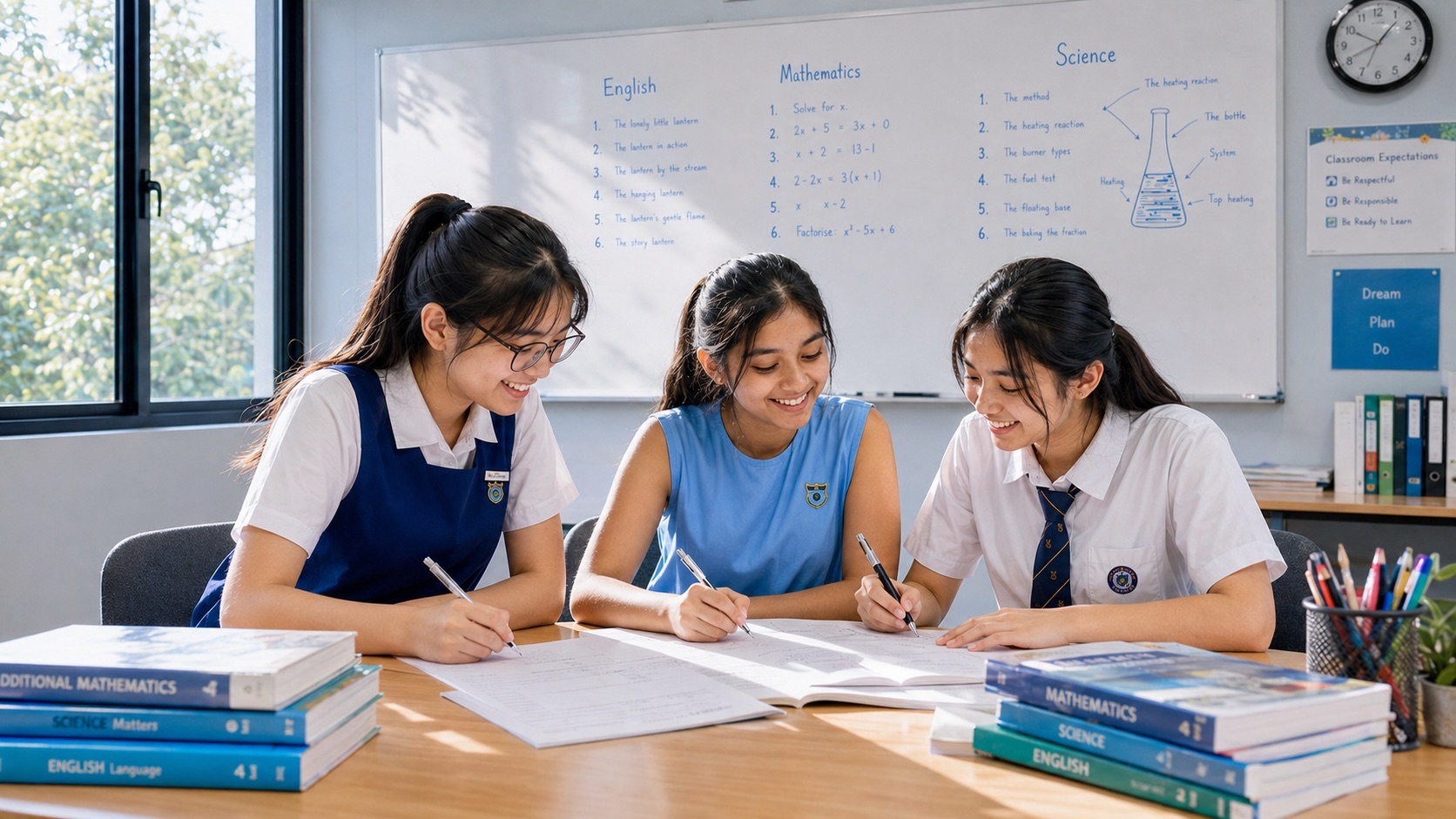
What is vocabulary depth? Vocabulary depth is the richness and quality of knowledge a learner has about a word, including its meanings, relationships, forms, collocations, grammatical behaviour, register and ability to be used across contexts. Learning vocabulary depth, meaning, examples, context, vocabulary, reading comprehension, word meaning and precise English use helps learners move beyond recognition toward independent interpretation.
Vocabulary learning becomes more powerful when students combine several sources of evidence. A word’s spelling or remembered definition may provide one clue, but sentence grammar, collocation, semantic field, morphology, tone and the wider paragraph can refine or overturn the first guess. Strong readers therefore treat an initial interpretation as a hypothesis to test.
This eduKateSG apex guide continues from context in vocabulary, semantic fields, root words, Vocabulary and the Vocabulary Learning Hub.
The 50-second answer
Vocabulary depth is the richness and quality of knowledge a learner has about a word, including its meanings, relationships, forms, collocations, grammatical behaviour, register and ability to be used across contexts. A reliable routine is to read beyond the target word, identify grammatical role, gather semantic and morphological clues, predict a plain-English meaning, substitute that meaning into the sentence, and verify when accuracy matters.
1. Meaning and definition
Meaning and definition becomes useful when learners treat word meaning as an evidence problem. Start with the whole sentence rather than the isolated target. Identify what grammatical category can fit, what the topic predicts, which nearby words constrain meaning and whether morphology supplies a plausible clue. Each source narrows the possibilities.
Good inference remains provisional until tested. Replace the unknown item with a short paraphrase and reread the sentence and paragraph. If coherence improves and the grammar still works, confidence rises. If evidence conflicts, revise the hypothesis instead of forcing the first guess. When the distinction matters, verify with a reliable dictionary.
For durable learning, do not stop once the immediate question is answered. Record the new word with its sense, collocation, word family and one original sentence. Retrieve it after a delay and use it in a different context. This converts successful inference into vocabulary acquisition rather than a one-time rescue strategy.
2. Why it matters
Why it matters becomes useful when learners treat word meaning as an evidence problem. Start with the whole sentence rather than the isolated target. Identify what grammatical category can fit, what the topic predicts, which nearby words constrain meaning and whether morphology supplies a plausible clue. Each source narrows the possibilities.
Good inference remains provisional until tested. Replace the unknown item with a short paraphrase and reread the sentence and paragraph. If coherence improves and the grammar still works, confidence rises. If evidence conflicts, revise the hypothesis instead of forcing the first guess. When the distinction matters, verify with a reliable dictionary.
For durable learning, do not stop once the immediate question is answered. Record the new word with its sense, collocation, word family and one original sentence. Retrieve it after a delay and use it in a different context. This converts successful inference into vocabulary acquisition rather than a one-time rescue strategy.
3. Context
Context becomes useful when learners treat word meaning as an evidence problem. Start with the whole sentence rather than the isolated target. Identify what grammatical category can fit, what the topic predicts, which nearby words constrain meaning and whether morphology supplies a plausible clue. Each source narrows the possibilities.
Good inference remains provisional until tested. Replace the unknown item with a short paraphrase and reread the sentence and paragraph. If coherence improves and the grammar still works, confidence rises. If evidence conflicts, revise the hypothesis instead of forcing the first guess. When the distinction matters, verify with a reliable dictionary.
For durable learning, do not stop once the immediate question is answered. Record the new word with its sense, collocation, word family and one original sentence. Retrieve it after a delay and use it in a different context. This converts successful inference into vocabulary acquisition rather than a one-time rescue strategy.
4. Sentence clues
Sentence clues becomes useful when learners treat word meaning as an evidence problem. Start with the whole sentence rather than the isolated target. Identify what grammatical category can fit, what the topic predicts, which nearby words constrain meaning and whether morphology supplies a plausible clue. Each source narrows the possibilities.
Good inference remains provisional until tested. Replace the unknown item with a short paraphrase and reread the sentence and paragraph. If coherence improves and the grammar still works, confidence rises. If evidence conflicts, revise the hypothesis instead of forcing the first guess. When the distinction matters, verify with a reliable dictionary.
For durable learning, do not stop once the immediate question is answered. Record the new word with its sense, collocation, word family and one original sentence. Retrieve it after a delay and use it in a different context. This converts successful inference into vocabulary acquisition rather than a one-time rescue strategy.
5. Paragraph clues
Paragraph clues becomes useful when learners treat word meaning as an evidence problem. Start with the whole sentence rather than the isolated target. Identify what grammatical category can fit, what the topic predicts, which nearby words constrain meaning and whether morphology supplies a plausible clue. Each source narrows the possibilities.
Good inference remains provisional until tested. Replace the unknown item with a short paraphrase and reread the sentence and paragraph. If coherence improves and the grammar still works, confidence rises. If evidence conflicts, revise the hypothesis instead of forcing the first guess. When the distinction matters, verify with a reliable dictionary.
For durable learning, do not stop once the immediate question is answered. Record the new word with its sense, collocation, word family and one original sentence. Retrieve it after a delay and use it in a different context. This converts successful inference into vocabulary acquisition rather than a one-time rescue strategy.
6. Topic knowledge
Topic knowledge becomes useful when learners treat word meaning as an evidence problem. Start with the whole sentence rather than the isolated target. Identify what grammatical category can fit, what the topic predicts, which nearby words constrain meaning and whether morphology supplies a plausible clue. Each source narrows the possibilities.
Good inference remains provisional until tested. Replace the unknown item with a short paraphrase and reread the sentence and paragraph. If coherence improves and the grammar still works, confidence rises. If evidence conflicts, revise the hypothesis instead of forcing the first guess. When the distinction matters, verify with a reliable dictionary.
For durable learning, do not stop once the immediate question is answered. Record the new word with its sense, collocation, word family and one original sentence. Retrieve it after a delay and use it in a different context. This converts successful inference into vocabulary acquisition rather than a one-time rescue strategy.
7. Grammar
Grammar becomes useful when learners treat word meaning as an evidence problem. Start with the whole sentence rather than the isolated target. Identify what grammatical category can fit, what the topic predicts, which nearby words constrain meaning and whether morphology supplies a plausible clue. Each source narrows the possibilities.
Good inference remains provisional until tested. Replace the unknown item with a short paraphrase and reread the sentence and paragraph. If coherence improves and the grammar still works, confidence rises. If evidence conflicts, revise the hypothesis instead of forcing the first guess. When the distinction matters, verify with a reliable dictionary.
For durable learning, do not stop once the immediate question is answered. Record the new word with its sense, collocation, word family and one original sentence. Retrieve it after a delay and use it in a different context. This converts successful inference into vocabulary acquisition rather than a one-time rescue strategy.
8. Part of speech
Part of speech becomes useful when learners treat word meaning as an evidence problem. Start with the whole sentence rather than the isolated target. Identify what grammatical category can fit, what the topic predicts, which nearby words constrain meaning and whether morphology supplies a plausible clue. Each source narrows the possibilities.
Good inference remains provisional until tested. Replace the unknown item with a short paraphrase and reread the sentence and paragraph. If coherence improves and the grammar still works, confidence rises. If evidence conflicts, revise the hypothesis instead of forcing the first guess. When the distinction matters, verify with a reliable dictionary.
For durable learning, do not stop once the immediate question is answered. Record the new word with its sense, collocation, word family and one original sentence. Retrieve it after a delay and use it in a different context. This converts successful inference into vocabulary acquisition rather than a one-time rescue strategy.
9. Syntax
Syntax becomes useful when learners treat word meaning as an evidence problem. Start with the whole sentence rather than the isolated target. Identify what grammatical category can fit, what the topic predicts, which nearby words constrain meaning and whether morphology supplies a plausible clue. Each source narrows the possibilities.
Good inference remains provisional until tested. Replace the unknown item with a short paraphrase and reread the sentence and paragraph. If coherence improves and the grammar still works, confidence rises. If evidence conflicts, revise the hypothesis instead of forcing the first guess. When the distinction matters, verify with a reliable dictionary.
For durable learning, do not stop once the immediate question is answered. Record the new word with its sense, collocation, word family and one original sentence. Retrieve it after a delay and use it in a different context. This converts successful inference into vocabulary acquisition rather than a one-time rescue strategy.
10. Collocation
Collocation becomes useful when learners treat word meaning as an evidence problem. Start with the whole sentence rather than the isolated target. Identify what grammatical category can fit, what the topic predicts, which nearby words constrain meaning and whether morphology supplies a plausible clue. Each source narrows the possibilities.
Good inference remains provisional until tested. Replace the unknown item with a short paraphrase and reread the sentence and paragraph. If coherence improves and the grammar still works, confidence rises. If evidence conflicts, revise the hypothesis instead of forcing the first guess. When the distinction matters, verify with a reliable dictionary.
For durable learning, do not stop once the immediate question is answered. Record the new word with its sense, collocation, word family and one original sentence. Retrieve it after a delay and use it in a different context. This converts successful inference into vocabulary acquisition rather than a one-time rescue strategy.
11. Semantic fields
Semantic fields becomes useful when learners treat word meaning as an evidence problem. Start with the whole sentence rather than the isolated target. Identify what grammatical category can fit, what the topic predicts, which nearby words constrain meaning and whether morphology supplies a plausible clue. Each source narrows the possibilities.
Good inference remains provisional until tested. Replace the unknown item with a short paraphrase and reread the sentence and paragraph. If coherence improves and the grammar still works, confidence rises. If evidence conflicts, revise the hypothesis instead of forcing the first guess. When the distinction matters, verify with a reliable dictionary.
For durable learning, do not stop once the immediate question is answered. Record the new word with its sense, collocation, word family and one original sentence. Retrieve it after a delay and use it in a different context. This converts successful inference into vocabulary acquisition rather than a one-time rescue strategy.
12. Synonyms
Synonyms becomes useful when learners treat word meaning as an evidence problem. Start with the whole sentence rather than the isolated target. Identify what grammatical category can fit, what the topic predicts, which nearby words constrain meaning and whether morphology supplies a plausible clue. Each source narrows the possibilities.
Good inference remains provisional until tested. Replace the unknown item with a short paraphrase and reread the sentence and paragraph. If coherence improves and the grammar still works, confidence rises. If evidence conflicts, revise the hypothesis instead of forcing the first guess. When the distinction matters, verify with a reliable dictionary.
For durable learning, do not stop once the immediate question is answered. Record the new word with its sense, collocation, word family and one original sentence. Retrieve it after a delay and use it in a different context. This converts successful inference into vocabulary acquisition rather than a one-time rescue strategy.
13. Antonyms
Antonyms becomes useful when learners treat word meaning as an evidence problem. Start with the whole sentence rather than the isolated target. Identify what grammatical category can fit, what the topic predicts, which nearby words constrain meaning and whether morphology supplies a plausible clue. Each source narrows the possibilities.
Good inference remains provisional until tested. Replace the unknown item with a short paraphrase and reread the sentence and paragraph. If coherence improves and the grammar still works, confidence rises. If evidence conflicts, revise the hypothesis instead of forcing the first guess. When the distinction matters, verify with a reliable dictionary.
For durable learning, do not stop once the immediate question is answered. Record the new word with its sense, collocation, word family and one original sentence. Retrieve it after a delay and use it in a different context. This converts successful inference into vocabulary acquisition rather than a one-time rescue strategy.
14. Multiple meanings
Multiple meanings becomes useful when learners treat word meaning as an evidence problem. Start with the whole sentence rather than the isolated target. Identify what grammatical category can fit, what the topic predicts, which nearby words constrain meaning and whether morphology supplies a plausible clue. Each source narrows the possibilities.
Good inference remains provisional until tested. Replace the unknown item with a short paraphrase and reread the sentence and paragraph. If coherence improves and the grammar still works, confidence rises. If evidence conflicts, revise the hypothesis instead of forcing the first guess. When the distinction matters, verify with a reliable dictionary.
For durable learning, do not stop once the immediate question is answered. Record the new word with its sense, collocation, word family and one original sentence. Retrieve it after a delay and use it in a different context. This converts successful inference into vocabulary acquisition rather than a one-time rescue strategy.
15. Polysemy
Polysemy becomes useful when learners treat word meaning as an evidence problem. Start with the whole sentence rather than the isolated target. Identify what grammatical category can fit, what the topic predicts, which nearby words constrain meaning and whether morphology supplies a plausible clue. Each source narrows the possibilities.
Good inference remains provisional until tested. Replace the unknown item with a short paraphrase and reread the sentence and paragraph. If coherence improves and the grammar still works, confidence rises. If evidence conflicts, revise the hypothesis instead of forcing the first guess. When the distinction matters, verify with a reliable dictionary.
For durable learning, do not stop once the immediate question is answered. Record the new word with its sense, collocation, word family and one original sentence. Retrieve it after a delay and use it in a different context. This converts successful inference into vocabulary acquisition rather than a one-time rescue strategy.
16. Word families
Word families becomes useful when learners treat word meaning as an evidence problem. Start with the whole sentence rather than the isolated target. Identify what grammatical category can fit, what the topic predicts, which nearby words constrain meaning and whether morphology supplies a plausible clue. Each source narrows the possibilities.
Good inference remains provisional until tested. Replace the unknown item with a short paraphrase and reread the sentence and paragraph. If coherence improves and the grammar still works, confidence rises. If evidence conflicts, revise the hypothesis instead of forcing the first guess. When the distinction matters, verify with a reliable dictionary.
For durable learning, do not stop once the immediate question is answered. Record the new word with its sense, collocation, word family and one original sentence. Retrieve it after a delay and use it in a different context. This converts successful inference into vocabulary acquisition rather than a one-time rescue strategy.
17. Roots
Roots becomes useful when learners treat word meaning as an evidence problem. Start with the whole sentence rather than the isolated target. Identify what grammatical category can fit, what the topic predicts, which nearby words constrain meaning and whether morphology supplies a plausible clue. Each source narrows the possibilities.
Good inference remains provisional until tested. Replace the unknown item with a short paraphrase and reread the sentence and paragraph. If coherence improves and the grammar still works, confidence rises. If evidence conflicts, revise the hypothesis instead of forcing the first guess. When the distinction matters, verify with a reliable dictionary.
For durable learning, do not stop once the immediate question is answered. Record the new word with its sense, collocation, word family and one original sentence. Retrieve it after a delay and use it in a different context. This converts successful inference into vocabulary acquisition rather than a one-time rescue strategy.
18. Prefixes
Prefixes becomes useful when learners treat word meaning as an evidence problem. Start with the whole sentence rather than the isolated target. Identify what grammatical category can fit, what the topic predicts, which nearby words constrain meaning and whether morphology supplies a plausible clue. Each source narrows the possibilities.
Good inference remains provisional until tested. Replace the unknown item with a short paraphrase and reread the sentence and paragraph. If coherence improves and the grammar still works, confidence rises. If evidence conflicts, revise the hypothesis instead of forcing the first guess. When the distinction matters, verify with a reliable dictionary.
For durable learning, do not stop once the immediate question is answered. Record the new word with its sense, collocation, word family and one original sentence. Retrieve it after a delay and use it in a different context. This converts successful inference into vocabulary acquisition rather than a one-time rescue strategy.
19. Suffixes
Suffixes becomes useful when learners treat word meaning as an evidence problem. Start with the whole sentence rather than the isolated target. Identify what grammatical category can fit, what the topic predicts, which nearby words constrain meaning and whether morphology supplies a plausible clue. Each source narrows the possibilities.
Good inference remains provisional until tested. Replace the unknown item with a short paraphrase and reread the sentence and paragraph. If coherence improves and the grammar still works, confidence rises. If evidence conflicts, revise the hypothesis instead of forcing the first guess. When the distinction matters, verify with a reliable dictionary.
For durable learning, do not stop once the immediate question is answered. Record the new word with its sense, collocation, word family and one original sentence. Retrieve it after a delay and use it in a different context. This converts successful inference into vocabulary acquisition rather than a one-time rescue strategy.
20. Morphology
Morphology becomes useful when learners treat word meaning as an evidence problem. Start with the whole sentence rather than the isolated target. Identify what grammatical category can fit, what the topic predicts, which nearby words constrain meaning and whether morphology supplies a plausible clue. Each source narrows the possibilities.
Good inference remains provisional until tested. Replace the unknown item with a short paraphrase and reread the sentence and paragraph. If coherence improves and the grammar still works, confidence rises. If evidence conflicts, revise the hypothesis instead of forcing the first guess. When the distinction matters, verify with a reliable dictionary.
For durable learning, do not stop once the immediate question is answered. Record the new word with its sense, collocation, word family and one original sentence. Retrieve it after a delay and use it in a different context. This converts successful inference into vocabulary acquisition rather than a one-time rescue strategy.
21. Definition clues
Definition clues becomes useful when learners treat word meaning as an evidence problem. Start with the whole sentence rather than the isolated target. Identify what grammatical category can fit, what the topic predicts, which nearby words constrain meaning and whether morphology supplies a plausible clue. Each source narrows the possibilities.
Good inference remains provisional until tested. Replace the unknown item with a short paraphrase and reread the sentence and paragraph. If coherence improves and the grammar still works, confidence rises. If evidence conflicts, revise the hypothesis instead of forcing the first guess. When the distinction matters, verify with a reliable dictionary.
For durable learning, do not stop once the immediate question is answered. Record the new word with its sense, collocation, word family and one original sentence. Retrieve it after a delay and use it in a different context. This converts successful inference into vocabulary acquisition rather than a one-time rescue strategy.
22. Restatement clues
Restatement clues becomes useful when learners treat word meaning as an evidence problem. Start with the whole sentence rather than the isolated target. Identify what grammatical category can fit, what the topic predicts, which nearby words constrain meaning and whether morphology supplies a plausible clue. Each source narrows the possibilities.
Good inference remains provisional until tested. Replace the unknown item with a short paraphrase and reread the sentence and paragraph. If coherence improves and the grammar still works, confidence rises. If evidence conflicts, revise the hypothesis instead of forcing the first guess. When the distinction matters, verify with a reliable dictionary.
For durable learning, do not stop once the immediate question is answered. Record the new word with its sense, collocation, word family and one original sentence. Retrieve it after a delay and use it in a different context. This converts successful inference into vocabulary acquisition rather than a one-time rescue strategy.
23. Example clues
Example clues becomes useful when learners treat word meaning as an evidence problem. Start with the whole sentence rather than the isolated target. Identify what grammatical category can fit, what the topic predicts, which nearby words constrain meaning and whether morphology supplies a plausible clue. Each source narrows the possibilities.
Good inference remains provisional until tested. Replace the unknown item with a short paraphrase and reread the sentence and paragraph. If coherence improves and the grammar still works, confidence rises. If evidence conflicts, revise the hypothesis instead of forcing the first guess. When the distinction matters, verify with a reliable dictionary.
For durable learning, do not stop once the immediate question is answered. Record the new word with its sense, collocation, word family and one original sentence. Retrieve it after a delay and use it in a different context. This converts successful inference into vocabulary acquisition rather than a one-time rescue strategy.
24. Contrast clues
Contrast clues becomes useful when learners treat word meaning as an evidence problem. Start with the whole sentence rather than the isolated target. Identify what grammatical category can fit, what the topic predicts, which nearby words constrain meaning and whether morphology supplies a plausible clue. Each source narrows the possibilities.
Good inference remains provisional until tested. Replace the unknown item with a short paraphrase and reread the sentence and paragraph. If coherence improves and the grammar still works, confidence rises. If evidence conflicts, revise the hypothesis instead of forcing the first guess. When the distinction matters, verify with a reliable dictionary.
For durable learning, do not stop once the immediate question is answered. Record the new word with its sense, collocation, word family and one original sentence. Retrieve it after a delay and use it in a different context. This converts successful inference into vocabulary acquisition rather than a one-time rescue strategy.
25. Cause and effect
Cause and effect becomes useful when learners treat word meaning as an evidence problem. Start with the whole sentence rather than the isolated target. Identify what grammatical category can fit, what the topic predicts, which nearby words constrain meaning and whether morphology supplies a plausible clue. Each source narrows the possibilities.
Good inference remains provisional until tested. Replace the unknown item with a short paraphrase and reread the sentence and paragraph. If coherence improves and the grammar still works, confidence rises. If evidence conflicts, revise the hypothesis instead of forcing the first guess. When the distinction matters, verify with a reliable dictionary.
For durable learning, do not stop once the immediate question is answered. Record the new word with its sense, collocation, word family and one original sentence. Retrieve it after a delay and use it in a different context. This converts successful inference into vocabulary acquisition rather than a one-time rescue strategy.
26. Inference
Inference becomes useful when learners treat word meaning as an evidence problem. Start with the whole sentence rather than the isolated target. Identify what grammatical category can fit, what the topic predicts, which nearby words constrain meaning and whether morphology supplies a plausible clue. Each source narrows the possibilities.
Good inference remains provisional until tested. Replace the unknown item with a short paraphrase and reread the sentence and paragraph. If coherence improves and the grammar still works, confidence rises. If evidence conflicts, revise the hypothesis instead of forcing the first guess. When the distinction matters, verify with a reliable dictionary.
For durable learning, do not stop once the immediate question is answered. Record the new word with its sense, collocation, word family and one original sentence. Retrieve it after a delay and use it in a different context. This converts successful inference into vocabulary acquisition rather than a one-time rescue strategy.
27. Prediction
Prediction becomes useful when learners treat word meaning as an evidence problem. Start with the whole sentence rather than the isolated target. Identify what grammatical category can fit, what the topic predicts, which nearby words constrain meaning and whether morphology supplies a plausible clue. Each source narrows the possibilities.
Good inference remains provisional until tested. Replace the unknown item with a short paraphrase and reread the sentence and paragraph. If coherence improves and the grammar still works, confidence rises. If evidence conflicts, revise the hypothesis instead of forcing the first guess. When the distinction matters, verify with a reliable dictionary.
For durable learning, do not stop once the immediate question is answered. Record the new word with its sense, collocation, word family and one original sentence. Retrieve it after a delay and use it in a different context. This converts successful inference into vocabulary acquisition rather than a one-time rescue strategy.
28. Substitution test
Substitution test becomes useful when learners treat word meaning as an evidence problem. Start with the whole sentence rather than the isolated target. Identify what grammatical category can fit, what the topic predicts, which nearby words constrain meaning and whether morphology supplies a plausible clue. Each source narrows the possibilities.
Good inference remains provisional until tested. Replace the unknown item with a short paraphrase and reread the sentence and paragraph. If coherence improves and the grammar still works, confidence rises. If evidence conflicts, revise the hypothesis instead of forcing the first guess. When the distinction matters, verify with a reliable dictionary.
For durable learning, do not stop once the immediate question is answered. Record the new word with its sense, collocation, word family and one original sentence. Retrieve it after a delay and use it in a different context. This converts successful inference into vocabulary acquisition rather than a one-time rescue strategy.
29. Verification
Verification becomes useful when learners treat word meaning as an evidence problem. Start with the whole sentence rather than the isolated target. Identify what grammatical category can fit, what the topic predicts, which nearby words constrain meaning and whether morphology supplies a plausible clue. Each source narrows the possibilities.
Good inference remains provisional until tested. Replace the unknown item with a short paraphrase and reread the sentence and paragraph. If coherence improves and the grammar still works, confidence rises. If evidence conflicts, revise the hypothesis instead of forcing the first guess. When the distinction matters, verify with a reliable dictionary.
For durable learning, do not stop once the immediate question is answered. Record the new word with its sense, collocation, word family and one original sentence. Retrieve it after a delay and use it in a different context. This converts successful inference into vocabulary acquisition rather than a one-time rescue strategy.
30. Dictionary use
Dictionary use becomes useful when learners treat word meaning as an evidence problem. Start with the whole sentence rather than the isolated target. Identify what grammatical category can fit, what the topic predicts, which nearby words constrain meaning and whether morphology supplies a plausible clue. Each source narrows the possibilities.
Good inference remains provisional until tested. Replace the unknown item with a short paraphrase and reread the sentence and paragraph. If coherence improves and the grammar still works, confidence rises. If evidence conflicts, revise the hypothesis instead of forcing the first guess. When the distinction matters, verify with a reliable dictionary.
For durable learning, do not stop once the immediate question is answered. Record the new word with its sense, collocation, word family and one original sentence. Retrieve it after a delay and use it in a different context. This converts successful inference into vocabulary acquisition rather than a one-time rescue strategy.
31. Reading comprehension
Reading comprehension becomes useful when learners treat word meaning as an evidence problem. Start with the whole sentence rather than the isolated target. Identify what grammatical category can fit, what the topic predicts, which nearby words constrain meaning and whether morphology supplies a plausible clue. Each source narrows the possibilities.
Good inference remains provisional until tested. Replace the unknown item with a short paraphrase and reread the sentence and paragraph. If coherence improves and the grammar still works, confidence rises. If evidence conflicts, revise the hypothesis instead of forcing the first guess. When the distinction matters, verify with a reliable dictionary.
For durable learning, do not stop once the immediate question is answered. Record the new word with its sense, collocation, word family and one original sentence. Retrieve it after a delay and use it in a different context. This converts successful inference into vocabulary acquisition rather than a one-time rescue strategy.
32. Cloze passages
Cloze passages becomes useful when learners treat word meaning as an evidence problem. Start with the whole sentence rather than the isolated target. Identify what grammatical category can fit, what the topic predicts, which nearby words constrain meaning and whether morphology supplies a plausible clue. Each source narrows the possibilities.
Good inference remains provisional until tested. Replace the unknown item with a short paraphrase and reread the sentence and paragraph. If coherence improves and the grammar still works, confidence rises. If evidence conflicts, revise the hypothesis instead of forcing the first guess. When the distinction matters, verify with a reliable dictionary.
For durable learning, do not stop once the immediate question is answered. Record the new word with its sense, collocation, word family and one original sentence. Retrieve it after a delay and use it in a different context. This converts successful inference into vocabulary acquisition rather than a one-time rescue strategy.
33. Academic vocabulary
Academic vocabulary becomes useful when learners treat word meaning as an evidence problem. Start with the whole sentence rather than the isolated target. Identify what grammatical category can fit, what the topic predicts, which nearby words constrain meaning and whether morphology supplies a plausible clue. Each source narrows the possibilities.
Good inference remains provisional until tested. Replace the unknown item with a short paraphrase and reread the sentence and paragraph. If coherence improves and the grammar still works, confidence rises. If evidence conflicts, revise the hypothesis instead of forcing the first guess. When the distinction matters, verify with a reliable dictionary.
For durable learning, do not stop once the immediate question is answered. Record the new word with its sense, collocation, word family and one original sentence. Retrieve it after a delay and use it in a different context. This converts successful inference into vocabulary acquisition rather than a one-time rescue strategy.
34. Science vocabulary
Science vocabulary becomes useful when learners treat word meaning as an evidence problem. Start with the whole sentence rather than the isolated target. Identify what grammatical category can fit, what the topic predicts, which nearby words constrain meaning and whether morphology supplies a plausible clue. Each source narrows the possibilities.
Good inference remains provisional until tested. Replace the unknown item with a short paraphrase and reread the sentence and paragraph. If coherence improves and the grammar still works, confidence rises. If evidence conflicts, revise the hypothesis instead of forcing the first guess. When the distinction matters, verify with a reliable dictionary.
For durable learning, do not stop once the immediate question is answered. Record the new word with its sense, collocation, word family and one original sentence. Retrieve it after a delay and use it in a different context. This converts successful inference into vocabulary acquisition rather than a one-time rescue strategy.
35. Humanities vocabulary
Humanities vocabulary becomes useful when learners treat word meaning as an evidence problem. Start with the whole sentence rather than the isolated target. Identify what grammatical category can fit, what the topic predicts, which nearby words constrain meaning and whether morphology supplies a plausible clue. Each source narrows the possibilities.
Good inference remains provisional until tested. Replace the unknown item with a short paraphrase and reread the sentence and paragraph. If coherence improves and the grammar still works, confidence rises. If evidence conflicts, revise the hypothesis instead of forcing the first guess. When the distinction matters, verify with a reliable dictionary.
For durable learning, do not stop once the immediate question is answered. Record the new word with its sense, collocation, word family and one original sentence. Retrieve it after a delay and use it in a different context. This converts successful inference into vocabulary acquisition rather than a one-time rescue strategy.
36. Narrative texts
Narrative texts becomes useful when learners treat word meaning as an evidence problem. Start with the whole sentence rather than the isolated target. Identify what grammatical category can fit, what the topic predicts, which nearby words constrain meaning and whether morphology supplies a plausible clue. Each source narrows the possibilities.
Good inference remains provisional until tested. Replace the unknown item with a short paraphrase and reread the sentence and paragraph. If coherence improves and the grammar still works, confidence rises. If evidence conflicts, revise the hypothesis instead of forcing the first guess. When the distinction matters, verify with a reliable dictionary.
For durable learning, do not stop once the immediate question is answered. Record the new word with its sense, collocation, word family and one original sentence. Retrieve it after a delay and use it in a different context. This converts successful inference into vocabulary acquisition rather than a one-time rescue strategy.
37. Expository texts
Expository texts becomes useful when learners treat word meaning as an evidence problem. Start with the whole sentence rather than the isolated target. Identify what grammatical category can fit, what the topic predicts, which nearby words constrain meaning and whether morphology supplies a plausible clue. Each source narrows the possibilities.
Good inference remains provisional until tested. Replace the unknown item with a short paraphrase and reread the sentence and paragraph. If coherence improves and the grammar still works, confidence rises. If evidence conflicts, revise the hypothesis instead of forcing the first guess. When the distinction matters, verify with a reliable dictionary.
For durable learning, do not stop once the immediate question is answered. Record the new word with its sense, collocation, word family and one original sentence. Retrieve it after a delay and use it in a different context. This converts successful inference into vocabulary acquisition rather than a one-time rescue strategy.
38. Argument texts
Argument texts becomes useful when learners treat word meaning as an evidence problem. Start with the whole sentence rather than the isolated target. Identify what grammatical category can fit, what the topic predicts, which nearby words constrain meaning and whether morphology supplies a plausible clue. Each source narrows the possibilities.
Good inference remains provisional until tested. Replace the unknown item with a short paraphrase and reread the sentence and paragraph. If coherence improves and the grammar still works, confidence rises. If evidence conflicts, revise the hypothesis instead of forcing the first guess. When the distinction matters, verify with a reliable dictionary.
For durable learning, do not stop once the immediate question is answered. Record the new word with its sense, collocation, word family and one original sentence. Retrieve it after a delay and use it in a different context. This converts successful inference into vocabulary acquisition rather than a one-time rescue strategy.
39. Unknown words
Unknown words becomes useful when learners treat word meaning as an evidence problem. Start with the whole sentence rather than the isolated target. Identify what grammatical category can fit, what the topic predicts, which nearby words constrain meaning and whether morphology supplies a plausible clue. Each source narrows the possibilities.
Good inference remains provisional until tested. Replace the unknown item with a short paraphrase and reread the sentence and paragraph. If coherence improves and the grammar still works, confidence rises. If evidence conflicts, revise the hypothesis instead of forcing the first guess. When the distinction matters, verify with a reliable dictionary.
For durable learning, do not stop once the immediate question is answered. Record the new word with its sense, collocation, word family and one original sentence. Retrieve it after a delay and use it in a different context. This converts successful inference into vocabulary acquisition rather than a one-time rescue strategy.
40. Unfamiliar senses
Unfamiliar senses becomes useful when learners treat word meaning as an evidence problem. Start with the whole sentence rather than the isolated target. Identify what grammatical category can fit, what the topic predicts, which nearby words constrain meaning and whether morphology supplies a plausible clue. Each source narrows the possibilities.
Good inference remains provisional until tested. Replace the unknown item with a short paraphrase and reread the sentence and paragraph. If coherence improves and the grammar still works, confidence rises. If evidence conflicts, revise the hypothesis instead of forcing the first guess. When the distinction matters, verify with a reliable dictionary.
For durable learning, do not stop once the immediate question is answered. Record the new word with its sense, collocation, word family and one original sentence. Retrieve it after a delay and use it in a different context. This converts successful inference into vocabulary acquisition rather than a one-time rescue strategy.
41. False friends
False friends becomes useful when learners treat word meaning as an evidence problem. Start with the whole sentence rather than the isolated target. Identify what grammatical category can fit, what the topic predicts, which nearby words constrain meaning and whether morphology supplies a plausible clue. Each source narrows the possibilities.
Good inference remains provisional until tested. Replace the unknown item with a short paraphrase and reread the sentence and paragraph. If coherence improves and the grammar still works, confidence rises. If evidence conflicts, revise the hypothesis instead of forcing the first guess. When the distinction matters, verify with a reliable dictionary.
For durable learning, do not stop once the immediate question is answered. Record the new word with its sense, collocation, word family and one original sentence. Retrieve it after a delay and use it in a different context. This converts successful inference into vocabulary acquisition rather than a one-time rescue strategy.
42. Overconfident guessing
Overconfident guessing becomes useful when learners treat word meaning as an evidence problem. Start with the whole sentence rather than the isolated target. Identify what grammatical category can fit, what the topic predicts, which nearby words constrain meaning and whether morphology supplies a plausible clue. Each source narrows the possibilities.
Good inference remains provisional until tested. Replace the unknown item with a short paraphrase and reread the sentence and paragraph. If coherence improves and the grammar still works, confidence rises. If evidence conflicts, revise the hypothesis instead of forcing the first guess. When the distinction matters, verify with a reliable dictionary.
For durable learning, do not stop once the immediate question is answered. Record the new word with its sense, collocation, word family and one original sentence. Retrieve it after a delay and use it in a different context. This converts successful inference into vocabulary acquisition rather than a one-time rescue strategy.
43. Evidence weighting
Evidence weighting becomes useful when learners treat word meaning as an evidence problem. Start with the whole sentence rather than the isolated target. Identify what grammatical category can fit, what the topic predicts, which nearby words constrain meaning and whether morphology supplies a plausible clue. Each source narrows the possibilities.
Good inference remains provisional until tested. Replace the unknown item with a short paraphrase and reread the sentence and paragraph. If coherence improves and the grammar still works, confidence rises. If evidence conflicts, revise the hypothesis instead of forcing the first guess. When the distinction matters, verify with a reliable dictionary.
For durable learning, do not stop once the immediate question is answered. Record the new word with its sense, collocation, word family and one original sentence. Retrieve it after a delay and use it in a different context. This converts successful inference into vocabulary acquisition rather than a one-time rescue strategy.
44. Precision
Precision becomes useful when learners treat word meaning as an evidence problem. Start with the whole sentence rather than the isolated target. Identify what grammatical category can fit, what the topic predicts, which nearby words constrain meaning and whether morphology supplies a plausible clue. Each source narrows the possibilities.
Good inference remains provisional until tested. Replace the unknown item with a short paraphrase and reread the sentence and paragraph. If coherence improves and the grammar still works, confidence rises. If evidence conflicts, revise the hypothesis instead of forcing the first guess. When the distinction matters, verify with a reliable dictionary.
For durable learning, do not stop once the immediate question is answered. Record the new word with its sense, collocation, word family and one original sentence. Retrieve it after a delay and use it in a different context. This converts successful inference into vocabulary acquisition rather than a one-time rescue strategy.
45. Memory
Memory becomes useful when learners treat word meaning as an evidence problem. Start with the whole sentence rather than the isolated target. Identify what grammatical category can fit, what the topic predicts, which nearby words constrain meaning and whether morphology supplies a plausible clue. Each source narrows the possibilities.
Good inference remains provisional until tested. Replace the unknown item with a short paraphrase and reread the sentence and paragraph. If coherence improves and the grammar still works, confidence rises. If evidence conflicts, revise the hypothesis instead of forcing the first guess. When the distinction matters, verify with a reliable dictionary.
For durable learning, do not stop once the immediate question is answered. Record the new word with its sense, collocation, word family and one original sentence. Retrieve it after a delay and use it in a different context. This converts successful inference into vocabulary acquisition rather than a one-time rescue strategy.
46. Retrieval practice
Retrieval practice becomes useful when learners treat word meaning as an evidence problem. Start with the whole sentence rather than the isolated target. Identify what grammatical category can fit, what the topic predicts, which nearby words constrain meaning and whether morphology supplies a plausible clue. Each source narrows the possibilities.
Good inference remains provisional until tested. Replace the unknown item with a short paraphrase and reread the sentence and paragraph. If coherence improves and the grammar still works, confidence rises. If evidence conflicts, revise the hypothesis instead of forcing the first guess. When the distinction matters, verify with a reliable dictionary.
For durable learning, do not stop once the immediate question is answered. Record the new word with its sense, collocation, word family and one original sentence. Retrieve it after a delay and use it in a different context. This converts successful inference into vocabulary acquisition rather than a one-time rescue strategy.
47. Spaced review
Spaced review becomes useful when learners treat word meaning as an evidence problem. Start with the whole sentence rather than the isolated target. Identify what grammatical category can fit, what the topic predicts, which nearby words constrain meaning and whether morphology supplies a plausible clue. Each source narrows the possibilities.
Good inference remains provisional until tested. Replace the unknown item with a short paraphrase and reread the sentence and paragraph. If coherence improves and the grammar still works, confidence rises. If evidence conflicts, revise the hypothesis instead of forcing the first guess. When the distinction matters, verify with a reliable dictionary.
For durable learning, do not stop once the immediate question is answered. Record the new word with its sense, collocation, word family and one original sentence. Retrieve it after a delay and use it in a different context. This converts successful inference into vocabulary acquisition rather than a one-time rescue strategy.
48. Primary English
Primary English becomes useful when learners treat word meaning as an evidence problem. Start with the whole sentence rather than the isolated target. Identify what grammatical category can fit, what the topic predicts, which nearby words constrain meaning and whether morphology supplies a plausible clue. Each source narrows the possibilities.
Good inference remains provisional until tested. Replace the unknown item with a short paraphrase and reread the sentence and paragraph. If coherence improves and the grammar still works, confidence rises. If evidence conflicts, revise the hypothesis instead of forcing the first guess. When the distinction matters, verify with a reliable dictionary.
For durable learning, do not stop once the immediate question is answered. Record the new word with its sense, collocation, word family and one original sentence. Retrieve it after a delay and use it in a different context. This converts successful inference into vocabulary acquisition rather than a one-time rescue strategy.
49. Secondary English
Secondary English becomes useful when learners treat word meaning as an evidence problem. Start with the whole sentence rather than the isolated target. Identify what grammatical category can fit, what the topic predicts, which nearby words constrain meaning and whether morphology supplies a plausible clue. Each source narrows the possibilities.
Good inference remains provisional until tested. Replace the unknown item with a short paraphrase and reread the sentence and paragraph. If coherence improves and the grammar still works, confidence rises. If evidence conflicts, revise the hypothesis instead of forcing the first guess. When the distinction matters, verify with a reliable dictionary.
For durable learning, do not stop once the immediate question is answered. Record the new word with its sense, collocation, word family and one original sentence. Retrieve it after a delay and use it in a different context. This converts successful inference into vocabulary acquisition rather than a one-time rescue strategy.
50. PSLE transfer
PSLE transfer becomes useful when learners treat word meaning as an evidence problem. Start with the whole sentence rather than the isolated target. Identify what grammatical category can fit, what the topic predicts, which nearby words constrain meaning and whether morphology supplies a plausible clue. Each source narrows the possibilities.
Good inference remains provisional until tested. Replace the unknown item with a short paraphrase and reread the sentence and paragraph. If coherence improves and the grammar still works, confidence rises. If evidence conflicts, revise the hypothesis instead of forcing the first guess. When the distinction matters, verify with a reliable dictionary.
For durable learning, do not stop once the immediate question is answered. Record the new word with its sense, collocation, word family and one original sentence. Retrieve it after a delay and use it in a different context. This converts successful inference into vocabulary acquisition rather than a one-time rescue strategy.
51. The central rule
The central rule becomes useful when learners treat word meaning as an evidence problem. Start with the whole sentence rather than the isolated target. Identify what grammatical category can fit, what the topic predicts, which nearby words constrain meaning and whether morphology supplies a plausible clue. Each source narrows the possibilities.
Good inference remains provisional until tested. Replace the unknown item with a short paraphrase and reread the sentence and paragraph. If coherence improves and the grammar still works, confidence rises. If evidence conflicts, revise the hypothesis instead of forcing the first guess. When the distinction matters, verify with a reliable dictionary.
For durable learning, do not stop once the immediate question is answered. Record the new word with its sense, collocation, word family and one original sentence. Retrieve it after a delay and use it in a different context. This converts successful inference into vocabulary acquisition rather than a one-time rescue strategy.
51. Meaning and definition
Meaning and definition becomes useful when learners treat word meaning as an evidence problem. Start with the whole sentence rather than the isolated target. Identify what grammatical category can fit, what the topic predicts, which nearby words constrain meaning and whether morphology supplies a plausible clue. Each source narrows the possibilities.
Good inference remains provisional until tested. Replace the unknown item with a short paraphrase and reread the sentence and paragraph. If coherence improves and the grammar still works, confidence rises. If evidence conflicts, revise the hypothesis instead of forcing the first guess. When the distinction matters, verify with a reliable dictionary.
For durable learning, do not stop once the immediate question is answered. Record the new word with its sense, collocation, word family and one original sentence. Retrieve it after a delay and use it in a different context. This converts successful inference into vocabulary acquisition rather than a one-time rescue strategy.
52. Why it matters
Why it matters becomes useful when learners treat word meaning as an evidence problem. Start with the whole sentence rather than the isolated target. Identify what grammatical category can fit, what the topic predicts, which nearby words constrain meaning and whether morphology supplies a plausible clue. Each source narrows the possibilities.
Good inference remains provisional until tested. Replace the unknown item with a short paraphrase and reread the sentence and paragraph. If coherence improves and the grammar still works, confidence rises. If evidence conflicts, revise the hypothesis instead of forcing the first guess. When the distinction matters, verify with a reliable dictionary.
For durable learning, do not stop once the immediate question is answered. Record the new word with its sense, collocation, word family and one original sentence. Retrieve it after a delay and use it in a different context. This converts successful inference into vocabulary acquisition rather than a one-time rescue strategy.
53. Context
Context becomes useful when learners treat word meaning as an evidence problem. Start with the whole sentence rather than the isolated target. Identify what grammatical category can fit, what the topic predicts, which nearby words constrain meaning and whether morphology supplies a plausible clue. Each source narrows the possibilities.
Good inference remains provisional until tested. Replace the unknown item with a short paraphrase and reread the sentence and paragraph. If coherence improves and the grammar still works, confidence rises. If evidence conflicts, revise the hypothesis instead of forcing the first guess. When the distinction matters, verify with a reliable dictionary.
For durable learning, do not stop once the immediate question is answered. Record the new word with its sense, collocation, word family and one original sentence. Retrieve it after a delay and use it in a different context. This converts successful inference into vocabulary acquisition rather than a one-time rescue strategy.
54. Sentence clues
Sentence clues becomes useful when learners treat word meaning as an evidence problem. Start with the whole sentence rather than the isolated target. Identify what grammatical category can fit, what the topic predicts, which nearby words constrain meaning and whether morphology supplies a plausible clue. Each source narrows the possibilities.
Good inference remains provisional until tested. Replace the unknown item with a short paraphrase and reread the sentence and paragraph. If coherence improves and the grammar still works, confidence rises. If evidence conflicts, revise the hypothesis instead of forcing the first guess. When the distinction matters, verify with a reliable dictionary.
For durable learning, do not stop once the immediate question is answered. Record the new word with its sense, collocation, word family and one original sentence. Retrieve it after a delay and use it in a different context. This converts successful inference into vocabulary acquisition rather than a one-time rescue strategy.
55. Paragraph clues
Paragraph clues becomes useful when learners treat word meaning as an evidence problem. Start with the whole sentence rather than the isolated target. Identify what grammatical category can fit, what the topic predicts, which nearby words constrain meaning and whether morphology supplies a plausible clue. Each source narrows the possibilities.
Good inference remains provisional until tested. Replace the unknown item with a short paraphrase and reread the sentence and paragraph. If coherence improves and the grammar still works, confidence rises. If evidence conflicts, revise the hypothesis instead of forcing the first guess. When the distinction matters, verify with a reliable dictionary.
For durable learning, do not stop once the immediate question is answered. Record the new word with its sense, collocation, word family and one original sentence. Retrieve it after a delay and use it in a different context. This converts successful inference into vocabulary acquisition rather than a one-time rescue strategy.
56. Topic knowledge
Topic knowledge becomes useful when learners treat word meaning as an evidence problem. Start with the whole sentence rather than the isolated target. Identify what grammatical category can fit, what the topic predicts, which nearby words constrain meaning and whether morphology supplies a plausible clue. Each source narrows the possibilities.
Good inference remains provisional until tested. Replace the unknown item with a short paraphrase and reread the sentence and paragraph. If coherence improves and the grammar still works, confidence rises. If evidence conflicts, revise the hypothesis instead of forcing the first guess. When the distinction matters, verify with a reliable dictionary.
For durable learning, do not stop once the immediate question is answered. Record the new word with its sense, collocation, word family and one original sentence. Retrieve it after a delay and use it in a different context. This converts successful inference into vocabulary acquisition rather than a one-time rescue strategy.
57. Grammar
Grammar becomes useful when learners treat word meaning as an evidence problem. Start with the whole sentence rather than the isolated target. Identify what grammatical category can fit, what the topic predicts, which nearby words constrain meaning and whether morphology supplies a plausible clue. Each source narrows the possibilities.
Good inference remains provisional until tested. Replace the unknown item with a short paraphrase and reread the sentence and paragraph. If coherence improves and the grammar still works, confidence rises. If evidence conflicts, revise the hypothesis instead of forcing the first guess. When the distinction matters, verify with a reliable dictionary.
For durable learning, do not stop once the immediate question is answered. Record the new word with its sense, collocation, word family and one original sentence. Retrieve it after a delay and use it in a different context. This converts successful inference into vocabulary acquisition rather than a one-time rescue strategy.
58. Part of speech
Part of speech becomes useful when learners treat word meaning as an evidence problem. Start with the whole sentence rather than the isolated target. Identify what grammatical category can fit, what the topic predicts, which nearby words constrain meaning and whether morphology supplies a plausible clue. Each source narrows the possibilities.
Good inference remains provisional until tested. Replace the unknown item with a short paraphrase and reread the sentence and paragraph. If coherence improves and the grammar still works, confidence rises. If evidence conflicts, revise the hypothesis instead of forcing the first guess. When the distinction matters, verify with a reliable dictionary.
For durable learning, do not stop once the immediate question is answered. Record the new word with its sense, collocation, word family and one original sentence. Retrieve it after a delay and use it in a different context. This converts successful inference into vocabulary acquisition rather than a one-time rescue strategy.
59. Syntax
Syntax becomes useful when learners treat word meaning as an evidence problem. Start with the whole sentence rather than the isolated target. Identify what grammatical category can fit, what the topic predicts, which nearby words constrain meaning and whether morphology supplies a plausible clue. Each source narrows the possibilities.
Good inference remains provisional until tested. Replace the unknown item with a short paraphrase and reread the sentence and paragraph. If coherence improves and the grammar still works, confidence rises. If evidence conflicts, revise the hypothesis instead of forcing the first guess. When the distinction matters, verify with a reliable dictionary.
For durable learning, do not stop once the immediate question is answered. Record the new word with its sense, collocation, word family and one original sentence. Retrieve it after a delay and use it in a different context. This converts successful inference into vocabulary acquisition rather than a one-time rescue strategy.
60. Collocation
Collocation becomes useful when learners treat word meaning as an evidence problem. Start with the whole sentence rather than the isolated target. Identify what grammatical category can fit, what the topic predicts, which nearby words constrain meaning and whether morphology supplies a plausible clue. Each source narrows the possibilities.
Good inference remains provisional until tested. Replace the unknown item with a short paraphrase and reread the sentence and paragraph. If coherence improves and the grammar still works, confidence rises. If evidence conflicts, revise the hypothesis instead of forcing the first guess. When the distinction matters, verify with a reliable dictionary.
For durable learning, do not stop once the immediate question is answered. Record the new word with its sense, collocation, word family and one original sentence. Retrieve it after a delay and use it in a different context. This converts successful inference into vocabulary acquisition rather than a one-time rescue strategy.
61. Semantic fields
Semantic fields becomes useful when learners treat word meaning as an evidence problem. Start with the whole sentence rather than the isolated target. Identify what grammatical category can fit, what the topic predicts, which nearby words constrain meaning and whether morphology supplies a plausible clue. Each source narrows the possibilities.
Good inference remains provisional until tested. Replace the unknown item with a short paraphrase and reread the sentence and paragraph. If coherence improves and the grammar still works, confidence rises. If evidence conflicts, revise the hypothesis instead of forcing the first guess. When the distinction matters, verify with a reliable dictionary.
For durable learning, do not stop once the immediate question is answered. Record the new word with its sense, collocation, word family and one original sentence. Retrieve it after a delay and use it in a different context. This converts successful inference into vocabulary acquisition rather than a one-time rescue strategy.
62. Synonyms
Synonyms becomes useful when learners treat word meaning as an evidence problem. Start with the whole sentence rather than the isolated target. Identify what grammatical category can fit, what the topic predicts, which nearby words constrain meaning and whether morphology supplies a plausible clue. Each source narrows the possibilities.
Good inference remains provisional until tested. Replace the unknown item with a short paraphrase and reread the sentence and paragraph. If coherence improves and the grammar still works, confidence rises. If evidence conflicts, revise the hypothesis instead of forcing the first guess. When the distinction matters, verify with a reliable dictionary.
For durable learning, do not stop once the immediate question is answered. Record the new word with its sense, collocation, word family and one original sentence. Retrieve it after a delay and use it in a different context. This converts successful inference into vocabulary acquisition rather than a one-time rescue strategy.
63. Antonyms
Antonyms becomes useful when learners treat word meaning as an evidence problem. Start with the whole sentence rather than the isolated target. Identify what grammatical category can fit, what the topic predicts, which nearby words constrain meaning and whether morphology supplies a plausible clue. Each source narrows the possibilities.
Good inference remains provisional until tested. Replace the unknown item with a short paraphrase and reread the sentence and paragraph. If coherence improves and the grammar still works, confidence rises. If evidence conflicts, revise the hypothesis instead of forcing the first guess. When the distinction matters, verify with a reliable dictionary.
For durable learning, do not stop once the immediate question is answered. Record the new word with its sense, collocation, word family and one original sentence. Retrieve it after a delay and use it in a different context. This converts successful inference into vocabulary acquisition rather than a one-time rescue strategy.
64. Multiple meanings
Multiple meanings becomes useful when learners treat word meaning as an evidence problem. Start with the whole sentence rather than the isolated target. Identify what grammatical category can fit, what the topic predicts, which nearby words constrain meaning and whether morphology supplies a plausible clue. Each source narrows the possibilities.
Good inference remains provisional until tested. Replace the unknown item with a short paraphrase and reread the sentence and paragraph. If coherence improves and the grammar still works, confidence rises. If evidence conflicts, revise the hypothesis instead of forcing the first guess. When the distinction matters, verify with a reliable dictionary.
For durable learning, do not stop once the immediate question is answered. Record the new word with its sense, collocation, word family and one original sentence. Retrieve it after a delay and use it in a different context. This converts successful inference into vocabulary acquisition rather than a one-time rescue strategy.
65. Polysemy
Polysemy becomes useful when learners treat word meaning as an evidence problem. Start with the whole sentence rather than the isolated target. Identify what grammatical category can fit, what the topic predicts, which nearby words constrain meaning and whether morphology supplies a plausible clue. Each source narrows the possibilities.
Good inference remains provisional until tested. Replace the unknown item with a short paraphrase and reread the sentence and paragraph. If coherence improves and the grammar still works, confidence rises. If evidence conflicts, revise the hypothesis instead of forcing the first guess. When the distinction matters, verify with a reliable dictionary.
For durable learning, do not stop once the immediate question is answered. Record the new word with its sense, collocation, word family and one original sentence. Retrieve it after a delay and use it in a different context. This converts successful inference into vocabulary acquisition rather than a one-time rescue strategy.
66. Word families
Word families becomes useful when learners treat word meaning as an evidence problem. Start with the whole sentence rather than the isolated target. Identify what grammatical category can fit, what the topic predicts, which nearby words constrain meaning and whether morphology supplies a plausible clue. Each source narrows the possibilities.
Good inference remains provisional until tested. Replace the unknown item with a short paraphrase and reread the sentence and paragraph. If coherence improves and the grammar still works, confidence rises. If evidence conflicts, revise the hypothesis instead of forcing the first guess. When the distinction matters, verify with a reliable dictionary.
For durable learning, do not stop once the immediate question is answered. Record the new word with its sense, collocation, word family and one original sentence. Retrieve it after a delay and use it in a different context. This converts successful inference into vocabulary acquisition rather than a one-time rescue strategy.
67. Roots
Roots becomes useful when learners treat word meaning as an evidence problem. Start with the whole sentence rather than the isolated target. Identify what grammatical category can fit, what the topic predicts, which nearby words constrain meaning and whether morphology supplies a plausible clue. Each source narrows the possibilities.
Good inference remains provisional until tested. Replace the unknown item with a short paraphrase and reread the sentence and paragraph. If coherence improves and the grammar still works, confidence rises. If evidence conflicts, revise the hypothesis instead of forcing the first guess. When the distinction matters, verify with a reliable dictionary.
For durable learning, do not stop once the immediate question is answered. Record the new word with its sense, collocation, word family and one original sentence. Retrieve it after a delay and use it in a different context. This converts successful inference into vocabulary acquisition rather than a one-time rescue strategy.
68. Prefixes
Prefixes becomes useful when learners treat word meaning as an evidence problem. Start with the whole sentence rather than the isolated target. Identify what grammatical category can fit, what the topic predicts, which nearby words constrain meaning and whether morphology supplies a plausible clue. Each source narrows the possibilities.
Good inference remains provisional until tested. Replace the unknown item with a short paraphrase and reread the sentence and paragraph. If coherence improves and the grammar still works, confidence rises. If evidence conflicts, revise the hypothesis instead of forcing the first guess. When the distinction matters, verify with a reliable dictionary.
For durable learning, do not stop once the immediate question is answered. Record the new word with its sense, collocation, word family and one original sentence. Retrieve it after a delay and use it in a different context. This converts successful inference into vocabulary acquisition rather than a one-time rescue strategy.
69. Suffixes
Suffixes becomes useful when learners treat word meaning as an evidence problem. Start with the whole sentence rather than the isolated target. Identify what grammatical category can fit, what the topic predicts, which nearby words constrain meaning and whether morphology supplies a plausible clue. Each source narrows the possibilities.
Good inference remains provisional until tested. Replace the unknown item with a short paraphrase and reread the sentence and paragraph. If coherence improves and the grammar still works, confidence rises. If evidence conflicts, revise the hypothesis instead of forcing the first guess. When the distinction matters, verify with a reliable dictionary.
For durable learning, do not stop once the immediate question is answered. Record the new word with its sense, collocation, word family and one original sentence. Retrieve it after a delay and use it in a different context. This converts successful inference into vocabulary acquisition rather than a one-time rescue strategy.
70. Morphology
Morphology becomes useful when learners treat word meaning as an evidence problem. Start with the whole sentence rather than the isolated target. Identify what grammatical category can fit, what the topic predicts, which nearby words constrain meaning and whether morphology supplies a plausible clue. Each source narrows the possibilities.
Good inference remains provisional until tested. Replace the unknown item with a short paraphrase and reread the sentence and paragraph. If coherence improves and the grammar still works, confidence rises. If evidence conflicts, revise the hypothesis instead of forcing the first guess. When the distinction matters, verify with a reliable dictionary.
For durable learning, do not stop once the immediate question is answered. Record the new word with its sense, collocation, word family and one original sentence. Retrieve it after a delay and use it in a different context. This converts successful inference into vocabulary acquisition rather than a one-time rescue strategy.
71. Definition clues
Definition clues becomes useful when learners treat word meaning as an evidence problem. Start with the whole sentence rather than the isolated target. Identify what grammatical category can fit, what the topic predicts, which nearby words constrain meaning and whether morphology supplies a plausible clue. Each source narrows the possibilities.
Good inference remains provisional until tested. Replace the unknown item with a short paraphrase and reread the sentence and paragraph. If coherence improves and the grammar still works, confidence rises. If evidence conflicts, revise the hypothesis instead of forcing the first guess. When the distinction matters, verify with a reliable dictionary.
For durable learning, do not stop once the immediate question is answered. Record the new word with its sense, collocation, word family and one original sentence. Retrieve it after a delay and use it in a different context. This converts successful inference into vocabulary acquisition rather than a one-time rescue strategy.
72. Restatement clues
Restatement clues becomes useful when learners treat word meaning as an evidence problem. Start with the whole sentence rather than the isolated target. Identify what grammatical category can fit, what the topic predicts, which nearby words constrain meaning and whether morphology supplies a plausible clue. Each source narrows the possibilities.
Good inference remains provisional until tested. Replace the unknown item with a short paraphrase and reread the sentence and paragraph. If coherence improves and the grammar still works, confidence rises. If evidence conflicts, revise the hypothesis instead of forcing the first guess. When the distinction matters, verify with a reliable dictionary.
For durable learning, do not stop once the immediate question is answered. Record the new word with its sense, collocation, word family and one original sentence. Retrieve it after a delay and use it in a different context. This converts successful inference into vocabulary acquisition rather than a one-time rescue strategy.
73. Example clues
Example clues becomes useful when learners treat word meaning as an evidence problem. Start with the whole sentence rather than the isolated target. Identify what grammatical category can fit, what the topic predicts, which nearby words constrain meaning and whether morphology supplies a plausible clue. Each source narrows the possibilities.
Good inference remains provisional until tested. Replace the unknown item with a short paraphrase and reread the sentence and paragraph. If coherence improves and the grammar still works, confidence rises. If evidence conflicts, revise the hypothesis instead of forcing the first guess. When the distinction matters, verify with a reliable dictionary.
For durable learning, do not stop once the immediate question is answered. Record the new word with its sense, collocation, word family and one original sentence. Retrieve it after a delay and use it in a different context. This converts successful inference into vocabulary acquisition rather than a one-time rescue strategy.
74. Contrast clues
Contrast clues becomes useful when learners treat word meaning as an evidence problem. Start with the whole sentence rather than the isolated target. Identify what grammatical category can fit, what the topic predicts, which nearby words constrain meaning and whether morphology supplies a plausible clue. Each source narrows the possibilities.
Good inference remains provisional until tested. Replace the unknown item with a short paraphrase and reread the sentence and paragraph. If coherence improves and the grammar still works, confidence rises. If evidence conflicts, revise the hypothesis instead of forcing the first guess. When the distinction matters, verify with a reliable dictionary.
For durable learning, do not stop once the immediate question is answered. Record the new word with its sense, collocation, word family and one original sentence. Retrieve it after a delay and use it in a different context. This converts successful inference into vocabulary acquisition rather than a one-time rescue strategy.
75. Cause and effect
Cause and effect becomes useful when learners treat word meaning as an evidence problem. Start with the whole sentence rather than the isolated target. Identify what grammatical category can fit, what the topic predicts, which nearby words constrain meaning and whether morphology supplies a plausible clue. Each source narrows the possibilities.
Good inference remains provisional until tested. Replace the unknown item with a short paraphrase and reread the sentence and paragraph. If coherence improves and the grammar still works, confidence rises. If evidence conflicts, revise the hypothesis instead of forcing the first guess. When the distinction matters, verify with a reliable dictionary.
For durable learning, do not stop once the immediate question is answered. Record the new word with its sense, collocation, word family and one original sentence. Retrieve it after a delay and use it in a different context. This converts successful inference into vocabulary acquisition rather than a one-time rescue strategy.
76. Inference
Inference becomes useful when learners treat word meaning as an evidence problem. Start with the whole sentence rather than the isolated target. Identify what grammatical category can fit, what the topic predicts, which nearby words constrain meaning and whether morphology supplies a plausible clue. Each source narrows the possibilities.
Good inference remains provisional until tested. Replace the unknown item with a short paraphrase and reread the sentence and paragraph. If coherence improves and the grammar still works, confidence rises. If evidence conflicts, revise the hypothesis instead of forcing the first guess. When the distinction matters, verify with a reliable dictionary.
For durable learning, do not stop once the immediate question is answered. Record the new word with its sense, collocation, word family and one original sentence. Retrieve it after a delay and use it in a different context. This converts successful inference into vocabulary acquisition rather than a one-time rescue strategy.
77. Prediction
Prediction becomes useful when learners treat word meaning as an evidence problem. Start with the whole sentence rather than the isolated target. Identify what grammatical category can fit, what the topic predicts, which nearby words constrain meaning and whether morphology supplies a plausible clue. Each source narrows the possibilities.
Good inference remains provisional until tested. Replace the unknown item with a short paraphrase and reread the sentence and paragraph. If coherence improves and the grammar still works, confidence rises. If evidence conflicts, revise the hypothesis instead of forcing the first guess. When the distinction matters, verify with a reliable dictionary.
For durable learning, do not stop once the immediate question is answered. Record the new word with its sense, collocation, word family and one original sentence. Retrieve it after a delay and use it in a different context. This converts successful inference into vocabulary acquisition rather than a one-time rescue strategy.
78. Substitution test
Substitution test becomes useful when learners treat word meaning as an evidence problem. Start with the whole sentence rather than the isolated target. Identify what grammatical category can fit, what the topic predicts, which nearby words constrain meaning and whether morphology supplies a plausible clue. Each source narrows the possibilities.
Good inference remains provisional until tested. Replace the unknown item with a short paraphrase and reread the sentence and paragraph. If coherence improves and the grammar still works, confidence rises. If evidence conflicts, revise the hypothesis instead of forcing the first guess. When the distinction matters, verify with a reliable dictionary.
For durable learning, do not stop once the immediate question is answered. Record the new word with its sense, collocation, word family and one original sentence. Retrieve it after a delay and use it in a different context. This converts successful inference into vocabulary acquisition rather than a one-time rescue strategy.
79. Verification
Verification becomes useful when learners treat word meaning as an evidence problem. Start with the whole sentence rather than the isolated target. Identify what grammatical category can fit, what the topic predicts, which nearby words constrain meaning and whether morphology supplies a plausible clue. Each source narrows the possibilities.
Good inference remains provisional until tested. Replace the unknown item with a short paraphrase and reread the sentence and paragraph. If coherence improves and the grammar still works, confidence rises. If evidence conflicts, revise the hypothesis instead of forcing the first guess. When the distinction matters, verify with a reliable dictionary.
For durable learning, do not stop once the immediate question is answered. Record the new word with its sense, collocation, word family and one original sentence. Retrieve it after a delay and use it in a different context. This converts successful inference into vocabulary acquisition rather than a one-time rescue strategy.
80. Dictionary use
Dictionary use becomes useful when learners treat word meaning as an evidence problem. Start with the whole sentence rather than the isolated target. Identify what grammatical category can fit, what the topic predicts, which nearby words constrain meaning and whether morphology supplies a plausible clue. Each source narrows the possibilities.
Good inference remains provisional until tested. Replace the unknown item with a short paraphrase and reread the sentence and paragraph. If coherence improves and the grammar still works, confidence rises. If evidence conflicts, revise the hypothesis instead of forcing the first guess. When the distinction matters, verify with a reliable dictionary.
For durable learning, do not stop once the immediate question is answered. Record the new word with its sense, collocation, word family and one original sentence. Retrieve it after a delay and use it in a different context. This converts successful inference into vocabulary acquisition rather than a one-time rescue strategy.
81. Reading comprehension
Reading comprehension becomes useful when learners treat word meaning as an evidence problem. Start with the whole sentence rather than the isolated target. Identify what grammatical category can fit, what the topic predicts, which nearby words constrain meaning and whether morphology supplies a plausible clue. Each source narrows the possibilities.
Good inference remains provisional until tested. Replace the unknown item with a short paraphrase and reread the sentence and paragraph. If coherence improves and the grammar still works, confidence rises. If evidence conflicts, revise the hypothesis instead of forcing the first guess. When the distinction matters, verify with a reliable dictionary.
For durable learning, do not stop once the immediate question is answered. Record the new word with its sense, collocation, word family and one original sentence. Retrieve it after a delay and use it in a different context. This converts successful inference into vocabulary acquisition rather than a one-time rescue strategy.
82. Cloze passages
Cloze passages becomes useful when learners treat word meaning as an evidence problem. Start with the whole sentence rather than the isolated target. Identify what grammatical category can fit, what the topic predicts, which nearby words constrain meaning and whether morphology supplies a plausible clue. Each source narrows the possibilities.
Good inference remains provisional until tested. Replace the unknown item with a short paraphrase and reread the sentence and paragraph. If coherence improves and the grammar still works, confidence rises. If evidence conflicts, revise the hypothesis instead of forcing the first guess. When the distinction matters, verify with a reliable dictionary.
For durable learning, do not stop once the immediate question is answered. Record the new word with its sense, collocation, word family and one original sentence. Retrieve it after a delay and use it in a different context. This converts successful inference into vocabulary acquisition rather than a one-time rescue strategy.
83. Academic vocabulary
Academic vocabulary becomes useful when learners treat word meaning as an evidence problem. Start with the whole sentence rather than the isolated target. Identify what grammatical category can fit, what the topic predicts, which nearby words constrain meaning and whether morphology supplies a plausible clue. Each source narrows the possibilities.
Good inference remains provisional until tested. Replace the unknown item with a short paraphrase and reread the sentence and paragraph. If coherence improves and the grammar still works, confidence rises. If evidence conflicts, revise the hypothesis instead of forcing the first guess. When the distinction matters, verify with a reliable dictionary.
For durable learning, do not stop once the immediate question is answered. Record the new word with its sense, collocation, word family and one original sentence. Retrieve it after a delay and use it in a different context. This converts successful inference into vocabulary acquisition rather than a one-time rescue strategy.
84. Science vocabulary
Science vocabulary becomes useful when learners treat word meaning as an evidence problem. Start with the whole sentence rather than the isolated target. Identify what grammatical category can fit, what the topic predicts, which nearby words constrain meaning and whether morphology supplies a plausible clue. Each source narrows the possibilities.
Good inference remains provisional until tested. Replace the unknown item with a short paraphrase and reread the sentence and paragraph. If coherence improves and the grammar still works, confidence rises. If evidence conflicts, revise the hypothesis instead of forcing the first guess. When the distinction matters, verify with a reliable dictionary.
For durable learning, do not stop once the immediate question is answered. Record the new word with its sense, collocation, word family and one original sentence. Retrieve it after a delay and use it in a different context. This converts successful inference into vocabulary acquisition rather than a one-time rescue strategy.
85. Humanities vocabulary
Humanities vocabulary becomes useful when learners treat word meaning as an evidence problem. Start with the whole sentence rather than the isolated target. Identify what grammatical category can fit, what the topic predicts, which nearby words constrain meaning and whether morphology supplies a plausible clue. Each source narrows the possibilities.
Good inference remains provisional until tested. Replace the unknown item with a short paraphrase and reread the sentence and paragraph. If coherence improves and the grammar still works, confidence rises. If evidence conflicts, revise the hypothesis instead of forcing the first guess. When the distinction matters, verify with a reliable dictionary.
For durable learning, do not stop once the immediate question is answered. Record the new word with its sense, collocation, word family and one original sentence. Retrieve it after a delay and use it in a different context. This converts successful inference into vocabulary acquisition rather than a one-time rescue strategy.
86. Narrative texts
Narrative texts becomes useful when learners treat word meaning as an evidence problem. Start with the whole sentence rather than the isolated target. Identify what grammatical category can fit, what the topic predicts, which nearby words constrain meaning and whether morphology supplies a plausible clue. Each source narrows the possibilities.
Good inference remains provisional until tested. Replace the unknown item with a short paraphrase and reread the sentence and paragraph. If coherence improves and the grammar still works, confidence rises. If evidence conflicts, revise the hypothesis instead of forcing the first guess. When the distinction matters, verify with a reliable dictionary.
For durable learning, do not stop once the immediate question is answered. Record the new word with its sense, collocation, word family and one original sentence. Retrieve it after a delay and use it in a different context. This converts successful inference into vocabulary acquisition rather than a one-time rescue strategy.
87. Expository texts
Expository texts becomes useful when learners treat word meaning as an evidence problem. Start with the whole sentence rather than the isolated target. Identify what grammatical category can fit, what the topic predicts, which nearby words constrain meaning and whether morphology supplies a plausible clue. Each source narrows the possibilities.
Good inference remains provisional until tested. Replace the unknown item with a short paraphrase and reread the sentence and paragraph. If coherence improves and the grammar still works, confidence rises. If evidence conflicts, revise the hypothesis instead of forcing the first guess. When the distinction matters, verify with a reliable dictionary.
For durable learning, do not stop once the immediate question is answered. Record the new word with its sense, collocation, word family and one original sentence. Retrieve it after a delay and use it in a different context. This converts successful inference into vocabulary acquisition rather than a one-time rescue strategy.
88. Argument texts
Argument texts becomes useful when learners treat word meaning as an evidence problem. Start with the whole sentence rather than the isolated target. Identify what grammatical category can fit, what the topic predicts, which nearby words constrain meaning and whether morphology supplies a plausible clue. Each source narrows the possibilities.
Good inference remains provisional until tested. Replace the unknown item with a short paraphrase and reread the sentence and paragraph. If coherence improves and the grammar still works, confidence rises. If evidence conflicts, revise the hypothesis instead of forcing the first guess. When the distinction matters, verify with a reliable dictionary.
For durable learning, do not stop once the immediate question is answered. Record the new word with its sense, collocation, word family and one original sentence. Retrieve it after a delay and use it in a different context. This converts successful inference into vocabulary acquisition rather than a one-time rescue strategy.
89. Unknown words
Unknown words becomes useful when learners treat word meaning as an evidence problem. Start with the whole sentence rather than the isolated target. Identify what grammatical category can fit, what the topic predicts, which nearby words constrain meaning and whether morphology supplies a plausible clue. Each source narrows the possibilities.
Good inference remains provisional until tested. Replace the unknown item with a short paraphrase and reread the sentence and paragraph. If coherence improves and the grammar still works, confidence rises. If evidence conflicts, revise the hypothesis instead of forcing the first guess. When the distinction matters, verify with a reliable dictionary.
For durable learning, do not stop once the immediate question is answered. Record the new word with its sense, collocation, word family and one original sentence. Retrieve it after a delay and use it in a different context. This converts successful inference into vocabulary acquisition rather than a one-time rescue strategy.
90. Unfamiliar senses
Unfamiliar senses becomes useful when learners treat word meaning as an evidence problem. Start with the whole sentence rather than the isolated target. Identify what grammatical category can fit, what the topic predicts, which nearby words constrain meaning and whether morphology supplies a plausible clue. Each source narrows the possibilities.
Good inference remains provisional until tested. Replace the unknown item with a short paraphrase and reread the sentence and paragraph. If coherence improves and the grammar still works, confidence rises. If evidence conflicts, revise the hypothesis instead of forcing the first guess. When the distinction matters, verify with a reliable dictionary.
For durable learning, do not stop once the immediate question is answered. Record the new word with its sense, collocation, word family and one original sentence. Retrieve it after a delay and use it in a different context. This converts successful inference into vocabulary acquisition rather than a one-time rescue strategy.
91. False friends
False friends becomes useful when learners treat word meaning as an evidence problem. Start with the whole sentence rather than the isolated target. Identify what grammatical category can fit, what the topic predicts, which nearby words constrain meaning and whether morphology supplies a plausible clue. Each source narrows the possibilities.
Good inference remains provisional until tested. Replace the unknown item with a short paraphrase and reread the sentence and paragraph. If coherence improves and the grammar still works, confidence rises. If evidence conflicts, revise the hypothesis instead of forcing the first guess. When the distinction matters, verify with a reliable dictionary.
For durable learning, do not stop once the immediate question is answered. Record the new word with its sense, collocation, word family and one original sentence. Retrieve it after a delay and use it in a different context. This converts successful inference into vocabulary acquisition rather than a one-time rescue strategy.
92. Overconfident guessing
Overconfident guessing becomes useful when learners treat word meaning as an evidence problem. Start with the whole sentence rather than the isolated target. Identify what grammatical category can fit, what the topic predicts, which nearby words constrain meaning and whether morphology supplies a plausible clue. Each source narrows the possibilities.
Good inference remains provisional until tested. Replace the unknown item with a short paraphrase and reread the sentence and paragraph. If coherence improves and the grammar still works, confidence rises. If evidence conflicts, revise the hypothesis instead of forcing the first guess. When the distinction matters, verify with a reliable dictionary.
For durable learning, do not stop once the immediate question is answered. Record the new word with its sense, collocation, word family and one original sentence. Retrieve it after a delay and use it in a different context. This converts successful inference into vocabulary acquisition rather than a one-time rescue strategy.
93. Evidence weighting
Evidence weighting becomes useful when learners treat word meaning as an evidence problem. Start with the whole sentence rather than the isolated target. Identify what grammatical category can fit, what the topic predicts, which nearby words constrain meaning and whether morphology supplies a plausible clue. Each source narrows the possibilities.
Good inference remains provisional until tested. Replace the unknown item with a short paraphrase and reread the sentence and paragraph. If coherence improves and the grammar still works, confidence rises. If evidence conflicts, revise the hypothesis instead of forcing the first guess. When the distinction matters, verify with a reliable dictionary.
For durable learning, do not stop once the immediate question is answered. Record the new word with its sense, collocation, word family and one original sentence. Retrieve it after a delay and use it in a different context. This converts successful inference into vocabulary acquisition rather than a one-time rescue strategy.
94. Precision
Precision becomes useful when learners treat word meaning as an evidence problem. Start with the whole sentence rather than the isolated target. Identify what grammatical category can fit, what the topic predicts, which nearby words constrain meaning and whether morphology supplies a plausible clue. Each source narrows the possibilities.
Good inference remains provisional until tested. Replace the unknown item with a short paraphrase and reread the sentence and paragraph. If coherence improves and the grammar still works, confidence rises. If evidence conflicts, revise the hypothesis instead of forcing the first guess. When the distinction matters, verify with a reliable dictionary.
For durable learning, do not stop once the immediate question is answered. Record the new word with its sense, collocation, word family and one original sentence. Retrieve it after a delay and use it in a different context. This converts successful inference into vocabulary acquisition rather than a one-time rescue strategy.
95. Memory
Memory becomes useful when learners treat word meaning as an evidence problem. Start with the whole sentence rather than the isolated target. Identify what grammatical category can fit, what the topic predicts, which nearby words constrain meaning and whether morphology supplies a plausible clue. Each source narrows the possibilities.
Good inference remains provisional until tested. Replace the unknown item with a short paraphrase and reread the sentence and paragraph. If coherence improves and the grammar still works, confidence rises. If evidence conflicts, revise the hypothesis instead of forcing the first guess. When the distinction matters, verify with a reliable dictionary.
For durable learning, do not stop once the immediate question is answered. Record the new word with its sense, collocation, word family and one original sentence. Retrieve it after a delay and use it in a different context. This converts successful inference into vocabulary acquisition rather than a one-time rescue strategy.
96. Retrieval practice
Retrieval practice becomes useful when learners treat word meaning as an evidence problem. Start with the whole sentence rather than the isolated target. Identify what grammatical category can fit, what the topic predicts, which nearby words constrain meaning and whether morphology supplies a plausible clue. Each source narrows the possibilities.
Good inference remains provisional until tested. Replace the unknown item with a short paraphrase and reread the sentence and paragraph. If coherence improves and the grammar still works, confidence rises. If evidence conflicts, revise the hypothesis instead of forcing the first guess. When the distinction matters, verify with a reliable dictionary.
For durable learning, do not stop once the immediate question is answered. Record the new word with its sense, collocation, word family and one original sentence. Retrieve it after a delay and use it in a different context. This converts successful inference into vocabulary acquisition rather than a one-time rescue strategy.
97. Spaced review
Spaced review becomes useful when learners treat word meaning as an evidence problem. Start with the whole sentence rather than the isolated target. Identify what grammatical category can fit, what the topic predicts, which nearby words constrain meaning and whether morphology supplies a plausible clue. Each source narrows the possibilities.
Good inference remains provisional until tested. Replace the unknown item with a short paraphrase and reread the sentence and paragraph. If coherence improves and the grammar still works, confidence rises. If evidence conflicts, revise the hypothesis instead of forcing the first guess. When the distinction matters, verify with a reliable dictionary.
For durable learning, do not stop once the immediate question is answered. Record the new word with its sense, collocation, word family and one original sentence. Retrieve it after a delay and use it in a different context. This converts successful inference into vocabulary acquisition rather than a one-time rescue strategy.
98. Primary English
Primary English becomes useful when learners treat word meaning as an evidence problem. Start with the whole sentence rather than the isolated target. Identify what grammatical category can fit, what the topic predicts, which nearby words constrain meaning and whether morphology supplies a plausible clue. Each source narrows the possibilities.
Good inference remains provisional until tested. Replace the unknown item with a short paraphrase and reread the sentence and paragraph. If coherence improves and the grammar still works, confidence rises. If evidence conflicts, revise the hypothesis instead of forcing the first guess. When the distinction matters, verify with a reliable dictionary.
For durable learning, do not stop once the immediate question is answered. Record the new word with its sense, collocation, word family and one original sentence. Retrieve it after a delay and use it in a different context. This converts successful inference into vocabulary acquisition rather than a one-time rescue strategy.
99. Secondary English
Secondary English becomes useful when learners treat word meaning as an evidence problem. Start with the whole sentence rather than the isolated target. Identify what grammatical category can fit, what the topic predicts, which nearby words constrain meaning and whether morphology supplies a plausible clue. Each source narrows the possibilities.
Good inference remains provisional until tested. Replace the unknown item with a short paraphrase and reread the sentence and paragraph. If coherence improves and the grammar still works, confidence rises. If evidence conflicts, revise the hypothesis instead of forcing the first guess. When the distinction matters, verify with a reliable dictionary.
For durable learning, do not stop once the immediate question is answered. Record the new word with its sense, collocation, word family and one original sentence. Retrieve it after a delay and use it in a different context. This converts successful inference into vocabulary acquisition rather than a one-time rescue strategy.
100. PSLE transfer
PSLE transfer becomes useful when learners treat word meaning as an evidence problem. Start with the whole sentence rather than the isolated target. Identify what grammatical category can fit, what the topic predicts, which nearby words constrain meaning and whether morphology supplies a plausible clue. Each source narrows the possibilities.
Good inference remains provisional until tested. Replace the unknown item with a short paraphrase and reread the sentence and paragraph. If coherence improves and the grammar still works, confidence rises. If evidence conflicts, revise the hypothesis instead of forcing the first guess. When the distinction matters, verify with a reliable dictionary.
For durable learning, do not stop once the immediate question is answered. Record the new word with its sense, collocation, word family and one original sentence. Retrieve it after a delay and use it in a different context. This converts successful inference into vocabulary acquisition rather than a one-time rescue strategy.
101. The central rule
The central rule becomes useful when learners treat word meaning as an evidence problem. Start with the whole sentence rather than the isolated target. Identify what grammatical category can fit, what the topic predicts, which nearby words constrain meaning and whether morphology supplies a plausible clue. Each source narrows the possibilities.
Good inference remains provisional until tested. Replace the unknown item with a short paraphrase and reread the sentence and paragraph. If coherence improves and the grammar still works, confidence rises. If evidence conflicts, revise the hypothesis instead of forcing the first guess. When the distinction matters, verify with a reliable dictionary.
For durable learning, do not stop once the immediate question is answered. Record the new word with its sense, collocation, word family and one original sentence. Retrieve it after a delay and use it in a different context. This converts successful inference into vocabulary acquisition rather than a one-time rescue strategy.
100 vocabulary depth teaching and practice anchors
1. meaning
meaning is a useful anchor for studying vocabulary depth. Explain what evidence this element provides and what it cannot establish by itself. Then combine it with at least one other source of evidence. The objective is calibrated inference: strong enough to move reading forward, but flexible enough to be corrected.
Construct a short sentence or mini-passage in which the target evidence matters. Remove an important word and infer a replacement or plain-English meaning. State the clues explicitly, rank them by usefulness and test the proposed interpretation through substitution. This makes hidden reading processes visible and teachable.
Return to the example later with a different target word or context. Retrieve the procedure without prompts and explain why an attractive wrong interpretation fails. Connect successful new vocabulary to semantic fields, morphology, synonyms, antonyms and collocations so the knowledge gains multiple retrieval routes.
2. multiple senses
multiple senses is a useful anchor for studying vocabulary depth. Explain what evidence this element provides and what it cannot establish by itself. Then combine it with at least one other source of evidence. The objective is calibrated inference: strong enough to move reading forward, but flexible enough to be corrected.
Construct a short sentence or mini-passage in which the target evidence matters. Remove an important word and infer a replacement or plain-English meaning. State the clues explicitly, rank them by usefulness and test the proposed interpretation through substitution. This makes hidden reading processes visible and teachable.
Return to the example later with a different target word or context. Retrieve the procedure without prompts and explain why an attractive wrong interpretation fails. Connect successful new vocabulary to semantic fields, morphology, synonyms, antonyms and collocations so the knowledge gains multiple retrieval routes.
3. synonyms
synonyms is a useful anchor for studying vocabulary depth. Explain what evidence this element provides and what it cannot establish by itself. Then combine it with at least one other source of evidence. The objective is calibrated inference: strong enough to move reading forward, but flexible enough to be corrected.
Construct a short sentence or mini-passage in which the target evidence matters. Remove an important word and infer a replacement or plain-English meaning. State the clues explicitly, rank them by usefulness and test the proposed interpretation through substitution. This makes hidden reading processes visible and teachable.
Return to the example later with a different target word or context. Retrieve the procedure without prompts and explain why an attractive wrong interpretation fails. Connect successful new vocabulary to semantic fields, morphology, synonyms, antonyms and collocations so the knowledge gains multiple retrieval routes.
4. antonyms
antonyms is a useful anchor for studying vocabulary depth. Explain what evidence this element provides and what it cannot establish by itself. Then combine it with at least one other source of evidence. The objective is calibrated inference: strong enough to move reading forward, but flexible enough to be corrected.
Construct a short sentence or mini-passage in which the target evidence matters. Remove an important word and infer a replacement or plain-English meaning. State the clues explicitly, rank them by usefulness and test the proposed interpretation through substitution. This makes hidden reading processes visible and teachable.
Return to the example later with a different target word or context. Retrieve the procedure without prompts and explain why an attractive wrong interpretation fails. Connect successful new vocabulary to semantic fields, morphology, synonyms, antonyms and collocations so the knowledge gains multiple retrieval routes.
5. collocations
collocations is a useful anchor for studying vocabulary depth. Explain what evidence this element provides and what it cannot establish by itself. Then combine it with at least one other source of evidence. The objective is calibrated inference: strong enough to move reading forward, but flexible enough to be corrected.
Construct a short sentence or mini-passage in which the target evidence matters. Remove an important word and infer a replacement or plain-English meaning. State the clues explicitly, rank them by usefulness and test the proposed interpretation through substitution. This makes hidden reading processes visible and teachable.
Return to the example later with a different target word or context. Retrieve the procedure without prompts and explain why an attractive wrong interpretation fails. Connect successful new vocabulary to semantic fields, morphology, synonyms, antonyms and collocations so the knowledge gains multiple retrieval routes.
6. word family
word family is a useful anchor for studying vocabulary depth. Explain what evidence this element provides and what it cannot establish by itself. Then combine it with at least one other source of evidence. The objective is calibrated inference: strong enough to move reading forward, but flexible enough to be corrected.
Construct a short sentence or mini-passage in which the target evidence matters. Remove an important word and infer a replacement or plain-English meaning. State the clues explicitly, rank them by usefulness and test the proposed interpretation through substitution. This makes hidden reading processes visible and teachable.
Return to the example later with a different target word or context. Retrieve the procedure without prompts and explain why an attractive wrong interpretation fails. Connect successful new vocabulary to semantic fields, morphology, synonyms, antonyms and collocations so the knowledge gains multiple retrieval routes.
7. prefixes and suffixes
prefixes and suffixes is a useful anchor for studying vocabulary depth. Explain what evidence this element provides and what it cannot establish by itself. Then combine it with at least one other source of evidence. The objective is calibrated inference: strong enough to move reading forward, but flexible enough to be corrected.
Construct a short sentence or mini-passage in which the target evidence matters. Remove an important word and infer a replacement or plain-English meaning. State the clues explicitly, rank them by usefulness and test the proposed interpretation through substitution. This makes hidden reading processes visible and teachable.
Return to the example later with a different target word or context. Retrieve the procedure without prompts and explain why an attractive wrong interpretation fails. Connect successful new vocabulary to semantic fields, morphology, synonyms, antonyms and collocations so the knowledge gains multiple retrieval routes.
8. register
register is a useful anchor for studying vocabulary depth. Explain what evidence this element provides and what it cannot establish by itself. Then combine it with at least one other source of evidence. The objective is calibrated inference: strong enough to move reading forward, but flexible enough to be corrected.
Construct a short sentence or mini-passage in which the target evidence matters. Remove an important word and infer a replacement or plain-English meaning. State the clues explicitly, rank them by usefulness and test the proposed interpretation through substitution. This makes hidden reading processes visible and teachable.
Return to the example later with a different target word or context. Retrieve the procedure without prompts and explain why an attractive wrong interpretation fails. Connect successful new vocabulary to semantic fields, morphology, synonyms, antonyms and collocations so the knowledge gains multiple retrieval routes.
9. connotation
connotation is a useful anchor for studying vocabulary depth. Explain what evidence this element provides and what it cannot establish by itself. Then combine it with at least one other source of evidence. The objective is calibrated inference: strong enough to move reading forward, but flexible enough to be corrected.
Construct a short sentence or mini-passage in which the target evidence matters. Remove an important word and infer a replacement or plain-English meaning. State the clues explicitly, rank them by usefulness and test the proposed interpretation through substitution. This makes hidden reading processes visible and teachable.
Return to the example later with a different target word or context. Retrieve the procedure without prompts and explain why an attractive wrong interpretation fails. Connect successful new vocabulary to semantic fields, morphology, synonyms, antonyms and collocations so the knowledge gains multiple retrieval routes.
10. productive use
productive use is a useful anchor for studying vocabulary depth. Explain what evidence this element provides and what it cannot establish by itself. Then combine it with at least one other source of evidence. The objective is calibrated inference: strong enough to move reading forward, but flexible enough to be corrected.
Construct a short sentence or mini-passage in which the target evidence matters. Remove an important word and infer a replacement or plain-English meaning. State the clues explicitly, rank them by usefulness and test the proposed interpretation through substitution. This makes hidden reading processes visible and teachable.
Return to the example later with a different target word or context. Retrieve the procedure without prompts and explain why an attractive wrong interpretation fails. Connect successful new vocabulary to semantic fields, morphology, synonyms, antonyms and collocations so the knowledge gains multiple retrieval routes.
11. meaning
meaning is a useful anchor for studying vocabulary depth. Explain what evidence this element provides and what it cannot establish by itself. Then combine it with at least one other source of evidence. The objective is calibrated inference: strong enough to move reading forward, but flexible enough to be corrected.
Construct a short sentence or mini-passage in which the target evidence matters. Remove an important word and infer a replacement or plain-English meaning. State the clues explicitly, rank them by usefulness and test the proposed interpretation through substitution. This makes hidden reading processes visible and teachable.
Return to the example later with a different target word or context. Retrieve the procedure without prompts and explain why an attractive wrong interpretation fails. Connect successful new vocabulary to semantic fields, morphology, synonyms, antonyms and collocations so the knowledge gains multiple retrieval routes.
12. multiple senses
multiple senses is a useful anchor for studying vocabulary depth. Explain what evidence this element provides and what it cannot establish by itself. Then combine it with at least one other source of evidence. The objective is calibrated inference: strong enough to move reading forward, but flexible enough to be corrected.
Construct a short sentence or mini-passage in which the target evidence matters. Remove an important word and infer a replacement or plain-English meaning. State the clues explicitly, rank them by usefulness and test the proposed interpretation through substitution. This makes hidden reading processes visible and teachable.
Return to the example later with a different target word or context. Retrieve the procedure without prompts and explain why an attractive wrong interpretation fails. Connect successful new vocabulary to semantic fields, morphology, synonyms, antonyms and collocations so the knowledge gains multiple retrieval routes.
13. synonyms
synonyms is a useful anchor for studying vocabulary depth. Explain what evidence this element provides and what it cannot establish by itself. Then combine it with at least one other source of evidence. The objective is calibrated inference: strong enough to move reading forward, but flexible enough to be corrected.
Construct a short sentence or mini-passage in which the target evidence matters. Remove an important word and infer a replacement or plain-English meaning. State the clues explicitly, rank them by usefulness and test the proposed interpretation through substitution. This makes hidden reading processes visible and teachable.
Return to the example later with a different target word or context. Retrieve the procedure without prompts and explain why an attractive wrong interpretation fails. Connect successful new vocabulary to semantic fields, morphology, synonyms, antonyms and collocations so the knowledge gains multiple retrieval routes.
14. antonyms
antonyms is a useful anchor for studying vocabulary depth. Explain what evidence this element provides and what it cannot establish by itself. Then combine it with at least one other source of evidence. The objective is calibrated inference: strong enough to move reading forward, but flexible enough to be corrected.
Construct a short sentence or mini-passage in which the target evidence matters. Remove an important word and infer a replacement or plain-English meaning. State the clues explicitly, rank them by usefulness and test the proposed interpretation through substitution. This makes hidden reading processes visible and teachable.
Return to the example later with a different target word or context. Retrieve the procedure without prompts and explain why an attractive wrong interpretation fails. Connect successful new vocabulary to semantic fields, morphology, synonyms, antonyms and collocations so the knowledge gains multiple retrieval routes.
15. collocations
collocations is a useful anchor for studying vocabulary depth. Explain what evidence this element provides and what it cannot establish by itself. Then combine it with at least one other source of evidence. The objective is calibrated inference: strong enough to move reading forward, but flexible enough to be corrected.
Construct a short sentence or mini-passage in which the target evidence matters. Remove an important word and infer a replacement or plain-English meaning. State the clues explicitly, rank them by usefulness and test the proposed interpretation through substitution. This makes hidden reading processes visible and teachable.
Return to the example later with a different target word or context. Retrieve the procedure without prompts and explain why an attractive wrong interpretation fails. Connect successful new vocabulary to semantic fields, morphology, synonyms, antonyms and collocations so the knowledge gains multiple retrieval routes.
16. word family
word family is a useful anchor for studying vocabulary depth. Explain what evidence this element provides and what it cannot establish by itself. Then combine it with at least one other source of evidence. The objective is calibrated inference: strong enough to move reading forward, but flexible enough to be corrected.
Construct a short sentence or mini-passage in which the target evidence matters. Remove an important word and infer a replacement or plain-English meaning. State the clues explicitly, rank them by usefulness and test the proposed interpretation through substitution. This makes hidden reading processes visible and teachable.
Return to the example later with a different target word or context. Retrieve the procedure without prompts and explain why an attractive wrong interpretation fails. Connect successful new vocabulary to semantic fields, morphology, synonyms, antonyms and collocations so the knowledge gains multiple retrieval routes.
17. prefixes and suffixes
prefixes and suffixes is a useful anchor for studying vocabulary depth. Explain what evidence this element provides and what it cannot establish by itself. Then combine it with at least one other source of evidence. The objective is calibrated inference: strong enough to move reading forward, but flexible enough to be corrected.
Construct a short sentence or mini-passage in which the target evidence matters. Remove an important word and infer a replacement or plain-English meaning. State the clues explicitly, rank them by usefulness and test the proposed interpretation through substitution. This makes hidden reading processes visible and teachable.
Return to the example later with a different target word or context. Retrieve the procedure without prompts and explain why an attractive wrong interpretation fails. Connect successful new vocabulary to semantic fields, morphology, synonyms, antonyms and collocations so the knowledge gains multiple retrieval routes.
18. register
register is a useful anchor for studying vocabulary depth. Explain what evidence this element provides and what it cannot establish by itself. Then combine it with at least one other source of evidence. The objective is calibrated inference: strong enough to move reading forward, but flexible enough to be corrected.
Construct a short sentence or mini-passage in which the target evidence matters. Remove an important word and infer a replacement or plain-English meaning. State the clues explicitly, rank them by usefulness and test the proposed interpretation through substitution. This makes hidden reading processes visible and teachable.
Return to the example later with a different target word or context. Retrieve the procedure without prompts and explain why an attractive wrong interpretation fails. Connect successful new vocabulary to semantic fields, morphology, synonyms, antonyms and collocations so the knowledge gains multiple retrieval routes.
19. connotation
connotation is a useful anchor for studying vocabulary depth. Explain what evidence this element provides and what it cannot establish by itself. Then combine it with at least one other source of evidence. The objective is calibrated inference: strong enough to move reading forward, but flexible enough to be corrected.
Construct a short sentence or mini-passage in which the target evidence matters. Remove an important word and infer a replacement or plain-English meaning. State the clues explicitly, rank them by usefulness and test the proposed interpretation through substitution. This makes hidden reading processes visible and teachable.
Return to the example later with a different target word or context. Retrieve the procedure without prompts and explain why an attractive wrong interpretation fails. Connect successful new vocabulary to semantic fields, morphology, synonyms, antonyms and collocations so the knowledge gains multiple retrieval routes.
20. productive use
productive use is a useful anchor for studying vocabulary depth. Explain what evidence this element provides and what it cannot establish by itself. Then combine it with at least one other source of evidence. The objective is calibrated inference: strong enough to move reading forward, but flexible enough to be corrected.
Construct a short sentence or mini-passage in which the target evidence matters. Remove an important word and infer a replacement or plain-English meaning. State the clues explicitly, rank them by usefulness and test the proposed interpretation through substitution. This makes hidden reading processes visible and teachable.
Return to the example later with a different target word or context. Retrieve the procedure without prompts and explain why an attractive wrong interpretation fails. Connect successful new vocabulary to semantic fields, morphology, synonyms, antonyms and collocations so the knowledge gains multiple retrieval routes.
21. meaning
meaning is a useful anchor for studying vocabulary depth. Explain what evidence this element provides and what it cannot establish by itself. Then combine it with at least one other source of evidence. The objective is calibrated inference: strong enough to move reading forward, but flexible enough to be corrected.
Construct a short sentence or mini-passage in which the target evidence matters. Remove an important word and infer a replacement or plain-English meaning. State the clues explicitly, rank them by usefulness and test the proposed interpretation through substitution. This makes hidden reading processes visible and teachable.
Return to the example later with a different target word or context. Retrieve the procedure without prompts and explain why an attractive wrong interpretation fails. Connect successful new vocabulary to semantic fields, morphology, synonyms, antonyms and collocations so the knowledge gains multiple retrieval routes.
22. multiple senses
multiple senses is a useful anchor for studying vocabulary depth. Explain what evidence this element provides and what it cannot establish by itself. Then combine it with at least one other source of evidence. The objective is calibrated inference: strong enough to move reading forward, but flexible enough to be corrected.
Construct a short sentence or mini-passage in which the target evidence matters. Remove an important word and infer a replacement or plain-English meaning. State the clues explicitly, rank them by usefulness and test the proposed interpretation through substitution. This makes hidden reading processes visible and teachable.
Return to the example later with a different target word or context. Retrieve the procedure without prompts and explain why an attractive wrong interpretation fails. Connect successful new vocabulary to semantic fields, morphology, synonyms, antonyms and collocations so the knowledge gains multiple retrieval routes.
23. synonyms
synonyms is a useful anchor for studying vocabulary depth. Explain what evidence this element provides and what it cannot establish by itself. Then combine it with at least one other source of evidence. The objective is calibrated inference: strong enough to move reading forward, but flexible enough to be corrected.
Construct a short sentence or mini-passage in which the target evidence matters. Remove an important word and infer a replacement or plain-English meaning. State the clues explicitly, rank them by usefulness and test the proposed interpretation through substitution. This makes hidden reading processes visible and teachable.
Return to the example later with a different target word or context. Retrieve the procedure without prompts and explain why an attractive wrong interpretation fails. Connect successful new vocabulary to semantic fields, morphology, synonyms, antonyms and collocations so the knowledge gains multiple retrieval routes.
24. antonyms
antonyms is a useful anchor for studying vocabulary depth. Explain what evidence this element provides and what it cannot establish by itself. Then combine it with at least one other source of evidence. The objective is calibrated inference: strong enough to move reading forward, but flexible enough to be corrected.
Construct a short sentence or mini-passage in which the target evidence matters. Remove an important word and infer a replacement or plain-English meaning. State the clues explicitly, rank them by usefulness and test the proposed interpretation through substitution. This makes hidden reading processes visible and teachable.
Return to the example later with a different target word or context. Retrieve the procedure without prompts and explain why an attractive wrong interpretation fails. Connect successful new vocabulary to semantic fields, morphology, synonyms, antonyms and collocations so the knowledge gains multiple retrieval routes.
25. collocations
collocations is a useful anchor for studying vocabulary depth. Explain what evidence this element provides and what it cannot establish by itself. Then combine it with at least one other source of evidence. The objective is calibrated inference: strong enough to move reading forward, but flexible enough to be corrected.
Construct a short sentence or mini-passage in which the target evidence matters. Remove an important word and infer a replacement or plain-English meaning. State the clues explicitly, rank them by usefulness and test the proposed interpretation through substitution. This makes hidden reading processes visible and teachable.
Return to the example later with a different target word or context. Retrieve the procedure without prompts and explain why an attractive wrong interpretation fails. Connect successful new vocabulary to semantic fields, morphology, synonyms, antonyms and collocations so the knowledge gains multiple retrieval routes.
26. word family
word family is a useful anchor for studying vocabulary depth. Explain what evidence this element provides and what it cannot establish by itself. Then combine it with at least one other source of evidence. The objective is calibrated inference: strong enough to move reading forward, but flexible enough to be corrected.
Construct a short sentence or mini-passage in which the target evidence matters. Remove an important word and infer a replacement or plain-English meaning. State the clues explicitly, rank them by usefulness and test the proposed interpretation through substitution. This makes hidden reading processes visible and teachable.
Return to the example later with a different target word or context. Retrieve the procedure without prompts and explain why an attractive wrong interpretation fails. Connect successful new vocabulary to semantic fields, morphology, synonyms, antonyms and collocations so the knowledge gains multiple retrieval routes.
27. prefixes and suffixes
prefixes and suffixes is a useful anchor for studying vocabulary depth. Explain what evidence this element provides and what it cannot establish by itself. Then combine it with at least one other source of evidence. The objective is calibrated inference: strong enough to move reading forward, but flexible enough to be corrected.
Construct a short sentence or mini-passage in which the target evidence matters. Remove an important word and infer a replacement or plain-English meaning. State the clues explicitly, rank them by usefulness and test the proposed interpretation through substitution. This makes hidden reading processes visible and teachable.
Return to the example later with a different target word or context. Retrieve the procedure without prompts and explain why an attractive wrong interpretation fails. Connect successful new vocabulary to semantic fields, morphology, synonyms, antonyms and collocations so the knowledge gains multiple retrieval routes.
28. register
register is a useful anchor for studying vocabulary depth. Explain what evidence this element provides and what it cannot establish by itself. Then combine it with at least one other source of evidence. The objective is calibrated inference: strong enough to move reading forward, but flexible enough to be corrected.
Construct a short sentence or mini-passage in which the target evidence matters. Remove an important word and infer a replacement or plain-English meaning. State the clues explicitly, rank them by usefulness and test the proposed interpretation through substitution. This makes hidden reading processes visible and teachable.
Return to the example later with a different target word or context. Retrieve the procedure without prompts and explain why an attractive wrong interpretation fails. Connect successful new vocabulary to semantic fields, morphology, synonyms, antonyms and collocations so the knowledge gains multiple retrieval routes.
29. connotation
connotation is a useful anchor for studying vocabulary depth. Explain what evidence this element provides and what it cannot establish by itself. Then combine it with at least one other source of evidence. The objective is calibrated inference: strong enough to move reading forward, but flexible enough to be corrected.
Construct a short sentence or mini-passage in which the target evidence matters. Remove an important word and infer a replacement or plain-English meaning. State the clues explicitly, rank them by usefulness and test the proposed interpretation through substitution. This makes hidden reading processes visible and teachable.
Return to the example later with a different target word or context. Retrieve the procedure without prompts and explain why an attractive wrong interpretation fails. Connect successful new vocabulary to semantic fields, morphology, synonyms, antonyms and collocations so the knowledge gains multiple retrieval routes.
30. productive use
productive use is a useful anchor for studying vocabulary depth. Explain what evidence this element provides and what it cannot establish by itself. Then combine it with at least one other source of evidence. The objective is calibrated inference: strong enough to move reading forward, but flexible enough to be corrected.
Construct a short sentence or mini-passage in which the target evidence matters. Remove an important word and infer a replacement or plain-English meaning. State the clues explicitly, rank them by usefulness and test the proposed interpretation through substitution. This makes hidden reading processes visible and teachable.
Return to the example later with a different target word or context. Retrieve the procedure without prompts and explain why an attractive wrong interpretation fails. Connect successful new vocabulary to semantic fields, morphology, synonyms, antonyms and collocations so the knowledge gains multiple retrieval routes.
31. meaning
meaning is a useful anchor for studying vocabulary depth. Explain what evidence this element provides and what it cannot establish by itself. Then combine it with at least one other source of evidence. The objective is calibrated inference: strong enough to move reading forward, but flexible enough to be corrected.
Construct a short sentence or mini-passage in which the target evidence matters. Remove an important word and infer a replacement or plain-English meaning. State the clues explicitly, rank them by usefulness and test the proposed interpretation through substitution. This makes hidden reading processes visible and teachable.
Return to the example later with a different target word or context. Retrieve the procedure without prompts and explain why an attractive wrong interpretation fails. Connect successful new vocabulary to semantic fields, morphology, synonyms, antonyms and collocations so the knowledge gains multiple retrieval routes.
32. multiple senses
multiple senses is a useful anchor for studying vocabulary depth. Explain what evidence this element provides and what it cannot establish by itself. Then combine it with at least one other source of evidence. The objective is calibrated inference: strong enough to move reading forward, but flexible enough to be corrected.
Construct a short sentence or mini-passage in which the target evidence matters. Remove an important word and infer a replacement or plain-English meaning. State the clues explicitly, rank them by usefulness and test the proposed interpretation through substitution. This makes hidden reading processes visible and teachable.
Return to the example later with a different target word or context. Retrieve the procedure without prompts and explain why an attractive wrong interpretation fails. Connect successful new vocabulary to semantic fields, morphology, synonyms, antonyms and collocations so the knowledge gains multiple retrieval routes.
33. synonyms
synonyms is a useful anchor for studying vocabulary depth. Explain what evidence this element provides and what it cannot establish by itself. Then combine it with at least one other source of evidence. The objective is calibrated inference: strong enough to move reading forward, but flexible enough to be corrected.
Construct a short sentence or mini-passage in which the target evidence matters. Remove an important word and infer a replacement or plain-English meaning. State the clues explicitly, rank them by usefulness and test the proposed interpretation through substitution. This makes hidden reading processes visible and teachable.
Return to the example later with a different target word or context. Retrieve the procedure without prompts and explain why an attractive wrong interpretation fails. Connect successful new vocabulary to semantic fields, morphology, synonyms, antonyms and collocations so the knowledge gains multiple retrieval routes.
34. antonyms
antonyms is a useful anchor for studying vocabulary depth. Explain what evidence this element provides and what it cannot establish by itself. Then combine it with at least one other source of evidence. The objective is calibrated inference: strong enough to move reading forward, but flexible enough to be corrected.
Construct a short sentence or mini-passage in which the target evidence matters. Remove an important word and infer a replacement or plain-English meaning. State the clues explicitly, rank them by usefulness and test the proposed interpretation through substitution. This makes hidden reading processes visible and teachable.
Return to the example later with a different target word or context. Retrieve the procedure without prompts and explain why an attractive wrong interpretation fails. Connect successful new vocabulary to semantic fields, morphology, synonyms, antonyms and collocations so the knowledge gains multiple retrieval routes.
35. collocations
collocations is a useful anchor for studying vocabulary depth. Explain what evidence this element provides and what it cannot establish by itself. Then combine it with at least one other source of evidence. The objective is calibrated inference: strong enough to move reading forward, but flexible enough to be corrected.
Construct a short sentence or mini-passage in which the target evidence matters. Remove an important word and infer a replacement or plain-English meaning. State the clues explicitly, rank them by usefulness and test the proposed interpretation through substitution. This makes hidden reading processes visible and teachable.
Return to the example later with a different target word or context. Retrieve the procedure without prompts and explain why an attractive wrong interpretation fails. Connect successful new vocabulary to semantic fields, morphology, synonyms, antonyms and collocations so the knowledge gains multiple retrieval routes.
36. word family
word family is a useful anchor for studying vocabulary depth. Explain what evidence this element provides and what it cannot establish by itself. Then combine it with at least one other source of evidence. The objective is calibrated inference: strong enough to move reading forward, but flexible enough to be corrected.
Construct a short sentence or mini-passage in which the target evidence matters. Remove an important word and infer a replacement or plain-English meaning. State the clues explicitly, rank them by usefulness and test the proposed interpretation through substitution. This makes hidden reading processes visible and teachable.
Return to the example later with a different target word or context. Retrieve the procedure without prompts and explain why an attractive wrong interpretation fails. Connect successful new vocabulary to semantic fields, morphology, synonyms, antonyms and collocations so the knowledge gains multiple retrieval routes.
37. prefixes and suffixes
prefixes and suffixes is a useful anchor for studying vocabulary depth. Explain what evidence this element provides and what it cannot establish by itself. Then combine it with at least one other source of evidence. The objective is calibrated inference: strong enough to move reading forward, but flexible enough to be corrected.
Construct a short sentence or mini-passage in which the target evidence matters. Remove an important word and infer a replacement or plain-English meaning. State the clues explicitly, rank them by usefulness and test the proposed interpretation through substitution. This makes hidden reading processes visible and teachable.
Return to the example later with a different target word or context. Retrieve the procedure without prompts and explain why an attractive wrong interpretation fails. Connect successful new vocabulary to semantic fields, morphology, synonyms, antonyms and collocations so the knowledge gains multiple retrieval routes.
38. register
register is a useful anchor for studying vocabulary depth. Explain what evidence this element provides and what it cannot establish by itself. Then combine it with at least one other source of evidence. The objective is calibrated inference: strong enough to move reading forward, but flexible enough to be corrected.
Construct a short sentence or mini-passage in which the target evidence matters. Remove an important word and infer a replacement or plain-English meaning. State the clues explicitly, rank them by usefulness and test the proposed interpretation through substitution. This makes hidden reading processes visible and teachable.
Return to the example later with a different target word or context. Retrieve the procedure without prompts and explain why an attractive wrong interpretation fails. Connect successful new vocabulary to semantic fields, morphology, synonyms, antonyms and collocations so the knowledge gains multiple retrieval routes.
39. connotation
connotation is a useful anchor for studying vocabulary depth. Explain what evidence this element provides and what it cannot establish by itself. Then combine it with at least one other source of evidence. The objective is calibrated inference: strong enough to move reading forward, but flexible enough to be corrected.
Construct a short sentence or mini-passage in which the target evidence matters. Remove an important word and infer a replacement or plain-English meaning. State the clues explicitly, rank them by usefulness and test the proposed interpretation through substitution. This makes hidden reading processes visible and teachable.
Return to the example later with a different target word or context. Retrieve the procedure without prompts and explain why an attractive wrong interpretation fails. Connect successful new vocabulary to semantic fields, morphology, synonyms, antonyms and collocations so the knowledge gains multiple retrieval routes.
40. productive use
productive use is a useful anchor for studying vocabulary depth. Explain what evidence this element provides and what it cannot establish by itself. Then combine it with at least one other source of evidence. The objective is calibrated inference: strong enough to move reading forward, but flexible enough to be corrected.
Construct a short sentence or mini-passage in which the target evidence matters. Remove an important word and infer a replacement or plain-English meaning. State the clues explicitly, rank them by usefulness and test the proposed interpretation through substitution. This makes hidden reading processes visible and teachable.
Return to the example later with a different target word or context. Retrieve the procedure without prompts and explain why an attractive wrong interpretation fails. Connect successful new vocabulary to semantic fields, morphology, synonyms, antonyms and collocations so the knowledge gains multiple retrieval routes.
41. meaning
meaning is a useful anchor for studying vocabulary depth. Explain what evidence this element provides and what it cannot establish by itself. Then combine it with at least one other source of evidence. The objective is calibrated inference: strong enough to move reading forward, but flexible enough to be corrected.
Construct a short sentence or mini-passage in which the target evidence matters. Remove an important word and infer a replacement or plain-English meaning. State the clues explicitly, rank them by usefulness and test the proposed interpretation through substitution. This makes hidden reading processes visible and teachable.
Return to the example later with a different target word or context. Retrieve the procedure without prompts and explain why an attractive wrong interpretation fails. Connect successful new vocabulary to semantic fields, morphology, synonyms, antonyms and collocations so the knowledge gains multiple retrieval routes.
42. multiple senses
multiple senses is a useful anchor for studying vocabulary depth. Explain what evidence this element provides and what it cannot establish by itself. Then combine it with at least one other source of evidence. The objective is calibrated inference: strong enough to move reading forward, but flexible enough to be corrected.
Construct a short sentence or mini-passage in which the target evidence matters. Remove an important word and infer a replacement or plain-English meaning. State the clues explicitly, rank them by usefulness and test the proposed interpretation through substitution. This makes hidden reading processes visible and teachable.
Return to the example later with a different target word or context. Retrieve the procedure without prompts and explain why an attractive wrong interpretation fails. Connect successful new vocabulary to semantic fields, morphology, synonyms, antonyms and collocations so the knowledge gains multiple retrieval routes.
43. synonyms
synonyms is a useful anchor for studying vocabulary depth. Explain what evidence this element provides and what it cannot establish by itself. Then combine it with at least one other source of evidence. The objective is calibrated inference: strong enough to move reading forward, but flexible enough to be corrected.
Construct a short sentence or mini-passage in which the target evidence matters. Remove an important word and infer a replacement or plain-English meaning. State the clues explicitly, rank them by usefulness and test the proposed interpretation through substitution. This makes hidden reading processes visible and teachable.
Return to the example later with a different target word or context. Retrieve the procedure without prompts and explain why an attractive wrong interpretation fails. Connect successful new vocabulary to semantic fields, morphology, synonyms, antonyms and collocations so the knowledge gains multiple retrieval routes.
44. antonyms
antonyms is a useful anchor for studying vocabulary depth. Explain what evidence this element provides and what it cannot establish by itself. Then combine it with at least one other source of evidence. The objective is calibrated inference: strong enough to move reading forward, but flexible enough to be corrected.
Construct a short sentence or mini-passage in which the target evidence matters. Remove an important word and infer a replacement or plain-English meaning. State the clues explicitly, rank them by usefulness and test the proposed interpretation through substitution. This makes hidden reading processes visible and teachable.
Return to the example later with a different target word or context. Retrieve the procedure without prompts and explain why an attractive wrong interpretation fails. Connect successful new vocabulary to semantic fields, morphology, synonyms, antonyms and collocations so the knowledge gains multiple retrieval routes.
45. collocations
collocations is a useful anchor for studying vocabulary depth. Explain what evidence this element provides and what it cannot establish by itself. Then combine it with at least one other source of evidence. The objective is calibrated inference: strong enough to move reading forward, but flexible enough to be corrected.
Construct a short sentence or mini-passage in which the target evidence matters. Remove an important word and infer a replacement or plain-English meaning. State the clues explicitly, rank them by usefulness and test the proposed interpretation through substitution. This makes hidden reading processes visible and teachable.
Return to the example later with a different target word or context. Retrieve the procedure without prompts and explain why an attractive wrong interpretation fails. Connect successful new vocabulary to semantic fields, morphology, synonyms, antonyms and collocations so the knowledge gains multiple retrieval routes.
46. word family
word family is a useful anchor for studying vocabulary depth. Explain what evidence this element provides and what it cannot establish by itself. Then combine it with at least one other source of evidence. The objective is calibrated inference: strong enough to move reading forward, but flexible enough to be corrected.
Construct a short sentence or mini-passage in which the target evidence matters. Remove an important word and infer a replacement or plain-English meaning. State the clues explicitly, rank them by usefulness and test the proposed interpretation through substitution. This makes hidden reading processes visible and teachable.
Return to the example later with a different target word or context. Retrieve the procedure without prompts and explain why an attractive wrong interpretation fails. Connect successful new vocabulary to semantic fields, morphology, synonyms, antonyms and collocations so the knowledge gains multiple retrieval routes.
47. prefixes and suffixes
prefixes and suffixes is a useful anchor for studying vocabulary depth. Explain what evidence this element provides and what it cannot establish by itself. Then combine it with at least one other source of evidence. The objective is calibrated inference: strong enough to move reading forward, but flexible enough to be corrected.
Construct a short sentence or mini-passage in which the target evidence matters. Remove an important word and infer a replacement or plain-English meaning. State the clues explicitly, rank them by usefulness and test the proposed interpretation through substitution. This makes hidden reading processes visible and teachable.
Return to the example later with a different target word or context. Retrieve the procedure without prompts and explain why an attractive wrong interpretation fails. Connect successful new vocabulary to semantic fields, morphology, synonyms, antonyms and collocations so the knowledge gains multiple retrieval routes.
48. register
register is a useful anchor for studying vocabulary depth. Explain what evidence this element provides and what it cannot establish by itself. Then combine it with at least one other source of evidence. The objective is calibrated inference: strong enough to move reading forward, but flexible enough to be corrected.
Construct a short sentence or mini-passage in which the target evidence matters. Remove an important word and infer a replacement or plain-English meaning. State the clues explicitly, rank them by usefulness and test the proposed interpretation through substitution. This makes hidden reading processes visible and teachable.
Return to the example later with a different target word or context. Retrieve the procedure without prompts and explain why an attractive wrong interpretation fails. Connect successful new vocabulary to semantic fields, morphology, synonyms, antonyms and collocations so the knowledge gains multiple retrieval routes.
49. connotation
connotation is a useful anchor for studying vocabulary depth. Explain what evidence this element provides and what it cannot establish by itself. Then combine it with at least one other source of evidence. The objective is calibrated inference: strong enough to move reading forward, but flexible enough to be corrected.
Construct a short sentence or mini-passage in which the target evidence matters. Remove an important word and infer a replacement or plain-English meaning. State the clues explicitly, rank them by usefulness and test the proposed interpretation through substitution. This makes hidden reading processes visible and teachable.
Return to the example later with a different target word or context. Retrieve the procedure without prompts and explain why an attractive wrong interpretation fails. Connect successful new vocabulary to semantic fields, morphology, synonyms, antonyms and collocations so the knowledge gains multiple retrieval routes.
50. productive use
productive use is a useful anchor for studying vocabulary depth. Explain what evidence this element provides and what it cannot establish by itself. Then combine it with at least one other source of evidence. The objective is calibrated inference: strong enough to move reading forward, but flexible enough to be corrected.
Construct a short sentence or mini-passage in which the target evidence matters. Remove an important word and infer a replacement or plain-English meaning. State the clues explicitly, rank them by usefulness and test the proposed interpretation through substitution. This makes hidden reading processes visible and teachable.
Return to the example later with a different target word or context. Retrieve the procedure without prompts and explain why an attractive wrong interpretation fails. Connect successful new vocabulary to semantic fields, morphology, synonyms, antonyms and collocations so the knowledge gains multiple retrieval routes.
51. meaning
meaning is a useful anchor for studying vocabulary depth. Explain what evidence this element provides and what it cannot establish by itself. Then combine it with at least one other source of evidence. The objective is calibrated inference: strong enough to move reading forward, but flexible enough to be corrected.
Construct a short sentence or mini-passage in which the target evidence matters. Remove an important word and infer a replacement or plain-English meaning. State the clues explicitly, rank them by usefulness and test the proposed interpretation through substitution. This makes hidden reading processes visible and teachable.
Return to the example later with a different target word or context. Retrieve the procedure without prompts and explain why an attractive wrong interpretation fails. Connect successful new vocabulary to semantic fields, morphology, synonyms, antonyms and collocations so the knowledge gains multiple retrieval routes.
52. multiple senses
multiple senses is a useful anchor for studying vocabulary depth. Explain what evidence this element provides and what it cannot establish by itself. Then combine it with at least one other source of evidence. The objective is calibrated inference: strong enough to move reading forward, but flexible enough to be corrected.
Construct a short sentence or mini-passage in which the target evidence matters. Remove an important word and infer a replacement or plain-English meaning. State the clues explicitly, rank them by usefulness and test the proposed interpretation through substitution. This makes hidden reading processes visible and teachable.
Return to the example later with a different target word or context. Retrieve the procedure without prompts and explain why an attractive wrong interpretation fails. Connect successful new vocabulary to semantic fields, morphology, synonyms, antonyms and collocations so the knowledge gains multiple retrieval routes.
53. synonyms
synonyms is a useful anchor for studying vocabulary depth. Explain what evidence this element provides and what it cannot establish by itself. Then combine it with at least one other source of evidence. The objective is calibrated inference: strong enough to move reading forward, but flexible enough to be corrected.
Construct a short sentence or mini-passage in which the target evidence matters. Remove an important word and infer a replacement or plain-English meaning. State the clues explicitly, rank them by usefulness and test the proposed interpretation through substitution. This makes hidden reading processes visible and teachable.
Return to the example later with a different target word or context. Retrieve the procedure without prompts and explain why an attractive wrong interpretation fails. Connect successful new vocabulary to semantic fields, morphology, synonyms, antonyms and collocations so the knowledge gains multiple retrieval routes.
54. antonyms
antonyms is a useful anchor for studying vocabulary depth. Explain what evidence this element provides and what it cannot establish by itself. Then combine it with at least one other source of evidence. The objective is calibrated inference: strong enough to move reading forward, but flexible enough to be corrected.
Construct a short sentence or mini-passage in which the target evidence matters. Remove an important word and infer a replacement or plain-English meaning. State the clues explicitly, rank them by usefulness and test the proposed interpretation through substitution. This makes hidden reading processes visible and teachable.
Return to the example later with a different target word or context. Retrieve the procedure without prompts and explain why an attractive wrong interpretation fails. Connect successful new vocabulary to semantic fields, morphology, synonyms, antonyms and collocations so the knowledge gains multiple retrieval routes.
55. collocations
collocations is a useful anchor for studying vocabulary depth. Explain what evidence this element provides and what it cannot establish by itself. Then combine it with at least one other source of evidence. The objective is calibrated inference: strong enough to move reading forward, but flexible enough to be corrected.
Construct a short sentence or mini-passage in which the target evidence matters. Remove an important word and infer a replacement or plain-English meaning. State the clues explicitly, rank them by usefulness and test the proposed interpretation through substitution. This makes hidden reading processes visible and teachable.
Return to the example later with a different target word or context. Retrieve the procedure without prompts and explain why an attractive wrong interpretation fails. Connect successful new vocabulary to semantic fields, morphology, synonyms, antonyms and collocations so the knowledge gains multiple retrieval routes.
56. word family
word family is a useful anchor for studying vocabulary depth. Explain what evidence this element provides and what it cannot establish by itself. Then combine it with at least one other source of evidence. The objective is calibrated inference: strong enough to move reading forward, but flexible enough to be corrected.
Construct a short sentence or mini-passage in which the target evidence matters. Remove an important word and infer a replacement or plain-English meaning. State the clues explicitly, rank them by usefulness and test the proposed interpretation through substitution. This makes hidden reading processes visible and teachable.
Return to the example later with a different target word or context. Retrieve the procedure without prompts and explain why an attractive wrong interpretation fails. Connect successful new vocabulary to semantic fields, morphology, synonyms, antonyms and collocations so the knowledge gains multiple retrieval routes.
57. prefixes and suffixes
prefixes and suffixes is a useful anchor for studying vocabulary depth. Explain what evidence this element provides and what it cannot establish by itself. Then combine it with at least one other source of evidence. The objective is calibrated inference: strong enough to move reading forward, but flexible enough to be corrected.
Construct a short sentence or mini-passage in which the target evidence matters. Remove an important word and infer a replacement or plain-English meaning. State the clues explicitly, rank them by usefulness and test the proposed interpretation through substitution. This makes hidden reading processes visible and teachable.
Return to the example later with a different target word or context. Retrieve the procedure without prompts and explain why an attractive wrong interpretation fails. Connect successful new vocabulary to semantic fields, morphology, synonyms, antonyms and collocations so the knowledge gains multiple retrieval routes.
58. register
register is a useful anchor for studying vocabulary depth. Explain what evidence this element provides and what it cannot establish by itself. Then combine it with at least one other source of evidence. The objective is calibrated inference: strong enough to move reading forward, but flexible enough to be corrected.
Construct a short sentence or mini-passage in which the target evidence matters. Remove an important word and infer a replacement or plain-English meaning. State the clues explicitly, rank them by usefulness and test the proposed interpretation through substitution. This makes hidden reading processes visible and teachable.
Return to the example later with a different target word or context. Retrieve the procedure without prompts and explain why an attractive wrong interpretation fails. Connect successful new vocabulary to semantic fields, morphology, synonyms, antonyms and collocations so the knowledge gains multiple retrieval routes.
59. connotation
connotation is a useful anchor for studying vocabulary depth. Explain what evidence this element provides and what it cannot establish by itself. Then combine it with at least one other source of evidence. The objective is calibrated inference: strong enough to move reading forward, but flexible enough to be corrected.
Construct a short sentence or mini-passage in which the target evidence matters. Remove an important word and infer a replacement or plain-English meaning. State the clues explicitly, rank them by usefulness and test the proposed interpretation through substitution. This makes hidden reading processes visible and teachable.
Return to the example later with a different target word or context. Retrieve the procedure without prompts and explain why an attractive wrong interpretation fails. Connect successful new vocabulary to semantic fields, morphology, synonyms, antonyms and collocations so the knowledge gains multiple retrieval routes.
60. productive use
productive use is a useful anchor for studying vocabulary depth. Explain what evidence this element provides and what it cannot establish by itself. Then combine it with at least one other source of evidence. The objective is calibrated inference: strong enough to move reading forward, but flexible enough to be corrected.
Construct a short sentence or mini-passage in which the target evidence matters. Remove an important word and infer a replacement or plain-English meaning. State the clues explicitly, rank them by usefulness and test the proposed interpretation through substitution. This makes hidden reading processes visible and teachable.
Return to the example later with a different target word or context. Retrieve the procedure without prompts and explain why an attractive wrong interpretation fails. Connect successful new vocabulary to semantic fields, morphology, synonyms, antonyms and collocations so the knowledge gains multiple retrieval routes.
61. meaning
meaning is a useful anchor for studying vocabulary depth. Explain what evidence this element provides and what it cannot establish by itself. Then combine it with at least one other source of evidence. The objective is calibrated inference: strong enough to move reading forward, but flexible enough to be corrected.
Construct a short sentence or mini-passage in which the target evidence matters. Remove an important word and infer a replacement or plain-English meaning. State the clues explicitly, rank them by usefulness and test the proposed interpretation through substitution. This makes hidden reading processes visible and teachable.
Return to the example later with a different target word or context. Retrieve the procedure without prompts and explain why an attractive wrong interpretation fails. Connect successful new vocabulary to semantic fields, morphology, synonyms, antonyms and collocations so the knowledge gains multiple retrieval routes.
62. multiple senses
multiple senses is a useful anchor for studying vocabulary depth. Explain what evidence this element provides and what it cannot establish by itself. Then combine it with at least one other source of evidence. The objective is calibrated inference: strong enough to move reading forward, but flexible enough to be corrected.
Construct a short sentence or mini-passage in which the target evidence matters. Remove an important word and infer a replacement or plain-English meaning. State the clues explicitly, rank them by usefulness and test the proposed interpretation through substitution. This makes hidden reading processes visible and teachable.
Return to the example later with a different target word or context. Retrieve the procedure without prompts and explain why an attractive wrong interpretation fails. Connect successful new vocabulary to semantic fields, morphology, synonyms, antonyms and collocations so the knowledge gains multiple retrieval routes.
63. synonyms
synonyms is a useful anchor for studying vocabulary depth. Explain what evidence this element provides and what it cannot establish by itself. Then combine it with at least one other source of evidence. The objective is calibrated inference: strong enough to move reading forward, but flexible enough to be corrected.
Construct a short sentence or mini-passage in which the target evidence matters. Remove an important word and infer a replacement or plain-English meaning. State the clues explicitly, rank them by usefulness and test the proposed interpretation through substitution. This makes hidden reading processes visible and teachable.
Return to the example later with a different target word or context. Retrieve the procedure without prompts and explain why an attractive wrong interpretation fails. Connect successful new vocabulary to semantic fields, morphology, synonyms, antonyms and collocations so the knowledge gains multiple retrieval routes.
64. antonyms
antonyms is a useful anchor for studying vocabulary depth. Explain what evidence this element provides and what it cannot establish by itself. Then combine it with at least one other source of evidence. The objective is calibrated inference: strong enough to move reading forward, but flexible enough to be corrected.
Construct a short sentence or mini-passage in which the target evidence matters. Remove an important word and infer a replacement or plain-English meaning. State the clues explicitly, rank them by usefulness and test the proposed interpretation through substitution. This makes hidden reading processes visible and teachable.
Return to the example later with a different target word or context. Retrieve the procedure without prompts and explain why an attractive wrong interpretation fails. Connect successful new vocabulary to semantic fields, morphology, synonyms, antonyms and collocations so the knowledge gains multiple retrieval routes.
65. collocations
collocations is a useful anchor for studying vocabulary depth. Explain what evidence this element provides and what it cannot establish by itself. Then combine it with at least one other source of evidence. The objective is calibrated inference: strong enough to move reading forward, but flexible enough to be corrected.
Construct a short sentence or mini-passage in which the target evidence matters. Remove an important word and infer a replacement or plain-English meaning. State the clues explicitly, rank them by usefulness and test the proposed interpretation through substitution. This makes hidden reading processes visible and teachable.
Return to the example later with a different target word or context. Retrieve the procedure without prompts and explain why an attractive wrong interpretation fails. Connect successful new vocabulary to semantic fields, morphology, synonyms, antonyms and collocations so the knowledge gains multiple retrieval routes.
66. word family
word family is a useful anchor for studying vocabulary depth. Explain what evidence this element provides and what it cannot establish by itself. Then combine it with at least one other source of evidence. The objective is calibrated inference: strong enough to move reading forward, but flexible enough to be corrected.
Construct a short sentence or mini-passage in which the target evidence matters. Remove an important word and infer a replacement or plain-English meaning. State the clues explicitly, rank them by usefulness and test the proposed interpretation through substitution. This makes hidden reading processes visible and teachable.
Return to the example later with a different target word or context. Retrieve the procedure without prompts and explain why an attractive wrong interpretation fails. Connect successful new vocabulary to semantic fields, morphology, synonyms, antonyms and collocations so the knowledge gains multiple retrieval routes.
67. prefixes and suffixes
prefixes and suffixes is a useful anchor for studying vocabulary depth. Explain what evidence this element provides and what it cannot establish by itself. Then combine it with at least one other source of evidence. The objective is calibrated inference: strong enough to move reading forward, but flexible enough to be corrected.
Construct a short sentence or mini-passage in which the target evidence matters. Remove an important word and infer a replacement or plain-English meaning. State the clues explicitly, rank them by usefulness and test the proposed interpretation through substitution. This makes hidden reading processes visible and teachable.
Return to the example later with a different target word or context. Retrieve the procedure without prompts and explain why an attractive wrong interpretation fails. Connect successful new vocabulary to semantic fields, morphology, synonyms, antonyms and collocations so the knowledge gains multiple retrieval routes.
68. register
register is a useful anchor for studying vocabulary depth. Explain what evidence this element provides and what it cannot establish by itself. Then combine it with at least one other source of evidence. The objective is calibrated inference: strong enough to move reading forward, but flexible enough to be corrected.
Construct a short sentence or mini-passage in which the target evidence matters. Remove an important word and infer a replacement or plain-English meaning. State the clues explicitly, rank them by usefulness and test the proposed interpretation through substitution. This makes hidden reading processes visible and teachable.
Return to the example later with a different target word or context. Retrieve the procedure without prompts and explain why an attractive wrong interpretation fails. Connect successful new vocabulary to semantic fields, morphology, synonyms, antonyms and collocations so the knowledge gains multiple retrieval routes.
69. connotation
connotation is a useful anchor for studying vocabulary depth. Explain what evidence this element provides and what it cannot establish by itself. Then combine it with at least one other source of evidence. The objective is calibrated inference: strong enough to move reading forward, but flexible enough to be corrected.
Construct a short sentence or mini-passage in which the target evidence matters. Remove an important word and infer a replacement or plain-English meaning. State the clues explicitly, rank them by usefulness and test the proposed interpretation through substitution. This makes hidden reading processes visible and teachable.
Return to the example later with a different target word or context. Retrieve the procedure without prompts and explain why an attractive wrong interpretation fails. Connect successful new vocabulary to semantic fields, morphology, synonyms, antonyms and collocations so the knowledge gains multiple retrieval routes.
70. productive use
productive use is a useful anchor for studying vocabulary depth. Explain what evidence this element provides and what it cannot establish by itself. Then combine it with at least one other source of evidence. The objective is calibrated inference: strong enough to move reading forward, but flexible enough to be corrected.
Construct a short sentence or mini-passage in which the target evidence matters. Remove an important word and infer a replacement or plain-English meaning. State the clues explicitly, rank them by usefulness and test the proposed interpretation through substitution. This makes hidden reading processes visible and teachable.
Return to the example later with a different target word or context. Retrieve the procedure without prompts and explain why an attractive wrong interpretation fails. Connect successful new vocabulary to semantic fields, morphology, synonyms, antonyms and collocations so the knowledge gains multiple retrieval routes.
71. meaning
meaning is a useful anchor for studying vocabulary depth. Explain what evidence this element provides and what it cannot establish by itself. Then combine it with at least one other source of evidence. The objective is calibrated inference: strong enough to move reading forward, but flexible enough to be corrected.
Construct a short sentence or mini-passage in which the target evidence matters. Remove an important word and infer a replacement or plain-English meaning. State the clues explicitly, rank them by usefulness and test the proposed interpretation through substitution. This makes hidden reading processes visible and teachable.
Return to the example later with a different target word or context. Retrieve the procedure without prompts and explain why an attractive wrong interpretation fails. Connect successful new vocabulary to semantic fields, morphology, synonyms, antonyms and collocations so the knowledge gains multiple retrieval routes.
72. multiple senses
multiple senses is a useful anchor for studying vocabulary depth. Explain what evidence this element provides and what it cannot establish by itself. Then combine it with at least one other source of evidence. The objective is calibrated inference: strong enough to move reading forward, but flexible enough to be corrected.
Construct a short sentence or mini-passage in which the target evidence matters. Remove an important word and infer a replacement or plain-English meaning. State the clues explicitly, rank them by usefulness and test the proposed interpretation through substitution. This makes hidden reading processes visible and teachable.
Return to the example later with a different target word or context. Retrieve the procedure without prompts and explain why an attractive wrong interpretation fails. Connect successful new vocabulary to semantic fields, morphology, synonyms, antonyms and collocations so the knowledge gains multiple retrieval routes.
73. synonyms
synonyms is a useful anchor for studying vocabulary depth. Explain what evidence this element provides and what it cannot establish by itself. Then combine it with at least one other source of evidence. The objective is calibrated inference: strong enough to move reading forward, but flexible enough to be corrected.
Construct a short sentence or mini-passage in which the target evidence matters. Remove an important word and infer a replacement or plain-English meaning. State the clues explicitly, rank them by usefulness and test the proposed interpretation through substitution. This makes hidden reading processes visible and teachable.
Return to the example later with a different target word or context. Retrieve the procedure without prompts and explain why an attractive wrong interpretation fails. Connect successful new vocabulary to semantic fields, morphology, synonyms, antonyms and collocations so the knowledge gains multiple retrieval routes.
74. antonyms
antonyms is a useful anchor for studying vocabulary depth. Explain what evidence this element provides and what it cannot establish by itself. Then combine it with at least one other source of evidence. The objective is calibrated inference: strong enough to move reading forward, but flexible enough to be corrected.
Construct a short sentence or mini-passage in which the target evidence matters. Remove an important word and infer a replacement or plain-English meaning. State the clues explicitly, rank them by usefulness and test the proposed interpretation through substitution. This makes hidden reading processes visible and teachable.
Return to the example later with a different target word or context. Retrieve the procedure without prompts and explain why an attractive wrong interpretation fails. Connect successful new vocabulary to semantic fields, morphology, synonyms, antonyms and collocations so the knowledge gains multiple retrieval routes.
75. collocations
collocations is a useful anchor for studying vocabulary depth. Explain what evidence this element provides and what it cannot establish by itself. Then combine it with at least one other source of evidence. The objective is calibrated inference: strong enough to move reading forward, but flexible enough to be corrected.
Construct a short sentence or mini-passage in which the target evidence matters. Remove an important word and infer a replacement or plain-English meaning. State the clues explicitly, rank them by usefulness and test the proposed interpretation through substitution. This makes hidden reading processes visible and teachable.
Return to the example later with a different target word or context. Retrieve the procedure without prompts and explain why an attractive wrong interpretation fails. Connect successful new vocabulary to semantic fields, morphology, synonyms, antonyms and collocations so the knowledge gains multiple retrieval routes.
76. word family
word family is a useful anchor for studying vocabulary depth. Explain what evidence this element provides and what it cannot establish by itself. Then combine it with at least one other source of evidence. The objective is calibrated inference: strong enough to move reading forward, but flexible enough to be corrected.
Construct a short sentence or mini-passage in which the target evidence matters. Remove an important word and infer a replacement or plain-English meaning. State the clues explicitly, rank them by usefulness and test the proposed interpretation through substitution. This makes hidden reading processes visible and teachable.
Return to the example later with a different target word or context. Retrieve the procedure without prompts and explain why an attractive wrong interpretation fails. Connect successful new vocabulary to semantic fields, morphology, synonyms, antonyms and collocations so the knowledge gains multiple retrieval routes.
77. prefixes and suffixes
prefixes and suffixes is a useful anchor for studying vocabulary depth. Explain what evidence this element provides and what it cannot establish by itself. Then combine it with at least one other source of evidence. The objective is calibrated inference: strong enough to move reading forward, but flexible enough to be corrected.
Construct a short sentence or mini-passage in which the target evidence matters. Remove an important word and infer a replacement or plain-English meaning. State the clues explicitly, rank them by usefulness and test the proposed interpretation through substitution. This makes hidden reading processes visible and teachable.
Return to the example later with a different target word or context. Retrieve the procedure without prompts and explain why an attractive wrong interpretation fails. Connect successful new vocabulary to semantic fields, morphology, synonyms, antonyms and collocations so the knowledge gains multiple retrieval routes.
78. register
register is a useful anchor for studying vocabulary depth. Explain what evidence this element provides and what it cannot establish by itself. Then combine it with at least one other source of evidence. The objective is calibrated inference: strong enough to move reading forward, but flexible enough to be corrected.
Construct a short sentence or mini-passage in which the target evidence matters. Remove an important word and infer a replacement or plain-English meaning. State the clues explicitly, rank them by usefulness and test the proposed interpretation through substitution. This makes hidden reading processes visible and teachable.
Return to the example later with a different target word or context. Retrieve the procedure without prompts and explain why an attractive wrong interpretation fails. Connect successful new vocabulary to semantic fields, morphology, synonyms, antonyms and collocations so the knowledge gains multiple retrieval routes.
79. connotation
connotation is a useful anchor for studying vocabulary depth. Explain what evidence this element provides and what it cannot establish by itself. Then combine it with at least one other source of evidence. The objective is calibrated inference: strong enough to move reading forward, but flexible enough to be corrected.
Construct a short sentence or mini-passage in which the target evidence matters. Remove an important word and infer a replacement or plain-English meaning. State the clues explicitly, rank them by usefulness and test the proposed interpretation through substitution. This makes hidden reading processes visible and teachable.
Return to the example later with a different target word or context. Retrieve the procedure without prompts and explain why an attractive wrong interpretation fails. Connect successful new vocabulary to semantic fields, morphology, synonyms, antonyms and collocations so the knowledge gains multiple retrieval routes.
80. productive use
productive use is a useful anchor for studying vocabulary depth. Explain what evidence this element provides and what it cannot establish by itself. Then combine it with at least one other source of evidence. The objective is calibrated inference: strong enough to move reading forward, but flexible enough to be corrected.
Construct a short sentence or mini-passage in which the target evidence matters. Remove an important word and infer a replacement or plain-English meaning. State the clues explicitly, rank them by usefulness and test the proposed interpretation through substitution. This makes hidden reading processes visible and teachable.
Return to the example later with a different target word or context. Retrieve the procedure without prompts and explain why an attractive wrong interpretation fails. Connect successful new vocabulary to semantic fields, morphology, synonyms, antonyms and collocations so the knowledge gains multiple retrieval routes.
81. meaning
meaning is a useful anchor for studying vocabulary depth. Explain what evidence this element provides and what it cannot establish by itself. Then combine it with at least one other source of evidence. The objective is calibrated inference: strong enough to move reading forward, but flexible enough to be corrected.
Construct a short sentence or mini-passage in which the target evidence matters. Remove an important word and infer a replacement or plain-English meaning. State the clues explicitly, rank them by usefulness and test the proposed interpretation through substitution. This makes hidden reading processes visible and teachable.
Return to the example later with a different target word or context. Retrieve the procedure without prompts and explain why an attractive wrong interpretation fails. Connect successful new vocabulary to semantic fields, morphology, synonyms, antonyms and collocations so the knowledge gains multiple retrieval routes.
82. multiple senses
multiple senses is a useful anchor for studying vocabulary depth. Explain what evidence this element provides and what it cannot establish by itself. Then combine it with at least one other source of evidence. The objective is calibrated inference: strong enough to move reading forward, but flexible enough to be corrected.
Construct a short sentence or mini-passage in which the target evidence matters. Remove an important word and infer a replacement or plain-English meaning. State the clues explicitly, rank them by usefulness and test the proposed interpretation through substitution. This makes hidden reading processes visible and teachable.
Return to the example later with a different target word or context. Retrieve the procedure without prompts and explain why an attractive wrong interpretation fails. Connect successful new vocabulary to semantic fields, morphology, synonyms, antonyms and collocations so the knowledge gains multiple retrieval routes.
83. synonyms
synonyms is a useful anchor for studying vocabulary depth. Explain what evidence this element provides and what it cannot establish by itself. Then combine it with at least one other source of evidence. The objective is calibrated inference: strong enough to move reading forward, but flexible enough to be corrected.
Construct a short sentence or mini-passage in which the target evidence matters. Remove an important word and infer a replacement or plain-English meaning. State the clues explicitly, rank them by usefulness and test the proposed interpretation through substitution. This makes hidden reading processes visible and teachable.
Return to the example later with a different target word or context. Retrieve the procedure without prompts and explain why an attractive wrong interpretation fails. Connect successful new vocabulary to semantic fields, morphology, synonyms, antonyms and collocations so the knowledge gains multiple retrieval routes.
84. antonyms
antonyms is a useful anchor for studying vocabulary depth. Explain what evidence this element provides and what it cannot establish by itself. Then combine it with at least one other source of evidence. The objective is calibrated inference: strong enough to move reading forward, but flexible enough to be corrected.
Construct a short sentence or mini-passage in which the target evidence matters. Remove an important word and infer a replacement or plain-English meaning. State the clues explicitly, rank them by usefulness and test the proposed interpretation through substitution. This makes hidden reading processes visible and teachable.
Return to the example later with a different target word or context. Retrieve the procedure without prompts and explain why an attractive wrong interpretation fails. Connect successful new vocabulary to semantic fields, morphology, synonyms, antonyms and collocations so the knowledge gains multiple retrieval routes.
85. collocations
collocations is a useful anchor for studying vocabulary depth. Explain what evidence this element provides and what it cannot establish by itself. Then combine it with at least one other source of evidence. The objective is calibrated inference: strong enough to move reading forward, but flexible enough to be corrected.
Construct a short sentence or mini-passage in which the target evidence matters. Remove an important word and infer a replacement or plain-English meaning. State the clues explicitly, rank them by usefulness and test the proposed interpretation through substitution. This makes hidden reading processes visible and teachable.
Return to the example later with a different target word or context. Retrieve the procedure without prompts and explain why an attractive wrong interpretation fails. Connect successful new vocabulary to semantic fields, morphology, synonyms, antonyms and collocations so the knowledge gains multiple retrieval routes.
86. word family
word family is a useful anchor for studying vocabulary depth. Explain what evidence this element provides and what it cannot establish by itself. Then combine it with at least one other source of evidence. The objective is calibrated inference: strong enough to move reading forward, but flexible enough to be corrected.
Construct a short sentence or mini-passage in which the target evidence matters. Remove an important word and infer a replacement or plain-English meaning. State the clues explicitly, rank them by usefulness and test the proposed interpretation through substitution. This makes hidden reading processes visible and teachable.
Return to the example later with a different target word or context. Retrieve the procedure without prompts and explain why an attractive wrong interpretation fails. Connect successful new vocabulary to semantic fields, morphology, synonyms, antonyms and collocations so the knowledge gains multiple retrieval routes.
87. prefixes and suffixes
prefixes and suffixes is a useful anchor for studying vocabulary depth. Explain what evidence this element provides and what it cannot establish by itself. Then combine it with at least one other source of evidence. The objective is calibrated inference: strong enough to move reading forward, but flexible enough to be corrected.
Construct a short sentence or mini-passage in which the target evidence matters. Remove an important word and infer a replacement or plain-English meaning. State the clues explicitly, rank them by usefulness and test the proposed interpretation through substitution. This makes hidden reading processes visible and teachable.
Return to the example later with a different target word or context. Retrieve the procedure without prompts and explain why an attractive wrong interpretation fails. Connect successful new vocabulary to semantic fields, morphology, synonyms, antonyms and collocations so the knowledge gains multiple retrieval routes.
88. register
register is a useful anchor for studying vocabulary depth. Explain what evidence this element provides and what it cannot establish by itself. Then combine it with at least one other source of evidence. The objective is calibrated inference: strong enough to move reading forward, but flexible enough to be corrected.
Construct a short sentence or mini-passage in which the target evidence matters. Remove an important word and infer a replacement or plain-English meaning. State the clues explicitly, rank them by usefulness and test the proposed interpretation through substitution. This makes hidden reading processes visible and teachable.
Return to the example later with a different target word or context. Retrieve the procedure without prompts and explain why an attractive wrong interpretation fails. Connect successful new vocabulary to semantic fields, morphology, synonyms, antonyms and collocations so the knowledge gains multiple retrieval routes.
89. connotation
connotation is a useful anchor for studying vocabulary depth. Explain what evidence this element provides and what it cannot establish by itself. Then combine it with at least one other source of evidence. The objective is calibrated inference: strong enough to move reading forward, but flexible enough to be corrected.
Construct a short sentence or mini-passage in which the target evidence matters. Remove an important word and infer a replacement or plain-English meaning. State the clues explicitly, rank them by usefulness and test the proposed interpretation through substitution. This makes hidden reading processes visible and teachable.
Return to the example later with a different target word or context. Retrieve the procedure without prompts and explain why an attractive wrong interpretation fails. Connect successful new vocabulary to semantic fields, morphology, synonyms, antonyms and collocations so the knowledge gains multiple retrieval routes.
90. productive use
productive use is a useful anchor for studying vocabulary depth. Explain what evidence this element provides and what it cannot establish by itself. Then combine it with at least one other source of evidence. The objective is calibrated inference: strong enough to move reading forward, but flexible enough to be corrected.
Construct a short sentence or mini-passage in which the target evidence matters. Remove an important word and infer a replacement or plain-English meaning. State the clues explicitly, rank them by usefulness and test the proposed interpretation through substitution. This makes hidden reading processes visible and teachable.
Return to the example later with a different target word or context. Retrieve the procedure without prompts and explain why an attractive wrong interpretation fails. Connect successful new vocabulary to semantic fields, morphology, synonyms, antonyms and collocations so the knowledge gains multiple retrieval routes.
91. meaning
meaning is a useful anchor for studying vocabulary depth. Explain what evidence this element provides and what it cannot establish by itself. Then combine it with at least one other source of evidence. The objective is calibrated inference: strong enough to move reading forward, but flexible enough to be corrected.
Construct a short sentence or mini-passage in which the target evidence matters. Remove an important word and infer a replacement or plain-English meaning. State the clues explicitly, rank them by usefulness and test the proposed interpretation through substitution. This makes hidden reading processes visible and teachable.
Return to the example later with a different target word or context. Retrieve the procedure without prompts and explain why an attractive wrong interpretation fails. Connect successful new vocabulary to semantic fields, morphology, synonyms, antonyms and collocations so the knowledge gains multiple retrieval routes.
92. multiple senses
multiple senses is a useful anchor for studying vocabulary depth. Explain what evidence this element provides and what it cannot establish by itself. Then combine it with at least one other source of evidence. The objective is calibrated inference: strong enough to move reading forward, but flexible enough to be corrected.
Construct a short sentence or mini-passage in which the target evidence matters. Remove an important word and infer a replacement or plain-English meaning. State the clues explicitly, rank them by usefulness and test the proposed interpretation through substitution. This makes hidden reading processes visible and teachable.
Return to the example later with a different target word or context. Retrieve the procedure without prompts and explain why an attractive wrong interpretation fails. Connect successful new vocabulary to semantic fields, morphology, synonyms, antonyms and collocations so the knowledge gains multiple retrieval routes.
93. synonyms
synonyms is a useful anchor for studying vocabulary depth. Explain what evidence this element provides and what it cannot establish by itself. Then combine it with at least one other source of evidence. The objective is calibrated inference: strong enough to move reading forward, but flexible enough to be corrected.
Construct a short sentence or mini-passage in which the target evidence matters. Remove an important word and infer a replacement or plain-English meaning. State the clues explicitly, rank them by usefulness and test the proposed interpretation through substitution. This makes hidden reading processes visible and teachable.
Return to the example later with a different target word or context. Retrieve the procedure without prompts and explain why an attractive wrong interpretation fails. Connect successful new vocabulary to semantic fields, morphology, synonyms, antonyms and collocations so the knowledge gains multiple retrieval routes.
94. antonyms
antonyms is a useful anchor for studying vocabulary depth. Explain what evidence this element provides and what it cannot establish by itself. Then combine it with at least one other source of evidence. The objective is calibrated inference: strong enough to move reading forward, but flexible enough to be corrected.
Construct a short sentence or mini-passage in which the target evidence matters. Remove an important word and infer a replacement or plain-English meaning. State the clues explicitly, rank them by usefulness and test the proposed interpretation through substitution. This makes hidden reading processes visible and teachable.
Return to the example later with a different target word or context. Retrieve the procedure without prompts and explain why an attractive wrong interpretation fails. Connect successful new vocabulary to semantic fields, morphology, synonyms, antonyms and collocations so the knowledge gains multiple retrieval routes.
95. collocations
collocations is a useful anchor for studying vocabulary depth. Explain what evidence this element provides and what it cannot establish by itself. Then combine it with at least one other source of evidence. The objective is calibrated inference: strong enough to move reading forward, but flexible enough to be corrected.
Construct a short sentence or mini-passage in which the target evidence matters. Remove an important word and infer a replacement or plain-English meaning. State the clues explicitly, rank them by usefulness and test the proposed interpretation through substitution. This makes hidden reading processes visible and teachable.
Return to the example later with a different target word or context. Retrieve the procedure without prompts and explain why an attractive wrong interpretation fails. Connect successful new vocabulary to semantic fields, morphology, synonyms, antonyms and collocations so the knowledge gains multiple retrieval routes.
96. word family
word family is a useful anchor for studying vocabulary depth. Explain what evidence this element provides and what it cannot establish by itself. Then combine it with at least one other source of evidence. The objective is calibrated inference: strong enough to move reading forward, but flexible enough to be corrected.
Construct a short sentence or mini-passage in which the target evidence matters. Remove an important word and infer a replacement or plain-English meaning. State the clues explicitly, rank them by usefulness and test the proposed interpretation through substitution. This makes hidden reading processes visible and teachable.
Return to the example later with a different target word or context. Retrieve the procedure without prompts and explain why an attractive wrong interpretation fails. Connect successful new vocabulary to semantic fields, morphology, synonyms, antonyms and collocations so the knowledge gains multiple retrieval routes.
97. prefixes and suffixes
prefixes and suffixes is a useful anchor for studying vocabulary depth. Explain what evidence this element provides and what it cannot establish by itself. Then combine it with at least one other source of evidence. The objective is calibrated inference: strong enough to move reading forward, but flexible enough to be corrected.
Construct a short sentence or mini-passage in which the target evidence matters. Remove an important word and infer a replacement or plain-English meaning. State the clues explicitly, rank them by usefulness and test the proposed interpretation through substitution. This makes hidden reading processes visible and teachable.
Return to the example later with a different target word or context. Retrieve the procedure without prompts and explain why an attractive wrong interpretation fails. Connect successful new vocabulary to semantic fields, morphology, synonyms, antonyms and collocations so the knowledge gains multiple retrieval routes.
98. register
register is a useful anchor for studying vocabulary depth. Explain what evidence this element provides and what it cannot establish by itself. Then combine it with at least one other source of evidence. The objective is calibrated inference: strong enough to move reading forward, but flexible enough to be corrected.
Construct a short sentence or mini-passage in which the target evidence matters. Remove an important word and infer a replacement or plain-English meaning. State the clues explicitly, rank them by usefulness and test the proposed interpretation through substitution. This makes hidden reading processes visible and teachable.
Return to the example later with a different target word or context. Retrieve the procedure without prompts and explain why an attractive wrong interpretation fails. Connect successful new vocabulary to semantic fields, morphology, synonyms, antonyms and collocations so the knowledge gains multiple retrieval routes.
99. connotation
connotation is a useful anchor for studying vocabulary depth. Explain what evidence this element provides and what it cannot establish by itself. Then combine it with at least one other source of evidence. The objective is calibrated inference: strong enough to move reading forward, but flexible enough to be corrected.
Construct a short sentence or mini-passage in which the target evidence matters. Remove an important word and infer a replacement or plain-English meaning. State the clues explicitly, rank them by usefulness and test the proposed interpretation through substitution. This makes hidden reading processes visible and teachable.
Return to the example later with a different target word or context. Retrieve the procedure without prompts and explain why an attractive wrong interpretation fails. Connect successful new vocabulary to semantic fields, morphology, synonyms, antonyms and collocations so the knowledge gains multiple retrieval routes.
100. productive use
productive use is a useful anchor for studying vocabulary depth. Explain what evidence this element provides and what it cannot establish by itself. Then combine it with at least one other source of evidence. The objective is calibrated inference: strong enough to move reading forward, but flexible enough to be corrected.
Construct a short sentence or mini-passage in which the target evidence matters. Remove an important word and infer a replacement or plain-English meaning. State the clues explicitly, rank them by usefulness and test the proposed interpretation through substitution. This makes hidden reading processes visible and teachable.
Return to the example later with a different target word or context. Retrieve the procedure without prompts and explain why an attractive wrong interpretation fails. Connect successful new vocabulary to semantic fields, morphology, synonyms, antonyms and collocations so the knowledge gains multiple retrieval routes.
A 12-week vocabulary inference programme
Week 1
Choose short passages containing eight to ten unfamiliar or polysemous targets. Predict meanings before dictionary use, identify evidence, test substitutions and verify. Later in the week, revisit the words through retrieval and original sentences. Mix old and new vocabulary so learners must decide which clues and relationships are relevant.
Measure mastery through transfer and calibration. A learner should generate plausible meanings, cite evidence, recognise uncertainty, revise when clues conflict and retain useful words after verification. Keep recurring inference errors in review and diagnose whether they come from grammar, morphology, background knowledge or weak contextual integration.
Week 2
Choose short passages containing eight to ten unfamiliar or polysemous targets. Predict meanings before dictionary use, identify evidence, test substitutions and verify. Later in the week, revisit the words through retrieval and original sentences. Mix old and new vocabulary so learners must decide which clues and relationships are relevant.
Measure mastery through transfer and calibration. A learner should generate plausible meanings, cite evidence, recognise uncertainty, revise when clues conflict and retain useful words after verification. Keep recurring inference errors in review and diagnose whether they come from grammar, morphology, background knowledge or weak contextual integration.
Week 3
Choose short passages containing eight to ten unfamiliar or polysemous targets. Predict meanings before dictionary use, identify evidence, test substitutions and verify. Later in the week, revisit the words through retrieval and original sentences. Mix old and new vocabulary so learners must decide which clues and relationships are relevant.
Measure mastery through transfer and calibration. A learner should generate plausible meanings, cite evidence, recognise uncertainty, revise when clues conflict and retain useful words after verification. Keep recurring inference errors in review and diagnose whether they come from grammar, morphology, background knowledge or weak contextual integration.
Week 4
Choose short passages containing eight to ten unfamiliar or polysemous targets. Predict meanings before dictionary use, identify evidence, test substitutions and verify. Later in the week, revisit the words through retrieval and original sentences. Mix old and new vocabulary so learners must decide which clues and relationships are relevant.
Measure mastery through transfer and calibration. A learner should generate plausible meanings, cite evidence, recognise uncertainty, revise when clues conflict and retain useful words after verification. Keep recurring inference errors in review and diagnose whether they come from grammar, morphology, background knowledge or weak contextual integration.
Week 5
Choose short passages containing eight to ten unfamiliar or polysemous targets. Predict meanings before dictionary use, identify evidence, test substitutions and verify. Later in the week, revisit the words through retrieval and original sentences. Mix old and new vocabulary so learners must decide which clues and relationships are relevant.
Measure mastery through transfer and calibration. A learner should generate plausible meanings, cite evidence, recognise uncertainty, revise when clues conflict and retain useful words after verification. Keep recurring inference errors in review and diagnose whether they come from grammar, morphology, background knowledge or weak contextual integration.
Week 6
Choose short passages containing eight to ten unfamiliar or polysemous targets. Predict meanings before dictionary use, identify evidence, test substitutions and verify. Later in the week, revisit the words through retrieval and original sentences. Mix old and new vocabulary so learners must decide which clues and relationships are relevant.
Measure mastery through transfer and calibration. A learner should generate plausible meanings, cite evidence, recognise uncertainty, revise when clues conflict and retain useful words after verification. Keep recurring inference errors in review and diagnose whether they come from grammar, morphology, background knowledge or weak contextual integration.
Week 7
Choose short passages containing eight to ten unfamiliar or polysemous targets. Predict meanings before dictionary use, identify evidence, test substitutions and verify. Later in the week, revisit the words through retrieval and original sentences. Mix old and new vocabulary so learners must decide which clues and relationships are relevant.
Measure mastery through transfer and calibration. A learner should generate plausible meanings, cite evidence, recognise uncertainty, revise when clues conflict and retain useful words after verification. Keep recurring inference errors in review and diagnose whether they come from grammar, morphology, background knowledge or weak contextual integration.
Week 8
Choose short passages containing eight to ten unfamiliar or polysemous targets. Predict meanings before dictionary use, identify evidence, test substitutions and verify. Later in the week, revisit the words through retrieval and original sentences. Mix old and new vocabulary so learners must decide which clues and relationships are relevant.
Measure mastery through transfer and calibration. A learner should generate plausible meanings, cite evidence, recognise uncertainty, revise when clues conflict and retain useful words after verification. Keep recurring inference errors in review and diagnose whether they come from grammar, morphology, background knowledge or weak contextual integration.
Week 9
Choose short passages containing eight to ten unfamiliar or polysemous targets. Predict meanings before dictionary use, identify evidence, test substitutions and verify. Later in the week, revisit the words through retrieval and original sentences. Mix old and new vocabulary so learners must decide which clues and relationships are relevant.
Measure mastery through transfer and calibration. A learner should generate plausible meanings, cite evidence, recognise uncertainty, revise when clues conflict and retain useful words after verification. Keep recurring inference errors in review and diagnose whether they come from grammar, morphology, background knowledge or weak contextual integration.
Week 10
Choose short passages containing eight to ten unfamiliar or polysemous targets. Predict meanings before dictionary use, identify evidence, test substitutions and verify. Later in the week, revisit the words through retrieval and original sentences. Mix old and new vocabulary so learners must decide which clues and relationships are relevant.
Measure mastery through transfer and calibration. A learner should generate plausible meanings, cite evidence, recognise uncertainty, revise when clues conflict and retain useful words after verification. Keep recurring inference errors in review and diagnose whether they come from grammar, morphology, background knowledge or weak contextual integration.
Week 11
Choose short passages containing eight to ten unfamiliar or polysemous targets. Predict meanings before dictionary use, identify evidence, test substitutions and verify. Later in the week, revisit the words through retrieval and original sentences. Mix old and new vocabulary so learners must decide which clues and relationships are relevant.
Measure mastery through transfer and calibration. A learner should generate plausible meanings, cite evidence, recognise uncertainty, revise when clues conflict and retain useful words after verification. Keep recurring inference errors in review and diagnose whether they come from grammar, morphology, background knowledge or weak contextual integration.
Week 12
Choose short passages containing eight to ten unfamiliar or polysemous targets. Predict meanings before dictionary use, identify evidence, test substitutions and verify. Later in the week, revisit the words through retrieval and original sentences. Mix old and new vocabulary so learners must decide which clues and relationships are relevant.
Measure mastery through transfer and calibration. A learner should generate plausible meanings, cite evidence, recognise uncertainty, revise when clues conflict and retain useful words after verification. Keep recurring inference errors in review and diagnose whether they come from grammar, morphology, background knowledge or weak contextual integration.
Continue through the eduKate vocabulary system
What Is Context in Vocabulary? · What Is a Semantic Field? · What Are Root Words? · Vocabulary · Vocabulary Learning Hub.