
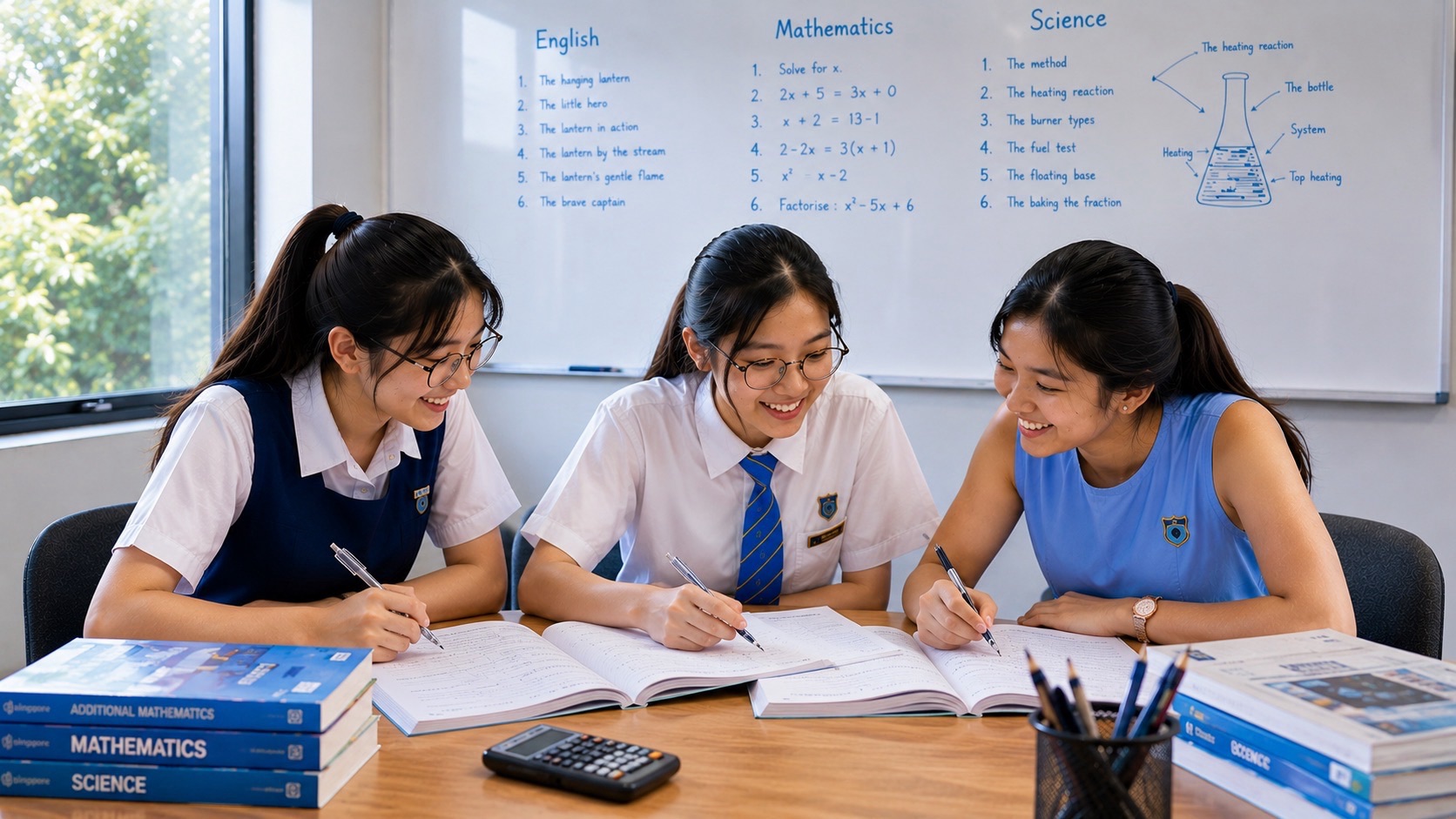
A school timetable is the hidden operating system of the school day. It decides when subjects happen, which teacher meets which class, where rooms and specialist spaces are used, how breaks interrupt cognitive work, and how hundreds or thousands of people share scarce time without colliding. A timetable looks like a grid, but the grid is the visible surface of a much harder scheduling problem.
Understanding how school timetables work means understanding lesson periods, subject allocation, teacher availability, classroom capacity, laboratories, physical education spaces, lunch and recess, transitions, curriculum requirements, workload, sequencing and constraints. A good timetable cannot make every lesson occur at the perfect time for every learner. Its job is to produce a workable whole from competing educational and logistical demands.
This world-facing guide explains school timetable design from first principles and connects it to lessons, attendance, homework, assessment, projects and school-family life. It also turns timetable logic into a creative-writing engine: collisions, scarce rooms, changed periods, substitutions, transitions and the simple drama of being in the wrong place at the wrong time. It continues the How School Works series without taking ownership from From First Bell to Final Bell. That article owns the lived architecture of the school day; this one owns the scheduling machinery that makes the day possible.
The 50-second quick read
A timetable solves a constraint problem. Classes need subjects. Teachers can teach only certain groups and cannot be in two places at once. Rooms have capacities and functions. Some subjects need consecutive periods or specialist spaces. Breaks, assemblies and transitions consume time. Curriculum requirements set minimum or expected allocations. The scheduler tries to fit these demands into a finite week.
No timetable optimises everything simultaneously. Improving one feature can worsen another: fewer student gaps may create teacher gaps; perfect room use may increase walking; longer subject blocks may reduce daily variety; equal distribution may conflict with specialist availability. Good timetable design therefore uses priorities, hard constraints, soft preferences and trade-offs.
1. The timetable is a resource-allocation system
Time is finite. Teachers, rooms and specialist resources are finite. A timetable allocates those resources across educational needs.
2. The grid hides the constraints
A student sees “Mathematics, 9:00.” The scheduler sees a class, a qualified teacher, a suitable room, a period, curriculum frequency, teacher workload and conflicts with every other assignment.
3. Hard constraints and soft preferences
A hard constraint cannot be violated: one teacher cannot teach two classes simultaneously. A soft preference is desirable but negotiable: perhaps a subject is preferably not scheduled in the final period. Actual rules vary by school.
4. Timetabling is optimisation under scarcity
The goal is not a perfect grid. It is a feasible schedule with acceptable educational and operational quality.
5. Every improvement has a cost somewhere
Moving one class can free a laboratory but create a teacher conflict. The timetable is a network: local changes propagate.
6. The basic timetable objects
A timetable usually coordinates several object types: students or classes, teachers, subjects, rooms, periods and special events. Each assignment joins some of these objects: Class A + mathematics + Teacher X + Room 12 + Period 3.
7. Periods
Schools divide time into periods or blocks of different lengths. Period structure determines how many scheduling slots exist and how easily subjects can receive single or double lessons.
8. Classes and cohorts
A class may travel together for many subjects, split into different groups, combine with other classes or follow individual subject selections. Every split increases scheduling complexity.
9. Teachers
Teachers have subject expertise, assigned loads, availability and other responsibilities. Their schedules must be feasible across the whole week, not only convenient for one class.
10. Rooms
General classrooms are often flexible. Laboratories, workshops, studios, kitchens, computer rooms, performance spaces and sports facilities may be scarce specialist resources.
11. Subjects
Subjects differ in required or planned weekly time, preferred lesson lengths, specialist spaces and sequencing. A practical lesson may need a longer uninterrupted block than a short tutorial.
12. Breaks
Breaks are not empty timetable cells. They support meals, movement, social time, transitions and operational reset. Their placement affects the shape of the entire day.
13. Assemblies and common events
Whole-school or cohort events consume shared slots. They can simplify coordination by aligning everyone, but they also remove periods from ordinary teaching.
14. Teacher non-teaching duties
Planning, meetings, supervision, pastoral responsibilities and other work affect availability. A timetable is only one representation of teacher workload.
15. Student options
When students choose different subjects, the timetable must create compatible option blocks so selected combinations can coexist. Not every theoretical combination may be schedulable.
16. The collision rule
Two events collide when they require the same exclusive resource at the same time: the same teacher, student group or room. Feasibility begins by preventing collisions.
17. The capacity rule
A room or resource must support the activity and group. Capacity is not merely seat count; safety, equipment and access can matter.
18. The frequency rule
Subjects need enough scheduled time across the cycle. Schools may prefer lessons distributed rather than clustered, depending on curriculum and pedagogy.
19. The adjacency rule
Some lessons need consecutive periods. Others may preferably be separated. Adjacency turns individual cells into blocks.
20. The travel rule
Moving between distant rooms consumes transition time. A technically feasible schedule can still be operationally poor if people cannot move realistically between assignments.
21. Twenty timetable constraints
1. Teacher collision. A teacher cannot be assigned to two simultaneous lessons.
2. Student collision. A student or class cannot attend two simultaneous required lessons.
3. Room collision. One exclusive room cannot host two incompatible classes at once.
4. Subject allocation. Each subject needs its planned time within the timetable cycle.
5. Specialist room need. Some activities require particular facilities.
6. Teacher qualification or assignment. The right staff must be attached to the right lessons according to the school’s staffing model.
7. Class grouping. Split groups must recombine correctly for later lessons.
8. Option compatibility. Student subject choices need compatible blocks.
9. Double-period requirement. Practical or extended work may need consecutive slots.
10. Break placement. Meals and rest need operationally workable times.
11. Assembly placement. Shared events need simultaneous cohort or school availability.
12. Part-time availability. Some staff may be available only at certain times.
13. Shared teacher constraint. One specialist may serve many year groups.
14. Shared room constraint. One laboratory may serve many science classes.
15. Transition feasibility. People need enough time to move.
16. Workload distribution. Schools may seek reasonable teaching patterns rather than extreme clustering.
17. Student day shape. Schools may seek balanced sequences rather than several demanding lessons in one block, where feasible.
18. Curriculum sequence. Some teaching benefits from particular spacing or ordering.
19. Support scheduling. Intervention, learning support or pastoral time can create additional resource conflicts.
20. Exceptional events. Trips, examinations, performances and special programmes can temporarily override the normal grid.
22. Hard constraints versus soft constraints
Hard constraints define feasibility. Soft constraints define quality. The scheduler first needs a timetable that can exist, then tries to improve how well it serves educational and human preferences.
23. Why soft constraints conflict
A school may prefer mathematics early, practical science in doubles, no teacher with six consecutive lessons, minimal student room movement and balanced subject distribution. These preferences can compete for the same scarce periods.
24. The optimisation objective
One conceptual model is: satisfy all hard constraints, then minimise weighted penalties for undesirable but allowable patterns. Actual timetabling software and school processes can use many methods.
25. Weighting preferences
If avoiding teacher collisions has infinite practical priority and avoiding a Friday-last-period subject has modest priority, the system should never trade feasibility for convenience. Clear weights express that hierarchy.
26. Why the perfect timetable usually does not exist
Different stakeholders define perfection differently. Students may want no awkward gaps. Teachers may want concentrated teaching days. Departments may want specialist rooms. Operations may want easy supervision. The feasible set rarely contains everyone’s ideal simultaneously.
27. A timetable is a negotiated machine
Even when software generates schedules, humans define constraints, priorities and acceptable compromises. The algorithm does not decide educational values by itself.
28. The timetable construction loop
Collect. Gather classes, subject allocations, teachers, rooms, events and availability.
Encode. Translate requirements into hard constraints and preferences.
Generate. Build a feasible candidate schedule manually, algorithmically or through a hybrid process.
Score. Identify undesirable patterns, overload, gaps, room movement and preference violations.
Repair. Move or swap assignments while checking for new collisions.
Validate. Departments, operations and leadership inspect real-world feasibility.
Publish. Release the timetable through the school’s official system.
Operate. Manage substitutions, events and exceptions after the timetable meets reality.
29. Why changing one cell is hard
Suppose a science class moves from Period 4 to Period 2. The science teacher may already teach another class then. The laboratory may be occupied. The original Period 4 room becomes free but another class may need it. A simple move can create a chain of swaps.
30. The swap
A timetable repair often swaps two assignments. But both teachers, rooms, classes and subject rules must remain feasible after the exchange.
31. The cascade
A swap fails, so another period moves. That move displaces a third lesson. Timetable editing can resemble solving a sliding puzzle whose pieces have different shapes and rules.
32. The bottleneck
A bottleneck is a scarce resource that constrains many assignments. One specialist teacher or laboratory can determine large parts of the timetable around it.
33. Find bottlenecks first
Scheduling the most constrained resources early can reduce later collisions. Flexible classes can fit around them more easily than the reverse.
34. Option blocks as bottlenecks
When many students choose different subject combinations, compatible option blocks can become one of the hardest scheduling structures because several subjects must run simultaneously without student conflicts.
35. Specialist spaces as bottlenecks
If several practical subjects need a small number of equipped rooms, room availability can dominate otherwise flexible teacher schedules.
36. Part-time staff as bottlenecks
Limited availability creates narrow windows. Other lessons must often move around those windows.
37. Common events as anchors
Assemblies, common curriculum periods and fixed programmes can anchor the week. Other assignments are built around them.
38. Fixed versus flexible events
The more events that are fixed, the smaller the feasible search space becomes. Flexibility is a scheduling resource.
39. Flexibility has educational value
A school that can move some lessons or use multiple suitable rooms has more ways to protect important preferences and handle disruption.
40. Flexibility also has limits
Too much variation can make routines hard to remember and operations difficult. Stability itself is a useful property.
41. Twenty timetable failure modes
1. Optimising one class in isolation. The move creates conflicts elsewhere.
2. Ignoring teacher travel. A schedule is technically collision-free but physically unrealistic.
3. Ignoring student travel. Back-to-back specialist rooms sit at opposite ends of a campus.
4. Overloading one day. A subject or teacher receives an unnecessarily extreme pattern.
5. Over-clustering a subject. Several lessons occur close together and then disappear for days where spacing would be educationally preferable.
6. Over-spreading a subject. A practical sequence is broken into fragments too short for setup and meaningful work.
7. Wasting specialist rooms. Flexible classes occupy scarce spaces needed by activities that cannot happen elsewhere.
8. Treating every room as equivalent. Capacity, equipment and accessibility differ.
9. Treating every period as equivalent. Breaks, transitions and day boundaries change operational context.
10. Treating every preference as hard. The schedule becomes impossible because negotiable wishes are encoded as absolute rules.
11. Treating hard constraints as preferences. The schedule contains impossible assignments.
12. Ignoring option combinations. Students discover chosen subjects collide.
13. Ignoring non-teaching duties. Teacher availability is overstated.
14. Ignoring supervision. Break or transition coverage becomes operationally impossible.
15. Making the timetable too fragile. One absent teacher or closed room creates widespread disruption.
16. Changing too often. Constant revisions create information errors even if each new schedule is locally better.
17. Publishing ambiguity. Students or staff cannot tell which version is current.
18. Optimising visible gaps only. Removing one empty period can worsen workload, room movement or subject sequence.
19. Assuming software understands school values automatically. Algorithms optimise what humans encode.
20. Calling every inconvenience a timetable failure. Some compromise is unavoidable in constrained systems.
42. The timetable quality dimensions
A useful timetable can be evaluated across feasibility, curriculum allocation, teacher workload, student day shape, room efficiency, movement, stability, resilience and clarity.
43. Feasibility comes first
A beautiful timetable containing a teacher collision is not a timetable. Hard constraints define the boundary of reality.
44. Quality comes second
Once feasible, schedules can be compared by soft-constraint penalties and human review.
45. Robustness comes third
A schedule that barely works under perfect conditions may be operationally brittle. Schools also need ways to handle absence, room closure and events.
46. Thirty timetable cases
Case 1: One laboratory, six classes. Practical science becomes the bottleneck; general classroom lessons move around it.
Case 2: One specialist teacher, many cohorts. Teacher availability anchors several classes simultaneously.
Case 3: A part-time teacher. Narrow availability compresses the feasible periods for one subject.
Case 4: Two subjects need double periods. Long blocks compete for limited adjacency.
Case 5: A class has many option subjects. Compatible option blocks become harder than core-subject scheduling.
Case 6: A room closes temporarily. Classes that can move are displaced first; specialist activities require deeper repair.
Case 7: A teacher is absent. The permanent timetable remains, while the daily operating schedule needs substitution or another arrangement.
Case 8: An assembly appears. A common event removes a slot and displaced lessons need rescheduling or curriculum adjustment.
Case 9: Examination week. Normal room and timetable logic may be temporarily replaced by assessment logistics.
Case 10: A school trip. Selected students and teachers leave the normal schedule, creating partial-group complexity.
Case 11: Physical education needs facilities. Weather or shared-space constraints can add uncertainty beyond the static grid.
Case 12: Music needs specialist rooms. Sound, instruments and room capacity reduce interchangeability.
Case 13: Art needs setup time. A short period may be formally sufficient but operationally inefficient.
Case 14: Computer access is scarce. Digital activities compete for equipped rooms or devices.
Case 15: A teacher has five consecutive lessons. The schedule is feasible but may violate a workload preference.
Case 16: A student has several demanding subjects consecutively. Schools may try to rebalance if constraints allow.
Case 17: Mathematics appears only late in the day. Whether this is acceptable depends on broader priorities and evidence; it is not automatically wrong.
Case 18: English appears on consecutive days. This may be perfectly reasonable. Distribution preferences depend on curriculum design.
Case 19: One class changes room every period. Feasible assignments create excessive movement.
Case 20: One teacher changes room every period. The same movement problem appears from the staff side.
Case 21: A student chooses an unusual subject combination. The school tests whether option blocks permit it rather than promising compatibility first.
Case 22: A new class is added. The feasible space shrinks; many existing assignments may need movement.
Case 23: A teacher joins mid-year. New availability can improve the timetable but changes must be weighed against disruption.
Case 24: A room becomes permanently unavailable. The whole room-allocation layer may need recompilation.
Case 25: Lunch capacity is limited. Staggered breaks become a scheduling resource constraint.
Case 26: A cohort needs common support time. Multiple teachers or classes must be free simultaneously.
Case 27: A cross-curricular project begins. Several subjects may need aligned periods for collaboration.
Case 28: A timetable change improves room use but confuses students. Stability has value not captured by room-efficiency score alone.
Case 29: A schedule has no collisions but many awkward patterns. Feasibility has been achieved; optimisation remains.
Case 30: A schedule looks imperfect but operates smoothly. Visible symmetry is not the same as system quality.
47. The mathematics of timetabling
At a simplified level, timetabling resembles a constraint-satisfaction and optimisation problem. Variables represent assignments. Domains represent possible periods or rooms. Constraints remove impossible combinations. An objective function can score remaining schedules.
48. Variables
A variable might represent the scheduled period for a particular class-subject lesson. More detailed models can also assign rooms, teachers or lesson blocks.
49. Domains
The domain is the set of allowable values. A lesson requiring a laboratory has fewer room options than a lesson that can use any general classroom.
50. Constraints
A constraint rules out combinations. If Teacher A teaches Class 1 at Period 3, Teacher A cannot simultaneously teach Class 2.
51. Objective functions
Among feasible schedules, an objective function can penalise undesirable patterns. A conceptual score might add penalties for excessive gaps, movement, uneven distribution or violated preferences.
52. Weighted penalties
If one preference matters more, its violation receives greater weight. Weights make value judgements explicit but do not magically make them correct.
53. Search space
With many lessons and possible periods, the number of theoretical schedules grows extremely quickly. Most are invalid. Efficient methods prune impossible or poor regions rather than enumerate everything naively.
54. Greedy construction
A simple strategy places highly constrained lessons first and flexible lessons later. Greedy choices can work well but may also create dead ends.
55. Backtracking
When a later assignment becomes impossible, the scheduler can undo earlier choices and try alternatives. This is conceptually similar to solving a puzzle by revisiting a branch.
56. Local search
Start with a schedule and improve it through swaps or moves that reduce penalties. Local search can become stuck in a locally good configuration that is not globally best.
57. Randomisation
Some optimisation approaches use randomised moves or multiple starting points to explore different regions of the solution space. The exact methods depend on software and problem design.
58. Human repair
Experienced schedulers notice contextual constraints not perfectly represented in data: a room transition that is technically possible but impractical, or a subject pattern that departments know is educationally weak.
59. Hybrid scheduling
Many real processes combine software generation with human review, negotiation and repair. The machine searches; humans interpret.
60. The timetable is never only mathematics
Mathematics can formalise collisions and penalties. It cannot decide every educational priority without human values and institutional context.
61. Thirty questions students ask about timetables
Why do I have this subject at this time? Because your class schedule must fit teacher, room, curriculum and whole-school constraints. The visible time may be one of many feasible compromises.
Why can’t my hardest subject always be in the morning? Other classes may need the same teachers or rooms, and schools cannot optimise every student preference simultaneously.
Why do some subjects have double periods? Longer blocks can support practical work, extended tasks or reduce setup overhead.
Why do some subjects appear more often? Curriculum allocation and school programme design differ by subject and stage.
Why do we change rooms? Some teachers, subjects or facilities require particular spaces.
Why does another class stay in one room? Room models differ across schools and cohorts.
Why is lunch at a different time from another year group? Schools may stagger breaks because of space, supervision or scheduling constraints.
Why does the timetable change? Staffing, rooms, programmes or other constraints can change. Use the school’s current official version.
Why can’t one lesson simply move? The destination period may already contain a teacher, room or class conflict.
Why do substitutions happen? Daily operations need a temporary solution when the planned teacher or room is unavailable.
Why do we sometimes have a free or study period? Programme structures vary; older students in some systems may have non-class periods for study or other scheduled purposes.
Why can’t my friend and I choose every same subject? Subject combinations, entry rules and option-block feasibility can differ.
Why are option subjects simultaneous? Schools often create blocks so different choices can run in parallel.
Why is one room always busy? Specialist spaces can be bottlenecks.
Why is the timetable not symmetrical? Operational feasibility matters more than visual symmetry.
Why do I have two demanding subjects back-to-back? The scheduler may have had stronger constraints elsewhere. A feasible timetable contains compromises.
Why do teachers have gaps? Their lessons must align with many classes; non-teaching periods can also support other professional work.
Why do teachers sometimes teach many lessons in a row? Whole-school constraints can produce concentrated loads, though schools may try to manage workload patterns.
Why is assembly always at one time? Common events need many groups free together and can serve as fixed anchors.
Why can’t recess be whenever we want? Facilities, supervision and whole-school coordination constrain break placement.
Why do practical lessons need special rooms? Equipment, safety and activity design can make general rooms unsuitable.
Why do room changes matter? Walking consumes time and can affect punctuality to the next lesson.
Why does the timetable matter for homework? Subject spacing affects when tasks are assigned and returned. Homework Explained develops that system.
Why does it matter for attendance? Missing a period means missing the particular instructional function scheduled there. School Attendance Explained develops continuity.
Why does it matter for exams? Assessment periods can temporarily restructure rooms, teachers and student movement.
Can software make a perfect timetable? Software can search huge solution spaces, but “perfect” depends on human priorities that often conflict.
Can AI make the timetable? Computational systems can assist scheduling, but schools still need accurate constraints, human oversight and operational validation.
Can students request changes? Follow the school’s actual procedure. Individual preferences must be considered against system-wide feasibility.
What if my timetable looks wrong? Check the official current source and ask the school through the appropriate route rather than guessing from an old version.
What is the main thing to understand? Your timetable is one path through a much larger shared resource-allocation system.
62. Thirty questions families ask about timetables
Why is my child’s timetable so uneven? Unevenness can result from whole-school constraints. Ask about actual educational or workload effects rather than visual balance alone.
Why are difficult subjects late in the day? Teacher and room availability may constrain placement. There is no universal rule that one subject must always occupy one daypart.
Can we request a different class because of timing? Follow school procedures; class changes can affect staffing, capacity and subject combinations.
Why do schools change timetables after term begins? Staffing, enrolment, rooms or programme constraints can change after initial publication.
Why does one change affect several days? Timetable assignments are interconnected. Repairing one conflict can require a chain of moves.
Why do siblings have different break times? Cohort staggering can reduce pressure on shared spaces and supervision.
Why are some classes split? Subject choice, ability grouping, practical capacity or programme design can require different groups; actual policies vary.
Why do some lessons combine classes? Staffing, subject provision or programme design may make combined groups appropriate.
Why are practical subjects blocked? Setup, equipment and sustained activity can benefit from longer sessions.
Why does my child move rooms so often? Specialist facilities and teacher-room models can require movement.
Can excessive movement affect lateness? Yes operationally, which is why transition feasibility matters.
Why are teachers unavailable at some times? Their schedule includes other classes and professional responsibilities.
Why can’t a teacher simply swap a period? The swap must remain feasible for every affected class, room and teacher.
Why does one specialist teacher create constraints? Scarce expertise becomes a shared resource across many groups.
Why does one laboratory matter so much? Scarce specialist spaces can anchor multiple schedules.
Why are subject choices sometimes constrained? Schools balance demand, staffing, rooms, curriculum rules and option compatibility.
Does timetable position determine achievement? Do not infer individual outcomes from period placement alone. Learning depends on many variables.
Does a late-day lesson mean lower quality? Not inherently. Teaching quality and learner state cannot be inferred from clock time alone.
Should homework account for timetable clustering? Departments and teachers can coordinate workload where possible, but homework systems vary.
Should tests account for timetable clustering? Schools often coordinate assessment calendars separately from the ordinary timetable.
Why are parent meetings outside lesson time? They need teacher and family availability without displacing core instruction where possible. Parent-Teacher Meetings Explained develops that system.
Why does attendance matter differently by period? Different periods contain different learning functions.
What if a timetable error causes missed learning? Use the school’s correction route and repair the educational gap separately.
What if a timetable changes suddenly? Confirm the current official version and help the learner update routines and materials.
Should families optimise sleep around the timetable? Sustainable sleep and routines matter, but this article does not provide medical sleep prescriptions. Use age-appropriate health guidance where needed.
Can families understand why a request is denied? Schools may not be able to disclose every staffing detail, but the general reason is often system-wide constraint rather than arbitrary preference.
What should we ask if a timetable pattern seems harmful? Describe the observable effect—repeated lateness, workload, missed support—not merely dislike of the grid.
What is the timetable’s educational job? Put the right learning opportunities, people and resources together often enough for the curriculum to run.
What is its operational job? Prevent collisions and make movement, supervision and resource use workable.
What is the family’s best mental model? A timetable is a negotiated whole-school solution, not a personalised calendar assembled one student at a time.
63. Twenty advanced deductions about timetables
1. A timetable is a compressed map of institutional priorities. Allocated periods reveal what the programme has chosen to make time for.
2. Scarcity shapes visible structure. One scarce teacher or room can create patterns across many classes.
3. Flexibility is a resource. Assignments with many feasible periods help absorb constraints elsewhere.
4. Fixed events consume flexibility. Every immovable block reduces options for the remaining schedule.
5. Timetable quality is multi-objective. There is rarely one number that captures every stakeholder concern.
6. Visible inconvenience can purchase invisible feasibility. An awkward period may prevent a more serious collision elsewhere.
7. Symmetry is not optimisation. A neat-looking grid can waste specialist resources or overload staff.
8. Local fairness and global feasibility can conflict. Giving one class its ideal sequence may force worse patterns onto several others.
9. Stability has value. A slightly less optimal timetable may outperform constant revisions because people can rely on it.
10. Robustness has value. Spare flexibility makes daily disruption easier to absorb.
11. Room assignment is pedagogical. Space changes what activities are possible.
12. Period length is pedagogical. A forty-minute block and an eighty-minute block afford different lesson architectures.
13. Distribution is pedagogical. Spacing affects opportunities for retrieval, practice and return.
14. Transitions are hidden curriculum time. Movement reduces the usable time between scheduled endpoints.
15. Breaks are infrastructure. They support the human system that makes later lessons possible.
16. Timetables coordinate adults as much as students. Teacher workload and availability are central.
17. Timetables encode dependencies between departments. One option block can require several departments to align.
18. Timetable changes reveal system coupling. The farther a small change propagates, the more tightly coupled the schedule is.
19. Good timetables hide complexity. Students can follow a simple grid because schedulers absorbed thousands of constraints upstream.
20. A timetable is successful when people can stop thinking about timetabling. The schedule becomes reliable infrastructure for learning.
64. The inverse lens: no timetable
Imagine teachers and classes choosing rooms and subjects spontaneously each hour. Scarce spaces collide, specialist staff are double-booked, and curriculum allocation becomes unpredictable. The timetable exists because coordination at scale cannot rely on improvisation.
65. The opposite lens: a timetable that never changes
Absolute rigidity fails when teachers are absent, rooms close or events occur. Operational systems need controlled exceptions around a stable base.
66. The collapse lens: optimisation without humans
A schedule achieves an excellent numerical score but sends teachers across campus unrealistically, creates confusing room changes and ignores contextual needs not encoded in the model.
Repair with human validation.
67. The collapse lens: humans without constraints
Everyone requests preferred periods as though the school were scheduling one person. The feasible set disappears.
Repair by distinguishing preferences from non-negotiable constraints and evaluating trade-offs across the whole system.
68. The civilisation lens: synchronising specialised labour
Schools contain specialised teachers, spaces and activities. Timetables are a coordination technology that lets specialised labour serve many learners without constant negotiation.
69. Original model story: Period Four
This story is original fiction.
When the new timetable appeared, Ben found the problem in twelve seconds.
“Why is science Period Four?”
Adrian looked over his shoulder.
“Because Period Three was taken?”
“Last term it was Period Two.”
“A tragedy.”
Ben ignored him.
Period Four was after recess.
The science laboratory was on the other side of the campus.
English was in the library immediately before it.
“We’ll be late every Tuesday.”
On Tuesday, they were.
Not very late.
Three minutes.
But Ms Tan had already begun the safety briefing.
She stopped them at the door.
“Wait until I can brief you.”
They waited.
That afternoon, Ben wrote an email draft asking for science to move.
Mr Vale read it.
“Move where?”
“Period Two.”
“Tuesday?”
“Yes.”
Mr Vale opened the timetable.
Period Two: another science class in the laboratory.
“Period Three?” Ben asked.
Ms Tan taught another class.
“Period Five?”
The laboratory was free.
Ms Tan was free.
Ben smiled.
“Solved.”
“Your mathematics teacher teaches another class Period Five. To move mathematics, we need somewhere else for that lesson.”
They followed the chain.
Mathematics to Period Six collided with assembly.
Assembly could not move because the hall was shared.
“So we keep being late?”
Mr Vale looked at the map.
“Or we solve the problem you actually have.”
English ended in the library three minutes before the bell because students needed to return books and move.
On the next Tuesday, the class left in time.
Ben reached the laboratory before the safety briefing.
Science stayed Period Four.
The timetable had not been repaired.
The transition had.
70. Reading Period Four
Ben sees a local problem and proposes a local move. The timetable reveals hidden dependencies: room, teacher, mathematics and assembly. The cheaper repair occurs at the transition layer.
This does not imply every timetable complaint should be solved without changing the grid. It shows why diagnosis should locate the actual mechanism before triggering a large schedule cascade.
71. What writers can learn from Period Four
A timetable creates excellent causal objects. Each attempted move exposes another constraint. The story gains tension through dependency rather than villainy.
The ending is satisfying because the visible object remains unchanged while the actual problem disappears.
69. Original model story: Period Four
This story is original fiction.
Adrian hated Period Four.
Period Four was mathematics on Monday, science on Tuesday and mathematics again on Thursday.
“Why can’t they move maths?” he asked.
Jo looked at the timetable pinned beside the classroom door.
“Move it where?”
“Period Two.”
“We have English.”
“Move English.”
“Where?”
Adrian pointed at Friday Period Three.
“Science.”
“Move science.”
Jo smiled.
“You are inventing timetabling.”
That afternoon, Mr Vale found them moving sticky notes across a hand-drawn grid.
“What are you doing?”
“Fixing Period Four.”
Mr Vale sat down.
“Show me.”
Adrian moved mathematics to Tuesday Period Two.
“Teacher?” Mr Vale asked.
“Ms Tan.”
“She teaches another class then.”
Adrian moved that class.
“Room?”
“Any room.”
“That class is doing practical science.”
Adrian stared at the sticky note.
“Move the practical.”
“The laboratory is full for the next three periods.”
Jo laughed.
Adrian did not.
He moved another note.
Then another.
Within five minutes, twelve sticky notes were no longer where they had started.
“This is ridiculous.”
“This is one class,” Mr Vale said.
Adrian looked at the small grid.
“How many classes are there?”
Mr Vale told him.
Adrian put the mathematics note back into Period Four.
“I still hate it.”
“That’s allowed.”
“But now I know why moving it isn’t one move.”
The next week, the timetable changed anyway.
Not mathematics.
The laboratory ventilation system needed repair.
Three science classes moved.
One computer class moved.
A teacher changed rooms.
Two option groups swapped periods.
Adrian stood beside the updated timetable.
Jo joined him.
“Period Four?”
“Still terrible.”
“Want to fix it?”
Adrian looked at the grid.
“No.”
Then he pointed at a room change.
“But I want to know what that one broke.”
70. Reading Period Four
Adrian begins with a local preference and discovers system coupling. Every apparently simple move requires teacher, room, class and specialist-resource feasibility.
The story does not require Adrian to like the timetable. Understanding a constraint is different from endorsing every outcome it produces.
71. What writers can learn from Period Four
Sticky notes make an abstract optimisation problem physical. Conflict grows through cascading consequences rather than villainy.
The final line changes Adrian’s question from complaint to mechanism. That is a useful character arc for explanatory fiction.
72. Thirty timetable distinctions
Timetable versus calendar: a timetable repeats the structure of ordinary periods; a calendar locates dated events.
Timetable versus lesson plan: the timetable allocates the slot; the lesson plan designs what happens inside it.
Timetable versus curriculum: curriculum defines learning expectations; the timetable allocates time for teaching them.
Period versus usable teaching time: transitions, setup and closure can reduce the time available for instruction.
Room versus learning space: a room assignment is physical; how the space supports pedagogy is a separate question.
Teacher availability versus teacher preference: one may be a hard constraint; the other may be soft.
Student requirement versus student preference: required subjects constrain the grid more strongly than preferred dayparts.
Collision versus inconvenience: a collision is impossible; inconvenience is undesirable but feasible.
Feasible versus good: a collision-free timetable can still be poor on workload or movement.
Good versus perfect: a strong compromise need not satisfy every preference.
Fixed versus preferred: an assembly may be immovable; a subject placement may merely be desirable.
Single period versus double period: adjacency changes the shape of the scheduling unit.
Core class versus option block: one keeps a cohort together; the other deliberately splits students by choice or programme.
General room versus specialist room: interchangeability differs.
Base timetable versus daily operation: the published pattern can remain while substitutions and room changes handle exceptions.
Change versus correction: a schedule can change because constraints changed, or be corrected because the published information was wrong.
Student gap versus teacher gap: an unscheduled period has different implications for different roles and systems.
Distribution versus allocation: allocation asks how much subject time exists; distribution asks where it sits across the cycle.
Spacing versus sequence: spacing concerns intervals; sequence concerns order.
Load versus intensity: total periods and consecutive-period patterns are different workload dimensions.
Capacity versus suitability: a room may hold the class but lack the equipment for the activity.
Movement versus transition: movement is physical travel; transition includes settling, materials and cognitive switch.
Optimisation versus fairness: a low-penalty schedule still needs human judgement about legitimate distribution of inconvenience.
Fairness versus sameness: equal-looking schedules are not always possible or educationally sensible.
Algorithm versus policy: the algorithm searches within rules humans define.
Score versus judgement: a numerical objective summarises encoded preferences; human review can detect unencoded problems.
Efficiency versus resilience: maximum utilisation can leave little spare capacity for disruption.
Stability versus improvement: a small theoretical gain may not justify disruptive change.
Local optimum versus global optimum: improving one part does not guarantee the whole schedule is best.
Timetable simplicity versus scheduling complexity: a simple student grid can be the output of a very complex system.
73. Timetables and lesson design
The timetable provides duration and sequence constraints that teachers design within. From Question to Understanding explains the learning machinery inside a period.
74. Timetables and the school day
From First Bell to Final Bell explains arrival, breaks, transitions and the lived rhythm produced by the timetable.
75. Timetables and attendance
School Attendance Explained shows why missing different periods can have different educational effects.
76. Timetables and homework
Subject spacing affects when work can be assigned, practised and returned. Homework Explained owns the home-learning mechanism.
77. Timetables and assessment
Tests and examinations may use separate calendars or temporarily reshape the ordinary timetable. Tests and Exams Explained owns assessment interpretation.
78. Timetables and projects
Cross-curricular projects may require aligned teacher and class time. School Projects Explained develops research and group-work architecture.
79. Timetables and parent-teacher meetings
Family conferences need teacher availability and may run outside ordinary lesson schedules or through specially created slots. Parent-Teacher Meetings Explained develops the communication mechanism.
80. Timetables and school rules
Punctuality, room movement and attendance can interact with school rules. School Rules, Discipline and Fairness owns the rule system.
81. Timetables and English
English may need a mix of reading, writing, discussion and feedback across scheduled periods. The timetable provides opportunities; subject pedagogy determines how they are used. Singapore English Tuition Centre provides deeper English routes.
82. Timetables and mathematics
Mathematics benefits from coherent sequencing of explanation, guided practice, independent work and return. The Mathematics Learning Library provides deeper mathematical learning routes.
83. Timetables and vocabulary
Vocabulary learning can be distributed across English and other subjects rather than confined to one timetable cell. The Vocabulary Learning Hub develops word-learning systems.
84. Timetables and science
Science can create strong room and block constraints because demonstrations and practical work may require equipment, setup and specialist spaces.
85. Timetables and physical education
Facilities, changing time, weather exposure and shared spaces can make physical education scheduling operationally distinctive.
86. Timetables and arts
Music, drama, visual art and design can require specialist spaces, equipment, rehearsal continuity or setup time. Period length can materially change what is feasible.
87. Timetables and support
Learning support, counselling, intervention and pastoral programmes may need time that does not repeatedly remove the same curriculum access. Coordination matters.
88. Twenty timetable laboratories
Laboratory 1: Build a five-period day. Schedule four classes sharing one mathematics teacher. Discover the first collision.
Laboratory 2: Add a laboratory. Make two science classes require the same specialist room. Repair the schedule.
Laboratory 3: Add a double period. Watch how adjacency reduces flexibility.
Laboratory 4: Add a part-time teacher. Restrict one teacher to two days and observe the cascade.
Laboratory 5: Add an assembly. Remove one common slot from every class.
Laboratory 6: Add option blocks. Let students choose among four subjects and identify incompatible combinations.
Laboratory 7: Score movement. Give every room a location and penalise long consecutive transitions.
Laboratory 8: Score teacher intensity. Penalise very long runs of consecutive teaching periods.
Laboratory 9: Score student intensity. Define one transparent preference and see how improving it affects others.
Laboratory 10: Test stability. Compare a slightly better schedule requiring twenty changes with a nearly as good schedule requiring two.
Laboratory 11: Remove a room. Simulate a closure and identify which lessons have alternative spaces.
Laboratory 12: Remove a teacher. Distinguish permanent timetable redesign from one-day substitution.
Laboratory 13: Change one subject allocation. Add one weekly period and trace where time must come from.
Laboratory 14: Add travel time. Make distant rooms impossible in consecutive periods without a sufficient transition.
Laboratory 15: Create a bottleneck map. Count how many classes depend on each specialist resource.
Laboratory 16: Separate hard and soft constraints. Rewrite ten school requests into the two categories.
Laboratory 17: Challenge a preference. Ask what evidence or operational reason makes it worth a high penalty.
Laboratory 18: Find hidden coupling. Move one lesson and record every assignment affected.
Laboratory 19: Human review. Inspect a mathematically feasible schedule for practical problems not encoded in the model.
Laboratory 20: Publish clearly. Design a version label so students can distinguish the current timetable from an obsolete one.
89. A simple scoring model
For teaching purposes, imagine a feasible timetable receives penalties: +5 for an avoidable teacher gap, +3 for an excessive room transition, +4 for poor subject distribution, +2 for a minor preference violation. The schedule with the lower total is preferred, all else equal.
Real models can be much more sophisticated. The important idea is that the score represents chosen priorities, not objective truth.
90. Why weights are arguments
Assigning a penalty of ten instead of two says the school cares more about avoiding that pattern. Weight design is therefore a policy and educational decision expressed mathematically.
91. Pareto trade-offs
Sometimes one schedule improves teacher workload while another improves student movement, and neither dominates the other on every dimension. Decision-makers then choose among trade-offs rather than discovering one universally best schedule.
92. Thirty timetable myths
Myth: the timetable is just a calendar. It is a recurring allocation of constrained resources.
Myth: moving one lesson is easy. One move can create teacher, room and class collisions.
Myth: every class can have its preferred schedule. Preferences compete across a shared system.
Myth: software solves timetabling automatically. Humans must supply constraints, weights and validation.
Myth: a collision-free timetable is excellent. It may still have poor workload or movement patterns.
Myth: a symmetrical timetable is fair. Symmetry can ignore different subject and resource needs.
Myth: all rooms are interchangeable. Equipment, capacity and access differ.
Myth: all periods are interchangeable. Day structure, transitions and event anchors differ.
Myth: morning is always better for difficult subjects. Individual and group learning cannot be reduced to one universal timetable rule.
Myth: late periods are wasted. Lesson quality depends on teaching and many contextual variables.
Myth: double periods are always better for practical work. They can help, but actual pedagogy and constraints matter.
Myth: single periods are always better for memory. Spacing benefits depend on what happens within and between sessions.
Myth: teacher gaps are wasted time. Non-teaching time can support planning and other professional work, though patterns still matter operationally.
Myth: student gaps are always bad. Their meaning depends on programme and age; some systems deliberately schedule study periods.
Myth: the busiest room is badly scheduled. High utilisation can be efficient if transitions and resilience remain workable.
Myth: maximum utilisation is always good. Zero spare capacity can make the system brittle.
Myth: timetable changes always mean earlier planning failed. Constraints can change after publication.
Myth: timetable stability means never changing. Stable systems can still manage necessary controlled exceptions.
Myth: every student request should be satisfiable. Some preferences conflict with hard system constraints.
Myth: no student request matters. Observable problems can reveal unmodelled operational costs.
Myth: one objective score settles quality. Multiple dimensions and human values remain.
Myth: the algorithm is neutral. Its encoded objectives reflect human choices.
Myth: human scheduling is neutral. Human choices also reflect priorities and can contain blind spots.
Myth: room changes are merely inconvenient. Excessive movement can consume learning and transition time.
Myth: break time is unused time. It serves important human and operational functions.
Myth: timetable design ends when the grid is published. Daily operations continue handling substitutions and exceptions.
Myth: option blocks are simple. Student combinations and staffing can make them highly constrained.
Myth: one school’s timetable pattern should be copied everywhere. Buildings, staffing, curriculum and programme design differ.
Myth: a timetable can prove teaching quality. It allocates opportunity, not instructional quality.
Myth: the timetable is the school. It is infrastructure that allows the school’s teaching, support and community systems to meet in time.
93. A second model story: The Laboratory
This story is original fiction.
Aisha’s class had been promised the laboratory.
Thursday, Period Five.
They had spent two lessons preparing an investigation.
At lunch, a message appeared.
Science moved to Room 18.
Room 18 had tables.
Room 18 did not have the equipment.
“Then we can’t do the experiment,” Aisha said.
Ms Tan checked the timetable.
Another class was in the laboratory.
“Why?” Ryan asked.
“Their room has a maintenance problem.”
“So they get ours?”
“They need the laboratory for a practical assessment.”
“We need it too.”
Ms Tan looked at the equipment list.
“We need it for the investigation. They need it today for an assessment that cannot use an ordinary room.”
She opened the week’s schedule.
Friday Period Two was free in the laboratory.
Her class had English then.
English could not simply move because their English teacher taught another class during the only obvious gap.
Monday Period One?
Laboratory occupied.
Monday Period Three?
Ms Tan teaching elsewhere.
Tuesday Period Four?
The class split into option groups.
Aisha watched each possible solution disappear.
“So we just don’t do it?”
Ms Tan looked again at Friday.
“We don’t need the whole class for every part.”
She separated the investigation into setup, measurement and analysis.
Setup could happen in Room 18.
Measurement needed the laboratory.
Analysis could happen anywhere.
She found a shorter specialist slot the following week and redesigned the practical sequence around it.
“But it isn’t the lesson we planned,” Aisha said.
“No.”
“Is it worse?”
Ms Tan thought.
“Different. We’ll know after we teach it.”
The next week, measurement took twenty-five minutes.
Because the class had prepared the setup beforehand, nobody wasted laboratory time organising materials.
The disruption had forced the lesson to separate what needed the scarce room from what merely happened to be planned there.
Aisha wrote that sentence in her evaluation.
Not because losing the laboratory was good.
Because scarcity had revealed the job of the room.
94. Reading The Laboratory
The story turns a room conflict into functional decomposition. Instead of asking whether science needs the laboratory, Ms Tan asks which parts of the learning sequence need it.
This is a general scheduling strategy: reserve scarce resources for the work that cannot be done without them.
95. What writers can learn from The Laboratory
A good systems story can contain no villain. The conflict comes from two legitimate needs competing for one resource.
The resolution is not magical abundance. It is decomposition, reprioritisation and adaptation.
96. Thirty questions teachers ask about timetables
Why is my schedule concentrated? Whole-school constraints can cluster teaching even when a more even pattern is preferred.
Can one period move? Possibly, but the move must remain feasible for all affected resources.
Why do I teach in multiple rooms? Room allocation balances class capacity, specialist needs and availability.
Can I keep one base room? Schools use different rooming models; feasibility depends on the whole allocation.
Why do I have a gap? Your classes may be constrained by student options, rooms or other teachers. Non-teaching periods may also serve other work.
Why is my practical not a double? Adjacency may be scarce. If the learning function genuinely requires a longer block, that preference can be represented more strongly in future design where possible.
Why is my subject always after lunch? Ask whether this is a true pattern and what constraints produce it before inferring educational harm.
How should I adapt to short periods? Separate activities by function and reserve setup-heavy work for suitable blocks where possible.
How should I adapt to long blocks? Use varied phases rather than simply extending one activity.
What if transition time reduces my lesson? Design entry routines and communicate persistent operational problems through the appropriate route.
What if students repeatedly arrive late from another room? Investigate transition feasibility rather than assuming individual motive.
What if a specialist room is unavailable? Identify which lesson functions require it and which can move elsewhere.
What if a substitution occurs? Follow school procedures and preserve the highest-value learning possible within available staffing and resources.
What if my timetable changes? Update plans, room assumptions and student communication from the official version.
What if the change is worse pedagogically? Explain the specific learning cost rather than only preference. That gives schedulers actionable information.
What information helps schedulers? Hard requirements, genuine specialist-room needs, necessary adjacency and high-value preferences stated clearly.
What information hurts schedulers? Treating every convenience as non-negotiable.
Can departments coordinate subject spacing? Where the timetable system permits, distribution preferences can be encoded or reviewed.
Can teachers coordinate homework around the timetable? Yes through department or school processes where practical; the timetable provides visibility but does not itself coordinate workload.
Can teachers coordinate tests? Many schools use separate assessment calendars or policies.
Does room consistency matter? It can reduce setup and transition costs, but specialist needs may outweigh consistency.
Does class sequence matter? It can affect preparation and workload, but no universal sequence is optimal for every teacher.
Should teacher preferences count? They can be legitimate soft constraints, balanced against student and institutional needs.
Should student preferences count? Likewise, but system-wide feasibility remains.
Who owns the timetable? Governance varies by school. Usually it is an institutional schedule rather than an individual teacher’s calendar.
Who owns lesson quality? Timetabling provides conditions; teachers and educational systems design and support instruction within them.
Can timetable data improve future design? Yes. Persistent room, transition or workload problems can become evidence for the next scheduling cycle.
Should every complaint cause a change? No. Evaluate severity, evidence, feasibility and disruption cost.
Should no complaints cause changes? Also no. Repeated operational evidence can reveal unmodelled constraints.
What is the teacher’s best timetable question? “Which part of this pattern materially affects teaching or student access, and how can I make that cost visible?”
97. Timetable design across age and stage
Younger students may spend more time with one class teacher and fewer room changes. Older students often have more subject specialists, options and room movement. These are broad patterns, not universal rules.
98. Primary timetables
Primary scheduling may prioritise stable class groups, core learning blocks, specialist periods, breaks and developmentally appropriate transitions. Exact structures vary widely.
99. Secondary timetables
Secondary schools often face more specialist teachers, option groups, laboratories and subject movement, increasing the number of constraints.
100. Upper-secondary options
As subject choice expands, student combinations can become a major scheduling problem. Option blocks are designed to maximise feasible combinations within staffing and programme constraints.
101. Post-secondary schedules
Some systems provide more individualised schedules, study periods or lecture/tutorial structures. The scheduling problem shifts from fixed classes towards many personal combinations.
102. Timetables across countries
School days, period lengths, weekly cycles, break structures and subject allocations vary internationally. Use current local school information rather than assuming one model is universal.
103. Five-day and rotating cycles
Some schools repeat a weekly pattern; others use multi-day cycles that do not map directly onto Monday-to-Friday subject repetition. Rotating cycles can distribute subjects across different dayparts but add memory and communication complexity.
104. Block scheduling
Longer blocks reduce daily subject changes and can support extended work, while fewer weekly meetings change spacing and continuity. The educational effect depends on lesson design and programme context.
105. Short-period scheduling
Shorter periods increase subject frequency but can make setup-heavy activities inefficient. Teachers need tight transitions and lesson architecture.
106. Hybrid patterns
Schools can combine short and long periods, rotating days, common blocks or other structures. Every added pattern creates both opportunities and scheduling constraints.
107. Timetable literacy
Students need to read the timetable, identify rooms, prepare materials and notice changes. Older learners can increasingly use the schedule to plan homework, revision and travel.
108. Timetable literacy is executive work
The grid must become action: where to go, what to bring, when to leave, which task is due next. Organisational support can teach this translation rather than simply reminding indefinitely.
109. Timetable literacy after a change
When the schedule changes, old habits can persist. Clear versioning and temporary reminders reduce errors while new routines stabilise.
110. Timetable literacy and independence
A learner becomes more independent when they can translate tomorrow’s timetable into materials, travel and preparation without continuous adult prompting.
111. Twenty creative-writing prompts built from timetables
1. The impossible swap. A student tries to move one disliked period and discovers a chain of collisions.
2. The missing room. A specialist room closes and several subjects compete for alternatives.
3. The old timetable. A character follows an obsolete version and arrives where nobody expects them.
4. The double booking. Two groups arrive at the same room because of a publication error.
5. The bottleneck teacher. One specialist’s absence rearranges an entire day.
6. The laboratory. Two legitimate classes need one scarce room.
7. The option block. A student’s desired subject combination creates a conflict no one noticed until scheduling.
8. The five consecutive lessons. Tell the day from a teacher’s viewpoint.
9. The campus crossing. A technically feasible schedule becomes physically absurd.
10. The empty period. A student thinks a gap is freedom; a later responsibility changes its meaning.
11. The timetable maker. A character sees every request as reasonable until they must fit them together.
12. The assembly. One fixed event displaces a sequence of lessons.
13. The storm. Outdoor facilities become unavailable and the indoor schedule must absorb everyone.
14. The exam hall. Ordinary classrooms become assessment spaces and the school temporarily rewires itself.
15. The version number. Two characters hold different timetable versions and both think the other is wrong.
16. The perfect score. Scheduling software produces the best numerical solution and humans discover one ridiculous transition.
17. The human fix. A manual change improves reality but worsens the score.
18. The preference. A teacher’s reasonable request collides with a student group’s equally reasonable need.
19. The rotating day. A character keeps thinking it is Day Three when the cycle has advanced to Day Four.
20. The invisible timetable. A new student discovers that knowing the grid is not enough; transitions and routines are part of the real schedule.
112. A complete creative-writing blueprint: The swap
Opening: protagonist complains about one period.
Proposal: move it into an apparently empty slot.
Collision: teacher unavailable.
Second move: displace another class.
Cascade: specialist room or option group creates deeper conflict.
Reframe: protagonist stops asking “Why won’t they move it?” and asks “What is this period connected to?”
Ending: the period may remain disliked; the character’s model changes.
113. Timetable dialogue
Good timetable dialogue is causal. “Move maths.” “Ms Tan teaches Year Eight.” “Move Year Eight.” “They need the laboratory.” Each reply reveals another constraint.
114. Timetable setting
Use bells, corridors, room numbers, pinned grids, digital updates, closed doors and students moving in opposite directions. The system becomes visible through movement.
115. Timetable suspense
Give the character a deadline: a practical must happen before an assessment, a room becomes unavailable tomorrow, or a teacher can only attend one remaining slot. Scarcity creates stakes without melodrama.
116. A complete timetable workshop: four classes, one teacher
Create five periods and four classes. Each class needs one mathematics lesson with the same teacher. Immediately, the teacher constraint forces the four lessons into four different periods.
Now give Class A science in Period One and Class B English in Period Two. The mathematics domain for each class shrinks.
Add one period where the teacher has a meeting. Another slot disappears for every class simultaneously.
The exercise reveals a basic property: one shared resource couples otherwise separate class schedules.
117. Add rooms
Give the school two general rooms and one laboratory. General lessons can use either general room. Science practicals require the laboratory.
The laboratory has a smaller domain of compatible activities, so schedule it carefully. Scarce specialised resources should not be consumed by flexible activities without reason.
118. Add double periods
A double period needs two adjacent free slots for class, teacher and room. The number of feasible placements is much smaller than for a single period.
119. Add teacher preferences
Suppose the teacher prefers not to teach five consecutive periods. Encode that as a penalty, not a collision, unless school policy makes it a hard rule.
120. Add student movement
Give rooms coordinates or zones. Penalise transitions that require unrealistic travel between consecutive periods.
121. Add subject distribution
Suppose mathematics should preferably be distributed across the week rather than clustered. Add a spacing penalty.
122. Add a common assembly
Remove one period from every class and teacher. Observe how a single fixed event changes the entire feasible space.
123. Add an option block
Split students into several subjects that must run simultaneously. Now teacher and room constraints cross class boundaries in new ways.
124. Score the schedule
After achieving feasibility, count penalties. Then try one swap. If the score improves without violating constraints, keep it. If another dimension worsens, decide whether the trade-off is worth it.
125. Break the schedule
Close the laboratory unexpectedly. Which lessons have alternatives? Which cannot proceed as planned? Robustness becomes visible only after disruption.
126. Rebuild with minimum change
Instead of generating an entirely new timetable, try to repair the disruption with the fewest necessary moves. Stability becomes an explicit objective.
127. What this workshop teaches
Timetabling becomes difficult not because any one rule is mysterious, but because many simple rules interact. Complexity emerges from coupling.
128. A third model story: Version Three
This story is original fiction.
On Monday morning, Ben went to Room 24.
Room 24 was empty.
He checked his phone.
Mathematics. Room 24.
The bell rang.
Still empty.
He ran to the mathematics office.
Ms Tan looked surprised.
“Why aren’t you in Room 31?”
Ben held up the timetable.
“Room 24.”
Ms Tan looked at the screen.
“That’s Version Two.”
“There are versions?”
“Version Three was published Friday.”
Ben had downloaded the timetable on Thursday.
It was perfectly accurate.
For one day.
At lunch, Ben found three friends comparing schedules.
One had Version Three.
One had a screenshot with no version number.
One had copied Monday’s rooms into a notebook.
“Which one is right?” Aisha asked.
Ben had learned something.
“The one the school says is current.”
They checked.
Version Three.
On Tuesday, a temporary room change appeared for science.
“Version Four?” Ryan asked.
“No. Daily change.”
Ben frowned.
“So the timetable can be current and still not tell me today’s room?”
“Sometimes,” Ms Tan said. “The base schedule and the daily operation are different layers.”
By Friday, Ben had stopped treating every timetable image as equally authoritative.
He checked the source.
Then the version.
Then the daily notice.
He was learning to read not just a schedule.
He was learning to read a system that could change.
129. Reading Version Three
The story separates content accuracy from temporal authority. Ben’s old timetable is not false; it is obsolete.
The second distinction is between base timetable and daily operation. Stable infrastructure can coexist with temporary exceptions.
130. What writers can learn from Version Three
Versioning creates conflict without anyone lying. Two documents can contain different information because they belong to different states of the system.
For mystery and school fiction, source, timestamp and authority are powerful weak signals.
131. Thirty deeper timetable cases
A. Same teacher load, different intensity. Twenty periods spread evenly differ from twenty periods clustered into long runs.
B. Same student load, different movement. Identical subjects can require very different travel depending on room assignment.
C. Same room utilisation, different resilience. One schedule leaves alternative slots; another uses every specialist period and has no recovery capacity.
D. Same number of lessons, different spacing. Distribution changes retrieval and continuity opportunities.
E. Same subject, different block length. Lesson architecture must adapt.
F. Same apparent gap, different purpose. A teacher’s non-class period may contain planning; an older student’s may be scheduled study.
G. Same preference, different system cost. Moving one class early may be cheap; moving another may displace a specialist chain.
H. Same collision, different repair cost. A flexible classroom lesson is easier to move than a double practical with one available laboratory.
I. Same room, different suitability. Capacity fits both groups but equipment supports only one activity.
J. Same transition, different travellers. A teacher carrying equipment may face a different movement cost from students carrying books.
K. Same timetable score, different human preference. Two schedules tie numerically but departments may identify contextual differences.
L. Same human preference, different evidence. One complaint reflects a recurring operational problem; another is convenience only.
M. Same option demand, different combinations. Total enrolment can be identical while student combination patterns change feasibility.
N. Same staffing, different availability. Part-time or shared commitments change the domain of possible periods.
O. Same school size, different building. Campus geography changes transition costs.
P. Same curriculum, different room inventory. Facility design changes feasible pedagogy and scheduling.
Q. Same published timetable, different daily reality. Substitutions and room changes create an operational layer.
R. Same timetable change, different communication. Clear versioning produces smooth adaptation; ambiguous screenshots produce confusion.
S. Same numerical improvement, different disruption. A five-point score gain requiring one swap may be preferable to the same gain requiring fifty changes.
T. Same stability, different hidden cost. Refusing all change can preserve a serious recurring problem.
U. Same flexibility, different routine burden. Too many rotating exceptions can increase cognitive load.
V. Same break duration, different placement. The day’s rhythm changes.
W. Same assembly duration, different displacement. Which subject loses the slot depends on the cycle.
X. Same subject allocation, different sequence. A lesson immediately after related teaching may support continuity differently from a long gap.
Y. Same timetable, different learner organisation. One student translates it into preparation; another needs support to do so.
Z. Same school, new constraints. A schedule that was strong last year may be infeasible this year because staffing, enrolment or rooms changed.
132. Timetable state
A timetable is valid for a particular set of constraints. When staffing, rooms or programmes change, the old optimum can become a poor or impossible solution.
133. Timetable memory
Schools can learn from recurring pain points: chronic room bottlenecks, repeated travel problems, option conflicts or fragile periods. Historical operation can improve the next scheduling cycle.
134. Timetable forgetting
Old preferences should not become permanent constraints merely because “we always did it that way.” Revalidate what still matters.
135. The timetable as a graph
One useful mental model treats classes, teachers, rooms and periods as nodes connected by requirements. A highly connected specialist teacher or room becomes a scheduling hub. Changes near that hub propagate widely.
136. The timetable as a packing problem
Another lens treats lessons as differently shaped pieces: singles, doubles, fixed blocks, specialist-room pieces and flexible pieces. The week is finite space into which they must fit.
137. The timetable as a matching problem
Lessons need compatible teachers, rooms and periods. Scheduling repeatedly matches requirements to available resources.
138. The timetable as a traffic system
At bells, large groups move simultaneously. Room assignment shapes corridor demand and transition feasibility. The timetable therefore creates spatial traffic as well as temporal order.
139. The timetable as a portfolio
Different quality dimensions must be balanced: teacher workload, student movement, curriculum spacing, room use and resilience. Improving one can impose costs elsewhere.
140. The timetable as a contract
Once published, the timetable becomes a shared expectation: people plan movement, preparation and teaching around it. This is why stability and clear change communication matter.
141. The timetable as an interface
Students do not need to see the optimisation model. They need a readable output: time, subject, teacher or room as relevant, plus clear exception notices.
142. The timetable as compression
A small grid compresses staffing, curriculum, facilities and institutional priorities into a representation people can act on.
143. The timetable as hidden infrastructure
When it works, people rarely think about the scheduling problem. They simply arrive. Infrastructure is often most visible when it fails.
144. The timetable as creative-writing machinery
Writers can use the grid to create constraint-driven plots. A character cannot meet someone because periods collide. A room change puts two people together. A substitution changes who hears a crucial conversation. Time structure becomes causal.
145. The timetable as character test
Do not judge a character by whether they like the schedule. Show what they do with constraints: complain, investigate, adapt, organise, help someone navigate or discover a better system representation.
146. A complete student timetable workshop
Take tomorrow’s timetable and translate each cell into action. For every subject, write the room, materials, transition and any known preparation.
Now identify bottlenecks in your own day. Do two consecutive lessons require distant rooms? Does one specialist subject require equipment you must remember? Is there a change from the usual classroom?
Build one transition cue for each high-risk point. The goal is not to memorise the whole grid more intensely; it is to externalise the few places where mistakes are costly.
147. A complete family timetable workshop
For younger learners, help convert the schedule into preparation without taking over forever. Start by packing together while naming the timetable cue: “Tuesday has PE, so what changes?”
Then fade prompts. Move from adult telling, to adult question, to visible checklist, to learner self-check.
148. A complete teacher timetable workshop
Mark the periods where room, duration or transition materially changes pedagogy. Which lessons need fast entry? Which require equipment setup? Which blocks permit extended practice?
Design around actual time, not nominal period length. If a fifty-minute period routinely yields forty-two usable minutes after movement and setup, plan for forty-two.
149. A complete scheduler workshop
List every hard constraint. Challenge each one: is it genuinely impossible to violate, or merely strongly preferred?
Then list soft constraints and assign priorities. Identify bottlenecks. Construct a feasible base. Score it. Review movement, intensity, room use and stability. Ask humans to inspect what the model missed.
Before publishing, validate version control and exception processes. A technically excellent schedule that people cannot reliably read will fail operationally.
150. A complete timetable-change workshop
When a constraint changes, first ask whether the base timetable needs permanent redesign or whether a temporary exception can absorb it.
If permanent change is necessary, minimise unnecessary movement. Every changed cell imposes communication and routine costs even if it improves the objective score.
151. A complete room-allocation workshop
Classify rooms by capabilities rather than names. Which activities require each capability? Reserve scarce capabilities for activities with no alternatives.
Then consider travel, capacity and setup. The “best room” is not always the most specialised room.
152. A complete option-block workshop
List student subject combinations. Build a conflict graph: subjects chosen together should not occupy the same block. Subjects rarely chosen together may be candidates to run simultaneously.
Then add staffing and room constraints. A theoretically compatible block may still be operationally impossible.
153. A complete resilience workshop
Simulate one teacher absence, one room closure and one common event. Count how many changes each disruption requires.
A timetable that recovers with small local repairs may be more robust than one whose efficiency depends on every resource remaining available.
154. A fourth model story: The Choice Block
This story is original fiction.
Clara wanted Art and Computing.
Ryan wanted Computing and Music.
Mira wanted Art and Music.
“Easy,” Ben said. “Put Art, Computing and Music in different periods.”
Then the option sheet arrived.
Art and Music were in the same block.
Mira frowned.
“Why?”
The timetable coordinator visited their class that afternoon.
She drew three circles on the board.
Art. Computing. Music.
Then she added History, Design, Geography and another language.
Lines appeared between subjects students wanted together.
Some circles had many lines.
Some had few.
“We are trying to keep commonly chosen combinations apart,” she said.
Mira pointed at Art and Music.
“I chose those together.”
“Yes.”
“Then the timetable is wrong.”
The coordinator did not erase the line.
She added numbers beside every connection.
Thirty-eight students needed Computing with another language.
Thirty-two needed Art with Geography.
Twenty-nine needed Music with History.
Four needed Art with Music.
“So four people lose?” Mira asked.
“Not automatically. We look for other structures. But sometimes not every combination can fit.”
“That’s unfair.”
“It can feel unfair. The scheduling question is whether another arrangement preserves more combinations without breaking staffing and rooms.”
They tried.
Moving Music created a teacher collision.
Moving Art created a room conflict.
Moving Computing broke two larger combinations.
Mira still disliked the result.
The coordinator did not ask her to like it.
She showed her the actual constraint and the school’s route for discussing subject choices.
Later, Mira wrote about the problem in English.
Her first draft said the timetable had ignored her.
Her second said something harder.
The timetable had counted her.
It had also counted everyone else.
155. Reading The Choice Block
The story distinguishes personal disappointment from system invisibility. Mira’s preference is real and counted, but it competes with other preferences and hard constraints.
This does not prove any particular school decision is correct. It shows the structure of the optimisation problem and why transparent reasoning matters.
156. What writers can learn from the choice block
Fairness becomes dramatically interesting when no character is dismissed. The conflict comes from aggregation: individual choices become a network.
The final revision—counted, but counted with everyone else—creates complexity without pretending disappointment vanished.
157. Twenty timetable design principles
1. Encode reality before preference. Teacher, room and student feasibility come first.
2. Challenge false hard constraints. Over-constraining can make good schedules impossible.
3. Protect genuine hard constraints. Feasibility is not negotiable.
4. Schedule bottlenecks deliberately. Scarce resources deserve early attention.
5. Preserve flexibility. Do not consume every adaptable slot too early.
6. Measure movement. Time between rooms is real.
7. Measure intensity. Consecutive-load patterns matter beyond total periods.
8. Measure distribution. Weekly allocation can hide poor spacing.
9. Measure stability. Changes impose cognitive and operational costs.
10. Measure resilience. Ask how the schedule behaves when one resource disappears.
11. Reserve specialist spaces for specialist functions. Scarcity should follow necessity.
12. Design period lengths around learning functions. Setup-heavy and extended tasks need suitable blocks.
13. Treat breaks as infrastructure. They support movement, food and human reset.
14. Coordinate option blocks from real demand. Student combinations matter more than abstract subject lists.
15. Separate base schedule from exceptions. Do not redesign the whole system for every temporary disruption.
16. Version clearly. Obsolete schedules should be recognisably obsolete.
17. Validate with humans. Models omit context.
18. Learn from operations. Repeated real-world failures should update next cycle’s constraints.
19. Avoid aesthetic optimisation. A pretty grid is not necessarily a good school.
20. Make the output simple. Complexity belongs upstream; users need a clear schedule.
158. The timetable audit
Are all hard constraints satisfied? Are subject allocations correct? Are specialist rooms used appropriately? Are movement patterns realistic? Are teacher and student intensity patterns acceptable? Are option combinations handled? Are changes versioned? Is there enough resilience for common disruptions?
159. The bottleneck audit
Which teacher, room, option block or event has the fewest feasible alternatives? How many assignments depend on it? What happens if it becomes unavailable?
160. The preference audit
For each preference, ask: whose preference is this, what educational or operational mechanism supports it, what is the system cost, and how strongly should it be weighted?
161. The stability audit
How many people must update routines if this change is made? Does the improvement justify the communication and transition cost?
162. The resilience audit
Simulate common failures. If every disruption creates a large cascade, the timetable may be over-optimised for perfect conditions.
163. A fifth model story: The Best Timetable
This story is original fiction.
The computer said the score was 184.
Mr Vale did not know whether 184 was good until the timetable coordinator showed him the previous score.
231.
“Lower is better.”
“Much better?”
“According to what we’ve encoded.”
They opened the candidate timetable.
Teacher gaps had fallen.
Room utilisation improved.
Subject spacing improved.
“Looks good.”
Then Ms Tan arrived.
She looked at Wednesday.
“I can’t do that.”
The coordinator checked.
“No collision.”
“Room 8 to the laboratory in one transition.”
“Seven minutes.”
“With the equipment trolley?”
The coordinator looked at the campus map.
The model had travel distance.
It did not have equipment.
They added a penalty.
The score rose to 190.
Then a physical education teacher pointed out that one transition crossed the busiest student corridor while carrying equipment.
Another penalty.
194.
A language teacher noticed that an option block left one student combination impossible.
Hard constraint.
The schedule was no longer merely worse.
It was invalid.
The computer searched again.
Hours later, the best candidate scored 203.
Mr Vale looked at the number.
“So we made it worse.”
The coordinator shook her head.
“We made the model less wrong.”
They published the 203 schedule.
For the first week, teachers reported two small room issues.
Students reported one confusing transition.
The coordinator recorded all three for the next cycle.
The number had never been the timetable.
It had been one way of asking the timetable questions they knew how to count.
164. Reading The Best Timetable
The candidate score improves only relative to encoded objectives. Human review reveals omitted variables and one missing hard constraint.
A numerically higher final score can represent a better real model because the scoring system now measures more relevant costs.
165. What writers can learn from The Best Timetable
Numbers can create false certainty without being false themselves. The score accurately reports the model. The drama lies in discovering what the model forgot.
166. Thirty final timetable deductions
1. Timetable complaints are data. They are not automatically proof of bad design, but recurring patterns can reveal unmodelled costs.
2. Timetable satisfaction is not enough. A popular schedule could still violate curriculum or workload constraints.
3. Timetable feasibility is not enough. Human quality dimensions remain.
4. The hardest resources should shape the easiest ones. Flexible lessons can move around specialist bottlenecks.
5. A room has an opportunity cost. Using a laboratory for a flexible lesson prevents another activity from using it.
6. A fixed period has an opportunity cost. Every immovable event removes a scheduling option.
7. A preference has an opportunity cost. Protecting one preferred placement can worsen another stakeholder’s schedule.
8. A change has an opportunity cost. Even improvements consume communication and routine stability.
9. Spare capacity has value. Unused flexibility can absorb disruption.
10. Maximum efficiency can reduce resilience. Systems with no slack can be brittle.
11. Timetable literacy reduces transition error. Students who can translate the grid into action need fewer reminders.
12. Version literacy reduces information error. Source and timestamp matter when schedules change.
13. Specialist scarcity can reveal pedagogical function. Asking which part truly needs the lab can improve lesson design.
14. Short periods reveal setup cost. If setup consumes a large fraction, activity design must change.
15. Long periods reveal attention architecture. Extended time needs internal variation.
16. Movement is a system output. The timetable creates corridor flows.
17. Punctuality can be partly infrastructural. Unrealistic transitions should not be interpreted only as individual behaviour.
18. Curriculum allocation is a value decision. Giving time to one activity means not giving that time elsewhere.
19. Timetable design is educational policy made temporal. Programme priorities become minutes and periods.
20. Timetable software is policy made computational. Constraints and weights operationalise those priorities.
21. Human review is model criticism. Staff test whether encoded abstractions match lived reality.
22. Daily operations are runtime. The published schedule is the base program; substitutions and room changes handle real-time exceptions.
23. A timetable can have technical debt. Repeated patches may accumulate awkward patterns that justify a larger redesign later.
24. A timetable can have legacy constraints. Old practices can survive after their original reason disappears.
25. A timetable can learn. Operational evidence can update the next cycle’s model.
26. A timetable can overfit. Optimising too tightly for one year’s exact conditions may reduce robustness to change.
27. A timetable can underfit. Ignoring meaningful constraints produces recurring operational pain.
28. Good scheduling is selective precision. Encode what materially changes feasibility or quality.
29. Good publishing is selective simplicity. Users should not need the optimisation model to find Period Four.
30. The timetable succeeds by disappearing into routine. Its complexity is justified when the school can focus on learning instead of collisions.
167. The timetable decision tree
Is the requested assignment feasible? Check teacher, class, room, availability and curriculum constraints. If no, reject or redesign.
If feasible, is it high quality? Check movement, workload, spacing, room suitability and stakeholder preferences.
If quality is weak, can a local swap improve it? Test the swap against every affected constraint.
If a local swap creates a cascade, is the gain worth the disruption? Compare objective improvement with stability cost.
If no good local repair exists, is the problem serious enough for larger recompilation? Use evidence rather than aesthetic dissatisfaction.
168. The room decision tree
Does the activity require specialist capability? If yes, reserve a compatible specialist space. If no, prefer a general room where that preserves scarce resources.
Then check capacity, accessibility, transition distance, setup and availability.
169. The period decision tree
Does the activity require adjacency or extended time? If yes, search block placements. If no, retain more flexible single-period domains.
Then evaluate distribution and interaction with breaks, common events and other subject allocations.
170. The change decision tree
Is the problem temporary? Use a daily exception if appropriate. Is the underlying constraint permanent? Consider base-timetable change.
Before changing, count affected people and routines. After changing, publish one authoritative current version.
171. The preference decision tree
What mechanism makes the preference valuable? How many people benefit? What system cost does it impose? Can the same benefit be achieved another way?
172. The resilience decision tree
What happens if this teacher, room or block disappears for a day? If the answer is a large cascade, ask whether alternative capacity or a different allocation can reduce fragility.
173. The student organisation decision tree
Is tomorrow the normal timetable? If yes, prepare from the current base schedule. If there is a published change, update. If a daily exception exists, apply it without rewriting the whole week.
174. A sixth model story: The Seven-Minute Walk
This story is original fiction.
Faith was late to science three Thursdays in a row.
Not very late.
Three minutes.
Four minutes.
Three minutes again.
“You need to leave English faster,” someone said.
Faith tried.
On the fourth Thursday, she packed before the English teacher finished the final sentence.
She left at the bell.
She was still two minutes late.
Mr Vale walked the route with her the next week.
English was on the fourth floor of the east building.
Science was on the ground floor of the west block.
The shortest path crossed the central staircase.
At the bell, hundreds of students used it.
They timed the walk.
Seven minutes and twelve seconds.
The transition was five.
“So I’m allowed to be late?” Faith asked.
“No. We’ve learned something about the system. Now the school decides how to handle it.”
The timetable coordinator checked who else made the same transition.
Two classes.
Every Thursday.
They tested alternatives.
Moving science created a laboratory conflict.
Moving English created a teacher conflict.
Changing rooms was easier.
English moved two floors down to a suitable general classroom on Thursdays.
The walk became four minutes.
Faith arrived on time.
So did thirty-one other students.
The following week, one student was late anyway.
The room change had fixed a system constraint.
It had not abolished individual responsibility.
175. Reading The Seven-Minute Walk
The case separates infrastructure from behaviour. Faith’s repeated lateness reveals an impossible transition under normal corridor conditions.
The final late student prevents the opposite error: recognising a system constraint does not imply every future lateness has the same cause.
176. What writers can learn from the seven-minute walk
Measurement changes the conflict. Before the walk is timed, the story is about interpretation. After seven minutes and twelve seconds, the characters have a new constraint.
Good explanatory stories let evidence change what characters are entitled to conclude.
177. Thirty final timetable questions
What are the true hard constraints?
Which constraints are inherited rather than still necessary?
What is the scarcest teacher resource?
What is the scarcest room resource?
Which option block has the most conflicts?
Which fixed event removes the most flexibility?
Which lessons genuinely require adjacency?
Which specialist-room requests can use general rooms?
Which room transitions are technically feasible but operationally poor?
Which teacher patterns create extreme intensity?
Which student patterns create extreme movement?
Which subject distributions are educationally weak?
Which preferences have evidence behind them?
Which preferences are merely historical habit?
Which penalty weights deserve revision?
What does the objective function omit?
What do teachers notice that the model does not?
What do students notice that adults do not?
What do operations staff notice that departments do not?
How many changes does a small disruption trigger?
Where does spare capacity exist?
Where is the schedule brittle?
Which local improvement creates a global cost?
Which global improvement creates a local burden?
How is that burden distributed fairly?
How many people must update routines if the timetable changes?
Is the improvement worth that stability cost?
Can the same benefit be achieved through lesson design rather than timetable change?
Can the published output become simpler?
When the timetable works, can everyone stop thinking about it?
178. The timetable quality ladder
Level one: valid. No impossible collisions.
Level two: complete. Curriculum and staffing allocations are satisfied.
Level three: usable. Rooms, movement and transitions work in reality.
Level four: balanced. Important soft constraints and workload patterns are reasonably handled.
Level five: resilient. Common disruptions can be absorbed without major cascades.
Level six: legible. Users can reliably read the current schedule and exceptions.
Level seven: learnable. Operational evidence feeds the next design cycle.
179. Why legibility belongs in timetable quality
A perfect hidden schedule is useless. The system succeeds only when teachers and students can act on the correct current representation.
180. Why learning belongs in timetable quality
Timetables are not merely logistics. Period length, sequence, spacing and room capability shape the opportunities teachers can design. Scheduling should therefore remain connected to educational purpose.
181. A complete timetable field guide for students
Use the current official timetable. Check version or date where the school provides one. Read temporary changes separately from the base schedule.
Translate tomorrow into action before the morning: subjects, rooms, materials, unusual transitions and any changed periods.
Notice high-risk transitions. If two rooms are far apart, leave promptly according to school procedures rather than discovering the route at the bell.
When the timetable changes, update the few routines affected instead of mentally rebuilding the whole week.
182. A complete timetable field guide for families
For younger students, help them learn how to read and prepare from the schedule. The long-term goal is not permanent adult packing but increasing student ownership.
If a timetable pattern creates a repeated observable problem, communicate the mechanism: unrealistic travel, repeated missing support, conflicting information. This is more actionable than “the timetable is bad.”
183. A complete timetable field guide for teachers
Plan from usable time and actual room capability. Mark transitions and setup costs. Distinguish preferences from requirements when giving feedback to schedulers.
When disruption occurs, preserve the learning function first. A room change may require a different activity even when the subject and period remain unchanged.
184. A complete timetable field guide for schedulers
Start with clean data. Separate hard constraints, high-value soft constraints and low-value preferences. Identify bottlenecks. Generate feasibility before polishing aesthetics.
Inspect movement, intensity, distribution and resilience. Invite human review. Version the output. Record operational failures for the next cycle.
185. A complete timetable field guide for school leaders
Timetabling decisions express programme priorities and distribute inconvenience. Make major priorities explicit. Do not expect schedulers or software to resolve value conflicts that leadership has not defined.
Protect enough flexibility for real-world operations. Maximum utilisation is not automatically maximum educational value.
186. A complete timetable field guide for writers
Give characters a local goal: move one lesson, reach one room, preserve one subject combination. Then reveal the hidden network one constraint at a time.
Use physical objects—sticky notes, room keys, printed grids, version labels—to make invisible scheduling logic visible.
187. The timetable field rule
When a schedule looks irrational, do not assume it is rational and do not assume it is foolish. Ask which constraints and priorities produced it, then compare those with real operational evidence.
188. Twenty final creative-writing drills
Drill 1: Write one period move that creates three new conflicts.
Drill 2: Write two characters with equally legitimate claims on one room.
Drill 3: Give a student an obsolete timetable that was once correct.
Drill 4: Make a version number solve the factual dispute.
Drill 5: Let the current version still fail to capture a daily exception.
Drill 6: Write a seven-minute walk inside a five-minute transition.
Drill 7: Fix the infrastructure without erasing individual responsibility.
Drill 8: Write a numerical score that improves while the real schedule worsens.
Drill 9: Add one missing variable and let the score rise while the model improves.
Drill 10: Write a subject-choice conflict where everyone is counted but not everyone can be satisfied.
Drill 11: Show a teacher decomposing a lesson because a specialist room disappears.
Drill 12: Show a student learning the difference between hard constraint and preference.
Drill 13: Show a scheduler learning that a “preference” is actually a safety or accessibility requirement.
Drill 14: Show the opposite: a claimed necessity turns out to be habit.
Drill 15: Write an assembly causing a cascade across five subjects.
Drill 16: Write a timetable repair that uses the fewest possible changes.
Drill 17: Make a visually ugly timetable operate beautifully.
Drill 18: Make a beautifully symmetrical timetable fail in practice.
Drill 19: End a story with a character still disliking the schedule but understanding the mechanism.
Drill 20: End another with operational evidence proving the schedule genuinely should change.
189. The timetable story engine
Want → constraint → workaround → new collision → deeper model → trade-off → operational test.
This pattern produces stories where intelligence is visible through updating rather than speeches.
190. The timetable mystery engine
A character is in the wrong room. Possible explanations: they misread, the timetable changed, they have an old version, a daily exception exists, the room notice is wrong, or another group has been displaced. Each clue narrows the state.
191. The timetable comedy engine
Comedy can come from cascading rational fixes. Every solution creates a more absurd downstream problem until someone notices the original preference was negotiable.
192. The timetable drama engine
Drama comes from scarce resources and legitimate competing needs: one room, one remaining slot, one specialist teacher, two important activities.
193. A seventh model story: The Empty Period
This is original fiction.
Ethan had one empty square on Wednesday.
Everyone else seemed to have a lesson.
“Lucky,” Ryan said.
Ethan agreed.
For the first two weeks, he spent the period talking.
Then a project deadline arrived.
He used the empty period for research.
The following week, he revised mathematics.
“Still lucky,” Ryan said.
“It’s not empty.”
“There isn’t a class.”
“That’s not the same thing.”
Later that term, a timetable change removed the study period.
A new option class needed the slot.
Ethan complained.
“But that’s when I do my project work.”
The coordinator checked the programme.
The study period was not guaranteed at that stage; it had been a consequence of Ethan’s subject combination.
“So it was never mine?”
“It was in your timetable. You used it well. But the programme did not promise that slot permanently.”
Ethan looked at Wednesday.
The empty square had become a class.
His project work still had to exist somewhere.
He moved it to Thursday after school.
For the first time, he understood that a timetable did not create time.
It allocated it.
194. Reading The Empty Period
The story separates an unscheduled class period from unused time. Ethan gives the period a function through self-directed work.
When the slot disappears, the underlying work does not. This exposes the difference between timetable allocation and personal planning.
195. What writers can learn from the empty period
An empty square can carry changing meaning: freedom, study, routine, entitlement, loss. The physical representation stays simple while character interpretation evolves.
196. Timetable literacy and study planning
Older learners can use subject spacing and free periods to plan retrieval, assignments and preparation. The timetable is an input to planning, not the plan itself.
197. Timetable literacy and homework planning
A learner can notice that a subject meets tomorrow and prepare required work, but should still follow actual deadlines rather than assuming work is always due at the next lesson.
198. Timetable literacy and materials
Preparation systems can map subjects to books, devices, clothing or equipment. With practice, the learner should increasingly own the translation.
199. Timetable literacy and recovery
After absence, the timetable helps locate which subjects and periods were missed. School Attendance Explained develops how to rebuild the learning bridge.
200. Timetable literacy and adulthood
The transferable capability is resource-aware planning: reading constraints, sequencing commitments, allowing travel and distinguishing fixed events from flexible work.
201. Twenty timetable repair patterns
Repair 1: Direct move. Move a lesson into a genuinely free compatible slot.
Repair 2: Swap. Exchange two lessons when all resources remain compatible.
Repair 3: Three-way rotation. Move A into B, B into C and C into A when no direct swap works.
Repair 4: Room-only change. Preserve time and teacher while moving to another suitable space.
Repair 5: Teacher substitution. Preserve class and period through approved staffing arrangements.
Repair 6: Activity decomposition. Move only the part requiring a scarce resource.
Repair 7: Block split. Divide a long activity where pedagogy permits.
Repair 8: Block merge. Combine compatible adjacent periods where appropriate.
Repair 9: Preference relaxation. Drop a low-value soft constraint to restore feasibility.
Repair 10: Alternative resource. Use a different room or equipment configuration that still serves the learning function.
Repair 11: Common-event relocation. Move a shared event if it is less fixed than assumed.
Repair 12: Option regrouping. Rebuild blocks when demand patterns permit another configuration.
Repair 13: Minimum-change patch. Accept a slightly worse objective score to preserve stability.
Repair 14: Full recompilation. Regenerate the schedule when constraints change substantially.
Repair 15: Temporary exception. Handle a one-day problem without altering the base timetable.
Repair 16: Transition buffer. Adjust room allocation or operational timing where movement is the real problem.
Repair 17: Resource reservation. Protect a bottleneck for activities with no alternative.
Repair 18: Demand reduction. Reconsider whether every requested use of a scarce resource is necessary.
Repair 19: Constraint correction. Fix inaccurate availability or room data rather than optimising around a false premise.
Repair 20: Model update. Add a real operational cost the scoring system previously ignored.
202. Repair order matters
Correct false data first. Restore hard feasibility second. Repair severe operational problems third. Optimise softer preferences after the system is valid.
203. Minimal repair versus redesign
A local patch is appropriate when the underlying system remains sound. Repeated patches around the same bottleneck can signal that a larger redesign is cheaper in the long run.
204. The repair stopping rule
Stop when remaining improvements are too small relative to disruption, uncertainty or opportunity cost. Optimisation has diminishing returns.
205. A final long case: The Timetable Room
This is original fiction.
The timetable room had no timetable on the wall.
It had six screens.
One showed teachers.
One showed rooms.
One showed classes.
One showed option blocks.
One showed warnings.
The last showed a grid that looked almost exactly like the timetable students received.
Emily had expected something more mysterious.
“That’s it?”
The coordinator laughed.
“That’s the output.”
She clicked a mathematics lesson.
Lines appeared.
Teacher.
Class.
Room.
Subject allocation.
Student option group.
Preferred spacing.
“Move it,” Emily said.
The coordinator dragged it one cell.
Three warnings appeared.
“Again.”
Another cell.
Two warnings.
“Again.”
No warning.
Emily smiled.
“There.”
The coordinator opened the room map.
The teacher would need to cross the campus in four minutes.
“But the computer said no warning.”
“The computer knows the rooms are different. It doesn’t currently know this teacher carries equipment after the previous lesson.”
Emily looked at the six screens.
“So you can’t trust it.”
“We trust it to do what the model does. Then we check the model.”
A warning appeared on another screen.
A subject combination had become impossible after a staffing update.
The coordinator sighed.
“Now that is a real problem.”
She locked three fixed events.
Moved a flexible class.
Released a room preference.
Ran the search.
The grid changed.
Emily watched colours move across the screen.
“How do you know when it’s finished?”
“It is never finished in the way a puzzle is finished.”
“Then when do you stop?”
“When it is feasible, good enough on the important priorities, checked by people who know the school, and stable enough to publish.”
The search stopped.
The coordinator did not publish.
She printed three reports and walked out of the room.
“Where are we going?” Emily asked.
“To ask the people who have to live inside it.”
206. Reading The Timetable Room
The visible grid is only the output layer. Clicking one lesson exposes dependencies hidden from students.
The story also draws a boundary around computational authority. A model can search consistently through encoded constraints while still omitting lived details.
207. What writers can learn from The Timetable Room
The six screens create a visual metaphor for distributed state. The final movement out of the room completes the mechanism: optimisation returns to reality for validation.
208. Twenty final field scenarios
Scenario 1: One teacher request can be granted with no downstream cost. Granting it improves the schedule.
Scenario 2: The same request in another department displaces three specialist lessons. The cost changes the decision.
Scenario 3: A laboratory is heavily used but has spare alternative slots. Utilisation is high without brittleness.
Scenario 4: Another laboratory is booked every possible slot. One closure causes a cascade.
Scenario 5: A timetable has many teacher gaps but excellent student option coverage. Improvement requires deciding how much teacher compactness matters.
Scenario 6: A compact teacher timetable creates extreme room movement. One objective improves while another worsens.
Scenario 7: Students request later starts for one subject. Staffing prevents the change. The preference remains legitimate but infeasible.
Scenario 8: A repeated transition problem is measured. Room allocation changes because evidence converts complaint into a system constraint.
Scenario 9: A claimed transition problem disappears when walked under normal conditions. The timetable remains.
Scenario 10: An old fixed event is discovered to be movable. Releasing it unlocks a much better schedule.
Scenario 11: A preference was encoded too strongly and distorted the timetable. Its weight is reduced.
Scenario 12: A preference was encoded too weakly and produced repeated operational failures. Its weight increases.
Scenario 13: A hard constraint was missing. A high-scoring schedule is invalidated.
Scenario 14: A hard constraint was false. Removing it expands the feasible space.
Scenario 15: A daily exception solves a one-day room problem without destabilising the base timetable.
Scenario 16: Daily exceptions recur every week. The “temporary” problem is promoted into the next base design.
Scenario 17: A new schedule scores better but requires dozens of mid-term changes. Leadership chooses a smaller repair until the next cycle.
Scenario 18: A major staffing change makes the old timetable genuinely obsolete. Full recompilation is justified.
Scenario 19: Students learn the new version quickly because the school publishes one authoritative source.
Scenario 20: The timetable stops being discussed because it works. Hidden infrastructure has succeeded.
209. The timetable compact
School: define curriculum, staffing, room and operational constraints clearly.
Schedulers: build feasible, balanced and legible schedules while making trade-offs explicit.
Teachers: design lessons for actual time and space, and report recurring operational problems precisely.
Students: learn to read the current schedule, prepare, move and update when legitimate changes occur.
Families: support timetable literacy and use appropriate routes for recurring observable problems.
Everyone: distinguish inconvenience, preference, evidence and impossibility.
210. Twenty final timetable rules for clear thinking
Ask what is impossible before asking what is undesirable.
Ask what is scarce before allocating flexible resources.
Ask what is fixed before optimising the rest.
Ask what is merely habitual before locking it.
Ask what the room enables, not only where it is.
Ask what the period length enables, not only how many minutes it contains.
Ask what transition time costs, not only whether two cells touch.
Ask what one move displaces.
Ask which stakeholder receives the inconvenience.
Ask whether that distribution is legitimate and proportionate.
Ask whether a numerical score contains the variables people actually experience.
Ask whether human judgement is using evidence or habit.
Ask whether a local improvement worsens the whole.
Ask whether a global improvement imposes a severe local cost.
Ask whether a temporary exception is becoming permanent.
Ask whether a permanent redesign is being avoided through endless patches.
Ask whether stability is protecting users or protecting obsolete design.
Ask whether spare capacity is waste or resilience.
Ask whether users can identify the authoritative current schedule.
Ask whether the timetable is serving learning rather than becoming an end in itself.
211. The one-page timetable reasoning model
Resources: teachers, rooms, periods, groups.
Demand: curriculum time, subject choices, common events.
Hard constraints: collisions, availability, required facilities.
Soft constraints: spacing, workload, movement, preferences.
Bottlenecks: resources with few alternatives.
Candidate: a feasible assignment.
Score: encoded quality penalties.
Human review: unencoded reality.
Publication: authoritative current representation.
Runtime: daily exceptions and substitutions.
Learning loop: operational evidence updates the next design.
212. The model in one example
A science class needs two consecutive periods and a laboratory. The teacher is unavailable Wednesday. The lab is occupied Thursday. Tuesday has a feasible double, but the class would travel from a distant room immediately beforehand. The scheduler moves the preceding general lesson closer, checks that teacher and room constraints remain valid, and accepts a small subject-spacing penalty. Human review confirms the transition works. The timetable is published.
213. The model in one sentence
School timetabling is the art and mathematics of fitting educational intentions into finite shared time without pretending every good thing can occupy the same hour.
214. A final creative-writing workshop: build the collision
Choose one scarce resource: a laboratory, teacher, hall, computer room or remaining double period. Give two characters legitimate reasons to need it.
Do not solve the conflict by declaring one character selfish. Add constraints one at a time: deadline, specialist equipment, teacher availability, another group, travel time.
Then force the characters to decompose their needs. Which part truly requires the scarce resource? Which part can move? A strong resolution changes the architecture rather than merely awarding victory.
215. A final creative-writing workshop: build the cascade
Start with one simple request: move Friday mathematics to Tuesday. Write every downstream consequence as a new scene beat.
Teacher conflict. Room conflict. Option conflict. Break collision. Then reveal one soft preference that can be relaxed and let the whole chain collapse into a feasible solution.
216. A final creative-writing workshop: build the model error
Give software a high-scoring timetable. Let a human notice one omitted reality. Do not make the machine foolish; make the model incomplete.
Update the model. Let the score worsen. Explain why the worse score can represent better reasoning.
217. A final creative-writing workshop: build the version mystery
Give two students contradictory timetables. Both documents are authentic. One is older. Add a temporary daily exception so even the newest base timetable is not sufficient by itself.
Resolve the mystery through source, version and runtime notice rather than accusation.
218. A final creative-writing workshop: build the fairness problem
Give five students different subject preferences and only three option blocks. Make every preference reasonable. Use numbers to show that no arrangement preserves every combination.
Let the ending preserve disappointment while improving understanding. Complex systems do not require emotional neatness.
219. A final creative-writing workshop: build the infrastructure reveal
Begin with repeated lateness. Let adults initially debate responsibility. Then measure the transition. If the route is impossible, repair the system. Afterwards show one person still arriving late for another reason.
The second event protects the story from replacing one total explanation with another.
220. Twenty final timetable observations from the corridor
Observation 1: A bell releases several classes simultaneously. The timetable becomes pedestrian traffic.
Observation 2: A teacher waits while students arrive from a distant room. Transition assumptions become visible.
Observation 3: A laboratory sits empty for one period. Spare capacity may be inefficiency, resilience or simply the result of incompatible demand.
Observation 4: A general classroom hosts different subjects all day. Flexibility creates utilisation.
Observation 5: A specialist room requires setup between classes. Nominal occupancy does not equal usable capacity.
Observation 6: Students check phones after a room-change notice. Publication design becomes part of punctuality.
Observation 7: One student checks an old screenshot. Version control becomes a learning-access issue.
Observation 8: A teacher carries materials across campus. Movement cost is asymmetric.
Observation 9: Two classes wait outside one room. A collision escaped the system or a daily exception was communicated poorly.
Observation 10: A break area fills beyond comfort. Timetable design meets physical capacity.
Observation 11: A class enters before the previous group has cleared. Turnover time matters.
Observation 12: A practical ends early to allow cleanup. Scheduled lesson length contains hidden operational phases.
Observation 13: A teacher uses a long block for several learning phases. Duration becomes pedagogy.
Observation 14: A short period begins instantly because routines are strong. Operational design recovers usable minutes.
Observation 15: An assembly ends late and every later period shifts. Common events propagate.
Observation 16: A substitute teacher cannot access a specialist room. Staffing and room permissions interact.
Observation 17: Students from different option groups converge and separate. The abstract block becomes visible movement.
Observation 18: One corridor is crowded while another is empty. Room allocation shapes traffic topology.
Observation 19: Nobody comments on the timetable for days. Reliability has made infrastructure invisible.
Observation 20: One unexpected closure makes everyone talk about it again. Failure reveals architecture.
221. The corridor audit
A scheduler can learn by walking the timetable. Observe transitions at the bell, room turnover, equipment movement and crowding. Operational reality can expose costs missing from digital models.
222. The classroom audit
Ask whether scheduled duration supports the lesson function after setup and closure. A period that looks adequate on paper may produce insufficient usable time.
223. The student audit
Ask where students repeatedly become late, confused or unprepared because of schedule interpretation or transitions. Separate individual organisation from structural patterns.
224. The teacher audit
Ask where room changes, equipment, consecutive teaching or fragmented blocks materially affect instruction. Convert complaints into observable mechanisms.
225. The annual audit
Before the next cycle, review recurring substitutions, room changes, option conflicts, transition failures and unnecessary fixed assumptions. The timetable should learn from the year it created.
226. The timetable and cognitive switching
Moving from mathematics to literature to physical education changes task demands. The timetable creates cognitive transitions as well as room transitions. Teachers and learners use routines to enter the new task state efficiently.
227. The timetable and retrieval
Subject spacing creates natural intervals between encounters. Teachers can use lesson openings to retrieve prior learning and reconnect the sequence rather than assuming continuity survives automatically.
228. The timetable and forgetting
Longer gaps can increase forgetting of some material, while spaced retrieval can strengthen long-term retention. The timetable sets intervals; instructional design determines what learners do with them.
229. The timetable and interleaving
Across a school week, students naturally alternate subjects. Within subjects, teachers can deliberately revisit and mix prior material. Do not confuse simply having different subjects with a specific evidence-based interleaving design.
230. The timetable and preparation
Knowing when a subject returns can support material preparation and planned review. Students should follow actual deadlines and teacher guidance rather than assuming every next lesson is a deadline.
231. The timetable and feedback loops
Spacing between lessons affects when work can be reviewed and feedback acted upon. A useful sequence allows enough time for action without letting the thread disappear.
232. The timetable and project cadence
Projects need checkpoints across time. If meetings are too far apart, groups may drift; if too close, there may be insufficient time for meaningful independent work.
233. The timetable and examination preparation
As assessment periods approach, ordinary lesson allocation may interact with revision, practical completion and examination schedules. Schools balance current teaching with assessment preparation according to their programme.
234. The timetable and teacher preparation
Teaching periods are only the visible classroom portion of professional work. Planning, marking, collaboration and other responsibilities occur around them. A timetable should not be read as a complete workload ledger.
235. The timetable and institutional rhythm
Repeated weekly patterns create expectations. Students know when equipment is needed, departments know when groups arrive, and spaces develop rhythms. Stability reduces coordination cost.
236. The timetable and novelty
Special events interrupt rhythm deliberately. Trips, performances, project days and examinations can justify temporary reconfiguration because schools serve purposes beyond ordinary repetition.
237. The timetable and recovery after disruption
After a major event, the school returns to the base schedule. Clear re-entry prevents temporary exceptions from becoming information chaos.
238. A final long case: The Bell Map
This is original fiction.
Jo thought the bell meant the same thing everywhere.
End.
Move.
Start again.
Then her class moved to a temporary building for two weeks.
The timetable did not change.
The rooms did.
On Monday, Jo left English at the bell and arrived at science after the teacher had started.
On Tuesday, the same thing happened after mathematics.
“Leave faster,” Ryan said.
Jo did.
She packed before the bell.
Her English teacher stopped her.
“The lesson isn’t over.”
“Science starts when the bell goes.”
“Science starts one transition later.”
“The transition isn’t long enough.”
The sentence reached the timetable coordinator by Wednesday.
She printed a campus map.
Not the timetable.
The map.
She marked every class using the temporary building.
Then she marked their next rooms.
Red lines crossed the campus.
“The timetable is unchanged,” Jo said.
“The constraints changed.”
That afternoon, the school tested the longest transitions.
Some were fine.
Three were not.
The coordinator had choices.
Move periods.
Move rooms.
Change temporary room allocation.
Or create a short operational adjustment during the two-week relocation.
A full timetable rewrite would affect hundreds of people for a temporary problem.
So the school changed the temporary room map instead.
Two classes swapped temporary bases.
One specialist lesson kept its original room.
The red lines shortened.
On Thursday, Jo walked from English to science in four minutes.
She arrived before the teacher.
“So the timetable was wrong,” Ryan said.
Jo looked at the printed grid.
Every period was exactly where it had always been.
“No.”
She pointed at the map.
“The world under it changed.”
239. Reading The Bell Map
The base timetable remains valid while a temporary spatial change makes some transitions infeasible. The repair occurs in room allocation rather than period allocation.
This is an important systems distinction: when an output fails in practice, locate which underlying constraint changed before rebuilding the entire system.
240. What writers can learn from the bell map
The timetable and campus map are two representations of the same school. Conflict appears only when they are overlaid. Stories become richer when characters compare representations instead of relying on one.
241. Twenty final timetable checks before publication
Every teacher assignment is collision-free.
Every student or class assignment is collision-free.
Every exclusive room assignment is collision-free.
Subject allocations match the intended programme.
Specialist activities have suitable rooms.
Required double periods are adjacent.
Part-time and restricted staff availability is respected.
Option combinations are validated.
Common events are correctly anchored.
Break and supervision structures are workable.
Transitions are physically realistic.
Teacher intensity patterns are reviewed.
Student movement patterns are reviewed.
Subject distribution is reviewed.
Specialist-room utilisation leaves acceptable resilience.
Known accessibility requirements are represented appropriately.
Human reviewers have inspected the candidate.
The current version is clearly identified.
Daily-exception communication has a defined route.
Operational feedback can be recorded for future revision.
242. Twenty final checks after publication
Are people using the current version?
Are repeated room errors occurring?
Are any transitions consistently late?
Are specialist spaces becoming bottlenecks?
Are teachers reporting impossible setup demands?
Are students repeatedly confused by rotating cycles?
Are option groups operating as intended?
Are temporary exceptions becoming recurrent?
Are substitutions creating predictable weak points?
Are room capacities accurate in practice?
Are equipment movements realistic?
Are break spaces overloaded?
Are teacher load patterns materially worse than expected?
Are students losing current learning because of transition design?
Are daily notices reaching users reliably?
Are old versions still circulating?
Which complaints are isolated preferences?
Which complaints reveal repeated measurable costs?
Which issues need a local patch?
Which should wait for the next full scheduling cycle?
243. Final evidence notes and boundaries
The models, scoring examples, workshops and fictional cases in this article are original eduKate constructions for explaining school timetabling. They are not a description of one school’s scheduling software, one national timetable policy or one universal optimisation formula.
Real timetable structures vary with jurisdiction, curriculum, staffing contracts, school size, buildings, student options, accessibility requirements and local policy. Readers should use current official school information for actual schedules, subject requirements and timetable-change procedures.
For broader background on constraint programming and scheduling, Google OR-Tools scheduling documentation provides technical examples of computational scheduling concepts. Those examples are general optimisation resources, not school-policy guidance.
The educational sections in this guide deliberately distinguish opportunity structure from learning outcome. A timetable can create better or worse conditions for certain activities, but period placement alone does not determine an individual learner’s attainment.
244. Final compression: how a school timetable works
A school timetable is a constrained allocation of people, rooms, subjects and time. Its first job is feasibility: no impossible collisions. Its second job is quality: distribute learning, workload, movement and specialist resources reasonably. Its third job is resilience: survive ordinary disruption without collapsing into constant change.
Hard constraints define what cannot happen. Soft constraints describe what schools would prefer. Bottlenecks narrow the search. Algorithms can explore candidates. Human reviewers test the model against lived reality. Publication turns the chosen schedule into shared infrastructure. Daily operations handle exceptions. Evidence from the year improves the next cycle.
For students, the timetable becomes a navigation and preparation interface. For teachers, it defines the time and space inside which lessons must be designed. For families, it explains some of the structure behind movement, subject frequency and changes. For school leaders, it converts programme priorities into finite minutes.
For writers, a timetable is a plot engine disguised as a grid. Every cell has dependencies. Move one, and the story can move with it.
245. Twelve final transfer prompts
Turn one timetable complaint into a constraint map.
Turn one scarce room into a conflict between two legitimate needs.
Turn one teacher preference into a weighted soft constraint.
Turn one safety or accessibility need into a hard constraint.
Turn one old habit back into a preference and test whether it still deserves protection.
Move one lesson and trace the cascade.
Close one room and repair with minimum change.
Write two authentic timetable versions and make the timestamp solve the dispute.
Design one option block from student combinations.
Walk one transition and compare scheduled time with real time.
Improve a timetable score by adding a missing real-world cost.
End a story when everyone arrives where they need to be and nobody thinks about the timetable anymore.
246. Closing image: the grid disappears
At seven in the morning, the timetable is a grid.
By eight, it has become footsteps.
Teachers unlock rooms. Students climb stairs. Laboratories fill. Books open. Bells divide one kind of attention from another.
Nobody walks through a constraint graph.
They walk through corridors.
Nobody learns inside an optimisation score.
They learn inside lessons.
The timetable has done its job when the grid disappears into a functioning school.
247. Twenty final practical deductions
1. If a timetable problem repeats, measure it. Repeated evidence deserves more weight than one anecdote.
2. If a room is scarce, identify the exact function requiring it. Scarcity encourages functional decomposition.
3. If a teacher is scarce, protect the assignments that require that expertise. Flexible work should not consume bottleneck capacity unnecessarily.
4. If a transition is impossible, moving rooms may be cheaper than moving periods. Repair the correct layer.
5. If a timetable is confusing, redesign communication before redesigning scheduling. The underlying allocation may be sound.
6. If daily exceptions are constant, the base schedule may be wrong for reality. Runtime patches can reveal design debt.
7. If a preference never survives optimisation, ask whether it needs stronger evidence or lower expectations.
8. If one constraint dominates everything, investigate whether capacity can increase. Sometimes the long-term answer is not better scheduling but another room, teacher or resource.
9. If capacity cannot increase, allocate by necessity. Scarce resources should serve activities with fewer alternatives.
10. If a schedule is too tightly packed, preserve slack deliberately. Resilience can justify apparent inefficiency.
11. If students repeatedly forget changes, improve version and notification design. Memory failure may be an interface problem.
12. If one cohort bears most inconvenience, inspect distribution. System optimisation should not hide concentrated burden.
13. If a lesson consistently loses setup time, reconsider block length or activity architecture.
14. If a long block drifts, redesign internal lesson phases before blaming duration alone.
15. If a subject sequence feels poor, specify whether the problem is spacing, adjacency or ordering.
16. If a timetable request is denied, the useful explanation is the relevant constraint where disclosure is appropriate.
17. If a schedule improves numerically, still walk it. Reality can contain variables the model omitted.
18. If human review rejects a candidate, capture why. Otherwise the same model error returns next cycle.
19. If no one knows which version is current, authority has failed even if optimisation succeeded.
20. If everyone arrives, teaches, learns and moves without recurring conflict, do not over-optimise a functioning system for cosmetic gains.
248. The timetable’s stopping condition
A timetable is ready when it satisfies hard requirements, performs acceptably on high-value soft constraints, survives human validation, has a clear publication path and is stable enough that further theoretical improvement is not worth the disruption or uncertainty.
249. One sentence to carry forward
A school timetable is not a list of lessons; it is a negotiated solution to thousands of connected claims on the same finite week.
250. Final synthesis: timetable design as reasoning under constraints
Timetable design begins with an uncomfortable truth: there is more legitimate demand than there is unconstrained time. Subjects want enough periods. Practical work wants long blocks. Teachers need feasible workloads. Students want sensible movement. Specialist rooms are scarce. Common events require everyone at once. Options require different groups to split and recombine. Every request can be reasonable while the combined set is impossible.
The first intellectual move is classification. Which requirements are truly hard? Which are strong preferences? Which are habits that merely feel fixed because nobody has challenged them recently? A scheduling system that misclassifies these will either produce impossible timetables or unnecessarily narrow the solution space.
The second move is bottleneck discovery. The most constrained resource often determines the shape around it. One laboratory, one specialist teacher, one common option block or one part-time availability window can govern many otherwise flexible assignments.
The third move is construction. Place enough assignments to produce a feasible whole. This can involve algorithms, human judgement or both. Feasibility is the floor, not the finish.
The fourth move is evaluation. Look beyond collisions. How far do people travel? How concentrated are teaching loads? Are subjects distributed sensibly? Are specialist rooms being used for work that truly needs them? Is there any slack for disruption? Are particular groups carrying a disproportionate share of inconvenience?
The fifth move is model criticism. Walk the campus. Ask departments. Test transitions. Inspect option combinations. Look for real variables that were missing from the data. A timetable is not validated merely because software accepts it.
The sixth move is publication. A schedule becomes useful only when the people who depend on it can identify the authoritative current version. Clear versioning, room information and exception notices are not cosmetic. They are part of operational correctness.
The seventh move is runtime learning. Once the term begins, substitutions, closures, events and human behaviour reveal where the design is robust and where it is brittle. Those observations should not disappear. They become evidence for the next cycle.
This is why timetable design is a useful model for thinking far beyond school. It teaches that constraints should be named, preferences weighted, scarce resources protected, trade-offs made visible, models checked against reality and infrastructure judged partly by how quietly it lets people do their real work.
251. Final route through the school system
The timetable allocates the slots. From Question to Understanding explains what happens inside a lesson. From First Bell to Final Bell explains the lived day created by those slots. School Attendance Explained explains what happens when access to a slot breaks. Homework Explained follows learning beyond the timetable into home. Tests and Exams Explained explains how assessment temporarily reshapes the system.
252. Closing image: five minutes before the bell
Five minutes before the bell, the timetable is still invisible.
A mathematics teacher finishes an example.
A science class washes equipment.
A student checks the room number for the next period.
A music teacher unlocks a specialist room.
A corridor is empty.
Then the bell rings.
The grid becomes movement.
Hundreds of separate journeys occur at once, each apparently ordinary because someone, somewhere, made sure they could coexist.
That is how a school timetable works.
253. Ten last deductions from the grid
1. The timetable allocates opportunity, not outcome. A well-placed lesson still needs strong teaching and learner participation.
2. Constraints can be educational information. Scarcity forces schools to identify which activities genuinely need specialist time or space.
3. Complaints become useful when converted into mechanisms. “Bad timetable” becomes “this transition takes seven minutes inside a five-minute interval.”
4. Optimisation becomes trustworthy when its assumptions remain inspectable. A score should never hide what was weighted or omitted.
5. Human judgement becomes trustworthy when it can update. Experience should refine the model, not become an unquestionable tradition.
6. Fairness requires seeing distribution. A globally efficient schedule can still concentrate inconvenience on one group.
7. Stability is a resource. People build habits around schedules; unnecessary change spends that resource.
8. Slack is a resource. A free room or flexible slot can absorb the unexpected.
9. Legibility is a resource. Clear schedules reduce errors without changing the underlying allocation.
10. The best timetable supports work larger than itself. Its purpose is to make teaching, learning, movement and school life possible.
254. Final student challenge
Take one day of your timetable and draw the hidden system beneath it. For every period, add teacher, room, specialist resource and transition. Mark which elements could move easily and which would create collisions.
Then choose one disliked period and attempt to move it. Keep following the consequences until you either find a feasible improvement or understand why the original slot survives.
255. Final writer challenge
Write 1,000 words beginning with a character saying, “Just move it.” By the end, that sentence should mean something different. Do not solve the story by making the character obedient. Let evidence change the model.
256. Final teacher challenge
Choose one period that regularly feels too short or operationally awkward. Separate timetable constraint from lesson-design constraint. Identify one change you can make inside the lesson and one system change that would require institutional action.
257. Final school challenge
Find one recurring timetable complaint. Measure it. Locate the layer—period, room, transition, staffing, communication or preference. Repair only after the mechanism is clear.
258. Final sentence
The timetable is where a school’s ambitions meet the mathematical fact that everyone cannot be everywhere at once.
259. Final note: what the grid cannot tell you
A timetable can tell you that mathematics is Period Three. It cannot tell you whether the explanation will be clear, whether the student remembers yesterday’s method, whether the room feels easy to learn in, whether a question will transform understanding, or whether the class will need ten extra minutes on an unexpected misconception.
That boundary matters. Good systems know what their representations can and cannot say. The timetable coordinates opportunity. Teachers, learners and the wider school turn opportunity into education.
260. The last bell
At the final bell, the day’s timetable is complete but the system is already preparing to repeat. Rooms reset. Teachers prepare. Students check tomorrow. The grid waits quietly for morning.
Its elegance is not that every person received every preferred period. Its achievement is that finite people, spaces and minutes were arranged well enough for a school to become possible again.
238. Evidence notes and boundaries
The constraint models, scoring examples, timetable laboratories and fictional cases in this article are explanatory constructions. They show how scheduling logic can be reasoned about; they do not describe the exact timetable policy, software or optimisation method used by every school.
Actual school timetables depend on local curriculum requirements, staffing, facilities, employment arrangements, accessibility needs, safeguarding, transport, school policy and many other constraints. When a real timetable matters, use the current official information from the relevant school.
239. Final compression: what a timetable really does
A school timetable makes specialised education shareable. It lets many students use a finite set of teachers, rooms, laboratories, halls and periods without requiring everyone to negotiate every hour from scratch.
The visible grid is therefore not the scheduling problem. It is the compressed answer to the scheduling problem.
Behind one cell sit constraints. Behind one room sit competing uses. Behind one subject choice sit other students’ combinations. Behind one change sit possible cascades. Behind one score sit human decisions about what deserves weight.
Good timetabling keeps these complexities upstream so teachers and students can do something much simpler downstream: arrive at the right place, with the right people and resources, and learn.
240. Final route through How School Works
Continue through From First Bell to Final Bell for the lived school-day architecture, From Question to Understanding for what happens inside a lesson, School Attendance Explained for continuity and re-entry, Homework Explained for the home-learning boundary, and Tests and Exams Explained for assessment.
241. Closing image: the bell
The bell rings.
Doors open.
One class turns left.
Another goes upstairs.
A teacher carries a box towards the laboratory.
A music group crosses the courtyard.
Hundreds of separate paths begin at once.
Five minutes later, doors close again.
Mathematics starts here.
Science starts there.
English begins upstairs.
Music begins across the courtyard.
The grid has become a school.
238. Timetable architecture as a chain of promises
A published timetable makes several promises at once. It promises a learner that a subject will be available at a stated time. It promises a teacher that the relevant class will arrive. It promises a department that curriculum time has been allocated. It promises operations that rooms and movement have been coordinated. Each promise depends on the others.
This is why timetable reliability matters even when individual cells appear ordinary. A period is useful because many people can act as though the same future is going to occur.
239. The cost of uncertainty
If students repeatedly wonder which room is correct, teachers repeatedly verify schedules, or departments repeatedly negotiate last-minute access to spaces, coordination itself consumes attention. A stable authoritative timetable reduces that transaction cost.
240. The cost of over-stability
Stability becomes harmful when it protects a known structural failure. If a transition is repeatedly impossible, a room is chronically unsuitable or an option block excludes an avoidable combination, refusing change merely preserves the defect.
241. The right question about timetable change
Do not ask only whether the proposed schedule scores better. Ask whether the improvement is large enough, real enough and durable enough to justify changing the routines of everyone affected.
242. Timetable changes have a migration cost
Every revision requires people to move from an old representation to a new one. Screenshots, printed copies, calendar entries, room habits and family routines can preserve obsolete state. Good change management therefore includes versioning, communication and a clear effective date.
243. The timetable has a control plane and a runtime
The control plane is the designed base schedule: classes, teachers, rooms and recurring periods. Runtime is what happens today: a teacher is absent, a hall is unavailable, an assembly overruns, a room changes.
Confusing these layers creates unnecessary redesign. A temporary exception does not always require a permanent timetable change. Repeated exceptions, however, can reveal that the base schedule needs updating.
244. The exception ledger
A useful school can record recurring exceptions by type: room conflict, teacher substitution, transition delay, event displacement, option conflict, equipment problem. Patterns across the year become evidence for the next scheduling cycle.
245. The difference between noise and signal
One unusual disruption may be noise. The same failure appearing every Thursday may be signal. Timetable improvement requires enough memory to distinguish isolated events from structural patterns.
246. Why complaints need coordinates
“The timetable is exhausting” is important human feedback but difficult to route. “On Tuesdays, four consecutive room changes cross two buildings and reduce the start of each lesson” contains coordinates the system can inspect.
247. Why praise needs coordinates too
“The new timetable is better” becomes more useful when people can say why: fewer impossible transitions, better practical blocks, clearer option groups or fewer late room changes. Positive evidence should also update the model.
248. The timetable and invisible labour
A timetable cell can hide preparation, equipment movement, room setup, cleanup, supervision and administrative coordination. Good scheduling tries to represent the costs that materially affect feasibility without attempting to model every detail of human life.
249. The timetable and handovers
When one class leaves and another arrives, a room changes state. Equipment may need resetting, boards clearing and furniture rearranging. Back-to-back bookings can be feasible on paper yet operationally tight.
250. The timetable and buffers
Buffers are spare time or capacity that absorb uncertainty. Too much buffer wastes scarce resources; too little can make small delays propagate. Good systems choose where slack has the greatest protective value.
251. The timetable and queues
Staggered breaks, room releases and transitions can reduce queues at cafeterias, staircases, lockers or specialist spaces. Scheduling is therefore partly the management of simultaneous demand.
252. The timetable and peak load
A resource may have enough total weekly capacity but insufficient capacity at popular times. Timetabling must solve peak demand, not merely total demand.
253. The timetable and fairness over time
When unavoidable inconvenience exists, schools can consider whether it is concentrated repeatedly on the same people or distributed across the cycle. Fairness can concern patterns across time, not just one period.
254. The timetable and accessibility
Accessibility requirements can turn an apparent preference into a genuine constraint. Routes, lifts, room access and transition time may need explicit representation. Schools should follow their actual accessibility obligations and individual arrangements.
255. The timetable and safety
Safety-related room capacities, supervision requirements or specialist-space rules are not soft conveniences. When a requirement protects safe operation, the model must treat it with the appropriate authority.
256. The timetable and uncertainty
Not every future condition is known when the schedule is built. Enrolment can change, staff availability can change and facilities can fail. Robust design accepts uncertainty rather than optimising as though the world will remain perfectly still.
257. The timetable and graceful degradation
A resilient schedule degrades gracefully: one unavailable room causes a local workaround rather than a school-wide collapse. Designing for graceful degradation is different from designing for maximum theoretical utilisation.
258. Twenty-five timetable red-team tests
Test 1: Remove the busiest room. How many lessons fail immediately, and how many have compatible alternatives?
Test 2: Remove the most constrained teacher. Does one absence trigger a local substitution problem or a large cascade?
Test 3: Add ten students to one option subject. Does room capacity or staffing become the new bottleneck?
Test 4: Add one new subject combination. Can the option blocks support it without breaking more common combinations?
Test 5: Close one staircase. Do transition assumptions remain realistic?
Test 6: Delay assembly by ten minutes. Which later periods absorb the loss?
Test 7: Make one preference hard. Does the feasible set collapse? If so, was the preference really non-negotiable?
Test 8: Relax one inherited hard constraint. Does a much better solution appear, and is the relaxation legitimate?
Test 9: Double the movement penalty. Which classes or teachers receive the displaced inconvenience?
Test 10: Remove the movement penalty. Does the model generate absurd campus crossings?
Test 11: Remove the teacher-intensity penalty. Does feasibility concentrate workload excessively?
Test 12: Remove the subject-spacing penalty. Do lessons cluster in ways departments consider educationally poor?
Test 13: Maximise room utilisation. How much resilience disappears?
Test 14: Maximise spare capacity. How much curriculum efficiency is lost?
Test 15: Publish without version labels. How quickly do obsolete copies become operational hazards?
Test 16: Change twenty cells mid-term. What is the migration cost in routines and communication?
Test 17: Freeze the timetable despite a recurring failure. What does stability now cost?
Test 18: Let software choose without human review. Which unencoded realities appear first?
Test 19: Let humans schedule without collision checking. Which invisible conflicts appear first?
Test 20: Give every stakeholder equal weight. Does equality of weights make sense when some requirements are safety-critical and others are convenience?
Test 21: Give one stakeholder overwhelming weight. What costs are exported to everyone else?
Test 22: Ignore daily exceptions. Does the base schedule still describe lived school accurately enough?
Test 23: Promote every daily exception into the base timetable. Does the schedule become unstable and overfitted?
Test 24: Walk the timetable. Which constraints become visible only in physical space?
Test 25: Ask students to explain the timetable. Can users understand the output well enough to act correctly?
259. Why red-team tests matter
A schedule can look strong under normal assumptions and fail under small perturbations. Stress tests reveal hidden dependencies before reality finds them at a worse moment.
260. The timetable receipt
For any major scheduling decision, keep enough reasoning to explain the important constraint, the alternatives considered and the trade-off accepted. This does not mean exposing private staffing details. It means preserving institutional memory about why the architecture exists.
261. The timetable bridge test
A timetable decision should connect an educational intention to an executable arrangement. If the school wants practical science but never provides a viable room and block, the bridge from intention to action is broken.
262. The timetable scale test
A solution that works for one class may fail at whole-school scale. Always test local ideas against the shared resource field.
263. The timetable mirror test
If the same inconvenience were assigned to another department or cohort, would the reasoning still seem legitimate? The mirror question can expose preferences disguised as principles.
264. A final extended story: The Bell That Moved
This story is original fiction.
The first complaint was about lunch.
Too many students arrived at once.
The queue reached the stairs on Tuesdays and Thursdays.
Someone suggested moving lunch five minutes earlier for one cohort.
“Five minutes,” Adrian said. “That’s nothing.”
Mr Vale wrote five minutes on the board.
Then he wrote the period before lunch.
Then the period after lunch.
“Where do the five minutes come from?”
“The lesson before.”
“Every day?”
Adrian stopped.
The school tested another idea.
Stagger two cohorts by ten minutes.
The cafeteria queue improved.
But one cohort now returned during another cohort’s quiet reading period, and the corridor outside the library became noisy.
They changed the route.
The new route crossed the sports hall entrance.
On Wednesdays, that entrance was crowded after physical education.
Another route.
Longer walk.
“This is ridiculous,” Adrian said.
Mr Vale smiled.
“You said five minutes was nothing.”
They collected data for two weeks.
Queue length.
Transition time.
Late arrivals after lunch.
Corridor congestion.
The surprising result was not that one solution won.
It was that the original problem happened mostly on two days because several cohorts finished specialist lessons near the same area just before lunch.
The school did not move the bell.
It changed the room allocation of two flexible lessons on Tuesdays and Thursdays.
The flow into lunch spread across two approaches.
The queue shortened.
No lesson lost five minutes.
Adrian looked at the unchanged bell schedule.
“So we fixed lunch without changing lunch.”
“We fixed the arrival pattern.”
“Which wasn’t the same problem.”
“Exactly.”
At the next student council meeting, someone complained that the library was crowded after school.
Adrian raised his hand.
“Before we move anything, can we find out where everyone is coming from?”
265. Reading The Bell That Moved
The first proposed solution targets the visible clock. Measurement reveals the deeper mechanism: simultaneous spatial arrival from nearby lessons.
The final repair changes room allocation rather than lunch time. This is a classic systems move: solve the mechanism rather than the label attached to the complaint.
266. What writers can learn from the bell story
Let a character begin with an intuitive solution. Then make each attempted fix expose another layer. The story becomes intellectually satisfying when the final intervention is smaller and more precise than the first proposal.
267. Timetable problems are often representation problems
“Lunch is overcrowded” is a useful observation but an incomplete model. The more actionable representation might be “three cohorts approach the same serving area within four minutes on two days.” Better representation narrows better intervention.
268. Timetable problems are sometimes genuinely timetable problems
Do not force every issue into another explanation. If evidence shows a period allocation, transition or resource assignment is structurally poor, change the timetable through the appropriate process.
269. Thirty practical questions for reading any school timetable
What cycle does this timetable use?
Which version is current?
When does it take effect?
Where are daily exceptions published?
Which periods are single and which are double?
Which subjects require specialist rooms?
Which transitions require the most travel?
How long is the transition allowance?
Which days contain unusual assemblies or common events?
Are breaks staggered?
Which subject groups split the class?
Which groups recombine afterwards?
Which option blocks affect individual schedules?
Which periods require special materials or clothing?
Which room changes are temporary?
Which teacher substitutions alter only today?
What happens when a room is unavailable?
What happens when a teacher is absent?
How are timetable corrections communicated?
How are permanent changes distinguished from temporary notices?
Which periods create repeated late arrivals?
Which periods repeatedly lose usable time to setup?
Which long blocks need internal variation?
Which short blocks need especially efficient routines?
Which subject spacing supports useful retrieval opportunities?
Which gaps create planning opportunities for older learners?
Which schedule features are school requirements rather than individual choices?
Which visible inconveniences protect a more important constraint?
Which visible inconveniences have no good current justification?
What evidence would justify changing the timetable?
270. A timetable is not a diagnosis of a learner
A student with mathematics late in the day is not therefore weak in mathematics. A student with many room changes is not therefore disorganised. A student with an option conflict is not therefore indecisive. The timetable describes allocated conditions, not personality.
271. A timetable is not a diagnosis of a teacher
A concentrated teaching day does not reveal competence or commitment. It describes one dimension of scheduled workload. Evaluation of teaching requires relevant evidence from teaching itself.
272. A timetable is not a complete workload model
Scheduled lessons omit planning, assessment, meetings, support, communication and other professional or student work. Use the timetable for the construct it actually represents.
273. A timetable is not a complete learning model
Allocated minutes are opportunities. What learners do during and between those minutes determines learning. The grid is infrastructure, not mastery.
274. A timetable is not merely logistics
At the same time, scheduling affects the conditions under which teaching happens. Duration, spacing, room capability and transition time can materially shape pedagogy.
275. The correct level of claim
Say “this schedule creates a seven-minute transition inside a five-minute allowance” when that is what was measured. Do not leap directly to broad claims about motivation, quality or institutional intent without additional evidence.