
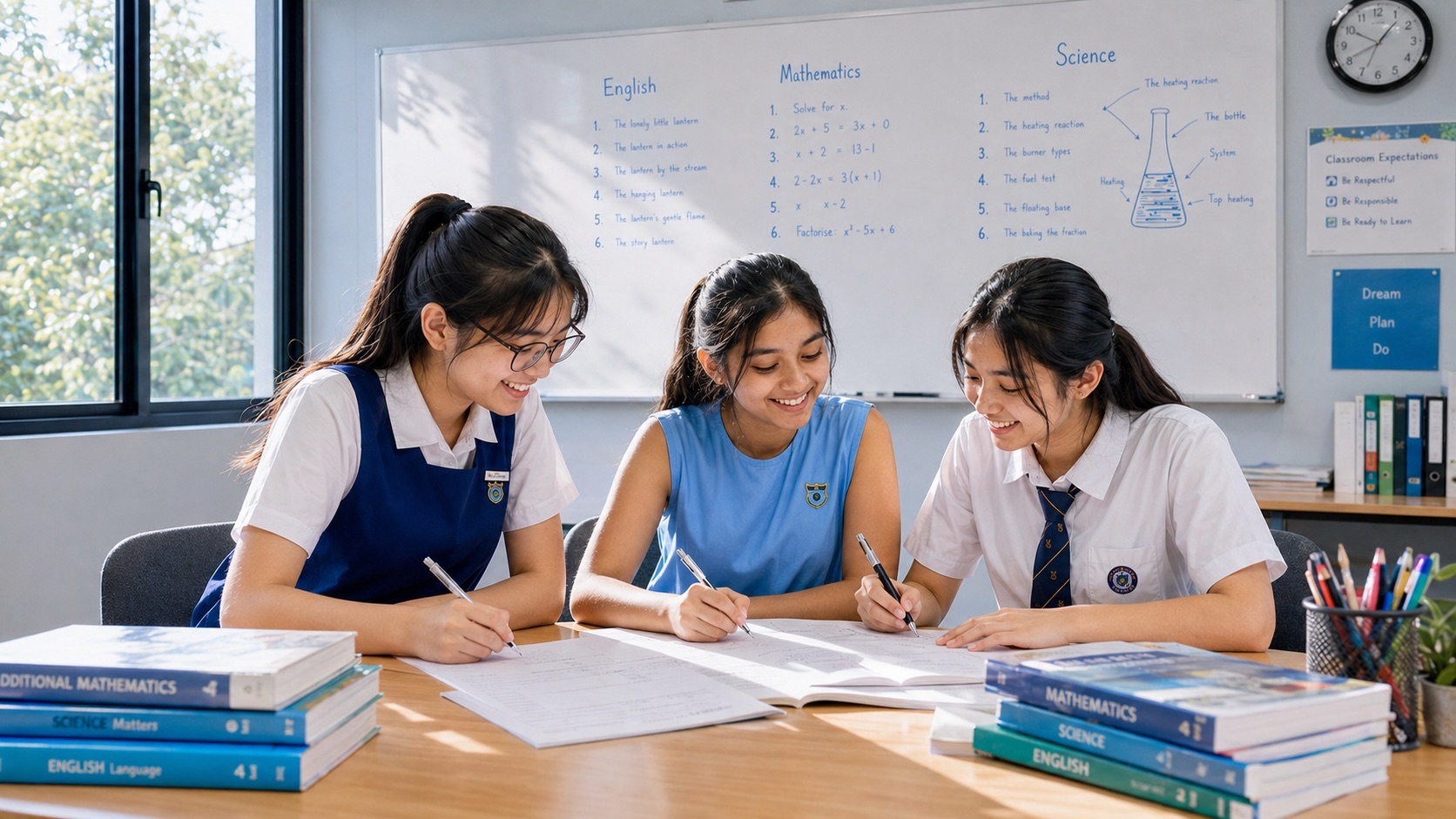
Methodist Girls’ School Began as a Tamil Girls’ School with Just Nine Students Methodist Girls’ School began on 15 August 1887 as Tamil Girls’ School in a shophouse on Short Street, with just nine girls in its first batch.
MOE Heritage records that the girls’ fathers—Tamil businessmen—helped start the school by contributing money, furniture and a rent-free shophouse. The institution later changed name, moved several times and eventually reached Blackmore Drive in Bukit Timah.
The story is powerful because it turns a large modern school into a history of language, migration, women’s education, community contribution and institutional movement.
50-second router
- 1887: Sophia Blackmore founded the school.
- Original name: Tamil Girls’ School.
- First cohort: nine Indian girls.
- Family contribution: fathers supplied money, furniture and rent-free premises.
- Moves: the school shifted through several sites before reaching Blackmore Drive.
- Bukit Timah: the present campus dates from the 1990s, while the institution’s history is much older.
1. Nine students make the beginning imaginable
A first cohort of nine is small enough for a reader to picture individually rather than as an abstract enrolment total.
Small scale does not imply small ambition.
Why this matters: Institutions can begin with a handful of learners and still build long histories.
2. The original name tells us who the first school was serving
Tamil Girls’ School was not a generic label.
It pointed to language, community and a specific social need.
Why this matters: Names can reveal a founding audience.
3. Girls’ education itself was the central intervention
Late nineteenth-century schooling opportunities were not distributed equally.
Creating a school specifically for girls changed who could participate in formal education.
Why this matters: Access is an institutional design choice.
4. Sophia Blackmore’s role connected Singapore to a wider missionary network
She was an Australian missionary assigned through the Women’s Foreign Missionary Society.
The school therefore emerged through transnational religious and educational networks.
Why this matters: Local institutions can have international origins.
5. The first fathers were not passive bystanders
MOE Heritage records their donations of money, furniture and premises.
Families helped convert the idea of a school into something operational.
Why this matters: Community support can be material, not only symbolic.
6. A rent-free shophouse lowered one early barrier
Premises are one of the first costs an institution must solve.
Reducing that cost can make teaching possible before a purpose-built campus exists.
Why this matters: A school begins through usable space, not architectural grandeur.
7. Short Street was only the first chapter
The school moved as it grew.
Relocation is evidence that institutional continuity can outlast one building.
Why this matters: A school’s age and a campus’s age are different questions.
8. Middle Road added another institutional layer
The school later used the Christian Institute.
Shared or borrowed premises can support real education even before permanent facilities are secured.
Why this matters: Operational identity is not dependent on one lifelong address.
9. Mount Sophia became a major chapter
The school eventually settled there for decades.
Long occupancy can make a site feel synonymous with an institution even when it is not the founding place.
Why this matters: Memory often attaches to the longest-lived setting.
10. Blackmore Drive carries the founder’s name
The road leading to the modern campus was named after Sophia Blackmore.
A person’s contribution became part of the map.
Why this matters: Toponymy can turn institutional memory into everyday navigation.
11. The road name is different from the school name
One commemorates the founder; the other identifies the institution.
They intersect but should not be treated as the same naming act.
Why this matters: Related names can preserve different pieces of history.
12. Language changed as the school changed
The original Tamil-language identity did not remain the only defining feature.
Institutional growth can broaden audience, curriculum and language while preserving an origin story.
Why this matters: Continuity does not require permanent sameness.
13. Changing language can widen access and alter identity
A language of instruction shapes who can enter and how learning is organised.
Changes therefore have both practical and cultural consequences.
Why this matters: Language policy is part of education history.
14. A school can preserve an origin without recreating it
Modern MGS does not need to reproduce an 1887 shophouse in order to remember its beginning.
Historical identity can be carried through archives, names and institutional traditions.
Why this matters: Heritage is not literal reenactment.
15. The early fathers’ support should not erase the girls themselves
The nine students were the reason the school existed.
Institutional histories often make donors easier to name than learners.
Why this matters: Education history should keep students visible even when records are uneven.
16. Nor should the founder erase later teachers
A long institution survives through successive generations of staff.
Founding is one stage; continuation requires repeated labour.
Why this matters: Durability is collective.
17. The shophouse story teaches resourcefulness
Purpose-built facilities are helpful, but education can begin before every ideal condition exists.
The challenge is to distinguish temporary improvisation from permanent under-provision.
Why this matters: Adaptability and adequacy are different questions.
18. Growth creates new coordination problems
More students require more rooms, teachers, schedules and materials.
Scaling a school is not simply repeating a nine-student arrangement many times.
Why this matters: Size changes organisational needs.
19. The Bukit Timah campus represents one outcome of that long scaling process
A modern campus contains facilities unimaginable in the first shophouse.
But new resources still need teaching design and maintenance.
Why this matters: Buildings expand possibilities; they do not teach by themselves.
20. The school’s history complicates stereotypes about Bukit Timah
The present district is often read through wealth and prestige.
MGS’s origin lies in a much smaller community-based initiative elsewhere before its later move into the corridor.
Why this matters: Current reputation should not overwrite institutional origins.
21. Girls’ education is also labour-market and civic history
Expanding schooling changes what women can later do in professions, families and public life.
A school’s effect extends beyond its campus.
Why this matters: Educational access reshapes society gradually.
22. Migration is embedded in the first cohort’s story
Tamil businessmen and an Australian missionary meet inside one institution’s origin.
Singapore’s education history is built through communities with different geographic origins.
Why this matters: Local history is often transnational history.
23. The nine-student hook should not become a ranking device
A small first cohort does not prove superior intimacy, just as a large current enrolment does not prove poorer education.
Numbers need purpose and context.
Why this matters: Scale is descriptive before it becomes evaluative.
24. The deepest continuity is purpose through adaptation
The school moved, changed scale and evolved its programmes.
What persists is not a frozen building or unchanged language but an institution continuing to educate girls.
Why this matters: Institutional identity can survive substantial change.
A nine-student school laboratory
1. Build the first-room budget
Use fictional tokens for rent, furniture and books.
Try this: Show how a rent-free room changes the amount needed to begin.
2. Map the school’s moves
Place Short Street, Middle Road, Mount Sophia and Blackmore Drive on a timeline.
Try this: Keep institution and site as separate lines.
3. Compare name functions
Explain what ‘Tamil Girls’ School’, ‘Methodist Girls’ School’ and ‘Blackmore Drive’ each preserve.
Try this: Do not treat them as interchangeable labels.
4. Design for nine versus ninety
List which parts of a school can scale directly and which require new coordination.
Try this: Focus on rooms, teachers and schedules.
5. Write a founder-and-community paragraph
Give Sophia Blackmore, the nine girls and the contributing fathers distinct roles.
Try this: Avoid giving one actor credit for everything.
Questions for curious students
1. Why did the original school focus on Tamil girls?
A strong answer should connect the local fact to a wider system—education, language, architecture, community, transport or institutional change—rather than simply repeat a date.
2. How can a rent-free room change whether an institution can begin?
A strong answer should connect the local fact to a wider system—education, language, architecture, community, transport or institutional change—rather than simply repeat a date.
3. Why can a school be older than its current campus?
A strong answer should connect the local fact to a wider system—education, language, architecture, community, transport or institutional change—rather than simply repeat a date.
4. What does a road named after a founder preserve?
A strong answer should connect the local fact to a wider system—education, language, architecture, community, transport or institutional change—rather than simply repeat a date.
5. How can language change while an institution remains continuous?
A strong answer should connect the local fact to a wider system—education, language, architecture, community, transport or institutional change—rather than simply repeat a date.
6. Why should student history not disappear behind founder history?
A strong answer should connect the local fact to a wider system—education, language, architecture, community, transport or institutional change—rather than simply repeat a date.
7. What changes when a school scales from a few students to many?
A strong answer should connect the local fact to a wider system—education, language, architecture, community, transport or institutional change—rather than simply repeat a date.
8. How does MGS complicate a simple picture of Bukit Timah education?
A strong answer should connect the local fact to a wider system—education, language, architecture, community, transport or institutional change—rather than simply repeat a date.
Authoritative references
- MOE Heritage Centre — Methodist Girls’ School
- National Heritage Board / Roots — Methodist Girls’ School historic site
- National Heritage Board — Bukit Timah Heritage Trail booklet
Continue exploring Bukit Timah
Final thought
Methodist Girls’ School’s modern Bukit Timah presence began with a much smaller, very specific educational intervention: nine girls learning in a Short Street shophouse.
The enduring lesson is not that small beginnings are automatically noble. It is that access, community resources and persistent institutional work can turn a tiny opening into a long educational history.
Deep-dive note 1: Nine students make the beginning imaginable
Return to this point from another angle. A first cohort of nine is small enough for a reader to picture individually rather than as an abstract enrolment total. Ask what changed before and after this development, which people or institutions carried the change, and what evidence would let a student verify the sequence more precisely.
Student task: find one official institutional source, one dated image or map, and one sentence that states a limit. Write an observation, an inference and an uncertainty. The goal is to turn a memorable Bukit Timah fact into disciplined local research.
Deep-dive note 2: The original name tells us who the first school was serving
Return to this point from another angle. Tamil Girls’ School was not a generic label. Ask what changed before and after this development, which people or institutions carried the change, and what evidence would let a student verify the sequence more precisely.
Student task: find one official institutional source, one dated image or map, and one sentence that states a limit. Write an observation, an inference and an uncertainty. The goal is to turn a memorable Bukit Timah fact into disciplined local research.
Deep-dive note 3: Girls’ education itself was the central intervention
Return to this point from another angle. Late nineteenth-century schooling opportunities were not distributed equally. Ask what changed before and after this development, which people or institutions carried the change, and what evidence would let a student verify the sequence more precisely.
Student task: find one official institutional source, one dated image or map, and one sentence that states a limit. Write an observation, an inference and an uncertainty. The goal is to turn a memorable Bukit Timah fact into disciplined local research.
Deep-dive note 4: Sophia Blackmore’s role connected Singapore to a wider missionary network
Return to this point from another angle. She was an Australian missionary assigned through the Women’s Foreign Missionary Society. Ask what changed before and after this development, which people or institutions carried the change, and what evidence would let a student verify the sequence more precisely.
Student task: find one official institutional source, one dated image or map, and one sentence that states a limit. Write an observation, an inference and an uncertainty. The goal is to turn a memorable Bukit Timah fact into disciplined local research.
Deep-dive note 5: The first fathers were not passive bystanders
Return to this point from another angle. MOE Heritage records their donations of money, furniture and premises. Ask what changed before and after this development, which people or institutions carried the change, and what evidence would let a student verify the sequence more precisely.
Student task: find one official institutional source, one dated image or map, and one sentence that states a limit. Write an observation, an inference and an uncertainty. The goal is to turn a memorable Bukit Timah fact into disciplined local research.
Deep-dive note 6: A rent-free shophouse lowered one early barrier
Return to this point from another angle. Premises are one of the first costs an institution must solve. Ask what changed before and after this development, which people or institutions carried the change, and what evidence would let a student verify the sequence more precisely.
Student task: find one official institutional source, one dated image or map, and one sentence that states a limit. Write an observation, an inference and an uncertainty. The goal is to turn a memorable Bukit Timah fact into disciplined local research.
Deep-dive note 7: Short Street was only the first chapter
Return to this point from another angle. The school moved as it grew. Ask what changed before and after this development, which people or institutions carried the change, and what evidence would let a student verify the sequence more precisely.
Student task: find one official institutional source, one dated image or map, and one sentence that states a limit. Write an observation, an inference and an uncertainty. The goal is to turn a memorable Bukit Timah fact into disciplined local research.
Deep-dive note 8: Middle Road added another institutional layer
Return to this point from another angle. The school later used the Christian Institute. Ask what changed before and after this development, which people or institutions carried the change, and what evidence would let a student verify the sequence more precisely.
Student task: find one official institutional source, one dated image or map, and one sentence that states a limit. Write an observation, an inference and an uncertainty. The goal is to turn a memorable Bukit Timah fact into disciplined local research.
Deep-dive note 9: Mount Sophia became a major chapter
Return to this point from another angle. The school eventually settled there for decades. Ask what changed before and after this development, which people or institutions carried the change, and what evidence would let a student verify the sequence more precisely.
Student task: find one official institutional source, one dated image or map, and one sentence that states a limit. Write an observation, an inference and an uncertainty. The goal is to turn a memorable Bukit Timah fact into disciplined local research.
Deep-dive note 10: Blackmore Drive carries the founder’s name
Return to this point from another angle. The road leading to the modern campus was named after Sophia Blackmore. Ask what changed before and after this development, which people or institutions carried the change, and what evidence would let a student verify the sequence more precisely.
Student task: find one official institutional source, one dated image or map, and one sentence that states a limit. Write an observation, an inference and an uncertainty. The goal is to turn a memorable Bukit Timah fact into disciplined local research.
Deep-dive note 11: The road name is different from the school name
Return to this point from another angle. One commemorates the founder; the other identifies the institution. Ask what changed before and after this development, which people or institutions carried the change, and what evidence would let a student verify the sequence more precisely.
Student task: find one official institutional source, one dated image or map, and one sentence that states a limit. Write an observation, an inference and an uncertainty. The goal is to turn a memorable Bukit Timah fact into disciplined local research.
Deep-dive note 12: Language changed as the school changed
Return to this point from another angle. The original Tamil-language identity did not remain the only defining feature. Ask what changed before and after this development, which people or institutions carried the change, and what evidence would let a student verify the sequence more precisely.
Student task: find one official institutional source, one dated image or map, and one sentence that states a limit. Write an observation, an inference and an uncertainty. The goal is to turn a memorable Bukit Timah fact into disciplined local research.
Deep-dive note 13: Changing language can widen access and alter identity
Return to this point from another angle. A language of instruction shapes who can enter and how learning is organised. Ask what changed before and after this development, which people or institutions carried the change, and what evidence would let a student verify the sequence more precisely.
Student task: find one official institutional source, one dated image or map, and one sentence that states a limit. Write an observation, an inference and an uncertainty. The goal is to turn a memorable Bukit Timah fact into disciplined local research.
Deep-dive note 14: A school can preserve an origin without recreating it
Return to this point from another angle. Modern MGS does not need to reproduce an 1887 shophouse in order to remember its beginning. Ask what changed before and after this development, which people or institutions carried the change, and what evidence would let a student verify the sequence more precisely.
Student task: find one official institutional source, one dated image or map, and one sentence that states a limit. Write an observation, an inference and an uncertainty. The goal is to turn a memorable Bukit Timah fact into disciplined local research.
Deep-dive note 15: The early fathers’ support should not erase the girls themselves
Return to this point from another angle. The nine students were the reason the school existed. Ask what changed before and after this development, which people or institutions carried the change, and what evidence would let a student verify the sequence more precisely.
Student task: find one official institutional source, one dated image or map, and one sentence that states a limit. Write an observation, an inference and an uncertainty. The goal is to turn a memorable Bukit Timah fact into disciplined local research.
Deep-dive note 16: Nor should the founder erase later teachers
Return to this point from another angle. A long institution survives through successive generations of staff. Ask what changed before and after this development, which people or institutions carried the change, and what evidence would let a student verify the sequence more precisely.
Student task: find one official institutional source, one dated image or map, and one sentence that states a limit. Write an observation, an inference and an uncertainty. The goal is to turn a memorable Bukit Timah fact into disciplined local research.
Deep-dive note 17: The shophouse story teaches resourcefulness
Return to this point from another angle. Purpose-built facilities are helpful, but education can begin before every ideal condition exists. Ask what changed before and after this development, which people or institutions carried the change, and what evidence would let a student verify the sequence more precisely.
Student task: find one official institutional source, one dated image or map, and one sentence that states a limit. Write an observation, an inference and an uncertainty. The goal is to turn a memorable Bukit Timah fact into disciplined local research.
Deep-dive note 18: Growth creates new coordination problems
Return to this point from another angle. More students require more rooms, teachers, schedules and materials. Ask what changed before and after this development, which people or institutions carried the change, and what evidence would let a student verify the sequence more precisely.
Student task: find one official institutional source, one dated image or map, and one sentence that states a limit. Write an observation, an inference and an uncertainty. The goal is to turn a memorable Bukit Timah fact into disciplined local research.
Deep-dive note 19: The Bukit Timah campus represents one outcome of that long scaling process
Return to this point from another angle. A modern campus contains facilities unimaginable in the first shophouse. Ask what changed before and after this development, which people or institutions carried the change, and what evidence would let a student verify the sequence more precisely.
Student task: find one official institutional source, one dated image or map, and one sentence that states a limit. Write an observation, an inference and an uncertainty. The goal is to turn a memorable Bukit Timah fact into disciplined local research.
Deep-dive note 20: The school’s history complicates stereotypes about Bukit Timah
Return to this point from another angle. The present district is often read through wealth and prestige. Ask what changed before and after this development, which people or institutions carried the change, and what evidence would let a student verify the sequence more precisely.
Student task: find one official institutional source, one dated image or map, and one sentence that states a limit. Write an observation, an inference and an uncertainty. The goal is to turn a memorable Bukit Timah fact into disciplined local research.
Deep-dive note 21: Girls’ education is also labour-market and civic history
Return to this point from another angle. Expanding schooling changes what women can later do in professions, families and public life. Ask what changed before and after this development, which people or institutions carried the change, and what evidence would let a student verify the sequence more precisely.
Student task: find one official institutional source, one dated image or map, and one sentence that states a limit. Write an observation, an inference and an uncertainty. The goal is to turn a memorable Bukit Timah fact into disciplined local research.
Deep-dive note 22: Migration is embedded in the first cohort’s story
Return to this point from another angle. Tamil businessmen and an Australian missionary meet inside one institution’s origin. Ask what changed before and after this development, which people or institutions carried the change, and what evidence would let a student verify the sequence more precisely.
Student task: find one official institutional source, one dated image or map, and one sentence that states a limit. Write an observation, an inference and an uncertainty. The goal is to turn a memorable Bukit Timah fact into disciplined local research.
Deep-dive note 23: The nine-student hook should not become a ranking device
Return to this point from another angle. A small first cohort does not prove superior intimacy, just as a large current enrolment does not prove poorer education. Ask what changed before and after this development, which people or institutions carried the change, and what evidence would let a student verify the sequence more precisely.
Student task: find one official institutional source, one dated image or map, and one sentence that states a limit. Write an observation, an inference and an uncertainty. The goal is to turn a memorable Bukit Timah fact into disciplined local research.
Deep-dive note 24: The deepest continuity is purpose through adaptation
Return to this point from another angle. The school moved, changed scale and evolved its programmes. Ask what changed before and after this development, which people or institutions carried the change, and what evidence would let a student verify the sequence more precisely.
Student task: find one official institutional source, one dated image or map, and one sentence that states a limit. Write an observation, an inference and an uncertainty. The goal is to turn a memorable Bukit Timah fact into disciplined local research.
Deep-dive note 25: Nine students make the beginning imaginable
Return to this point from another angle. A first cohort of nine is small enough for a reader to picture individually rather than as an abstract enrolment total. Ask what changed before and after this development, which people or institutions carried the change, and what evidence would let a student verify the sequence more precisely.
Student task: find one official institutional source, one dated image or map, and one sentence that states a limit. Write an observation, an inference and an uncertainty. The goal is to turn a memorable Bukit Timah fact into disciplined local research.
Deep-dive note 26: The original name tells us who the first school was serving
Return to this point from another angle. Tamil Girls’ School was not a generic label. Ask what changed before and after this development, which people or institutions carried the change, and what evidence would let a student verify the sequence more precisely.
Student task: find one official institutional source, one dated image or map, and one sentence that states a limit. Write an observation, an inference and an uncertainty. The goal is to turn a memorable Bukit Timah fact into disciplined local research.
Deep-dive note 27: Girls’ education itself was the central intervention
Return to this point from another angle. Late nineteenth-century schooling opportunities were not distributed equally. Ask what changed before and after this development, which people or institutions carried the change, and what evidence would let a student verify the sequence more precisely.
Student task: find one official institutional source, one dated image or map, and one sentence that states a limit. Write an observation, an inference and an uncertainty. The goal is to turn a memorable Bukit Timah fact into disciplined local research.
Deep-dive note 28: Sophia Blackmore’s role connected Singapore to a wider missionary network
Return to this point from another angle. She was an Australian missionary assigned through the Women’s Foreign Missionary Society. Ask what changed before and after this development, which people or institutions carried the change, and what evidence would let a student verify the sequence more precisely.
Student task: find one official institutional source, one dated image or map, and one sentence that states a limit. Write an observation, an inference and an uncertainty. The goal is to turn a memorable Bukit Timah fact into disciplined local research.
Deep-dive note 29: The first fathers were not passive bystanders
Return to this point from another angle. MOE Heritage records their donations of money, furniture and premises. Ask what changed before and after this development, which people or institutions carried the change, and what evidence would let a student verify the sequence more precisely.
Student task: find one official institutional source, one dated image or map, and one sentence that states a limit. Write an observation, an inference and an uncertainty. The goal is to turn a memorable Bukit Timah fact into disciplined local research.
Deep-dive note 30: A rent-free shophouse lowered one early barrier
Return to this point from another angle. Premises are one of the first costs an institution must solve. Ask what changed before and after this development, which people or institutions carried the change, and what evidence would let a student verify the sequence more precisely.
Student task: find one official institutional source, one dated image or map, and one sentence that states a limit. Write an observation, an inference and an uncertainty. The goal is to turn a memorable Bukit Timah fact into disciplined local research.
Deep-dive note 31: Short Street was only the first chapter
Return to this point from another angle. The school moved as it grew. Ask what changed before and after this development, which people or institutions carried the change, and what evidence would let a student verify the sequence more precisely.
Student task: find one official institutional source, one dated image or map, and one sentence that states a limit. Write an observation, an inference and an uncertainty. The goal is to turn a memorable Bukit Timah fact into disciplined local research.
Deep-dive note 32: Middle Road added another institutional layer
Return to this point from another angle. The school later used the Christian Institute. Ask what changed before and after this development, which people or institutions carried the change, and what evidence would let a student verify the sequence more precisely.
Student task: find one official institutional source, one dated image or map, and one sentence that states a limit. Write an observation, an inference and an uncertainty. The goal is to turn a memorable Bukit Timah fact into disciplined local research.
Deep-dive note 33: Mount Sophia became a major chapter
Return to this point from another angle. The school eventually settled there for decades. Ask what changed before and after this development, which people or institutions carried the change, and what evidence would let a student verify the sequence more precisely.
Student task: find one official institutional source, one dated image or map, and one sentence that states a limit. Write an observation, an inference and an uncertainty. The goal is to turn a memorable Bukit Timah fact into disciplined local research.
Deep-dive note 34: Blackmore Drive carries the founder’s name
Return to this point from another angle. The road leading to the modern campus was named after Sophia Blackmore. Ask what changed before and after this development, which people or institutions carried the change, and what evidence would let a student verify the sequence more precisely.
Student task: find one official institutional source, one dated image or map, and one sentence that states a limit. Write an observation, an inference and an uncertainty. The goal is to turn a memorable Bukit Timah fact into disciplined local research.
Deep-dive note 35: The road name is different from the school name
Return to this point from another angle. One commemorates the founder; the other identifies the institution. Ask what changed before and after this development, which people or institutions carried the change, and what evidence would let a student verify the sequence more precisely.
Student task: find one official institutional source, one dated image or map, and one sentence that states a limit. Write an observation, an inference and an uncertainty. The goal is to turn a memorable Bukit Timah fact into disciplined local research.
Deep-dive note 36: Language changed as the school changed
Return to this point from another angle. The original Tamil-language identity did not remain the only defining feature. Ask what changed before and after this development, which people or institutions carried the change, and what evidence would let a student verify the sequence more precisely.
Student task: find one official institutional source, one dated image or map, and one sentence that states a limit. Write an observation, an inference and an uncertainty. The goal is to turn a memorable Bukit Timah fact into disciplined local research.
Deep-dive note 37: Changing language can widen access and alter identity
Return to this point from another angle. A language of instruction shapes who can enter and how learning is organised. Ask what changed before and after this development, which people or institutions carried the change, and what evidence would let a student verify the sequence more precisely.
Student task: find one official institutional source, one dated image or map, and one sentence that states a limit. Write an observation, an inference and an uncertainty. The goal is to turn a memorable Bukit Timah fact into disciplined local research.
Deep-dive note 38: A school can preserve an origin without recreating it
Return to this point from another angle. Modern MGS does not need to reproduce an 1887 shophouse in order to remember its beginning. Ask what changed before and after this development, which people or institutions carried the change, and what evidence would let a student verify the sequence more precisely.
Student task: find one official institutional source, one dated image or map, and one sentence that states a limit. Write an observation, an inference and an uncertainty. The goal is to turn a memorable Bukit Timah fact into disciplined local research.
Deep-dive note 39: The early fathers’ support should not erase the girls themselves
Return to this point from another angle. The nine students were the reason the school existed. Ask what changed before and after this development, which people or institutions carried the change, and what evidence would let a student verify the sequence more precisely.
Student task: find one official institutional source, one dated image or map, and one sentence that states a limit. Write an observation, an inference and an uncertainty. The goal is to turn a memorable Bukit Timah fact into disciplined local research.
Deep-dive note 40: Nor should the founder erase later teachers
Return to this point from another angle. A long institution survives through successive generations of staff. Ask what changed before and after this development, which people or institutions carried the change, and what evidence would let a student verify the sequence more precisely.
Student task: find one official institutional source, one dated image or map, and one sentence that states a limit. Write an observation, an inference and an uncertainty. The goal is to turn a memorable Bukit Timah fact into disciplined local research.
Deep-dive note 41: The shophouse story teaches resourcefulness
Return to this point from another angle. Purpose-built facilities are helpful, but education can begin before every ideal condition exists. Ask what changed before and after this development, which people or institutions carried the change, and what evidence would let a student verify the sequence more precisely.
Student task: find one official institutional source, one dated image or map, and one sentence that states a limit. Write an observation, an inference and an uncertainty. The goal is to turn a memorable Bukit Timah fact into disciplined local research.
Deep-dive note 42: Growth creates new coordination problems
Return to this point from another angle. More students require more rooms, teachers, schedules and materials. Ask what changed before and after this development, which people or institutions carried the change, and what evidence would let a student verify the sequence more precisely.
Student task: find one official institutional source, one dated image or map, and one sentence that states a limit. Write an observation, an inference and an uncertainty. The goal is to turn a memorable Bukit Timah fact into disciplined local research.
Deep-dive note 43: The Bukit Timah campus represents one outcome of that long scaling process
Return to this point from another angle. A modern campus contains facilities unimaginable in the first shophouse. Ask what changed before and after this development, which people or institutions carried the change, and what evidence would let a student verify the sequence more precisely.
Student task: find one official institutional source, one dated image or map, and one sentence that states a limit. Write an observation, an inference and an uncertainty. The goal is to turn a memorable Bukit Timah fact into disciplined local research.
Deep-dive note 44: The school’s history complicates stereotypes about Bukit Timah
Return to this point from another angle. The present district is often read through wealth and prestige. Ask what changed before and after this development, which people or institutions carried the change, and what evidence would let a student verify the sequence more precisely.
Student task: find one official institutional source, one dated image or map, and one sentence that states a limit. Write an observation, an inference and an uncertainty. The goal is to turn a memorable Bukit Timah fact into disciplined local research.
Deep-dive note 45: Girls’ education is also labour-market and civic history
Return to this point from another angle. Expanding schooling changes what women can later do in professions, families and public life. Ask what changed before and after this development, which people or institutions carried the change, and what evidence would let a student verify the sequence more precisely.
Student task: find one official institutional source, one dated image or map, and one sentence that states a limit. Write an observation, an inference and an uncertainty. The goal is to turn a memorable Bukit Timah fact into disciplined local research.
Deep-dive note 46: Migration is embedded in the first cohort’s story
Return to this point from another angle. Tamil businessmen and an Australian missionary meet inside one institution’s origin. Ask what changed before and after this development, which people or institutions carried the change, and what evidence would let a student verify the sequence more precisely.
Student task: find one official institutional source, one dated image or map, and one sentence that states a limit. Write an observation, an inference and an uncertainty. The goal is to turn a memorable Bukit Timah fact into disciplined local research.
Deep-dive note 47: The nine-student hook should not become a ranking device
Return to this point from another angle. A small first cohort does not prove superior intimacy, just as a large current enrolment does not prove poorer education. Ask what changed before and after this development, which people or institutions carried the change, and what evidence would let a student verify the sequence more precisely.
Student task: find one official institutional source, one dated image or map, and one sentence that states a limit. Write an observation, an inference and an uncertainty. The goal is to turn a memorable Bukit Timah fact into disciplined local research.