
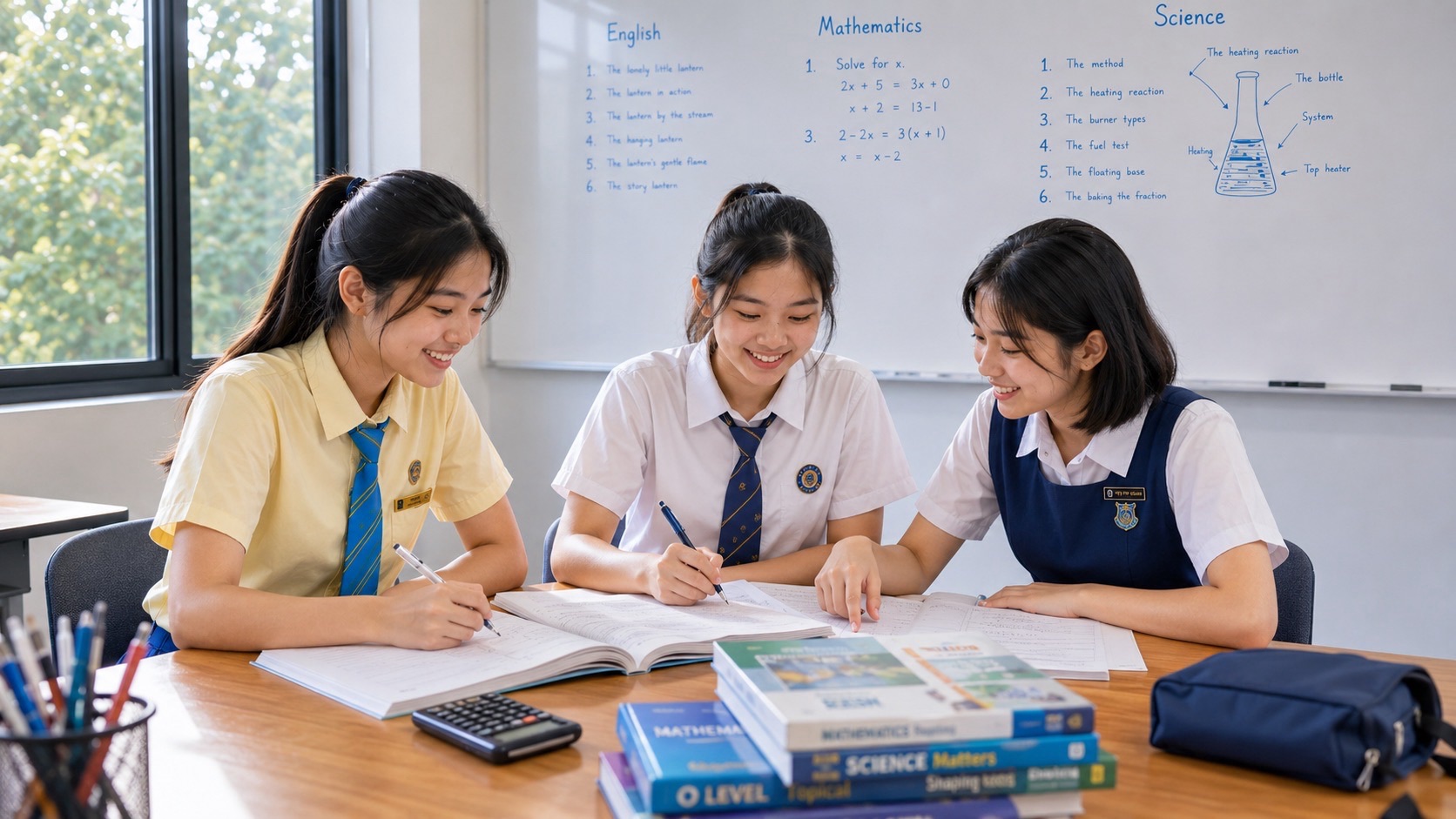
Creative writing games are most useful when the game mechanic creates a real writing decision. A timer can force selection. Hidden information can train point of view. Random objects can train premise generation. Role cards can create conflicting goals. Revision games can make writers compare versions instead of treating the first draft as fixed.
If you are searching for creative writing games, writing games for students, fun writing games, classroom writing games, story writing games or writing games for adults, this guide provides 40 original games with rules, skill targets, variations and transfer tasks. They work for classrooms, tuition groups, writing clubs, families, adult workshops and independent practice.
This eduKate guide is distinct from 50 Creative Writing Activities. Activities can be individual drills; games add a formal mechanic such as turns, cards, hidden constraints, scoring by evidence, cooperative assembly or timed transformation. The purpose is still capability. Nobody needs to “win creativity.”
Quick read: use game mechanics to expose craft
A useful writing game has four parts: a writing target, a mechanic, a stopping condition and a transfer. For example, to train causality, players build a chain where every new event must begin with “therefore” or “but.” To train viewpoint, one player holds information the narrator cannot know. To train revision, players earn a point only when they can explain why a cut improves the passage.
Routes: games 1–10, games 11–20, games 21–30, games 31–40, and teaching and group guide. All examples are original teaching material.
1. Creative writing games 1–10: ideas, prompts and premises
1. Object Relay
Trains: Idea generation. How to play: Player one names an ordinary object. Player two gives it an owner. Player three adds a reason it matters. Player four adds a constraint. Continue until a premise exists.
Rule: No contribution may contradict earlier facts unless the group explicitly chooses a revision token. Transfer: Write the resulting premise independently with a new object.
2. Five Motives Draft
Trains: Character. How to play: Reveal one action—“keeps a broken watch.” Each player writes a motive privately. Compare without ranking novelty.
Rule: Choose the motive that creates the clearest future choice, not the strangest answer. Transfer: Build a scene around an unselected motive.
3. Constraint Cards
Trains: Flexibility. How to play: Prepare cards labelled TIME, ACCESS, PROMISE, MISSING INFORMATION, LIMITED SPACE and WRONG ASSUMPTION. Draw one and apply it to a neutral premise.
Rule: The constraint must change what the character can do, not merely decorate the scene. Transfer: Replace the card with another and compare story direction.
4. Question Tennis
Trains: Curiosity. How to play: Two players alternate questions about one observed detail. Statements are not allowed for ten turns.
Rule: Questions must open possibilities rather than smuggle in conclusions. Transfer: Choose one unanswered question as a story engine.
5. Premise Auction
Trains: Selection. How to play: Players receive five fictional tokens and bid on premises they think can sustain consequential choices. Bidders must explain the mechanism before spending.
Rule: No points for popularity; explanation is required for a valid bid. Transfer: Rewrite the least-bid premise to make its choice clearer.
6. Title First / Title Last
Trains: Framing. How to play: Half the group writes from a supplied title. Half writes without one and titles afterwards.
Rule: Compare how titles constrained generation versus interpretation. Transfer: Retitle both pieces with a title that changes emphasis.
7. Three Doors
Trains: Alternatives. How to play: At a decision point, the group must generate three plausible actions before the writer chooses one.
Rule: The first plausible action cannot be selected until all three exist. Transfer: Draft the consequence of the least obvious viable choice.
8. Rule of One
Trains: Constraint. How to play: Draw one card: one room, one hour, one speaking character, one object or one irreversible choice.
Rule: The story must remain coherent inside the limit. Transfer: Remove the constraint and decide whether freedom improves the piece.
9. Reverse Prompt
Trains: Inference. How to play: One player secretly chooses a premise and writes only the ending. Others infer possible starting conditions.
Rule: Multiple beginnings can be valid; players cite evidence in the ending. Transfer: Choose one inferred beginning and write the causal bridge.
10. Premise Repair Shop
Trains: Diagnosis. How to play: Give teams a weak premise such as “A girl has an adventure.” They may change only one variable per turn.
Rule: Every change must state what problem it repairs. Transfer: Create a fresh weak premise and repair it independently.
2. Creative writing games 11–20: character, conflict and stakes
11. Goal Cards
Trains: Character goals. How to play: Each player draws a character and a verb card: RETURN, PERSUADE, DELAY, CORRECT, RETRIEVE, REFUSE. Write the first action that reveals the goal.
Rule: Do not state the goal in narration. Transfer: Swap verb cards and rewrite the same character.
12. Usually / Except
Trains: Character complexity. How to play: Player one states what a character usually does. Player two supplies an exception condition. Player three creates the scene.
Rule: The exception must follow from a value, history or circumstance rather than randomness. Transfer: Write another exception for the same character that produces a different choice.
13. No Villain Negotiation
Trains: Conflict. How to play: Two players receive reasonable but incompatible objectives. They improvise or write twelve lines of negotiation.
Rule: Insults, threats and deliberate lies are prohibited. Transfer: Turn the exchange into prose and add viewpoint.
14. Stake Switch
Trains: Stakes. How to play: One event remains fixed. Teams draw PRACTICAL, SOCIAL, ETHICAL or RELATIONAL and make the outcome matter in that dimension.
Rule: No catastrophe cards; scale stays ordinary. Transfer: Combine two stake types without inflating the event.
15. Choice Triangle
Trains: Decision. How to play: Players fill three cards: WANT A, WANT B, CONDITION C. Shuffle within compatible sets and build a scene.
Rule: Condition C must make A and B genuinely incompatible. Transfer: Write the moment the character recognises the trade-off.
16. Character Object Draft
Trains: Characterisation. How to play: Pass one object card around. Every player writes how a different character handles or notices it.
Rule: No personality adjectives are allowed. Transfer: Remove names and test whether behaviour distinguishes characters.
17. Motive Court
Trains: Inference. How to play: One player presents an action. Two teams argue different plausible motives using only supplied evidence.
Rule: No team may claim private thoughts not in evidence. Transfer: Write a scene that preserves both interpretations.
18. Promise Problem
Trains: Ethics/conflict. How to play: Draw a promise card and a new obligation card. The character cannot satisfy both perfectly.
Rule: The story cannot solve the conflict by revealing that one obligation never mattered. Transfer: Draft a partial repair rather than a perfect solution.
19. Status Shift
Trains: Relationship. How to play: Two characters begin with an unequal social advantage. A new piece of information changes who can decide the next action.
Rule: The shift must come from established conditions. Transfer: Rewrite earlier dialogue so the later shift gains meaning.
20. Character Compass
Trains: Consistency. How to play: Four corners represent WANT, FEAR, DUTY and HABIT. Give a character one item in each. Draw two corners to create a decision.
Rule: The character cannot obey both automatically. Transfer: Write the consequence of prioritising one.
3. Creative writing games 21–30: viewpoint, dialogue, description and voice
21. Secret Knowledge
Trains: Point of view. How to play: One player writes the viewpoint character. Another holds a secret fact card the viewpoint cannot know. The scene must reveal clues without leaking the fact.
Rule: Any direct statement of the secret before evidence reaches the viewpoint loses the round. Transfer: Rewrite with the secret-holder as viewpoint.
22. Camera Pass
Trains: Perspective. How to play: Write 100 words, then pass the scene to another player who continues from a different character’s perspective.
Rule: External facts already established cannot change. Transfer: Compare what each viewpoint notices and cannot know.
23. Room Hunt
Trains: Description. How to play: Display or invent a room inventory. Players draw a goal card and have sixty seconds to select five relevant details.
Rule: Points come from explaining relevance, not number of adjectives. Transfer: Write an 80-word paragraph using only selected details.
24. Sense Signal
Trains: Imagery. How to play: Draw a sense card and a change card. Reveal the change first through that sense.
Rule: The sensory clue must be plausible in the setting. Transfer: Rewrite using another sense and compare timing.
25. Dialogue Chess
Trains: Dialogue. How to play: Each speaker secretly receives an objective. Players alternate lines; after each line they mark whether it advanced, defended or changed strategy.
Rule: No line may exist only to explain backstory to the reader. Transfer: Turn the exchange into a scene with action beats.
26. Subtext Taboo
Trains: Subtext. How to play: Players receive a real topic card and a forbidden phrase naming the underlying issue. They must negotiate without using it.
Rule: Surface dialogue must still make literal sense. Transfer: Write a prose version where viewpoint interprets one line incorrectly.
27. Tag Minimalist
Trains: Dialogue tags. How to play: Write a conversation using only ‘said’ when attribution is needed. Then revise with action beats where action itself matters.
Rule: Fancy speech verbs earn no automatic points. Transfer: Keep the cleaner version line by line.
28. Silence Token
Trains: Dialogue rhythm. How to play: Each player has one silence token that can replace a spoken turn with an action or pause.
Rule: The silence must change the other speaker’s next move. Transfer: Write the moment before and after the silence.
29. Voice Filter
Trains: Voice. How to play: Draw two cards: audience and attitude. Write the same event as a private note, formal report, comic narration or worried message.
Rule: Facts remain fixed while selection and syntax may change. Transfer: Identify which language choices created voice.
30. Description Detective
Trains: Inference. How to play: One player describes a person indirectly through what they notice in a room. Others infer the character’s current goal.
Rule: Inferences must cite textual clues. Transfer: Revise any clue that produced the wrong inference unintentionally.
4. Creative writing games 31–40: plot, pacing, endings and revision
31. Therefore / But
Trains: Causality. How to play: Players build a story one event at a time. Every turn must logically begin with therefore or but.
Rule: ‘And then’ is rejected unless the player can show a causal relationship. Transfer: Draft the chain without visible connectors.
32. State Change Bingo
Trains: Scene function. How to play: Cards list KNOWLEDGE, ACCESS, RELATIONSHIP, RESOURCE, RISK, PLAN and OBLIGATION. After a scene, players mark what changed.
Rule: A square can be claimed only with textual evidence. Transfer: Revise a scene that changes nothing.
33. Pacing Auction
Trains: Pacing. How to play: Give teams 1,000 imaginary words to allocate across five planned events.
Rule: They must justify why one moment deserves more page time than another. Transfer: Draft the highest-allocation event and summarise the lowest.
34. Reveal Early Challenge
Trains: Suspense. How to play: Teams receive a mystery premise and must reveal the secret in the first sentence.
Rule: They may not invent a second secret to replace it. Transfer: Create tension from consequence and decision.
35. Foreshadow Fairness
Trains: Setup/payoff. How to play: One player supplies a late event. Others compete to plant the smallest earlier enabling condition.
Rule: The clue must have an immediate earlier function. Transfer: Use the winning setup in a fresh story.
36. Opening Tournament
Trains: Openings. How to play: Write four openings for one premise: action, voice, image and disturbance. Readers state the expectation each creates.
Rule: No voting until expectations are articulated. Transfer: Choose according to story promise, not popularity.
37. Ending Match
Trains: Endings. How to play: Mix opening cards and ending cards. Players identify which pairings feel prepared and explain why.
Rule: Explanations must reference setup, change or pattern. Transfer: Write a new ending for a mismatched opening.
38. Scene Shuffle
Trains: Structure. How to play: Teams receive five scene cards and build two viable orders.
Rule: Every order must explain how reader knowledge changes. Transfer: Draft the transition that makes the less obvious order work.
39. Cut Card
Trains: Revision. How to play: Each round a player draws CUT 10%, CUT EXPLANATION, CUT BACKSTORY or CUT DECORATION and revises a passage.
Rule: A cut is valid only if the writer can name what is preserved and what is traded away. Transfer: Restore one cut if evidence shows it was necessary.
40. Repair Relay
Trains: Revision diagnosis. How to play: A paragraph passes through four roles: structure, viewpoint, language and surface editor. Each may make only one change.
Rule: Editors must state the diagnosed problem before changing text. Transfer: The original writer accepts or rejects each change with reasons.
5. How to score creative writing games without ranking creativity
Score observable craft conditions, not whether one writer is “more creative.” A point can be earned for a causal link that survives explanation, a viewpoint clue that stays within knowledge limits, a dialogue line that changes strategy, or a revision whose purpose is stated. This keeps competition attached to learning.
Cooperative scoring often works better. Give the whole group a target: create six consecutive causal links, produce four genuinely different motives, or revise a paragraph until every pronoun is clear. The group wins when the system works.
6. Ten-minute game format
Use one minute for rules, five for play, two for comparison and two for transfer. Object Relay, Question Tennis, Goal Cards, Room Hunt and Therefore / But work well. End with one sentence: “This game trained ___, and I will use it in ___.”
7. Thirty-minute classroom format
Begin with a five-minute model, play for ten minutes, write independently for ten and reflect for five. The independent writing should change the surface material so students cannot simply reproduce the game output.
8. Sixty-minute writing-group format
Use two related games. Dialogue Chess can be followed by Silence Token; Therefore / But can be followed by State Change Bingo. Spend the final twenty minutes applying both skills to one original scene. Games should converge into writing rather than remain isolated rounds.
9. Creative writing games for primary students
Keep rules visible, turns short and material concrete. Object Relay, Three Doors, Goal Cards, Character Object Draft, Room Hunt and Opening Tournament can be simplified easily. Let students speak an idea before writing it where helpful.
Do not award points for the longest sentence, rarest word or most dramatic disaster. Reward coherence, clear choice and explanation. A quiet story can demonstrate excellent control.
10. Creative writing games for secondary students
Add hidden objectives, conflicting evidence, time limits and transfer under independent conditions. Motive Court, Secret Knowledge, Dialogue Chess, Pacing Auction and Repair Relay can make analytical reading and writing reinforce one another.
11. Creative writing games for adults
Use more complex trade-offs and form changes. Adults can play Voice Filter with professional, public and private audiences; Scene Shuffle with nonlinear structures; or Repair Relay on their own drafts. Personal disclosure remains optional.
12. Creative writing games for online groups
Use shared documents or chat for turn-based games. Secret Knowledge works through private role cards. Therefore / But can run one line per participant. Keep a visible state summary so later players do not accidentally contradict established facts.
13. Games for reluctant writers
Reduce blank-page load. Give cards, choices and short turns. A reluctant writer may contribute one motive or one causal event before writing a paragraph. Completion of a bounded move can create momentum without lowering the thinking demand.
14. Games for advanced writers
Attack habits. A writer who relies on mystery plays Reveal Early Challenge. A writer who overplans plays Object Relay with no prewriting. A writer who over-explains plays Cut Card. A dialogue-heavy writer plays a silent version of Status Shift using action only.
15. Five games that combine into one story
Start with Object Relay for premise. Use Usually / Except for character. Use No Villain Negotiation for conflict. Build the middle with Therefore / But. Finish with Ending Match. Then write the story independently without the game cards. This sequence turns play into a construction pipeline.
16. A five-day creative writing games plan
Day 1: Object Relay and Three Doors. Day 2: Goal Cards and Choice Triangle. Day 3: Secret Knowledge and Dialogue Chess. Day 4: Therefore / But and Pacing Auction. Day 5: Opening Tournament, Ending Match and a complete independent story.
17. Frequently asked question: are writing games useful?
Yes when the mechanic targets a real writing capability and is followed by transfer. A game can lower startup friction and make comparison visible. It becomes less useful when winning, speed or novelty replaces the writing objective.
18. What is a good creative writing game for beginners?
Object Relay is a strong starting game because it reduces the blank page to four decisions: object, owner, importance and constraint. The resulting premise can immediately become a short scene.
19. What is a good writing game for a classroom?
Therefore / But works well because the rules are simple and the learning target—causality—is visible. Run it cooperatively, then ask each student to write an independent causal chain.
20. What is a good writing game for adults?
Voice Filter, Scene Shuffle and Repair Relay can be adapted to sophisticated material without becoming childish. The mechanic should respect the writer’s level by creating a real craft problem rather than adding decorative play.
21. Can writing games improve vocabulary?
Yes if lexical choice affects the game. Add a Vocabulary Trial round: players propose verbs, define the difference and earn a point only when the chosen word fits the action and register. Rare words do not earn bonus points merely for rarity.
22. Can writing games improve composition writing?
They can strengthen planning, causality, character, description, dialogue, vocabulary and revision. For assessed composition, add the actual timing and task requirements. General craft games are practice tools, not official examination criteria.
23. Should creative writing games be competitive?
They can be, but competition should attach to observable craft rather than ranking people. Cooperative goals often preserve experimentation better. Never turn personal disclosure, language background or artistic taste into a competitive disadvantage.
24. Should there be prizes?
Prizes are unnecessary for the craft mechanism. If used, keep them low-stakes and avoid making the group optimise for spectacle. The durable reward is discovering a technique that improves the next piece.
25. How do I invent my own writing game?
Choose one capability. Identify its common failure. Create a mechanic that makes the failure visible. Add a stopping condition and transfer task. If viewpoint leaks, hide information from the narrator. If plots float, require therefore/but links. If description sprawls, give a five-detail budget.
26. The game should disappear into the writing
A successful game ends when the writer no longer needs it. The player who has practised causal chains should begin noticing weak links in ordinary drafts. The player who has practised hidden objectives should write dialogue with social pressure without drawing a card.
Play creates a compressed world where one decision becomes visible. Transfer returns that decision to the full complexity of writing. That movement—from game to independent craft—is the reason to play.
Reference and scope notes
For broader creative-writing practice context, see Purdue OWL’s Creative Writing resources and the Open University’s Creative Writing and Critical Reading materials. The forty games, mechanics, rules, variations and transfer systems here are original eduKate teaching material.
Adapt rules, timing and complexity to the learners and follow any school, examination, course or publication requirements that govern the actual writing task. Games support practice; they do not guarantee a fixed academic or professional outcome.