
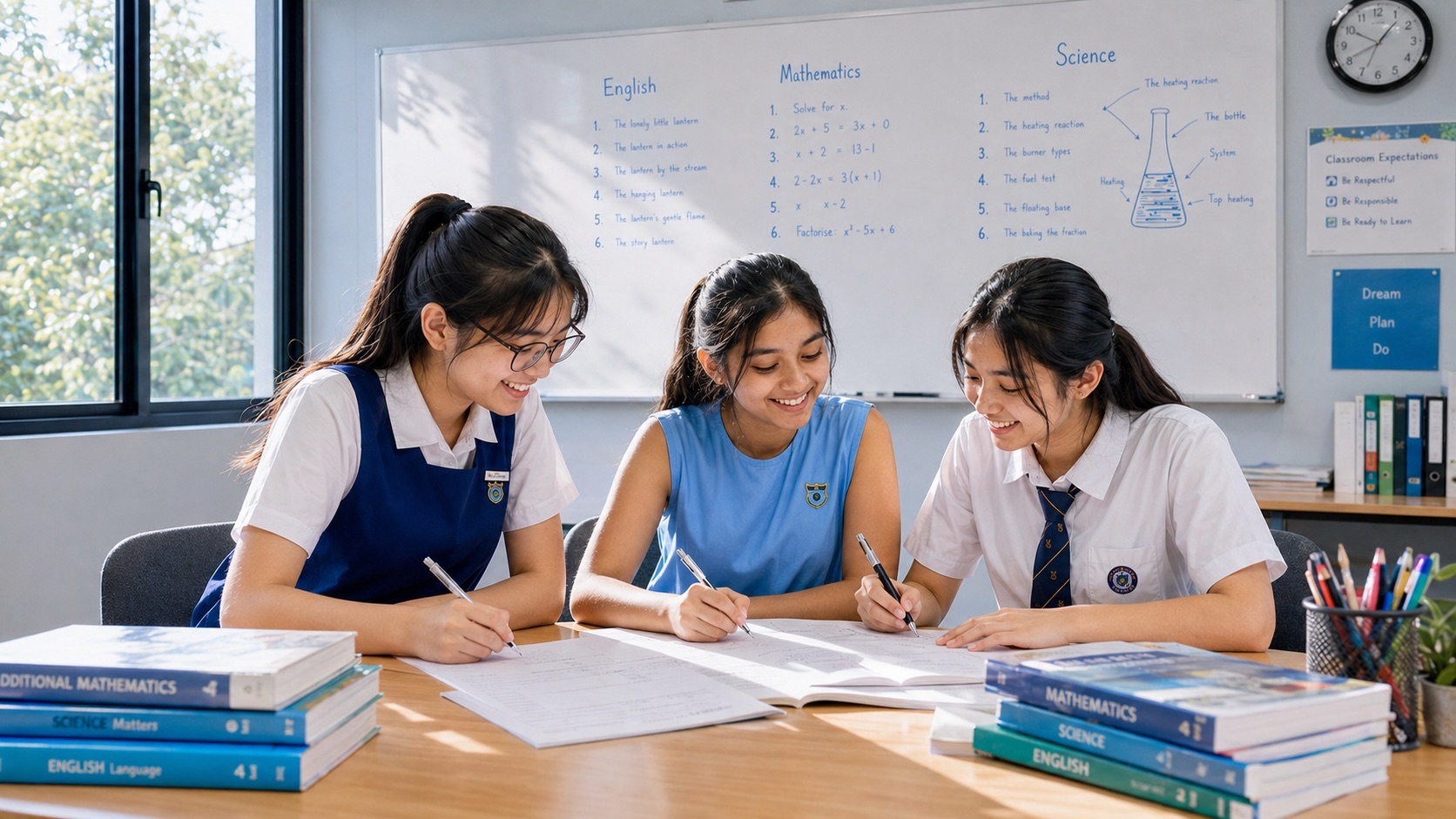
How do we teach civilisation without turning it into a pile of dates, slogans or disconnected facts? A useful answer begins with critical thinking: students need to learn how to distinguish claims from evidence, evidence from interpretation, correlation from cause, confidence from certainty, and disagreement from error. Searches for “how to teach critical thinking”, “critical thinking activities for students”, “evidence-based reasoning”, “independent thinking” and “critical thinking lesson plans” all point toward the same educational need. A civilisation survives intellectually when its people can examine what they are told, test it against reality and revise their judgment when stronger evidence appears.
This article is part of eduKateSG’s How to Teach Civilisation lane. Its job is not to compete with the site’s existing explanations of what civilisation is, how civilisation works, or the dedicated owner How Education Works | Critical Thinking Education. Instead, it converts those systems into a teachable sequence: what students should notice, what teachers should model, how lessons should be structured, where reasoning usually fails, how to diagnose those failures and how to transfer good judgment into science, history, language, mathematics, technology, media and ordinary life.
The emphasis matters because analytical thinking remains a major skill in contemporary work and civic life. The World Economic Forum’s Future of Jobs 2025 skills outlook identifies analytical thinking as a leading core skill, while technological literacy, creative thinking, resilience and lifelong learning also remain important. The educational implication is not that schools should chase every labour-market trend. It is that students should leave school able to inspect a problem, ask what is known, identify what is missing, compare explanations and make a reasoned decision rather than merely repeat a conclusion.
1. The Teaching Goal: Build Judgment, Not Suspicion
Critical thinking is sometimes taught badly because it is mistaken for permanent doubt. A student who rejects everything is not necessarily thinking critically. Good judgment requires a more demanding discipline: believe strongly when evidence is strong, believe cautiously when evidence is incomplete, suspend judgment when the information is insufficient, and change position when a better explanation accounts for more of the facts. The goal is calibrated confidence.
That distinction is essential when teaching civilisation. Human systems are complicated. Food prices can rise because of harvest failure, energy costs, exchange rates, transport bottlenecks, demand, policy or several causes operating together. A city can become safer because of infrastructure, law, social trust, public health, economic opportunity, design, technology and demographic change. Students should learn to resist single-cause stories when the system is multi-causal.
At eduKateSG, this connects directly to the wider knowledge estate. How Intelligence Works gives students a route into reasoning and cognition; How Science Works gives them a route into evidence, testing and revision; How English Works helps them express distinctions precisely; and the Vocabulary Learning Hub supplies the language needed to name relationships such as cause, constraint, trend, exception, inference and trade-off.
2. Start With the Smallest Unit: Claim, Evidence, Reasoning
A reliable teaching sequence starts with three boxes: claim, evidence and reasoning. The claim is what someone wants us to accept. The evidence is the information offered in support. The reasoning explains why that evidence should move us toward the claim. Students often merge all three into one sentence, which makes it hard to inspect the logic.
Give students short examples before asking them to analyse civilisation-scale problems. “The school canteen should open earlier because many students arrive before 7.30 a.m.” contains a claim and a reason, but it does not yet contain strong evidence. “In a one-week count, 38 percent of students entered the canteen area before 7.30 a.m.” is evidence, but by itself it does not prove an earlier opening is worth the staffing cost. The missing work is reasoning: what problem would earlier opening solve, for whom, at what cost, with what alternatives?
Once students can separate these units, move to larger questions: Why do cities need water reserves? Why do societies maintain libraries and archives? Why are power grids built with redundancy? Why do governments collect statistics? Why do scientific journals use peer review? The aim is not to hand students a list of approved answers. The aim is to make the reasoning architecture visible.
3. Teach Students to Ask “What Would Change My Mind?”
One of the most powerful classroom questions is also one of the simplest: What evidence would change your mind? If the answer is “nothing”, the student is not yet reasoning about an empirical claim; the student is protecting a position. This question teaches intellectual reversibility. It asks learners to imagine conditions under which a belief should be updated.
Use low-stakes topics first. If a student believes a particular study method is effective, ask what evidence would weaken that belief. If a student believes a public transport route is overcrowded, ask what data would strengthen or weaken the claim. If a student believes a historical policy caused a particular outcome, ask what counterfactual evidence or comparison would matter. Over time, students learn that changing one’s mind can be a sign of stronger reasoning rather than weakness.
The habit also protects classrooms from becoming debate theatres where confidence is rewarded more than accuracy. Students should be praised for identifying an uncertainty, correcting an error, narrowing a claim, or replacing a weak source. The classroom norm becomes: we are not here to win every argument; we are here to improve the model.
4. Observation Before Explanation
Students often jump from seeing something to explaining it. Teach a deliberate pause. First describe what can be observed. Then propose explanations. Then ask what evidence could discriminate between those explanations. This sequence is central to science, journalism, historical reasoning, diagnosis, engineering and everyday problem solving.
Suppose a graph shows a sudden fall in electricity demand. Observation: demand fell sharply during a particular period. Possible explanations: weather changed, industrial activity fell, a major outage occurred, pricing changed, a public holiday reduced activity, or measurement failed. Students should not be allowed to choose a favourite explanation merely because it sounds plausible. They should list alternatives and identify evidence that would help distinguish them.
This lesson connects naturally to critical infrastructure. Civilisation-scale systems produce patterns, but patterns are not self-explanatory. Critical thinking begins when learners understand that the same observation can be compatible with several mechanisms.
5. Correlation, Cause and Mechanism
A civilisation curriculum should repeatedly return to the difference between correlation and causation. Two things moving together may be causally connected, connected through a third factor, or simply coincidental. Students need practice identifying plausible mechanisms rather than assuming that a chart automatically tells a causal story.
Teach a four-question causal check: Did the proposed cause occur before the effect? Is there a plausible mechanism connecting them? Could another factor produce both? What comparison, experiment, natural experiment or historical evidence would increase confidence? These questions are simple enough for younger students and deep enough for advanced learners.
Mechanism matters because civilisation is built from mechanisms. Markets coordinate through prices and contracts. Public health uses surveillance, prevention and treatment. Infrastructure uses standards, maintenance and redundancy. Education uses instruction, practice, feedback and assessment. Archives preserve records across time. A student who can describe mechanisms is less vulnerable to shallow stories that name outcomes without explaining how they arise.
6. Evidence Is Not One Thing
Teach students that evidence comes in different forms and that different questions require different kinds of evidence. A controlled experiment may be powerful for testing one intervention but impossible for reconstructing an ancient event. Administrative records can reveal population patterns but may omit unrecorded activity. Interviews can reveal experience but may not establish prevalence. Satellite data can show environmental change but may require interpretation. A single anecdote can expose a possibility without telling us how common it is.
A useful classroom matrix has two axes: relevance and reliability. Evidence can be reliable but irrelevant to the claim. It can be relevant but too weak to carry the conclusion. Students should learn to ask who collected the information, how it was measured, whether the sample matches the population, what definitions were used, what incentives might distort reporting and whether independent sources converge.
This connects directly to eduKateSG’s How Media Literacy Works owner. Media literacy is not a separate subject from critical thinking. It is critical thinking applied to information environments in which sources, platforms, images, algorithms, institutions and audiences all shape what people see.
7. Source Evaluation Without the “Good Site / Bad Site” Shortcut
Young learners are often given source-checking rules that are too blunt: government sites are reliable, social media is unreliable, Wikipedia is bad, academic papers are good. Real information literacy is more precise. A trustworthy institution can publish an outdated page. A social-media post can contain a primary-source video. A journal article can be later corrected. A company may be the best source for its own product specifications but not for an independent comparison of competing products.
Teach source evaluation as a question of fit. Who is the source? What are they in a position to know? What is the claim? What evidence do they provide? Is the information current? Can the key details be checked elsewhere? Are conflicts of interest disclosed? Does the source distinguish data from interpretation?
The aim is not cynicism. It is disciplined trust. Civilisation depends on institutions that allow people to rely on knowledge they did not personally produce: laboratories, standards bodies, statistical agencies, libraries, universities, courts, professional associations, archives, newsrooms and technical organisations. Students should learn both why such institutions matter and why their claims still require context.
8. Teach Definitions as Tools, Not Decorations
Many weak arguments begin with vague words. “Fair”, “safe”, “successful”, “efficient”, “sustainable”, “free”, “advanced” and “harmful” sound meaningful until two people use them differently. Teaching civilisation therefore requires explicit work on definitions. Ask students: What does this word mean in this problem? How would we measure it? What cases are included? What cases are excluded?
This is where vocabulary becomes reasoning infrastructure. The Vocabulary Learning Hub is not merely a bank of difficult words; it can be used to help students distinguish concepts precisely. A learner who understands the difference between efficiency and resilience, equality and equity, hazard and risk, law and policy, evidence and proof, probability and certainty, can think with finer resolution.
A useful exercise is the “definition stress test”. Give a proposed definition and ask students to find an edge case that breaks it. Then revise the definition. This teaches that definitions are often engineered for purpose and that good conceptual boundaries reduce confusion.
9. The Ladder of Inference
Students frequently move from data to interpretation to judgment so quickly that they cannot see the steps. Make the ladder visible. At the bottom are observations. Above them are selected facts, interpretations, assumptions, conclusions and actions. In a disagreement, two students may share the same observation but select different details or carry different assumptions into the interpretation.
For example: a city closes a road to private cars on weekends. One student says the city is “anti-car”; another says it is “pro-community”. Both labels go beyond the observable action. Ask students to descend the ladder: What exactly changed? What official reasons were given? What outcomes were measured? Who gained convenience? Who lost it? What alternative explanation fits the same evidence?
The exercise improves writing as well as reasoning. Students learn to mark epistemic status with phrases such as “the data show”, “this suggests”, “one explanation is”, “a limitation is”, “we cannot yet conclude”, and “further evidence would be needed”. Precision in language becomes precision in thought.
10. Compare Competing Explanations
Civilisation is an ideal subject for comparative reasoning because most important outcomes have several plausible explanations. Instead of asking only “Why did this happen?”, ask students to generate at least three explanations and then compare them against the evidence. This prevents the first plausible story from becoming the final answer.
Use a table with columns for explanation, predicted evidence, supporting evidence, contradictory evidence and unresolved questions. The same method works for topics as different as migration, inflation, urban congestion, school performance, disease spread, innovation, water scarcity and institutional trust.
Students quickly discover that explanations can be partly true at the same time. This is a major step toward systems thinking. Causes can interact. A drought can reduce agricultural output; higher energy costs can raise fertiliser and transport prices; trade restrictions can reduce substitutes; household incomes can determine who absorbs the shock. The world does not owe us a single-variable explanation.
11. Use Counterexamples to Test Generalisations
Generalisation is necessary for learning, but every generalisation has a range. Teach students to search for counterexamples. If someone claims that “technology always makes work easier”, students can identify technologies that create new training burdens, security risks or forms of dependence. If someone says “cities grow because people want jobs”, students can test other drivers such as education, safety, family networks, housing and forced migration.
The purpose of a counterexample is not always to destroy the claim. Often it helps refine it. “Technology often increases productivity when institutions, skills and infrastructure can absorb it” is more defensible than “technology always makes work easier”. Students learn that stronger thinking often produces narrower but more accurate statements.
12. Separate Values From Empirical Claims
Civilisation education frequently mixes two kinds of questions. Empirical questions ask what is happening, why, how much and with what effects. Normative questions ask what ought to happen, what is fair, what should be prioritised and what trade-offs are acceptable. Both are legitimate, but they require different forms of reasoning.
Teach students to label them. “Does this policy reduce traffic?” is empirical. “Is reducing traffic worth restricting some forms of access?” is partly normative. Evidence can inform the second question, but evidence alone does not determine how values should be weighted. This separation allows disagreement to become more productive because students can identify whether they disagree about facts, predictions, definitions or values.
For civics-related topics, this also supports neutral education. A classroom can examine institutional design, legal processes, public data and documented policy effects without telling students which political choice to make. The educational responsibility is to make the reasoning visible enough that learners can form their own judgments.
13. Teach Probability and Uncertainty
Civilisations make decisions under uncertainty: weather forecasts, epidemic models, engineering safety margins, insurance, budgets, energy demand, military risk, investment and disaster planning all involve probabilities rather than guarantees. Students therefore need a working language of uncertainty.
Teach them to distinguish possible, plausible, probable and certain. Show why “there is a chance” is incomplete without magnitude. Explain confidence intervals conceptually before introducing formal statistics. Ask students to compare a one-in-two risk with a one-in-a-thousand risk and to consider consequences as well as probability. A small probability of a catastrophic event may justify preparation even when the event is unlikely.
This creates a bridge to mathematics and science. Civilisation thinking should not be a humanities-only exercise. Quantitative literacy helps students check whether verbal claims are compatible with the scale of the numbers.
14. Make Numbers Answerable
A common failure is number intimidation: students see a percentage, large figure or chart and assume it must be authoritative. Teach a five-question number check: What is the unit? What is the denominator? What time period is being compared? Is the change absolute or relative? What baseline makes the number meaningful?
If a risk “doubles”, ask from what to what. If a budget is “billions”, ask per person, per year or as a share of the relevant total. If a city’s population rises, ask whether the land area or boundaries changed. If a test score improves, ask whether the cohort, test difficulty or participation changed.
The goal is not to turn every lesson into statistics. It is to teach students that quantities need context. Good civilisation teaching joins words, mechanisms and numbers.
15. Use Three-Student Reasoning Rounds
Small-group teaching is especially effective when every student must make their reasoning inspectable. A simple three-student round uses rotating roles: one student states the claim and evidence; the second searches for alternative explanations or missing information; the third reconstructs the strongest version of the argument before the group revises it together.
Rotate roles so that no student becomes “the sceptic” or “the defender”. The intellectual identity being built is flexible: sometimes we propose, sometimes we test, sometimes we synthesise. This structure also prevents one confident speaker from controlling the lesson.
The teacher’s job is to ask questions that expose the reasoning process: “What is your evidence?”, “Which word in the claim is doing too much work?”, “What else could explain this?”, “What would you need to know next?”, “How strong is your confidence from zero to one hundred?”, “What would move that number?”
16. The Teacher Think-Aloud
Students need to hear expert uncertainty, not only expert answers. Model the process aloud. “This source is recent, but it is summarising another report, so I want the original.” “This graph shows a relationship, but I cannot yet infer cause.” “I expected one result, but the data point the other way, so I need to update.” “This term is ambiguous, so I am going to define how I am using it.”
Think-alouds make hidden cognition visible. They also correct a damaging misconception: that strong thinkers instantly know the answer. In reality, good reasoning often looks like slowing down, checking, re-reading, comparing and revising.
17. Design Lessons Around Real Questions
Critical thinking improves when the question matters enough to create genuine uncertainty. Instead of worksheets filled only with abstract fallacies, use real civilisation questions that have bounded evidence and age-appropriate complexity. Why do cities build drainage systems larger than average rainfall requires? Why do hospitals keep backup power? Why do countries hold strategic reserves? Why do libraries preserve old records? Why do standards exist for measurements and electrical plugs?
These questions are concrete enough to investigate and broad enough to reveal system design. They also connect naturally to eduKateSG’s growing Civilisation estate, including knowledge, education, libraries, archives and science, energy security and water security.
18. Teach Failure Analysis
Students learn a system more deeply when they study how it fails. Ask: What could break? What warning signs appear first? Which dependency becomes a bottleneck? Who notices? What backup exists? How quickly can the system recover? Failure analysis turns abstract structures into causal maps.
A public transport system can fail through vehicle shortage, signalling problems, power loss, labour constraints, overcrowding, extreme weather or communication breakdown. A food system can fail through crop loss, trade disruption, storage failure, transport blockage or affordability shock. A knowledge system can fail through censorship, poor archiving, low literacy, misinformation or loss of institutional trust.
The key pedagogical move is to distinguish failure mode from blame. Students should first understand the mechanism before assigning responsibility. That sequence reduces moral oversimplification and improves diagnosis.
19. Teach Repair, Not Only Critique
A civilisation curriculum that teaches students only to find flaws can produce sophisticated helplessness. After diagnosis, require repair. What intervention targets the mechanism? What resources would it require? What new risks might it create? How would we know whether it worked? What happens if the intervention fails?
This is where critical thinking becomes constructive. Students move from “this is wrong” to “here is the failure mechanism, here is a repair hypothesis, here are the trade-offs, and here is how we would evaluate it.” That is much closer to the reasoning required in engineering, public administration, business, medicine, education and community life.
20. Build a Research Routine
Give students a repeatable research protocol. First, define the question. Second, identify what kind of evidence would answer it. Third, search for primary and high-quality secondary sources. Fourth, record source details and dates. Fifth, extract claims separately from quotations and data. Sixth, compare sources. Seventh, note contradictions and uncertainties. Eighth, write a provisional conclusion. Ninth, test it against a counterexample. Tenth, revise.
The word “provisional” is important. Civilisation knowledge is often updated. New data appear; definitions change; technologies alter constraints; historical archives are digitised; scientific consensus becomes stronger or weaker. Students should learn that a responsible conclusion is strong enough to act on and humble enough to update.
The Knowledge Commons article provides a useful companion for explaining why societies need systems to preserve, validate and transmit knowledge beyond a single classroom or generation.
21. Read Charts Like Arguments
Charts persuade because they look precise. Teach students that a chart is an argument made with selections: which variable, which time span, which scale, which categories, which denominator and which visual form. None of this means charts are deceptive by default. It means chart literacy is part of reasoning.
Use the same data with two different axes or time windows and ask how interpretation changes. Show how a truncated axis can exaggerate a small difference. Compare totals with per-capita values. Compare nominal with real values when appropriate. Ask what data are missing from the visual.
Students should eventually be able to reconstruct a chart in words: “This figure compares X and Y over this period, using this unit, and the main pattern is Z; however, it does not by itself establish cause.” That sentence frame is transferable across disciplines.
22. Detect False Precision
Civilisation problems often contain estimates. A forecast saying 63.7 percent can appear more certain than a forecast saying “about two thirds”, even when the underlying assumptions are rough. Teach students to ask whether the precision of the number matches the precision of the measurement and model.
This is especially important with projections. Population forecasts, economic growth estimates, climate scenarios, traffic models and technology adoption curves depend on assumptions. The correct response is neither blind faith nor blanket dismissal. Students should identify the model inputs, scenario range and sensitivity to assumptions.
23. Teach Argument Mapping
An argument map makes reasoning spatial. Put the main claim at the top. Under it place supporting reasons. Under each reason place evidence. Add objections, rebuttals, assumptions and unknowns. Students can then see whether a conclusion rests on one fragile branch or several independent lines of support.
Argument mapping works particularly well for complex civilisation questions because it reveals hidden dependence. If three reasons all rely on the same disputed statistic, the argument is not as diversified as it first appears. If several independent data sources converge, confidence can increase.
24. Use the “Best Case for the Other View” Rule
Before criticising a position, require students to state it in a form that a reasonable supporter would recognise. This is sometimes called steelmanning. It reduces straw-man arguments and teaches interpretive fairness. Students learn that disagreement is more valuable when they engage with the strongest available case rather than the easiest version to defeat.
This rule is especially useful in topics involving trade-offs. A proposal may improve efficiency while reducing redundancy; increase privacy while reducing convenience; reduce cost while increasing waiting time. Strong reasoning acknowledges the benefit that motivates the alternative before analysing its costs.
25. Assess the Process, Not Just the Final Answer
If grades reward only the final conclusion, students learn to hide uncertainty and reverse-engineer what the teacher wants. Instead, assess the reasoning process. Give credit for identifying missing evidence, revising after feedback, finding a counterexample, distinguishing fact from value, using a relevant source and stating confidence appropriately.
A simple rubric can include six dimensions: claim clarity, evidence quality, source fit, causal reasoning, consideration of alternatives and calibration of uncertainty. A student can therefore improve even when the final answer remains incomplete.
This assessment philosophy aligns with the broader educational idea that competence is built through diagnosis, practice, feedback and transfer rather than one-off performance.
26. Common Failure Modes and How to Repair Them
- Authority shortcut: “An expert said it, therefore it is true.” Repair by asking what expertise applies, what evidence is presented and whether independent sources converge.
- Popularity shortcut: “Many people believe it.” Repair by separating social prevalence from evidence.
- Anecdote dominance: one vivid story outweighs broader data. Repair by asking what the story establishes and what it cannot establish.
- Single-cause thinking: a complex outcome is attributed to one factor. Repair by generating alternative mechanisms.
- Presentism: today’s categories are projected uncritically onto the past. Repair through historical context and contemporary sources.
- Metric fixation: what can be measured becomes what matters. Repair by asking which important outcomes are poorly captured by the metric.
- False balance: two claims are treated as equally supported because two sides exist. Repair by comparing the quantity and quality of evidence, not the symmetry of opinions.
- Overconfidence: certainty exceeds the evidence. Repair by requiring a confidence level and the evidence that would change it.
27. A 60-Minute Critical Thinking Lesson
Minutes 0–8: Hook. Present a surprising but checkable claim about a familiar system. Do not ask students whether they “agree”. Ask what they would need to know before deciding.
Minutes 8–18: Decompose. Students identify claim, evidence, reasoning, assumptions and definitions. The teacher models one example, then students do one independently.
Minutes 18–32: Source comparison. Give two or three short sources with different strengths. Students rank them for specific uses, not by a universal good/bad label.
Minutes 32–44: Competing explanations. Students generate at least three mechanisms and list evidence that would distinguish them.
Minutes 44–54: Revision. New evidence is introduced. Students must update their conclusion or explain why it remains stable.
Minutes 54–60: Exit ticket. One sentence each: what I think, how confident I am, strongest evidence, biggest uncertainty, and what I would investigate next.
28. A 12-Week Progression
Weeks 1–2 focus on claim, evidence and reasoning. Weeks 3–4 add source evaluation and definitions. Weeks 5–6 introduce correlation, causation and competing explanations. Weeks 7–8 add probability, quantitative context and chart reading. Weeks 9–10 move into argument mapping, counterexamples and values-versus-facts. Weeks 11–12 require an independent civilisation investigation that includes research, analysis, a proposed repair and reflection on uncertainty.
The progression should revisit earlier skills rather than teach each once. Critical thinking is cumulative. A student who can evaluate sources but cannot define the claim precisely will still reason poorly. A student who understands cause but ignores base rates can still be misled. The system works when the parts are integrated.
29. Transfer Across Subjects
English: distinguish assertion from evidence, analyse rhetorical choices, qualify claims and write precise arguments. Mathematics: inspect assumptions, reason from definitions, test counterexamples and interpret quantitative evidence. Science: separate observation from explanation, evaluate experimental design and revise models. History: compare sources, contextualise claims and weigh competing causal accounts. Geography: connect spatial patterns with systems and constraints. Technology: analyse trade-offs, failure modes and unintended consequences.
The best sign of success is not that students perform well on a “critical thinking” worksheet. It is that they spontaneously use these habits when the label disappears.
30. Transfer Into Ordinary Life
Civilisation is experienced through ordinary decisions: choosing a route, reading a health claim, comparing a subscription, interpreting an advertisement, deciding whether a viral video is authentic, understanding a bill, evaluating a product review, following a weather warning, or deciding whether a statistic is relevant to one’s own situation. Teaching should deliberately bridge classroom reasoning into these everyday contexts.
Ask students to keep a weekly “reasoning log”: one claim they encountered, how they checked it, what evidence mattered, what remained uncertain and whether they changed their mind. The log turns critical thinking from a lesson topic into a habit.
31. Why Critical Thinking Is a Civilisation Skill
Civilisation allows people to coordinate beyond the limits of personal experience. We drink water tested by people we never meet, travel on structures designed by engineers we do not know, use medicines developed through research networks, rely on records maintained across generations, and make plans based on statistics collected from millions of people. This scale is possible because institutions create methods for producing and checking knowledge.
Critical thinking therefore has two complementary tasks. It protects the individual from weak claims, and it helps the individual participate responsibly in systems of shared knowledge. The mature learner is neither gullible nor reflexively distrustful. The learner asks what process produced the claim, how transparent that process is, what evidence supports it, what uncertainty remains and what better information would look like.
32. Questions Teachers Should Ask More Often
- What exactly is the claim?
- Which word needs a definition?
- What evidence would be relevant?
- How reliable is that evidence for this purpose?
- What else could explain the same observation?
- Are we confusing correlation with cause?
- What is the mechanism?
- What assumption is carrying the argument?
- What would change your mind?
- What is your confidence level, and why?
- What is the best case for the alternative explanation?
- What is missing from the data?
- What happens if our proposed repair fails?
- How would we know whether the intervention worked?
- Can this reasoning transfer to a different system?
33. Questions Students Should Learn to Ask Themselves
A strong civilisation student gradually internalises the teacher’s questions. Before accepting a claim: What do I know? How do I know it? What am I assuming? Am I using a precise definition? Is there a number I should contextualise? What alternative explanation fits? Am I more confident than the evidence allows? Is my conclusion about facts, values or both? What new information would make me revise?
When these questions become automatic, the classroom has achieved something more durable than content recall. It has helped build a learner capable of navigating unfamiliar problems.
34. Connection to the Wider eduKateSG Civilisation Estate
This teaching lane is designed as a routing layer across eduKateSG rather than a replacement for specialist owners. Begin with What Is Civilisation for the broad system. Use Learn How Civilisation Works for the mechanism map. Move to Critical Thinking Education for the dedicated capability owner, How Media Literacy Works for information environments, How Science Works for evidence and revision, and How Intelligence Works for cognition.
For system examples, use the new Civilisation lanes on food security, public health, supply-chain resilience, and technology, AI, digital systems and media. Each gives students a domain in which to practise the same reasoning architecture.
35. FAQ: How to Teach Civilisation Through Critical Thinking
What age should critical thinking begin?
As early as students can explain why they believe something. Younger learners can distinguish observation from guess, give reasons, compare sources and identify what would count as evidence. Older students can add causal inference, probability, statistics, modelling, argument maps and research methods.
Should teachers avoid controversial topics?
Not necessarily, but the topic must be age-appropriate, evidence-rich and structured so that students learn the reasoning process rather than being pushed toward a teacher’s preferred political or moral conclusion. Neutral comparison, precise sourcing and explicit separation of empirical and normative questions are essential.
Is critical thinking the same as debating?
No. Debate can practise reasoning, but it can also reward speed, confidence and rhetorical victory. Critical thinking includes research, uncertainty, revision, source evaluation, quantitative reasoning and the willingness to conclude that the evidence is not yet sufficient.
Can critical thinking be taught directly?
Yes, but it transfers best when explicit reasoning tools are repeatedly used inside real subject knowledge. Students need both general habits and domain knowledge. A learner cannot reason well about energy systems, epidemics or monetary policy without understanding enough of the underlying system to recognise plausible mechanisms.
How do we know students are improving?
Look for better questions, more precise claims, stronger source selection, more attention to definitions, wider consideration of alternatives, improved calibration of confidence, and greater willingness to revise. These behaviours are observable even before formal test scores change.
36. The Standard We Are Trying to Build
The standard is not a student who can recite the names of logical fallacies. It is a student who can enter an unfamiliar problem and build a responsible path through it: define, observe, source, compare, quantify, model, test, revise and explain. That student can learn new domains because the learner has methods for deciding what deserves belief.
Civilisations accumulate knowledge across generations. Teaching critical thinking helps the next generation inherit that knowledge without inheriting every error unchanged. It gives students a way to respect evidence without worshipping authority, question claims without collapsing into cynicism, and make decisions without pretending uncertainty has disappeared.
That is why critical thinking belongs near the centre of How to Teach Civilisation. We are not merely teaching students what the world contains. We are teaching them how to inspect the explanations by which the world becomes intelligible—and how to improve those explanations when reality refuses to cooperate.