
Learn and Understand Civilisation must include family, childhood, parenting, ageing, caregiving, disability, dependency and the life course because every civilisation is renewed one generation at a time. Search topics such as child development, family, parenting, healthy ageing, caregiving, elder care, early childhood development and long-term care appear to describe different stages of life. In reality, they form one civilisation system: human beings begin dependent, develop capability, support others, age, and may become dependent again.
The World Health Organization’s life-course approach connects pregnancy, infancy, childhood, adolescence, adulthood, healthy ageing and a dignified end of life. WHO emphasises that health and capability are shaped across time and across generations. UNICEF’s Care for Child Development framework likewise connects early learning with responsive caregiving. The civilisation lesson is larger than health: societies need ways to develop human capability and to care for people when capability is limited, interrupted or declining.
This guide folds into existing eduKateSG owners rather than replacing them. Read How Culture Works | Kinship for how societies define family obligations, How Socialisation Works for how family, school, peers, media and institutions teach belonging, and Education, Care and Dependency for the capability required to care across the life course.
Civilisation begins with dependency
A newborn cannot survive independently. Food, warmth, protection, language, emotional regulation and learning all arrive through other people. This makes care one of civilisation’s oldest infrastructures. Before a child can contribute to a society, the society must invest years of attention, resources and teaching.
This investment is easy to overlook because much care happens inside households and is unpaid. Yet unpaid care supports the formal economy. Workers can work because someone cares for children, older adults, people with disabilities or family members who are ill. When care arrangements fail, the effects spread into employment, schooling, healthcare and household finances.
Family is a care network and a learning network
Families differ across cultures and legal systems, but they commonly perform several civilisation functions: care, socialisation, emotional support, resource sharing, identity formation and transmission of knowledge. A child usually learns language, routines and social expectations first through close relationships.
That is why the family can be understood as the first education carrier. eduKateSG’s The Family as the First Education Carrier connects home life to the later learning system. School does not begin from zero. It inherits a child who already has habits, language, expectations and experiences.
Early childhood is a high-leverage period
Early childhood combines rapid physical, cognitive, language and social development. Responsive caregiving, nutrition, health, play and early learning interact rather than operating as separate services. UNICEF’s Care for Child Development approach reflects this by coaching caregivers to use play and communication to support motor, language and social-emotional development.
The important civilisation concept is cumulative development. Later capability depends partly on earlier foundations. Vocabulary supports reading. Reading supports subject learning. Emotional regulation supports classroom participation. Health supports attendance. Early disadvantages can therefore compound unless systems identify and repair them.
Childhood requires protection as well as opportunity
Children need opportunities to learn, play and participate, but they also need protection from abuse, neglect, exploitation and unsafe environments. Child protection systems therefore combine families, schools, healthcare, social services, law enforcement, courts and community organisations.
One eduKateSG Singapore specimen is The Child Protection Layer. The local institutional details differ by country, but the systems mechanism is transferable: risk must be detected, assessed, acted on and followed through.
Adolescence is a transition in responsibility
Adolescence is not simply “older childhood”. It is a transition toward increasing independence, decision-making and adult roles. Education, peer relationships, identity, health behaviours and future pathways all become more complex.
Civilisations therefore build staged transitions: school years, examinations, age thresholds, licences, employment pathways and legal responsibilities. These transitions attempt to match increasing freedom with increasing capability and accountability.
Adulthood is where care flows in multiple directions
Adults may care for children, partners, parents and community members while also participating in paid work. This creates the “sandwich” problem for some households: people support younger and older generations simultaneously.
Care therefore interacts with labour markets. Leave policies, flexible work, childcare, eldercare, healthcare access and proximity all influence whether adults can combine employment with family responsibility. Civilisation design is partly the design of these interfaces.
Ageing changes the balance between independence and support
Ageing does not mean automatic dependency. Many older adults remain healthy, active and economically or socially productive. WHO’s healthy-ageing work emphasises functional ability and the interaction between individual capacity and environment rather than reducing ageing to disease.
However, population ageing changes aggregate demand for healthcare, accessible housing, mobility, social connection and long-term care. eduKateSG’s The Ageing Civilisation shows how housing, healthcare, transport, work and care must adapt together.
Long-term care is civilisation infrastructure
Some people need sustained help with daily activities because of age, disability, illness or injury. Long-term care can involve families, home-care workers, community services, residential facilities, healthcare systems and public financing.
WHO has repeatedly noted that families remain central but cannot always carry the entire long-term-care burden alone. This is a systems issue: caregivers need knowledge, time, respite, income protection and access to professional services. A civilisation that depends entirely on invisible family labour can become fragile as household size, work patterns and demography change.
Disability reveals whether systems are designed for human variation
Human bodies and minds vary. Disability becomes more or less limiting depending on the environment. Stairs create a barrier where a ramp or lift can restore access. Text-only information creates barriers for some readers where alternate formats can restore participation.
This is why accessibility is not merely a medical question. It is a design question. The eduKateSG article The Disability Inclusion Layer connects accessibility, education, employment, independent living and care across a lifetime.
Care work requires skill
Care is sometimes described as if goodwill were sufficient. Good intentions matter, but complex care also requires knowledge. Medication schedules, dementia care, mobility support, nutrition, safeguarding, communication and emergency recognition can require training.
This is another civilisation pattern: important work becomes safer when knowledge is teachable, roles are clear, records are maintained and support is available.
A worked example: one child entering school
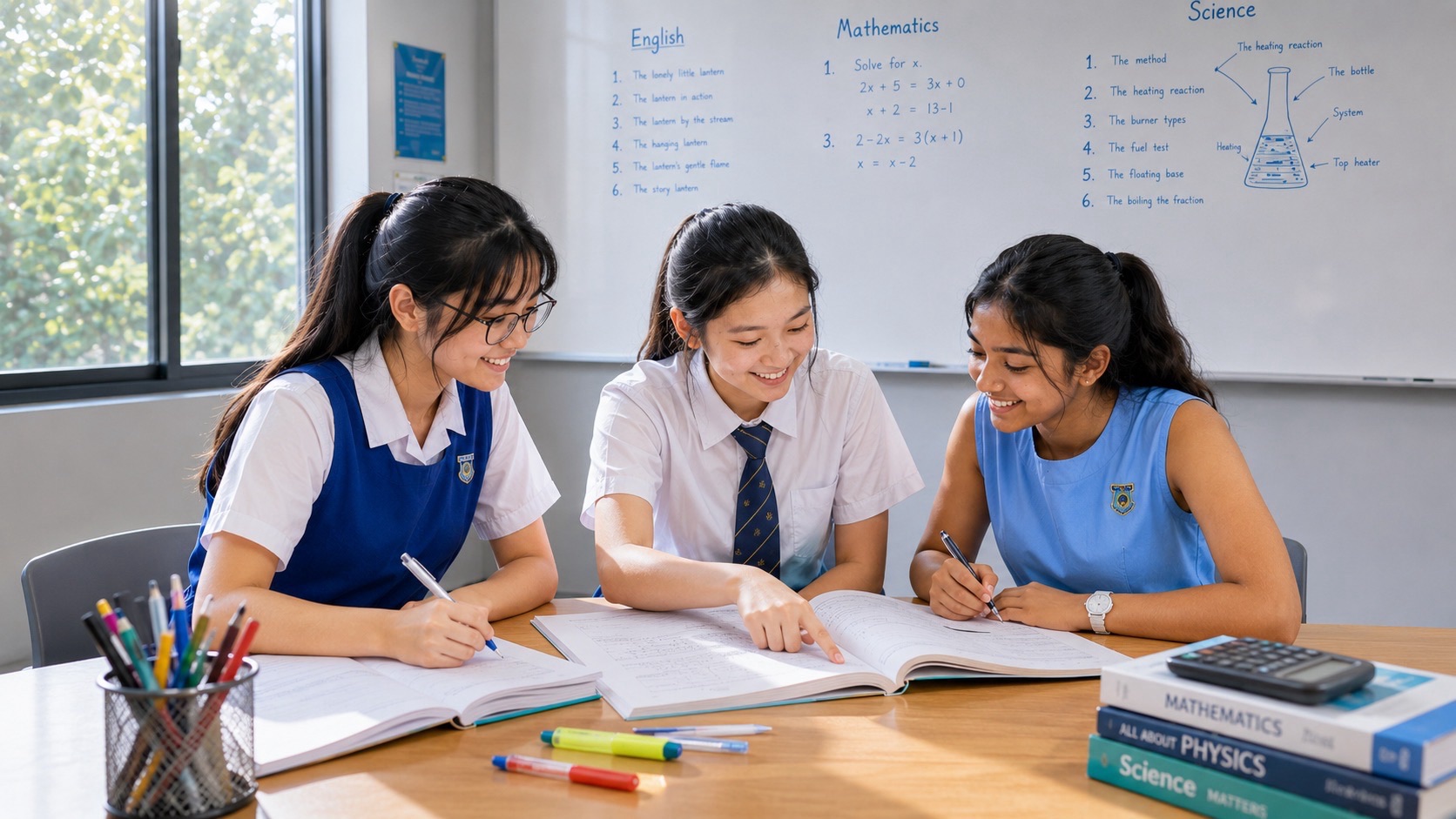
When a child starts school, the classroom inherits years of development. Language exposure, sleep, nutrition, health, emotional security, play, early reading and family routines all influence how easily the child can participate.
School then adds new layers: subject knowledge, peer relationships, structured time, assessment and wider socialisation. The transition illustrates why education cannot be separated completely from family and health systems.
A worked example: an older person living independently
Independent ageing may depend on accessible housing, nearby food, safe walking routes, public transport, primary care, medication management, social connection and emergency support. None is sufficient alone.
The person appears independent because a large interdependent system makes independence possible. This is the same civilisation principle seen in infrastructure and economics: autonomy often rests on dependable shared systems.
Ten words that unlock the life course
- Life course: the sequence of stages and transitions across a human lifetime.
- Dependency: reliance on others for essential support or capability.
- Caregiving: providing practical, emotional or health-related support.
- Development: growth of physical, cognitive, language and social capability.
- Socialisation: learning the norms, roles and behaviours of social life.
- Accessibility: design that enables people with differing abilities to participate.
- Long-term care: continuing support for people with sustained care needs.
- Healthy ageing: maintaining functional ability and well-being in older age.
- Intergenerational: occurring between or across generations.
- Respite: temporary relief for a regular caregiver.
Five questions for understanding care in civilisation
- Who depends on whom at this life stage?
- What capability is still developing, temporarily lost or permanently limited?
- Which work is done by families, communities, professionals and institutions?
- What happens when the primary caregiver is unavailable?
- How can environments increase independence rather than create unnecessary dependency?
The deeper civilisation principle
Civilisation is not only the coordination of productive adults. It is the organisation of entire lives. Every generation begins dependent, develops capability, contributes in different ways, cares for others and eventually passes knowledge and responsibility onward. Care is therefore not outside civilisation’s productive system. It is one of the conditions that makes the productive system possible.