
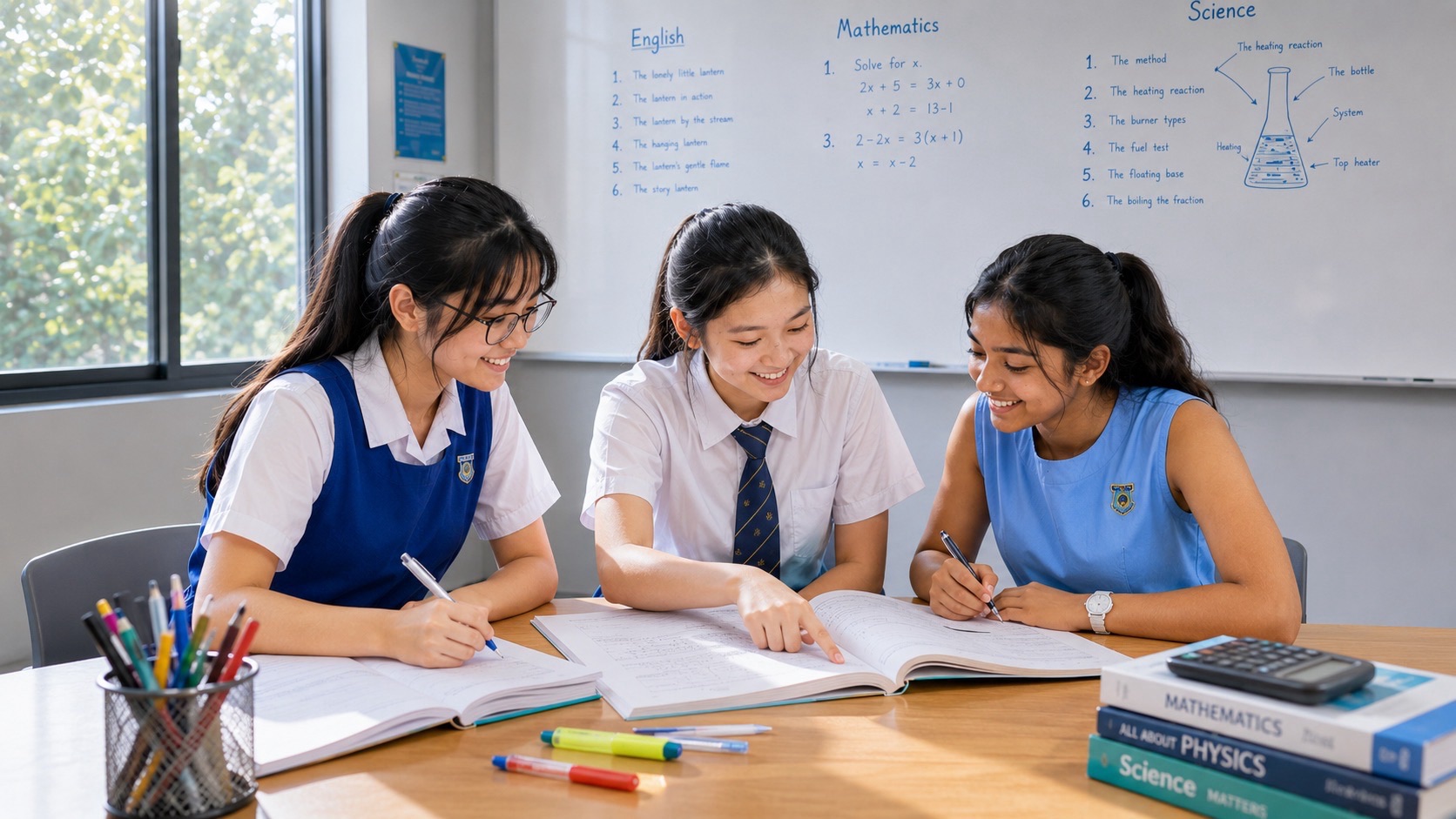
Top 100 SEC (Singapore Education Vocabulary) Vocabulary List | Composition Theme: Creativity, Imagination and Self-Expression
Here are 100 SEC-ready vocabulary words for the composition theme Creativity, Imagination and Self-Expression. This eduKate-curated list is for Singapore secondary English composition practice rather than an official SEAB prescribed word list. Start with the 100 words immediately, then move into meanings, composition use and transfer work.
- Creativity
- Imagination
- Originality
- Expression
- Self-expression
- Inspiration
- Idea
- Concept
- Vision
- Curiosity
- Observation
- Experimentation
- Exploration
- Innovation
- Invention
- Design
- Craft
- Art
- Music
- Writing
- Storytelling
- Performance
- Theatre
- Dance
- Photography
- Illustration
- Composition
- Style
- Voice
- Tone
- Mood
- Theme
- Symbol
- Metaphor
- Imagery
- Description
- Character
- Plot
- Setting
- Perspective
- Point of view
- Audience
- Communication
- Meaning
- Interpretation
- Ambiguity
- Nuance
- Emotion
- Passion
- Motivation
- Discipline
- Practice
- Technique
- Skill
- Talent
- Mastery
- Feedback
- Revision
- Editing
- Draft
- Process
- Iteration
- Risk-taking
- Courage
- Vulnerability
- Authenticity
- Individuality
- Identity
- Confidence
- Self-belief
- Collaboration
- Community
- Influence
- Tradition
- Heritage
- Culture
- Convention
- Rule
- Constraint
- Limitation
- Freedom
- Play
- Spontaneity
- Improvisation
- Experiment
- Failure
- Mistake
- Breakthrough
- Discovery
- Problem-solving
- Resourcefulness
- Adaptation
- Perspective shift
- Association
- Connection
- Reframing
- Detail
- Contrast
- Balance
- Resonance
Top 100 SEC Vocabulary Words: Creativity, Imagination and Self-Expression — Meanings and Composition Use
| Word / Phrase | Meaning | Composition Use |
|---|---|---|
| Creativity | the ability to generate original and useful ideas | Use Creativity when the paragraph needs to express the ability to generate original and useful ideas. Support the term with a clear example, process or consequence. |
| Imagination | the ability to form possibilities, images or ideas beyond immediate reality | Use Imagination when the paragraph needs to express the ability to form possibilities, images or ideas beyond immediate reality. Support the term with a clear example, process or consequence. |
| Originality | the quality of being fresh, distinctive or not merely copied | Use Originality when the paragraph needs to express the quality of being fresh, distinctive or not merely copied. Support the term with a clear example, process or consequence. |
| Expression | the act of communicating thoughts, feelings or identity | Use Expression when the paragraph needs to express the act of communicating thoughts, feelings or identity. Support the term with a clear example, process or consequence. |
| Self-expression | communication that reveals personal thoughts, feelings or identity | Use Self-expression when the paragraph needs to express communication that reveals personal thoughts, feelings or identity. Support the term with a clear example, process or consequence. |
| Inspiration | an idea, experience or influence that stimulates creative action | Use Inspiration when the paragraph needs to express an idea, experience or influence that stimulates creative action. Support the term with a clear example, process or consequence. |
| Idea | a thought or concept that can guide creation or problem-solving | Use Idea when the paragraph needs to express a thought or concept that can guide creation or problem-solving. Support the term with a clear example, process or consequence. |
| Concept | an organising idea that gives a work or design coherence | Use Concept when the paragraph needs to express an organising idea that gives a work or design coherence. Support the term with a clear example, process or consequence. |
| Vision | a clear idea of a desired creative direction | Use Vision when the paragraph needs to express a clear idea of a desired creative direction. Support the term with a clear example, process or consequence. |
| Curiosity | a desire to know, understand or explore | Use Curiosity when the paragraph needs to express a desire to know, understand or explore. Support the term with a clear example, process or consequence. |
| Observation | careful attention to details in people, places or events | Use Observation when the paragraph needs to express careful attention to details in people, places or events. Support the term with a clear example, process or consequence. |
| Experimentation | trying different methods or possibilities in order to learn | Use Experimentation when the paragraph needs to express trying different methods or possibilities in order to learn. Support the term with a clear example, process or consequence. |
| Exploration | investigating unfamiliar ideas, forms or possibilities | Use Exploration when the paragraph needs to express investigating unfamiliar ideas, forms or possibilities. Support the term with a clear example, process or consequence. |
| Innovation | the development or use of a new and useful idea or method | Use Innovation when the paragraph needs to express the development or use of a new and useful idea or method. Support the term with a clear example, process or consequence. |
| Invention | a new device, process or creative solution produced through design | Use Invention when the paragraph needs to express a new device, process or creative solution produced through design. Support the term with a clear example, process or consequence. |
| Design | the planned creation of a product, system or experience | Use Design when the paragraph needs to express the planned creation of a product, system or experience. Support the term with a clear example, process or consequence. |
| Craft | skill developed through careful practice in making something | Use Craft when the paragraph needs to express skill developed through careful practice in making something. Support the term with a clear example, process or consequence. |
| Art | creative activity that communicates ideas, feeling or aesthetic experience | Use Art when the paragraph needs to express creative activity that communicates ideas, feeling or aesthetic experience. Support the term with a clear example, process or consequence. |
| Music | organised sound used for expression, communication or art | Use Music when the paragraph needs to express organised sound used for expression, communication or art. Support the term with a clear example, process or consequence. |
| Writing | the creation of meaning through written language | Use Writing when the paragraph needs to express the creation of meaning through written language. Support the term with a clear example, process or consequence. |
| Storytelling | the shaping of events and meaning into a narrative | Use Storytelling when the paragraph needs to express the shaping of events and meaning into a narrative. Support the term with a clear example, process or consequence. |
| Performance | the presentation of a creative work before an audience | Use Performance when the paragraph needs to express the presentation of a creative work before an audience. Support the term with a clear example, process or consequence. |
| Theatre | dramatic performance using actors, dialogue and staging | Use Theatre when the paragraph needs to express dramatic performance using actors, dialogue and staging. Support the term with a clear example, process or consequence. |
| Dance | artistic expression through organised movement | Use Dance when the paragraph needs to express artistic expression through organised movement. Support the term with a clear example, process or consequence. |
| Photography | the creation of images using cameras and visual composition | Use Photography when the paragraph needs to express the creation of images using cameras and visual composition. Support the term with a clear example, process or consequence. |
| Illustration | visual representation used to explain, decorate or express an idea | Use Illustration when the paragraph needs to express visual representation used to explain, decorate or express an idea. Support the term with a clear example, process or consequence. |
| Composition | the arrangement of parts into a coherent creative whole | Use Composition when the paragraph needs to express the arrangement of parts into a coherent creative whole. Support the term with a clear example, process or consequence. |
| Style | a distinctive way of creating or expressing something | Use Style when the paragraph needs to express a distinctive way of creating or expressing something. Support the term with a clear example, process or consequence. |
| Voice | the distinctive personality or manner expressed in a creative work | Use Voice when the paragraph needs to express the distinctive personality or manner expressed in a creative work. Support the term with a clear example, process or consequence. |
| Tone | the attitude or feeling conveyed through language or artistic choices | Use Tone when the paragraph needs to express the attitude or feeling conveyed through language or artistic choices. Support the term with a clear example, process or consequence. |
| Mood | the emotional atmosphere created for an audience | Use Mood when the paragraph needs to express the emotional atmosphere created for an audience. Support the term with a clear example, process or consequence. |
| Theme | a central idea explored through a creative work | Use Theme when the paragraph needs to express a central idea explored through a creative work. Support the term with a clear example, process or consequence. |
| Symbol | an object, image or action that represents a larger idea | Use Symbol when the paragraph needs to express an object, image or action that represents a larger idea. Support the term with a clear example, process or consequence. |
| Metaphor | a comparison that describes one thing in terms of another | Use Metaphor when the paragraph needs to express a comparison that describes one thing in terms of another. Support the term with a clear example, process or consequence. |
| Imagery | language or visual detail that creates sensory experience | Use Imagery when the paragraph needs to express language or visual detail that creates sensory experience. Support the term with a clear example, process or consequence. |
| Description | language that makes people, places or situations vivid | Use Description when the paragraph needs to express language that makes people, places or situations vivid. Support the term with a clear example, process or consequence. |
| Character | a person or figure represented in a story or performance | Use Character when the paragraph needs to express a person or figure represented in a story or performance. Support the term with a clear example, process or consequence. |
| Plot | the organised sequence of events in a story | Use Plot when the paragraph needs to express the organised sequence of events in a story. Support the term with a clear example, process or consequence. |
| Setting | the time, place and environment in which a story occurs | Use Setting when the paragraph needs to express the time, place and environment in which a story occurs. Support the term with a clear example, process or consequence. |
| Perspective | a way of seeing or interpreting an experience | Use Perspective when the paragraph needs to express a way of seeing or interpreting an experience. Support the term with a clear example, process or consequence. |
| Point of view | the position from which a story or idea is presented | Use Point of view when the paragraph needs to express the position from which a story or idea is presented. Support the term with a clear example, process or consequence. |
| Audience | the people for whom a creative work is produced | Use Audience when the paragraph needs to express the people for whom a creative work is produced. Support the term with a clear example, process or consequence. |
| Communication | the exchange of information, ideas or meaning | Use Communication when the paragraph needs to express the exchange of information, ideas or meaning. Support the term with a clear example, process or consequence. |
| Meaning | the significance communicated or interpreted in a creative work | Use Meaning when the paragraph needs to express the significance communicated or interpreted in a creative work. Support the term with a clear example, process or consequence. |
| Interpretation | the meaning an audience gives to a work or idea | Use Interpretation when the paragraph needs to express the meaning an audience gives to a work or idea. Support the term with a clear example, process or consequence. |
| Ambiguity | the quality of allowing more than one possible meaning | Use Ambiguity when the paragraph needs to express the quality of allowing more than one possible meaning. Support the term with a clear example, process or consequence. |
| Nuance | a small but important difference in meaning or expression | Use Nuance when the paragraph needs to express a small but important difference in meaning or expression. Support the term with a clear example, process or consequence. |
| Emotion | a feeling state communicated or experienced through creative work | Use Emotion when the paragraph needs to express a feeling state communicated or experienced through creative work. Support the term with a clear example, process or consequence. |
| Passion | strong enthusiasm or commitment towards an activity or idea | Use Passion when the paragraph needs to express strong enthusiasm or commitment towards an activity or idea. Support the term with a clear example, process or consequence. |
| Motivation | the reason or desire that causes a creator to act | Use Motivation when the paragraph needs to express the reason or desire that causes a creator to act. Support the term with a clear example, process or consequence. |
| Discipline | the ability to continue necessary effort despite fluctuating motivation | Use Discipline when the paragraph needs to express the ability to continue necessary effort despite fluctuating motivation. Support the term with a clear example, process or consequence. |
| Practice | repeated activity intended to improve skill | Use Practice when the paragraph needs to express repeated activity intended to improve skill. Support the term with a clear example, process or consequence. |
| Technique | a specific method used to produce an artistic or practical effect | Use Technique when the paragraph needs to express a specific method used to produce an artistic or practical effect. Support the term with a clear example, process or consequence. |
| Skill | an ability developed through learning and practice | Use Skill when the paragraph needs to express an ability developed through learning and practice. Support the term with a clear example, process or consequence. |
| Talent | natural or early-developed aptitude | Use Talent when the paragraph needs to express natural or early-developed aptitude. Support the term with a clear example, process or consequence. |
| Mastery | a high level of control, understanding or skill | Use Mastery when the paragraph needs to express a high level of control, understanding or skill. Support the term with a clear example, process or consequence. |
| Feedback | information about a work that can guide improvement | Use Feedback when the paragraph needs to express information about a work that can guide improvement. Support the term with a clear example, process or consequence. |
| Revision | the process of reworking content or structure to improve a draft | Use Revision when the paragraph needs to express the process of reworking content or structure to improve a draft. Support the term with a clear example, process or consequence. |
| Editing | careful correction and refinement of a creative work | Use Editing when the paragraph needs to express careful correction and refinement of a creative work. Support the term with a clear example, process or consequence. |
| Draft | an early version created for development and revision | Use Draft when the paragraph needs to express an early version created for development and revision. Support the term with a clear example, process or consequence. |
| Process | the sequence of actions through which a work is created | Use Process when the paragraph needs to express the sequence of actions through which a work is created. Support the term with a clear example, process or consequence. |
| Iteration | repeated cycles of making, testing and improving | Use Iteration when the paragraph needs to express repeated cycles of making, testing and improving. Support the term with a clear example, process or consequence. |
| Risk-taking | willingness to try an uncertain or unconventional creative choice | Use Risk-taking when the paragraph needs to express willingness to try an uncertain or unconventional creative choice. Support the term with a clear example, process or consequence. |
| Courage | the ability to act despite fear, uncertainty or possible criticism | Use Courage when the paragraph needs to express the ability to act despite fear, uncertainty or possible criticism. Support the term with a clear example, process or consequence. |
| Vulnerability | openness to emotional exposure, judgement or failure | Use Vulnerability when the paragraph needs to express openness to emotional exposure, judgement or failure. Support the term with a clear example, process or consequence. |
| Authenticity | the quality of being genuine rather than artificially presented | Use Authenticity when the paragraph needs to express the quality of being genuine rather than artificially presented. Support the term with a clear example, process or consequence. |
| Individuality | the qualities that make a creator or work distinct | Use Individuality when the paragraph needs to express the qualities that make a creator or work distinct. Support the term with a clear example, process or consequence. |
| Identity | a person’s sense of who they are | Use Identity when the paragraph needs to express a person’s sense of who they are. Support the term with a clear example, process or consequence. |
| Confidence | belief in one’s ability or judgement | Use Confidence when the paragraph needs to express belief in one’s ability or judgement. Support the term with a clear example, process or consequence. |
| Self-belief | confidence in one’s capacity to create, improve or succeed | Use Self-belief when the paragraph needs to express confidence in one’s capacity to create, improve or succeed. Support the term with a clear example, process or consequence. |
| Collaboration | working together by combining ideas, effort or skills | Use Collaboration when the paragraph needs to express working together by combining ideas, effort or skills. Support the term with a clear example, process or consequence. |
| Community | a group connected by shared place, interest or creative practice | Use Community when the paragraph needs to express a group connected by shared place, interest or creative practice. Support the term with a clear example, process or consequence. |
| Influence | the power of another person, work or culture to shape creative choices | Use Influence when the paragraph needs to express the power of another person, work or culture to shape creative choices. Support the term with a clear example, process or consequence. |
| Tradition | a practice or form passed through time or generations | Use Tradition when the paragraph needs to express a practice or form passed through time or generations. Support the term with a clear example, process or consequence. |
| Heritage | cultural stories, practices and forms passed through generations | Use Heritage when the paragraph needs to express cultural stories, practices and forms passed through generations. Support the term with a clear example, process or consequence. |
| Culture | shared values, practices and expressions of a group | Use Culture when the paragraph needs to express shared values, practices and expressions of a group. Support the term with a clear example, process or consequence. |
| Convention | an established practice or expectation within a creative form | Use Convention when the paragraph needs to express an established practice or expectation within a creative form. Support the term with a clear example, process or consequence. |
| Rule | a standard that guides a form, task or creative system | Use Rule when the paragraph needs to express a standard that guides a form, task or creative system. Support the term with a clear example, process or consequence. |
| Constraint | a condition that limits available creative choices | Use Constraint when the paragraph needs to express a condition that limits available creative choices. Support the term with a clear example, process or consequence. |
| Limitation | a restriction affecting what can be created or expressed | Use Limitation when the paragraph needs to express a restriction affecting what can be created or expressed. Support the term with a clear example, process or consequence. |
| Freedom | the ability to create or choose without unreasonable restriction | Use Freedom when the paragraph needs to express the ability to create or choose without unreasonable restriction. Support the term with a clear example, process or consequence. |
| Play | open-ended activity that encourages exploration and experimentation | Use Play when the paragraph needs to express open-ended activity that encourages exploration and experimentation. Support the term with a clear example, process or consequence. |
| Spontaneity | willingness to respond or create without detailed advance planning | Use Spontaneity when the paragraph needs to express willingness to respond or create without detailed advance planning. Support the term with a clear example, process or consequence. |
| Improvisation | creation or performance developed in the moment | Use Improvisation when the paragraph needs to express creation or performance developed in the moment. Support the term with a clear example, process or consequence. |
| Experiment | a deliberate trial used to test a creative possibility | Use Experiment when the paragraph needs to express a deliberate trial used to test a creative possibility. Support the term with a clear example, process or consequence. |
| Failure | an attempt that does not achieve its intended result | Use Failure when the paragraph needs to express an attempt that does not achieve its intended result. Support the term with a clear example, process or consequence. |
| Mistake | an error that can reveal a problem or new possibility | Use Mistake when the paragraph needs to express an error that can reveal a problem or new possibility. Support the term with a clear example, process or consequence. |
| Breakthrough | an important advance after difficulty or repeated attempts | Use Breakthrough when the paragraph needs to express an important advance after difficulty or repeated attempts. Support the term with a clear example, process or consequence. |
| Discovery | the act of finding an unexpected idea, method or possibility | Use Discovery when the paragraph needs to express the act of finding an unexpected idea, method or possibility. Support the term with a clear example, process or consequence. |
| Problem-solving | the process of identifying and resolving a creative difficulty | Use Problem-solving when the paragraph needs to express the process of identifying and resolving a creative difficulty. Support the term with a clear example, process or consequence. |
| Resourcefulness | the ability to find practical solutions using available resources | Use Resourcefulness when the paragraph needs to express the ability to find practical solutions using available resources. Support the term with a clear example, process or consequence. |
| Adaptation | adjusting an idea or method to suit new conditions | Use Adaptation when the paragraph needs to express adjusting an idea or method to suit new conditions. Support the term with a clear example, process or consequence. |
| Perspective shift | a change in the way an idea or situation is viewed | Use Perspective shift when the paragraph needs to express a change in the way an idea or situation is viewed. Support the term with a clear example, process or consequence. |
| Association | a connection formed between ideas, memories or images | Use Association when the paragraph needs to express a connection formed between ideas, memories or images. Support the term with a clear example, process or consequence. |
| Connection | a meaningful link between ideas, people or experiences | Use Connection when the paragraph needs to express a meaningful link between ideas, people or experiences. Support the term with a clear example, process or consequence. |
| Reframing | changing how a problem or idea is presented in order to see new possibilities | Use Reframing when the paragraph needs to express changing how a problem or idea is presented in order to see new possibilities. Support the term with a clear example, process or consequence. |
| Detail | a small element that contributes precision or vividness | Use Detail when the paragraph needs to express a small element that contributes precision or vividness. Support the term with a clear example, process or consequence. |
| Contrast | the use of difference to create emphasis or meaning | Use Contrast when the paragraph needs to express the use of difference to create emphasis or meaning. Support the term with a clear example, process or consequence. |
| Balance | the arrangement of competing elements into a workable whole | Use Balance when the paragraph needs to express the arrangement of competing elements into a workable whole. Support the term with a clear example, process or consequence. |
| Resonance | the quality of continuing to affect an audience emotionally or intellectually | Use Resonance when the paragraph needs to express the quality of continuing to affect an audience emotionally or intellectually. Support the term with a clear example, process or consequence. |

Why Creativity, Imagination and Self-Expression Is a High-Value SEC Composition Theme
Creativity is a useful SEC theme because it can appear in writing, music, art, design, performance, school projects or problem-solving. A story can focus on an idea that initially fails, criticism that improves a draft, a collaboration, a performance, a competition or a moment when someone chooses originality over imitation.
Self-expression gives the theme a personal dimension. Creative work can reveal identity, values and emotion, yet creativity also depends on discipline, technique, revision and constraints. Strong writing therefore avoids the myth that creativity is simply spontaneous inspiration. It can show how imagination and craft work together.
Folded Into the Wider eduKate Ecosystem
Creative Writing vs Academic Writing owns the form comparison. How Creative Writing Works owns technique and reader experience. Observation to Description owns noticing-to-language practice.
The wider network continues through eduKateSG, eduKateSingapore, eduKateYishun, eduKatePunggol, eduKateSengkang, BukitTimahTutor and SETC. This article remains the exact SEC composition-theme vocabulary owner.
Word-by-Word SEC Composition Application Guide
1. Creativity
Working meaning: the ability to generate original and useful ideas. Use Creativity only when that distinction genuinely matters to the paragraph. The reader should be able to infer the idea from the scene, process or consequence.
Precision test: Replace the target term with simpler English. If nothing important changes, keep the simpler version. If a useful distinction disappears, restore the target word and keep the sentence controlled.
Transfer: Use Creativity in one narrative sentence, one reflective sentence and one argumentative sentence. Then write one sentence where the term would be inaccurate or too strong.
Editing move: Check whether the word names a process, quality, choice, relationship or outcome. If its job is unclear, strengthen the underlying idea before adding more vocabulary.
2. Imagination
Working meaning: the ability to form possibilities, images or ideas beyond immediate reality. Use Imagination only when that distinction genuinely matters to the paragraph. The reader should be able to infer the idea from the scene, process or consequence.
Precision test: Replace the target term with simpler English. If nothing important changes, keep the simpler version. If a useful distinction disappears, restore the target word and keep the sentence controlled.
Transfer: Use Imagination in one narrative sentence, one reflective sentence and one argumentative sentence. Then write one sentence where the term would be inaccurate or too strong.
Editing move: Check whether the word names a process, quality, choice, relationship or outcome. If its job is unclear, strengthen the underlying idea before adding more vocabulary.
3. Originality
Working meaning: the quality of being fresh, distinctive or not merely copied. Use Originality only when that distinction genuinely matters to the paragraph. The reader should be able to infer the idea from the scene, process or consequence.
Precision test: Replace the target term with simpler English. If nothing important changes, keep the simpler version. If a useful distinction disappears, restore the target word and keep the sentence controlled.
Transfer: Use Originality in one narrative sentence, one reflective sentence and one argumentative sentence. Then write one sentence where the term would be inaccurate or too strong.
Editing move: Check whether the word names a process, quality, choice, relationship or outcome. If its job is unclear, strengthen the underlying idea before adding more vocabulary.
4. Expression
Working meaning: the act of communicating thoughts, feelings or identity. Use Expression only when that distinction genuinely matters to the paragraph. The reader should be able to infer the idea from the scene, process or consequence.
Precision test: Replace the target term with simpler English. If nothing important changes, keep the simpler version. If a useful distinction disappears, restore the target word and keep the sentence controlled.
Transfer: Use Expression in one narrative sentence, one reflective sentence and one argumentative sentence. Then write one sentence where the term would be inaccurate or too strong.
Editing move: Check whether the word names a process, quality, choice, relationship or outcome. If its job is unclear, strengthen the underlying idea before adding more vocabulary.
5. Self-expression
Working meaning: communication that reveals personal thoughts, feelings or identity. Use Self-expression only when that distinction genuinely matters to the paragraph. The reader should be able to infer the idea from the scene, process or consequence.
Precision test: Replace the target term with simpler English. If nothing important changes, keep the simpler version. If a useful distinction disappears, restore the target word and keep the sentence controlled.
Transfer: Use Self-expression in one narrative sentence, one reflective sentence and one argumentative sentence. Then write one sentence where the term would be inaccurate or too strong.
Editing move: Check whether the word names a process, quality, choice, relationship or outcome. If its job is unclear, strengthen the underlying idea before adding more vocabulary.
6. Inspiration
Working meaning: an idea, experience or influence that stimulates creative action. Use Inspiration only when that distinction genuinely matters to the paragraph. The reader should be able to infer the idea from the scene, process or consequence.
Precision test: Replace the target term with simpler English. If nothing important changes, keep the simpler version. If a useful distinction disappears, restore the target word and keep the sentence controlled.
Transfer: Use Inspiration in one narrative sentence, one reflective sentence and one argumentative sentence. Then write one sentence where the term would be inaccurate or too strong.
Editing move: Check whether the word names a process, quality, choice, relationship or outcome. If its job is unclear, strengthen the underlying idea before adding more vocabulary.
7. Idea
Working meaning: a thought or concept that can guide creation or problem-solving. Use Idea only when that distinction genuinely matters to the paragraph. The reader should be able to infer the idea from the scene, process or consequence.
Precision test: Replace the target term with simpler English. If nothing important changes, keep the simpler version. If a useful distinction disappears, restore the target word and keep the sentence controlled.
Transfer: Use Idea in one narrative sentence, one reflective sentence and one argumentative sentence. Then write one sentence where the term would be inaccurate or too strong.
Editing move: Check whether the word names a process, quality, choice, relationship or outcome. If its job is unclear, strengthen the underlying idea before adding more vocabulary.
8. Concept
Working meaning: an organising idea that gives a work or design coherence. Use Concept only when that distinction genuinely matters to the paragraph. The reader should be able to infer the idea from the scene, process or consequence.
Precision test: Replace the target term with simpler English. If nothing important changes, keep the simpler version. If a useful distinction disappears, restore the target word and keep the sentence controlled.
Transfer: Use Concept in one narrative sentence, one reflective sentence and one argumentative sentence. Then write one sentence where the term would be inaccurate or too strong.
Editing move: Check whether the word names a process, quality, choice, relationship or outcome. If its job is unclear, strengthen the underlying idea before adding more vocabulary.
9. Vision
Working meaning: a clear idea of a desired creative direction. Use Vision only when that distinction genuinely matters to the paragraph. The reader should be able to infer the idea from the scene, process or consequence.
Precision test: Replace the target term with simpler English. If nothing important changes, keep the simpler version. If a useful distinction disappears, restore the target word and keep the sentence controlled.
Transfer: Use Vision in one narrative sentence, one reflective sentence and one argumentative sentence. Then write one sentence where the term would be inaccurate or too strong.
Editing move: Check whether the word names a process, quality, choice, relationship or outcome. If its job is unclear, strengthen the underlying idea before adding more vocabulary.
10. Curiosity
Working meaning: a desire to know, understand or explore. Use Curiosity only when that distinction genuinely matters to the paragraph. The reader should be able to infer the idea from the scene, process or consequence.
Precision test: Replace the target term with simpler English. If nothing important changes, keep the simpler version. If a useful distinction disappears, restore the target word and keep the sentence controlled.
Transfer: Use Curiosity in one narrative sentence, one reflective sentence and one argumentative sentence. Then write one sentence where the term would be inaccurate or too strong.
Editing move: Check whether the word names a process, quality, choice, relationship or outcome. If its job is unclear, strengthen the underlying idea before adding more vocabulary.
11. Observation
Working meaning: careful attention to details in people, places or events. Use Observation only when that distinction genuinely matters to the paragraph. The reader should be able to infer the idea from the scene, process or consequence.
Precision test: Replace the target term with simpler English. If nothing important changes, keep the simpler version. If a useful distinction disappears, restore the target word and keep the sentence controlled.
Transfer: Use Observation in one narrative sentence, one reflective sentence and one argumentative sentence. Then write one sentence where the term would be inaccurate or too strong.
Editing move: Check whether the word names a process, quality, choice, relationship or outcome. If its job is unclear, strengthen the underlying idea before adding more vocabulary.
12. Experimentation
Working meaning: trying different methods or possibilities in order to learn. Use Experimentation only when that distinction genuinely matters to the paragraph. The reader should be able to infer the idea from the scene, process or consequence.
Precision test: Replace the target term with simpler English. If nothing important changes, keep the simpler version. If a useful distinction disappears, restore the target word and keep the sentence controlled.
Transfer: Use Experimentation in one narrative sentence, one reflective sentence and one argumentative sentence. Then write one sentence where the term would be inaccurate or too strong.
Editing move: Check whether the word names a process, quality, choice, relationship or outcome. If its job is unclear, strengthen the underlying idea before adding more vocabulary.
13. Exploration
Working meaning: investigating unfamiliar ideas, forms or possibilities. Use Exploration only when that distinction genuinely matters to the paragraph. The reader should be able to infer the idea from the scene, process or consequence.
Precision test: Replace the target term with simpler English. If nothing important changes, keep the simpler version. If a useful distinction disappears, restore the target word and keep the sentence controlled.
Transfer: Use Exploration in one narrative sentence, one reflective sentence and one argumentative sentence. Then write one sentence where the term would be inaccurate or too strong.
Editing move: Check whether the word names a process, quality, choice, relationship or outcome. If its job is unclear, strengthen the underlying idea before adding more vocabulary.
14. Innovation
Working meaning: the development or use of a new and useful idea or method. Use Innovation only when that distinction genuinely matters to the paragraph. The reader should be able to infer the idea from the scene, process or consequence.
Precision test: Replace the target term with simpler English. If nothing important changes, keep the simpler version. If a useful distinction disappears, restore the target word and keep the sentence controlled.
Transfer: Use Innovation in one narrative sentence, one reflective sentence and one argumentative sentence. Then write one sentence where the term would be inaccurate or too strong.
Editing move: Check whether the word names a process, quality, choice, relationship or outcome. If its job is unclear, strengthen the underlying idea before adding more vocabulary.
15. Invention
Working meaning: a new device, process or creative solution produced through design. Use Invention only when that distinction genuinely matters to the paragraph. The reader should be able to infer the idea from the scene, process or consequence.
Precision test: Replace the target term with simpler English. If nothing important changes, keep the simpler version. If a useful distinction disappears, restore the target word and keep the sentence controlled.
Transfer: Use Invention in one narrative sentence, one reflective sentence and one argumentative sentence. Then write one sentence where the term would be inaccurate or too strong.
Editing move: Check whether the word names a process, quality, choice, relationship or outcome. If its job is unclear, strengthen the underlying idea before adding more vocabulary.
16. Design
Working meaning: the planned creation of a product, system or experience. Use Design only when that distinction genuinely matters to the paragraph. The reader should be able to infer the idea from the scene, process or consequence.
Precision test: Replace the target term with simpler English. If nothing important changes, keep the simpler version. If a useful distinction disappears, restore the target word and keep the sentence controlled.
Transfer: Use Design in one narrative sentence, one reflective sentence and one argumentative sentence. Then write one sentence where the term would be inaccurate or too strong.
Editing move: Check whether the word names a process, quality, choice, relationship or outcome. If its job is unclear, strengthen the underlying idea before adding more vocabulary.
17. Craft
Working meaning: skill developed through careful practice in making something. Use Craft only when that distinction genuinely matters to the paragraph. The reader should be able to infer the idea from the scene, process or consequence.
Precision test: Replace the target term with simpler English. If nothing important changes, keep the simpler version. If a useful distinction disappears, restore the target word and keep the sentence controlled.
Transfer: Use Craft in one narrative sentence, one reflective sentence and one argumentative sentence. Then write one sentence where the term would be inaccurate or too strong.
Editing move: Check whether the word names a process, quality, choice, relationship or outcome. If its job is unclear, strengthen the underlying idea before adding more vocabulary.
18. Art
Working meaning: creative activity that communicates ideas, feeling or aesthetic experience. Use Art only when that distinction genuinely matters to the paragraph. The reader should be able to infer the idea from the scene, process or consequence.
Precision test: Replace the target term with simpler English. If nothing important changes, keep the simpler version. If a useful distinction disappears, restore the target word and keep the sentence controlled.
Transfer: Use Art in one narrative sentence, one reflective sentence and one argumentative sentence. Then write one sentence where the term would be inaccurate or too strong.
Editing move: Check whether the word names a process, quality, choice, relationship or outcome. If its job is unclear, strengthen the underlying idea before adding more vocabulary.
19. Music
Working meaning: organised sound used for expression, communication or art. Use Music only when that distinction genuinely matters to the paragraph. The reader should be able to infer the idea from the scene, process or consequence.
Precision test: Replace the target term with simpler English. If nothing important changes, keep the simpler version. If a useful distinction disappears, restore the target word and keep the sentence controlled.
Transfer: Use Music in one narrative sentence, one reflective sentence and one argumentative sentence. Then write one sentence where the term would be inaccurate or too strong.
Editing move: Check whether the word names a process, quality, choice, relationship or outcome. If its job is unclear, strengthen the underlying idea before adding more vocabulary.
20. Writing
Working meaning: the creation of meaning through written language. Use Writing only when that distinction genuinely matters to the paragraph. The reader should be able to infer the idea from the scene, process or consequence.
Precision test: Replace the target term with simpler English. If nothing important changes, keep the simpler version. If a useful distinction disappears, restore the target word and keep the sentence controlled.
Transfer: Use Writing in one narrative sentence, one reflective sentence and one argumentative sentence. Then write one sentence where the term would be inaccurate or too strong.
Editing move: Check whether the word names a process, quality, choice, relationship or outcome. If its job is unclear, strengthen the underlying idea before adding more vocabulary.
21. Storytelling
Working meaning: the shaping of events and meaning into a narrative. Use Storytelling only when that distinction genuinely matters to the paragraph. The reader should be able to infer the idea from the scene, process or consequence.
Precision test: Replace the target term with simpler English. If nothing important changes, keep the simpler version. If a useful distinction disappears, restore the target word and keep the sentence controlled.
Transfer: Use Storytelling in one narrative sentence, one reflective sentence and one argumentative sentence. Then write one sentence where the term would be inaccurate or too strong.
Editing move: Check whether the word names a process, quality, choice, relationship or outcome. If its job is unclear, strengthen the underlying idea before adding more vocabulary.
22. Performance
Working meaning: the presentation of a creative work before an audience. Use Performance only when that distinction genuinely matters to the paragraph. The reader should be able to infer the idea from the scene, process or consequence.
Precision test: Replace the target term with simpler English. If nothing important changes, keep the simpler version. If a useful distinction disappears, restore the target word and keep the sentence controlled.
Transfer: Use Performance in one narrative sentence, one reflective sentence and one argumentative sentence. Then write one sentence where the term would be inaccurate or too strong.
Editing move: Check whether the word names a process, quality, choice, relationship or outcome. If its job is unclear, strengthen the underlying idea before adding more vocabulary.
23. Theatre
Working meaning: dramatic performance using actors, dialogue and staging. Use Theatre only when that distinction genuinely matters to the paragraph. The reader should be able to infer the idea from the scene, process or consequence.
Precision test: Replace the target term with simpler English. If nothing important changes, keep the simpler version. If a useful distinction disappears, restore the target word and keep the sentence controlled.
Transfer: Use Theatre in one narrative sentence, one reflective sentence and one argumentative sentence. Then write one sentence where the term would be inaccurate or too strong.
Editing move: Check whether the word names a process, quality, choice, relationship or outcome. If its job is unclear, strengthen the underlying idea before adding more vocabulary.
24. Dance
Working meaning: artistic expression through organised movement. Use Dance only when that distinction genuinely matters to the paragraph. The reader should be able to infer the idea from the scene, process or consequence.
Precision test: Replace the target term with simpler English. If nothing important changes, keep the simpler version. If a useful distinction disappears, restore the target word and keep the sentence controlled.
Transfer: Use Dance in one narrative sentence, one reflective sentence and one argumentative sentence. Then write one sentence where the term would be inaccurate or too strong.
Editing move: Check whether the word names a process, quality, choice, relationship or outcome. If its job is unclear, strengthen the underlying idea before adding more vocabulary.
25. Photography
Working meaning: the creation of images using cameras and visual composition. Use Photography only when that distinction genuinely matters to the paragraph. The reader should be able to infer the idea from the scene, process or consequence.
Precision test: Replace the target term with simpler English. If nothing important changes, keep the simpler version. If a useful distinction disappears, restore the target word and keep the sentence controlled.
Transfer: Use Photography in one narrative sentence, one reflective sentence and one argumentative sentence. Then write one sentence where the term would be inaccurate or too strong.
Editing move: Check whether the word names a process, quality, choice, relationship or outcome. If its job is unclear, strengthen the underlying idea before adding more vocabulary.
26. Illustration
Working meaning: visual representation used to explain, decorate or express an idea. Use Illustration only when that distinction genuinely matters to the paragraph. The reader should be able to infer the idea from the scene, process or consequence.
Precision test: Replace the target term with simpler English. If nothing important changes, keep the simpler version. If a useful distinction disappears, restore the target word and keep the sentence controlled.
Transfer: Use Illustration in one narrative sentence, one reflective sentence and one argumentative sentence. Then write one sentence where the term would be inaccurate or too strong.
Editing move: Check whether the word names a process, quality, choice, relationship or outcome. If its job is unclear, strengthen the underlying idea before adding more vocabulary.
27. Composition
Working meaning: the arrangement of parts into a coherent creative whole. Use Composition only when that distinction genuinely matters to the paragraph. The reader should be able to infer the idea from the scene, process or consequence.
Precision test: Replace the target term with simpler English. If nothing important changes, keep the simpler version. If a useful distinction disappears, restore the target word and keep the sentence controlled.
Transfer: Use Composition in one narrative sentence, one reflective sentence and one argumentative sentence. Then write one sentence where the term would be inaccurate or too strong.
Editing move: Check whether the word names a process, quality, choice, relationship or outcome. If its job is unclear, strengthen the underlying idea before adding more vocabulary.
28. Style
Working meaning: a distinctive way of creating or expressing something. Use Style only when that distinction genuinely matters to the paragraph. The reader should be able to infer the idea from the scene, process or consequence.
Precision test: Replace the target term with simpler English. If nothing important changes, keep the simpler version. If a useful distinction disappears, restore the target word and keep the sentence controlled.
Transfer: Use Style in one narrative sentence, one reflective sentence and one argumentative sentence. Then write one sentence where the term would be inaccurate or too strong.
Editing move: Check whether the word names a process, quality, choice, relationship or outcome. If its job is unclear, strengthen the underlying idea before adding more vocabulary.
29. Voice
Working meaning: the distinctive personality or manner expressed in a creative work. Use Voice only when that distinction genuinely matters to the paragraph. The reader should be able to infer the idea from the scene, process or consequence.
Precision test: Replace the target term with simpler English. If nothing important changes, keep the simpler version. If a useful distinction disappears, restore the target word and keep the sentence controlled.
Transfer: Use Voice in one narrative sentence, one reflective sentence and one argumentative sentence. Then write one sentence where the term would be inaccurate or too strong.
Editing move: Check whether the word names a process, quality, choice, relationship or outcome. If its job is unclear, strengthen the underlying idea before adding more vocabulary.
30. Tone
Working meaning: the attitude or feeling conveyed through language or artistic choices. Use Tone only when that distinction genuinely matters to the paragraph. The reader should be able to infer the idea from the scene, process or consequence.
Precision test: Replace the target term with simpler English. If nothing important changes, keep the simpler version. If a useful distinction disappears, restore the target word and keep the sentence controlled.
Transfer: Use Tone in one narrative sentence, one reflective sentence and one argumentative sentence. Then write one sentence where the term would be inaccurate or too strong.
Editing move: Check whether the word names a process, quality, choice, relationship or outcome. If its job is unclear, strengthen the underlying idea before adding more vocabulary.
31. Mood
Working meaning: the emotional atmosphere created for an audience. Use Mood only when that distinction genuinely matters to the paragraph. The reader should be able to infer the idea from the scene, process or consequence.
Precision test: Replace the target term with simpler English. If nothing important changes, keep the simpler version. If a useful distinction disappears, restore the target word and keep the sentence controlled.
Transfer: Use Mood in one narrative sentence, one reflective sentence and one argumentative sentence. Then write one sentence where the term would be inaccurate or too strong.
Editing move: Check whether the word names a process, quality, choice, relationship or outcome. If its job is unclear, strengthen the underlying idea before adding more vocabulary.
32. Theme
Working meaning: a central idea explored through a creative work. Use Theme only when that distinction genuinely matters to the paragraph. The reader should be able to infer the idea from the scene, process or consequence.
Precision test: Replace the target term with simpler English. If nothing important changes, keep the simpler version. If a useful distinction disappears, restore the target word and keep the sentence controlled.
Transfer: Use Theme in one narrative sentence, one reflective sentence and one argumentative sentence. Then write one sentence where the term would be inaccurate or too strong.
Editing move: Check whether the word names a process, quality, choice, relationship or outcome. If its job is unclear, strengthen the underlying idea before adding more vocabulary.
33. Symbol
Working meaning: an object, image or action that represents a larger idea. Use Symbol only when that distinction genuinely matters to the paragraph. The reader should be able to infer the idea from the scene, process or consequence.
Precision test: Replace the target term with simpler English. If nothing important changes, keep the simpler version. If a useful distinction disappears, restore the target word and keep the sentence controlled.
Transfer: Use Symbol in one narrative sentence, one reflective sentence and one argumentative sentence. Then write one sentence where the term would be inaccurate or too strong.
Editing move: Check whether the word names a process, quality, choice, relationship or outcome. If its job is unclear, strengthen the underlying idea before adding more vocabulary.
34. Metaphor
Working meaning: a comparison that describes one thing in terms of another. Use Metaphor only when that distinction genuinely matters to the paragraph. The reader should be able to infer the idea from the scene, process or consequence.
Precision test: Replace the target term with simpler English. If nothing important changes, keep the simpler version. If a useful distinction disappears, restore the target word and keep the sentence controlled.
Transfer: Use Metaphor in one narrative sentence, one reflective sentence and one argumentative sentence. Then write one sentence where the term would be inaccurate or too strong.
Editing move: Check whether the word names a process, quality, choice, relationship or outcome. If its job is unclear, strengthen the underlying idea before adding more vocabulary.
35. Imagery
Working meaning: language or visual detail that creates sensory experience. Use Imagery only when that distinction genuinely matters to the paragraph. The reader should be able to infer the idea from the scene, process or consequence.
Precision test: Replace the target term with simpler English. If nothing important changes, keep the simpler version. If a useful distinction disappears, restore the target word and keep the sentence controlled.
Transfer: Use Imagery in one narrative sentence, one reflective sentence and one argumentative sentence. Then write one sentence where the term would be inaccurate or too strong.
Editing move: Check whether the word names a process, quality, choice, relationship or outcome. If its job is unclear, strengthen the underlying idea before adding more vocabulary.
36. Description
Working meaning: language that makes people, places or situations vivid. Use Description only when that distinction genuinely matters to the paragraph. The reader should be able to infer the idea from the scene, process or consequence.
Precision test: Replace the target term with simpler English. If nothing important changes, keep the simpler version. If a useful distinction disappears, restore the target word and keep the sentence controlled.
Transfer: Use Description in one narrative sentence, one reflective sentence and one argumentative sentence. Then write one sentence where the term would be inaccurate or too strong.
Editing move: Check whether the word names a process, quality, choice, relationship or outcome. If its job is unclear, strengthen the underlying idea before adding more vocabulary.
37. Character
Working meaning: a person or figure represented in a story or performance. Use Character only when that distinction genuinely matters to the paragraph. The reader should be able to infer the idea from the scene, process or consequence.
Precision test: Replace the target term with simpler English. If nothing important changes, keep the simpler version. If a useful distinction disappears, restore the target word and keep the sentence controlled.
Transfer: Use Character in one narrative sentence, one reflective sentence and one argumentative sentence. Then write one sentence where the term would be inaccurate or too strong.
Editing move: Check whether the word names a process, quality, choice, relationship or outcome. If its job is unclear, strengthen the underlying idea before adding more vocabulary.
38. Plot
Working meaning: the organised sequence of events in a story. Use Plot only when that distinction genuinely matters to the paragraph. The reader should be able to infer the idea from the scene, process or consequence.
Precision test: Replace the target term with simpler English. If nothing important changes, keep the simpler version. If a useful distinction disappears, restore the target word and keep the sentence controlled.
Transfer: Use Plot in one narrative sentence, one reflective sentence and one argumentative sentence. Then write one sentence where the term would be inaccurate or too strong.
Editing move: Check whether the word names a process, quality, choice, relationship or outcome. If its job is unclear, strengthen the underlying idea before adding more vocabulary.
39. Setting
Working meaning: the time, place and environment in which a story occurs. Use Setting only when that distinction genuinely matters to the paragraph. The reader should be able to infer the idea from the scene, process or consequence.
Precision test: Replace the target term with simpler English. If nothing important changes, keep the simpler version. If a useful distinction disappears, restore the target word and keep the sentence controlled.
Transfer: Use Setting in one narrative sentence, one reflective sentence and one argumentative sentence. Then write one sentence where the term would be inaccurate or too strong.
Editing move: Check whether the word names a process, quality, choice, relationship or outcome. If its job is unclear, strengthen the underlying idea before adding more vocabulary.
40. Perspective
Working meaning: a way of seeing or interpreting an experience. Use Perspective only when that distinction genuinely matters to the paragraph. The reader should be able to infer the idea from the scene, process or consequence.
Precision test: Replace the target term with simpler English. If nothing important changes, keep the simpler version. If a useful distinction disappears, restore the target word and keep the sentence controlled.
Transfer: Use Perspective in one narrative sentence, one reflective sentence and one argumentative sentence. Then write one sentence where the term would be inaccurate or too strong.
Editing move: Check whether the word names a process, quality, choice, relationship or outcome. If its job is unclear, strengthen the underlying idea before adding more vocabulary.
41. Point of view
Working meaning: the position from which a story or idea is presented. Use Point of view only when that distinction genuinely matters to the paragraph. The reader should be able to infer the idea from the scene, process or consequence.
Precision test: Replace the target term with simpler English. If nothing important changes, keep the simpler version. If a useful distinction disappears, restore the target word and keep the sentence controlled.
Transfer: Use Point of view in one narrative sentence, one reflective sentence and one argumentative sentence. Then write one sentence where the term would be inaccurate or too strong.
Editing move: Check whether the word names a process, quality, choice, relationship or outcome. If its job is unclear, strengthen the underlying idea before adding more vocabulary.
42. Audience
Working meaning: the people for whom a creative work is produced. Use Audience only when that distinction genuinely matters to the paragraph. The reader should be able to infer the idea from the scene, process or consequence.
Precision test: Replace the target term with simpler English. If nothing important changes, keep the simpler version. If a useful distinction disappears, restore the target word and keep the sentence controlled.
Transfer: Use Audience in one narrative sentence, one reflective sentence and one argumentative sentence. Then write one sentence where the term would be inaccurate or too strong.
Editing move: Check whether the word names a process, quality, choice, relationship or outcome. If its job is unclear, strengthen the underlying idea before adding more vocabulary.
43. Communication
Working meaning: the exchange of information, ideas or meaning. Use Communication only when that distinction genuinely matters to the paragraph. The reader should be able to infer the idea from the scene, process or consequence.
Precision test: Replace the target term with simpler English. If nothing important changes, keep the simpler version. If a useful distinction disappears, restore the target word and keep the sentence controlled.
Transfer: Use Communication in one narrative sentence, one reflective sentence and one argumentative sentence. Then write one sentence where the term would be inaccurate or too strong.
Editing move: Check whether the word names a process, quality, choice, relationship or outcome. If its job is unclear, strengthen the underlying idea before adding more vocabulary.
44. Meaning
Working meaning: the significance communicated or interpreted in a creative work. Use Meaning only when that distinction genuinely matters to the paragraph. The reader should be able to infer the idea from the scene, process or consequence.
Precision test: Replace the target term with simpler English. If nothing important changes, keep the simpler version. If a useful distinction disappears, restore the target word and keep the sentence controlled.
Transfer: Use Meaning in one narrative sentence, one reflective sentence and one argumentative sentence. Then write one sentence where the term would be inaccurate or too strong.
Editing move: Check whether the word names a process, quality, choice, relationship or outcome. If its job is unclear, strengthen the underlying idea before adding more vocabulary.
45. Interpretation
Working meaning: the meaning an audience gives to a work or idea. Use Interpretation only when that distinction genuinely matters to the paragraph. The reader should be able to infer the idea from the scene, process or consequence.
Precision test: Replace the target term with simpler English. If nothing important changes, keep the simpler version. If a useful distinction disappears, restore the target word and keep the sentence controlled.
Transfer: Use Interpretation in one narrative sentence, one reflective sentence and one argumentative sentence. Then write one sentence where the term would be inaccurate or too strong.
Editing move: Check whether the word names a process, quality, choice, relationship or outcome. If its job is unclear, strengthen the underlying idea before adding more vocabulary.
46. Ambiguity
Working meaning: the quality of allowing more than one possible meaning. Use Ambiguity only when that distinction genuinely matters to the paragraph. The reader should be able to infer the idea from the scene, process or consequence.
Precision test: Replace the target term with simpler English. If nothing important changes, keep the simpler version. If a useful distinction disappears, restore the target word and keep the sentence controlled.
Transfer: Use Ambiguity in one narrative sentence, one reflective sentence and one argumentative sentence. Then write one sentence where the term would be inaccurate or too strong.
Editing move: Check whether the word names a process, quality, choice, relationship or outcome. If its job is unclear, strengthen the underlying idea before adding more vocabulary.
47. Nuance
Working meaning: a small but important difference in meaning or expression. Use Nuance only when that distinction genuinely matters to the paragraph. The reader should be able to infer the idea from the scene, process or consequence.
Precision test: Replace the target term with simpler English. If nothing important changes, keep the simpler version. If a useful distinction disappears, restore the target word and keep the sentence controlled.
Transfer: Use Nuance in one narrative sentence, one reflective sentence and one argumentative sentence. Then write one sentence where the term would be inaccurate or too strong.
Editing move: Check whether the word names a process, quality, choice, relationship or outcome. If its job is unclear, strengthen the underlying idea before adding more vocabulary.
48. Emotion
Working meaning: a feeling state communicated or experienced through creative work. Use Emotion only when that distinction genuinely matters to the paragraph. The reader should be able to infer the idea from the scene, process or consequence.
Precision test: Replace the target term with simpler English. If nothing important changes, keep the simpler version. If a useful distinction disappears, restore the target word and keep the sentence controlled.
Transfer: Use Emotion in one narrative sentence, one reflective sentence and one argumentative sentence. Then write one sentence where the term would be inaccurate or too strong.
Editing move: Check whether the word names a process, quality, choice, relationship or outcome. If its job is unclear, strengthen the underlying idea before adding more vocabulary.
49. Passion
Working meaning: strong enthusiasm or commitment towards an activity or idea. Use Passion only when that distinction genuinely matters to the paragraph. The reader should be able to infer the idea from the scene, process or consequence.
Precision test: Replace the target term with simpler English. If nothing important changes, keep the simpler version. If a useful distinction disappears, restore the target word and keep the sentence controlled.
Transfer: Use Passion in one narrative sentence, one reflective sentence and one argumentative sentence. Then write one sentence where the term would be inaccurate or too strong.
Editing move: Check whether the word names a process, quality, choice, relationship or outcome. If its job is unclear, strengthen the underlying idea before adding more vocabulary.
50. Motivation
Working meaning: the reason or desire that causes a creator to act. Use Motivation only when that distinction genuinely matters to the paragraph. The reader should be able to infer the idea from the scene, process or consequence.
Precision test: Replace the target term with simpler English. If nothing important changes, keep the simpler version. If a useful distinction disappears, restore the target word and keep the sentence controlled.
Transfer: Use Motivation in one narrative sentence, one reflective sentence and one argumentative sentence. Then write one sentence where the term would be inaccurate or too strong.
Editing move: Check whether the word names a process, quality, choice, relationship or outcome. If its job is unclear, strengthen the underlying idea before adding more vocabulary.
51. Discipline
Working meaning: the ability to continue necessary effort despite fluctuating motivation. Use Discipline only when that distinction genuinely matters to the paragraph. The reader should be able to infer the idea from the scene, process or consequence.
Precision test: Replace the target term with simpler English. If nothing important changes, keep the simpler version. If a useful distinction disappears, restore the target word and keep the sentence controlled.
Transfer: Use Discipline in one narrative sentence, one reflective sentence and one argumentative sentence. Then write one sentence where the term would be inaccurate or too strong.
Editing move: Check whether the word names a process, quality, choice, relationship or outcome. If its job is unclear, strengthen the underlying idea before adding more vocabulary.
52. Practice
Working meaning: repeated activity intended to improve skill. Use Practice only when that distinction genuinely matters to the paragraph. The reader should be able to infer the idea from the scene, process or consequence.
Precision test: Replace the target term with simpler English. If nothing important changes, keep the simpler version. If a useful distinction disappears, restore the target word and keep the sentence controlled.
Transfer: Use Practice in one narrative sentence, one reflective sentence and one argumentative sentence. Then write one sentence where the term would be inaccurate or too strong.
Editing move: Check whether the word names a process, quality, choice, relationship or outcome. If its job is unclear, strengthen the underlying idea before adding more vocabulary.
53. Technique
Working meaning: a specific method used to produce an artistic or practical effect. Use Technique only when that distinction genuinely matters to the paragraph. The reader should be able to infer the idea from the scene, process or consequence.
Precision test: Replace the target term with simpler English. If nothing important changes, keep the simpler version. If a useful distinction disappears, restore the target word and keep the sentence controlled.
Transfer: Use Technique in one narrative sentence, one reflective sentence and one argumentative sentence. Then write one sentence where the term would be inaccurate or too strong.
Editing move: Check whether the word names a process, quality, choice, relationship or outcome. If its job is unclear, strengthen the underlying idea before adding more vocabulary.
54. Skill
Working meaning: an ability developed through learning and practice. Use Skill only when that distinction genuinely matters to the paragraph. The reader should be able to infer the idea from the scene, process or consequence.
Precision test: Replace the target term with simpler English. If nothing important changes, keep the simpler version. If a useful distinction disappears, restore the target word and keep the sentence controlled.
Transfer: Use Skill in one narrative sentence, one reflective sentence and one argumentative sentence. Then write one sentence where the term would be inaccurate or too strong.
Editing move: Check whether the word names a process, quality, choice, relationship or outcome. If its job is unclear, strengthen the underlying idea before adding more vocabulary.
55. Talent
Working meaning: natural or early-developed aptitude. Use Talent only when that distinction genuinely matters to the paragraph. The reader should be able to infer the idea from the scene, process or consequence.
Precision test: Replace the target term with simpler English. If nothing important changes, keep the simpler version. If a useful distinction disappears, restore the target word and keep the sentence controlled.
Transfer: Use Talent in one narrative sentence, one reflective sentence and one argumentative sentence. Then write one sentence where the term would be inaccurate or too strong.
Editing move: Check whether the word names a process, quality, choice, relationship or outcome. If its job is unclear, strengthen the underlying idea before adding more vocabulary.
56. Mastery
Working meaning: a high level of control, understanding or skill. Use Mastery only when that distinction genuinely matters to the paragraph. The reader should be able to infer the idea from the scene, process or consequence.
Precision test: Replace the target term with simpler English. If nothing important changes, keep the simpler version. If a useful distinction disappears, restore the target word and keep the sentence controlled.
Transfer: Use Mastery in one narrative sentence, one reflective sentence and one argumentative sentence. Then write one sentence where the term would be inaccurate or too strong.
Editing move: Check whether the word names a process, quality, choice, relationship or outcome. If its job is unclear, strengthen the underlying idea before adding more vocabulary.
57. Feedback
Working meaning: information about a work that can guide improvement. Use Feedback only when that distinction genuinely matters to the paragraph. The reader should be able to infer the idea from the scene, process or consequence.
Precision test: Replace the target term with simpler English. If nothing important changes, keep the simpler version. If a useful distinction disappears, restore the target word and keep the sentence controlled.
Transfer: Use Feedback in one narrative sentence, one reflective sentence and one argumentative sentence. Then write one sentence where the term would be inaccurate or too strong.
Editing move: Check whether the word names a process, quality, choice, relationship or outcome. If its job is unclear, strengthen the underlying idea before adding more vocabulary.
58. Revision
Working meaning: the process of reworking content or structure to improve a draft. Use Revision only when that distinction genuinely matters to the paragraph. The reader should be able to infer the idea from the scene, process or consequence.
Precision test: Replace the target term with simpler English. If nothing important changes, keep the simpler version. If a useful distinction disappears, restore the target word and keep the sentence controlled.
Transfer: Use Revision in one narrative sentence, one reflective sentence and one argumentative sentence. Then write one sentence where the term would be inaccurate or too strong.
Editing move: Check whether the word names a process, quality, choice, relationship or outcome. If its job is unclear, strengthen the underlying idea before adding more vocabulary.
59. Editing
Working meaning: careful correction and refinement of a creative work. Use Editing only when that distinction genuinely matters to the paragraph. The reader should be able to infer the idea from the scene, process or consequence.
Precision test: Replace the target term with simpler English. If nothing important changes, keep the simpler version. If a useful distinction disappears, restore the target word and keep the sentence controlled.
Transfer: Use Editing in one narrative sentence, one reflective sentence and one argumentative sentence. Then write one sentence where the term would be inaccurate or too strong.
Editing move: Check whether the word names a process, quality, choice, relationship or outcome. If its job is unclear, strengthen the underlying idea before adding more vocabulary.
60. Draft
Working meaning: an early version created for development and revision. Use Draft only when that distinction genuinely matters to the paragraph. The reader should be able to infer the idea from the scene, process or consequence.
Precision test: Replace the target term with simpler English. If nothing important changes, keep the simpler version. If a useful distinction disappears, restore the target word and keep the sentence controlled.
Transfer: Use Draft in one narrative sentence, one reflective sentence and one argumentative sentence. Then write one sentence where the term would be inaccurate or too strong.
Editing move: Check whether the word names a process, quality, choice, relationship or outcome. If its job is unclear, strengthen the underlying idea before adding more vocabulary.
61. Process
Working meaning: the sequence of actions through which a work is created. Use Process only when that distinction genuinely matters to the paragraph. The reader should be able to infer the idea from the scene, process or consequence.
Precision test: Replace the target term with simpler English. If nothing important changes, keep the simpler version. If a useful distinction disappears, restore the target word and keep the sentence controlled.
Transfer: Use Process in one narrative sentence, one reflective sentence and one argumentative sentence. Then write one sentence where the term would be inaccurate or too strong.
Editing move: Check whether the word names a process, quality, choice, relationship or outcome. If its job is unclear, strengthen the underlying idea before adding more vocabulary.
62. Iteration
Working meaning: repeated cycles of making, testing and improving. Use Iteration only when that distinction genuinely matters to the paragraph. The reader should be able to infer the idea from the scene, process or consequence.
Precision test: Replace the target term with simpler English. If nothing important changes, keep the simpler version. If a useful distinction disappears, restore the target word and keep the sentence controlled.
Transfer: Use Iteration in one narrative sentence, one reflective sentence and one argumentative sentence. Then write one sentence where the term would be inaccurate or too strong.
Editing move: Check whether the word names a process, quality, choice, relationship or outcome. If its job is unclear, strengthen the underlying idea before adding more vocabulary.
63. Risk-taking
Working meaning: willingness to try an uncertain or unconventional creative choice. Use Risk-taking only when that distinction genuinely matters to the paragraph. The reader should be able to infer the idea from the scene, process or consequence.
Precision test: Replace the target term with simpler English. If nothing important changes, keep the simpler version. If a useful distinction disappears, restore the target word and keep the sentence controlled.
Transfer: Use Risk-taking in one narrative sentence, one reflective sentence and one argumentative sentence. Then write one sentence where the term would be inaccurate or too strong.
Editing move: Check whether the word names a process, quality, choice, relationship or outcome. If its job is unclear, strengthen the underlying idea before adding more vocabulary.
64. Courage
Working meaning: the ability to act despite fear, uncertainty or possible criticism. Use Courage only when that distinction genuinely matters to the paragraph. The reader should be able to infer the idea from the scene, process or consequence.
Precision test: Replace the target term with simpler English. If nothing important changes, keep the simpler version. If a useful distinction disappears, restore the target word and keep the sentence controlled.
Transfer: Use Courage in one narrative sentence, one reflective sentence and one argumentative sentence. Then write one sentence where the term would be inaccurate or too strong.
Editing move: Check whether the word names a process, quality, choice, relationship or outcome. If its job is unclear, strengthen the underlying idea before adding more vocabulary.
65. Vulnerability
Working meaning: openness to emotional exposure, judgement or failure. Use Vulnerability only when that distinction genuinely matters to the paragraph. The reader should be able to infer the idea from the scene, process or consequence.
Precision test: Replace the target term with simpler English. If nothing important changes, keep the simpler version. If a useful distinction disappears, restore the target word and keep the sentence controlled.
Transfer: Use Vulnerability in one narrative sentence, one reflective sentence and one argumentative sentence. Then write one sentence where the term would be inaccurate or too strong.
Editing move: Check whether the word names a process, quality, choice, relationship or outcome. If its job is unclear, strengthen the underlying idea before adding more vocabulary.
66. Authenticity
Working meaning: the quality of being genuine rather than artificially presented. Use Authenticity only when that distinction genuinely matters to the paragraph. The reader should be able to infer the idea from the scene, process or consequence.
Precision test: Replace the target term with simpler English. If nothing important changes, keep the simpler version. If a useful distinction disappears, restore the target word and keep the sentence controlled.
Transfer: Use Authenticity in one narrative sentence, one reflective sentence and one argumentative sentence. Then write one sentence where the term would be inaccurate or too strong.
Editing move: Check whether the word names a process, quality, choice, relationship or outcome. If its job is unclear, strengthen the underlying idea before adding more vocabulary.
67. Individuality
Working meaning: the qualities that make a creator or work distinct. Use Individuality only when that distinction genuinely matters to the paragraph. The reader should be able to infer the idea from the scene, process or consequence.
Precision test: Replace the target term with simpler English. If nothing important changes, keep the simpler version. If a useful distinction disappears, restore the target word and keep the sentence controlled.
Transfer: Use Individuality in one narrative sentence, one reflective sentence and one argumentative sentence. Then write one sentence where the term would be inaccurate or too strong.
Editing move: Check whether the word names a process, quality, choice, relationship or outcome. If its job is unclear, strengthen the underlying idea before adding more vocabulary.
68. Identity
Working meaning: a person’s sense of who they are. Use Identity only when that distinction genuinely matters to the paragraph. The reader should be able to infer the idea from the scene, process or consequence.
Precision test: Replace the target term with simpler English. If nothing important changes, keep the simpler version. If a useful distinction disappears, restore the target word and keep the sentence controlled.
Transfer: Use Identity in one narrative sentence, one reflective sentence and one argumentative sentence. Then write one sentence where the term would be inaccurate or too strong.
Editing move: Check whether the word names a process, quality, choice, relationship or outcome. If its job is unclear, strengthen the underlying idea before adding more vocabulary.
69. Confidence
Working meaning: belief in one’s ability or judgement. Use Confidence only when that distinction genuinely matters to the paragraph. The reader should be able to infer the idea from the scene, process or consequence.
Precision test: Replace the target term with simpler English. If nothing important changes, keep the simpler version. If a useful distinction disappears, restore the target word and keep the sentence controlled.
Transfer: Use Confidence in one narrative sentence, one reflective sentence and one argumentative sentence. Then write one sentence where the term would be inaccurate or too strong.
Editing move: Check whether the word names a process, quality, choice, relationship or outcome. If its job is unclear, strengthen the underlying idea before adding more vocabulary.
70. Self-belief
Working meaning: confidence in one’s capacity to create, improve or succeed. Use Self-belief only when that distinction genuinely matters to the paragraph. The reader should be able to infer the idea from the scene, process or consequence.
Precision test: Replace the target term with simpler English. If nothing important changes, keep the simpler version. If a useful distinction disappears, restore the target word and keep the sentence controlled.
Transfer: Use Self-belief in one narrative sentence, one reflective sentence and one argumentative sentence. Then write one sentence where the term would be inaccurate or too strong.
Editing move: Check whether the word names a process, quality, choice, relationship or outcome. If its job is unclear, strengthen the underlying idea before adding more vocabulary.
71. Collaboration
Working meaning: working together by combining ideas, effort or skills. Use Collaboration only when that distinction genuinely matters to the paragraph. The reader should be able to infer the idea from the scene, process or consequence.
Precision test: Replace the target term with simpler English. If nothing important changes, keep the simpler version. If a useful distinction disappears, restore the target word and keep the sentence controlled.
Transfer: Use Collaboration in one narrative sentence, one reflective sentence and one argumentative sentence. Then write one sentence where the term would be inaccurate or too strong.
Editing move: Check whether the word names a process, quality, choice, relationship or outcome. If its job is unclear, strengthen the underlying idea before adding more vocabulary.
72. Community
Working meaning: a group connected by shared place, interest or creative practice. Use Community only when that distinction genuinely matters to the paragraph. The reader should be able to infer the idea from the scene, process or consequence.
Precision test: Replace the target term with simpler English. If nothing important changes, keep the simpler version. If a useful distinction disappears, restore the target word and keep the sentence controlled.
Transfer: Use Community in one narrative sentence, one reflective sentence and one argumentative sentence. Then write one sentence where the term would be inaccurate or too strong.
Editing move: Check whether the word names a process, quality, choice, relationship or outcome. If its job is unclear, strengthen the underlying idea before adding more vocabulary.
73. Influence
Working meaning: the power of another person, work or culture to shape creative choices. Use Influence only when that distinction genuinely matters to the paragraph. The reader should be able to infer the idea from the scene, process or consequence.
Precision test: Replace the target term with simpler English. If nothing important changes, keep the simpler version. If a useful distinction disappears, restore the target word and keep the sentence controlled.
Transfer: Use Influence in one narrative sentence, one reflective sentence and one argumentative sentence. Then write one sentence where the term would be inaccurate or too strong.
Editing move: Check whether the word names a process, quality, choice, relationship or outcome. If its job is unclear, strengthen the underlying idea before adding more vocabulary.
74. Tradition
Working meaning: a practice or form passed through time or generations. Use Tradition only when that distinction genuinely matters to the paragraph. The reader should be able to infer the idea from the scene, process or consequence.
Precision test: Replace the target term with simpler English. If nothing important changes, keep the simpler version. If a useful distinction disappears, restore the target word and keep the sentence controlled.
Transfer: Use Tradition in one narrative sentence, one reflective sentence and one argumentative sentence. Then write one sentence where the term would be inaccurate or too strong.
Editing move: Check whether the word names a process, quality, choice, relationship or outcome. If its job is unclear, strengthen the underlying idea before adding more vocabulary.
75. Heritage
Working meaning: cultural stories, practices and forms passed through generations. Use Heritage only when that distinction genuinely matters to the paragraph. The reader should be able to infer the idea from the scene, process or consequence.
Precision test: Replace the target term with simpler English. If nothing important changes, keep the simpler version. If a useful distinction disappears, restore the target word and keep the sentence controlled.
Transfer: Use Heritage in one narrative sentence, one reflective sentence and one argumentative sentence. Then write one sentence where the term would be inaccurate or too strong.
Editing move: Check whether the word names a process, quality, choice, relationship or outcome. If its job is unclear, strengthen the underlying idea before adding more vocabulary.
76. Culture
Working meaning: shared values, practices and expressions of a group. Use Culture only when that distinction genuinely matters to the paragraph. The reader should be able to infer the idea from the scene, process or consequence.
Precision test: Replace the target term with simpler English. If nothing important changes, keep the simpler version. If a useful distinction disappears, restore the target word and keep the sentence controlled.
Transfer: Use Culture in one narrative sentence, one reflective sentence and one argumentative sentence. Then write one sentence where the term would be inaccurate or too strong.
Editing move: Check whether the word names a process, quality, choice, relationship or outcome. If its job is unclear, strengthen the underlying idea before adding more vocabulary.
77. Convention
Working meaning: an established practice or expectation within a creative form. Use Convention only when that distinction genuinely matters to the paragraph. The reader should be able to infer the idea from the scene, process or consequence.
Precision test: Replace the target term with simpler English. If nothing important changes, keep the simpler version. If a useful distinction disappears, restore the target word and keep the sentence controlled.
Transfer: Use Convention in one narrative sentence, one reflective sentence and one argumentative sentence. Then write one sentence where the term would be inaccurate or too strong.
Editing move: Check whether the word names a process, quality, choice, relationship or outcome. If its job is unclear, strengthen the underlying idea before adding more vocabulary.
78. Rule
Working meaning: a standard that guides a form, task or creative system. Use Rule only when that distinction genuinely matters to the paragraph. The reader should be able to infer the idea from the scene, process or consequence.
Precision test: Replace the target term with simpler English. If nothing important changes, keep the simpler version. If a useful distinction disappears, restore the target word and keep the sentence controlled.
Transfer: Use Rule in one narrative sentence, one reflective sentence and one argumentative sentence. Then write one sentence where the term would be inaccurate or too strong.
Editing move: Check whether the word names a process, quality, choice, relationship or outcome. If its job is unclear, strengthen the underlying idea before adding more vocabulary.
79. Constraint
Working meaning: a condition that limits available creative choices. Use Constraint only when that distinction genuinely matters to the paragraph. The reader should be able to infer the idea from the scene, process or consequence.
Precision test: Replace the target term with simpler English. If nothing important changes, keep the simpler version. If a useful distinction disappears, restore the target word and keep the sentence controlled.
Transfer: Use Constraint in one narrative sentence, one reflective sentence and one argumentative sentence. Then write one sentence where the term would be inaccurate or too strong.
Editing move: Check whether the word names a process, quality, choice, relationship or outcome. If its job is unclear, strengthen the underlying idea before adding more vocabulary.
80. Limitation
Working meaning: a restriction affecting what can be created or expressed. Use Limitation only when that distinction genuinely matters to the paragraph. The reader should be able to infer the idea from the scene, process or consequence.
Precision test: Replace the target term with simpler English. If nothing important changes, keep the simpler version. If a useful distinction disappears, restore the target word and keep the sentence controlled.
Transfer: Use Limitation in one narrative sentence, one reflective sentence and one argumentative sentence. Then write one sentence where the term would be inaccurate or too strong.
Editing move: Check whether the word names a process, quality, choice, relationship or outcome. If its job is unclear, strengthen the underlying idea before adding more vocabulary.
81. Freedom
Working meaning: the ability to create or choose without unreasonable restriction. Use Freedom only when that distinction genuinely matters to the paragraph. The reader should be able to infer the idea from the scene, process or consequence.
Precision test: Replace the target term with simpler English. If nothing important changes, keep the simpler version. If a useful distinction disappears, restore the target word and keep the sentence controlled.
Transfer: Use Freedom in one narrative sentence, one reflective sentence and one argumentative sentence. Then write one sentence where the term would be inaccurate or too strong.
Editing move: Check whether the word names a process, quality, choice, relationship or outcome. If its job is unclear, strengthen the underlying idea before adding more vocabulary.
82. Play
Working meaning: open-ended activity that encourages exploration and experimentation. Use Play only when that distinction genuinely matters to the paragraph. The reader should be able to infer the idea from the scene, process or consequence.
Precision test: Replace the target term with simpler English. If nothing important changes, keep the simpler version. If a useful distinction disappears, restore the target word and keep the sentence controlled.
Transfer: Use Play in one narrative sentence, one reflective sentence and one argumentative sentence. Then write one sentence where the term would be inaccurate or too strong.
Editing move: Check whether the word names a process, quality, choice, relationship or outcome. If its job is unclear, strengthen the underlying idea before adding more vocabulary.
83. Spontaneity
Working meaning: willingness to respond or create without detailed advance planning. Use Spontaneity only when that distinction genuinely matters to the paragraph. The reader should be able to infer the idea from the scene, process or consequence.
Precision test: Replace the target term with simpler English. If nothing important changes, keep the simpler version. If a useful distinction disappears, restore the target word and keep the sentence controlled.
Transfer: Use Spontaneity in one narrative sentence, one reflective sentence and one argumentative sentence. Then write one sentence where the term would be inaccurate or too strong.
Editing move: Check whether the word names a process, quality, choice, relationship or outcome. If its job is unclear, strengthen the underlying idea before adding more vocabulary.
84. Improvisation
Working meaning: creation or performance developed in the moment. Use Improvisation only when that distinction genuinely matters to the paragraph. The reader should be able to infer the idea from the scene, process or consequence.
Precision test: Replace the target term with simpler English. If nothing important changes, keep the simpler version. If a useful distinction disappears, restore the target word and keep the sentence controlled.
Transfer: Use Improvisation in one narrative sentence, one reflective sentence and one argumentative sentence. Then write one sentence where the term would be inaccurate or too strong.
Editing move: Check whether the word names a process, quality, choice, relationship or outcome. If its job is unclear, strengthen the underlying idea before adding more vocabulary.
85. Experiment
Working meaning: a deliberate trial used to test a creative possibility. Use Experiment only when that distinction genuinely matters to the paragraph. The reader should be able to infer the idea from the scene, process or consequence.
Precision test: Replace the target term with simpler English. If nothing important changes, keep the simpler version. If a useful distinction disappears, restore the target word and keep the sentence controlled.
Transfer: Use Experiment in one narrative sentence, one reflective sentence and one argumentative sentence. Then write one sentence where the term would be inaccurate or too strong.
Editing move: Check whether the word names a process, quality, choice, relationship or outcome. If its job is unclear, strengthen the underlying idea before adding more vocabulary.
86. Failure
Working meaning: an attempt that does not achieve its intended result. Use Failure only when that distinction genuinely matters to the paragraph. The reader should be able to infer the idea from the scene, process or consequence.
Precision test: Replace the target term with simpler English. If nothing important changes, keep the simpler version. If a useful distinction disappears, restore the target word and keep the sentence controlled.
Transfer: Use Failure in one narrative sentence, one reflective sentence and one argumentative sentence. Then write one sentence where the term would be inaccurate or too strong.
Editing move: Check whether the word names a process, quality, choice, relationship or outcome. If its job is unclear, strengthen the underlying idea before adding more vocabulary.
87. Mistake
Working meaning: an error that can reveal a problem or new possibility. Use Mistake only when that distinction genuinely matters to the paragraph. The reader should be able to infer the idea from the scene, process or consequence.
Precision test: Replace the target term with simpler English. If nothing important changes, keep the simpler version. If a useful distinction disappears, restore the target word and keep the sentence controlled.
Transfer: Use Mistake in one narrative sentence, one reflective sentence and one argumentative sentence. Then write one sentence where the term would be inaccurate or too strong.
Editing move: Check whether the word names a process, quality, choice, relationship or outcome. If its job is unclear, strengthen the underlying idea before adding more vocabulary.
88. Breakthrough
Working meaning: an important advance after difficulty or repeated attempts. Use Breakthrough only when that distinction genuinely matters to the paragraph. The reader should be able to infer the idea from the scene, process or consequence.
Precision test: Replace the target term with simpler English. If nothing important changes, keep the simpler version. If a useful distinction disappears, restore the target word and keep the sentence controlled.
Transfer: Use Breakthrough in one narrative sentence, one reflective sentence and one argumentative sentence. Then write one sentence where the term would be inaccurate or too strong.
Editing move: Check whether the word names a process, quality, choice, relationship or outcome. If its job is unclear, strengthen the underlying idea before adding more vocabulary.
89. Discovery
Working meaning: the act of finding an unexpected idea, method or possibility. Use Discovery only when that distinction genuinely matters to the paragraph. The reader should be able to infer the idea from the scene, process or consequence.
Precision test: Replace the target term with simpler English. If nothing important changes, keep the simpler version. If a useful distinction disappears, restore the target word and keep the sentence controlled.
Transfer: Use Discovery in one narrative sentence, one reflective sentence and one argumentative sentence. Then write one sentence where the term would be inaccurate or too strong.
Editing move: Check whether the word names a process, quality, choice, relationship or outcome. If its job is unclear, strengthen the underlying idea before adding more vocabulary.
90. Problem-solving
Working meaning: the process of identifying and resolving a creative difficulty. Use Problem-solving only when that distinction genuinely matters to the paragraph. The reader should be able to infer the idea from the scene, process or consequence.
Precision test: Replace the target term with simpler English. If nothing important changes, keep the simpler version. If a useful distinction disappears, restore the target word and keep the sentence controlled.
Transfer: Use Problem-solving in one narrative sentence, one reflective sentence and one argumentative sentence. Then write one sentence where the term would be inaccurate or too strong.
Editing move: Check whether the word names a process, quality, choice, relationship or outcome. If its job is unclear, strengthen the underlying idea before adding more vocabulary.
91. Resourcefulness
Working meaning: the ability to find practical solutions using available resources. Use Resourcefulness only when that distinction genuinely matters to the paragraph. The reader should be able to infer the idea from the scene, process or consequence.
Precision test: Replace the target term with simpler English. If nothing important changes, keep the simpler version. If a useful distinction disappears, restore the target word and keep the sentence controlled.
Transfer: Use Resourcefulness in one narrative sentence, one reflective sentence and one argumentative sentence. Then write one sentence where the term would be inaccurate or too strong.
Editing move: Check whether the word names a process, quality, choice, relationship or outcome. If its job is unclear, strengthen the underlying idea before adding more vocabulary.
92. Adaptation
Working meaning: adjusting an idea or method to suit new conditions. Use Adaptation only when that distinction genuinely matters to the paragraph. The reader should be able to infer the idea from the scene, process or consequence.
Precision test: Replace the target term with simpler English. If nothing important changes, keep the simpler version. If a useful distinction disappears, restore the target word and keep the sentence controlled.
Transfer: Use Adaptation in one narrative sentence, one reflective sentence and one argumentative sentence. Then write one sentence where the term would be inaccurate or too strong.
Editing move: Check whether the word names a process, quality, choice, relationship or outcome. If its job is unclear, strengthen the underlying idea before adding more vocabulary.
93. Perspective shift
Working meaning: a change in the way an idea or situation is viewed. Use Perspective shift only when that distinction genuinely matters to the paragraph. The reader should be able to infer the idea from the scene, process or consequence.
Precision test: Replace the target term with simpler English. If nothing important changes, keep the simpler version. If a useful distinction disappears, restore the target word and keep the sentence controlled.
Transfer: Use Perspective shift in one narrative sentence, one reflective sentence and one argumentative sentence. Then write one sentence where the term would be inaccurate or too strong.
Editing move: Check whether the word names a process, quality, choice, relationship or outcome. If its job is unclear, strengthen the underlying idea before adding more vocabulary.
94. Association
Working meaning: a connection formed between ideas, memories or images. Use Association only when that distinction genuinely matters to the paragraph. The reader should be able to infer the idea from the scene, process or consequence.
Precision test: Replace the target term with simpler English. If nothing important changes, keep the simpler version. If a useful distinction disappears, restore the target word and keep the sentence controlled.
Transfer: Use Association in one narrative sentence, one reflective sentence and one argumentative sentence. Then write one sentence where the term would be inaccurate or too strong.
Editing move: Check whether the word names a process, quality, choice, relationship or outcome. If its job is unclear, strengthen the underlying idea before adding more vocabulary.
95. Connection
Working meaning: a meaningful link between ideas, people or experiences. Use Connection only when that distinction genuinely matters to the paragraph. The reader should be able to infer the idea from the scene, process or consequence.
Precision test: Replace the target term with simpler English. If nothing important changes, keep the simpler version. If a useful distinction disappears, restore the target word and keep the sentence controlled.
Transfer: Use Connection in one narrative sentence, one reflective sentence and one argumentative sentence. Then write one sentence where the term would be inaccurate or too strong.
Editing move: Check whether the word names a process, quality, choice, relationship or outcome. If its job is unclear, strengthen the underlying idea before adding more vocabulary.
96. Reframing
Working meaning: changing how a problem or idea is presented in order to see new possibilities. Use Reframing only when that distinction genuinely matters to the paragraph. The reader should be able to infer the idea from the scene, process or consequence.
Precision test: Replace the target term with simpler English. If nothing important changes, keep the simpler version. If a useful distinction disappears, restore the target word and keep the sentence controlled.
Transfer: Use Reframing in one narrative sentence, one reflective sentence and one argumentative sentence. Then write one sentence where the term would be inaccurate or too strong.
Editing move: Check whether the word names a process, quality, choice, relationship or outcome. If its job is unclear, strengthen the underlying idea before adding more vocabulary.
97. Detail
Working meaning: a small element that contributes precision or vividness. Use Detail only when that distinction genuinely matters to the paragraph. The reader should be able to infer the idea from the scene, process or consequence.
Precision test: Replace the target term with simpler English. If nothing important changes, keep the simpler version. If a useful distinction disappears, restore the target word and keep the sentence controlled.
Transfer: Use Detail in one narrative sentence, one reflective sentence and one argumentative sentence. Then write one sentence where the term would be inaccurate or too strong.
Editing move: Check whether the word names a process, quality, choice, relationship or outcome. If its job is unclear, strengthen the underlying idea before adding more vocabulary.
98. Contrast
Working meaning: the use of difference to create emphasis or meaning. Use Contrast only when that distinction genuinely matters to the paragraph. The reader should be able to infer the idea from the scene, process or consequence.
Precision test: Replace the target term with simpler English. If nothing important changes, keep the simpler version. If a useful distinction disappears, restore the target word and keep the sentence controlled.
Transfer: Use Contrast in one narrative sentence, one reflective sentence and one argumentative sentence. Then write one sentence where the term would be inaccurate or too strong.
Editing move: Check whether the word names a process, quality, choice, relationship or outcome. If its job is unclear, strengthen the underlying idea before adding more vocabulary.
99. Balance
Working meaning: the arrangement of competing elements into a workable whole. Use Balance only when that distinction genuinely matters to the paragraph. The reader should be able to infer the idea from the scene, process or consequence.
Precision test: Replace the target term with simpler English. If nothing important changes, keep the simpler version. If a useful distinction disappears, restore the target word and keep the sentence controlled.
Transfer: Use Balance in one narrative sentence, one reflective sentence and one argumentative sentence. Then write one sentence where the term would be inaccurate or too strong.
Editing move: Check whether the word names a process, quality, choice, relationship or outcome. If its job is unclear, strengthen the underlying idea before adding more vocabulary.
100. Resonance
Working meaning: the quality of continuing to affect an audience emotionally or intellectually. Use Resonance only when that distinction genuinely matters to the paragraph. The reader should be able to infer the idea from the scene, process or consequence.
Precision test: Replace the target term with simpler English. If nothing important changes, keep the simpler version. If a useful distinction disappears, restore the target word and keep the sentence controlled.
Transfer: Use Resonance in one narrative sentence, one reflective sentence and one argumentative sentence. Then write one sentence where the term would be inaccurate or too strong.
Editing move: Check whether the word names a process, quality, choice, relationship or outcome. If its job is unclear, strengthen the underlying idea before adding more vocabulary.
Ten Vocabulary Clusters for Fast Planning
Cluster 1: Creativity, Imagination, Originality
Creativity — the ability to generate original and useful ideas
Imagination — the ability to form possibilities, images or ideas beyond immediate reality
Originality — the quality of being fresh, distinctive or not merely copied
Expression — the act of communicating thoughts, feelings or identity
Self-expression — communication that reveals personal thoughts, feelings or identity
Inspiration — an idea, experience or influence that stimulates creative action
Idea — a thought or concept that can guide creation or problem-solving
Concept — an organising idea that gives a work or design coherence
Vision — a clear idea of a desired creative direction
Curiosity — a desire to know, understand or explore
Choose four to six terms and organise them as context → pressure → response → consequence → reflection. If the paragraph becomes a glossary, remove some vocabulary and add a concrete example.
Cluster 2: Observation, Experimentation, Exploration
Observation — careful attention to details in people, places or events
Experimentation — trying different methods or possibilities in order to learn
Exploration — investigating unfamiliar ideas, forms or possibilities
Innovation — the development or use of a new and useful idea or method
Invention — a new device, process or creative solution produced through design
Design — the planned creation of a product, system or experience
Craft — skill developed through careful practice in making something
Art — creative activity that communicates ideas, feeling or aesthetic experience
Music — organised sound used for expression, communication or art
Writing — the creation of meaning through written language
Choose four to six terms and organise them as context → pressure → response → consequence → reflection. If the paragraph becomes a glossary, remove some vocabulary and add a concrete example.
Cluster 3: Storytelling, Performance, Theatre
Storytelling — the shaping of events and meaning into a narrative
Performance — the presentation of a creative work before an audience
Theatre — dramatic performance using actors, dialogue and staging
Dance — artistic expression through organised movement
Photography — the creation of images using cameras and visual composition
Illustration — visual representation used to explain, decorate or express an idea
Composition — the arrangement of parts into a coherent creative whole
Style — a distinctive way of creating or expressing something
Voice — the distinctive personality or manner expressed in a creative work
Tone — the attitude or feeling conveyed through language or artistic choices
Choose four to six terms and organise them as context → pressure → response → consequence → reflection. If the paragraph becomes a glossary, remove some vocabulary and add a concrete example.
Cluster 4: Mood, Theme, Symbol
Mood — the emotional atmosphere created for an audience
Theme — a central idea explored through a creative work
Symbol — an object, image or action that represents a larger idea
Metaphor — a comparison that describes one thing in terms of another
Imagery — language or visual detail that creates sensory experience
Description — language that makes people, places or situations vivid
Character — a person or figure represented in a story or performance
Plot — the organised sequence of events in a story
Setting — the time, place and environment in which a story occurs
Perspective — a way of seeing or interpreting an experience
Choose four to six terms and organise them as context → pressure → response → consequence → reflection. If the paragraph becomes a glossary, remove some vocabulary and add a concrete example.
Cluster 5: Point of view, Audience, Communication
Point of view — the position from which a story or idea is presented
Audience — the people for whom a creative work is produced
Communication — the exchange of information, ideas or meaning
Meaning — the significance communicated or interpreted in a creative work
Interpretation — the meaning an audience gives to a work or idea
Ambiguity — the quality of allowing more than one possible meaning
Nuance — a small but important difference in meaning or expression
Emotion — a feeling state communicated or experienced through creative work
Passion — strong enthusiasm or commitment towards an activity or idea
Motivation — the reason or desire that causes a creator to act
Choose four to six terms and organise them as context → pressure → response → consequence → reflection. If the paragraph becomes a glossary, remove some vocabulary and add a concrete example.
Cluster 6: Discipline, Practice, Technique
Discipline — the ability to continue necessary effort despite fluctuating motivation
Practice — repeated activity intended to improve skill
Technique — a specific method used to produce an artistic or practical effect
Skill — an ability developed through learning and practice
Talent — natural or early-developed aptitude
Mastery — a high level of control, understanding or skill
Feedback — information about a work that can guide improvement
Revision — the process of reworking content or structure to improve a draft
Editing — careful correction and refinement of a creative work
Draft — an early version created for development and revision
Choose four to six terms and organise them as context → pressure → response → consequence → reflection. If the paragraph becomes a glossary, remove some vocabulary and add a concrete example.
Cluster 7: Process, Iteration, Risk-taking
Process — the sequence of actions through which a work is created
Iteration — repeated cycles of making, testing and improving
Risk-taking — willingness to try an uncertain or unconventional creative choice
Courage — the ability to act despite fear, uncertainty or possible criticism
Vulnerability — openness to emotional exposure, judgement or failure
Authenticity — the quality of being genuine rather than artificially presented
Individuality — the qualities that make a creator or work distinct
Identity — a person’s sense of who they are
Confidence — belief in one’s ability or judgement
Self-belief — confidence in one’s capacity to create, improve or succeed
Choose four to six terms and organise them as context → pressure → response → consequence → reflection. If the paragraph becomes a glossary, remove some vocabulary and add a concrete example.
Cluster 8: Collaboration, Community, Influence
Collaboration — working together by combining ideas, effort or skills
Community — a group connected by shared place, interest or creative practice
Influence — the power of another person, work or culture to shape creative choices
Tradition — a practice or form passed through time or generations
Heritage — cultural stories, practices and forms passed through generations
Culture — shared values, practices and expressions of a group
Convention — an established practice or expectation within a creative form
Rule — a standard that guides a form, task or creative system
Constraint — a condition that limits available creative choices
Limitation — a restriction affecting what can be created or expressed
Choose four to six terms and organise them as context → pressure → response → consequence → reflection. If the paragraph becomes a glossary, remove some vocabulary and add a concrete example.
Cluster 9: Freedom, Play, Spontaneity
Freedom — the ability to create or choose without unreasonable restriction
Play — open-ended activity that encourages exploration and experimentation
Spontaneity — willingness to respond or create without detailed advance planning
Improvisation — creation or performance developed in the moment
Experiment — a deliberate trial used to test a creative possibility
Failure — an attempt that does not achieve its intended result
Mistake — an error that can reveal a problem or new possibility
Breakthrough — an important advance after difficulty or repeated attempts
Discovery — the act of finding an unexpected idea, method or possibility
Problem-solving — the process of identifying and resolving a creative difficulty
Choose four to six terms and organise them as context → pressure → response → consequence → reflection. If the paragraph becomes a glossary, remove some vocabulary and add a concrete example.
Cluster 10: Resourcefulness, Adaptation, Perspective shift
Resourcefulness — the ability to find practical solutions using available resources
Adaptation — adjusting an idea or method to suit new conditions
Perspective shift — a change in the way an idea or situation is viewed
Association — a connection formed between ideas, memories or images
Connection — a meaningful link between ideas, people or experiences
Reframing — changing how a problem or idea is presented in order to see new possibilities
Detail — a small element that contributes precision or vividness
Contrast — the use of difference to create emphasis or meaning
Balance — the arrangement of competing elements into a workable whole
Resonance — the quality of continuing to affect an audience emotionally or intellectually
Choose four to six terms and organise them as context → pressure → response → consequence → reflection. If the paragraph becomes a glossary, remove some vocabulary and add a concrete example.
20 SEC Composition Prompts for Creativity, Imagination and Self-Expression
Prompt 1: Write about an idea that improved after criticism.
Plan the response before selecting vocabulary. For narrative writing, make the central choice or turning point visible. For reflective writing, show how understanding changes. For argumentative writing, explain the mechanism behind the claim and answer a serious counterargument.
Prompt 2: “Creativity requires discipline as well as imagination.” What are your views?
Plan the response before selecting vocabulary. For narrative writing, make the central choice or turning point visible. For reflective writing, show how understanding changes. For argumentative writing, explain the mechanism behind the claim and answer a serious counterargument.
Prompt 3: Describe a performance that mattered deeply to someone.
Plan the response before selecting vocabulary. For narrative writing, make the central choice or turning point visible. For reflective writing, show how understanding changes. For argumentative writing, explain the mechanism behind the claim and answer a serious counterargument.
Prompt 4: Write about a person afraid to show their creative work.
Plan the response before selecting vocabulary. For narrative writing, make the central choice or turning point visible. For reflective writing, show how understanding changes. For argumentative writing, explain the mechanism behind the claim and answer a serious counterargument.
Prompt 5: “Rules can sometimes make creativity stronger.” Discuss.
Plan the response before selecting vocabulary. For narrative writing, make the central choice or turning point visible. For reflective writing, show how understanding changes. For argumentative writing, explain the mechanism behind the claim and answer a serious counterargument.
Prompt 6: Describe a project that failed before it succeeded.
Plan the response before selecting vocabulary. For narrative writing, make the central choice or turning point visible. For reflective writing, show how understanding changes. For argumentative writing, explain the mechanism behind the claim and answer a serious counterargument.
Prompt 7: Write about someone discovering a creative talent.
Plan the response before selecting vocabulary. For narrative writing, make the central choice or turning point visible. For reflective writing, show how understanding changes. For argumentative writing, explain the mechanism behind the claim and answer a serious counterargument.
Prompt 8: “Originality does not mean ignoring tradition.” What are your views?
Plan the response before selecting vocabulary. For narrative writing, make the central choice or turning point visible. For reflective writing, show how understanding changes. For argumentative writing, explain the mechanism behind the claim and answer a serious counterargument.
Prompt 9: Describe a collaboration between people with different ideas.
Plan the response before selecting vocabulary. For narrative writing, make the central choice or turning point visible. For reflective writing, show how understanding changes. For argumentative writing, explain the mechanism behind the claim and answer a serious counterargument.
Prompt 10: Write about an object or artwork that expressed identity.
Plan the response before selecting vocabulary. For narrative writing, make the central choice or turning point visible. For reflective writing, show how understanding changes. For argumentative writing, explain the mechanism behind the claim and answer a serious counterargument.
Prompt 11: “Feedback is essential to creative growth.” Discuss.
Plan the response before selecting vocabulary. For narrative writing, make the central choice or turning point visible. For reflective writing, show how understanding changes. For argumentative writing, explain the mechanism behind the claim and answer a serious counterargument.
Prompt 12: Describe a time when improvisation solved a problem.
Plan the response before selecting vocabulary. For narrative writing, make the central choice or turning point visible. For reflective writing, show how understanding changes. For argumentative writing, explain the mechanism behind the claim and answer a serious counterargument.
Prompt 13: Write about a creator who had to work within a limitation.
Plan the response before selecting vocabulary. For narrative writing, make the central choice or turning point visible. For reflective writing, show how understanding changes. For argumentative writing, explain the mechanism behind the claim and answer a serious counterargument.
Prompt 14: “Technology changes creativity but does not replace human imagination.” What are your views?
Plan the response before selecting vocabulary. For narrative writing, make the central choice or turning point visible. For reflective writing, show how understanding changes. For argumentative writing, explain the mechanism behind the claim and answer a serious counterargument.
Prompt 15: Describe a story, song or image that stayed in someone’s memory.
Plan the response before selecting vocabulary. For narrative writing, make the central choice or turning point visible. For reflective writing, show how understanding changes. For argumentative writing, explain the mechanism behind the claim and answer a serious counterargument.
Prompt 16: Write about a mistake that led to a new idea.
Plan the response before selecting vocabulary. For narrative writing, make the central choice or turning point visible. For reflective writing, show how understanding changes. For argumentative writing, explain the mechanism behind the claim and answer a serious counterargument.
Prompt 17: “Self-expression requires courage.” Discuss.
Plan the response before selecting vocabulary. For narrative writing, make the central choice or turning point visible. For reflective writing, show how understanding changes. For argumentative writing, explain the mechanism behind the claim and answer a serious counterargument.
Prompt 18: Describe a person learning a creative skill through practice.
Plan the response before selecting vocabulary. For narrative writing, make the central choice or turning point visible. For reflective writing, show how understanding changes. For argumentative writing, explain the mechanism behind the claim and answer a serious counterargument.
Prompt 19: Write about tension between imitation and originality.
Plan the response before selecting vocabulary. For narrative writing, make the central choice or turning point visible. For reflective writing, show how understanding changes. For argumentative writing, explain the mechanism behind the claim and answer a serious counterargument.
Prompt 20: “The creative process matters as much as the final product.” What are your views?
Plan the response before selecting vocabulary. For narrative writing, make the central choice or turning point visible. For reflective writing, show how understanding changes. For argumentative writing, explain the mechanism behind the claim and answer a serious counterargument.
100 Retrieval and Transfer Checks
Practice 1: Creativity
Define Creativity from memory. Write one sentence showing the meaning through action, evidence or consequence. Replace it with a weaker alternative and explain what precision is lost. Then write one inaccurate use and repair it.
Practice 2: Imagination
Define Imagination from memory. Write one sentence showing the meaning through action, evidence or consequence. Replace it with a weaker alternative and explain what precision is lost. Then write one inaccurate use and repair it.
Practice 3: Originality
Define Originality from memory. Write one sentence showing the meaning through action, evidence or consequence. Replace it with a weaker alternative and explain what precision is lost. Then write one inaccurate use and repair it.
Practice 4: Expression
Define Expression from memory. Write one sentence showing the meaning through action, evidence or consequence. Replace it with a weaker alternative and explain what precision is lost. Then write one inaccurate use and repair it.
Practice 5: Self-expression
Define Self-expression from memory. Write one sentence showing the meaning through action, evidence or consequence. Replace it with a weaker alternative and explain what precision is lost. Then write one inaccurate use and repair it.
Practice 6: Inspiration
Define Inspiration from memory. Write one sentence showing the meaning through action, evidence or consequence. Replace it with a weaker alternative and explain what precision is lost. Then write one inaccurate use and repair it.
Practice 7: Idea
Define Idea from memory. Write one sentence showing the meaning through action, evidence or consequence. Replace it with a weaker alternative and explain what precision is lost. Then write one inaccurate use and repair it.
Practice 8: Concept
Define Concept from memory. Write one sentence showing the meaning through action, evidence or consequence. Replace it with a weaker alternative and explain what precision is lost. Then write one inaccurate use and repair it.
Practice 9: Vision
Define Vision from memory. Write one sentence showing the meaning through action, evidence or consequence. Replace it with a weaker alternative and explain what precision is lost. Then write one inaccurate use and repair it.
Practice 10: Curiosity
Define Curiosity from memory. Write one sentence showing the meaning through action, evidence or consequence. Replace it with a weaker alternative and explain what precision is lost. Then write one inaccurate use and repair it.
Practice 11: Observation
Define Observation from memory. Write one sentence showing the meaning through action, evidence or consequence. Replace it with a weaker alternative and explain what precision is lost. Then write one inaccurate use and repair it.
Practice 12: Experimentation
Define Experimentation from memory. Write one sentence showing the meaning through action, evidence or consequence. Replace it with a weaker alternative and explain what precision is lost. Then write one inaccurate use and repair it.
Practice 13: Exploration
Define Exploration from memory. Write one sentence showing the meaning through action, evidence or consequence. Replace it with a weaker alternative and explain what precision is lost. Then write one inaccurate use and repair it.
Practice 14: Innovation
Define Innovation from memory. Write one sentence showing the meaning through action, evidence or consequence. Replace it with a weaker alternative and explain what precision is lost. Then write one inaccurate use and repair it.
Practice 15: Invention
Define Invention from memory. Write one sentence showing the meaning through action, evidence or consequence. Replace it with a weaker alternative and explain what precision is lost. Then write one inaccurate use and repair it.
Practice 16: Design
Define Design from memory. Write one sentence showing the meaning through action, evidence or consequence. Replace it with a weaker alternative and explain what precision is lost. Then write one inaccurate use and repair it.
Practice 17: Craft
Define Craft from memory. Write one sentence showing the meaning through action, evidence or consequence. Replace it with a weaker alternative and explain what precision is lost. Then write one inaccurate use and repair it.
Practice 18: Art
Define Art from memory. Write one sentence showing the meaning through action, evidence or consequence. Replace it with a weaker alternative and explain what precision is lost. Then write one inaccurate use and repair it.
Practice 19: Music
Define Music from memory. Write one sentence showing the meaning through action, evidence or consequence. Replace it with a weaker alternative and explain what precision is lost. Then write one inaccurate use and repair it.
Practice 20: Writing
Define Writing from memory. Write one sentence showing the meaning through action, evidence or consequence. Replace it with a weaker alternative and explain what precision is lost. Then write one inaccurate use and repair it.
Practice 21: Storytelling
Define Storytelling from memory. Write one sentence showing the meaning through action, evidence or consequence. Replace it with a weaker alternative and explain what precision is lost. Then write one inaccurate use and repair it.
Practice 22: Performance
Define Performance from memory. Write one sentence showing the meaning through action, evidence or consequence. Replace it with a weaker alternative and explain what precision is lost. Then write one inaccurate use and repair it.
Practice 23: Theatre
Define Theatre from memory. Write one sentence showing the meaning through action, evidence or consequence. Replace it with a weaker alternative and explain what precision is lost. Then write one inaccurate use and repair it.
Practice 24: Dance
Define Dance from memory. Write one sentence showing the meaning through action, evidence or consequence. Replace it with a weaker alternative and explain what precision is lost. Then write one inaccurate use and repair it.
Practice 25: Photography
Define Photography from memory. Write one sentence showing the meaning through action, evidence or consequence. Replace it with a weaker alternative and explain what precision is lost. Then write one inaccurate use and repair it.
Practice 26: Illustration
Define Illustration from memory. Write one sentence showing the meaning through action, evidence or consequence. Replace it with a weaker alternative and explain what precision is lost. Then write one inaccurate use and repair it.
Practice 27: Composition
Define Composition from memory. Write one sentence showing the meaning through action, evidence or consequence. Replace it with a weaker alternative and explain what precision is lost. Then write one inaccurate use and repair it.
Practice 28: Style
Define Style from memory. Write one sentence showing the meaning through action, evidence or consequence. Replace it with a weaker alternative and explain what precision is lost. Then write one inaccurate use and repair it.
Practice 29: Voice
Define Voice from memory. Write one sentence showing the meaning through action, evidence or consequence. Replace it with a weaker alternative and explain what precision is lost. Then write one inaccurate use and repair it.
Practice 30: Tone
Define Tone from memory. Write one sentence showing the meaning through action, evidence or consequence. Replace it with a weaker alternative and explain what precision is lost. Then write one inaccurate use and repair it.
Practice 31: Mood
Define Mood from memory. Write one sentence showing the meaning through action, evidence or consequence. Replace it with a weaker alternative and explain what precision is lost. Then write one inaccurate use and repair it.
Practice 32: Theme
Define Theme from memory. Write one sentence showing the meaning through action, evidence or consequence. Replace it with a weaker alternative and explain what precision is lost. Then write one inaccurate use and repair it.
Practice 33: Symbol
Define Symbol from memory. Write one sentence showing the meaning through action, evidence or consequence. Replace it with a weaker alternative and explain what precision is lost. Then write one inaccurate use and repair it.
Practice 34: Metaphor
Define Metaphor from memory. Write one sentence showing the meaning through action, evidence or consequence. Replace it with a weaker alternative and explain what precision is lost. Then write one inaccurate use and repair it.
Practice 35: Imagery
Define Imagery from memory. Write one sentence showing the meaning through action, evidence or consequence. Replace it with a weaker alternative and explain what precision is lost. Then write one inaccurate use and repair it.
Practice 36: Description
Define Description from memory. Write one sentence showing the meaning through action, evidence or consequence. Replace it with a weaker alternative and explain what precision is lost. Then write one inaccurate use and repair it.
Practice 37: Character
Define Character from memory. Write one sentence showing the meaning through action, evidence or consequence. Replace it with a weaker alternative and explain what precision is lost. Then write one inaccurate use and repair it.
Practice 38: Plot
Define Plot from memory. Write one sentence showing the meaning through action, evidence or consequence. Replace it with a weaker alternative and explain what precision is lost. Then write one inaccurate use and repair it.
Practice 39: Setting
Define Setting from memory. Write one sentence showing the meaning through action, evidence or consequence. Replace it with a weaker alternative and explain what precision is lost. Then write one inaccurate use and repair it.
Practice 40: Perspective
Define Perspective from memory. Write one sentence showing the meaning through action, evidence or consequence. Replace it with a weaker alternative and explain what precision is lost. Then write one inaccurate use and repair it.
Practice 41: Point of view
Define Point of view from memory. Write one sentence showing the meaning through action, evidence or consequence. Replace it with a weaker alternative and explain what precision is lost. Then write one inaccurate use and repair it.
Practice 42: Audience
Define Audience from memory. Write one sentence showing the meaning through action, evidence or consequence. Replace it with a weaker alternative and explain what precision is lost. Then write one inaccurate use and repair it.
Practice 43: Communication
Define Communication from memory. Write one sentence showing the meaning through action, evidence or consequence. Replace it with a weaker alternative and explain what precision is lost. Then write one inaccurate use and repair it.
Practice 44: Meaning
Define Meaning from memory. Write one sentence showing the meaning through action, evidence or consequence. Replace it with a weaker alternative and explain what precision is lost. Then write one inaccurate use and repair it.
Practice 45: Interpretation
Define Interpretation from memory. Write one sentence showing the meaning through action, evidence or consequence. Replace it with a weaker alternative and explain what precision is lost. Then write one inaccurate use and repair it.
Practice 46: Ambiguity
Define Ambiguity from memory. Write one sentence showing the meaning through action, evidence or consequence. Replace it with a weaker alternative and explain what precision is lost. Then write one inaccurate use and repair it.
Practice 47: Nuance
Define Nuance from memory. Write one sentence showing the meaning through action, evidence or consequence. Replace it with a weaker alternative and explain what precision is lost. Then write one inaccurate use and repair it.
Practice 48: Emotion
Define Emotion from memory. Write one sentence showing the meaning through action, evidence or consequence. Replace it with a weaker alternative and explain what precision is lost. Then write one inaccurate use and repair it.
Practice 49: Passion
Define Passion from memory. Write one sentence showing the meaning through action, evidence or consequence. Replace it with a weaker alternative and explain what precision is lost. Then write one inaccurate use and repair it.
Practice 50: Motivation
Define Motivation from memory. Write one sentence showing the meaning through action, evidence or consequence. Replace it with a weaker alternative and explain what precision is lost. Then write one inaccurate use and repair it.
Practice 51: Discipline
Define Discipline from memory. Write one sentence showing the meaning through action, evidence or consequence. Replace it with a weaker alternative and explain what precision is lost. Then write one inaccurate use and repair it.
Practice 52: Practice
Define Practice from memory. Write one sentence showing the meaning through action, evidence or consequence. Replace it with a weaker alternative and explain what precision is lost. Then write one inaccurate use and repair it.
Practice 53: Technique
Define Technique from memory. Write one sentence showing the meaning through action, evidence or consequence. Replace it with a weaker alternative and explain what precision is lost. Then write one inaccurate use and repair it.
Practice 54: Skill
Define Skill from memory. Write one sentence showing the meaning through action, evidence or consequence. Replace it with a weaker alternative and explain what precision is lost. Then write one inaccurate use and repair it.
Practice 55: Talent
Define Talent from memory. Write one sentence showing the meaning through action, evidence or consequence. Replace it with a weaker alternative and explain what precision is lost. Then write one inaccurate use and repair it.
Practice 56: Mastery
Define Mastery from memory. Write one sentence showing the meaning through action, evidence or consequence. Replace it with a weaker alternative and explain what precision is lost. Then write one inaccurate use and repair it.
Practice 57: Feedback
Define Feedback from memory. Write one sentence showing the meaning through action, evidence or consequence. Replace it with a weaker alternative and explain what precision is lost. Then write one inaccurate use and repair it.
Practice 58: Revision
Define Revision from memory. Write one sentence showing the meaning through action, evidence or consequence. Replace it with a weaker alternative and explain what precision is lost. Then write one inaccurate use and repair it.
Practice 59: Editing
Define Editing from memory. Write one sentence showing the meaning through action, evidence or consequence. Replace it with a weaker alternative and explain what precision is lost. Then write one inaccurate use and repair it.
Practice 60: Draft
Define Draft from memory. Write one sentence showing the meaning through action, evidence or consequence. Replace it with a weaker alternative and explain what precision is lost. Then write one inaccurate use and repair it.
Practice 61: Process
Define Process from memory. Write one sentence showing the meaning through action, evidence or consequence. Replace it with a weaker alternative and explain what precision is lost. Then write one inaccurate use and repair it.
Practice 62: Iteration
Define Iteration from memory. Write one sentence showing the meaning through action, evidence or consequence. Replace it with a weaker alternative and explain what precision is lost. Then write one inaccurate use and repair it.
Practice 63: Risk-taking
Define Risk-taking from memory. Write one sentence showing the meaning through action, evidence or consequence. Replace it with a weaker alternative and explain what precision is lost. Then write one inaccurate use and repair it.
Practice 64: Courage
Define Courage from memory. Write one sentence showing the meaning through action, evidence or consequence. Replace it with a weaker alternative and explain what precision is lost. Then write one inaccurate use and repair it.
Practice 65: Vulnerability
Define Vulnerability from memory. Write one sentence showing the meaning through action, evidence or consequence. Replace it with a weaker alternative and explain what precision is lost. Then write one inaccurate use and repair it.
Practice 66: Authenticity
Define Authenticity from memory. Write one sentence showing the meaning through action, evidence or consequence. Replace it with a weaker alternative and explain what precision is lost. Then write one inaccurate use and repair it.
Practice 67: Individuality
Define Individuality from memory. Write one sentence showing the meaning through action, evidence or consequence. Replace it with a weaker alternative and explain what precision is lost. Then write one inaccurate use and repair it.
Practice 68: Identity
Define Identity from memory. Write one sentence showing the meaning through action, evidence or consequence. Replace it with a weaker alternative and explain what precision is lost. Then write one inaccurate use and repair it.
Practice 69: Confidence
Define Confidence from memory. Write one sentence showing the meaning through action, evidence or consequence. Replace it with a weaker alternative and explain what precision is lost. Then write one inaccurate use and repair it.
Practice 70: Self-belief
Define Self-belief from memory. Write one sentence showing the meaning through action, evidence or consequence. Replace it with a weaker alternative and explain what precision is lost. Then write one inaccurate use and repair it.
Practice 71: Collaboration
Define Collaboration from memory. Write one sentence showing the meaning through action, evidence or consequence. Replace it with a weaker alternative and explain what precision is lost. Then write one inaccurate use and repair it.
Practice 72: Community
Define Community from memory. Write one sentence showing the meaning through action, evidence or consequence. Replace it with a weaker alternative and explain what precision is lost. Then write one inaccurate use and repair it.
Practice 73: Influence
Define Influence from memory. Write one sentence showing the meaning through action, evidence or consequence. Replace it with a weaker alternative and explain what precision is lost. Then write one inaccurate use and repair it.
Practice 74: Tradition
Define Tradition from memory. Write one sentence showing the meaning through action, evidence or consequence. Replace it with a weaker alternative and explain what precision is lost. Then write one inaccurate use and repair it.
Practice 75: Heritage
Define Heritage from memory. Write one sentence showing the meaning through action, evidence or consequence. Replace it with a weaker alternative and explain what precision is lost. Then write one inaccurate use and repair it.
Practice 76: Culture
Define Culture from memory. Write one sentence showing the meaning through action, evidence or consequence. Replace it with a weaker alternative and explain what precision is lost. Then write one inaccurate use and repair it.
Practice 77: Convention
Define Convention from memory. Write one sentence showing the meaning through action, evidence or consequence. Replace it with a weaker alternative and explain what precision is lost. Then write one inaccurate use and repair it.
Practice 78: Rule
Define Rule from memory. Write one sentence showing the meaning through action, evidence or consequence. Replace it with a weaker alternative and explain what precision is lost. Then write one inaccurate use and repair it.
Practice 79: Constraint
Define Constraint from memory. Write one sentence showing the meaning through action, evidence or consequence. Replace it with a weaker alternative and explain what precision is lost. Then write one inaccurate use and repair it.
Practice 80: Limitation
Define Limitation from memory. Write one sentence showing the meaning through action, evidence or consequence. Replace it with a weaker alternative and explain what precision is lost. Then write one inaccurate use and repair it.
Practice 81: Freedom
Define Freedom from memory. Write one sentence showing the meaning through action, evidence or consequence. Replace it with a weaker alternative and explain what precision is lost. Then write one inaccurate use and repair it.
Practice 82: Play
Define Play from memory. Write one sentence showing the meaning through action, evidence or consequence. Replace it with a weaker alternative and explain what precision is lost. Then write one inaccurate use and repair it.
Practice 83: Spontaneity
Define Spontaneity from memory. Write one sentence showing the meaning through action, evidence or consequence. Replace it with a weaker alternative and explain what precision is lost. Then write one inaccurate use and repair it.
Practice 84: Improvisation
Define Improvisation from memory. Write one sentence showing the meaning through action, evidence or consequence. Replace it with a weaker alternative and explain what precision is lost. Then write one inaccurate use and repair it.
Practice 85: Experiment
Define Experiment from memory. Write one sentence showing the meaning through action, evidence or consequence. Replace it with a weaker alternative and explain what precision is lost. Then write one inaccurate use and repair it.
Practice 86: Failure
Define Failure from memory. Write one sentence showing the meaning through action, evidence or consequence. Replace it with a weaker alternative and explain what precision is lost. Then write one inaccurate use and repair it.
Practice 87: Mistake
Define Mistake from memory. Write one sentence showing the meaning through action, evidence or consequence. Replace it with a weaker alternative and explain what precision is lost. Then write one inaccurate use and repair it.
Practice 88: Breakthrough
Define Breakthrough from memory. Write one sentence showing the meaning through action, evidence or consequence. Replace it with a weaker alternative and explain what precision is lost. Then write one inaccurate use and repair it.
Practice 89: Discovery
Define Discovery from memory. Write one sentence showing the meaning through action, evidence or consequence. Replace it with a weaker alternative and explain what precision is lost. Then write one inaccurate use and repair it.
Practice 90: Problem-solving
Define Problem-solving from memory. Write one sentence showing the meaning through action, evidence or consequence. Replace it with a weaker alternative and explain what precision is lost. Then write one inaccurate use and repair it.
Practice 91: Resourcefulness
Define Resourcefulness from memory. Write one sentence showing the meaning through action, evidence or consequence. Replace it with a weaker alternative and explain what precision is lost. Then write one inaccurate use and repair it.
Practice 92: Adaptation
Define Adaptation from memory. Write one sentence showing the meaning through action, evidence or consequence. Replace it with a weaker alternative and explain what precision is lost. Then write one inaccurate use and repair it.
Practice 93: Perspective shift
Define Perspective shift from memory. Write one sentence showing the meaning through action, evidence or consequence. Replace it with a weaker alternative and explain what precision is lost. Then write one inaccurate use and repair it.
Practice 94: Association
Define Association from memory. Write one sentence showing the meaning through action, evidence or consequence. Replace it with a weaker alternative and explain what precision is lost. Then write one inaccurate use and repair it.
Practice 95: Connection
Define Connection from memory. Write one sentence showing the meaning through action, evidence or consequence. Replace it with a weaker alternative and explain what precision is lost. Then write one inaccurate use and repair it.
Practice 96: Reframing
Define Reframing from memory. Write one sentence showing the meaning through action, evidence or consequence. Replace it with a weaker alternative and explain what precision is lost. Then write one inaccurate use and repair it.
Practice 97: Detail
Define Detail from memory. Write one sentence showing the meaning through action, evidence or consequence. Replace it with a weaker alternative and explain what precision is lost. Then write one inaccurate use and repair it.
Practice 98: Contrast
Define Contrast from memory. Write one sentence showing the meaning through action, evidence or consequence. Replace it with a weaker alternative and explain what precision is lost. Then write one inaccurate use and repair it.
Practice 99: Balance
Define Balance from memory. Write one sentence showing the meaning through action, evidence or consequence. Replace it with a weaker alternative and explain what precision is lost. Then write one inaccurate use and repair it.
Practice 100: Resonance
Define Resonance from memory. Write one sentence showing the meaning through action, evidence or consequence. Replace it with a weaker alternative and explain what precision is lost. Then write one inaccurate use and repair it.
Extended SEC Composition Drill 1
Work with Concept, Mood, Editing and Mistake. Define them from memory, then assign each one a role in the composition: cause, response, consequence or reflection.
Write a 250-word narrative connected to creativity, imagination and self-expression. Use only two target words directly. Show the other ideas through behaviour, setting, dialogue or consequence.
Rewrite the same material as reflection. State an earlier belief, show what complicated it, and arrive at a more precise understanding. Avoid a generic moral.
Now write a discursive paragraph using claim → mechanism → example → implication → counterargument → qualification. This trains the same vocabulary inside reasoning.
Finish with a semantic boundary test. Write one sentence where each target term would be too strong, too weak or simply wrong, then replace it with a better word.
Extended SEC Composition Drill 2
Work with Invention, Plot, Authenticity and Association. Define them from memory, then assign each one a role in the composition: cause, response, consequence or reflection.
Write a 250-word narrative connected to creativity, imagination and self-expression. Use only two target words directly. Show the other ideas through behaviour, setting, dialogue or consequence.
Rewrite the same material as reflection. State an earlier belief, show what complicated it, and arrive at a more precise understanding. Avoid a generic moral.
Now write a discursive paragraph using claim → mechanism → example → implication → counterargument → qualification. This trains the same vocabulary inside reasoning.
Finish with a semantic boundary test. Write one sentence where each target term would be too strong, too weak or simply wrong, then replace it with a better word.
Extended SEC Composition Drill 3
Work with Performance, Interpretation, Influence and Creativity. Define them from memory, then assign each one a role in the composition: cause, response, consequence or reflection.
Write a 250-word narrative connected to creativity, imagination and self-expression. Use only two target words directly. Show the other ideas through behaviour, setting, dialogue or consequence.
Rewrite the same material as reflection. State an earlier belief, show what complicated it, and arrive at a more precise understanding. Avoid a generic moral.
Now write a discursive paragraph using claim → mechanism → example → implication → counterargument → qualification. This trains the same vocabulary inside reasoning.
Finish with a semantic boundary test. Write one sentence where each target term would be too strong, too weak or simply wrong, then replace it with a better word.
Extended SEC Composition Drill 4
Work with Voice, Practice, Limitation and Concept. Define them from memory, then assign each one a role in the composition: cause, response, consequence or reflection.
Write a 250-word narrative connected to creativity, imagination and self-expression. Use only two target words directly. Show the other ideas through behaviour, setting, dialogue or consequence.
Rewrite the same material as reflection. State an earlier belief, show what complicated it, and arrive at a more precise understanding. Avoid a generic moral.
Now write a discursive paragraph using claim → mechanism → example → implication → counterargument → qualification. This trains the same vocabulary inside reasoning.
Finish with a semantic boundary test. Write one sentence where each target term would be too strong, too weak or simply wrong, then replace it with a better word.
Extended SEC Composition Drill 5
Work with Description, Editing, Mistake and Invention. Define them from memory, then assign each one a role in the composition: cause, response, consequence or reflection.
Write a 250-word narrative connected to creativity, imagination and self-expression. Use only two target words directly. Show the other ideas through behaviour, setting, dialogue or consequence.
Rewrite the same material as reflection. State an earlier belief, show what complicated it, and arrive at a more precise understanding. Avoid a generic moral.
Now write a discursive paragraph using claim → mechanism → example → implication → counterargument → qualification. This trains the same vocabulary inside reasoning.
Finish with a semantic boundary test. Write one sentence where each target term would be too strong, too weak or simply wrong, then replace it with a better word.
Extended SEC Composition Drill 6
Work with Communication, Authenticity, Association and Performance. Define them from memory, then assign each one a role in the composition: cause, response, consequence or reflection.
Write a 250-word narrative connected to creativity, imagination and self-expression. Use only two target words directly. Show the other ideas through behaviour, setting, dialogue or consequence.
Rewrite the same material as reflection. State an earlier belief, show what complicated it, and arrive at a more precise understanding. Avoid a generic moral.
Now write a discursive paragraph using claim → mechanism → example → implication → counterargument → qualification. This trains the same vocabulary inside reasoning.
Finish with a semantic boundary test. Write one sentence where each target term would be too strong, too weak or simply wrong, then replace it with a better word.
Extended SEC Composition Drill 7
Work with Motivation, Influence, Creativity and Voice. Define them from memory, then assign each one a role in the composition: cause, response, consequence or reflection.
Write a 250-word narrative connected to creativity, imagination and self-expression. Use only two target words directly. Show the other ideas through behaviour, setting, dialogue or consequence.
Rewrite the same material as reflection. State an earlier belief, show what complicated it, and arrive at a more precise understanding. Avoid a generic moral.
Now write a discursive paragraph using claim → mechanism → example → implication → counterargument → qualification. This trains the same vocabulary inside reasoning.
Finish with a semantic boundary test. Write one sentence where each target term would be too strong, too weak or simply wrong, then replace it with a better word.
Extended SEC Composition Drill 8
Work with Feedback, Limitation, Concept and Description. Define them from memory, then assign each one a role in the composition: cause, response, consequence or reflection.
Write a 250-word narrative connected to creativity, imagination and self-expression. Use only two target words directly. Show the other ideas through behaviour, setting, dialogue or consequence.
Rewrite the same material as reflection. State an earlier belief, show what complicated it, and arrive at a more precise understanding. Avoid a generic moral.
Now write a discursive paragraph using claim → mechanism → example → implication → counterargument → qualification. This trains the same vocabulary inside reasoning.
Finish with a semantic boundary test. Write one sentence where each target term would be too strong, too weak or simply wrong, then replace it with a better word.
Extended SEC Composition Drill 9
Work with Courage, Mistake, Invention and Communication. Define them from memory, then assign each one a role in the composition: cause, response, consequence or reflection.
Write a 250-word narrative connected to creativity, imagination and self-expression. Use only two target words directly. Show the other ideas through behaviour, setting, dialogue or consequence.
Rewrite the same material as reflection. State an earlier belief, show what complicated it, and arrive at a more precise understanding. Avoid a generic moral.
Now write a discursive paragraph using claim → mechanism → example → implication → counterargument → qualification. This trains the same vocabulary inside reasoning.
Finish with a semantic boundary test. Write one sentence where each target term would be too strong, too weak or simply wrong, then replace it with a better word.
Extended SEC Composition Drill 10
Work with Collaboration, Association, Performance and Motivation. Define them from memory, then assign each one a role in the composition: cause, response, consequence or reflection.
Write a 250-word narrative connected to creativity, imagination and self-expression. Use only two target words directly. Show the other ideas through behaviour, setting, dialogue or consequence.
Rewrite the same material as reflection. State an earlier belief, show what complicated it, and arrive at a more precise understanding. Avoid a generic moral.
Now write a discursive paragraph using claim → mechanism → example → implication → counterargument → qualification. This trains the same vocabulary inside reasoning.
Finish with a semantic boundary test. Write one sentence where each target term would be too strong, too weak or simply wrong, then replace it with a better word.
Extended SEC Composition Drill 11
Work with Rule, Creativity, Voice and Feedback. Define them from memory, then assign each one a role in the composition: cause, response, consequence or reflection.
Write a 250-word narrative connected to creativity, imagination and self-expression. Use only two target words directly. Show the other ideas through behaviour, setting, dialogue or consequence.
Rewrite the same material as reflection. State an earlier belief, show what complicated it, and arrive at a more precise understanding. Avoid a generic moral.
Now write a discursive paragraph using claim → mechanism → example → implication → counterargument → qualification. This trains the same vocabulary inside reasoning.
Finish with a semantic boundary test. Write one sentence where each target term would be too strong, too weak or simply wrong, then replace it with a better word.
Extended SEC Composition Drill 12
Work with Experiment, Concept, Description and Courage. Define them from memory, then assign each one a role in the composition: cause, response, consequence or reflection.
Write a 250-word narrative connected to creativity, imagination and self-expression. Use only two target words directly. Show the other ideas through behaviour, setting, dialogue or consequence.
Rewrite the same material as reflection. State an earlier belief, show what complicated it, and arrive at a more precise understanding. Avoid a generic moral.
Now write a discursive paragraph using claim → mechanism → example → implication → counterargument → qualification. This trains the same vocabulary inside reasoning.
Finish with a semantic boundary test. Write one sentence where each target term would be too strong, too weak or simply wrong, then replace it with a better word.
Extended SEC Composition Drill 13
Work with Adaptation, Invention, Communication and Collaboration. Define them from memory, then assign each one a role in the composition: cause, response, consequence or reflection.
Write a 250-word narrative connected to creativity, imagination and self-expression. Use only two target words directly. Show the other ideas through behaviour, setting, dialogue or consequence.
Rewrite the same material as reflection. State an earlier belief, show what complicated it, and arrive at a more precise understanding. Avoid a generic moral.
Now write a discursive paragraph using claim → mechanism → example → implication → counterargument → qualification. This trains the same vocabulary inside reasoning.
Finish with a semantic boundary test. Write one sentence where each target term would be too strong, too weak or simply wrong, then replace it with a better word.
Extended SEC Composition Drill 14
Work with Balance, Performance, Motivation and Rule. Define them from memory, then assign each one a role in the composition: cause, response, consequence or reflection.
Write a 250-word narrative connected to creativity, imagination and self-expression. Use only two target words directly. Show the other ideas through behaviour, setting, dialogue or consequence.
Rewrite the same material as reflection. State an earlier belief, show what complicated it, and arrive at a more precise understanding. Avoid a generic moral.
Now write a discursive paragraph using claim → mechanism → example → implication → counterargument → qualification. This trains the same vocabulary inside reasoning.
Finish with a semantic boundary test. Write one sentence where each target term would be too strong, too weak or simply wrong, then replace it with a better word.
Extended SEC Composition Drill 15
Work with Inspiration, Voice, Feedback and Experiment. Define them from memory, then assign each one a role in the composition: cause, response, consequence or reflection.
Write a 250-word narrative connected to creativity, imagination and self-expression. Use only two target words directly. Show the other ideas through behaviour, setting, dialogue or consequence.
Rewrite the same material as reflection. State an earlier belief, show what complicated it, and arrive at a more precise understanding. Avoid a generic moral.
Now write a discursive paragraph using claim → mechanism → example → implication → counterargument → qualification. This trains the same vocabulary inside reasoning.
Finish with a semantic boundary test. Write one sentence where each target term would be too strong, too weak or simply wrong, then replace it with a better word.
Extended SEC Composition Drill 16
Work with Exploration, Description, Courage and Adaptation. Define them from memory, then assign each one a role in the composition: cause, response, consequence or reflection.
Write a 250-word narrative connected to creativity, imagination and self-expression. Use only two target words directly. Show the other ideas through behaviour, setting, dialogue or consequence.
Rewrite the same material as reflection. State an earlier belief, show what complicated it, and arrive at a more precise understanding. Avoid a generic moral.
Now write a discursive paragraph using claim → mechanism → example → implication → counterargument → qualification. This trains the same vocabulary inside reasoning.
Finish with a semantic boundary test. Write one sentence where each target term would be too strong, too weak or simply wrong, then replace it with a better word.
Extended SEC Composition Drill 17
Work with Writing, Communication, Collaboration and Balance. Define them from memory, then assign each one a role in the composition: cause, response, consequence or reflection.
Write a 250-word narrative connected to creativity, imagination and self-expression. Use only two target words directly. Show the other ideas through behaviour, setting, dialogue or consequence.
Rewrite the same material as reflection. State an earlier belief, show what complicated it, and arrive at a more precise understanding. Avoid a generic moral.
Now write a discursive paragraph using claim → mechanism → example → implication → counterargument → qualification. This trains the same vocabulary inside reasoning.
Finish with a semantic boundary test. Write one sentence where each target term would be too strong, too weak or simply wrong, then replace it with a better word.
Extended SEC Composition Drill 18
Work with Composition, Motivation, Rule and Inspiration. Define them from memory, then assign each one a role in the composition: cause, response, consequence or reflection.
Write a 250-word narrative connected to creativity, imagination and self-expression. Use only two target words directly. Show the other ideas through behaviour, setting, dialogue or consequence.
Rewrite the same material as reflection. State an earlier belief, show what complicated it, and arrive at a more precise understanding. Avoid a generic moral.
Now write a discursive paragraph using claim → mechanism → example → implication → counterargument → qualification. This trains the same vocabulary inside reasoning.
Finish with a semantic boundary test. Write one sentence where each target term would be too strong, too weak or simply wrong, then replace it with a better word.
Extended SEC Composition Drill 19
Work with Metaphor, Feedback, Experiment and Exploration. Define them from memory, then assign each one a role in the composition: cause, response, consequence or reflection.
Write a 250-word narrative connected to creativity, imagination and self-expression. Use only two target words directly. Show the other ideas through behaviour, setting, dialogue or consequence.
Rewrite the same material as reflection. State an earlier belief, show what complicated it, and arrive at a more precise understanding. Avoid a generic moral.
Now write a discursive paragraph using claim → mechanism → example → implication → counterargument → qualification. This trains the same vocabulary inside reasoning.
Finish with a semantic boundary test. Write one sentence where each target term would be too strong, too weak or simply wrong, then replace it with a better word.
Extended SEC Composition Drill 20
Work with Point of view, Courage, Adaptation and Writing. Define them from memory, then assign each one a role in the composition: cause, response, consequence or reflection.
Write a 250-word narrative connected to creativity, imagination and self-expression. Use only two target words directly. Show the other ideas through behaviour, setting, dialogue or consequence.
Rewrite the same material as reflection. State an earlier belief, show what complicated it, and arrive at a more precise understanding. Avoid a generic moral.
Now write a discursive paragraph using claim → mechanism → example → implication → counterargument → qualification. This trains the same vocabulary inside reasoning.
Finish with a semantic boundary test. Write one sentence where each target term would be too strong, too weak or simply wrong, then replace it with a better word.
Extended SEC Composition Drill 21
Work with Emotion, Collaboration, Balance and Composition. Define them from memory, then assign each one a role in the composition: cause, response, consequence or reflection.
Write a 250-word narrative connected to creativity, imagination and self-expression. Use only two target words directly. Show the other ideas through behaviour, setting, dialogue or consequence.
Rewrite the same material as reflection. State an earlier belief, show what complicated it, and arrive at a more precise understanding. Avoid a generic moral.
Now write a discursive paragraph using claim → mechanism → example → implication → counterargument → qualification. This trains the same vocabulary inside reasoning.
Finish with a semantic boundary test. Write one sentence where each target term would be too strong, too weak or simply wrong, then replace it with a better word.
Extended SEC Composition Drill 22
Work with Talent, Rule, Inspiration and Metaphor. Define them from memory, then assign each one a role in the composition: cause, response, consequence or reflection.
Write a 250-word narrative connected to creativity, imagination and self-expression. Use only two target words directly. Show the other ideas through behaviour, setting, dialogue or consequence.
Rewrite the same material as reflection. State an earlier belief, show what complicated it, and arrive at a more precise understanding. Avoid a generic moral.
Now write a discursive paragraph using claim → mechanism → example → implication → counterargument → qualification. This trains the same vocabulary inside reasoning.
Finish with a semantic boundary test. Write one sentence where each target term would be too strong, too weak or simply wrong, then replace it with a better word.
Extended SEC Composition Drill 23
Work with Iteration, Experiment, Exploration and Point of view. Define them from memory, then assign each one a role in the composition: cause, response, consequence or reflection.
Write a 250-word narrative connected to creativity, imagination and self-expression. Use only two target words directly. Show the other ideas through behaviour, setting, dialogue or consequence.
Rewrite the same material as reflection. State an earlier belief, show what complicated it, and arrive at a more precise understanding. Avoid a generic moral.
Now write a discursive paragraph using claim → mechanism → example → implication → counterargument → qualification. This trains the same vocabulary inside reasoning.
Finish with a semantic boundary test. Write one sentence where each target term would be too strong, too weak or simply wrong, then replace it with a better word.
Extended SEC Composition Drill 24
Work with Confidence, Adaptation, Writing and Emotion. Define them from memory, then assign each one a role in the composition: cause, response, consequence or reflection.
Write a 250-word narrative connected to creativity, imagination and self-expression. Use only two target words directly. Show the other ideas through behaviour, setting, dialogue or consequence.
Rewrite the same material as reflection. State an earlier belief, show what complicated it, and arrive at a more precise understanding. Avoid a generic moral.
Now write a discursive paragraph using claim → mechanism → example → implication → counterargument → qualification. This trains the same vocabulary inside reasoning.
Finish with a semantic boundary test. Write one sentence where each target term would be too strong, too weak or simply wrong, then replace it with a better word.
Extended SEC Composition Drill 25
Work with Culture, Balance, Composition and Talent. Define them from memory, then assign each one a role in the composition: cause, response, consequence or reflection.
Write a 250-word narrative connected to creativity, imagination and self-expression. Use only two target words directly. Show the other ideas through behaviour, setting, dialogue or consequence.
Rewrite the same material as reflection. State an earlier belief, show what complicated it, and arrive at a more precise understanding. Avoid a generic moral.
Now write a discursive paragraph using claim → mechanism → example → implication → counterargument → qualification. This trains the same vocabulary inside reasoning.
Finish with a semantic boundary test. Write one sentence where each target term would be too strong, too weak or simply wrong, then replace it with a better word.
Extended SEC Composition Drill 26
Work with Spontaneity, Inspiration, Metaphor and Iteration. Define them from memory, then assign each one a role in the composition: cause, response, consequence or reflection.
Write a 250-word narrative connected to creativity, imagination and self-expression. Use only two target words directly. Show the other ideas through behaviour, setting, dialogue or consequence.
Rewrite the same material as reflection. State an earlier belief, show what complicated it, and arrive at a more precise understanding. Avoid a generic moral.
Now write a discursive paragraph using claim → mechanism → example → implication → counterargument → qualification. This trains the same vocabulary inside reasoning.
Finish with a semantic boundary test. Write one sentence where each target term would be too strong, too weak or simply wrong, then replace it with a better word.
Extended SEC Composition Drill 27
Work with Problem-solving, Exploration, Point of view and Confidence. Define them from memory, then assign each one a role in the composition: cause, response, consequence or reflection.
Write a 250-word narrative connected to creativity, imagination and self-expression. Use only two target words directly. Show the other ideas through behaviour, setting, dialogue or consequence.
Rewrite the same material as reflection. State an earlier belief, show what complicated it, and arrive at a more precise understanding. Avoid a generic moral.
Now write a discursive paragraph using claim → mechanism → example → implication → counterargument → qualification. This trains the same vocabulary inside reasoning.
Finish with a semantic boundary test. Write one sentence where each target term would be too strong, too weak or simply wrong, then replace it with a better word.
Extended SEC Composition Drill 28
Work with Detail, Writing, Emotion and Culture. Define them from memory, then assign each one a role in the composition: cause, response, consequence or reflection.
Write a 250-word narrative connected to creativity, imagination and self-expression. Use only two target words directly. Show the other ideas through behaviour, setting, dialogue or consequence.
Rewrite the same material as reflection. State an earlier belief, show what complicated it, and arrive at a more precise understanding. Avoid a generic moral.
Now write a discursive paragraph using claim → mechanism → example → implication → counterargument → qualification. This trains the same vocabulary inside reasoning.
Finish with a semantic boundary test. Write one sentence where each target term would be too strong, too weak or simply wrong, then replace it with a better word.
Extended SEC Composition Drill 29
Work with Expression, Composition, Talent and Spontaneity. Define them from memory, then assign each one a role in the composition: cause, response, consequence or reflection.
Write a 250-word narrative connected to creativity, imagination and self-expression. Use only two target words directly. Show the other ideas through behaviour, setting, dialogue or consequence.
Rewrite the same material as reflection. State an earlier belief, show what complicated it, and arrive at a more precise understanding. Avoid a generic moral.
Now write a discursive paragraph using claim → mechanism → example → implication → counterargument → qualification. This trains the same vocabulary inside reasoning.
Finish with a semantic boundary test. Write one sentence where each target term would be too strong, too weak or simply wrong, then replace it with a better word.
Extended SEC Composition Drill 30
Work with Observation, Metaphor, Iteration and Problem-solving. Define them from memory, then assign each one a role in the composition: cause, response, consequence or reflection.
Write a 250-word narrative connected to creativity, imagination and self-expression. Use only two target words directly. Show the other ideas through behaviour, setting, dialogue or consequence.
Rewrite the same material as reflection. State an earlier belief, show what complicated it, and arrive at a more precise understanding. Avoid a generic moral.
Now write a discursive paragraph using claim → mechanism → example → implication → counterargument → qualification. This trains the same vocabulary inside reasoning.
Finish with a semantic boundary test. Write one sentence where each target term would be too strong, too weak or simply wrong, then replace it with a better word.
Extended SEC Composition Drill 31
Work with Art, Point of view, Confidence and Detail. Define them from memory, then assign each one a role in the composition: cause, response, consequence or reflection.
Write a 250-word narrative connected to creativity, imagination and self-expression. Use only two target words directly. Show the other ideas through behaviour, setting, dialogue or consequence.
Rewrite the same material as reflection. State an earlier belief, show what complicated it, and arrive at a more precise understanding. Avoid a generic moral.
Now write a discursive paragraph using claim → mechanism → example → implication → counterargument → qualification. This trains the same vocabulary inside reasoning.
Finish with a semantic boundary test. Write one sentence where each target term would be too strong, too weak or simply wrong, then replace it with a better word.
Extended SEC Composition Drill 32
Work with Photography, Emotion, Culture and Expression. Define them from memory, then assign each one a role in the composition: cause, response, consequence or reflection.
Write a 250-word narrative connected to creativity, imagination and self-expression. Use only two target words directly. Show the other ideas through behaviour, setting, dialogue or consequence.
Rewrite the same material as reflection. State an earlier belief, show what complicated it, and arrive at a more precise understanding. Avoid a generic moral.
Now write a discursive paragraph using claim → mechanism → example → implication → counterargument → qualification. This trains the same vocabulary inside reasoning.
Finish with a semantic boundary test. Write one sentence where each target term would be too strong, too weak or simply wrong, then replace it with a better word.
Extended SEC Composition Drill 33
Work with Theme, Talent, Spontaneity and Observation. Define them from memory, then assign each one a role in the composition: cause, response, consequence or reflection.
Write a 250-word narrative connected to creativity, imagination and self-expression. Use only two target words directly. Show the other ideas through behaviour, setting, dialogue or consequence.
Rewrite the same material as reflection. State an earlier belief, show what complicated it, and arrive at a more precise understanding. Avoid a generic moral.
Now write a discursive paragraph using claim → mechanism → example → implication → counterargument → qualification. This trains the same vocabulary inside reasoning.
Finish with a semantic boundary test. Write one sentence where each target term would be too strong, too weak or simply wrong, then replace it with a better word.
Extended SEC Composition Drill 34
Work with Setting, Iteration, Problem-solving and Art. Define them from memory, then assign each one a role in the composition: cause, response, consequence or reflection.
Write a 250-word narrative connected to creativity, imagination and self-expression. Use only two target words directly. Show the other ideas through behaviour, setting, dialogue or consequence.
Rewrite the same material as reflection. State an earlier belief, show what complicated it, and arrive at a more precise understanding. Avoid a generic moral.
Now write a discursive paragraph using claim → mechanism → example → implication → counterargument → qualification. This trains the same vocabulary inside reasoning.
Finish with a semantic boundary test. Write one sentence where each target term would be too strong, too weak or simply wrong, then replace it with a better word.
Extended SEC Composition Drill 35
Work with Ambiguity, Confidence, Detail and Photography. Define them from memory, then assign each one a role in the composition: cause, response, consequence or reflection.
Write a 250-word narrative connected to creativity, imagination and self-expression. Use only two target words directly. Show the other ideas through behaviour, setting, dialogue or consequence.
Rewrite the same material as reflection. State an earlier belief, show what complicated it, and arrive at a more precise understanding. Avoid a generic moral.
Now write a discursive paragraph using claim → mechanism → example → implication → counterargument → qualification. This trains the same vocabulary inside reasoning.
Finish with a semantic boundary test. Write one sentence where each target term would be too strong, too weak or simply wrong, then replace it with a better word.
Extended SEC Composition Drill 36
Work with Technique, Culture, Expression and Theme. Define them from memory, then assign each one a role in the composition: cause, response, consequence or reflection.
Write a 250-word narrative connected to creativity, imagination and self-expression. Use only two target words directly. Show the other ideas through behaviour, setting, dialogue or consequence.
Rewrite the same material as reflection. State an earlier belief, show what complicated it, and arrive at a more precise understanding. Avoid a generic moral.
Now write a discursive paragraph using claim → mechanism → example → implication → counterargument → qualification. This trains the same vocabulary inside reasoning.
Finish with a semantic boundary test. Write one sentence where each target term would be too strong, too weak or simply wrong, then replace it with a better word.
Extended SEC Composition Drill 37
Work with Draft, Spontaneity, Observation and Setting. Define them from memory, then assign each one a role in the composition: cause, response, consequence or reflection.
Write a 250-word narrative connected to creativity, imagination and self-expression. Use only two target words directly. Show the other ideas through behaviour, setting, dialogue or consequence.
Rewrite the same material as reflection. State an earlier belief, show what complicated it, and arrive at a more precise understanding. Avoid a generic moral.
Now write a discursive paragraph using claim → mechanism → example → implication → counterargument → qualification. This trains the same vocabulary inside reasoning.
Finish with a semantic boundary test. Write one sentence where each target term would be too strong, too weak or simply wrong, then replace it with a better word.
Extended SEC Composition Drill 38
Work with Individuality, Problem-solving, Art and Ambiguity. Define them from memory, then assign each one a role in the composition: cause, response, consequence or reflection.
Write a 250-word narrative connected to creativity, imagination and self-expression. Use only two target words directly. Show the other ideas through behaviour, setting, dialogue or consequence.
Rewrite the same material as reflection. State an earlier belief, show what complicated it, and arrive at a more precise understanding. Avoid a generic moral.
Now write a discursive paragraph using claim → mechanism → example → implication → counterargument → qualification. This trains the same vocabulary inside reasoning.
Finish with a semantic boundary test. Write one sentence where each target term would be too strong, too weak or simply wrong, then replace it with a better word.
Extended SEC Composition Drill 39
Work with Tradition, Detail, Photography and Technique. Define them from memory, then assign each one a role in the composition: cause, response, consequence or reflection.
Write a 250-word narrative connected to creativity, imagination and self-expression. Use only two target words directly. Show the other ideas through behaviour, setting, dialogue or consequence.
Rewrite the same material as reflection. State an earlier belief, show what complicated it, and arrive at a more precise understanding. Avoid a generic moral.
Now write a discursive paragraph using claim → mechanism → example → implication → counterargument → qualification. This trains the same vocabulary inside reasoning.
Finish with a semantic boundary test. Write one sentence where each target term would be too strong, too weak or simply wrong, then replace it with a better word.
Extended SEC Composition Drill 40
Work with Freedom, Expression, Theme and Draft. Define them from memory, then assign each one a role in the composition: cause, response, consequence or reflection.
Write a 250-word narrative connected to creativity, imagination and self-expression. Use only two target words directly. Show the other ideas through behaviour, setting, dialogue or consequence.
Rewrite the same material as reflection. State an earlier belief, show what complicated it, and arrive at a more precise understanding. Avoid a generic moral.
Now write a discursive paragraph using claim → mechanism → example → implication → counterargument → qualification. This trains the same vocabulary inside reasoning.
Finish with a semantic boundary test. Write one sentence where each target term would be too strong, too weak or simply wrong, then replace it with a better word.