
Primary 4 Science tuition in Bukit Timah should do more than add worksheets. Students need a Science system that helps them retrieve concepts, interpret evidence, select the correct relationship and explain clearly when the question changes shape.
At eduKateSG, our premium 3-pax Primary 4 Science tutorials are built around concept consolidation, diagram reading, inquiry, structured answers and upper-primary readiness.
Primary Science works best when students see concepts as a connected network rather than a sequence of chapters that disappear after each school test.
Our Primary 4 Science tutorials are suitable for students who need to:
- consolidate P3 concepts;
- read diagrams and tables systematically;
- strengthen classification, cycles and systems thinking;
- write clearer evidence-based explanations;
- reduce guessing in MCQ;
- begin mixed-topic retrieval; and
- enter Primary 5 with fewer hidden misconceptions.
Class size is limited to three students. Lessons are 1.5 hours weekly, with materials, retrieval, guided correction, independent transfer and focused continuation work.
Arrange a parent–student consultation with eduKate Singapore
Primary 4 Science: Consolidate the Foundation and Make It Transfer
Primary 4 is where separate Science ideas should begin connecting into a usable network.
The learner should increasingly recognise the concept even when the picture, wording or topic combination changes.
A strong programme therefore widens transfer gradually while protecting conceptual accuracy.
Bukit Timah Science Example: Start With the Evidence
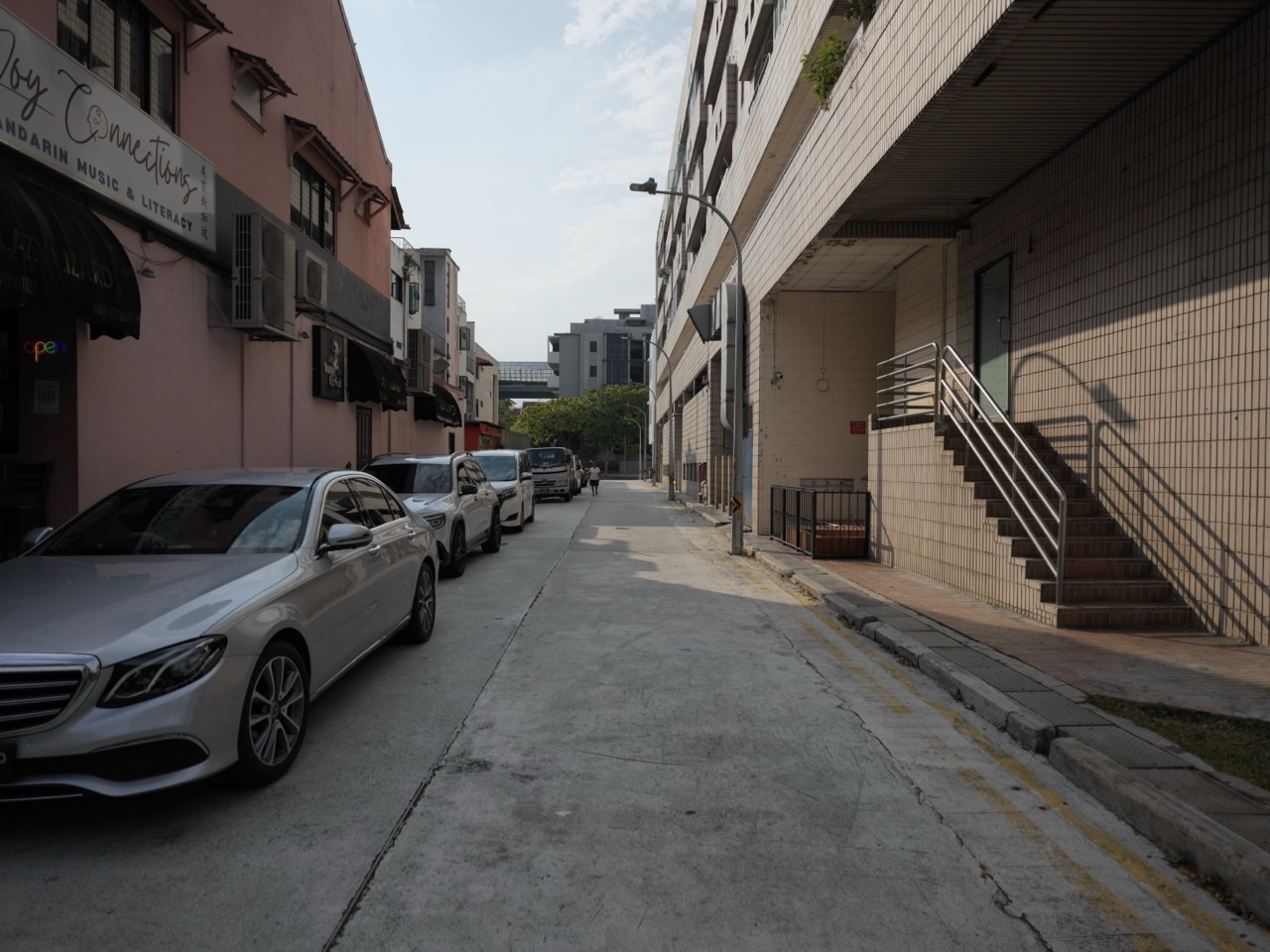
Imagine an invented observation task in Bukit Timah. Students compare shaded and open areas, plants, materials and movement. The job is to decide which observation matters, which concept applies and how the relationship should be explained.
A strong student does not jump straight to a remembered sentence.
The student asks: What changed? What was observed? Which information is relevant? Which Science relationship explains it?
That sequence protects the learner from keyword guessing.
Why a 3-Pax Science Tutorial Helps
Three students provide enough variety for comparison while keeping every learner visible.
One student may choose the correct option for the wrong reason. Another may understand orally but omit the relationship in writing. A third may know the concept but misread the diagram.
Those are different teaching problems.
- every student answers frequently;
- reasoning behind MCQ choices becomes visible;
- structured answers can be inspected line by line;
- misconceptions can be corrected immediately;
- students can compare methods and explanations;
- retrieval can be adjusted to individual gaps;
- timed work can be introduced selectively; and
- quiet students still have a clear turn to explain.
What We Teach in Primary 4 Science
Diversity
Students classify living things and materials using properties that remain valid when examples change.
Cycles
Students reconstruct stages and explain change without relying on one familiar diagram layout.
Systems
Students connect parts, functions and relationships.
Energy
Students relate observable effects to the relevant energy idea without vague everyday language.
Interactions
Students explain what changed, what interacted and which Science relationship accounts for the observation.
First Principles Before Keywords
Science keywords matter when they name the correct concept or relationship.
They do not rescue wrong reasoning.
We begin with the phenomenon, evidence or causal structure, then attach the precise scientific language.
World first, word later.
The Fencing Method
A difficult skill begins inside a narrow boundary.
The first question may make the evidence obvious. The next removes a cue. The next changes the diagram. The next mixes the idea with an older topic.
The fence widens one demand at a time.
Students learn exactly what changed instead of experiencing difficulty as random.
Diagram Reading: Inspect Before Interpreting
Students inspect labels, arrows, quantities, changed conditions and the exact question demand before retrieving a concept.
A diagram is often part of the evidence, not decoration.
Tables and Graphs: Structure Before Numbers
Students first identify headings, units, variables and comparison pairs.
Only then do they read individual values.
This prevents the common error of applying correct arithmetic or comparison to the wrong data.
Scientific Inquiry: A Repeatable Logic
- What was changed?
- What was observed or measured?
- What should remain comparable?
- What pattern does the evidence show?
- What conclusion is supported?
- What limitation or improvement matters?
The terminology becomes more sophisticated over time, but the causal structure should remain visible.
MCQ: Correct Is Not Enough
A correct MCQ can hide lucky guessing.
For selected questions we ask students to explain why the correct answer fits and why the strongest distractor fails.
This makes misconceptions visible before they become expensive.
Structured Answers: Evidence → Concept → Relationship
Students first identify the relevant evidence.
Then they identify the Science concept.
Finally they state the relationship linking the two.
The frame is a reasoning order, not a sentence template to memorise.
Retrieval Before Rereading
Rereading creates familiarity. Assessments require production.
We close notes and ask students to reconstruct concepts, diagrams, definitions, relationships and corrections from memory.
What cannot be retrieved becomes the next repair target.
Interleaving: Remove the Chapter Label
A chapter heading tells the student what concept to use.
Mixed practice removes that cue.
Students must decide whether the question concerns a cycle, system, material property, energy change, force, inquiry method or another relationship.
That selection process is part of Science performance.
How We Build the Language of Evidence
Students often know roughly what they mean before they can say it precisely.
We teach them to name the actual change, property or relationship instead of relying on vague phrases such as “it changed”.
Words such as increase, decrease, remain, compare, transfer, absorb, attract, repel, before, after, because and therefore become useful when they accurately describe the evidence.
The goal is not complicated language. It is scientific clarity.
Counterexamples Make Concepts Stronger
A concept learned from one familiar example is fragile.
We use counterexamples to test the student’s rule and force it to become more general.
A rule that survives changed examples is more likely to survive an assessment question.
Common Science Error Families
- Concept error: the underlying Science idea is wrong or incomplete.
- Evidence error: the relevant observation, value or diagram feature is missed.
- Question-command error: the student answers a different task from the one asked.
- Relationship error: facts are stated but the scientific connection is missing.
- Vocabulary error: the idea is generally correct but the wording is scientifically vague.
- Retrieval error: the concept was learned but cannot be produced independently.
- Transfer error: a changed surface makes an old concept look new.
- Timing error: good reasoning breaks under assessment conditions.
Different error families need different repairs. Calling all of them careless hides the mechanism.
What Happens During a 90-Minute Lesson
Retrieval
Older concepts and previous corrections return without immediate notes.
New learning or repair
The tutor teaches one concept or repairs one recurring misconception from first principles.
Guided reasoning
Students interpret diagrams, tables, MCQ or structured questions while explaining their thinking.
Independent transfer
A fresh question changes the surface or combines topics.
Correction
Students explain why the original method failed and what signal should be noticed next time.
Cumulative review
Older topics are mixed into the lesson so the growing Science network remains accessible.
Three Student Pathways
Repair
The student has a recurring foundational gap. We return to the first dependency blocking current work and rebuild it.
Stabilise
The student understands concepts but performs inconsistently when wording, diagrams or timing change. We vary the surface and build a repeatable routine.
Extend
The student is ready for deeper reasoning, counterexamples, experiment evaluation and more independent transfer.
Teaching Ahead Towards Primary 5
Teaching ahead means giving P4 students familiarity with the reasoning P5 will require once current foundations are stable. It does not mean racing through the P5 syllabus.
What Progress Should Look Like
- P3 concepts remain retrievable after a delay;
- classification rules survive unfamiliar examples;
- diagrams are inspected before answers are attempted;
- tables are read by headings, units and comparison structure;
- structured answers connect evidence to a Science idea;
- MCQ choices are justified rather than guessed;
- mixed-topic questions feel less novel; and
- the student enters Primary 5 with fewer hidden misconceptions.
How This Page Fits the Bukit Timah Science Architecture
This page continues from the Primary 3 Bukit Timah foundation page and becomes the consolidation year of the local Science route.
The broader Primary Science Bukit Timah learning guide remains the local subject hub.
Each year-level page owns its own intent so the hub and the year pages support rather than compete with one another.
When Should a Bukit Timah Family Consider Primary 4 Science Tuition?
Support may be useful when the child remembers facts but struggles with diagrams, explanations or mixed questions, or when P3 misconceptions are becoming visible in harder P4 work.
Tuition should solve a defined problem, not simply add volume.
Access for Bukit Timah Families
This is a Bukit Timah local-discovery page. Families who choose eduKateSG lessons travel to 8 Fourth Avenue, Singapore 268674, near Sixth Avenue MRT.
Families should consider school dismissal time, meals, travel and recovery when choosing a weekly slot.
Class Details
Format: Premium 3-pax small-group tutorials
Level: Primary 4 Science
Duration: 1.5 hours weekly
- concept consolidation;
- diagram and table reading;
- classification and cycles;
- systems, energy and interactions;
- structured answers;
- active recall and interleaving;
- error analysis; and
- carefully paced preparation for Primary 5.
What Parents Can Bring to the Consultation
- recent Science assessment papers;
- marked MCQ and structured answers;
- teacher comments;
- the school’s current topic sequence;
- examples of experiment or diagram questions the child finds difficult;
- ordinary homework completed independently; and
- the student’s own view of what feels difficult.
Frequently Asked Questions About Primary 4 Science Tuition in Bukit Timah
Should P4 students start doing PSLE papers?
Not as the main method. P4 should consolidate concepts, inquiry habits and mixed-topic recognition so later PSLE work rests on a stable base.
What is the biggest P4 Science risk?
Fragmentation. A child may know each chapter separately but struggle when one question combines diagrams, evidence and an older concept.
How do you teach structured answers?
We begin with evidence, identify the relevant concept and connect them in a complete explanation.
Can strong P4 students be extended?
Yes. We deepen transfer, counterexamples and inquiry instead of simply rushing through future chapters.
Helpful Reading for Bukit Timah Parents
- Primary Science Bukit Timah | P3–P6 Learning Guide
- eduKateSG Science Learning Hub
- Primary 3 Science Tuition | Bukit Timah
- Tutors and Tuition in Bukit Timah
- History of Singapore | Bukit Timah
- Why Singaporeans Love Bukit Timah
Primary 4 Science Tuition for Bukit Timah Families
Primary 4 should turn the P3 foundation into a transferable Science system.
At eduKateSG, our 3-pax tutorials make the reasoning visible, repair the first weak link and test whether the corrected method transfers.
For students who are behind, we repair.
For students who are inconsistent, we stabilise.
For students who are ready, we extend.
Properly taught kids shine a bright light into the future.
Arrange a Parent–Student Consultation
eduKateSG
8 Fourth Avenue
Singapore 268674
Near Sixth Avenue MRT
Premium 3-pax small-group tuition
By appointment