
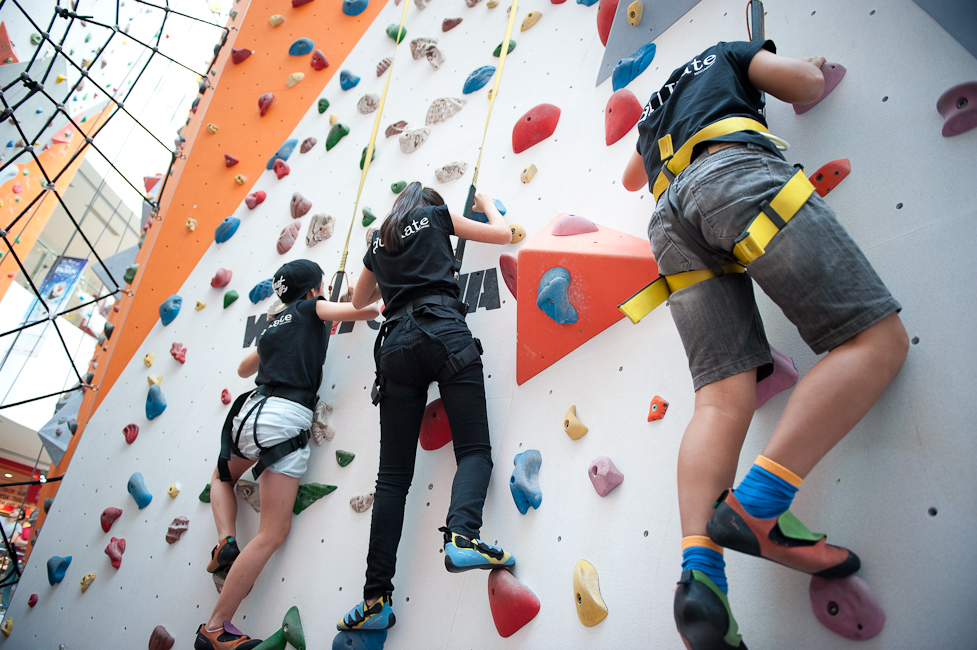
Rock climbing has a charming way of revealing wasted effort. Pull too hard with the arms, grip every hold desperately and ignore the feet, and even an easy wall can become exhausting.
Climbing technique becomes mastery when balance, footwork, body position and route reading begin doing work that raw strength used to do. At the same time, climbing remains a risk-managed activity, so movement skill must never be separated from competent belaying, equipment use and appropriate instruction.
That is the core aim of rock climbing mastery: move with increasing efficiency while keeping the safety system non-negotiable.
The Core Aim: Use the Whole Body
Beginners often climb as though the hands are pulling the body up a ladder.
Better climbing distributes the job.
- Feet create support.
- Legs generate much of the upward movement.
- Hips move the centre of mass closer to useful positions.
- Hands maintain contact and direction.
- Eyes search for the next efficient sequence.
The more these roles cooperate, the less the arms must rescue every move.
Footwork Is Usually the Fastest Upgrade
Feet are often capable of standing on much smaller holds than beginners expect.
Useful footwork habits include:
- looking at the foothold until the shoe arrives;
- placing the foot quietly rather than kicking at the wall;
- using the toe deliberately on smaller holds;
- avoiding unnecessary readjustment after placement; and
- choosing footholds that support the next move, not only the current one.
Quiet feet are not merely aesthetic. They usually indicate better visual attention and less wasted movement.
Move the Hips Before Pulling Harder
The body’s centre of mass matters constantly in climbing.
A hold that feels impossible with the hips far away may become comfortable when the body rotates or shifts closer to the wall.
Try asking:
- Can I move my hips over the supporting foot?
- Can I turn one hip toward the wall?
- Can I straighten one arm rather than holding both bent?
- Can I stand up through the legs instead of doing another pull-up?
Climbing technique often improves when geometry replaces effort.
Straight Arms Save Energy
Holding the body with constantly bent elbows keeps the muscles working continuously.
When position allows, straighter arms can transfer more load through the skeleton and preserve muscular energy.
This does not mean locking every joint rigidly. It means recognising when the wall allows a relaxed hanging position rather than an unnecessary contraction.
Grip Only as Hard as the Hold Requires
Overgripping is one of climbing’s classic energy leaks.
A large secure hold may not require maximum hand tension. Learn to vary grip according to the hold and body position.
Relaxing the hand when possible preserves forearm capacity for the moments when stronger grip is genuinely needed.
Route Reading Reduces Mid-Climb Surprises
Before leaving the ground, inspect the route.
- Where are the obvious rests?
- Which holds face left or right?
- Where might the feet need to cross or switch?
- Which section appears most demanding?
- Where can you pause to reconsider?
You will not predict everything, but a rough plan prevents every move from becoming a surprise.
Resting Is a Technique
Strong climbers do not simply climb faster. They recognise places where the body can recover.
A rest may involve:
- standing more fully on the feet;
- straightening one arm;
- shaking out the free hand;
- slowing breathing; and
- planning the next sequence before moving.
Resting well makes the difficult section easier before technique changes at all.
Climbing Safety Is Not a Technique Shortcut
Climbing involves fall risk and equipment systems that require competent instruction.
The International Climbing and Mountaineering Federation, the UIAA, publishes safety resources and belaying guidance because device handling, rope management and belay technique are safety-critical skills.
The UIAA has specifically warned that belay-device handling can differ by situation, particularly in multi-pitch contexts, and that correct technique should be taught and practised before progression.
For beginners, this means learning from a qualified climbing facility, instructor or recognised climbing organisation rather than attempting to reconstruct safety procedures from short online descriptions.
A Better Climbing Technique Practice Loop
- Choose an easy route. Reduce physical difficulty so technique is visible.
- Climb once naturally.
- Choose one constraint. Quiet feet, straight arms or hip movement.
- Climb again with that one focus.
- Compare effort. Which movements became easier?
- Repeat on a slightly different route.
The goal is transfer. A movement cue becomes useful when it survives beyond one familiar problem.
Common Rock Climbing Technique Mistakes
Pulling before checking the feet
Better foot placement may make the pull unnecessary.
Overgripping every hold
This spends forearm capacity much faster than required.
Moving before planning the next feet
Hands are visually obvious, but foot sequence often determines whether the move becomes efficient.
Learning safety systems from improvisation
Belaying, tying in and equipment use require recognised instruction and facility-specific procedures.
How to Know Climbing Mastery Is Growing
- Your feet become quieter.
- You use the legs more and pull less unnecessarily.
- You move the hips to solve positions.
- You recognise rest positions sooner.
- You read sequences before starting.
- You distinguish movement experimentation from safety-system experimentation.
- Routes begin to feel like movement problems rather than strength tests.
Frequently Asked Questions About Climbing Technique
Do I need strong arms to start climbing?
No. Technique, footwork and body position can reduce how much pulling strength is required, especially on beginner routes.
What should beginners practise first?
Quiet foot placement, balance, straight-arm positions, simple route reading and safe climbing procedures learned from qualified instruction.
Can I learn belaying from a video?
Videos can reinforce learning, but belaying is safety-critical. Learn and demonstrate it under competent in-person instruction and follow the rules of the climbing facility and equipment manufacturer.
Helpful Reading
UIAA: Climb Safe — Belaying Advisory
eduKate: Rock Climbing as a Science Lesson
Rock climbing mastery is delightfully economical. The better the movement becomes, the less heroic it often looks. Feet arrive quietly, hips shift at the right moment, hands grip only as hard as necessary—and the wall becomes a sequence of solvable relationships.