
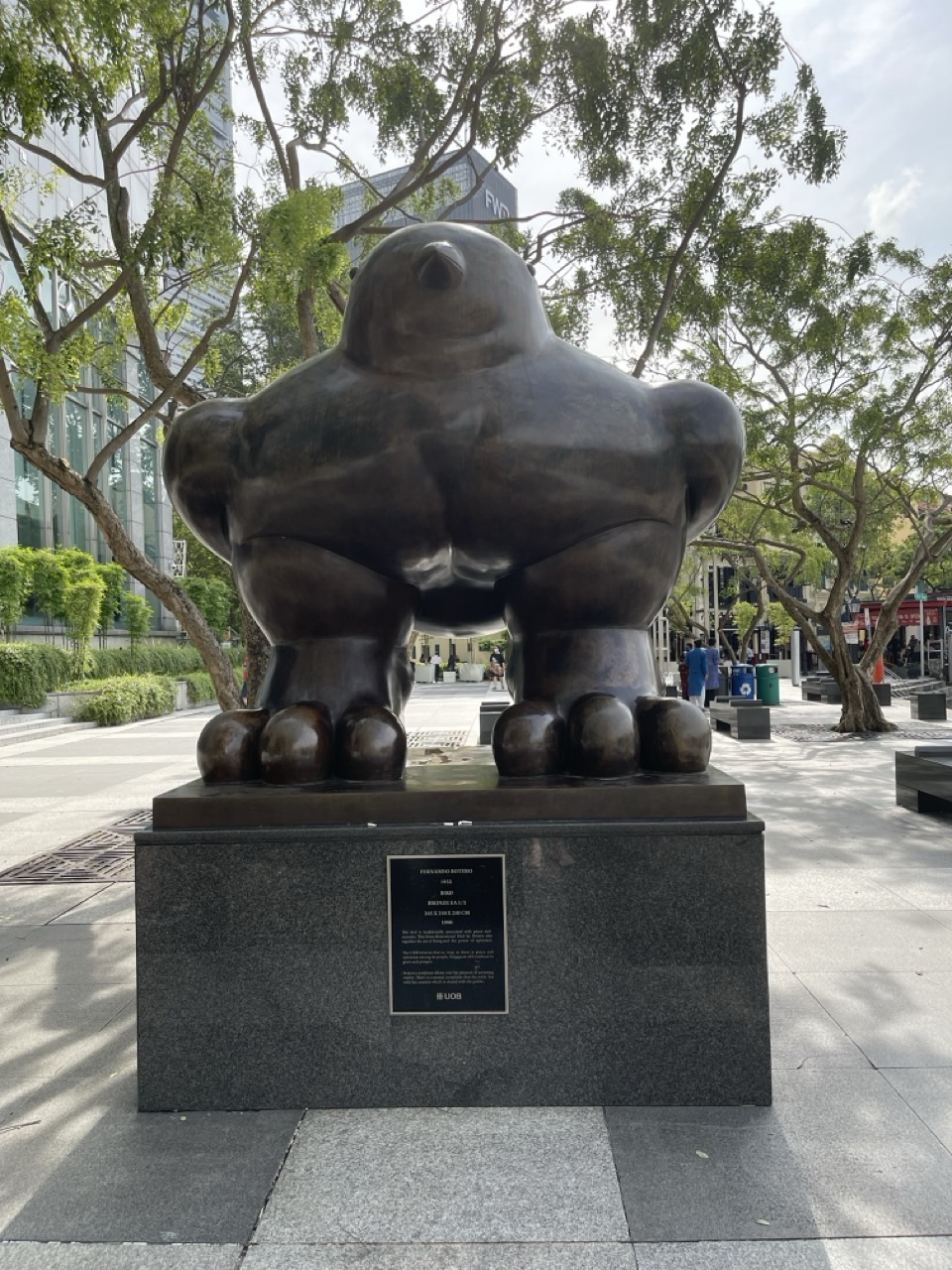
Sculpture has no favourite viewpoint. Walk around it and the work must keep answering new questions.
Sculpting techniques become mastery when the maker stops thinking only about a front view and begins controlling mass, proportion, balance, negative space, surface and material through the whole object.
That is the core aim of sculpture mastery: make three-dimensional form coherent from every direction that matters.
The Core Aim: Think in Mass, Not Outline
Tate defines sculpture broadly as three-dimensional art made through processes such as carving, modelling, casting and constructing.
This immediately changes the problem from drawing.
An outline can look correct from one angle while the volume behind it remains wrong.
Sculptural thinking asks:
- Where is the largest mass?
- How do forms overlap in depth?
- Which parts carry weight visually or physically?
- Where is the centre of gravity?
- What negative spaces pass through or around the object?
Additive and Subtractive Thinking Are Different
Modelling clay is additive. The artist can build mass, remove it and build again.
Carving stone or wood is primarily subtractive. Material removed cannot simply be put back in the same way.
Construction and assemblage introduce another logic entirely: separate parts are joined into a larger whole.
Mastery means allowing the process to influence the design rather than forcing every material to behave like every other one.
Start With the Largest Forms
Detail is seductive because it creates immediate recognisability.
But sculpture becomes unstable when details are refined before the large masses are correct.
Begin by blocking:
- overall height and width;
- major directional axes;
- primary masses;
- large negative spaces; and
- the relationship to the base or support.
Only after these relationships work should smaller forms begin dominating attention.
Rotate the Work Constantly
A sculpture can become convincing from the artist’s favourite viewpoint and collapse from the side.
Turn the work often.
- Check front, side and rear.
- Look from above and below when relevant.
- Step farther away.
- Look at the silhouette.
- Check whether one correction created a problem on the opposite side.
Three-dimensional work demands three-dimensional checking.
Negative Space Is Part of the Object
The holes, gaps and spaces around a sculpture help define its form.
A bent arm creates a triangular gap. Two crossing elements create a window. An open structure may be understood as much through the spaces between parts as through the material itself.
Design the empty spaces deliberately.
An Armature Is Hidden Structure
Some modelled sculptures require an internal armature to support material during construction.
The armature must fit the intended form closely enough to support it without emerging through the surface or preventing necessary changes.
It is similar to structural thinking in architecture: hidden support influences what the visible form can do.
Proportion Is Easier to Correct Early
Whether sculpting a figure, animal, abstract object or product form, proportional errors become harder to correct after detail accumulates.
Measure relationships:
- height to width;
- one mass to another;
- angle between major axes;
- distance between landmarks; and
- depth as carefully as frontal dimensions.
Surface Should Belong to the Form
Surface texture can describe material, catch light, create contrast or reveal process.
A rough surface scatters light differently from a polished one. Tool marks can remain visible as evidence of making. Smooth surfaces can emphasise uninterrupted mass.
The useful question is not whether a surface is smooth enough. It is whether the surface supports the character of the form.
Material Changes the Design
Clay, plaster, wood, stone, metal, resin and found objects all introduce different possibilities and constraints.
Material affects:
- weight;
- span;
- surface;
- joining method;
- tool choice;
- durability; and
- how the object can be displayed or installed.
Material knowledge expands creative freedom because the maker can design within reality rather than against it.
A Better Sculpture Practice Loop
- Make several thumbnail sketches.
- Build or carve the largest masses first.
- Rotate the work constantly.
- Check silhouette and negative space.
- Correct proportion before detail.
- Develop surface intentionally.
- Review the finished work from several distances and viewpoints.
Common Sculpting Technique Mistakes
Detailing one area too early
The rest of the form may still require major proportional changes.
Checking only the front view
Sculpture must remain coherent as the viewer moves around it.
Ignoring negative space
Empty areas shape the reading of the object just as strongly as solid material.
Choosing material after the form is already fixed
Material properties may fundamentally change what can be built safely and convincingly.
How to Know Sculpture Mastery Is Growing
- You think in mass rather than outline.
- You rotate the work before problems become severe.
- You simplify major forms before adding detail.
- You see negative space as part of the composition.
- You match technique to material.
- Your surface treatment reinforces the form.
- The work remains convincing from more than one viewpoint.
Frequently Asked Questions About Sculpting Techniques
What should beginners sculpt first?
Simple forms that emphasise proportion and mass are useful. A head, hand study, abstract volume or small still-life object can teach more than an overly complex first project.
Is clay best for beginners?
Clay is forgiving because it allows additive and subtractive changes, but other materials can also be excellent depending on available tools, supervision and the intended learning goal.
Why does my sculpture look right from one angle and wrong from another?
The underlying volumes may have been corrected only from one viewpoint. Rotate the work regularly and compare depths as carefully as widths and heights.
Helpful Reading
eduKate: How Art Uses Materials, Tools and Techniques
Sculpture mastery arrives when the object stops having a privileged front. The maker begins seeing mass, void, balance and surface as one continuous problem, and every turn of the work becomes another chance to make the whole form more coherent.