
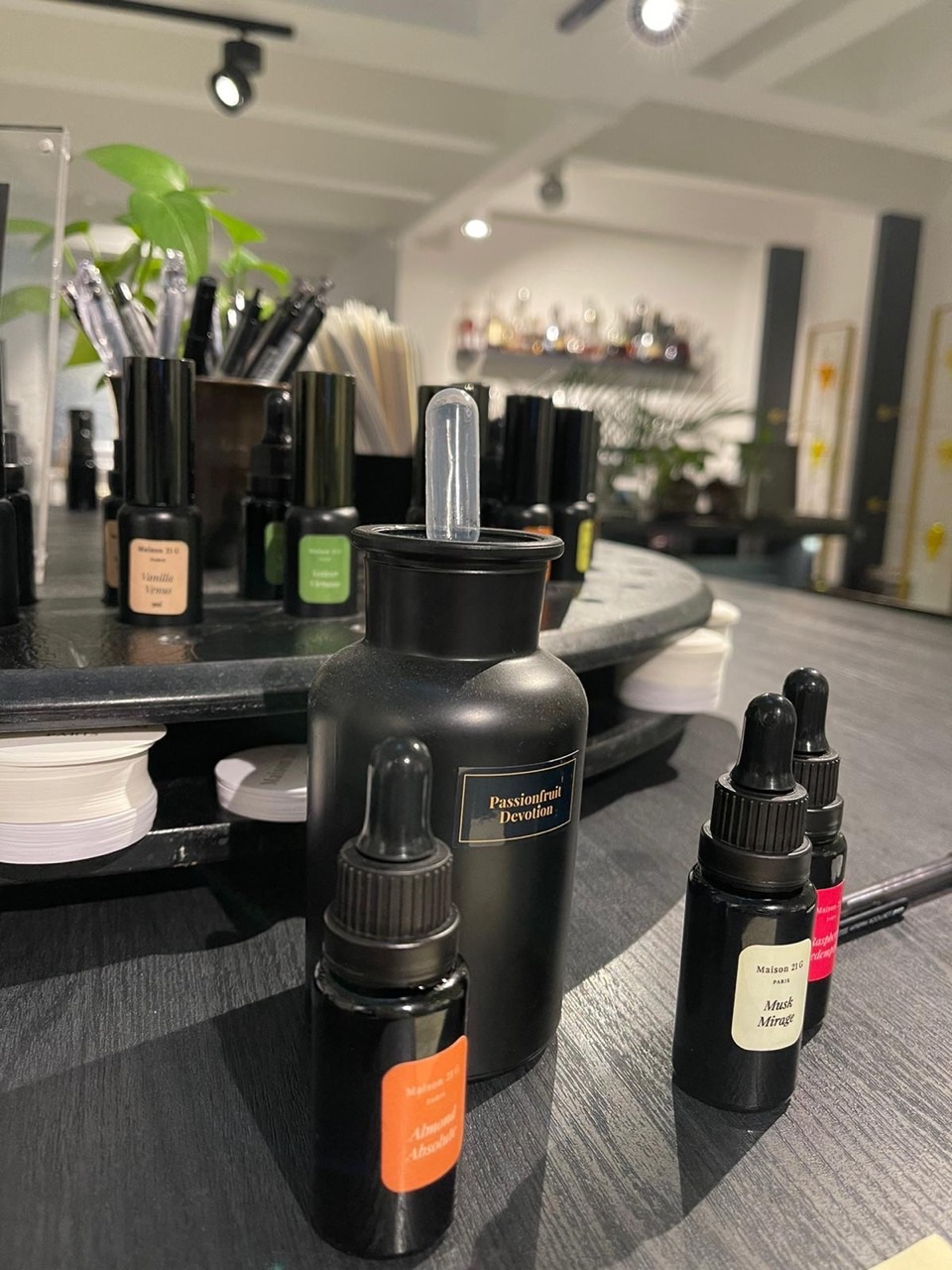
A fragrance can suggest rain, a garden or an old library without containing any of those things. Perfumery is the art of building that impression from carefully chosen aromatic materials.
Fragrance blending becomes mastery when creative intention meets repeatable technique. The core aim is to compose a balanced, repeatable scent through material knowledge, controlled dilution, accurate records and careful sensory evaluation.
Begin with a manageable project, observe what changes at each stage and build confidence through deliberate practice rather than rushing to an elaborate finished piece.
Define the scent idea
Write a short description of the atmosphere or impression before selecting materials. A clear brief prevents random accumulation of aromas.
Learn materials individually
Smell suitable pre-diluted materials separately and record their character over time. Some notes change dramatically after the first impression.
Work from a limited palette
Begin with a few compatible materials. Too many ingredients make it difficult to identify which one causes a problem.
Measure accurately
Record ingredient identity, concentration and batch amounts. Reproducibility depends on measurement rather than counting inconsistent drops.
Build structure
Explore the relationship between immediate impression, evolving heart and lasting base. These are useful compositional concepts rather than rigid ingredient categories.
Allow time for evaluation
Smell blends at several intervals using appropriate blotters. Avoid judging an entire composition only in its first minute.
Respect ingredient safety
Fragrance ingredients may irritate or sensitise skin, and some have strict use limits. Consult current IFRA guidance and supplier safety documentation; do not apply experimental concentrates directly to skin.
Revise one variable at a time
Keep versions labelled and change a small number of ingredients between trials. Compare results under similar conditions.
A Practical Mastery Routine
- Define the scent idea: make one deliberate improvement and record the result.
- Learn materials individually: make one deliberate improvement and record the result.
- Work from a limited palette: make one deliberate improvement and record the result.
- Measure accurately: make one deliberate improvement and record the result.
- Build structure: make one deliberate improvement and record the result.
- Allow time for evaluation: make one deliberate improvement and record the result.
- Respect ingredient safety: make one deliberate improvement and record the result.
- Revise one variable at a time: make one deliberate improvement and record the result.
How to Recognise Progress
Look for more consistent results, fewer avoidable corrections, clearer creative decisions and a better understanding of why the method works. Mastery is the ability to repeat a good result, not merely achieve it once.