
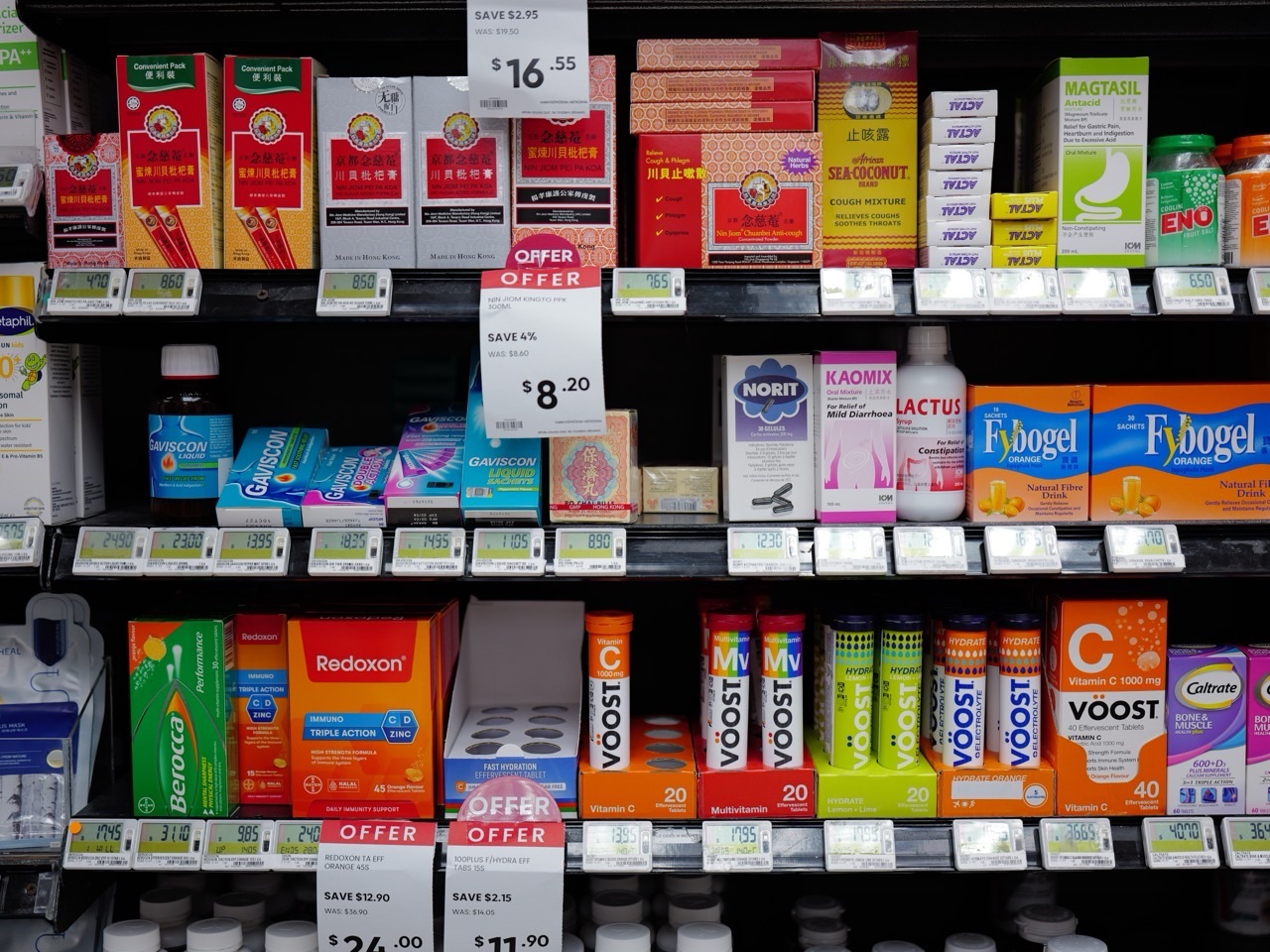
Did you know that “up to 50% off” does not mean every product is half price? Advertising can be perfectly readable at first glance while the most important comparison is carried by two small words. Children encounter these phrases in online shops, families see them on promotions, and older students meet them in arguments about evidence.
Vocabulary is important in the 21st century because advertising comparisons can change what a consumer believes a claim promises. Words such as up to, from, average, typical, selected, equivalent and subject to establish limits on price, performance or availability. The learning goal is to identify the comparison and its conditions before making a decision.
Start with a fictional advertisement and ask: What exactly is being compared? What is the baseline? Which customers or products are included? The answer often lies in the qualifying phrase rather than the biggest number. This focused lesson builds on reading conditions and exceptions and the eduKate vocabulary guide.
Worked Example: The ‘Up to 50%’ Offer
Imagine a shop advertises “Save up to 50% on selected school bags.” Bag A previously cost S$40 and now costs S$20; Bag B previously cost S$50 and now costs S$45. The discounts are 50% and 10% respectively, assuming those reference prices are genuine and comparable. The phrase up to describes a ceiling in this example, not a uniform discount.
A learner who says “All the bags are half price” has turned a limited claim into a universal one. A better summary is “Some selected bags may have discounts as high as 50%; the actual saving depends on the item and its reference price.” That is less dramatic and more useful.
The Vocabulary That Changes the Offer
- Up to: signals a stated upper limit; it does not guarantee that every case reaches the maximum.
- From: often introduces a starting price or range, with other versions potentially costing more.
- Selected: restricts the claim to some items or cases rather than everything.
- Average: a summary measure that can hide variation between individual cases.
- Typical: suggests a representative case, but readers should check how the example was chosen.
- Equivalent: asserts comparability on a relevant dimension, not necessarily identical products.
- Subject to: signals that stated conditions or restrictions apply.
- Free: should prompt a check for qualifying purchases, future payments, shipping or other conditions.
Why the Comparison Baseline Matters
Suppose two fictional stationery bundles each contain five pens. One costs S$10 and another S$15. A claim that the first is “33% cheaper” uses the S$15 bundle as its baseline: (15 − 10) ÷ 15 = 33.3% approximately. The second is “50% more expensive” than the first because (15 − 10) ÷ 10 = 50%. Both statements describe the same S$5 difference but use different denominators.
That is why students should ask “Compared with what?” before repeating a percentage. The denominator is part of the meaning. A price comparison also needs equivalent quantities and relevant features; a cheaper-looking product may contain less.
A Second Example: ‘More Efficient’
A fictional water bottle advertisement claims its design “keeps drinks cooler for longer.” Without a stated test, the reader does not know the comparison bottle, starting temperature, ambient conditions or measurement period. The wording suggests a performance advantage but does not supply enough evidence to quantify it.
Students can write the missing questions rather than declare the claim true or false. Which measurement? Compared with which product? Under what conditions? How large was the difference? This habit joins English comprehension with the evidence discipline of Science.
A Parent-Friendly Comparison Table
Give the child two imaginary offers: “S$24 for 12 notebooks” and “S$18 for 8 notebooks.” The unit prices are S$2.00 and S$2.25 per notebook. If the notebooks are otherwise comparable, the first has the lower unit price, even though the total bill is higher. A student should explain the distinction between total cost and unit cost.
The teacher can then change the quantities while keeping the language. This checks whether the learner can transfer the idea to a new situation, rather than simply repeat the first division.
What Does ‘Average’ Actually Hide?
Imagine three fictional delivery times of 1, 2 and 9 days. The mean is four days, but only one delivery took exactly four days—in fact none did. A claim that the “average delivery time is four days” can be numerically correct while giving an incomplete picture of variability. Median, range and sample size may help.
Students do not need advanced statistics to learn this. They need to recognise that average is a summary, not a promise about their individual outcome.
Four Mistakes Worth Diagnosing
- Reading “up to” as “at least” or “always.”
- Comparing total prices without checking quantity or quality.
- Repeating a percentage without identifying its baseline.
- Treating a performance claim as independently verified merely because it appears in an advertisement.
A student who misreads “selected” needs a vocabulary contrast. A student who understands the phrase but miscalculates unit price needs mathematical repair. Diagnosis before repetition follows the teaching principle in eduKate’s Clementi Secondary 1 Mathematics reference.
Three Learning Stages
Primary: compare “all,” “some,” “only,” “from” and “up to” using pretend shop labels. Secondary: calculate unit prices, percentages and fair comparison baselines. Older students: inspect claims about averages, study samples, performance metrics and conditions, separating marketing language from demonstrated evidence.
A Five-Minute Independent Check
Present “From S$8, up to 40% off selected items.” Ask the learner to identify three things the sentence does not guarantee. Suitable answers: every item costs S$8, every item has a 40% discount, and all items are included. Next show a different fictional offer and ask the learner to explain its limitations without prompts.
Frequently Asked Questions
Does a qualifying phrase mean the advertisement is dishonest? Not automatically. It may accurately describe a limited offer. The task is to read the full claim and verify relevant details.
Is this only financial literacy? No. The same vocabulary appears in scientific comparisons, educational claims, product reviews and news reporting.
What if the offer is unclear? Check the full terms and ask the seller for clarification before purchasing.
The Core Reason: Compare the Actual Claim
Vocabulary gives readers the ability to see where a promise begins and ends. A child who understands “up to,” “from” and “average” can turn an attractive headline into a sensible question. That is a useful step toward independent judgement.