
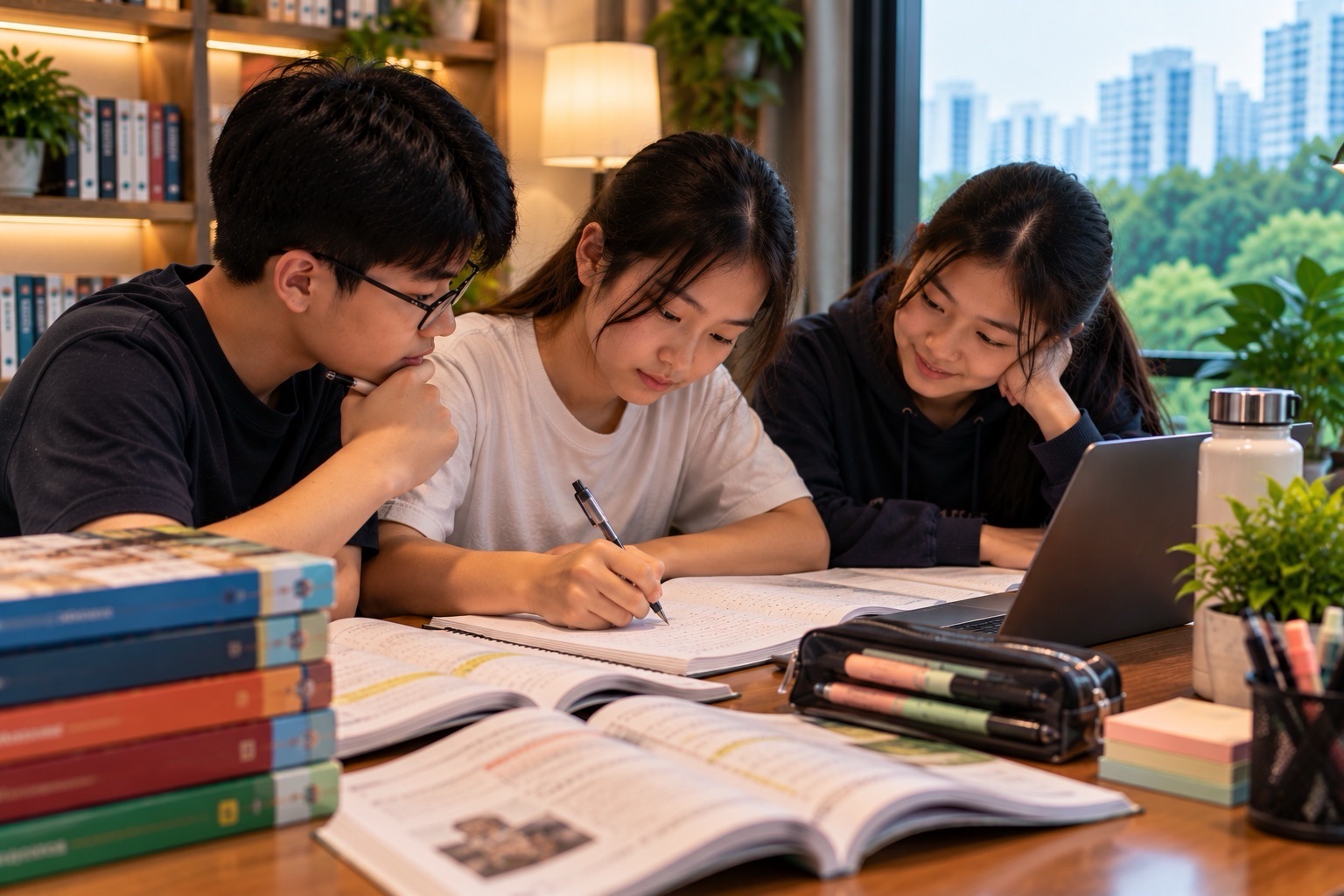
A family choosing a Physics tutor in the Central African Republic should begin with the learner’s current class and registered baccalauréat series. Students in Bangui or elsewhere studying Physics before the bac C or bac D have scientific foundations in common, but a tutor needs to match the actual school programme and the first misconception. The amount of practice alone is not proof of progress.
Parents in Bangui, Berbérati, Bambari, Bouar, Bossangoa, Bria and surrounding communities may search for cours particuliers physique-chimie Centrafrique, professeur physique Bangui or guidance on technical and general sciences. This article explains the official 2026 baccalauréat context, an original spring-force exercise and an achievable four-week plan. It is not a claim that eduKate operates a centre or supplies vetted local tutoring services in the Central African Republic.
Quick answer: check the actual bac series and school syllabus
The Central African Ministry of National Education is the relevant public source for examination administration. Its 2026 first-group baccalauréat results index lists the C and D series as well as other general and technical categories. A separate second-group results index for 2026 likewise lists C/D among the groups.
These results indexes establish that the 2026 examination had distinct registered series. They do not provide a verified chapter-by-chapter Physics programme for a different year, and families should avoid sharing any student’s private results or candidate details in a public tutor consultation.
In a Ministry statement for the June 2026 baccalauréat opening, the Ministry distinguished general and technical examinees and described the scheduled written examinations. This is historical session information, not a forecast about later examination dates, marks or individual question topics.
The Ministry’s École Normale Supérieure teaching programme provides a useful example of what may follow science education: it describes a Mathematics/Physics bivalent teacher-training block and a distinct science education block, each with its own eligibility requirements. This is an institution-specific training programme, not a promise that every bac C/D student is automatically admitted or that Physics alone determines future employment.
Parents should ask the tutor to identify the child’s school level, registered series, teacher-issued topic sequence and recent corrections. A younger pupil should not be rushed into advanced bac paper practice before mastering measurements and graphs. A candidate approaching a scientific bac may need more challenging analysis, but the exact 2027 programme should be verified rather than guessed.
Original worked example: finding the spring constant from a force–extension graph
Imagine a completely fictional classroom spring that behaves approximately according to Hooke’s law over the small loads discussed. Its unstretched length is 12.0 centimetres. When a force of 1.50 N acts, the measured length becomes 15.0 cm. Assume a vertical, idealised model with the spring safely supported; these numbers are not a specification for real apparatus.
Step 1 — identify extension rather than total length. The extension is 15.0 − 12.0 = 3.0 cm, which is 0.030 m. The 15.0 cm length is not the extension. A learner who inserts 0.15 m into F = kx has misunderstood the measurement before the arithmetic begins.
Step 2 — find the constant. Hooke’s law for this ideal elastic region is F = kx, so k = F/x = 1.50 N / 0.030 m = 50 N/m. Spring constant describes resistance to stretching in the assumed linear range. It is not a weight or an energy.
Step 3 — predict a changed force. If extension becomes 0.040 m while the same linear behaviour applies, F = 50 × 0.040 = 2.0 N. The total measured length would be 12.0 cm + 4.0 cm = 16.0 cm. Ask the learner to distinguish total length from extension again.
Step 4 — check the graph. A graph with applied force on the vertical axis and extension in metres on the horizontal axis should be a straight line through the origin in the ideal linear region. Its gradient is ΔF/Δx = 50 N/m. If the graph axes were swapped, the gradient’s physical meaning and unit would also change.
Step 5 — calculate stored elastic energy. For linear Hooke-law behaviour, E = ½kx². At extension 0.030 m, E = ½ × 50 × (0.030)² = 0.0225 J. At 0.040 m the stored energy is ½ × 50 × (0.040)² = 0.0400 J. Both answers must be positive and expressed in joules.
Step 6 — calculate energy from graph area. The force–extension graph up to 0.040 m forms a triangular region whose area is ½ × base × height = ½ × 0.040 m × 2.0 N = 0.040 J. Agreement with the formula is a valuable independent check.
Step 7 — predict an extension change. If the extension doubles from 0.030 m to 0.060 m within the same Hooke-law regime, force doubles from 1.50 N to 3.0 N, but energy rises fourfold from 0.0225 J to 0.090 J. The squared term explains why force and energy respond differently to a doubled extension.
Step 8 — model a second spring. If another hypothetical spring has k = 100 N/m, then producing the same 0.030 m extension requires 3.0 N, twice the original force. Its stored energy at that extension is ½ × 100 × 0.030² = 0.045 J. A stiffer spring is not necessarily ‘better’; it simply has different force–extension behaviour.
Step 9 — recognise limits. Real springs have elastic limits, mass, friction and measurement uncertainty. A spring extended too far may stop following Hooke’s law. No student should use high-tension, improvised spring apparatus; teacher-approved equipment or supplied data is preferable.
Diagnose the misunderstanding before choosing worksheets
The same problem reveals several distinct learning gaps. A learner may mistake total spring length for extension, convert 3 cm to 0.3 m, confuse energy with force, forget to square x or misunderstand which graph gradient represents k. Each requires a different intervention. A good tutor asks the child to label quantities and explain the physical situation before making them calculate.
One useful check is to ask the student to state whether doubling extension doubles or quadruples stored energy, before giving the formula. If they correctly predict fourfold energy and can explain the area under the force–extension graph, they are beginning to connect representations instead of merely memorising a line of algebra.
For an earlier class, the suitable task may be to measure stretch and create a table. For a senior scientific-route candidate, an appropriate extension could involve interpreting uncertainty, graph intervals or conditions where the linear relationship fails. Match difficulty to the current programme.
Experimental reliability and interpretation
A controlled spring experiment can be done with rated low-mass apparatus under school supervision, or with an existing force–extension data table. The student should identify the independent variable, the measured response, units, repeated readings and possible sources of systematic error.
For example, a ruler’s zero position could be shifted, or a force scale could have a consistent calibration offset. In real data, a line of best fit may not pass exactly through every point. The tutor should teach why observations cannot simply be edited to match an ideal straight line.
A useful lesson connects the same skills to other Physics topics. Graph gradient might represent speed in a distance–time model, acceleration in a velocity–time graph, or conductance in certain electrical graphs. The tutor must state which axes and physical relationship are being used instead of calling every gradient ‘speed’.
Central African Republic: why the actual bac C/D programme matters more than a practice-book title
The Ministry of National Education’s published official school and examination portal identifies different baccalauréat series, and its 2026 first-group baccalauréat results index includes scientific series such as C and D. This verifies the existence of separate pathways in the 2026 session, not the chapter list or mark distribution for every future Physics paper. Ask the learner’s school for the active syllabus, current class and examination instructions; never use another student’s personal results in a tutoring exercise.
The Ministry’s 2026 baccalauréat opening statement distinguishes general and technical candidates. A pupil in an earlier secondary school year, a lycée candidate in a scientific series and a learner preparing a different technical qualification can share core scientific concepts while requiring different lesson depth and evidence. A tutor who advertises one identical course for everyone should be able to demonstrate how the real student’s school material will be matched.
The original spring-extension example in this country guide asks the child to infer stiffness from a force–extension graph. That is a good diagnostic for proportionality. A second original thermal-equilibrium example tests a different set of ideas: energy conservation, changes in temperature, different specific heat capacities, algebraic unknowns and honest graphing. Doing well in one chapter does not automatically prove readiness in the other.
Original thermal Physics diagnostic: a fictional warm metal sample placed in water
Imagine a purely fictional insulated mixing model, not a school experiment to reproduce without supervision. A metal-like sample has mass 0.30 kg, a constant specific heat capacity assigned as 900 J/(kg·°C), and an initial temperature of 80.0°C. It is placed into 0.50 kg of water at 20.0°C. The water’s specific heat capacity is assumed to be 4,200 J/(kg·°C). Treat the container as perfectly insulated, ignore heat gained by the container, and assume no phase change.
Before calculating, a tutor should ask the student to sketch the two separate samples and mark their initial masses and temperatures. The metal starts warmer than the water. Therefore, if the ideal energy-transfer model reaches a common equilibrium, the final temperature should be between 20°C and 80°C. An answer higher than both initial temperatures, or lower than both, needs an explanation of where extra energy comes from—none is provided in this closed model.
Heat exchanged by a body without phase change can be calculated as Q = mcΔT under the given constant heat capacity. The hot metal loses thermal energy while its temperature decreases; the initially cooler water gains energy while its temperature rises. With no external transfer, the magnitude of energy lost by the metal equals the magnitude gained by the water.
Set up one energy-balance equation rather than averaging blindly
Let the unknown common final temperature be T. The metal loses Q(metal lost) = 0.30 × 900 × (80−T) = 270(80−T) J. The water gains Q(water gained) = 0.50 × 4,200 × (T−20) = 2,100(T−20) J. These forms use the positive magnitudes of temperature decrease and increase, respectively, while T lies between the initial temperatures.
Equate the two: 270(80−T) = 2,100(T−20). Expanding gives 21,600 − 270T = 2,100T − 42,000. Collecting terms yields 63,600 = 2,370T, so T ≈ 26.84°C. The result is much closer to the original 20°C water than to the hot sample’s 80°C because the 0.50-kg water has much greater thermal capacity.
A learner who simply averages 80°C and 20°C to get 50°C has ignored the masses and the unequal specific heat capacities. A student who subtracts the final temperature in the wrong order may produce a negative energy quantity despite knowing the physical energy-flow direction. These are different errors and should be corrected separately.
Check the result with two independent energy calculations
Under the calculated equilibrium, the warm sample loses approximately 270 × (80−26.8354) ≈ 14,354.4 joules. The water gains approximately 2,100 × (26.8354−20) ≈ 14,354.4 joules. The two numbers agree to rounding. This is a physical consistency test that is stronger than merely matching an answer-key temperature.
The units explain the formula. A specific heat capacity in joules per kilogram per degree Celsius, multiplied by mass in kilograms and a temperature change in Celsius, gives joules. It would be incorrect to call the 14,354-J transfer ‘14,354 watts’ unless a time interval were also supplied and an energy-per-time calculation made.
Under the same assumptions, final temperature can be written as a thermal-capacity-weighted average: T = (m₁c₁T₁ + m₂c₂T₂)/(m₁c₁ + m₂c₂). For this model the capacity terms are 270 J/°C and 2,100 J/°C, so T = (270×80 + 2,100×20)/2,370 ≈ 26.84°C. The equation is not an unweighted temperature average. It rests on the stated constant-c and energy-isolation assumptions.
Change the hot sample’s mass while everything else remains fixed
Suppose the metal-like sample mass doubles from 0.30 to 0.60 kg, while its c remains 900 J/(kg·°C), its initial temperature stays 80°C, and the water remains 0.50 kg at 20°C. The hot sample’s thermal capacity increases from 270 to 540 J/°C. The model equilibrium becomes T = (540×80 + 2,100×20)/(540+2,100) ≈ 32.27°C.
The final temperature has risen relative to 26.84°C because a larger mass of warm material can lose more energy for a given temperature drop. A student should predict a warmer final mixture before calculating. If the child says more warm metal must make the water cooler, their conceptual prediction is inconsistent with the stipulated closed, fixed-temperature model.
Keep the metal mass but halve the water mass
Return the metal to 0.30 kg but reduce water mass to 0.25 kg, still at 20°C. Its thermal capacity becomes 0.25 × 4,200 = 1,050 J/°C. The equilibrium temperature is T = (270×80 + 1,050×20)/(270+1,050) ≈ 32.27°C. This matches the previous changed-metal-mass result because the ratio of hot to cold thermal capacities is the same.
This is an elegant transfer check: two different changes can create the same final equilibrium temperature because they alter the capacity ratio in the same way. The correct explanation names the changed quantities and their relative sizes, rather than assuming identical numeric answers prove identical physical actions.
Change initial temperature instead of mass
Keep the original 0.30-kg metal and 0.50-kg water, but raise the metal’s fictional initial temperature to 100°C while retaining all no-loss and constant-c assumptions. The equilibrium becomes T = (270×100 + 2,100×20)/2,370 ≈ 29.11°C. The final temperature is higher than before but still closer to the initial water temperature.
For a prediction, increasing the hot sample’s initial temperature by twenty degrees raises equilibrium only by 20 × 270/2,370 ≈ 2.28°C in this model. The magnitude of the effect depends on the hot sample’s fraction of combined thermal capacity. The tutor should not simply say that ‘twenty degrees more heat gives twenty degrees more final temperature’.
A different specific heat capacity changes the result
Imagine a separate material with the same original 0.30-kg mass and 80°C initial temperature but stipulated specific heat capacity 450 J/(kg·°C), half the previous value. Its heat capacity is only 135 J/°C. The model equilibrium becomes (135×80 + 2,100×20)/(135+2,100) ≈ 23.62°C. There is less thermal energy available to warm the water before the metal cools toward equilibrium.
A student who says that every 0.30-kg block at 80°C must create the same final water temperature has ignored the physical meaning of specific heat capacity. Real materials have temperature-dependent properties and may exchange energy with containers; here the numbers are assigned deliberately to isolate that distinction.
Do not ignore heat absorbed by the container in a different model
The original numerical result assumed that the insulated container has zero effective heat capacity. Suppose a different hypothetical experiment includes a container initially at 20°C with effective heat capacity 300 J/°C. The water and container together then have capacity 2,100 + 300 = 2,400 J/°C on the cooler side, and the balance becomes 270(80−T) = 2,400(T−20).
Solving gives T = (270×80 + 2,400×20)/(270+2,400) = 69,600/2,670 ≈ 26.07°C. Including the cooler container lowers the predicted equilibrium relative to 26.84°C. If real school measurements differ from the first ideal model, a tutor should discuss missing energy pathways before calling the data ‘wrong’.
Use a model dataset to teach graph interpretation honestly
For the initial metal mass of 0.30 kg, water mass 0.50 kg, c values 900 and 4,200, and original metal temperature 80°C, imagine varying only the water’s starting temperature. The ideal final temperature is calculated from the weighted expression. Water starting at 10°C, 20°C, 30°C or 40°C produces equilibrium values of approximately 17.97°C, 26.84°C, 35.70°C and 44.56°C, respectively.
| Water initially | Metal initially | Model final temperature |
|---|---|---|
| 10°C | 80°C | 17.97°C |
| 20°C | 80°C | 26.84°C |
| 30°C | 80°C | 35.70°C |
| 40°C | 80°C | 44.56°C |
Plot water initial temperature horizontally and model final temperature vertically, with masses and heat capacities fixed. The relationship is a straight line with gradient 2,100/2,370 ≈ 0.886 degrees of final temperature per one degree increase in the water’s initial temperature. The intercept and gradient follow from the energy-balance equation, not from a magic graph-drawing rule.
The table is computed hypothetical data, not observations from a Central African laboratory. A real classroom experiment would need safe handling of heated materials, suitable thermometers, timing, genuine readings, a measurement uncertainty statement and school-approved supervision. A tutor must not pass invented values off as authentic assessed science work.
How the spring-force example and the heat-transfer example complement each other
The article’s original spring model uses force, displacement and stiffness. The new thermal problem uses mass, heat capacity and temperature change. Both benefit from proportional reasoning, correct graph labels and distinguishing measured quantities from calculations. However the relevant physical law is different. A student who succeeds at the force–extension graph but fails a heat-equilibrium problem may need thermal conceptual support or algebra with multiple capacity terms.
An advanced optional bridge revisits spring elastic energy E = ½kx². With a different purely imagined spring of k = 100 N/m stretched by x = 0.10 m, stored elastic energy is 0.50 J. If the extension doubles to 0.20 m while linear behaviour remains assumed, energy becomes 2.0 J, four times greater. Unlike the simple heat capacity model’s linear temperature-energy relationship at fixed c, elastic energy depends on squared extension.
Another check uses a fictional 0.40-kg object receiving the 0.50 J of spring energy entirely as translational kinetic energy. With no losses and starting from rest, ½mv² = 0.50 J gives v = √(2×0.50/0.40) ≈ 1.58 m/s. This is a mathematical extension, not apparatus guidance. The tutor should ask why the unit of speed is m/s instead of joules.
Locate the learner’s first misconception before choosing tutoring hours
In the thermal problem, a 50°C answer for the original unequal samples indicates unweighted averaging. A temperature outside the original 20°C–80°C bounds suggests a sign, input or model mistake. An answer in joules when temperature was requested is a quantity-identification error. A perfect graph constructed from fictional points and labelled as a real experiment is an evidence-integrity error. These require different corrections.
A tutor should name the first error in a short parent report, explain what changed after teaching, and demonstrate the correction with a new mass or temperature that the student solves without hints. A polished adult demonstration or a large pile of worked pages is weaker evidence than a pupil choosing a physical model and justifying an answer alone.
An effective ninety-minute Physics tutor trial
The opening minutes should verify whether the learner studies current secondary Science, a bac C/D Physics-Chemistry course or a more specific technical pathway, and inspect one authentic marked question. The tutor then asks for a brief independent attempt, diagnoses the first weak step, and chooses a safe example with clear physical quantities and diagrams.
In the middle of the session, the teacher can show the fictional water-and-metal energy balance, connect it to a temperature prediction, and invite the student to calculate one changed condition with the original answer hidden. Add a graph or data interpretation. The closing minutes should document an independently demonstrated skill and a small practice task that fits the child’s actual schoolwork.
Eight questions a Central African Republic parent can ask
1. What is the student’s current class, recognised baccalauréat series and school Physics-Chemistry learning plan? 2. Can the tutor distinguish a 2026 baccalauréat results listing from a future examination specification? 3. Will the teacher inspect the student’s own marked work and identify the first incorrect reasoning step? 4. Can the learner explain why an unequal hot metal and water mixture does not simply settle at the midpoint temperature?
5. Does instruction include unit checks, authentic experiment practices, graph reading and uncertainty? 6. Can the student predict what changes when water mass or heat capacity is altered before calculating? 7. Are the tutor’s identity, experience, lesson fees, teaching language, group size, materials and feedback arrangement clear? 8. Will a new course-aligned question after four weeks be used to judge independent improvement and the need for more tuition?
A four-week learning plan for stronger independent explanation
Week 1 — establish a baseline. Obtain the current school syllabus, one marked problem and a fresh diagnostic response. Determine whether the primary gap concerns graphs, energy units, physical assumptions or algebra. Agree on an observable target such as correctly explaining which sample loses energy in a thermal problem.
Week 2 — repair one physical relationship. Work through the imaginary 0.30-kg metal and 0.50-kg water, ask for a predicted equilibrium interval, and derive the conservation equation. The pupil should then solve an unfamiliar changed-mass case without being shown the first solution.
Week 3 — vary conditions and check evidence. Change initial temperature or specific heat capacity and interpret a small computed graph, then revisit a spring-force problem from an earlier lesson. The student should be able to say whether each table contains actual measurements or model predictions.
Week 4 — independent transfer and decision. Provide a different school-aligned Physics task that requires a diagram, a physical prediction, numerical calculation with proper units, one graph or evidence statement and one clear limitation. Review the work against Week 1 and decide whether to continue, narrow the target or reduce paid sessions. A tutor should not guarantee a bac grade or admissions outcome.
A realistic parent FAQ after the worked thermal model
Do published bac C and D results mean both séries study identical Physics?
No. A historical results index confirms the existence of those categories but not each course’s current chapter weighting or assessment rules. Ask for the real enrolled programme and the next Ministry or school instructions without exposing another candidate’s private data.
Does a final temperature have to be the arithmetic mean of two starting temperatures?
No. It depends on masses, specific heat capacities, initial temperatures and the energy-transfer assumptions. An unweighted midpoint applies only under special equal-capacity conditions and no additional energy pathways.
Can a fictional mixing exercise replace a real practical assessment?
No. It teaches conservation and graph interpretation, but real observations require safe approved apparatus, measured readings and uncertainty. Invented points must remain labelled as theoretical values.
Official sources and connected eduKate guidance
Use the Central African Republic Ministry of National Education, its June 2026 baccalauréat opening statement and relevant current school programme as separate sources of administrative and curricular information. The ENS training overview describes teacher preparation, not a guarantee that a tutoring provider has a particular qualification.
For complementary learning consult Mathematics Tutor | Central African Republic, Science Tutor | Central African Republic and the World Physics Tutor Guides directory. The examples use imaginary masses, temperatures and spring values. eduKateSG’s tutoring operates in Singapore and is not represented as a locally staffed Central African service.
Questions a Central African parent can ask
- Which current secondary class or baccalauréat C/D or technical route does my child actually follow?
- Can you show where this week’s topic appears in the student’s school programme rather than giving foreign worksheets by default?
- Can you diagnose an uncorrected problem and distinguish a unit error from misunderstanding of Hooke’s law?
- How do you teach graph axes, gradient, experimental variation and physical limits?
- Can you demonstrate a changed-number problem that the student solves without your hints?
- What are the full charges, teaching language, group size, location or connection needs, session duration and marking rules?
- What independent capability will be retested at the end of four weeks, and when would it be reasonable to reduce tuition?
Four-week learning plan with visible results
Week 1 — find the first misconception. Collect the school course and a marked paper. Have the learner label unstretched length, stretched length and extension on a sketch. Observe errors in interpretation, SI conversion and physical quantity.
Week 2 — rebuild the linear relationship. Explain F = kx with a diagram and a short table. Calculate gradient, use appropriate units and connect the work done to area under the graph. Retest comprehension after a short delay.
Week 3 — vary the physical situation. Change extension, force and spring constant one at a time. Ask predictions before calculations. Mix in an earlier wave or energy problem so the student has to choose the correct equation independently.
Week 4 — independent transfer. Give a new force–extension data set and ask the student to find gradient, energy, a limitation and a suitable estimate of measurement uncertainty. For examination preparation, choose additional questions based on the actual school and registered series.
An honest progress report states: ‘The learner previously used total length instead of extension; they now identify extension, compute a gradient with correct units and solve an unfamiliar changed-spring problem unaided.’ That is observable learning progress rather than a guarantee of a particular baccalauréat result.
Frequently asked questions
Does the existence of a 2026 C/D results category establish the 2027 Physics syllabus?
No. It establishes actual 2026 examination series. Future topic scopes, administrative procedures and paper structures must be checked with the school and relevant education ministry notices.
Does a science baccalauréat automatically qualify someone for teacher training?
No. The Ministry’s bivalent training programme has its own application and admission conditions. It demonstrates one possible educational transition, not a universal entitlement or job guarantee.
Should tuition always continue through to the final exam?
Not necessarily. If the child can select equations, communicate correctly and solve fresh work independently, a thoughtful tutor can recommend a new target, a lower frequency or a return to ordinary school-supported revision.
Official references and neighbouring eduKate guides
Use the Ministry of National Education website, its 2026 first-group baccalauréat results index, the 2026 exam-opening announcement and the ENS bivalent Mathematics/Physics teacher-training overview. For companion subject decisions see Science Tutor | Central African Republic, Mathematics Tutor | Central African Republic and the World Physics Tutor Guides directory.
Editorial note — 17 October 2026: All spring forces, lengths and energy values above are fictional school calculations. The Ministry’s 2026 results indexes should never be used to expose candidates’ personal data or predict future papers. eduKate’s own in-person small groups are in Singapore; no locally operated Central African tuition centre is claimed.