
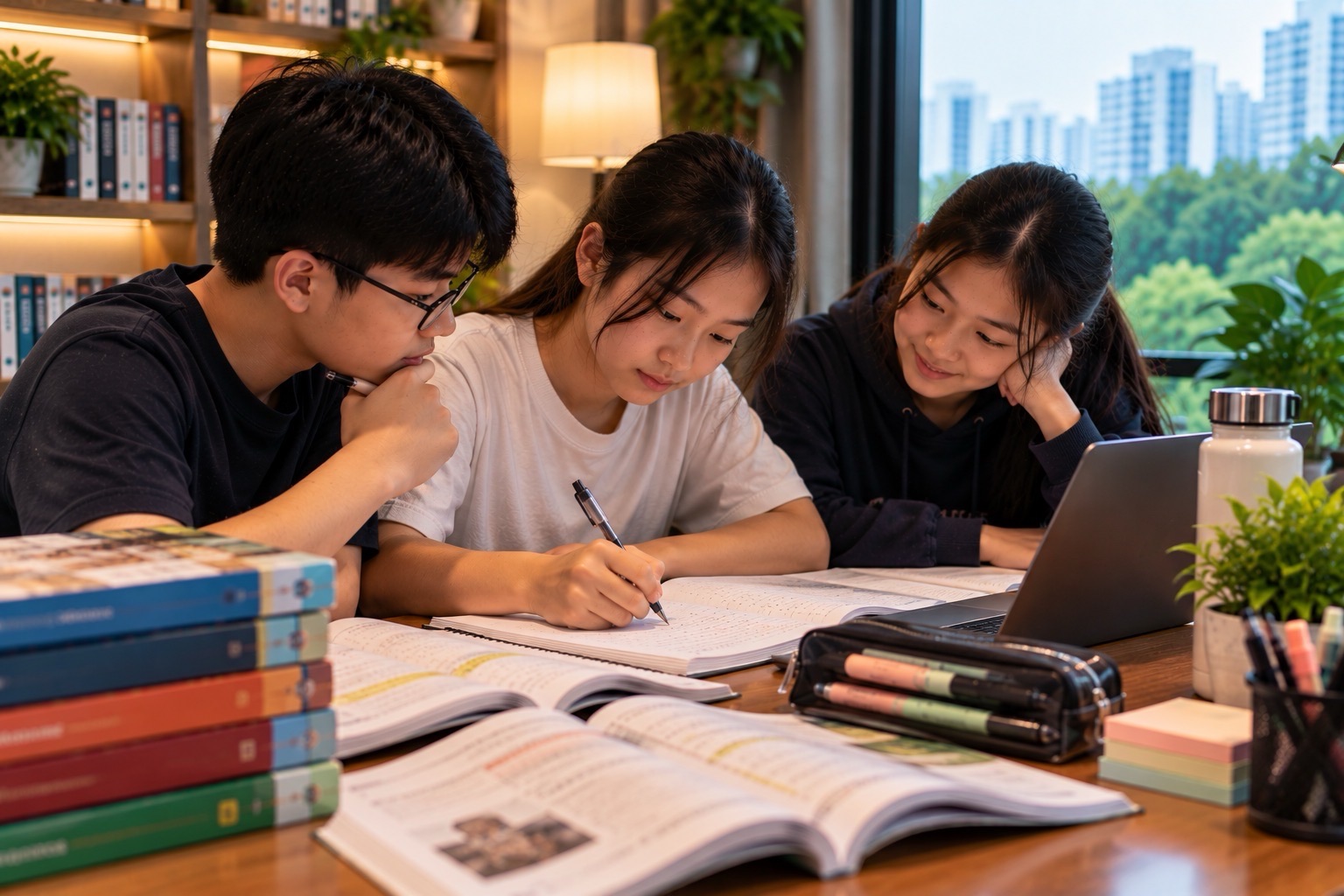
Choosing a Physics tutor in Panama starts with the student’s actual grade, school programme and the kind of problem they find difficult. Families seeking clases particulares de física, tutor de física bachillerato en ciencias, or Physics support in Panama City, San Miguelito, David, Colón or Santiago should not assume every tenth-, eleventh- and twelfth-grade learner is on the same topic, assessment route or technical programme.
The better question is not how many past-paper exercises a tutor can solve. It is whether the learner can explain an unfamiliar problem: what is measured, which physical law applies, how an equation is justified, and how to check units or a graph. A pupil who confuses pressure with force needs a different first lesson from one who can calculate correctly but cannot interpret laboratory observations.
This practical guide links Panama’s MEDUCA course materials with parent decisions, works through an original hypothetical canal-lock water-pressure scenario and offers a four-week learning review. The numbers are invented for teaching; this is not a claim about Panama Canal operations or a description of eduKateSG tuition services in Panama.
Which MEDUCA Physics programme applies to the student?
The Panamanian Ministry of Education (MEDUCA) plans and study programmes index distinguishes the premedia years and upper-secondary educación media, with academic, professional and technical programmes. The site’s programme archive explicitly includes Física 10°, Física 11° and relevant twelfth-grade study resources. Ask for the student’s enrolled bachillerato type rather than choosing a generic ‘Física de secundaria’ workbook.
The MEDUCA tenth-grade Physics programme names Física in Décimo Grado and lists four weekly hours for pathways including Ciencias, Agropecuaria, Marítimo, Tecnología Informática, Industrial and Servicios y Gestión Institucional. Its internal adaptation date is 2014, although an accessible file appears on a newer web path. The date of web upload is not evidence that this is a new 2025 or 2026 syllabus.
That distinction matters. A tenth-grade scientific-bachillerato student may be building models of motion, forces or measurement, while a student on a maritime or industrial track may need to connect the same basic laws to applied technologies. The shared subject title does not mean the teacher should ignore different practical projects, laboratory expectations, term planning and mathematical prerequisites.
MEDUCA’s curriculum directorate programme index provides another route to subject documents. The official Ester learning-platform announcement explains that Mathematics, Physics, Chemistry and other subject materials were added for tenth- through twelfth-grade students. That particular announcement dates to 2022, so it is useful evidence of learning resources, not a guarantee of a 2026 examination-paper format.
Parents should therefore obtain the current school-issued temario, the teacher’s marked assignments and information on the next assessment. Do not automatically treat a 2014 archived Physics programme as the only governing document if the student’s school has received updated guidance. A tutor who checks both the official archive and the actual classroom plan is more trustworthy than one who labels old materials ‘latest 2026’ without evidence.
For a student thinking about engineering, navigation, technology or another tertiary pathway, Physics helps develop useful reasoning, but university admission requirements must be verified with the receiving institution. Panama’s secondary school pathways should not be relabelled as Singapore JC, ITE or polytechnic routes.
Original worked Physics diagnostic: water pressure at an imaginary canal lock
Imagine an entirely fictional classroom cross-section of a lock chamber containing still fresh water of uniform density 1,000 kg/m³. At one point on an imaginary wall, the depth below the free surface is 4.0 metres. Take gravitational field strength as 9.8 N/kg. These are illustrative numbers only—not Panama Canal dimensions, water conditions, wall loads or civil-engineering advice.
A good tutor begins with a diagram. Draw a horizontal water surface, a point 4.0 m below it and a vertical depth arrow. The physics quantity at that point is hydrostatic gauge pressure: p = ρgh. Density describes mass per volume, g describes gravitational field strength, and h is vertical depth measured down from the free surface.
Substituting gives p = 1,000 × 9.8 × 4.0 = 39,200 Pa, or 39.2 kPa. A pascal is a newton per square metre. This pressure is additional to the atmospheric pressure at the water’s surface; the calculation is not an absolute-pressure value unless the specified atmospheric term is included.
If the student writes 39,200 newtons, they have confused pressure with force. If they enter 4 km rather than 4 metres, the issue is reading or converting units. If they measure the depth from the bottom of the chamber rather than the water surface, the model itself has been misunderstood. These are different teaching targets.
Suppose the problem selects a small flat test plate of area 0.20 m² at approximately the same 4.0-m depth, oriented so the water pressure acts normally to it. Treat pressure as uniform across this idealised small patch. The force associated with the gauge pressure is F = pA = 39,200 × 0.20 = 7,840 N. The units now are newtons because a force has been requested.
Now imagine an otherwise identical test plate only 2.0 metres below the water surface. The gauge pressure there is 19,600 Pa, and the corresponding force on the 0.20-m² plate is 3,920 N. Halving depth halves pressure and the force on the same area in this ideal model.
Another transfer keeps the 4.0-m depth but doubles the plate’s area to 0.40 m². The pressure remains 39.2 kPa, because pressure at that depth does not depend on the area of a test patch. The force doubles to 15,680 N. This distinction is often more important than the initial multiplication: changing the area changes total force, not the local hydrostatic gauge pressure.
For an additional proportionality check, suppose the model fluid density were 1,025 kg/m³ instead. At 4.0 m depth, pressure would become 1,025 × 9.8 × 4.0 = 40,180 Pa. On the original 0.20-m² patch the model force would be 8,036 N. Higher density creates greater hydrostatic pressure for the same g and h.
Ask the learner to sketch a pressure-versus-depth graph. It is a straight line through the origin for the ideal gauge-pressure model, with gradient ρg = 9,800 Pa/m. If a student graphs depth vertically and pressure horizontally, the slope has different units; they must label axes and interpret the relationship rather than simply draw a diagonal line.
A deeper discussion asks why a real vertical lock wall cannot be treated as if every square metre has pressure equal to the value at one particular depth. Pressure increases down the wall; a real structural calculation integrates a varying pressure distribution and accounts for many other conditions. The small test-patch exercise does not determine a complete gate force.
This distinction builds scientific judgement. The tutor should explain what the model can predict, what it deliberately excludes and what additional measurements an engineer would require. No child or family should apply this fictional calculation to real gates, tanks, construction or water-safety decisions.
The diagnostic identifies the first incorrect mental move
A student may perform all the arithmetic correctly yet choose the wrong measured height. Another may know p = ρgh but put area into the pressure equation. A third may understand pressure but struggle with kilo-pascals, decimal multiplication or the meaning of gauge versus absolute pressure. A tutor should watch the learner’s first wrong decision and design the next activity accordingly.
Ask the child to explain why the pressure doubles as depth doubles, why the chosen plate’s area does not change the local pressure, and why the total force requires multiplication by area. Then remove the model answer and change the numbers. The transfer question is the real evidence that teaching worked.
For a tenth-grade beginner, it may be enough to distinguish mass, force, area and pressure with familiar units. For an advanced student, add a graph and uncertainty, then introduce how depth variation matters in a larger surface. The school’s actual syllabus determines when to extend the model.
Physics practical work and Mathematics should support each other
A well-run practical session may use a safe pressure sensor in an appropriate small school vessel, or a table of teacher-provided observations. The student should know which values were measured, which were assumed, how a sensor’s resolution affects a reading and why repeated readings help evaluate uncertainty.
A table for the fictional model could include 1.0 m → 9.8 kPa, 2.0 m → 19.6 kPa, 3.0 m → 29.4 kPa and 4.0 m → 39.2 kPa. These are computed illustrations, not claims of measured data. Ask the learner to plot depth on the horizontal axis and pressure on the vertical axis, then interpret the gradient.
The Mathematics bridge includes ratios, gradients, square-metre area, decimals, scientific notation, converting Pa to kPa and algebraic rearrangement. If a student cannot solve h = p/(ρg), a short algebra repair within this meaningful problem may be better than assigning an unrelated hundred-equation worksheet.
A learner in a technical programme may benefit from discussing measurement accuracy and how idealised physical principles inform, but do not replace, professional design. Tutor claims about safety certification or professional training should be checked separately.
Eight questions to ask a Physics tutor in Panama
- Which grade and bachillerato? Confirm décimo, undécimo or duodécimo, plus the actual Ciencias, industrial, maritime, agricultural or other enrolled pathway.
- Which programme edition? Can the teacher distinguish MEDUCA’s 2014 adapted documents from the current school-issued 2026–2027 topic sequence?
- What is the learner’s first error? Bring one marked exercise and ask whether the problem is quantity meaning, diagram, Mathematics, graph or practical interpretation.
- Can the pupil explain units? In the water-pressure model, ask what a pascal is and why pressure and force require different units.
- How are experiments handled? Require honest observation, labelled measurements, uncertainty and safe supervised apparatus.
- Can new learning transfer? Change depth, area or density, and ask for a prediction before the calculator comes out.
- What is included in the price? Verify tutor identity, experience, group size, schedule, feedback, homework marking, travel and rescheduling.
- How will support end? Request an unfamiliar four-week retest and a clear report of independent capabilities rather than a guaranteed grade.
Panama’s MEDUCA Física programme is a course check, not a universal exam promise
A family choosing clases particulares de física in Panama should begin with the student’s current décimo, undécimo or duodécimo grade and the particular academic, professional or technical bachillerato programme. The Ministerio de Educación (MEDUCA) curriculum index preserves programmes and subject lists for premedia and educación media, including archived Física materials. The catalogue is a primary source for identifying a course, not proof that every school uses identical chapter timing or sits one national examination called ‘Física 2027’.
Several accessible MEDUCA Physics programme documents carry a 2014 curriculum revision or adaptation, even when their downloaded files appear on web paths containing later dates. The tutor should ask the student’s school which edition and subject plan govern the current class. A tutor who presents an archive as an entirely new 2026 syllabus without checking the document’s own date is not performing responsible curriculum matching.
A student in a scientific bachillerato may work with more abstract models, while a technical student may encounter applications in equipment, electrical principles or materials with their own supervised practice requirements. The same Physical law can connect these situations, but the assessment objective and safety conditions differ. Before booking, gather one marked exercise, the present teacher’s topic sequence and the learner’s next assessment date.
Extend the fictional canal-lock model: pressure varies over a vertical surface
The original article computes hydrostatic gauge pressure at one depth. A useful advanced extension demonstrates why that single pressure value cannot automatically be applied to an entire vertical wall. Imagine an entirely fictional, stationary water vessel with a rectangular vertical panel 3.0 metres high and 2.0 metres wide, its upper edge exactly at the model water surface. Use fresh-water density ρ = 1,000 kg/m³ and g = 9.8 N/kg. Assume the water is at rest, density constant, the other side carries no matching water pressure, and the panel is ideal and perfectly vertical. These are invented teaching conditions, not measurements or design criteria for the Panama Canal.
Draw a depth axis y measured downward from the water surface. At the surface, hydrostatic gauge pressure due to water depth is zero. At the bottom depth y = 3.0 m, pressure is p = ρgy = 1,000 × 9.8 × 3.0 = 29,400 Pa, or 29.4 kPa. The pressure depends on depth; it is not 29.4 kPa at every point from top to bottom.
At the halfway depth 1.50 m, gauge pressure is 14,700 Pa, half the bottom value. In this constant-density static model, the pressure-versus-depth graph is a straight line rising from zero at the surface to 29.4 kPa at three metres. A child who insists that all water pressure is constant along the wall may have memorised p = ρgh without interpreting h.
Find a model resultant water-pressure force over the whole panel
The model panel area is A = width × height = 2.0 × 3.0 = 6.0 m². Because pressure rises linearly from zero to 29.4 kPa, its average gauge pressure over this particular rectangle is (0 + 29,400)/2 = 14,700 Pa. Multiplying average pressure by area gives the ideal net water-side gauge-pressure force: F = 14,700 Pa × 6.0 m² = 88,200 N.
The same result follows from integrating small horizontal strips of the panel: each strip of height dy has area dA = width × dy, and force dF = ρgy × width × dy. Therefore F = ∫₀³(1,000 × 9.8 × y × 2.0)dy = 19,600 × (3.0²/2) = 88,200 N. The integral is an advanced explanation; a younger learner can correctly use the triangular pressure graph and average pressure instead.
If the pupil simply multiplies the bottom pressure by the entire six-square-metre area, they will calculate 29,400 × 6 = 176,400 N, double the correct value for this ideal rectangular panel with its top at the surface. The first wrong step is treating a depth-varying pressure as uniform. A useful tutor teaches the physical reason rather than mark the multiplication careless.
Where does the resultant force act?
A deeper extension locates the ideal centre of pressure. With pressure increasing linearly from the surface, the resultant of the triangular pressure distribution acts at two-thirds of the depth below the top for the stipulated vertical rectangle. Thus the centre-of-pressure depth is y(cp) = (2/3) × 3.0 = 2.0 metres below the surface, deeper than the midpoint at 1.50 m.
To justify this to a more advanced learner, take the moment of the pressure distribution about the top: M = ∫₀³ y(ρgy × width)dy = 19,600 × (3³/3) = 176,400 N·m. Divide by the resultant force: y(cp) = M/F = 176,400/88,200 = 2.0 m. This is a mathematical property of the idealised rectangular surface. It does not specify a safe hinge, allowable panel stress or gate design.
Change water depth: the force does not merely scale linearly
Imagine the same fictional panel width of two metres, but now analyse a separate vertical water depth of 4.0 metres with a correspondingly taller rectangular exposed surface whose upper edge remains at water level. The ideal net force is F = ρg × width × h²/2 = 1,000 × 9.8 × 2.0 × 4.0²/2 = 156,800 N.
Compare this with 88,200 N at three metres. The ratio is 156,800/88,200 = 16/9 ≈ 1.78. Increasing the model water depth by a third increases the ideal force on the correspondingly taller panel by about 78%, because both average pressure and total area rise. A tutor should ask the student why the force depends on depth squared for this particular changing-size rectangle.
If the panel’s physical height stays fixed instead, the geometry and limits of the pressure integration must be reconsidered. The child should never apply the h² result to a different surface without specifying which part is wetted, the top and bottom depths and whether water acts on both sides.
Water on both sides is a different engineering model
The original calculation assumes one water side and no matching water-pressure distribution on the opposite side. In a separate fictional case with water of the same density and level on both sides of an ideal panel, the equal hydrostatic gauge-pressure distributions cancel in the net load across the panel under static conditions. A learner who adds equal forces in the same direction despite arrows pointing oppositely has lost the physical diagram.
With different liquid levels, a correct calculation subtracts the opposing force distributions and may require different vertical integration limits. The net centre of pressure is also not generally found by simply taking the midpoint between two separate centres. Actual water structures involve pressures, flowing water, structural engineering, maintenance, environment and legal safety standards outside this school model.
Use a graph to check the difference between pressure and force
A simple model table uses depths 0, 0.75, 1.50, 2.25 and 3.00 metres. Corresponding gauge pressures are 0, 7,350, 14,700, 22,050 and 29,400 Pa. Plot depth horizontally and pressure vertically: the ideal straight-line gradient is 9,800 Pa per metre, equal to ρg for the chosen liquid.
The area under a pressure-versus-depth graph has units Pa·m = N/m. Multiply by the chosen panel width in metres to obtain the net force on the full vertical rectangular surface. For a triangle of base three metres and height 29,400 Pa, graph area is ½ × 3.0 × 29,400 = 44,100 N/m. Multiplying by two-metre width gives 88,200 N. This links the graph directly to the integral without demanding advanced calculus.
A student who says the gradient is a force or the graph area is measured in seconds has confused units. The tutor should ask for the axis labels before announcing what slope or area means. These numbers are computed predictions; they are not readings taken from any real canal, lock, river or dam.
Second original diagnostic: electrical power for a technical bachillerato learner
A separate hypothetical low-voltage electrical model can reveal a different misconception. Imagine an ideal 9.0-V DC source connected across one 6.0-Ω resistor, with fixed resistance and negligible wiring or source losses. This is a paper calculation, not instructions to assemble unsupervised electrical equipment.
Ohm’s law gives current I = V/R = 9.0/6.0 = 1.50 A. Electrical power in the resistor is P = VI = 9.0 × 1.50 = 13.5 W. Over a fictional constant two-minute interval = 120 seconds, energy transfer is E = Pt = 13.5 × 120 = 1,620 J. This is not a 1,620-W device; joules measure cumulative energy.
If the ideal source stays at nine volts but resistance doubles to 12.0 Ω, current halves to 0.75 A, power halves to 6.75 W, and model two-minute energy becomes 810 J. At fixed source voltage and Ohmic resistance, power is V²/R; doubling resistance halves power.
Instead keep the original six-ohm resistor and double ideal voltage to 18 V. Current doubles to 3.0 A, but power rises fourfold to 54 W. Over the same 120 seconds, energy is 6,480 J. The student should predict why doubling voltage does not merely double power when resistance is held fixed.
An advanced question changes the condition to fixed current. If a model source maintains 1.0 A through a six-ohm resistor, power is six watts; doubling resistance at the same current doubles power to twelve watts. A tutor must insist on naming what is held constant. This is the same scientific discipline required in the hydrostatics problem: a different set of assumptions can produce a different relationship.
Six common errors—and which lesson should correct each one
One learner uses the bottom depth for the entire wall: the correction is visualising a varying pressure field. Another converts six square metres into six metres: that is unit interpretation. Another obtains an accurate 88,200 but labels it pascals: that is force versus pressure. A student who mistakes a centre of pressure for the wall’s geometric midpoint needs a discussion of weighting by greater pressure at depth.
In the electrical example, a learner may use the correct nine-volt source but forget that watts multiplied by seconds yield joules, or assume doubling voltage doubles power under fixed resistance. These errors require a different mathematical or conceptual repair. A tutor who produces one generic worksheet for all six does not respond to the learner’s actual difficulty.
What a ninety-minute diagnostic lesson in Panama should accomplish
Start by identifying the student’s MEDUCA-based bachillerato course and the teacher’s next objective. Give a short unseen problem and let the learner sketch and predict before the tutor reveals any formula. When the first wrong step becomes visible, teach the missing idea using a diagram and a carefully chosen worked example.
Next change one parameter at a time and ask the student what will happen qualitatively. Include a graph or school-provided dataset where appropriate. End with a changed problem solved with the earlier work hidden, correct units and one model limitation. A good lesson demonstrates the child’s developing independence, not simply how much the adult can calculate during ninety minutes.
Eight useful questions for a Panamanian Physics tutor
1. Which exact décimo, undécimo or duodécimo grade and bachillerato pathway applies? 2. Can the tutor identify current MEDUCA and school documents without confusing an archive’s web path with the document’s original year? 3. Can the teacher locate the pupil’s first error in a marked pressure, force or electricity problem? 4. Can the learner predict whether pressure rises or falls with depth before using p = ρgh?
5. Are graphs, experiments, units and uncertainty taught honestly? 6. Can the pupil handle a changed depth or changed fixed electrical variable without seeing the model answer? 7. What are the instructor’s verified qualifications, fees, class size, access arrangements, corrections and cancellation terms? 8. Is there an independent retest after four weeks, with the option to reduce paid tutoring if the target is secure?
Four weeks to build a transferable physical explanation
Week 1: obtain the current school programme and one marked Física question. Diagnose whether the learner confuses pressure and force or another relevant quantity. Week 2: rebuild the relevant model through a diagram, equation and unit explanation, with a new numerical example to solve independently. Week 3: change one parameter, use a graph and revisit an earlier topic to test retrieval. Week 4: set an unfamiliar, course-aligned task with no formula prompt and compare the independent result with the baseline.
A useful parent report might say: ‘The student previously multiplied bottom pressure by the entire wall area, but can now interpret a triangular pressure distribution and verify the force through graph area without hints.’ Another learner may instead gain secure understanding of energy versus power. Different progress reports reflect different learning needs; neither is a guaranteed examination grade or admission result.
Frequently asked questions about Physics tutoring in Panama
Does every Bachillerato Técnico student need the same standalone Physics course?
No. Different technical and academic options can have overlapping scientific laws while assigning different practical applications and teacher tasks. Confirm the subject, year and approved school programme before buying a course.
Why is the centre of pressure below the middle of the fictional panel?
Pressure increases with depth, so deeper strips contribute more force. For the particular panel starting at the surface, the triangular distribution’s resultant acts at two-thirds of the depth below its top. Do not generalise that position to arbitrary surfaces or real structures without the appropriate calculation.
Can the fictional lock calculation support safe engineering or canal operations?
No. It omits structural strength, flowing water, changing levels, actual geometry and professional safety requirements. The goal is a classroom explanation of hydrostatic pressure, resultant force and graphs.
Should a student attend university-style Physics coaching immediately after one weak school test?
Not necessarily. The first step is to identify the incorrect mental move and repair the actual school subject. Advanced mathematics or entrance practice is appropriate only when the learner’s goals and prerequisites justify it.
Official curriculum sources and related eduKate reading
Use MEDUCA’s study-programme index and its Curriculum and Educational Technology directorate to confirm school routes. Read dated programmes in their proper historical context; a 2014 programme may be valuable, but the enrolled school must confirm the edition actually applied to the student.
For connected study see Mathematics Tutor | Panama, Science Tutor | Panama, How Science Works | Physics and the World Physics country directory. All panel dimensions, depths, resistors and power values are fictional and not engineering, water or electrical safety advice. eduKateSG does not claim to operate a Panamanian tutoring centre.
A four-week programme to decide whether tutoring adds value
Week 1 — identify and diagnose. Collect the present MEDUCA-aligned school topic, marked work and one new pressure diagram. Ask the learner to mark depth from the free surface and distinguish force from pressure. Record the first incorrect inference.
Week 2 — connect diagram and law. Work through the fictional 4.0-m depth and 0.20-m² plate. Discuss density, g, pascals, newtons and the distinction between an assumed model input and a measured quantity. Give a new example for the learner to solve alone.
Week 3 — vary one condition at a time. Halve the depth, double the plate area and change density, asking for qualitative predictions before calculation. Plot the pressure–depth values and discuss why a full vertical wall requires more than one point pressure.
Week 4 — test transfer without hints. Present a new vessel depth, fluid density and test patch. Require a drawing, units, p = ρgh, F = pA where appropriate, a graph interpretation and one assumption. Compare the result with the first diagnostic before choosing further support.
A useful parent report might say: ‘The student previously confused 39.2 kPa with 39.2 kN; now distinguishes pressure and force, uses the correct vertical depth and explains an unfamiliar changed-area problem independently.’ This is observable improvement, not an examination-score guarantee.
Choosing one-to-one, small-group and independent practice
One-to-one time can help repair a significant prerequisite or communication barrier. A carefully managed small group is useful when students can compare diagrams but each still shows individual working. If the child solves unfamiliar tasks independently, relevant school feedback and periodic practice may be enough.
Ask about lesson length, transport, tutoring-language clarity, reliable marking and time for home practice. More paid hours do not necessarily mean more useful learning. A responsible tutor can recommend less tuition when the agreed target skill becomes secure.
Questions parents commonly ask
Does MEDUCA’s online tenth-grade document prove a brand-new 2026 syllabus?
No. The accessible document bears an internal 2014 adaptation date. Ask the student’s school whether that edition, a modification or another programme is currently assigned.
Can one Physics tutor teach every bachillerato programme using the same papers?
Not automatically. Core laws may overlap, but technical projects, subject combinations and assessed competencies can differ. Verify the actual programme and level.
Should Physics tuition focus on formulas or understanding?
Both, in the right sequence: identify the system and quantities, explain a law, then calculate, check units and transfer the idea. A formula alone does not diagnose a misread situation.
Official sources and related eduKate study routes
Start with MEDUCA Plans and Study Programmes, the archived Physics 10° programme, the curriculum directorate index and the older Ester Physics-resource announcement. Their internal years and purposes must be read correctly.
For connected help use Mathematics Tutor | Panama, Science Tutor | Panama, How Science Works | Physics, the World Physics Country Directory and World Tuition.
Editorial note, 17 October 2026: The lock chamber, depths and forces are fictional teaching values and cannot be used as Panama Canal engineering or water-safety advice. An archived course document should not be misrepresented as a new 2026 syllabus. eduKateSG provides premium three-student small-group lessons in Singapore, not a claimed local tutoring service in Panama.