
A Primary 5 pupil around King George’s Avenue sees a drawing of a bee leaving one flower and approaching another. ‘The bee has fertilised the flower!’ the child writes. The diagram may suggest that pollen is being carried between flowers, but it does not by itself show fertilisation happening inside an ovule. The confusion is understandable because pollination, fertilisation, fruit formation and seed dispersal appear in one connected chapter.
A productive tuition lesson turns that tangled sequence into clearly separate events. It uses observations that actually support each claim, then tests whether the child can explain an unfamiliar flowering plant rather than repeat a sentence about bees. This is especially useful when Primary 5 work begins to ask for precise process names in open-ended answers.
Parents in the Lavender and Jalan Besar area have another question: is it better to use a weekday tutorial to repair a fresh wrong term, or weekend time to compare whole life cycles? The answer depends on the child’s actual gap, energy and need for delayed independent retrieval.
eduKateSG · Primary 5 Science · King George’s Avenue
Pollen reaching a stigma is pollination; fertilisation and seed formation are separate later events.
Full chapter index
1. Ask what the bee drawing really shows · 2. Separate pollination, fertilisation and seed formation · 3. Use a four-scene worked sorting exercise · 4. Learn what flower diagrams can and cannot prove · 5. When a weekday Science tutorial should be focused · 6. Use a weekend session to build the full sequence · 7. Write an answer that names the right event · 8. Use a delayed transfer check with wind rather than bees · 9. Questions parents ask about P5 plant reproduction · 10. Choose timing from a new reproductive-process answer
1. Ask what the bee drawing really shows
A diagram of a bee with pollen attached can support an inference that the insect may transfer pollen. It does not prove a male sex cell has fused with a female sex cell inside an ovule. First ask the pupil to identify the anther, where pollen grains are produced, and the stigma, the receiving part of a flower.
Pollination is the transfer of pollen grains from anther to stigma of a flower of the same species. A pollinating agent may be an animal, wind or another mechanism, depending on the plant. Not every observed insect visit delivers pollen to the correct stigma, and the presence of pollen alone does not prove a seed has formed.
This is a useful lesson in evidence: a photograph of transport, an internal reproductive event and a mature seed are three different observations. Pupils should name the one they have been shown.
2. Separate pollination, fertilisation and seed formation
Pollination is about transfer of pollen. Fertilisation occurs when a male sex cell fuses with a female sex cell in the ovule, following successful transfer and subsequent processes. Seeds can develop from fertilised ovules; in flowering plants the ovary commonly develops into a fruit as the seed matures.
Seed dispersal happens later, when seeds are moved away from the parent plant by wind, water, animals or other means. Dispersal is not the same as pollen transfer, even if wind or animals happen to be involved in both. A child’s explanation should therefore focus on what is being moved: pollen, a seed, or a fruit containing seeds.
Keep the vocabulary appropriate to the actual Primary 5 topic. It is enough to understand the main sequence accurately before attempting elaborate diagrams of pollen tubes or reproductive structures in microscopic detail.
3. Use a four-scene worked sorting exercise
Consider four fictional teaching cards. These are not field observations made on King George’s Avenue. The purpose is to choose the most precise process from the supplied evidence. Have the child predict a label before reading the explanation, then give a reason for rejecting at least one tempting alternative.
A labelled diagram may make the key structure visible. Where the evidence does not reveal what happened internally, the scientifically honest response may be ‘not enough information to claim fertilisation’.
| Scene on the question card | What is directly described? | Best process to name |
|---|---|---|
| Pollen grains land on a compatible stigma | Pollen transfer to stigma | Pollination |
| Male and female sex cells fuse in an ovule | A reproductive fusion event | Fertilisation |
| A mature fruit contains developed seeds | Later reproductive structures present | Seed and fruit development |
| Winged seeds blow away from parent plant | Seeds travel away | Seed dispersal |
4. Learn what flower diagrams can and cannot prove
A Primary 5 learner should be able to identify the main flower parts in the school syllabus and reason through their roles. For example, the anther produces pollen grains, while the stigma receives them. The ovary contains ovules; a fertilised ovule can develop into a seed. A diagram of the outside of a flower cannot necessarily show whether fusion of sex cells has occurred.
Ask a stronger question than ‘What is the part called?’ Try ‘Which observation would show pollen reached the stigma, and what extra event must take place before an ovule develops into a seed?’ This reveals whether the child understands sequence.
Do not use public planting or a neighbour’s flowers as unsupervised dissection material. Clear diagrams or teacher-provided specimens are enough. Some students have pollen allergies, and unnecessary handling is not required for good Science reasoning.
5. When a weekday Science tutorial should be focused
If the child lost a mark this morning by writing ‘fertilisation’ when the question only showed pollen on a stigma, a weekday session can focus on that precise terminology error. Ask the pupil to correct it and state why. Then change the diagram to one describing fusion inside an ovule and ask whether the answer should remain the same.
That two-case contrast is more valuable than writing ‘pollination’ twenty times. The child must learn what evidence triggers the right process name. Once the distinction is secure, add seed development as the next link in the sequence.
Parents choosing a weekday class should allow for travelling, homework and rest. A well-used one-and-a-half-hour three-pupil tutorial can be sufficient for a focused repair, but a long day that ends in copying will not demonstrate independent learning.
6. Use a weekend session to build the full sequence
A weekend class may have more space for linking flower structure, pollen transfer, fertilisation, seed formation and dispersal. Mix diagrams and short written descriptions: an insect touching an anther, wind moving pollen, a labelled ovule and a fruit releasing seeds. Then ask the child which process is supported in each case and what is not proven.
In a three-pupil lesson, let each learner act in turn as process-namer, diagram-checker and evidence-sceptic. Every pupil must eventually make an individual judgement on an unfamiliar scenario. Group consensus alone gives the tutor too little information about the weakest learner’s understanding.
Weekend time is useful for deliberately varied cases, not necessarily for harder vocabulary. The goal is to build a consistent internal timeline that still makes sense when a question describes a flower without mentioning bees.
7. Write an answer that names the right event
Question: ‘A pollen grain was transferred from an anther to the stigma of another flower of the same species. Name the process and explain why the observation does not yet prove a seed will form.’ A good response is: ‘The process is pollination. The observation shows pollen transfer, but fertilisation must still occur before the ovule can develop into a seed.’
A weaker answer says ‘the bee made a seed’ or ‘pollination means pollen becomes a seed’. Both skip important events. The improved answer is not much longer; it is more accurately bounded by the diagram and the biological process.
Teach an answer structure of observed event → precise process name → what must happen next. Then ask the learner to identify which words in the question support each part.
8. Use a delayed transfer check with wind rather than bees
After two or three days, give the child a different scenario: wind carries pollen grains from one flower to a compatible stigma; later the flower develops a fruit containing seeds. Ask the pupil to name the first event, describe what needs to happen for the seeds to develop and distinguish that from dispersal when the mature seeds leave the parent plant.
If the child calls wind-borne pollen ‘seed dispersal’, the original confusion persists. If the pupil understands the wind example without a picture of a bee, the concept has transferred beyond the first familiar stimulus.
A further challenge is to say what cannot be concluded from pollen on a stigma alone. Recognising a limit of evidence is a legitimate success, not a sign that the learner lacks confidence.
Independent changed-question check: Wind carries pollen grains to a stigma, and a fruit containing seeds develops later. Identify pollination, explain the role of fertilisation, and say when seed dispersal would occur.
Ask the student for an unaided explanation before looking at the worked response.
9. Questions parents ask about P5 plant reproduction
Why does my child mix up pollination and fertilisation? Both belong to one reproductive sequence, but different events happen at different stages. Should we learn difficult internal anatomy first? Start with the syllabus-level structures and main sequence. Does a bee always guarantee fertilisation? No; an insect visit is not proof of the internal reproductive event.
Is weekend tuition better for this topic? It may help with several linked diagrams when attention permits. What if the school follows a different order? Use the student’s current Science chapter, not a fixed website sequence. Can a shy child learn in a three-pupil group? Yes if the tutor requires a separate, prompt-free explanation from each learner.
10. Choose timing from a new reproductive-process answer
Bring the first wrong bee answer, a corrected sequence diagram and the new wind-pollination question to consultation. Ask the tutor whether the gap concerns flower parts, vocabulary, chronology or using evidence carefully. That answer should determine the next lesson, not simply adding another worksheet from the same page.
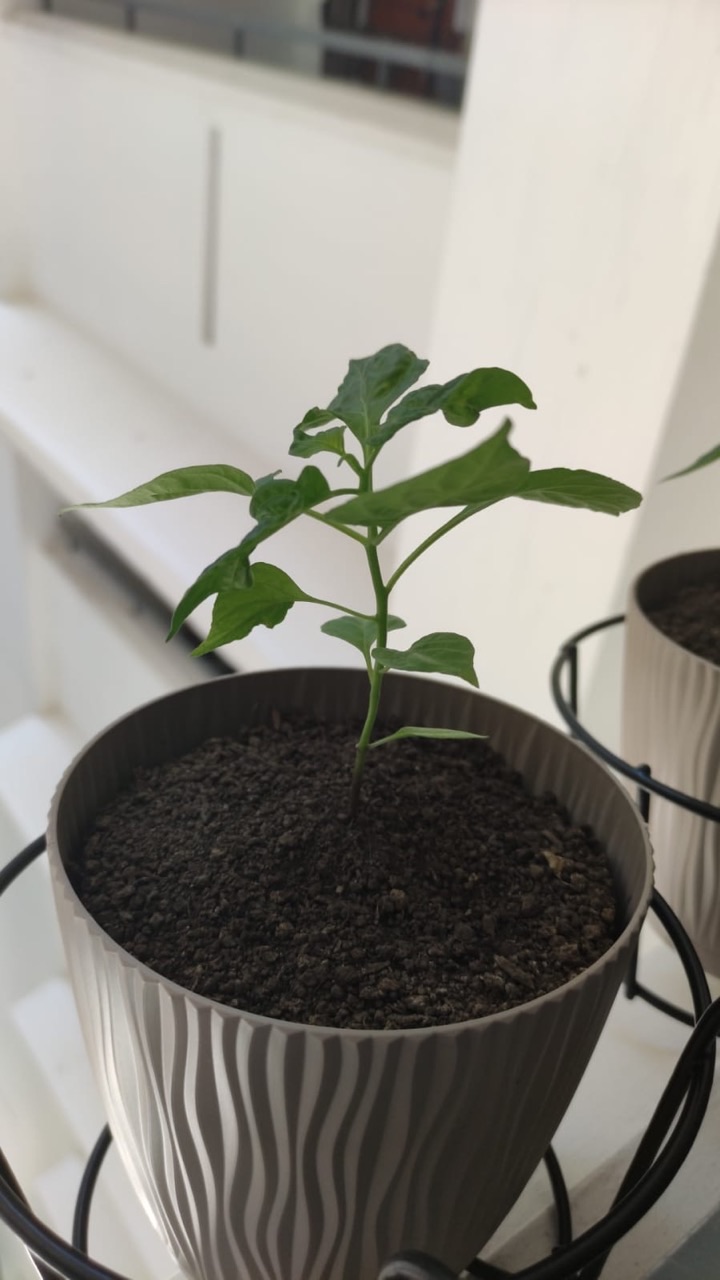
This guide serves readers around King George’s Avenue. The plant example is illustrative, and a featured plant photograph must not be mistaken for a documented botanical experiment at that address. There is no implied eduKate classroom, class timetable or vacancy on the road: confirm actual arrangements before deciding.
Weekday versus weekend decision table
| What parents need to decide | Weekday lesson | Weekend lesson |
|---|---|---|
| One fresh wrong term | Compare pollen transfer with internal fertilisation | Build a full reproduction-to-dispersal sequence |
| Best practice | Two closely contrasted labelled diagrams | Several unfamiliar flower and dispersal cases |
| Two-day follow-up | Wind-pollination transfer question | Mixed process-label exercise midweek |
| Evidence of success | Correct name and bounded reason without hints | Unfamiliar scenario explained in the right order |
Connect to other eduKateSG Science learning guides
Primary Science tuition hub · weekday and weekend Science learning rhythm · official MOE 2023 Primary Science syllabus · eduKate consultation and actual class information. The MOE syllabus outlines the theme progression; follow the student’s current school chapter and, where relevant, the actual Standard or Foundation Science requirements.
More independent examples at this level: Primary 5 Science at Tyrwhitt Road · Primary 5 Science at Crawford Street. These different topic examples can support spaced retrieval and varied-context practice; they are not a substitute for the child’s own school material.
King George’s Avenue is the intended local reader area. This educational guide does not imply that eduKate runs a classroom on that street, that a tutor is currently available there, or that any PSLE score is guaranteed. Verify tuition venue, fees and schedules directly.