
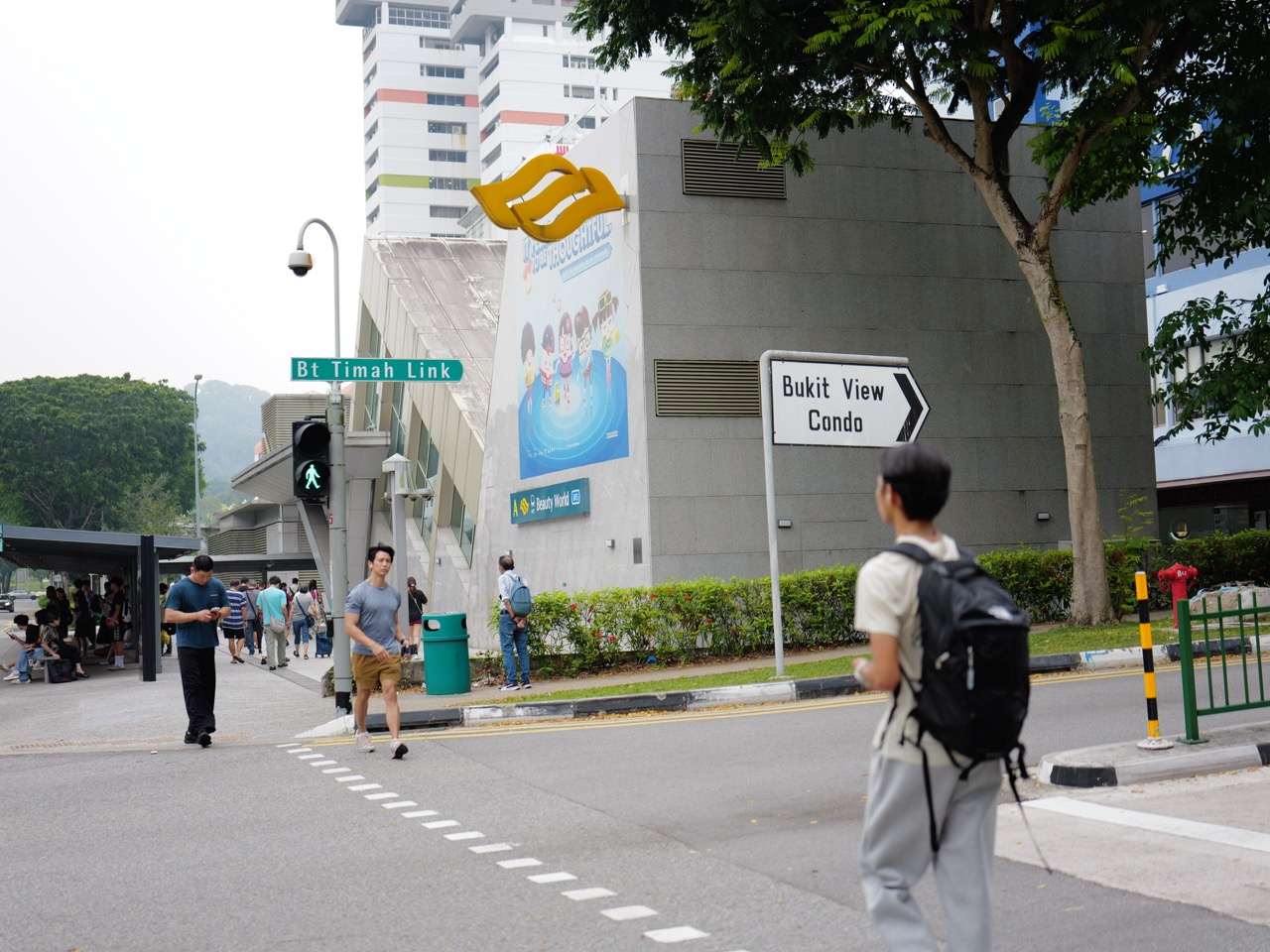
Bukit Timah Plaza opened in 1978, bringing a new kind of shopping destination to the area around Jalan Anak Bukit. Its history is about more than an older mall: it connects suburban shopping, homes above the shops and businesses that moved out of the earlier Beauty World Town.
eduKateSG · Bukit Timah history
Choose your reading route
1. When did Bukit Timah Plaza open?
2. The mall and Sherwood Towers belong to one development
3. A business carried its history from Beauty World Town
4. What can you do at Bukit Timah Plaza today?
When did Bukit Timah Plaza open?
The National Heritage Board’s Bukit Timah trail booklet records the opening of Bukit Timah Plaza in 1978. That places it within the neighbourhood’s late-1970s retail transformation.
You may also encounter 1979 in descriptions of the property. CBRE’s February 2025 property release uses 1979 as the development’s completion year. The sources describe an opening and a completion respectively; they should be labelled that way rather than treated as interchangeable dates.
A shopping centre enters local life when people start using it. The first grocery trip, a new shop address and the opening of a branch can all become markers of change. Seen from that angle, the opening year is a useful starting point for asking how the surrounding neighbourhood acquired its familiar routines.
The mall and Sherwood Towers belong to one development
CBRE describes a four-storey retail block and two apartment blocks containing 269 residential units, known as Sherwood Towers. It identifies the development as an early comprehensive mixed-use project outside Singapore’s city centre.
That arrangement helps explain what you are looking at when you approach the building. The shops and homes form parts of a larger project. Imagine the different journeys taking place around it: a resident coming home, a shopper arriving for groceries and a shopkeeper beginning work.
Mixed-use development can sound like a technical expression, but the underlying idea is easy to picture here. Several parts of everyday life share one location. It gives a neighbourhood building a role that extends beyond a single shopping trip.
The roads around the complex are also part of its setting. CBRE places it between the PIE, Jalan Anak Bukit and Upper Bukit Timah Road. Looking at the whole plot on a map helps explain why planning the final approach is useful.
A business carried its history from Beauty World Town
A particularly personal account comes from Mee Mee Optics’ own heritage page. The business began at Beauty World Town in 1965, founded by Chong Mee Liang and his siblings. It later moved into Bukit Timah Plaza. Its account also records the adoption of a Nikon Auto Refractor in July 1982.
This is a small story with several kinds of change inside it: a family business, a move between premises and new equipment changing the way work was done. The neighbourhood’s retail history becomes much easier to imagine through that sequence.
Notice the continuity as well as the move. A shop can keep its name, skills and customer relationships while changing its address. From a customer’s point of view, the familiar business may provide a thread between two very different shopping environments.
If you remember an older Bukit Timah shop, try placing your memory beside a dated photograph or the business’s own account. The result can be a wonderfully specific family story: who took you there, what you went to buy and what the journey felt like.
What can you do at Bukit Timah Plaza today?
The mall’s official website presents its current mix of retail, food, supermarket, beauty and education services. Use its directory to choose a purpose for your visit, then confirm an individual outlet’s hours.
For practical orientation, our Bukit Timah Plaza visitor guide covers the shopping and travel context. A short visit works well as one part of a neighbourhood outing rather than a checklist of every shop.
While you are there, look at how people use the building. Grocery shopping, lessons, meals and services give you different glimpses of its present role. Those ordinary activities make a useful connection with the development’s earlier ambition to bring shopping closer to homes.
The most interesting question to bring along is simple: which parts of this place have changed, and which routines would an earlier visitor still recognise? Leave room for an older family member’s answer. Their remembered shop or meeting place may be the detail that brings the building to life.