
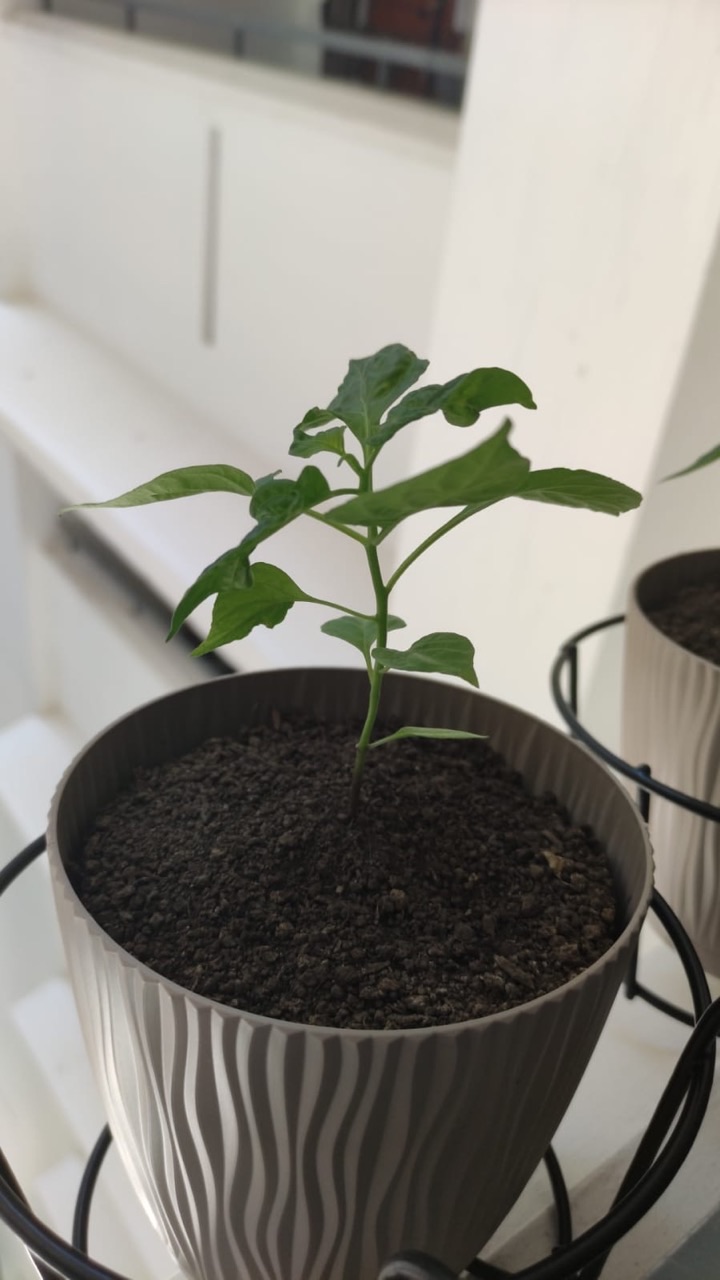
A Primary 4 child caring for a small chilli plant says, “The leaves absorb all the water from the soil because the leaves are the green part.” The plant has green leaves, but a usual classroom potted-plant example takes in water from the growing medium primarily through its roots. The stem then helps support the shoot and transport substances. Leaves have important roles, including food-making in suitable light, but being green does not mean they reach into the soil to drink.
The P4 Plant System topic is an opportunity to connect the visible parts of a plant with functions rather than merely label a diagram. A plant can wilt when its water uptake or water balance becomes inadequate, yet wilting alone does not establish precisely which part failed. Sunlight, soil water, root condition and environmental demands can all matter.
For parents searching for weekday or weekend Primary 4 Science tuition around Kampong Kapor Road, the first goal is to locate the wrong inference. A weekday lesson can repair one root-versus-leaf misunderstanding as soon as it appears. A weekend lesson can compare root, stem and leaf functions through varied observations and fair tests. Both should end with the child explaining a new potted-plant case without hints.
eduKateSG · Primary 4 Science · Kampong Kapor Road
Roots usually take in water and minerals from the growing medium; stems support and transport; green leaves make food during photosynthesis under suitable conditions.
Full chapter index
1. Why ‘green leaves’ does not answer the soil-water question · 2. Match each main plant part to an appropriate function · 3. Work through an illustrative three-plant watering comparison · 4. Trace the water path rather than memorise arrows in a picture · 5. Understand why wilting needs a careful diagnosis · 6. Design a fair observation without harming plants · 7. Repair a fresh root-versus-leaf error on a weekday · 8. Use weekend time for a wider plant-function comparison · 9. Write a supported answer about dry soil and leaves · 10. An unfamiliar root-damage question and parent FAQ
1. Why ‘green leaves’ does not answer the soil-water question
The child’s observation is that the leaves are green. The inference is that green leaves must absorb soil water directly. Ask the pupil to draw where the soil touches the plant. The roots are typically within the growing medium, while the leaves are above it. This simple physical arrangement helps explain why root structures are central to uptake.
At Primary 4, the goal is to link the part’s location to its major function without giving an overly rigid definition. Leaves can absorb some water on their surfaces in certain species or circumstances, but that is not the ordinary school-level pathway for watering a typical potted chilli plant. The relevant statement is that roots usually take in water from the soil or growing medium.
Ask the child to point out where the water goes next. The stem connects underground and aboveground parts and includes tissues that transport water upwards. The answer should not stop at ‘the roots absorb water’ if the question asks how water reaches the leaves.
2. Match each main plant part to an appropriate function
Roots commonly anchor the plant, absorb water and mineral salts, and may store food in some plants. The stem supports leaves and other shoot parts while allowing transport of materials within the plant. Leaves can make food through photosynthesis when they have appropriate light, water and carbon dioxide. Flowers and fruits are involved in reproduction, though details should match the school’s learning stage.
A child who knows the names ‘root’, ‘stem’ and ‘leaf’ is not automatically ready to explain a changed diagram. Ask what would happen if the plant had leaves but its root uptake was severely impaired. Ask what support the stem provides when leaves are held towards available light. Each question ties structure to function.
Do not claim that every root must be a thin underground thread or every stem must be green. Real plant forms vary. A carrot can have a thick storage root; woody trees have stems that develop into trunks. The key for P4 is a reliable function rather than a single cartoon shape.
3. Work through an illustrative three-plant watering comparison
Imagine three otherwise similar small potted chilli plants observed by a teacher. In Case A, a healthy plant receives adequate water in its growing medium. In Case B, the medium remains dry for a time. In Case C, the medium is moist but the roots are described as damaged. These are fictional teaching cases, not experimental observations made on Kampong Kapor Road.
The possible outcomes illustrate why one visible symptom cannot prove a single cause. A plant in dry soil may wilt because its roots cannot obtain enough water; a plant with damaged roots may struggle even when water is present. A healthy plant with adequate moisture may remain firm, but actual responses vary with temperature, light, species and the length of observation.
Do not present the table as measured growth data or as a recommendation to damage plants. It is a reading exercise about possible causes and limitations.
| Teaching case | Given growing conditions | Possible observation | What can be inferred? |
|---|---|---|---|
| A: healthy roots | Adequately moist medium | Plant remains firm | Water uptake may be sufficient |
| B: healthy roots | Medium becomes very dry | Leaves may wilt | Insufficient water availability is possible |
| C: impaired roots | Moist medium | Leaves may still wilt | Water uptake can be limited by root condition |
| D: no root information | Wilted plant in photo | Cause unknown | More evidence needed |
4. Trace the water path rather than memorise arrows in a picture
Use a simple root → stem → leaf arrow model for water carried through a typical plant. Roots take in water from the growing medium. The stem provides a route for transporting water to leaves and other parts. The plant uses water in several processes, and some may be lost from leaves to the surrounding air. At P4 level, the focus should be on the major parts and their functions; technical details can be extended later.
Ask the child to read the arrows aloud. A downward arrow from leaf to soil labelled ‘all water uptake’ would not represent the usual pathway. If water is absorbed at the root, the initial arrow points towards the root from the soil. From there, it continues through the plant’s transport system.
Then change the drawing by placing the roots partly visible in a transparent growing vessel. The learner should explain the same pathway even when the plant no longer resembles the original textbook pot.
5. Understand why wilting needs a careful diagnosis
A wilted leaf has lost firmness, often because water relations inside the plant are not sufficient for its needs. Dry soil is a common explanation, but one photograph cannot prove it. Root damage, excessive heat, disease or other conditions can contribute to visible wilting. A careful pupil should distinguish the observation from a specific cause that the question has not supplied.
Ask what extra observations would help: moisture of the growing medium, condition of the roots, recent watering, light exposure or whether the plant recovers under appropriate care. Never ask children to deliberately uproot or damage a public plant to confirm a hypothesis. Teacher-provided descriptions and drawings are enough.
In an exam-style question that clearly states the growing medium has been dry, the answer can connect lack of water availability with reduced uptake. In a photograph with no conditions, the student should say a cause is possible rather than certain.
6. Design a fair observation without harming plants
To test how watering affects a potted plant’s condition, compare similar healthy plants in similar pots, growing media and light conditions while deliberately varying the water supplied. Do not change species, pot size and sunlight simultaneously if the question aims to isolate water availability. Note that ethical classroom work should avoid leaving plants in damaging conditions for unnecessary lengths of time.
For young pupils, it may be better to compare teacher-provided photographs taken with documented conditions or observe a single plant before and after ordinary care. Avoid treating a wilted houseplant as a laboratory subject to be repeatedly deprived of water. A safe teaching activity still provides data for prediction and explanation.
Record observations such as leaf position, soil moisture and time rather than a vague judgement of a ‘happy’ or ‘sad’ plant. Explain why these observations are relevant and what they still cannot establish.
7. Repair a fresh root-versus-leaf error on a weekday
If the school paper returned today says ‘the leaves drink water from soil because they are green’, a weekday tutor can reconstruct the plant’s major functions. Ask the pupil to label root uptake, stem transport and leaf food-making separately. The correction is more than a change of one word: it connects each part with what it actually does.
Next, remove the familiar plant picture and present a tomato seedling growing in a container of suitable nutrient solution. Ask whether roots still have an uptake role when the medium is not ordinary soil. This altered situation reveals whether the child has learned the function rather than simply memorised ‘roots are in soil’.
Choose a weekday lesson only when the child has enough attention after school. Meals, travel, homework and sleep still matter. A short accurate explanation plus a delayed independent retest can show more progress than a pile of near-identical labelled diagrams.
8. Use weekend time for a wider plant-function comparison
Weekend tuition may allow comparisons among a herbaceous chilli plant, a small tree and a root crop. Ask which parts support the above-ground shoot, which parts take in water and which may store food. Different shapes should not cause the child to abandon the underlying function. Make the lesson conversational and use safe, clear illustrations.
In a three-pupil group, rotate the jobs of naming a plant part, explaining the function and challenging over-broad claims. Every child should then answer an unseen case alone. The quickest pupil’s correct answer is not evidence that all three can explain the same root-to-leaf pathway.
A tutor can include a small retrieval task two days later. Ask the learner to make a fresh root–stem–leaf diagram without a word bank and describe what might be wrong if water is abundant but the roots cannot take it up.
9. Write a supported answer about dry soil and leaves
Question: “A chilli plant with healthy roots is left in very dry soil. Explain why its leaves may wilt.” A strong answer is: “The roots cannot take in sufficient water from the dry soil. Less water is supplied through the plant to its leaves, so the leaves may lose firmness and wilt.” This connects the stated condition, plant part and visible outcome.
A weak answer says “the leaves forgot to absorb soil” or “the stem makes water”. These either mislocate the uptake function or invent production of water by a plant part. Another weak answer says “all plants with dry soil die immediately”; the question supplies neither a universal response nor an exact time.
Ask the child to underline the relevant condition in the question before answering. If the problem instead says roots are damaged while soil is moist, the explanation should change accordingly.
10. An unfamiliar root-damage question and parent FAQ
Two days after the lesson, show two fictional drawings. Plant A has healthy roots but dry medium. Plant B has damaged roots and moist medium. Both show drooping leaves. Ask for one possible reason for each, and whether adding more water to Plant B necessarily fixes the problem. A careful pupil should connect root condition to uptake rather than assume that water availability is the only factor.
Must P4 children learn detailed transport tissue names? Follow the current syllabus; major plant parts and their functions come first. Are wilted leaves proof of under-watering? No, several causes are possible. Is weekend tuition always better? Only when more varied comparisons are needed and the pupil can focus. How do three pupils each receive attention? Ask for independent diagrams and responses.
Bring the initial wrong leaf-uptake answer and new root-damage question to consultation. Kampong Kapor Road names the intended local reader area, not an eduKate teaching address or confirmed class availability. Confirm actual venue, fees and schedule before booking.
Independent changed-question check: Two chilli plants wilt. One has dry soil and healthy roots; the other has moist soil but damaged roots. Explain one likely water-uptake difficulty in each and why watering alone may not solve both.
Ask for an unaided reason, then compare it with the child’s first wrong explanation. Use the difference to decide the next lesson.
Weekday versus weekend parent decision table
| Decision | Weekday Science tutorial | Weekend Science tutorial |
|---|---|---|
| Fresh misconception | Repair uptake versus food-making functions promptly | Compare roots, stems and leaves across plant types |
| Best learning task | One root-to-stem-to-leaf diagram | Different water and root-condition scenarios |
| Two-day independent test | Plant in nutrient solution | Moist soil with damaged roots |
| Proof of understanding | Names source, pathway and role correctly | Rejects the idea that every wilted plant lacks water in soil |
Official curriculum, topic references and further learning
Science syllabus and eduKate tutorials: MOE Primary Science Syllabus · Primary Science Tuition Singapore · Weekday versus weekend Science learning rhythm · three-pupil tutorial teaching reference · eduKate parent–student consultation. Match the learning activity to the child’s actual Primary 4 chapter, Standard or Foundation course where applicable, and attention span.
Additional sources: Park View Primary: MOE Science theme and level mapping · URA Little India Conservation Area · URA conserved Kampong Kapor Road building. The street and historical setting are reader context; the worked teaching records are hypothetical rather than local field measurements.
Previous distinct Primary 4 worked cases: Petain Road · Desker Road · Jalan Berseh. These are independent topic examples for changed-context retrieval, not duplicate teaching venues.
Other Kampong Kapor Road Science levels: Primary 3 Science · Primary 5 Science · Primary 6 PSLE Science. Parents can follow the child’s current level rather than assume a higher-level explanation is compulsory.
Kampong Kapor Road is the intended reader area in Little India, Singapore. This educational guide does not claim that eduKate operates a classroom or has vacancies on this road, nor does it promise a score or Achievement Level. Confirm the actual tuition venue, fees, class size and timetable directly.