
Parents comparing Secondary 1 English tuition near City Hall, Singapore, on weekdays or weekends should begin with one practical learning question: can the child read a new passage accurately enough to tell who acted, where something happened and which detail supports an answer? After PSLE, the words may be familiar, but the thinking becomes more demanding. A confused location, misread pronoun or imagined motive can turn a fluent response into an unsupported one.
Choose a weekday tutorial when the actual school dismissal, meal, public-transport journey and return home leave the student alert enough to reason. Choose a weekend when CCA, homework and school fatigue make that difficult, provided the weekend still protects sleep, family time and independent reading. The useful measure is a fresh answer the child can produce alone after the lesson, not the day printed on the timetable.
eduKateSG’s referenced premium small-group format is up to three students, approximately 90 minutes each week, at 8 Fourth Avenue, Singapore 268674, near Sixth Avenue MRT. City Hall is a locality used by searching families, not a new City Hall tuition branch. Parents should confirm the student’s English subject level, a suitable group and genuine lesson availability rather than assume a City Hall station-side classroom exists.
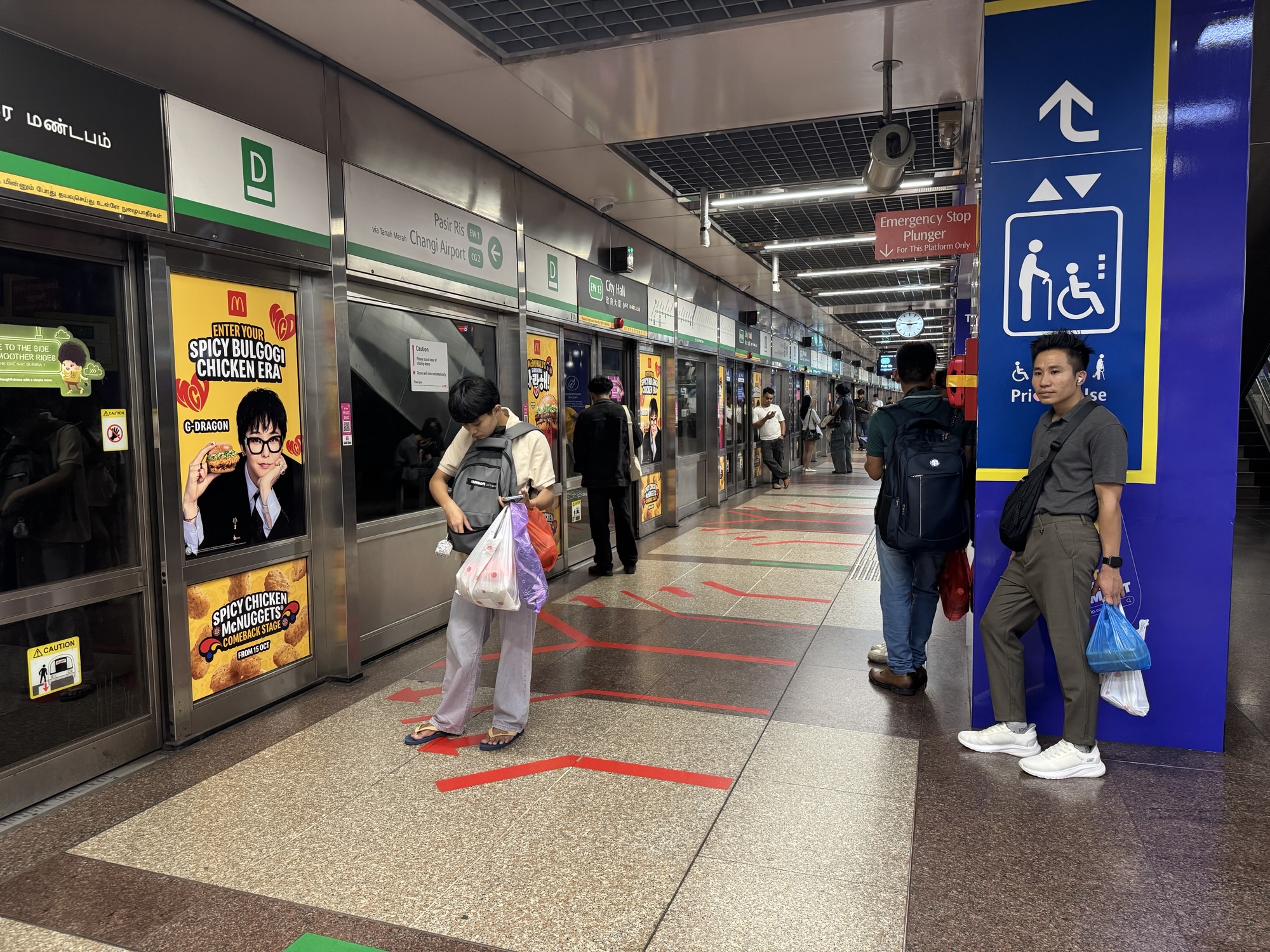
City Hall is an especially engaging setting for Secondary 1 English because the same phrase can describe a present-day MRT station, a historic building and the wider civic area. This guide shows children how to use context, reference and sequence to tell those meanings apart, with a calm, practical plan for families.
The parent answer in one minute
- Weekday: worthwhile when the schoolday, meal and travel still leave real attention for comprehension and writing.
- Weekend: worthwhile when weekdays are tiring but recovery and family life remain protected.
- First target: track place-name meanings, pronoun references, event order and supported inferences.
- Actual classroom: up to three students for approximately 90 minutes weekly at 8 Fourth Avenue near Sixth Avenue MRT.
- Placement: check G-level, uncorrected schoolwork, real journey and an appropriate available group.

Contents
- 1. A place name can mean three things: the first comprehension trap
- 2. Secondary 1 English after PSLE: what really needs to develop?
- 3. City Hall’s history makes factual reading feel wonderfully concrete
- 4. A worked example: who actually delivered the message?
- 5. A second worked example: ‘before’ changes the whole scene
- 6. The weekday journey from City Hall is not always the school journey
- 7. Five diagnostic checks before adding more tuition
- 8. Writing a short story set around an unfamiliar meeting point
- 9. Oral communication: give an opinion and answer the next question
- 10. What the three-student tutorial must actually make visible
- 11. A four-week plan for building a careful new secondary reader
- 12. Parents’ frequently asked questions about City Hall English tuition
1. A place name can mean three things: the first comprehension trap
Imagine a fictional Secondary 1 pupil, Anya, reading this sentence: “After leaving City Hall, the group studied a photograph of the former City Hall at the Gallery.” She says the group visited the same place twice. Her interpretation feels natural because she sees the words “City Hall” repeated; however, those words may refer to a rail station, a historic building or a wider area, depending on the text.
The tutor’s first job is to locate the exact referent. Did the author write “City Hall MRT station”, “the former City Hall building”, or a general phrase about the civic district? The article’s sentence alone can be improved for clarity: “After leaving City Hall MRT station, the group viewed a photograph of the former City Hall building at National Gallery Singapore.”
That revision does not increase the number of difficult adjectives. It adds two small clarifications that prevent the reader from merging different objects. Secondary English often grows through precisely this kind of reference control rather than through impressive vocabulary lists.
Now ask the child to identify the verb connected to each place. People leave a station, view a photograph, and may visit a museum. The verbs and their subjects help locate meaning. Then ask whether the sentence establishes that Anya’s group physically entered the heritage building; simply viewing a photograph is not the same action.
The teacher should change the text immediately. A new passage might say “We met at the library before reading about the old library.” Can the child distinguish meeting at a modern facility from reading about its predecessor? If the idea transfers, the learner has begun to control reference rather than merely remember a City Hall fact.
One diagnostic question is especially revealing: “How do you know?” If the pupil points to “MRT”, “photograph” or a context phrase, the answer is grounded. If they create a whole unseen journey, the tutor can teach what the sentence does and does not establish.
The characters and visit described above are invented teaching examples, not a reported eduKateSG excursion. Their value is to make a small interpretive decision visible before the family adds more academic hours.
2. Secondary 1 English after PSLE: what really needs to develop?
The move from Primary 6 to Secondary 1 is not a complete restart. Students retain important reading, grammar, vocabulary and writing foundations, but passages often demand stronger control over relationships between sentences. A learner may recognise every individual word and still misidentify who spoke or what changed between paragraphs.
Begin with literal comprehension: who is present, what is stated explicitly, which action happened first, and where each event occurs. In a narrative about a guide and two students, one overlooked speaker tag can reverse the meaning of a conversation. A tutor should repair that earlier misunderstanding before teaching an advanced inference formula.
Reference words are the next bridge. “She”, “they”, “this”, “those” and “it” require a clear earlier person or idea. In “Mei told Sara that she had misplaced the note”, the pronoun could be ambiguous without further context. A careful student may need to say that certainty is not available instead of choosing the nearest familiar name.
Time words matter. “Before”, “after”, “while”, “until” and “by the time” build the sequence of a text. A pupil who reads “the doors had closed before they arrived” as though the arrivals came first will struggle to explain why the characters missed an event.
Vocabulary should be taught within meaningful phrases. “Hall” can be part of a place name or a large room; “gallery” may refer to a museum space or a collection of images. A student should use sentence context instead of selecting whichever dictionary meaning seems most sophisticated.
Writing is the reverse of careful reading. Students must create clear reference and event order for other people. A story needs a situation, a meaningful choice, a consequence and an ending; it is not simply a long display of sensory descriptions.
Oral communication gives the child an opportunity to reveal thinking aloud. Ask for a view, one reason and a relevant example, then a short follow-up question. A small group is educationally useful when all three pupils explain independently rather than waiting for one confident student to answer.
The correct English complexity follows the learner’s current G1, G2 or G3 subject level under Full Subject-Based Banding. A year label alone does not tell the tutor which passage difficulty or school feedback to prioritise.
3. City Hall’s history makes factual reading feel wonderfully concrete
The National Heritage Board’s Civic District record explains that the former City Hall was completed in 1929 and the former Supreme Court in 1939. These are two adjoining but distinct historical buildings. Both are now part of National Gallery Singapore.
The former City Hall was originally known as the Municipal Building and was renamed City Hall in 1951. It witnessed major civic events. That does not mean every event took place in the same room or that the adjoining former Supreme Court building had the same function. An English student learns to attach each name and date to its correct referent.
The National Gallery’s architecture and history guide describes the former City Hall with a façade facing the Padang and 18 tall Corinthian columns. It distinguishes that wing from the domed former Supreme Court. A pupil can practise factual paraphrase by naming the right building instead of saying the City Hall building has every feature of its neighbour.
This is also a lesson in time. A text referring to the Municipal Building before 1951, another referring to City Hall in the later twentieth century, and a present-day guide to National Gallery Singapore may discuss connected but differently named stages. Accurate reading should not interpret the changed name as proof that the whole site was demolished.
The Gallery’s official story describes the two national monuments being transformed into an art museum. A student can write, “The buildings have been adapted for a new public role,” but should not claim that every former room remains unchanged or every past event has been recreated.
Set a short exercise: “The Municipal Building was completed in 1929; the former Supreme Court was completed in 1939; the National Gallery opened in 2015.” Ask which event happened first, whether the second building opened at the same time as the first, and which phrase describes the later reuse. The pupil needs evidence and chronology, not memorised opinions.
City Hall MRT is a transit station rather than one of these two national monuments. It can be part of a family journey, but a passage about a train arrival is not automatically a description of a museum visit. This practical distinction makes place-name ambiguity easy to understand.
4. A worked example: who actually delivered the message?
Read this original mini-passage: “At the station, Daniel saw Farah holding a printed map. Farah gave him a short note from their teacher. Before the group walked towards the Gallery, she asked him to check the meeting time.” The question is, “Who asked Daniel to check the meeting time?”
The answer is Farah, provided “she” has a clear reference to Farah in this context. The prior sentence names Farah as the person passing the note, and Daniel is the male recipient. But the tutor should still teach the student to show the chain of reference rather than simply guess from the names.
Now introduce another female character: “Mei joined Farah. She asked Daniel to check the time.” Who is “she”? Without clarification, the new sentence may be ambiguous. A pupil who insists the answer is automatically the newest name may be using a shortcut rather than understanding reference.
The writer can revise: “Mei joined Farah, and Farah asked Daniel to check the time.” Or: “After joining Farah, Mei asked Daniel to check the time.” Each revision makes a different actor explicit. The tutor should ask which version fits the intended story rather than declaring that all stylistic alternatives mean the same thing.
Pronoun chains matter in longer comprehension passages because one wrong identification can distort several later answers. If a learner wrongly assigns a message to Mei, they may later misinterpret Daniel’s reply, Farah’s reaction and the consequence of a delayed arrival.
Use a new passage about two science-club members and a teacher. Remove the highlighted clue and ask the child to underline every pronoun and draw an arrow to its referent. A correct independent explanation shows more than a corrected answer copied from the board.
The scenario, students and school message are fictional. They are classroom practice, not real National Gallery directions or verified school activity arrangements.
5. A second worked example: ‘before’ changes the whole scene
Imagine this original sentence: “By the time the class arrived at the Padang, the outdoor presentation had ended.” Some pupils may say the class arrived before the presentation ended because the words “arrived” and “ended” appear in the same line. The phrase “by the time” signals that the ending was already complete at the moment of arrival.
Make a two-event timeline: the presentation ended; the class arrived. The order is the important information. Then rewrite the sentence: “The class arrived before the presentation ended.” This describes a different situation even though the setting and basic vocabulary are unchanged.
Ask why the group missed the presentation. The original line alone shows that it had ended when they arrived; it does not tell us whether a bus delay, wrong meeting point or a teacher’s decision caused the late arrival. A good reader distinguishes what happened from the reason.
Add a new clue: “The class’s train had stopped unexpectedly for fifteen minutes.” Now a delay could be a relevant explanation, but the tutor must still check how that detail connects to the stated event. Inventing a missed train without this new evidence is not a defensible answer.
In composition, writers deliberately choose the order in which they reveal events. A story might open with an empty field, then flash back to the missed presentation. The student should use time markers so that readers understand the shift instead of assuming one continuous scene.
For independent transfer, use a library closing time or school assembly rather than another Padang scene. The child should still recognise when an event was already complete. This is the kind of foundation that later supports inference and narrative sequencing.
The Padang is a real public place, but the class and presentation here are invented examples. No actual event or booking has been asserted.
6. The weekday journey from City Hall is not always the school journey
City Hall MRT is served by Singapore’s North–South and East–West lines. Sixth Avenue MRT is on the Downtown Line. From City Hall station a family might consider changing to the Downtown Line at Bugis using the East–West Line, or at Newton using the North–South Line. The better journey depends on which platform, school or workplace the child actually starts from.
The Land Transport Authority’s rail network overview provides the official system context. Do not turn a station-to-station route into a guaranteed door-to-door travel time. Walking, transfers, service conditions and the journey back home all matter.
Parents sometimes search “English tuition City Hall” because they work near the civic district. Their children may attend schools elsewhere. An after-school trip could start at school, continue to meet a parent and only then head towards Sixth Avenue. A weekend trip might begin at the family’s home in a different estate.
Write a realistic weekday schedule: dismissal, CCA if any, meal, station access, journey to the centre, ninety-minute lesson, travel home, schoolwork and bedtime. If the plan depends on a teenager skipping food or arriving too tired to read, the timetable needs attention.
Weekends offer an alternative when the schoolweek is packed, but Saturday may already include sport, family visits and other academic commitments. A weekend full of consecutive lessons is not necessarily a calmer or more productive learning environment.
The academic question is simple: at the proposed hour, can the child read a new passage carefully enough to distinguish station, historic building and gallery, then justify the interpretation? A vacant time slot is not evidence of usable attention.
Confirm the actual available group at 8 Fourth Avenue before deciding travel. A premium three-seat teaching format is not a promise that Tuesday or Saturday has a vacancy.
7. Five diagnostic checks before adding more tuition
First, take one uncorrected comprehension answer and ask the pupil which line supports it. An answer that confuses a station and historic monument needs reference work; an answer that identifies the place correctly but invents a character’s emotion needs evidence-based inference. They are separate issues.
Second, ask the child to retell the events in a short passage chronologically. Put two or three actions on a timeline. If “before”, “after” or “by the time” is misunderstood, correct the sequence before discussing motives and literary effects.
Third, check vocabulary in context. A child may know that “gallery” usually refers to a place displaying art but not notice that a digital gallery can be a collection of online pictures. Ask how neighbouring words settle the meaning without assuming the most famous place is always intended.
Fourth, inspect the child’s composition paragraph for unclear reference. Does “she” identify the intended person? Does a setting description explain where the action occurs? Can a reader follow a meaningful choice and its consequence? Highlight one recurring pattern rather than twenty stylistic preferences.
Fifth, ask for a fresh independent attempt two or three days later. If the student can explain an unfamiliar sentence without a tutor highlighting the answer, the skill is becoming usable. A beautifully corrected old worksheet is weaker evidence of transfer.
Bring current English subject-level information and school feedback to the consultation. If the child is already secure and progressing through independent reading, more tuition may not be necessary. The goal is a measurable learning need rather than automatic weekly attendance.
A tutor should be able to name the first unstable decision, teach it deliberately and check again with different material. Parents can evaluate that process more reliably than a promise that a child will gain a particular grade.
8. Writing a short story set around an unfamiliar meeting point
Use this original composition prompt: “Write about a time you realised that a small misunderstanding could become a bigger problem.” A pupil chooses the City Hall area as the setting. The story should not consist of five paragraphs about the skyline followed by an abrupt happy ending. It needs a real decision.
A possible fictional spine is straightforward: a supervised school group receives two similarly named meeting points; the protagonist notices a difference between “City Hall MRT Exit A” and “the National Gallery’s entrance”; the student checks the teacher’s message and asks for confirmation before the group separates.
This plot uses the locality’s naming distinction without inventing a dangerous rescue or implying that a real school organised such an excursion. The conflict comes from the possible misunderstanding. The choice is to verify, and the consequence is that the group follows the correct instruction.
Give each paragraph a job: introduce the group and instructions, show the discrepancy, reveal hesitation, describe the verification, and explain what the protagonist learns. Any local detail should help the reader understand the confusion. A lengthy description of the columns is useful only if the character needs to distinguish the historic building from a station.
Dialogue can move the action. “Do you mean the station or the Gallery?” is more purposeful than a page of speeches about how exciting the area is. The teacher’s response should settle the actual meeting point within the fictional scenario, not introduce new unclear names.
Ask the student to revise pronouns, time transitions and the ending. Does the action solve the problem introduced earlier? If the child writes, “We finally arrived at City Hall,” will another reader know which City Hall referent is intended? The story tests the same reading habit in the role of writer.
Move the plot to a school library and a public library for independent transfer. If the student still structures a clear misunderstanding, choice and consequence, the narrative method is stronger than a memorised City Hall story.
9. Oral communication: give an opinion and answer the next question
A Secondary 1 oral practice question might ask whether learning about historic places through photographs is useful. A pupil may answer, “Yes, because photographs help us see what places look like.” That is relevant but undeveloped. A tutor can ask how photographs contribute and what they cannot show.
The child might add: “A photograph can show a building’s design, which makes a written description easier to imagine. But it may not explain what happened inside the building, so a reliable historical text is still helpful.” The response has a reason, an example and a limitation.
This is a good use of City Hall’s civic history. A photograph of the former City Hall’s façade can show columns; the National Gallery’s historical materials can supply dates and former functions. Neither should be treated as the source of every possible fact.
Then ask a genuine follow-up: “Would you rather learn from a photograph, a passage or an actual visit?” The pupil can choose one, give a considered reason and acknowledge different circumstances. The answer need not agree with the tutor’s personal preference.
In a three-student setting, each pupil should respond before hearing the polished model from the strongest speaker. One can focus on explaining a benefit, another on a limitation, and the third on proposing a practical classroom activity. Rotate roles so everyone practises flexible answers.
A rehearsed opening speech does not answer every oral prompt. Listening carefully to the question and adapting is a skill that can be taught through short discussions about school, reading and daily life.
The oral conversation is fictional practice. It is not an official examination script or a claim that any school visit has been arranged.
10. What the three-student tutorial must actually make visible
In the referenced eduKateSG format, up to three pupils take a weekly lesson of approximately ninety minutes near Sixth Avenue MRT. The advantage of the arrangement is the tutor’s opportunity to hear every child’s first reading decision, not merely the number of chairs around a table.
A session might begin with three independent answers to a short passage using “City Hall” in different senses. One child confuses the station with the historic building, another loses track of a pronoun, and a third correctly identifies the places but invents an unsupported reason for the visit.
The tutor can model a common strategy: mark each noun phrase and its referent, trace the event order, then separate stated facts from possible inferences. The following question must be new enough that pupils cannot just recognise the original answer.
For writing, each student can revise a different ambiguous sentence. Ask them to explain which misunderstanding the change prevents. A small group supports learning when every child gives a reasoned explanation and receives targeted feedback.
More confident learners can extend to writer purpose or deliberate ambiguity, while those still repairing reference words may need shorter texts. Appropriate variation does not require permanently labelling one pupil weak and another strong.
Home practice should be manageable: one short new passage, a few lines of explanation and a check for clear reference. Parents can protect the time without becoming the person who supplies all the answers.
Ask the tutor how progress will be measured with fresh independent attempts. A three-student format is promising only when it helps children become less dependent on teacher prompts. It is not a guarantee of particular marks or school placements.
11. A four-week plan for building a careful new secondary reader
Week 1 — diagnose. Use a current school comprehension response and a composition paragraph. Have the learner explain the first answer before correction. Identify whether the gap is reference, sequence, unsupported inference or expression.
Choose one priority rather than assigning every type of English work at once. If reference is unstable, practise identifying people, places and objects in short texts. Then ask the pupil to repair an unclear sentence in their own writing.
Week 2 — change the text. Move from City Hall-related examples to a school notice, library message or short story with unfamiliar names. The child should mark what each reference word points to without a highlighted model.
Introduce a simple event timeline and test “before”, “after” and “while”. Ask the learner to explain why a changed connective alters the story. The lesson should build a decision process, not just recognition of memorised vocabulary.
Week 3 — use the skill as a writer. Draft a short story about a mistaken meeting point. Require a beginning, a significant choice and an ending that follows from the action. Revise ambiguous references before replacing ordinary words with fancy ones.
Add a brief oral task: explain which source provides an observation and which provides verified context. Encourage the child to use “the passage states” or “this may suggest” where appropriate, rather than presenting every guess as fact.
Week 4 — test delayed transfer. Give a completely new passage without tutor annotations. Record the first response, compare it with Week 1 and ask the student to name the skill that improved and one remaining challenge.
If the child can now read accurately when rested but loses the skill after an exhausting weekday journey, reconsider the schedule. If errors persist in a calm lesson, reconsider the teaching explanation. A four-week checkpoint guides the next decision; it does not promise a certain grade.
12. Parents’ frequently asked questions about City Hall English tuition
Does eduKateSG have a City Hall classroom? This guide does not advertise one. The referenced teaching venue is 8 Fourth Avenue, Singapore 268674, near Sixth Avenue MRT. City Hall identifies a family’s search or potential travel origin.
Is weekday or weekend better after PSLE? Either can be suitable. The key is whether meals, school commitments, travel, sleep and a later independent reading attempt fit without exhausting the child.
Will my child be taught G1, G2 or G3 English? School information determines the child’s actual subject level under Full Subject-Based Banding. Parents can consult MOE’s official resources and use school work to guide difficulty.
How do I know the tutor is addressing the right weakness? Ask for an uncorrected example, an explanation of the first mistaken decision, and a later fresh exercise showing whether the pupil can use the method alone.
Should Secondary 1 pupils begin with full examination papers? A suitable plan generally starts from current school requirements and stable English foundations. Full-paper timing is less useful when the child cannot yet identify speakers or event order.
Can small-group lessons guarantee a grade jump? No. The small format may allow closer observation, but outcomes depend on starting gaps, instruction, practice and many other factors. Early progress should be visible in new independent answers.
What should we bring to a consultation? Bring a few uncorrected comprehension and writing samples, teacher feedback, the actual English subject level and a full timetable. Ask about an appropriate available three-student group.
To enquire, use eduKate Singapore or the Secondary 1 English WhatsApp enquiry. No specific weekday or weekend vacancy is claimed here.
Compare weekday and weekend as complete school routines
| Parent check | Weekday | Weekend |
|---|---|---|
| Where the journey starts | Usually school or CCA, not the parent’s office | Often the family home |
| Attention risk | Late dismissal, missed meal and long transfers | Multiple activities and reduced rest |
| Target for the first year | Place, pronoun and event sequence accuracy | Place, pronoun and event sequence accuracy |
| Proof of learning | Fresh answer later in the week | Fresh answer on another day |
| Booking | Confirm suitable group and available slot | Confirm suitable group and available slot |
Continue reading in the SEC English Tutorials | City Hall programme overview, Surviving Tuition | City Hall, the Downtown Core education guide and eduKateSG’s Clementi small-group learning reference.
Official factual sources include the National Heritage Board’s Former City Hall and Supreme Court, National Gallery Singapore’s architectural history, MOE Full Subject-Based Banding and LTA rail network information. Fictional student stories are illustrative and are not assertions about real pupils, current vacancies or actual school activities.