
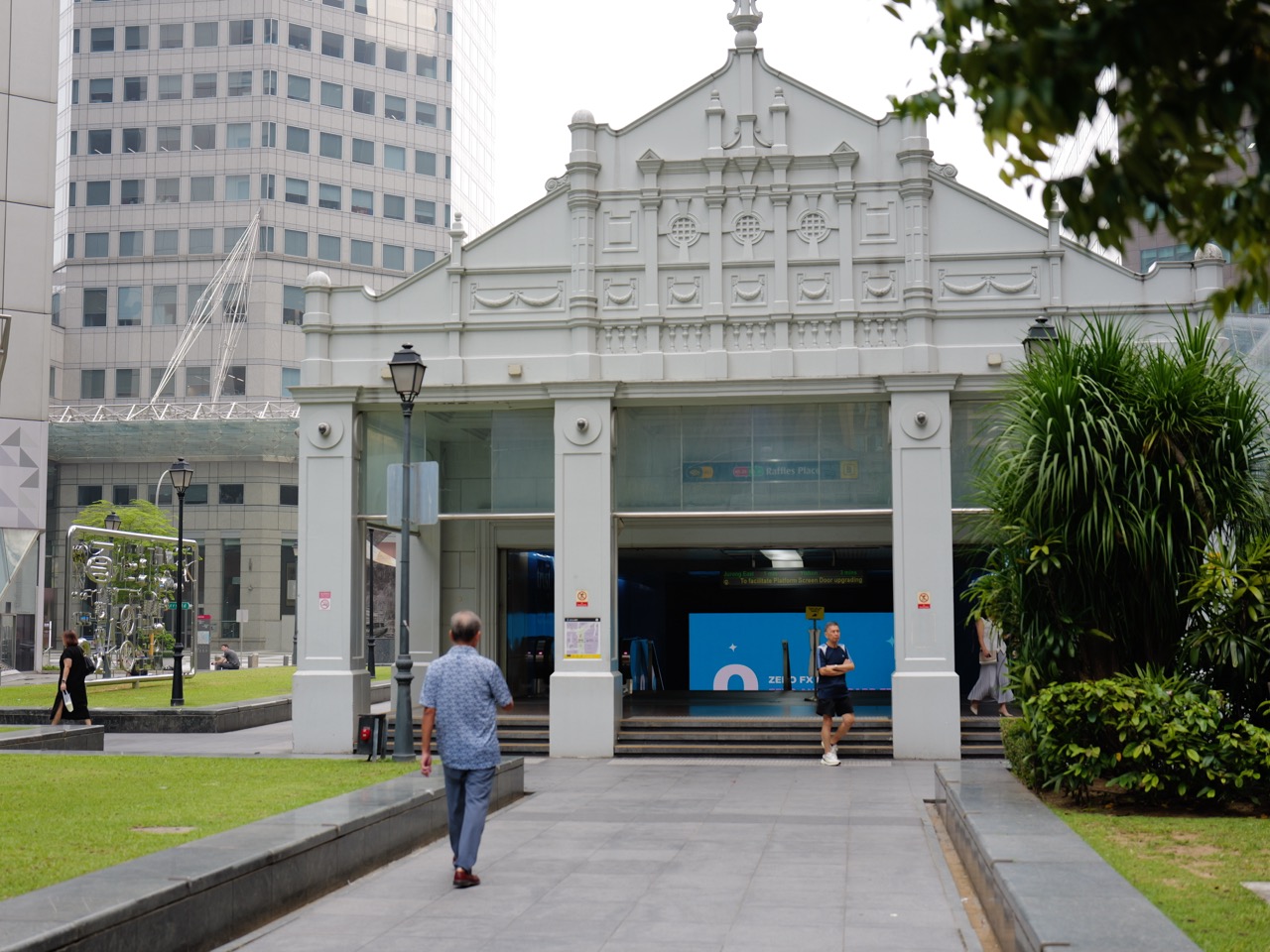
For families comparing Secondary 2 English tuition from Raffles Place on weekdays or weekends, begin with what the learner is actually struggling to do. Can your child compare two passages accurately, preserve conditions such as “unless” and “may”, and distinguish a reason from a sequence of events? If a busy weekday still allows thoughtful reading, writing and a short independent return, it can work. If CCA, travel and homework drain that attention, a weekend may be kinder. The better day is the one that protects real understanding.
Secondary 2 is a valuable time to repair something that often hides behind reasonable overall grades: distortion during comparison. A student may understand each notice separately but merge them into one claim. Another may quote a sentence correctly but turn “some” into “all”. Another may explain that one event happened after another as though the first caused the second. These are English reasoning errors, not simply weak vocabulary.
The teaching arrangement described is eduKateSG’s three-student, approximately 90-minute weekly tutorial at 8 Fourth Avenue, Singapore 268674, near Sixth Avenue MRT. Raffles Place identifies a family’s work or travel area, not a classroom at Raffles Place station. Determine the actual school or home starting point before comparing schedules; verify a suitable group and genuine availability rather than assuming a particular class day exists.
The SEC English Tutorials | Raffles Place page covers the subject and G1/G2/G3 pathway, while Surviving Tuition | Raffles Place considers the family’s overall timetable. This guide concentrates on comparison, chronology, qualification and the Secondary 2 student’s developing independence.
The immediate Secondary 2 parent answer
- Weekday fits if the learner can compare conditional statements after dismissal, dinner and travel.
- Weekend fits if CCA leaves weekdays exhausting and there is genuine recovery space.
- Key Secondary 2 issue: protect “may”, “unless”, “some”, time order, audience and evidence in reading and writing.
- Venue: 8 Fourth Avenue, near Sixth Avenue MRT, in a three-student 90-minute format.
- Check before enrolment: school subject level, uncorrected scripts, route, group fit and actual places.
Contents
- 1. The small reading mistake that changes a family’s decision
- 2. What progression looks like in Secondary 2 English
- 3. Raffles Place: compare the historic commercial square with the modern district
- 4. The scheduling decision should be made around independent comparison work
- 5. Diagnostic checks that reveal distortion instead of mere low marks
- 6. Original worked example: two notices that are not contradictory
- 7. Original worked example: the danger of ‘because’ in a comparative answer
- 8. Summary writing: shorten without strengthening claims
- 9. Functional writing: the right information for the right reader
- 10. Grammar and vocabulary corrections worth making before Secondary 3
- 11. What the three-student tutorial should look like
- 12. A four-week plan for conditions, comparisons and faithful writing
- 13. Four family scenarios and their different answers
- 14. Parent questions before making a commitment
1. The small reading mistake that changes a family’s decision
Imagine a fictional Secondary 2 class preparing for a guided heritage visit. The school notice says the walk is scheduled for Friday, but the route may change if the weather turns poor. A student tells a parent, “The visit has been cancelled because the weather will be bad.” The child has transformed a possibility into a decision and a conditional reason into a reported forecast.
Correcting the grammar in that sentence is not enough. Ask the pupil to locate four pieces of meaning: the scheduled event, the condition, the possible consequence, and what is not yet known. The notice commits to a date, allows for a change, and says nothing about an actual cancellation. The most honest paraphrase keeps those distinctions.
A good revision would be: “The visit is planned for Friday, but the school may change the route if the weather is unsuitable.” The child can now show which word carries uncertainty and which sentence provides the condition. This is a habit needed in comprehension, summary, situational writing and everyday school notices.
The tutor should next provide an unfamiliar notice with different wording. If the learner reads “Only registered students will receive a seat” as “All students must register”, they may again be confusing a condition with a universal requirement. The response reveals a teachable operation: preserve how strongly the original author commits to a claim.
Secondary 2 pupils encounter longer informational texts and more nuanced arguments than before. The issue is not that they are careless by nature. It is that accurate reading increasingly depends on tracking scope, sequence and qualifications across sentences. A half-understood sentence can distort an entire paragraph.
For parents choosing a lesson day, this diagnostic requires energy. A student who can copy “scheduled, not cancelled” while exhausted may still fail to notice the difference in the next text. The right timetable creates enough space for a guided correction and an independent transfer several days later.
2. What progression looks like in Secondary 2 English
Secondary 2 is not simply Secondary 1 with longer passages. Many learners can now identify who acted and what happened, yet they need to compare how two writers frame a similar issue. In literary texts they may weigh different characters’ interpretations. In non-fiction they may distinguish the purpose of a notice, advertisement, editorial comment and historical information panel.
A secure learner reads for both content and relationship. “First”, “meanwhile”, “however”, “therefore” and “unless” do different jobs. A paragraph can be factually understood sentence by sentence and still be misread overall when a contrast is treated as support or a possibility is treated as a certainty.
Students also need to preserve tone. “Residents expressed some concern” is not identical to “Residents were furious”. “A change may be considered” is not the same as “A change has been approved”. A student who recognises these differences can answer comprehension questions more precisely and avoid accidental exaggeration in writing.
Grammar is part of that precision. Relative clauses, pronoun chains, conditional structures, punctuation and correct tense signal which ideas depend on others. Do not teach them as detached labels alone. Put each structure back into a meaningful paragraph and ask what misunderstanding it prevents.
Composition and functional writing benefit from the same skills. A proposal should establish a credible problem, offer a feasible action and explain its likely benefit. An informal message needs enough detail for its intended reader, not a ceremonial introduction copied from a formal letter. Audience, purpose and content must work together.
Full Subject-Based Banding means a Secondary 2 learner’s English subject level can be G1, G2 or G3. The school may use different task demands and text complexity. Select the exact programme using current work and teacher feedback instead of assuming all Secondary 2 children should be drilled with the same eventual examination paper.
3. Raffles Place: compare the historic commercial square with the modern district
Raffles Place provides a particularly useful setting for comparative reading because two accurate texts can describe the same area at different times. One document may call it Commercial Square; another may describe today’s financial district. The reader has to notice that the names refer to a changing place, not automatically to two separate districts.
The National Heritage Board’s historic-site account records the role of Raffles Place as the commercial centre and its earlier name. The Singapore River Story describes the old trading environment and nearby Change Alley. Ask a pupil to identify which factual statement belongs to the past and which describes the present.
The URA’s precinct overview discusses contemporary Raffles Place as a prominent business district with work, retail and leisure uses. Comparing these sources encourages an important habit: a text written for heritage education and a present-day precinct overview are shaped by different purposes. Neither must be dismissed, but neither should be used to claim facts beyond its scope.
For example, “Raffles Place was once known as Commercial Square” is a historical statement. “A student liked the old shops better than modern towers” is a possible personal opinion or fictional voice. “Everyone prefers the old shops” is an unsupported generalisation unless credible evidence is supplied. Ask the learner to classify each before writing a comparison.
The district’s proximity to the Singapore River also helps with words that have multiple meanings. A “bank” may be the edge of the river or a financial institution. A “current” may refer to a time period or water flow. The correct reading depends on the sentence. This is a rich source of contextual vocabulary exercises without turning a heritage guide into an invented history lesson.
Raffles Place is primarily a work and commercial precinct, so parents should not assume that their child studies nearby. For a weekday tutorial, the journey may start at a school elsewhere; for a weekend it may start at home. That difference matters more than a convenient-looking point on a search map.
4. The scheduling decision should be made around independent comparison work
One workable weekday plan might include a school dismissal, meal, train travel, approximately 90 minutes of tuition and a brief review the following day. A different pupil may have CCA, project meetings and a much longer connection; that same weekday would leave the child too tired to discriminate between a genuine cause and a coincidental sequence.
Raffles Place MRT sits on the North–South and East–West lines, while Sixth Avenue MRT is on the Downtown Line. One possible rail option is a North–South Line journey towards Newton followed by a transfer to the Downtown Line; check transfer arrangements rather than assuming a simple same-platform change. Consult SMRT Journeys and LTA route information for current planning.
A useful comparison lists the whole schoolday. Record dismissal, where the learner will eat, transfer and walking time, any waiting for a parent, return travel, homework and sleep. There is no value in pretending that travel begins at the Raffles Place office if the child is actually at school in another part of Singapore.
A weekend is not automatically free. Some families have Saturday sport, music, responsibilities and long-standing family time. The weekend can become academically intense even when the train ride is smoother. Protect an ordinary hour of unstructured time and a short reading habit rather than filling every available slot.
Ask the child to perform a two-minute readiness test before an imagined class: explain the difference between “if”, “unless” and “only if” in a notice. A learner who is still able to think slowly and articulate a distinction is more likely to benefit from the tutorial than one who can barely read past the first sentence.
Choose an actual available tutorial group that matches the learner’s current English level and needs. A perfectly designed journey to a non-existent class slot is not a plan. If the group is appropriate but the weekday proves exhausting over several weeks, ask whether moving the day or reducing competing commitments is realistic.
The schedule should also reserve a second attempt after class. The student who can compare a new set of short notices on Thursday after a Monday lesson is showing continuity. Finishing two long worksheets on Monday night, with every answer supplied by an adult, gives weaker evidence.
5. Diagnostic checks that reveal distortion instead of mere low marks
Condition check: Give the child “The visit will proceed unless the school sends a cancellation notice.” Ask what must happen for the visit not to proceed. A student who thinks “unless” means “because” needs conditional-language practice before sophisticated inference exercises.
Scope check: Present the sentence “Some groups may use an alternative entrance.” If the learner paraphrases it as “Every group must use the alternative entrance”, three shifts have occurred: some becomes every, may becomes must, and use becomes a command. Ask them to identify all three.
Chronology check: Read a brief paragraph in which a museum exhibit is announced, registration opens, and a class visits later. Ask the student to order the events without using calendar dates supplied by the tutor. Wrong order may explain why subsequent interpretations fail.
Cause check: A fictional programme becomes popular after a poster is placed at a station. Popularity following the poster does not prove that the poster caused every additional visitor. A cautious answer says the poster may have contributed, while other factors are possible. Teach this restraint before argumentative essays.
Audience check: Ask the child to write the same information as a message to a friend and as a short notice to parents. Does the writer change tone while preserving deadline, venue and action? If facts disappear during tone change, functional writing needs attention.
Retention check: Give a new passage several days after the lesson, with no underlined keywords. Ask for the child’s first independent comparison, not just a clean copy of the corrected exercise. Distinguish understanding that travels from a one-time answer remembered by sight.
Bring untouched school scripts, a representative written task and subject-level information to the consultation. The tutor can decide whether comparison, grammar, comprehension or task interpretation should come first. Low marks are useful signals, but they are not diagnoses on their own.
6. Original worked example: two notices that are not contradictory
Read these two invented school notices. Notice A: “The heritage walk is scheduled for Friday morning. Registered students should meet their teacher at the agreed location. If the weather is unsafe, an indoor activity may replace the walk; confirmation will be sent by Thursday afternoon.” Notice B: “The registration form closes on Wednesday. Students who have not registered must speak to their teacher before joining any alternative activity.”
Question one: “Does Notice B cancel the walk in Notice A?” No. Notice B concerns registration and the procedure for unregistered students; it gives no new statement that the walk has been cancelled. The notices can both be true. Students often assume that a second document must reverse the first simply because it appears later.
Question two: “Can we be certain that the indoor activity will happen?” No. It is a possible response to unsafe weather, not an announced replacement. The word “may” is the hinge. A strong answer might say: “The indoor activity is conditional on unsafe weather and is not confirmed in either notice.”
Question three: “What should a student who missed the registration deadline do?” The student should speak to the teacher, because Notice B says that explicitly. There is no basis for promising that the teacher will admit the pupil to the walk. An accurate paraphrase can be practical without adding an outcome.
Question four: “Why does the Thursday message matter?” It is the promised confirmation point for the weather-related decision. Do not confuse it with Wednesday’s registration deadline. Two days appear, but each serves a different action.
A weak combined summary might read, “All students will go to an indoor venue on Thursday because the Friday walk is cancelled.” It invents a cancellation and changes the date of the activity. A revised summary could say, “Registration closes on Wednesday. The Friday walk is planned, but an indoor replacement is possible if conditions are unsafe. The school will confirm its decision by Thursday afternoon.”
Now create Notice C using entirely new wording and ask the child to mark facts, conditions, deadlines and unknowns in different columns. A tutor should not keep reusing the same words until recognition masquerades as understanding.
7. Original worked example: the danger of ‘because’ in a comparative answer
Consider two fictional statements about a public space. Text A says, “After the shaded seating was installed, more students stopped at the square on their way home.” Text B says, “The public-space team hopes to encourage more people to enjoy the area.” These statements refer to an imagined proposal for an English exercise; they are not evidence of a real Raffles Place project.
A pupil writes, “More students stopped at the square because the team wanted people to enjoy it.” This reasoning uses an intention in Text B as though it establishes the cause of a later observation in Text A. Wanting an effect is not proof that an intervention produced that effect.
The tutor should first ask what each source actually establishes. Text A reports sequence and an observed increase, but gives no method, counts or alternative causes. Text B states a goal, not an evaluation result. The joint evidence suggests that the intervention and change might be related, but it does not prove why the number rose.
A careful response is, “Text A reports an increase after the installation, while Text B describes a goal of attracting more users. The texts do not establish that the installation alone caused the increase.” This protects both sources and explains the missing link.
For a lower-demand reading task, the learner may simply need to distinguish an observation from an intention. For a more demanding G3 task, invite the student to identify possible alternative explanations, such as changes in nearby activities or weather. Both are learning progressions from one specific language decision.
Test the method with fresh subjects: a school campaign, a museum exhibition or a reading programme. A learner who keeps asking “Does this text show a cause, or only a sequence?” has acquired a portable critical-reading tool.
8. Summary writing: shorten without strengthening claims
Summary work makes the distinction between accuracy and brevity visible. A student may shorten a passage by deleting qualifying words. But the most important word can be the shortest: “may”, “some”, “only”, “before” or “unless”. A compact summary that changes the author’s degree of certainty is not faithful.
Take the invented source: “Several classes have expressed interest in visiting the exhibition. Places are limited and will be allocated after teachers confirm their student lists. The organiser may open an additional session if demand remains high.” A bad summary says, “All students will attend and a second session will be held.” Nearly every claim is now stronger than the source.
A better concise summary says: “Several classes are interested, but attendance depends on confirmed lists and limited places; an extra session is possible if demand stays high.” The wording is shorter but still preserves restrictions, decisions and conditions.
When teaching revision, ask students to annotate each original idea with a simple label: fact, condition, possibility, limitation or reason. Then remove repetition and subordinate details while retaining these relationships. The technique trains meaning rather than decorating a paragraph with difficult synonyms.
Teach paraphrasing as equivalence, not a vocabulary competition. “Further session” may be an acceptable rephrasing of “additional session”. “Guaranteed session” is not. Students should test whether a reader would take the same practical action after reading the summary.
A helpful group exercise gives each of three learners a slightly different summary. One may have deleted the condition, another changed the number involved, and a third kept the logic. The group explains which version is faithful and why, rather than simply voting for the shortest response.
9. Functional writing: the right information for the right reader
For a Secondary 2 learner, audience is not a decorative label at the top of a letter. It changes what a reader needs. A schoolmate deciding whether to join a visit may want a brief friendly message. A teacher approving a proposal needs a clear purpose, practical details and a reasonable request. A parent may prioritise timing, safety information and how to respond.
Use this original task: “Write to your class teacher recommending a short heritage reading activity about Raffles Place during an English lesson.” The pupil should not write as though permission has already been granted or invent a partnership with a museum. The aim is a practical school-based learning proposal.
A workable opening is: “I would like to suggest a short comparison activity using two publicly available texts about the history and present-day role of Raffles Place. This would help our class practise separating historical facts from present-day descriptions.” It names the action, purpose and audience without grand claims.
One supporting paragraph could outline a feasible lesson: read an NHB historical account and a URA precinct overview, then make a table of what each source addresses. Explain that the exercise can be conducted with printed extracts in class; there is no need to promise a supervised outdoor excursion.
A weak proposal might read, “Everyone loves Raffles Place and all students will get top marks if we visit.” Neither claim is justified. The stronger request explains a modest educational benefit: comparing source purposes and preserving factual accuracy in writing.
Then ask students to adapt the same idea into a message to a classmate. The content can become shorter and friendlier, but it should not change “I will ask our teacher” to “Our teacher approved it”. Audience adaptation must preserve what is true and what remains only proposed.
Before submission, check three questions: Is every requested content point present? Does the register fit the reader? Does the writer accurately distinguish an intended action from a confirmed one? This simple sequence prevents the common problem of polished language carrying the wrong message.
10. Grammar and vocabulary corrections worth making before Secondary 3
A vague pronoun chain can spoil a comparison: “The organisers spoke to the students after they changed the programme.” Who changed it? The organisers or the students? If the source does not make the actor clear, revise with a name rather than asking the reader to guess.
Conditionals are a second priority. “If the programme is cancelled, students will be informed” expresses a condition and consequence. “Because the programme is cancelled, students will be informed” asserts that the programme is cancelled. A single connecting word changes the whole factual status of the message.
Contrast also deserves explicit work. “The area was originally commercial, whereas it now combines offices with other amenities” highlights difference. “Therefore it now combines offices with other amenities” claims a causal relationship that the sentence may not support. Have the child explain the job of each connector before choosing it.
Words of degree can cause disproportionate errors. “Frequently”, “occasionally”, “usually” and “always” are not interchangeable. A student’s habit of choosing the strongest term for dramatic effect may be especially harmful in factual comprehension and summary. Teach strength and scope as part of vocabulary.
Editing should prioritise meaning-changing errors before stylistic preferences. An acceptable clear sentence need not be rewritten simply to include a rare adjective. A useful revision removes ambiguity, corrects tense or restores a missing condition.
Oral practice can reinforce all of this. Ask a learner to give a thirty-second explanation of why two notices are compatible. Follow with, “What would change your answer?” A response that names the needed extra evidence reveals flexible understanding rather than memorised agreement.
11. What the three-student tutorial should look like
In an approximately 90-minute three-student class, the tutor can give each learner a first unassisted reading attempt, then inspect where meaning shifts. One pupil may drop a condition, one may confuse the two notices, and one may incorrectly infer cause. Group discussion then becomes a comparison of reasoning rather than a race for the quickest sentence.
The tutor should make errors visible without turning them into labels about the child. “You changed ‘may’ to ‘will’ here” is teachable. “You are a weak English student” is not a useful diagnostic. A learner improves when the next decision is clear and manageable.
A short shared example can establish how to annotate facts, dates and uncertainties. Then each child should independently repair a different sentence. The tutor can hear three explanations and adapt the following task to the learners’ current level rather than assuming one answer fits all.
More confident students can compare the rhetorical purposes of two extracts or critique a weak inference. Students still strengthening literal meaning may need to reconstruct the timeline first. A three-person group can accommodate different starting questions only if the tutor actively observes each learner.
The lesson should finish with a retrieval instruction, not a pile of generic homework. “Read this new notice on Wednesday and underline every condition before you summarise it” is more revealing than “do another twenty comprehension questions”. The delayed return tells the tutor whether the method stayed available.
A parent should ask how the tutor checks both guided work and fresh independent work. Finished pages, pleasant class atmosphere and vocabulary lists are useful but insufficient if the learner cannot preserve meaning without help.
12. A four-week plan for conditions, comparisons and faithful writing
Week 1 — collect evidence. Use the child’s recent comprehension or functional writing to identify a primary error: scope, condition, sequence, causal language or task fulfilment. Record two exact source phrases and the child’s initial paraphrases. This baseline should be a real first attempt, not a polished answer copied after correction.
Model a repair using a short notice, then immediately change the wording. For instance, replace “may change” with “unless confirmed” and ask how the implication shifts. Finish with a new two-sentence text that the child interprets without highlighted clues.
Week 2 — compare with a purpose. Give two original sources about a school activity with different audiences. Ask which facts they share, which statements are compatible, and which questions neither answers. Teach a compact two-column note before moving to a paragraph.
Add an oral exercise in which the student explains why an apparently conflicting pair is not necessarily contradictory. The tutor should not supply the missing link. Let the child say, “We don’t yet know whether the event was cancelled.”
Week 3 — preserve meaning in writing. Turn the source material into a summary, a friendly message and a formal request. Compare which details are preserved in all three and which details each audience reasonably needs.
Review the first draft for meaning-changing errors before correcting every stylistic choice. Ask the learner to identify and replace an overstatement, unclear reference or unjustified cause in their own writing. Self-editing is the transferable step.
Week 4 — delayed independent comparison. Present two unfamiliar short texts without colour coding or prompts. Record whether the student identifies conditions, differentiates reasons from chronology and writes a faithful three-sentence comparison. Compare with the first week’s original work.
If the pupil is accurate in the lesson but inconsistent after a long weekday journey, reconsider the schedule. If the same error recurs even when rested, reconsider the explanation or amount of independent practice. Improvement is a series of observable decisions, not a promised examination score.
13. Four family scenarios and their different answers
A parent working in the financial district: the parent finishes near Raffles Place, while the student is at school in a different neighbourhood. Collecting the child at the office before continuing to Sixth Avenue adds a leg to the journey. Compare the real route with a weekend trip from home; office convenience may not equal child convenience.
A Secondary 2 pupil with heavier CCA: the timetable was manageable last year but has changed. A weekday may now turn the evening into a rush. If a rested weekend makes comparisons more thoughtful, the change is educational, not an admission that the child lacks discipline.
A student with strong vocabulary but weak logic: the child knows many expressive words yet repeatedly changes “some” into “all” and “after” into “because”. More word lists are unlikely to address the immediate gap. Ask for precise comparative-reading teaching and timed self-checks.
A family whose weekend is already full: Sunday is the only reliable day for sport and family time. A weekday with an appropriate class, meal and realistic journey may be preferable. The goal is a stable weekly learning cycle with room for rest, not maximum visible tuition hours.
These are planning examples, not observed testimonials or available booking slots. A good parent decision weighs both the educational diagnosis and the whole household schedule.
14. Parent questions before making a commitment
Is this a Raffles Place teaching branch? No. The programme described is based at 8 Fourth Avenue near Sixth Avenue MRT. The term “Raffles Place” denotes the family’s search or journey area.
How much emphasis should Secondary 2 place on examination papers? Start with the actual school subject level and observed skill gaps. Upper-secondary papers can be useful sources of task styles later, but practising the wrong level or cohort will not repair a missing comprehension method.
What if my child can compare two sources in class but not at home? Ask for a delayed independent task with new wording. Reduce tutor cues and use a brief, regular return practice. Accurate first attempts on fresh material are more informative than copied corrections.
Is 2027 SEC the exam my child will sit? The SEC begins in 2027 and groups subjects at G1, G2 and G3; the pupil’s examination year depends on the actual cohort and pathway. Use the SEAB subject listings and current school advice rather than assuming an exam code based on age alone.
Would weekend be safer for an exhausted child? Possibly, if it protects sleep, travel and family time. But the quality of a lesson also depends on group fit, teaching diagnosis and opportunity for follow-up. Weekends can be overloaded too.
What should I show a tutor? A genuinely independent reading attempt, one piece of functional or narrative writing, teacher comments and the existing CCA and transport timetable. Ask the tutor to name the next teachable error before recommending extra practice.
Are places available in a weekday or weekend group? This article is not a booking page and does not promise a vacancy. Verify current schedules, level fit and class arrangements directly with eduKateSG.
Which day is more likely to work?
| Area to check | Weekday risk or advantage | Weekend risk or advantage |
|---|---|---|
| Attention | Check school fatigue and meal timing | Check overload and lost recovery |
| Journey | Origin may be school, not Raffles Place | Origin may be home, not the CBD |
| Best evidence | Can explain a new conditional notice in class | Can make the same comparison after rest |
| Follow-up | Protect a brief practice later in the week | Protect an independent attempt before the next class |
Useful sources: National Heritage Board — Raffles Place; NHB — Singapore River Story; URA — Raffles Place Alliance; MOE — Full Subject-Based Banding; SEAB — 2027 G2 SEC syllabuses. These sources support factual context, not the invented notice examples.
Plan the next step: Discuss the learner’s Secondary 2 English work with eduKate Singapore or ask about an appropriate three-student group. Bring the real schedule and original school work rather than requesting a day before diagnosis.
All school notices, sample sentences, student scenarios and proposals in this guide are illustrative. They are not real school notices, verified local events, actual parents’ results, or claims that a specific weekday or weekend group is open.
Related Raffles Place English tuition guides
Choose the guide that matches your child’s actual school year and English learning need. Each article answers the weekday-or-weekend decision from a different stage of secondary English.