
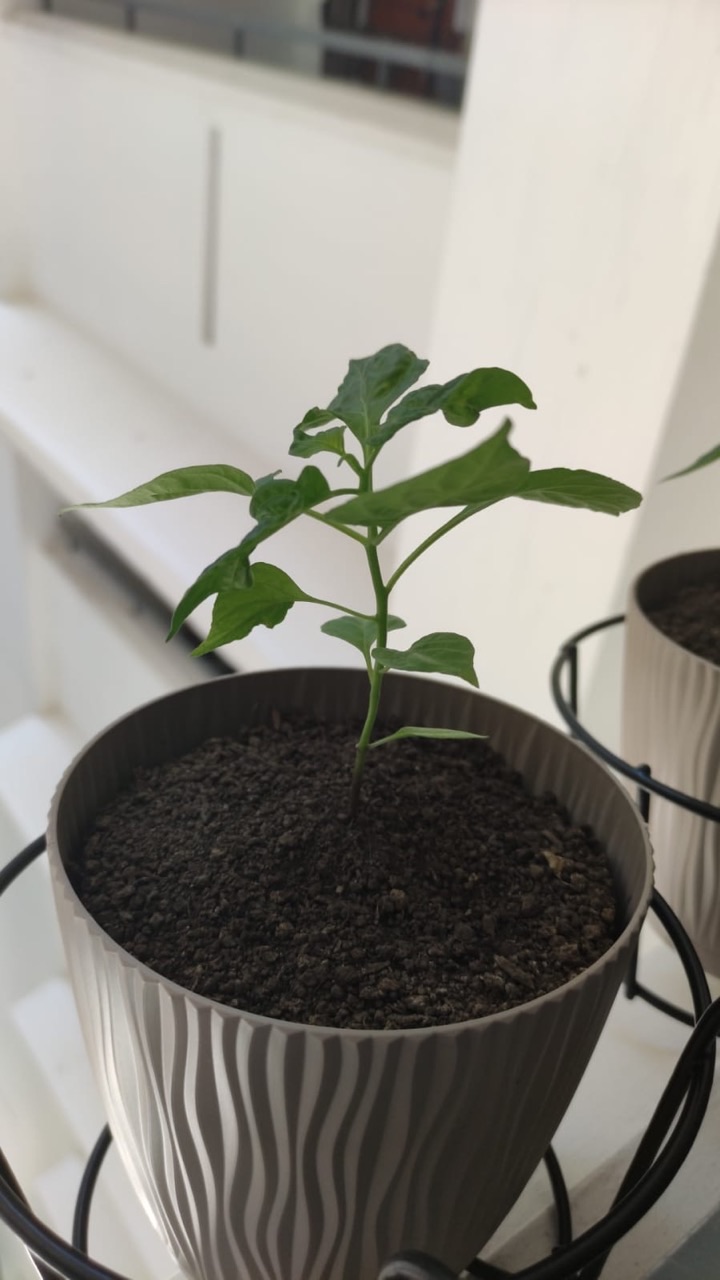
Why does chilli make your mouth feel hot when the food itself may be at room temperature? Chilli peppers can contain capsaicin and related compounds called capsaicinoids. These interact with a protein ion channel known as TRPV1, an important part of the sensory system that detects potentially harmful heat. Activating this pathway can create a burning or hot sensation without the chilli actually raising the food’s temperature to the level of a hot drink. This is chemically triggered heat perception, not proof that the chilli is burning like a flame. The sensation depends on the amount and type of capsaicinoids, their distribution in the food and the individual consuming it.
This Hougang Chemistry guide to why chilli feels hot, capsaicin, TRPV1 heat receptors, spicy food, Scoville heat units and chilli crab explains both the science and how researchers measure pungency. The 2021 Nobel Prize in Physiology or Medicine honoured discoveries of receptors for temperature and touch, including the heat-responsive TRPV1 channel identified through capsaicin research. The US National Institute of Standards and Technology describes how capsaicinoid concentration and the Scoville scale relate to perceived spiciness. For ordinary meals, choose foods appropriate to your preferences and avoid putting chilli or concentrated chilli extracts into the eyes or on sensitive skin. Secondary Science students can separate sensation from temperature; Chemistry students can study molecular properties; JC learners can investigate ion channels, measurement methods and analytical evidence.
The Chilli That Feels Hot Without Being Hot
A family in Hougang enjoys a meal with chilli sauce. Someone takes a bite, pauses, reaches for a drink and announces that the dish is extremely hot. The food was not scalding when served. The person is describing a different kind of heat.
A thermometer would measure the physical temperature of the meal. Our sensory system detects both physical conditions and particular chemical stimuli. Capsaicin can activate a pathway usually associated with potentially painful heat, so the sensation resembles a hot object even though the food need not have the same temperature.
That is the central scientific surprise. A small molecule from a plant can affect the behaviour of a protein in our nerve cells. The brain then experiences a response that feels thermal. Chemistry and Biology meet in one bite.
What Is Capsaicin?
Capsaicin is an organic compound produced by many hot chilli peppers. Its molecular formula is C₁₈H₂₇NO₃, and it belongs to the capsaicinoid family. Its structure contains carbon-based regions with particular chemical groups that influence its interactions with biological systems and other substances.
A chilli pepper can contain several different capsaicinoids, and the amount can vary with variety, growth conditions and the part of the fruit. The NIST guide to measuring pepper heat explains that capsaicinoids are associated particularly with tissues in the internal white lining of hot peppers.
The seeds themselves are not the whole source of chilli pungency. They can contact capsaicinoid-containing tissues and become coated during processing, which is one reason an everyday statement such as “all the heat is in the seeds” can mislead.
What Is the TRPV1 Receptor?
TRPV1 is a member of a family of ion channels involved in sensory signalling. The channel is found in relevant nerve cells and responds to several kinds of stimuli, including capsaicin and sufficiently high temperature.
An ion channel is a membrane protein that can allow certain charged ions to pass when it opens. Changing the flow of ions affects the electrical behaviour of a cell. In sensory neurons, those changes can contribute to signals interpreted as painful heat or irritation.
The Nobel Prize scientific background on temperature receptors describes how David Julius and colleagues identified the capsaicin receptor, now called TRPV1, and later demonstrated its sensitivity to noxious heat.
The receptor responds to molecular and thermal conditions. That is why describing capsaicin as a “chemical trick” is incomplete: the molecule is interacting with a real biological signalling system.
How Does Capsaicin Make the Channel Respond?
Capsaicin can bind to a region of the TRPV1 protein and influence the channel’s conformational state. When the channel becomes activated, cations can move through it, contributing to electrical responses in the sensory neuron.
Those signals travel through the nervous system and are processed by the brain. The resulting perception can include burning, heat or discomfort, even though the mouth may not have encountered a physically hot object.
The original discovery has an unusual educational history: capsaicin was used as a tool to find a heat-sensitive protein. Scientists began with a familiar plant chemical and discovered something important about how the body senses temperature.
The Nobel Prize account provides an accessible explanation of that breakthrough, while the advanced scientific background details the early gene and ion-channel experiments.
Is This the Same Thing as a Real Thermal Burn?
Not necessarily. A spicy sensation can occur without a matching physical temperature rise. But it would be wrong to conclude that concentrated capsaicin can never cause significant irritation or that every exposure is harmless.
Capsaicin-containing materials can irritate skin, eyes and other sensitive tissues. Exposure depends on concentration, duration and the individual. The useful school distinction is between a signal associated with heat perception and a direct measurement of physical temperature, not a claim that biological irritation does not matter.
Do not deliberately apply chilli extracts to sensitive tissues as an experiment. If a concerning accidental exposure occurs, seek appropriate medical or poison-information guidance for the actual situation.
Why Does Mint Feel Cold While Chilli Feels Hot?
The comparison is particularly revealing. Menthol from mint can influence TRPM8, a receptor associated with cool sensation. Capsaicin from chilli can influence TRPV1, a receptor involved in noxious-heat perception.
Both molecules can affect sensory pathways without requiring a physical temperature change corresponding exactly to the sensation. But they are different chemicals acting through different receptors and response patterns.
Our Hougang Chemistry guide to why mint feels cold explains TRPM8. Students can read both articles as a matched experiment in scientific reasoning: the sensation is real, but the mechanism is chemical activation of a receptor rather than direct evidence of the temperature of the food.
What Is the Scoville Scale?
The Scoville scale expresses pepper pungency in Scoville heat units, often abbreviated SHU. The original method involved diluting an extract containing pungent compounds until trained tasters no longer perceived the characteristic heat.
Because human perception varies, that original taste-based method has limitations. Modern laboratories can use analytical methods such as high-performance liquid chromatography (HPLC) to measure relevant capsaicinoid concentrations, then relate results to Scoville-style values.
The NIST explanation of pepper measurement discusses both approaches. It is important that the scale reports pungency, not a physical boiling point or the temperature of a dish.
Why Two Chillies of Similar Appearance Can Feel Different
Peppers differ in their capsaicinoid content, and concentrations may vary with genetic variety and growing or environmental conditions. Preparation also changes how capsaicinoids are distributed through a dish.
A chilli sauce mixed thoroughly through a meal may produce a different experience from direct contact with a piece of hot chilli. The perceived intensity also depends on the person and their recent exposure history.
Colour and size alone cannot accurately determine pungency. A dark red chilli is not guaranteed to be hotter than a green one; the relevant chemical measurements concern capsaicinoids, not a simple colour ranking.
This is a useful reminder that an attractive visible trait can be a poor proxy for a chemical quantity.
Why Water Does Not Always Provide Much Relief
Capsaicin is relatively poorly soluble in water. Rinsing with plain water may not remove the compound efficiently from the mouth’s surfaces. That is one reason swallowing large amounts of water does not always make the burning sensation stop immediately.
Research has examined other ordinary food materials in this context. A 2023 study in the Journal of Food Science investigated the interaction between capsaicin and dairy proteins, finding that casein and whey proteins can bind some capsaicin under the tested conditions and that certain formulations reduced perceived oral burn.
These findings do not guarantee that milk works equally well for everyone or justify deliberate exposure to concentrated chilli extracts. The more general Chemistry lesson is that a compound’s interaction with water, proteins and fats affects how it behaves in a mixture.
Why Milk Is More Than Just a Cold Drink
A cold drink can provide physical cooling, but dairy beverages also contain proteins and, depending on the product, fat. Those components may interact with capsaicin differently from plain water.
In the 2023 controlled study, greater casein content was associated with reductions in free capsaicin and lower reported maximum burn under specific test conditions. That gives a more informative explanation than the slogan “milk neutralises chilli acid”.
Capsaicin is not simply an acid that milk must chemically neutralise. The research concerns binding, distribution among food components and sensory effects, not an elementary acid–base equation.
A student should distinguish the experimental finding from a universal consumer guarantee. Different beverages and exposures may behave differently.
Is Spiciness a Taste?
The conventional basic taste categories include sweet, sour, salty, bitter and umami. Chilli heat is commonly described as pungency or chemesthetic sensation, involving sensory pathways associated with chemical irritation and temperature rather than being just another basic taste.
A mouthful of chilli-containing food can also taste sweet, sour, salty or savoury and have an aroma. All these experiences occur together, but they should not be confused with the TRPV1-mediated heat sensation.
For a scientific study, it matters whether the outcome is measured capsaicinoid concentration, the perceived burn, the intensity of a taste or the overall liking of a food. They are different variables.
A Simple Scoville Data Interpretation Exercise
Imagine a fictional table listing three sauces labelled A, B and C with independently measured capsaicinoid concentrations. Sauce B has a higher reported capsaicinoid concentration than A, while C has a lower concentration than both.
The student could reasonably predict that, under comparable test conditions, B may produce a stronger average pungent sensation. But they cannot use that table alone to predict precisely how every person will respond, or the actual serving temperature of any sauce.
The task is to recognise chemical quantity versus individual sensation and identify what the instrument measures. The exercise requires no pepper tasting contest or laboratory extraction at home.
A Six-Step Scientific Reasoning Map
- Observed experience: a person reports burning or hot sensation after chilli-containing food.
- Relevant chemical: capsaicin and related capsaicinoids are present in some chilli varieties.
- Molecular target: capsaicin influences TRPV1, an ion channel involved in sensing noxious heat.
- Cellular response: channel activation changes ion flow and contributes to nerve signalling.
- Scientific measurement: HPLC can be used to determine capsaicinoid concentrations; subjective intensity is a separate outcome.
- Limitation: the reported burning sensation does not establish the food’s temperature or the exact capsaicinoid amount.
The map teaches students how to build a causal explanation from molecule to receptor to observation without confusing any of those steps.
Safety and Real Food Handling
Chilli-containing food can be enjoyed according to individual preference, but there is no educational need to challenge children to eat increasingly concentrated extracts. Capsaicin can be irritating and intense exposures may be particularly unpleasant.
When preparing chilli peppers, follow ordinary food hygiene, avoid touching the eyes after handling pungent ingredients and wash hands appropriately. Do not use concentrated capsaicin or chilli extracts on skin as a home experiment.
For any persistent or serious reaction, obtain suitable medical advice rather than relying on a blog article. This discussion is about chemical sensation and measurement, not treatment.
Where the Topic Fits the Curriculum
Secondary 1–2 Science
Learners can distinguish a subjective hot sensation from a thermometer reading and recognise that a substance can affect a biological system without dramatically changing its physical temperature.
Secondary 3–4 Chemistry
Students can explore organic molecular properties, mixtures and the difference between measuring the concentration of a compound and observing its effect. They can practise drawing conclusions from a well-labelled table.
JC Chemistry and Biology
More advanced learners can connect molecular recognition, protein structure, ion-channel activity and analytical measurement, while distinguishing thermal energy transfer from a chemically activated sensory pathway.
A Three-Student Comparison Lesson
One learner explains capsaicin, a second identifies TRPV1 and its signalling role, and the third compares it with menthol acting at TRPM8. The tutor then asks each learner to explain why a cold mint and a room-temperature chilli may feel physically different without having the temperatures we might intuitively infer.
This is the sort of active reasoning and individual checking illustrated in eduKate’s three-pax Mathematics tutoring reference. That page describes Mathematics at another location and does not establish an available Hougang Chemistry class.
Frequently Asked Questions
Does spicy chilli actually raise your mouth’s temperature?
The burning sensation can occur because capsaicin activates heat-sensitive pathways, even without a matching physical temperature rise. Only a suitable temperature measurement could quantify the actual thermal change.
What is the chemical that makes chilli spicy?
Capsaicin is a major capsaicinoid in many hot peppers, alongside related compounds that contribute to pungency.
Why do some peppers taste much hotter than others?
They differ in capsaicinoid content, with variation linked to pepper type, growth conditions and preparation. Individual response also varies.
Is Scoville heat the same as degrees Celsius?
No. Scoville heat units describe pungency related to capsaicinoid levels, not actual food temperature.
Does drinking water always remove chilli burn?
No. Capsaicin’s limited water solubility means water may be less effective at removing it than people expect. The sensory response can persist after an ordinary rinse.
Does milk neutralise the chilli like a base neutralises acid?
That is not the established mechanism. Research has examined capsaicin interactions with dairy proteins and other food components rather than a simple acid–base neutralisation.
Can a student demonstrate TRPV1 by putting chilli on skin?
No. Use the Nobel Prize research, NIST measurement resources and published data instead of deliberate irritant exposure.
The Heat Is a Signal, and Chemistry Explains Why
A mouth can report strong heat from a chilli that was never especially warm. The remarkable answer lies in molecular recognition: a plant compound interacts with a protein channel used by the sensory system. Chemistry gives a precise way to explain the experience without confusing a real sensation with a thermometer reading.
Continue with Why Mint Feels Cold, Why Hand Sanitiser Feels Cold, the Scientific Evidence Toolkit, How Chemistry Works in Hougang and the Hougang Science Learning Hub. For the scientific references, see the 2021 Nobel Prize account of heat receptors, the NIST Scoville explanation, and the dairy-protein and capsaicin study. The Hougang Chemistry Tuition and Tutor Library offers relevant school-level routes.
This is an educational explanation of chilli pungency, not medical treatment or a recommendation to handle concentrated irritants. Follow normal food safety and seek professional care for concerning exposures. No eduKate Chemistry tuition venue in Hougang is asserted.