
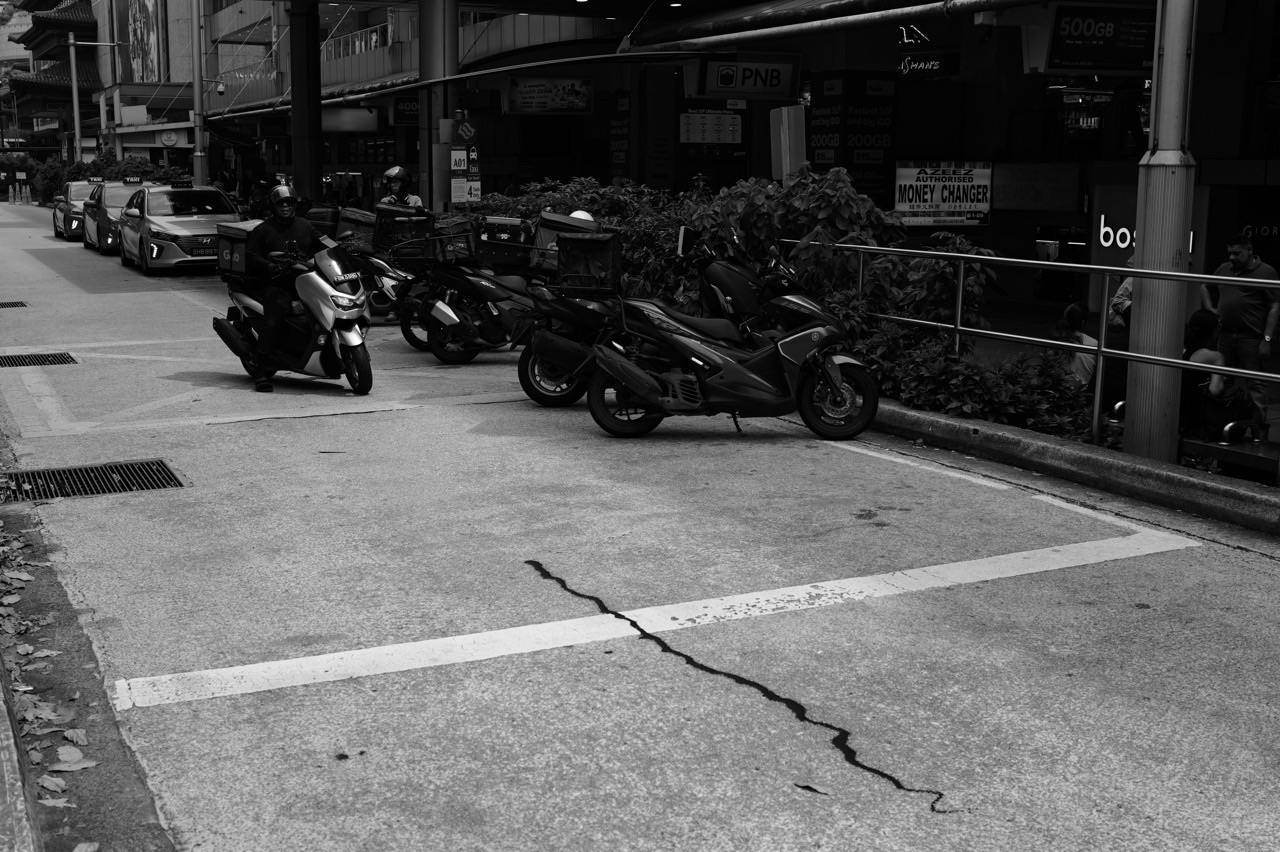
Primary 6 PSLE Science tuition for families around Sungei Road should distinguish why a bicycle slows from where its kinetic energy goes. Braking creates frictional interactions that can transfer motion energy into thermal energy and other forms; it does not destroy energy. A focused weekday lesson can repair that error, while weekend tuition can compare brake, wheel and tyre–road interactions in greater depth.
This guide uses a safe fictional toy-wheeled model, a controlled stopping-distance comparison and a changed-question retest. It links to eduKate’s deeper bicycle-brake learning manual rather than duplicating its advanced mechanical calculations.
eduKateSG · Primary 6 PSLE Science · Sungei Road
The brake acts on wheel braking surfaces; tyre–road contact helps slow the bicycle. Motion energy changes form rather than disappearing.
Full chapter index
1. The first mistake: brakes do not destroy energy · 2. Find the forces involved in stopping a bicycle · 3. Trace the moving bicycle’s energy into thermal energy · 4. Distinguish brake-pad contact from tyre–ground contact · 5. Interpret a fictional toy stopping-distance record · 6. Design a fair comparison without using real roads · 7. Why wet surfaces change the explanation’s conditions · 8. Repair the energy-destruction error in a weekday lesson · 9. Use weekend time to compare several resisting forces · 10. An exam-style answer and delayed independent retest
1. The first mistake: brakes do not destroy energy
A Primary 6 PSLE Science student near Sungei Road watches a bicycle slow after its brakes are applied. The child explains, “The brakes destroy the bicycle’s energy.” The observation of slowing is correct, but the claim about energy is not. The bicycle’s kinetic energy, associated with motion, decreases as braking and other resistive effects transfer energy into other forms and the surroundings.
The first teaching task is to separate what was observed from why it happened. The bicycle slowed down. The rider applied the brake. Frictional interactions can reduce the motion energy available while increasing thermal energy in parts of the braking system. Some energy can also contribute to sound, vibrations and air motion. The total energy is not simply erased when the bicycle reaches rest.
Ask the pupil whether the sentence “the bicycle has no kinetic energy while stationary relative to the road” means that all its earlier energy vanished. No. The second claim confuses a particular energy form with total energy. This distinction is central to a strong P6 explanation.
2. Find the forces involved in stopping a bicycle
A normal bicycle brake mechanism can press a pad against a wheel rim or disc to resist wheel rotation. The rolling tyre contacts the ground, where the road can exert a horizontal force on the tyre and thereby help decelerate the bicycle–rider system. In other words, the brake changes the wheel’s motion and the tyre–road interaction is important for the bicycle’s overall forward slowing.
A common inaccurate explanation is “brake pads rub on the road to stop the bike.” On an ordinary bicycle the pads contact their designated braking surfaces, not the road. The tyre contacts the road. A pupil who names both locations correctly has a clearer picture of how mechanical interactions are connected.
Draw a simple forward-motion arrow and a horizontal stopping-force arrow acting opposite the motion. The force diagram should not imply the bike is pushed backwards automatically or that gravity disappears. The task is qualitative: identify the resisting interaction and explain the resulting decrease in forward speed under the stated conditions.
3. Trace the moving bicycle’s energy into thermal energy
The bicycle has kinetic energy while moving. When a mechanical brake acts, friction between the brake pad and its braking surface can transfer some of that kinetic energy into internal or thermal energy of the pads, disc, rim and nearby components. Heat can subsequently spread to the surrounding air and structure. Other resisting interactions, including air drag and rolling losses, can also transfer energy from the motion.
The pupil should not claim that the brake creates all the energy released as heat. The energy was already associated with the moving bicycle–rider system. Braking changes the distribution of that energy, so the useful organised motion decreases. Hot brake parts should never be touched to demonstrate this; trusted diagrams and a toy-model comparison are sufficient for learning.
The familiar law of conservation of energy applies even when a child says energy is “lost”. In this context, the useful forward kinetic energy is reduced, while energy is transferred into different forms. This is a more precise explanation than saying energy is destroyed or disappears.
4. Distinguish brake-pad contact from tyre–ground contact
The brake pads and the tyre do different jobs. The pads apply friction to the rotating wheel’s braking surface. The rolling tyre is in contact with the ground, and friction there can provide the external force needed to slow the whole bicycle relative to the road. Those contacts are related but not interchangeable.
If a tyre locks and skids, its contact with the road changes. A pupil should not infer that simply locking a wheel guarantees the shortest or safest stop. Grip and braking behaviour depend on surface, tyre and rider conditions. The classroom aim is to understand why a braking mechanism needs the ground contact to produce a controlled change of the bicycle’s forward movement.
Ask the pupil to label a simple bicycle diagram with two arrows: one to the brake pad and rim or disc, another to the tyre–ground interface. Which contact converts energy through friction at the brake? Which contact transmits the external stopping force? Answering those separately prevents a vague statement that “friction works everywhere in exactly the same way”.
5. Interpret a fictional toy stopping-distance record
Imagine a toy wheeled model travelling along a short flat tabletop track with a purpose-made gentle felt brake. A teacher records how far the same toy moves after the same brake is applied at different initial speeds. The values in the table are fictional teaching data, not measurements made at Sungei Road and not safe stopping-distance advice for an actual cyclist.
The model record suggests that the initially faster toy travels farther before stopping under these selected conditions. But these illustrative numbers do not establish an exact universal formula. Real braking distances depend on brake setting, surface grip, mass, slope, wheel condition, speed and other variables. A school question can show a trend without asking the child to calculate a friction coefficient.
Ask the learner to read the data before giving a cause. The number has changed, but why might speed matter? The toy begins with more kinetic energy when moving faster, and resisting forces must transfer that energy before it stops. A cautious answer respects the conditions and avoids claiming that the values are observed local traffic measurements.
| Fictional model trial | Initial speed | Stopping distance | Conditions |
|---|---|---|---|
| A | 1.0 m/s | 0.30 m | Same toy, pad and level track |
| B | 1.5 m/s | 0.70 m | Same toy, pad and level track |
| C | 2.0 m/s | 1.30 m | Same toy, pad and level track |
| D | 2.0 m/s | Not specified | Brake and surface both changed |
6. Design a fair comparison without using real roads
A fair toy-brake comparison should use the same toy, mass, wheels, level track, release direction, brake setting and distance-measurement method. Change only the intended initial speed as far as possible. Repeat the trial because small differences in how a toy is released can affect the recorded stopping point.
Another test could deliberately change the gentle brake setting while keeping the toy’s initial speed similar. That is a different investigation with a different variable. If speed and track roughness both change at once, the stopping-distance difference cannot confidently be assigned only to speed. A child should learn to identify the manipulated factor, observed response and important controls.
Do not conduct real bicycle emergency-braking trials on public roads, slopes or crowded paths. There is no educational need to create dangerous riding conditions. A short toy track, simulation or printed data table is safer and is adequate for teaching how force and energy are connected.
7. Why wet surfaces change the explanation’s conditions
Wet and dry surfaces can provide different tyre grip conditions. However, the effect depends on the surface texture, tyres, riding speed, braking system, water and other conditions. It is scientifically careless to state one exact extra stopping distance from the single word “wet”, or to say that friction always increases whenever water is present.
If a school question describes a controlled case in which wet conditions reduce available tyre grip, a pupil can explain why the bicycle may be harder to stop within the same distance. The explanation should name the changed frictional interaction and relate it to the resisting force. Without specified data, do not promise that one model’s result applies to every bicycle or road.
In a tutor session, compare two labelled schematic surfaces rather than attempting real bicycle skids. The lesson concerns reading the conditions and predicting a possible effect, not certifying that a child can brake safely on a real road. This also prevents confusing changes in braking contact with changes in tyre–road contact.
8. Repair the energy-destruction error in a weekday lesson
If a worksheet says “brakes destroy the bicycle’s energy”, a weekday tutor can correct that exact sentence. Ask the pupil to identify kinetic energy before braking, the resisting interactions during braking and the principal energy form transferred into the braking components and surroundings. Have the student draw a short energy pathway with a clear source and destination.
Next remove the bicycle picture and show a small toy car that rolls across a rough surface until it stops. Why did its speed decrease, and what happened to some of its motion energy? The pupil should apply the same conservation principle even without brake pads. A repeated bicycle sentence is not enough; the changed object tests whether the concept has transferred.
A family considering tuition around Sungei Road should account for homework, dinner, sleep and the actual commute. A short focused correction with a two-day independent retest can provide better evidence of learning than completing many nearly identical braking questions after the child is already tired.
9. Use weekend time to compare several resisting forces
Weekend time can be valuable when a pupil confuses several causes of slowing. Compare a normal bicycle brake, a toy wheel rubbing on a felt pad and a trolley experiencing resistance from its track. Ask which moving object has kinetic energy, where friction acts and how the energy transfers to the surroundings. The mechanisms differ in detail, but the conservation idea is shared.
In a three-pupil tutorial, rotate force-arrow reader, energy-path explainer and fair-test checker. Every child then answers a new diagram without hints. Group discussion should not disguise a quieter child’s uncertainty about whether a brake pad touches the road or whether kinetic energy was destroyed.
Use any additional lesson time to interpret an original toy-trial table and discuss its limits, not to demand secondary-school work-energy formulas that are unnecessary for the pupil’s immediate question. The full eduKate bicycle-brake learning manual can support deeper reading while this parent guide stays focused on diagnosing and repairing the student’s explanation.
10. An exam-style answer and delayed independent retest
Question: “A moving bicycle slows when its brakes are applied. Explain where some of its kinetic energy goes.” A strong answer is: “The brakes produce frictional interactions that slow the bicycle. Some kinetic energy of the moving system is transferred into thermal energy at the braking surfaces and surroundings, rather than being destroyed.” Where the question asks about overall stopping force, add that the tyre–road contact contributes to deceleration.
A weak answer is “the bicycle stops, so all energy disappears” or “the brake pad rubs the road in every bicycle”. Those sentences either violate energy conservation or misidentify a contact surface. The student should connect the named mechanism with an observable change and avoid invented exact energy values.
Two days later, show a toy trolley slowed by a gentle felt brake. Ask which contact resists wheel motion, how kinetic energy changes and what conditions should be held constant to compare stopping distances. Is weekend tuition always better? No; choose based on the gap and independent retest. Should pupils test emergency braking on roads? No. Sungei Road is the intended reader area, not an eduKate classroom or advertised vacancy.
Independent changed-question check: A toy trolley slows when a gentle felt brake touches its wheel. Explain the resisting interaction, where the kinetic energy goes, and two conditions to control when comparing stopping distance.
Weekday versus weekend decision table
| Parent decision | Weekday tuition | Weekend tuition |
|---|---|---|
| Fresh error | Repair energy-destruction claim promptly | Compare three different resisting interactions |
| Main lesson | Bicycle force and energy arrows | Toy stopping-distance model and fair test |
| Delayed check | Toy wheel and felt brake | Changed surface with controlled speed |
| Evidence of learning | Correct energy transfer explanation | Separates braking contact from tyre–ground force |
Official references and eduKate teaching architecture
Scientific references: MOE Primary Science Syllabus (2023) · OpenStax: Nonconservative Forces · OpenStax: Conservation of Energy · eduKate Learning Manual: Bicycle Brake and Energy Dissipation. Worked toy values are fictional and not road-safety measurements.
eduKate learning system: Primary Science Tuition Singapore · Weekday–weekend learning rhythm · Three-pupil teaching reference · Parent consultation. Match the current school chapter and the actual Standard or Foundation Science requirements.
Different P6 PSLE Science examples: Upper Weld Road — Compressed Springs · Rowell Road — Pendulum Energy · Veerasamy Road — Parachute Forces. Different examples support independent transfer.
Other Sungei Road Science levels: Primary 3 · Primary 4 · Primary 5.
Sungei Road is the intended local reader area bordering Little India and Jalan Besar. This guide does not confirm an eduKate classroom, vacancy, fee or timetable on the road. Verify the actual teaching venue and class suitability. Never practise unsafe emergency braking in traffic; the Science cases are fictional. No PSLE result is guaranteed.