
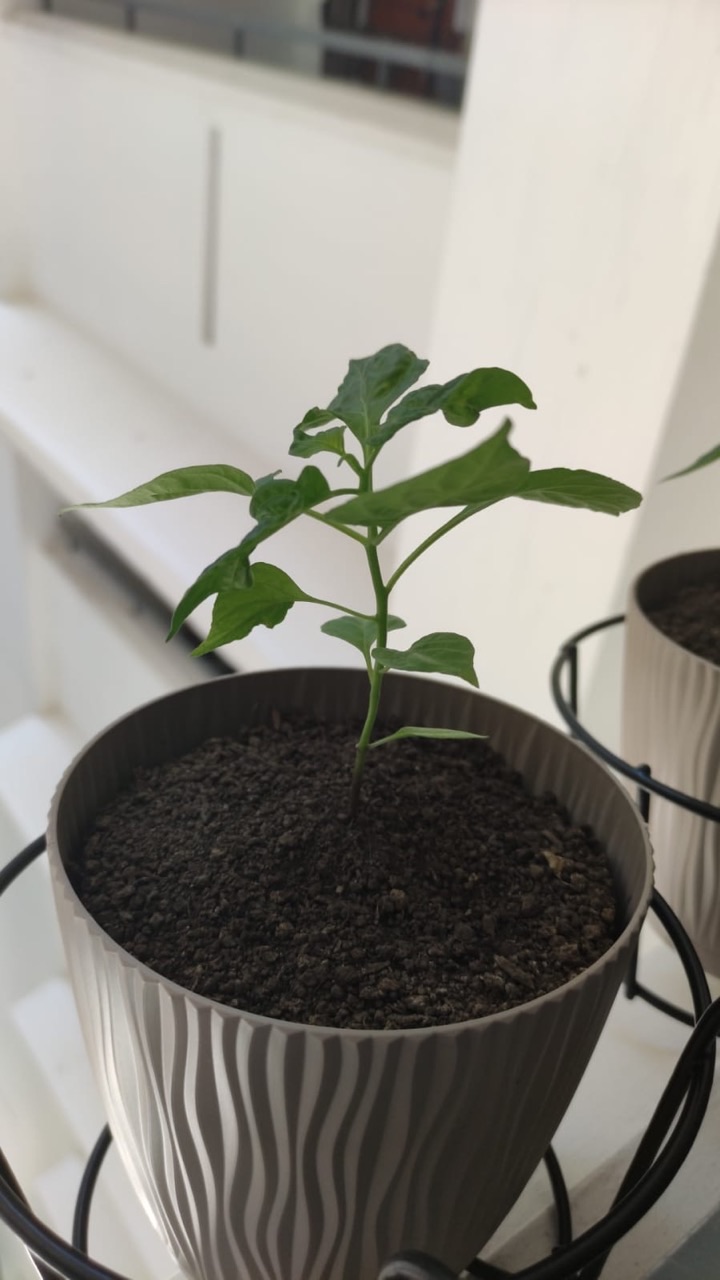
Primary 3 Science tuition for Hindoo Road families can start with a common mistake: a child sees a seedling’s first leaves and calls it an adult. The correct MOE life-cycle progression is seed → young plant → adult plant. Weekday tuition can repair the first wrong answer promptly, while weekend lessons can support wider comparison across flowering plants.
eduKateSG · Primary 3 Science · Hindoo Road
Observe the seed, young plant and adult plant stages. Having two leaves alone does not prove that a plant is mature.
Full chapter index
1. A leafy seedling is not automatically an adult · 2. The Primary 3 plant life-cycle sequence · 3. Observe the first visible root, shoot and leaves · 4. Read a changed four-stage classroom series · 5. Why plant height alone can be misleading · 6. Identify real young plants and manufactured models · 7. Record growth safely without inventing dates · 8. Weekday tuition for a fresh life-cycle error · 9. Weekend tutorials for different flowering plants · 10. Retest an unseen tomato-plant sequence
1. A leafy seedling is not automatically an adult
A Primary 3 pupil near Hindoo Road sees a bean seedling with two small leaves and calls it an adult plant. The leaves are real, but the conclusion is too strong. Many young plants have roots, shoots and green leaves before reaching the adult stage. The useful question is what evidence shows the plant has developed from a seed and how its stage compares with a mature plant of that species.
In a school diagram, leaves alone do not prove that the plant is old enough to reproduce. Asking the child to inspect the sequence often reveals that a familiar image has been labelled from appearance rather than developmental evidence. The answer should be corrected using the correct stages, not by memorising a particular bean drawing.
For Hindoo Road families, the timetable choice comes after diagnosis. If the child has just made the error on a school worksheet, a focused weekday tutorial can repair it; if the child confuses several species, weekend comparison time may help. The educational outcome is an independent new answer.
2. The Primary 3 plant life-cycle sequence
The Singapore MOE 2023 Primary 3 Science syllabus focuses on observing the stages seed, young plant and adult plant. A viable seed can develop into a seedling, which continues to grow towards maturity under appropriate conditions. The adult flowering plant can produce a new generation of seeds through reproduction. The cycle does not mean an adult physically becomes its own original seed again.
Pupils should be able to arrange labelled plant pictures and describe one or two visible changes. They should know that one textbook may show three main stages while another uses more intermediate snapshots. Neither changes the broad developmental order. A new leaf, longer stem or developing flower might help place an image in context when the species and question supply those details.
The detailed reproductive processes of pollination, fertilisation, seed dispersal and germination are introduced in the MOE Primary 5 reproduction topic. A P3 tutor may introduce these as gentle enrichment, but should not misrepresent them as compulsory advanced P3 assessment content.
3. Observe the first visible root, shoot and leaves
Imagine a series beginning with a viable seed, followed by a root emerging, a shoot developing and small leaves becoming visible. At a later stage, the plant may grow taller and develop more leaves. These observations show change in a living plant over time. Pupils can describe those visible differences without needing advanced knowledge of seed physiology.
Roots help anchor a plant and absorb water from the surrounding medium. A stem supports growing structures, and green leaves usually provide surfaces where photosynthesis takes place. For the Primary 3 activity, the emphasis is on observing which parts appear, not calculating photosynthetic rates or memorising all microscopic processes.
A strong worksheet response says that the seed developed into a young plant, showing structures that were not visible on the dry seed exterior. It does not say a young seedling must already be mature because the first leaves appeared. The tutor should ask which new structure the specific photograph actually shows.
4. Read a changed four-stage classroom series
The original teaching table describes five fictional observation cards, not a plant experiment undertaken on Hindoo Road. The first shows a seed, the second a developing root and shoot, the third a leafy young plant, the fourth a mature flowering plant, and the fifth a manufactured plastic model. The last card should not be inserted anywhere within a living plant’s life cycle.
Ask the child to cover the stage column and arrange the first four cards, giving one reason for each. A mature flowering plant may show reproduction-related structures that a young plant has not yet developed. However, the exact timing and appearance vary by species, so the plant’s identity and the sequence matter as much as height.
Do not infer that all seeds in a packet will develop on the same date or that every small real plant has the identical number of leaves. A school observation record is a simplified, evidence-based sequence rather than a universal timetable.
| Card | Observed feature | Likely stage |
|---|---|---|
| A | Viable seed | Seed |
| B | Small root and shoot emerging | Developing young plant |
| C | Small stem with leaves | Young plant |
| D | Mature flowering bean plant | Adult |
| E | Plastic imitation seedling | Not a living plant stage |
5. Why plant height alone can be misleading
A tall young tree and a short flowering herb may be at different developmental stages even though the young tree is physically taller. Height is an attribute, not an automatic measure of reproductive maturity. Likewise, a small bean seedling may be photographed close up and appear larger on a worksheet than a mature plant shown at a distance.
Ask the child to identify the plant species, read labels and locate meaningful developmental structures before calling a stage adult. If the image is too unclear or the species is unknown, the child should state what cannot be concluded confidently. Justified uncertainty is part of Science, not a failure to guess.
A useful changed question shows a tall non-flowering young tree and a short flowering mature plant. Which is more mature? The answer cannot be determined solely by comparing their apparent heights; context and reproductive stage matter. This habit transfers to many P3 classification exercises.
6. Identify real young plants and manufactured models
A realistic plastic seedling sold as a decoration can have green leaves and a brown stem. It is not a living young plant simply because it resembles one. Conversely, a viable seed may show little visible movement for a time while retaining the capacity for development. The pupil must distinguish a manufactured model from the biological plant represented by that model.
A useful observation asks whether an object can develop roots, stems and leaves through life processes and whether it is a real plant. An artificial sprout stays manufactured, while a real viable seed may produce a young plant under appropriate conditions. Not every individual dry seed is viable, so a photograph alone may not settle the life status of a particular unknown seed.
Use clearly identified picture cards rather than guessing from one blurry image. At P3 level, the lesson can safely connect living-and-non-living classification with the plant life cycle without requiring technical tests of seed viability.
7. Record growth safely without inventing dates
A teacher can provide dated photographs of a familiar flowering plant or a safely grown classroom bean. Ask pupils to record visible changes to roots, stems and leaves using simple drawings and brief notes. Children should not pick plants from public landscaping, handle unknown pesticides or be required to force a seed to develop under a fixed timetable.
If comparing two sets of photographs, use similar plants or clearly state when the species are different. A close photograph of a young seedling and a distant photograph of an adult cannot be compared reliably by apparent picture height. Identify structures and sequence instead. Dates should reflect actual supplied observations, not invented growth rates.
A class with no live growing activity can still learn the life-cycle sequence from trustworthy photographs. The quality of the learner’s explanation matters more than possession of a plant pot or the number of worksheets filled during a tutorial.
8. Weekday tuition for a fresh life-cycle error
Suppose Tuesday’s schoolwork calls a leafy seedling an adult. A weekday tutor can begin with the exact wrong answer and ask whether leaves alone are sufficient evidence of maturity. The child then arranges seed, young plant and adult plant drawings and supplies one developmental difference between the stages.
Before ending, remove the familiar bean and show a leafy young tomato plant. The pupil should not immediately call it adult merely because it has green leaves. Ask what additional evidence might indicate a mature flowering stage in the labelled sequence. This changed example reveals whether the student learned a reasoning principle or simply memorised the teacher’s original correction.
Choose a weekday lesson that still leaves room for travel, dinner, homework and sleep. Timely correction is valuable when the pupil can explain independently, not when a tired child is only copying labels.
9. Weekend tutorials for different flowering plants
Weekend tuition can compare a bean and a sunflower through their seed, young and adult stages. The two plants can differ substantially in mature height and leaf shape while still showing comparable developmental progressions. Ask the student which features are relevant to the stage and why the species’ height alone is not the deciding rule.
In a three-pupil tutorial, one child sequences the cards, another identifies developmental evidence, and a third challenges the assumption that every leafy plant is adult. Rotate these roles so all learners practise the full task. Then give each child a new picture set to answer independently. A confident group discussion is not evidence that every pupil has mastered the concept.
Weekend time is helpful if several comparisons are necessary, but it should also include a plan for a short retest after two days. Progress should be judged by new-context reasoning rather than the length of the class.
10. Retest an unseen tomato-plant sequence
After two or three days, show a new tomato-plant sequence with an identified seed, a small leafy young plant and a mature flowering plant. Ask the child to place the pictures in developmental order and name the visible changes. A strong answer states that a leafy young plant has already developed from a seed but need not have reached the adult stage.
A weak answer merely says that two leaves mean adult or that an adult returns to the original seed. The tutor should revisit the difference between an individual growing and an adult beginning a new generation. The pupil does not need the detailed P5 process of fertilisation to understand the P3 stages correctly.
Parents may ask whether weekend tuition always works better, whether P3 needs a complete germination experiment and whether a live plant is compulsory. No: choose by the child’s gap, follow the syllabus focus and use safe pictures when suitable. Hindoo Road is a local readership reference, not a confirmed eduKate teaching venue.
Independent changed-question: Arrange a seed, a young leafy tomato plant and an adult flowering tomato plant. Explain why the middle picture is not necessarily an adult.
Weekday versus weekend parent choice
| Parent decision | Weekday tutorial | Weekend tutorial |
|---|---|---|
| Fresh mistake | Correct two-leaves-means-adult rule | Compare bean and sunflower life cycles |
| Lesson focus | One supported seed–young–adult explanation | Multiple new species and developmental clues |
| Delayed retest | Unseen tomato sequence after two days | Separate picture cards without labels |
| Success evidence | Correct stage and explanation unaided | Does not judge adult status by height alone |
Sources, MOE scope and eduKate learning
Science references: MOE Primary Science Syllabus 2023 · Royal Horticultural Society — All About Seeds · RHS — How Plants Reproduce · URA — 1 Hindoo Road Heritage. The teaching cards are illustrative, not local plant measurements.
eduKate ecosystem: Primary Science Tuition Singapore · Weekday and weekend learning rhythm · Three-pupil tuition teaching reference · Parent–student consultation. Match activities to the actual school chapter.
Different P3 worked cases: Dickson Road · Sungei Road · Upper Weld Road.
Other Hindoo Road Science levels: Primary 4 · Primary 5 · Primary 6 PSLE.
Hindoo Road is the intended reader neighbourhood within Little India. This guide does not confirm an eduKate classroom, current vacancy, advertised fee or timetable on the road. Check the actual teaching venue, class size and schedule before booking. No examination outcome is guaranteed.