
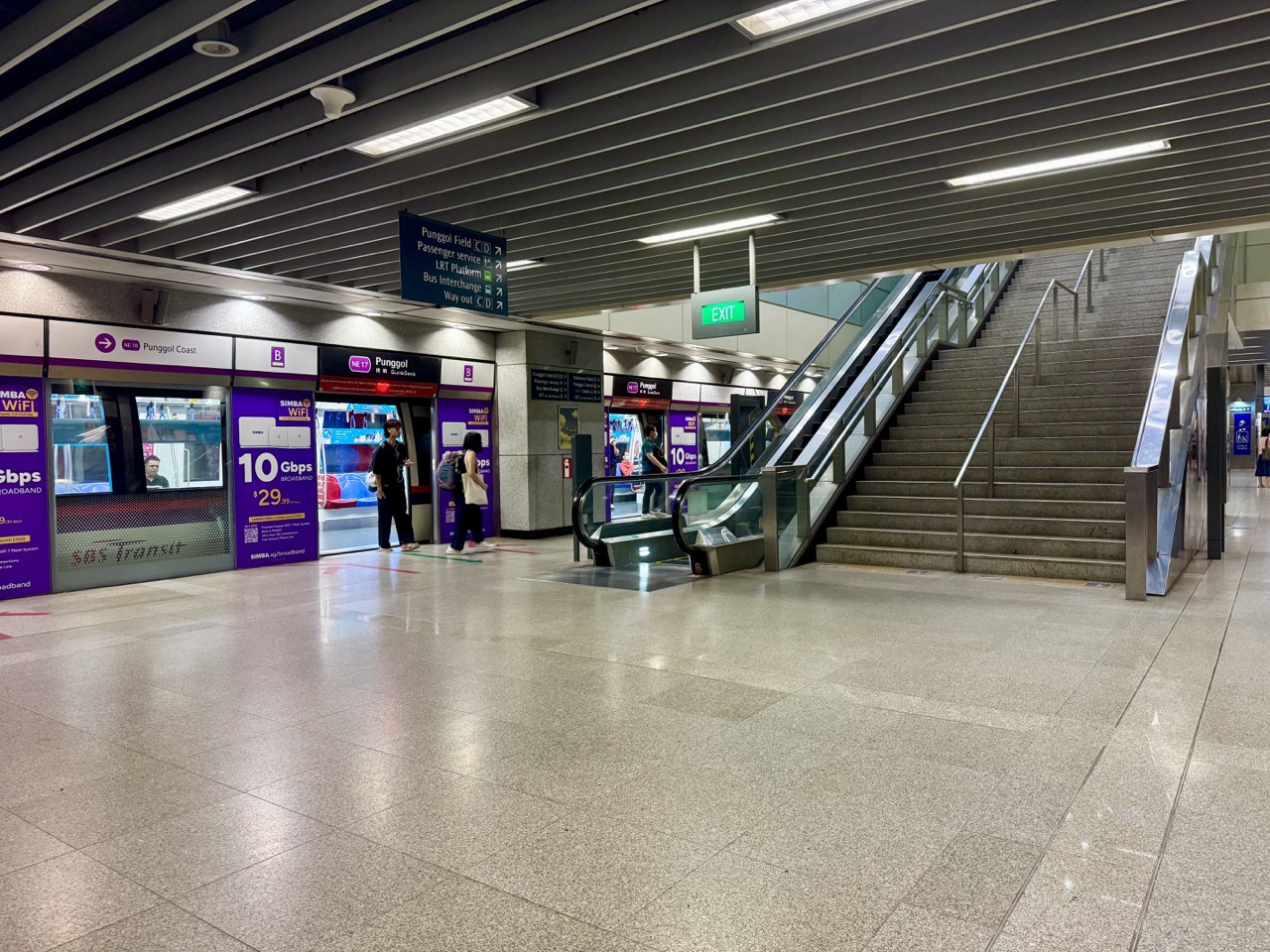
Singapore children often ride on buses and trains before they are old enough to travel independently. An adult guides them through the station, checks the destination and keeps them safe. Along the way the child sees an important feature of a shared society: a journey works better when people make room, let others alight, speak at a considerate volume and notice that some commuters may need additional support.
Public-transport courtesy is a vocabulary lesson because the key words describe choices between people, not simply vehicle parts. “Alight” tells us who is leaving; “board” tells us who is entering. “Priority” signals a need for particular consideration; it is not a label that lets children judge strangers by appearance. “Offer” is different from “demand.” “Give way” involves changing one’s position to support another person’s movement.
The child’s first language remains a useful starting point. Some families discuss transport routines in English; others use Mandarin, Malay, Tamil or a different home language. Children can explain a familiar situation in the language they know best and learn a clear English phrase for speaking with other commuters. This fifteenth Singapore Children Vocabulary article teaches the speech and behaviour of a considerate passenger, mainly for ages six to eleven, rather than route-reading, fares or signs. For interpreting written rules and directions, use our separate Public Notices and Signs guide.
Quick answer: notice the people who share the journey
Teach a short routine: wait safely → allow people to alight → board with the adult → make room without blocking others → listen and respond respectfully. Children should not be encouraged to move across crowded carriages, give up personal safety or approach strangers alone. The point is to understand and practise courtesy when a trusted adult is present.
LTA’s Gracious Commuting guidance features the “Thoughtful Bunch,” which models giving up seats when needed, moving in, giving way at doors, lowering bags and keeping noise down. These behaviours provide specific, teachable examples. Each one has a reason that children can put into words: space is limited and other people are also trying to travel safely and comfortably.
- Best audience: children travelling with a caregiver and classrooms using safe pictures or role-play.
- Main language skill: distinguish a request from an instruction, an offer from an obligation and a visible clue from an assumption.
- Good progress: the child can say why people alight before boarding and explain a considerate response to somebody needing a seat or room.
- Safety limit: adults remain responsible for doors, platform edges, traffic, child supervision, safe boarding and any urgent incident.
What Singapore’s public transport guidance actually says
The Land Transport Authority describes priority queues and seating, among other facilities, in its Inclusive Public Transport System page. It identifies commuters who may particularly benefit from priority access, such as older people, expectant mothers, families with strollers and commuters with disabilities. It also describes priority-seat arrangements and alternative ways passengers can receive announcements.
The page matters because courtesy and accessibility are connected but not identical. A priority queue marking provides a system-level arrangement; a person moving aside is an individual action. A wheelchair space or step-free route has a specific access function and must not be treated as ordinary spare room. A child can practise the words without deciding somebody’s disability or policing their eligibility.
LTA’s Thoughtful Bunch examples provide a friendly vocabulary bridge, but parents should still explain why an action matters. Move in creates room for other commuters; give way helps passengers leave first; bag down reduces unnecessary obstruction; and a quieter volume considers other riders.
The transport environment can also involve formal rules. A September 2026 LTA announcement describes new regulations for nuisance and disruptive behaviour on public buses and at bus interchanges and terminals. The article recognises discretion and fairness where physical or mental health conditions are involved. This children’s guide does not attempt to turn legal enforcement details into a quiz or ask children to confront other commuters.
Twenty words that make a considerate journey clearer
These are English meaning anchors for ages six to eleven. The words and examples are teaching material, not a transport operator’s official script. Parents can begin with five in a familiar home language and model accurate English sentences afterward.
- 1. Commuter: someone travelling, often regularly, between places. “Many commuters use the train in the morning.”
- 2. Queue: a line of people waiting for a turn or service. “We wait safely in the marked queue.”
- 3. Board: enter a bus, train or other vehicle as a passenger. “We wait before boarding.”
- 4. Alight: leave a bus or train. “Let passengers alight before we board.”
- 5. Platform: the station area beside the tracks where passengers wait for trains. “Stay with an adult on the platform.”
- 6. Doorway: the opening through which people enter or leave. “Keep the doorway clear when instructed.”
- 7. Aisle: a passage between seats or areas inside a vehicle. “Do not leave a bag blocking the aisle.”
- 8. Priority: being given earlier or particular consideration because of need or a rule. “A commuter with a greater need may use priority access.”
- 9. Seat: a place intended for a person to sit. “Ask an adult where it is safe to sit.”
- 10. Offer: make help or a place available without forcing acceptance. “May I offer this seat?”
- 11. Decline: politely choose not to accept an offer. “The person may decline, and we respect the answer.”
- 12. Give way: allow another person space or passage. “We give way to those who are alighting.”
- 13. Move in: shift farther inside when safe and appropriate to create room. “The adults may move in so the doorway is not blocked.”
- 14. Luggage: bags or belongings carried while travelling. “Keep luggage from blocking the pathway.”
- 15. Volume: the loudness of a sound. “We can lower the volume of our voices.”
- 16. Announcement: a message given to inform people. “An announcement tells passengers about a change.”
- 17. Accessible: usable by people with relevant access needs. “An accessible route may be important for some commuters.”
- 18. Assistance: suitable help given with consent or according to a need. “A station employee may offer assistance.”
- 19. Considerate: taking other people’s circumstances into account. “A considerate passenger avoids blocking the way.”
- 20. Courtesy: respectful and thoughtful behaviour toward others. “Courtesy makes shared journeys more pleasant.”
Teach boundaries as part of the lesson. Board and alight describe opposite directions; mixing them changes a useful instruction. Priority does not mean a child is entitled to interrogate someone’s private needs. Assistance is helpful only when suitable; an unsolicited touch can be intrusive. Move in is not an instruction to push into unsafe crowding. And courtesy does not require silence or pretending nobody has different needs.
Worked case one: the child tries to enter before anyone alights
A fictional family waits at an MRT station. A train arrives and several people prepare to leave. Seven-year-old Daniel steps towards the doorway and says, “We should get in first so we find seats!”
Parent: “Which passengers are leaving the train?”
Daniel: “The people who are alighting.”
Parent: “What would happen if we stood across their way?”
Daniel: “They would have less room to get out. We would also get in their way.”
Parent: “Then what should we do?”
Daniel: “Stand back safely, let them alight and then board with you.”
This works as a simple cause-and-effect explanation. The child identifies two directions of movement and recognises why the order matters. The adult still handles actual platform safety and timing. Children should not be asked to enter or leave a moving vehicle independently as a demonstration.
Ask a near-miss question: “If there are no passengers leaving, should we still ignore all markings and rush forward?” No. Follow the actual signage, staff directions and safe boarding arrangements. The meaning of give way is part of a wider set of safe behaviours.
Worked case two: offering a priority seat without judging people
A caregiver and child board a bus. They notice a commuter standing nearby who may appreciate a seat. The child says, “They look fine, so they do not deserve a priority seat.” The parent explains that some needs may not be visible and that a child cannot determine another person’s condition from appearance.
Parent: “Can we always tell what someone needs just by looking?”
Child: “No.”
Parent: “What is a respectful offer?”
Child: “Would you like to sit here?”
Commuter: “No, thank you.”
Child: “All right.”
An offer should not turn into insistence or an interrogation. If the person says no, accept it. If the child needs their own seat for safety, a caregiver should make appropriate decisions rather than teach that the child must stand despite risk. LTA’s inclusive-transport guidance is a source for the wider priority-access purpose, not authority for children to question strangers.
An extension question asks: “Is giving up a seat the only possible way to be considerate?” No. Making safe space, not blocking the door, lowering noise and respecting other people’s needs are also relevant. Courtesy is not one fixed gesture.
Worked case three: the bag that blocks an aisle
A child places a large schoolbag in the walkway next to a seat. A passenger trying to leave needs to step around it. The parent asks the child to look at the effect of the bag rather than criticising them as “bad.”
Parent: “Where is the bag?”
Child: “It is in the aisle.”
Parent: “What might happen when people need to get past?”
Child: “The bag could block them or create a tripping risk.”
Parent: “Where can we put it safely?”
Child: “We can move it so it does not obstruct anyone, following the vehicle instructions.”
The adult makes the actual safety decision. A child should not place a bag where it could fall, block emergency access or interfere with others. The exercise teaches aisle, luggage, considerate and obstruction as connected ideas.
LTA’s Thoughtful Bunch includes Bag-Down Benny to remind commuters that keeping bags out of others’ way creates more room. The cartoon is useful as a memory cue, but the adult must still consider the real layout, passenger crowding and safe placement.
Worked case four: a loud video and shared comfort
In a fictional bus ride, a passenger plays a video loudly. A child reacts, “I will tell them off!” The parent uses the situation to teach the difference between noticing a problem and confronting a stranger.
Parent: “What is the problem you have noticed?”
Child: “The video volume is loud.”
Parent: “How can we manage our own sound responsibly?”
Child: “We can use a suitable low volume, with your guidance, and avoid disturbing others.”
Parent: “Should you confront an unknown passenger yourself?”
Child: “No. I can tell you if I feel uncomfortable or unsafe.”
The point is not that children must remain silent about discomfort. It is that confrontation can create risks and should be handled by a responsible adult or transport staff as appropriate. LTA’s 2026 bus regulations announcement addresses nuisance and disruptive behaviour; formal enforcement belongs to authorised personnel.
Teach “volume” with a safe classroom example: two recordings played at comfortable levels by an adult. Ask the child which is easier to hear over background noise and which could disturb people in a shared space. Do not use a real journey to test how loudly a device can be played.
Worked case five: a visitor needs different journey information
A family member who is unfamiliar with the transport system wants to know whether a route is suitable for somebody using a mobility aid. The child finds a line on a diagram and declares the entire journey accessible. The parent explains that one map mark is not proof of every practical requirement.
Parent: “Which part have you checked?”
Child: “The station entrance on the map.”
Parent: “Does that tell us whether every transfer and boarding step will work?”
Child: “No. We need more information.”
Parent: “What is the next safe action?”
Child: “Let you check current LTA or operator guidance and ask staff if anything is unclear.”
This scenario links courtesy to accessibility without making a child responsible for a traveller’s support plan. Information can be incomplete, facilities can change and needs vary. LTA’s inclusive transport information discusses priority queues, facilities and announcements. Adults should follow current operational guidance for a real journey.
A useful sentence is “We have checked this part, but we have not confirmed the whole journey.” It models precision and respects the person whose access needs matter.
Teach why an offer and a request are different
A child who is comfortable saying “I will help you” may not know how to ask whether assistance is wanted. An offer presents a choice: “Would you like me to move my bag?” A request asks somebody else to act: “Could you please make space for us?” A command directs behaviour and may be appropriate only in certain roles or emergencies.
Practise these three forms using paper figures, not unsuspecting passengers. The parent says, “A person is trying to leave the train.” The child offers one suitable expression. An adult can then explain who has authority to issue actual safety instructions and why riders should respect operator directions.
Teach decline as a normal outcome. If the offered seat or assistance is not wanted, the child should not demand an explanation. They can remain courteous while accepting the answer. A child with an invisible need may be the one declining someone else’s help, and that choice also deserves respect.
The language of courtesy becomes valuable only if the behaviour follows. “Please” cannot compensate for standing across a doorway; “I respect you” does not justify touching a mobility aid without permission. Use examples where words and actions need to agree.
A first-language bridge that preserves the right action
When translating a transport message, keep the direction of action. “Let others alight before boarding” is different from “Board before others leave.” A child may know one phrase in a family language but not the English verb alight. The adult can demonstrate with toy figures: one moves out, one waits, one then moves in.
Next teach the difference between a polite suggestion and a mandatory instruction. “You may move farther inside when safe” is not identical to “You must move through a blocked aisle.” Context matters, especially when safety instructions come from staff. The child should never treat an invented translation as more authoritative than actual operator guidance.
A multilingual family may also explain terms such as priority, assistance and accessible through examples rather than single translated nouns. The important concept is what the word changes in a real decision. Ask a knowledgeable speaker about nuances instead of asserting that every phrase has one exact equivalent in all four official languages.
Children should not be made to interpret an altercation between adults or give high-stakes transport directions to strangers. A trusted adult should handle sensitive or urgent communication. This guide teaches child-friendly understanding, not public operational authority.
Ten minutes at home: a cardboard carriage and five decisions
Draw a simple fictional train carriage on cardboard. Include a door, two rows of seats, a marked waiting area and an aisle. Place paper figures inside and outside. Label the exercise as a role-play, not as an exact transport safety diagram.
The first card says, “Two passengers want to alight; another wants to board.” Ask the child to place figures in a safe order. The second says, “A schoolbag blocks the aisle.” The child explains what changes when it is moved out of the way. The third says, “Someone is standing near a seat.” The child practises an offer without claiming to know whether the seat is needed.
The fourth card says, “A commuter declines assistance.” The child replies politely and stops insisting. The fifth shows a picture of an announcement display; ask why reading an updated official notice may matter as well as hearing the audio. Separate these questions so a child learns that physical space, consent and information are different dimensions of courtesy.
Then use a new scene: a bus with a narrower passage or a different waiting arrangement. Ask the child what is still true—do not block people, wait safely, listen to instructions—and what needs checking. Transfer is better evidence of learning than memorising one drawing.
Three pathways for different learners
Repair pathway: begin with board, alight, queue, seat and give way. Use movements of toy figures and two-word explanations. Let the child describe the meaning in the stronger home language before practising English.
Stabilisation pathway: teach priority, offer, decline, aisle and luggage. Ask whether a proposed helpful action has unwanted consequences. A correct sentence may still be unsuitable if it puts a child in danger or disrespects someone else’s choice.
Extension pathway: add accessible, assistance, announcement, considerate and courtesy. Present a fictional trip with one missing accessibility detail and ask which appropriate source an adult should consult. Teach the child to preserve uncertainty rather than invent facilities.
If a child struggles to answer aloud, offer visual choices and extra time. They may understand the sequence but not yet retrieve the English word. A quiet passenger can be considerate, and a talkative child can also learn appropriate volume and timing. The activity is about actionable meaning, not personality judgement.
Four-week public-transport vocabulary routine
- Week 1 — passenger movement: commuter, queue, board, alight and platform. Show how passengers wait and move in a safe imagined scene.
- Week 2 — shared space: doorway, aisle, seat, give way and move in. Check how bags and positions affect other passengers.
- Week 3 — choices and needs: priority, offer, decline, accessible and assistance. Practise a genuine offer and a respectful response without guessing personal conditions.
- Week 4 — sound and conduct: luggage, volume, announcement, considerate and courtesy. Explain what makes a shared journey easier for others.
Parents can revisit words on supervised journeys, but do not turn busy platforms or crowded buses into teaching stages. Stop the conversation when safety demands attention. One minute of noticing followed by discussion at home may be enough for useful retrieval.
Progress can be checked with three questions: “Who is trying to move?”, “What action would help without creating a hazard?”, and “How do we know the other person wants assistance?” A child should be able to explain a reason, not just perform a gesture.
Common misunderstandings to correct
“Boarding quickly is always the best choice.” No. Let passengers alight first, observe the actual rules and follow adult guidance. Rushing increases risk.
“I can tell who deserves a priority seat by looking.” Not reliably. Needs may not be visible. Teach respectful offers, not interrogation or judgement.
“Courtesy means a child must stand even when unsafe.” No. Caregivers are responsible for a child’s safety and suitable seating decisions.
“A bag on the floor is always safe.” Not if it blocks a passage or creates a hazard. Placement depends on the actual space and instructions.
“If someone is loud, a child must correct them.” Children should not confront strangers. They can tell a trusted adult or staff member where appropriate.
“A route is accessible because one station has a lift.” That does not establish every part of the journey. Check the whole relevant route with current guidance.
“Every public-transport problem is solved by kindness alone.” Courtesy helps, but public transport also depends on staff, regulation, design, safety and accessibility features.
Frequently asked questions
What does alight mean?
Does Singapore have official public-transport courtesy guidance?
Are priority seats only for people who look elderly?
Must my child offer their seat?
Is public-transport courtesy the same as reading route signs?
What should a child do if someone on transport acts threateningly?
Can we practise these words in Mandarin, Malay or Tamil before English?
How does this support nation building?
Nation building across a shared journey
A train or bus places people with different ages, backgrounds, language abilities and needs in a limited space. Courtesy is not the same as agreement or friendship; it is the practical skill of allowing others to move, understand information and travel with dignity. Public transport design and rules make that possible at a larger scale, while individual passengers can support the arrangement through considerate actions.
LTA’s inclusive transport page, gracious commuting campaign and September 2026 bus-regulation notice provide the official background. Our children’s dialogues are fictional teaching applications, not operational instructions or proof that a vocabulary list creates national unity.
The educational contribution is modest but concrete: the child learns to notice another traveller, choose an appropriate phrase and understand why a particular behaviour supports a shared journey. Respect for needs that differ from one’s own begins with not pretending to know more about a stranger than one does.
Continue the Singapore Children Vocabulary series
The companion Accessible Communication lesson teaches why different people may need different formats or physical arrangements. The Community Workers guide recognises the people who operate public systems. The Inclusive Play guide gives a simpler foundation for offering and accepting choices.
In this batch, see Library Books and Shared Knowledge and Hawker-Centre Courtesy. The final guide moves to National Symbols, the Pledge and the Anthem, a different kind of shared public language.
For broader learning routes, use the Vocabulary Learning Hub and Singapore Bilingual Education. For actual transport decisions, rely on LTA and operator guidance, not children’s fictional examples.
A gentle exercise during a supervised journey
Once safely seated, ask your child to identify one choice that gives another commuter more room or comfort. Later at home, practise the exact English sentence and its meaning in the child’s stronger language. The goal is not a public performance. It is a child who can explain why ordinary consideration matters when people travel together.
Prepared on 23 October 2026 with reference to LTA’s gracious commuting, accessibility and September 2026 public-bus guidance. All cases are fictional and age-appropriate discussion activities. Adults must supervise real travel and follow current operational rules.