
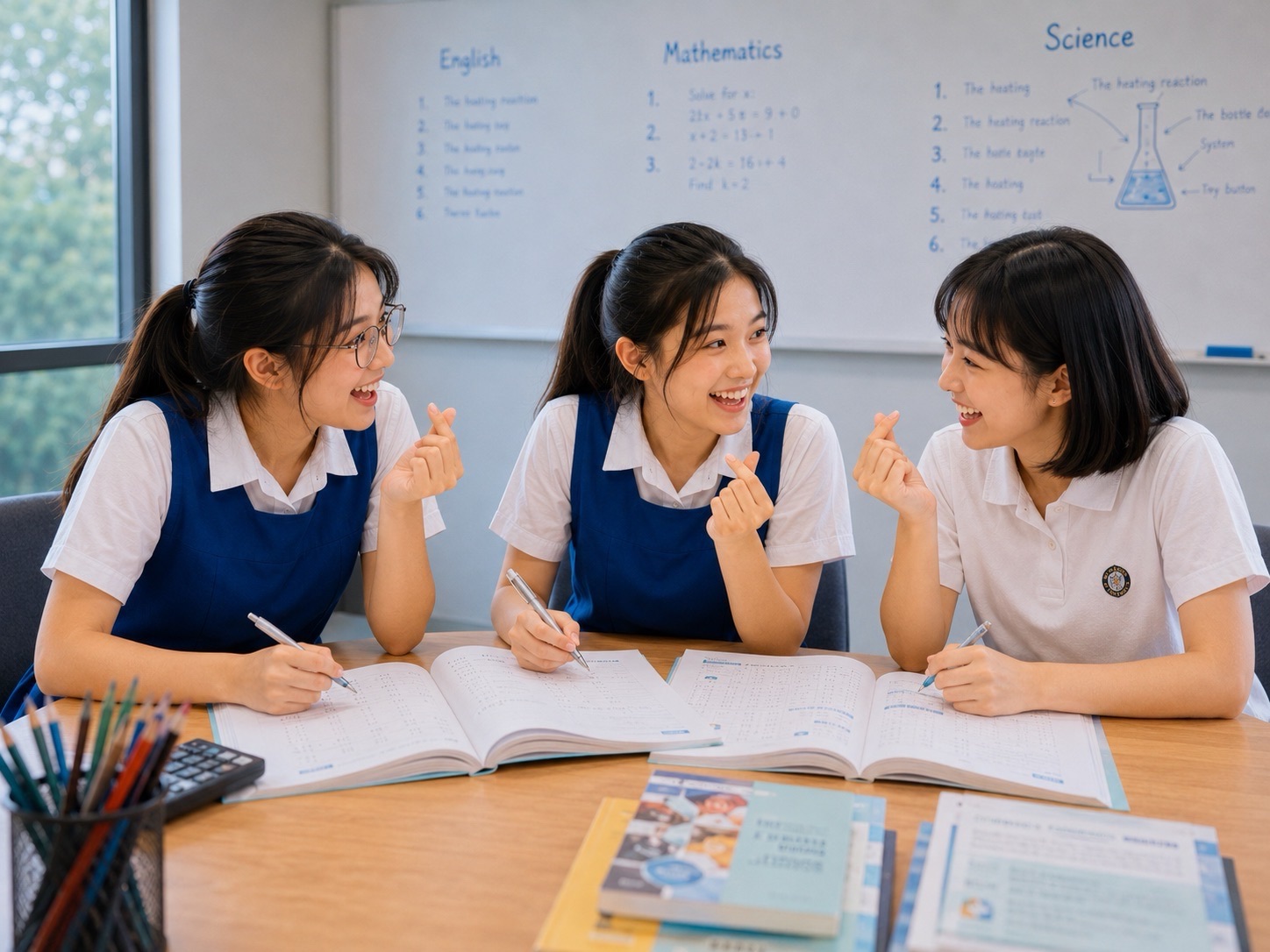
How should children understand the difference between a real future plan and an imagined alternative? Compare “If we finish early, we will read another chapter” with “If we had more time, we would read another chapter”. The first discusses a possible future. The second commonly imagines a different present situation. Both are useful English expressions, but they do not say the same thing.
Parents can practise these meanings with harmless paper-card games. A child can describe what happens if a card matches a rule, what they might do tomorrow if they finish a task, and what they would have done differently in a story about yesterday. The aim is to connect conditions and consequences accurately, not to memorise verb patterns detached from meaning.
Quick answer for parents
Ask whether the speaker is giving a general rule, discussing a future possibility, imagining a different situation or reflecting on a past that did not happen. Use a simple drawing to locate what is real and what is imagined before introducing formal names for conditional structures.
A worked lesson with coloured book cards
Draw blue and green paper book cards and two labelled boxes. Tell the child: “If the card is blue, it belongs in the blue box.” This is the defined rule for the fictional game. It is not a claim that every book in the world must follow the rule.
Now ask what the child will do tomorrow if the boxes are ready. “If we finish the labels early, we will decorate the boxes.” The sentence does not say that early completion is certain. It connects a future possibility to a plan.
Next imagine an extra shelf that is not available in this story. “If we had another shelf, we would put large books there.” The sentence imagines a different situation. It does not report that the shelf existed yesterday.
Finally, say that yesterday the labels were forgotten and some cards were mixed. “If we had labelled the boxes, sorting might have been easier.” The imagined past is not a second event that actually occurred. The word might preserves uncertainty about the result.
Why meaning comes before grammar labels
Children may recognise if, will and would while still being unsure whether a sentence reports an event. Start by asking “Did this happen, could this happen, or are we imagining it?” Older learners can then study conventional grammar patterns such as the first, second and third conditional.
Twenty useful conditional expressions and their jobs
Choose two or three expressions that fit your child’s current story or plan. A conditional phrase may introduce a requirement, a possible outcome, a hypothetical alternative or a precaution. The whole sentence—not one word alone—determines the exact meaning.
| Expression | Useful role | Parent check |
|---|---|---|
| if | introduces a condition | What must be true? |
| unless | marks an exception | What stops the usual action? |
| even if | indicates a result despite the condition | Would the result change? |
| only if | states a necessary condition | Which requirement matters? |
| provided that | sets out a condition | Under which circumstances? |
| as long as | may express a condition or duration | Which sense fits here? |
| in case | introduces a precaution | What might happen? |
| whether | introduces alternatives or an unresolved question | Which possibilities? |
| whether or not | includes both alternatives | Does the outcome depend on either? |
| otherwise | introduces another outcome | What happens if not? |
| when | identifies time or a more expected event | Is this an event or a condition? |
| whenever | on each relevant occasion | When does the relation hold? |
| will | often predicts or announces a future outcome | Is it actually guaranteed? |
| would | often describes an imagined consequence | Which situation is imagined? |
| could | expresses ability or possibility | Could it happen? |
| might | expresses possibility with uncertainty | What remains unknown? |
| would have | often describes an alternative past result | What really happened? |
| could have | describes a past possibility or alternative | Was it done? |
| suppose | asks us to consider a case | What are we supposing? |
| imagine | invites an invented situation | What is not established as real? |
The word would also occurs in polite questions and past-habit expressions, while when can simply indicate time. Avoid explaining all these words with one fixed formula. Start from the intended meaning and show one natural sentence.
Future possibilities: a plan, not a finished event
‘If the group finishes its poster, it will have more time to read’ refers to a possible future. In common future-condition sentences English uses the present simple in the if-clause: if the group finishes. The result may contain will, can or might, depending on the intended confidence or permission.
Compare ‘If the group finishes early, we can play a word game’ with ‘If the group finishes early, we might read a longer story’. Both identify the same condition, but the outcome has a different status. Neither sentence reports that the group has finished.
An older student can learn that English permits other specialised patterns with will in if-clauses. The standard future-conditional example is a good starting point, not a claim that one form is forbidden in every possible use.
Imagined present or future: if I had, I would
‘If I had a larger table, I would arrange the books in three groups’ usually imagines a condition that is not true in the fictional present. The form had is used in this hypothetical construction, not simply because the story is describing yesterday.
Draw the actual small table and a dotted outline of a larger imagined table. Invite the child to explain what would change. Repeat with a different imaginary resource, such as an additional shelf or a second box. The child should know which object is real in the activity and which is imagined.
‘If I were the librarian, I would sort these books by topic’ is a common hypothetical way to offer an idea. Some other forms occur in informal English, but if I were is a reliable conventional model for a hypothetical situation. It does not mean the child has become the librarian.
Alternative past: if I had known, I might have
Say that the books were not labelled yesterday and their piles became mixed. ‘If we had labelled the books, sorting might have been easier’ imagines a different past. The sentence does not claim the labels were actually present.
The familiar structure if + past perfect and would have + past participle often describes an unreal past result. But the outcome may be uncertain: labels can help without guaranteeing that no errors would occur. Might have or could have can express a plausible alternative without pretending it is proven.
| Actual fictional situation | Hypothetical reflection | Important distinction |
|---|---|---|
| The folder had no label. | If it had had a label, we might have recognised it sooner. | Imagined past, not a second event |
| A child arrived after story time. | If they had arrived earlier, they could have heard the opening. | Possible past opportunity |
| The toy tilted on the small base. | If the base had been wider, the toy might have stood more steadily. | An untested alternative |
| The group did not finish the display. | If they had started earlier, they might have completed more. | Not proof of full completion |
For young children, do not make an imagined past into a way to assign blame. The learning task is to identify what the story reported, what is being imagined and what lesson could inform a future plan.
Unless introduces an exception
‘We will read outside unless it rains’ identifies rain as an exception to the planned activity. In an uncomplicated context, this is close to ‘If it does not rain, we will read outside’. But the original statement does not prove that rain is the only factor that might ever affect a real outdoor activity. Ask the child what the exception is rather than assuming the rule has no other limits.
Make a small paper game: ‘Put the card in the blue tray unless it has a star.’ Give the child one starred card and one plain card. If the game does not say where the starred card should go, encourage a clarifying question rather than an invented instruction.
Even if means the result is not changed by that condition
Compare ‘If the picture is small, I will use a larger sheet’ with ‘Even if the picture is small, I will keep it in the notebook’. In the first, size influences the choice. In the second, small size will not prevent the stated decision. One short word changes how the ideas connect.
A related phrase is whether or not: ‘We will discuss the book whether or not everyone finishes drawing.’ This says the discussion is planned in both situations. It does not cancel any separate rule about completing the drawing.
In case describes preparation for an uncertain event
‘We packed a spare pencil in case one broke’ describes a precaution. It does not report that a pencil broke. ‘We packed a spare pencil because one broke’ describes an earlier breakage as the reason for taking another. Children can investigate the distinction by arranging paper cards into a before-and-after sequence.
| Sentence | What it communicates | What it does not establish |
|---|---|---|
| We brought a spare pencil in case one broke. | A precaution for a possibility | That any pencil broke |
| We brought a spare pencil because one broke. | A completed breakage is offered as a reason | Which pencil broke without more context |
| We brought a spare pencil so that we could continue. | A purpose | That anyone needed the spare |
| We used the spare after a pencil broke. | A reported sequence | That the spare was originally packed as a precaution |
Only if gives a necessary condition
A fictional game says, ‘You may open the paper treasure box only if you have a blue token.’ This makes a blue token necessary for opening the box under the game’s rule. It does not automatically state that the token is the only requirement; the game may also require that it is your turn. A young child can start with ‘You need a blue token’; an older child can compare conditions that are necessary with conditions that are sufficient.
The distinction helps with school instructions. If a task says ‘Participants may enter only if registered’, a learner should not claim that registering guarantees entry regardless of other rules. Real rules must be checked through the official source, not assumed from one sentence.
A conditional with missing information should prompt a question
A child reads: ‘If you finish the first book, …’. The consequence is missing. Perhaps another book can be chosen, or perhaps the activity ends. The sentence does not say. Ask which information needs clarification instead of training the child to guess what an adult probably intended.
Even a complete instruction such as ‘If you need help, ask someone’ can be unclear in a large group. A child can ask which adult or channel is appropriate. That is a communication skill, not failure to understand the words.
A story with facts, possibilities and imagined events
Read: ‘Tricia forgot to label her folders on Monday. On Tuesday, she found that their contents had been mixed. If she had labelled them, she might have avoided the confusion. She planned to label them on Wednesday. If she finished before lunch, she would show the new labels to the group.’
| Question | Answer supported by the text | Why |
|---|---|---|
| Were the folders labelled on Monday? | No | The story reports they were not |
| Were the contents mixed on Tuesday? | Yes | That is a story fact |
| Did another version of Monday occur? | No | The labelled past is hypothetical |
| Did Tricia plan to label on Wednesday? | Yes | That is an intention |
| Was showing the labels guaranteed? | No | It depends on the condition and scenario |
Use different-coloured marks for the actual past, intended future and imagined alternative. The purpose is to protect meaning, not to make children label every verb with a technical grammar category.
A grammatically correct condition can still contain a false claim
‘If an object has wheels, it always rolls smoothly’ is grammatical but not universally true. A wheel can be obstructed or damaged. Ask whether the child has enough evidence for always. A cautious revision could say ‘Some objects with wheels roll easily on smooth surfaces when their wheels are working.’
Likewise, ‘If a character smiles, they must be happy’ assumes more than a smile alone establishes. The condition does not prove someone’s internal state. Vocabulary instruction should encourage careful evidence, not unsupported general rules.
Writing repair: ask what the writer intended
Unclear first draft: ‘If Maya will find the picture yesterday, she will put it in the box.’ The main difficulty is mixing a yesterday story with a future possibility. Ask the child whether the author means a possible event tomorrow or a different version of yesterday.
Imagined past: ‘Maya did not find the picture yesterday. If she had found it, she might have put it in the box.’ Possible future: ‘If Maya finds the picture tomorrow, she will put it in the box.’ Both are natural for different meanings. An adult should not choose the intended meaning without listening to the child.
Let the child explain which version reports an actual event and which imagines or plans an outcome. A polished verb form matters less than a sentence that accurately describes its time and reality.
Different learners need different kinds of practice
| Current stage | Start with | Next meaningful challenge |
|---|---|---|
| Young speaker | If this card is blue, put it in the blue tray | Explain the matching rule |
| Beginning reader | Two pictures showing a possible future plan | Choose which event is still uncertain |
| Growing primary reader | Compare if and unless in a simple game | Identify an exception |
| Confident primary reader | Imagine a new object with if I had | Explain how the present would change |
| Older learner | Reflect on an imaginary different past | Distinguish hypothetical consequences from proven facts |
These stages refer to task complexity, not rigid ages. A multilingual child may express hypothetical situations correctly in a familiar language before mastering the written English forms. Use the child’s current language strengths to make the meaning clear.
A picture-and-timeline exercise
Draw three labelled boxes: What happened, What may happen and What we are imagining. Read a short fictional event. Place the actual result in the first box, a realistic future condition in the second and a hypothetical alternative in the third. Ask what information allows each sentence to be placed where it belongs.
For example, the picture story says the class used the blue cards because the red cards were missing. ‘The class used blue cards’ belongs under the reported story. ‘If the red cards arrive tomorrow, the class may use them’ belongs under a future possibility. ‘If the class had found the red cards earlier, it might have used them instead’ belongs under an alternative past.
Change one detail: the red cards were not missing, but had been placed in another box. Ask which explanation must now be revised. This checks whether the child is following the relationship instead of remembering the original sentence.
A flexible ten-minute parent routine
- Minutes 1–2: choose one harmless story and identify what really happened.
- Minutes 3–5: make a possible future plan with if.
- Minutes 6–7: imagine a different present situation with would.
- Minutes 8–9: reflect on a different past using might have or would have.
- Minute 10: ask the child which version is factual, possible or imagined.
The timing is only an illustration, not an evidence-tested dosage. One meaningful contrast can be enough for a relaxed family conversation. Older learners may enjoy comparing all three structures in writing, while younger children may need only the first step.
What progress should parents notice?
- The child identifies which part states a condition and which states an outcome.
- They do not claim an imagined alternative actually occurred.
- They use natural future if-sentences to describe a plan without announcing it as complete.
- They recognise that would can mark a hypothetical condition rather than a past fact.
- They notice that might have conveys a possible alternate past rather than a proven outcome.
- They can distinguish unless, even if and in case in a new context.
- They ask for missing conditions instead of inventing an instruction.
Common parent mistakes to avoid
- Teaching the labels before the meaning: begin with a real or fictional scene the child understands.
- Confusing the past form with an actual past event: check whether the condition is hypothetical.
- Using a confident outcome for every condition: consider might or could when uncertainty is genuine.
- Calling every if-sentence a prediction: some describe general rules, plans or alternatives.
- Correcting tense without asking what the child meant: one draft may have several possible repairs.
- Using counterfactual stories to blame: an imagined outcome cannot establish with certainty what would have happened.
- Ignoring official instructions: genuine safety and permission conditions should be checked directly with responsible adults.
Frequently asked questions
Is ‘if I have’ the same as ‘if I had’?
Not usually in the situations discussed here. ‘If I have time, I will read’ commonly presents a future possibility. ‘If I had more time, I would read’ commonly imagines a different present or future.
Does the word if prove a result will happen?
No. It names a condition in a relationship. The result depends on the sentence’s assumptions and facts; a conditional can also describe a fictional or uncertain event.
Can unless always be replaced by if not?
They are similar in many simple examples, but meaning, emphasis and additional conditions can differ. Compare the full instructions rather than replacing one phrase automatically.
What does would have mean in a story?
Within a third-conditional pattern, it generally introduces an imagined result of a different past, not a second event that actually took place.
Is even if stronger than if?
Even if typically presents a condition despite which the main outcome would still apply. Ordinary if may instead describe an outcome dependent on that condition.
Should younger children memorise the formal names of all conditionals?
No. The useful early target is distinguishing rules, possibilities and imagined changes. Technical grammar labels become useful later when children can handle the underlying meaning.
Can a grammatical conditional sentence still be wrong?
Yes. A sentence may have correct grammar but claim a causal or guaranteed relation that the evidence does not support. Ask what is actually established.
Evidence and parent reference links
The British Council guide to zero, first and second conditionals discusses general conditions, real future possibilities and imagined present or future situations. The British Council guide to third and mixed conditionals explains alternative past outcomes. The examples above are original parent teaching illustrations rather than a guaranteed programme for every learner.
One small conditional to discuss tonight
Ask your child to complete ‘If I have another book tomorrow…’ and ‘If I had another book now…’. Then discuss what differs: a possible future versus an imagined present. The explanation is the real vocabulary achievement.
Connected vocabulary learning: Vol 15: Conditions in Instructions · Vol 26: Time and Change · Vol 31: Probability · Vol 35: Permission and Obligation · Vol 46: Cause and Purpose · Vocabulary in Real English Hub.
More from this parent vocabulary batch: Vol 51: Relative Clauses and Identifying Descriptions · Vol 53: Make, Do, Take and Have Partnerships · Vol 54: Comparatives and Superlatives. Explore the Vocabulary in Real English Hub for related lessons.