
Did you know? From the 2027 Primary 1 registration exercise, living 500 metres from certain Bukit Timah schools may no longer give a Phase 2C applicant higher distance priority than living 1.5 kilometres away. That is a substantial shift for families who grew up hearing that ‘closer always wins’. But the change applies in a very specific phase—and it is not a promise of admission.
Quick answer — checked 24 October 2026: MOE announced on 10 September 2026 that most primary schools will reserve 60 Phase 2C places instead of 40 from the 2027 P1 Registration Exercise. At 12 named schools, Phase 2C will have two separate ballot tracks: children living within 2km and children living more than 2km away, with no finer home-distance priority within either track. The 2027 registration exercise is for children entering Primary 1 in 2028. Read MOE’s original announcement.
First, do not confuse the two years
In Singapore, parents register for Primary 1 the year before their child starts. Families registering in 2026 are preparing for the 2027 school year. Families registering in 2027 are preparing for 2028 Primary 1. These new Phase 2C changes apply to the latter exercise, not retroactively to the completed 2026 registration.
MOE confirms this timing on its 2027 framework-changes page. Its registration portal remains the place to check the actual upcoming calendar and eligibility. As of October 2026, do not use dates from a 2026 phase calendar as though they were confirmed for the 2027 exercise.
What does 60 reserved Phase 2C places mean?
Phase 2C is the phase available to children without the prior school connections used in some earlier phases. Most schools will now reserve at least 60 places for it, up from 40, while schools with fewer than 180 Primary 1 places retain a 40-place reserve.
Here is the nuance: 20 more reserved places in Phase 2C do not automatically mean 20 more seats are added to the school. The adjustment changes the allocation among registration phases, while earlier eligible groups can still register in their own phases. Phase 2B retains its 20-place reserve.
Also, ‘reserved’ is a minimum allocation rule, not necessarily the final exact number available in Phase 2C. Any places carried forward from earlier phases can change the number visible when applications open.
Which Bukit Timah schools are directly affected?
The 12-school list includes several familiar Bukit Timah-area names: Methodist Girls’ School (Primary), Nanyang Primary School, Pei Hwa Presbyterian Primary School and Raffles Girls’ Primary School. The wider list also includes Singapore Chinese Girls’ Primary School and schools in other neighbourhoods. See the full official-announcement coverage and list of 12 schools.
This does not mean every school in Bukit Timah has the special two-track balloting. The two-track policy applies only to the named schools, selected because public housing accounts for less than 40% of dwellings within 2km of each one. MOE said the list will be reviewed periodically as housing profiles change.
How does two-track balloting work?
Start with the 60 reserved places. At a participating school, the basic scheme divides the Phase 2C seats equally: 30 for children living within 2km, and 30 for children living beyond 2km. Any additional Phase 2C places carried forward are also allocated across the tracks according to MOE’s rules.
Suppose a Singapore Citizen applicant lives 700 metres from the school and another Singapore Citizen applicant lives 1.7 kilometres away. They are in the same within-2km track. Under the new arrangement, the 700-metre child does not outrank the 1.7-kilometre child merely by distance at Phase 2C. If citizens exceed the places available to that track, MOE conducts a ballot.
Now consider a child living 3km away. That child belongs to the beyond-2km track, with its separate pool of places. An oversubscribed track is balloted. If citizen applications leave spare places in one track, those places can move to citizen applicants in the other track under the published rules.
Singapore Citizen applicants retain priority over Permanent Resident applicants. The new two-track framework is not a single lottery where PR and citizen applications have identical ranking.
Does living closer no longer matter at all?
No. It would be a serious mistake to turn a precise Phase 2C rule into a sweeping claim about the entire Primary 1 process. Earlier phases have their own eligibility rules; the special two-track change concerns Phase 2C at the 12 listed schools. Normal MOE home-school distance rules remain relevant elsewhere.
It is also wrong to describe the new policy as guaranteeing all applicants beyond 2km a place. There may be more applicants than seats in that track. Balloting resolves the oversubscription; it does not remove it.
Do not pay for a property or sign a tenancy on the assumption that a marketing claim about a school radius guarantees entry. Use MOE’s official address and distance checker for the particular application, and consider the wider impact of the commute on a six-year-old child’s day.
What is happening in 2026, and what should parents do in 2027?
- 10 September 2026: MOE announced the revised rules and identified the 12 schools for special Phase 2C balloting.
- 7 October 2026: the Education Minister addressed Parliament about access and social mixing at the affected schools; the policy remains scheduled for the 2027 exercise.
- Late 2026: parents of children due to enter Primary 1 in 2028 can review the revised phase rules, their realistic school options and commute preferences.
- 2027 registration: check MOE’s actual phase dates, vacancies and ballot notices before submitting. Do not assume last year’s calendar repeats exactly.
- 2028: children successfully placed through the 2027 exercise start Primary 1, subject to the usual entry arrangements.
A family decision is more than one popular school
For a young child, school choice is also a daily-life choice. Think about a rainy morning, a caregiver’s work schedule, how a child travels home, the school’s activities and the community around it. A school far away can be possible, but a long journey repeated five days a week has a cost in time and energy.
Look at the practical alternatives as well as the highly subscribed schools. Ask whether the school environment suits the child’s temperament, whether transport is manageable and what support the family will need if the first preference is unsuccessful.
And remember: two children with similar academic interests can flourish in different schools. The registration framework controls allocation of a limited number of seats; it is not a ranking of children’s worth or potential.
A parent’s 2027 preparation checklist
- Confirm the year your child is due to enter Primary 1 and the corresponding registration exercise.
- Review phase eligibility separately from the Phase 2C two-track rules.
- Check whether a school is one of the 12 named institutions rather than assuming every Bukit Timah school follows the new model.
- Use MOE’s official home-school distance checker, not an estate agent’s guessed circle or walking distance.
- Compare historical vacancies and balloting as context, never as a guarantee of future results.
- Keep a realistic second or third school option and review daily travel arrangements.
- Read current MOE vacancy updates during the actual exercise before submitting an application.
Frequently asked questions
Is the 2027 P1 registration exercise for a child starting school in 2027?
No. The 2027 registration exercise places eligible children into the 2028 Primary 1 intake. The 2026 exercise applied to children starting in 2027.
Will every school reserve 60 Phase 2C places?
Most schools will. Those with fewer than 180 P1 places retain a minimum of 40.
Is Nanyang Primary in the two-track group?
Yes. MOE’s named group includes Nanyang Primary, Methodist Girls’ School (Primary), Pei Hwa Presbyterian Primary and Raffles Girls’ Primary.
Does the 1km rule disappear at these schools?
Within Phase 2C’s new within-2km track, distance does not provide a finer priority order. That is not a universal abolition of home-school distance priority across all phases.
Can a child living beyond 2km apply?
Yes, the special schools have a separate beyond-2km track at Phase 2C. Applicants still face balloting if applications exceed places.
Have the 2027 registration dates been announced?
Consult MOE’s current portal for the official calendar. No dates are assumed here based on the previous exercise.
Government references and further reading
MOE: 10 September 2026 announcement · MOE: changes from 2027 · MOE: registration phases and dates · MOE: P1 registration portal · CNA: full 12-school list and ballot explanation.
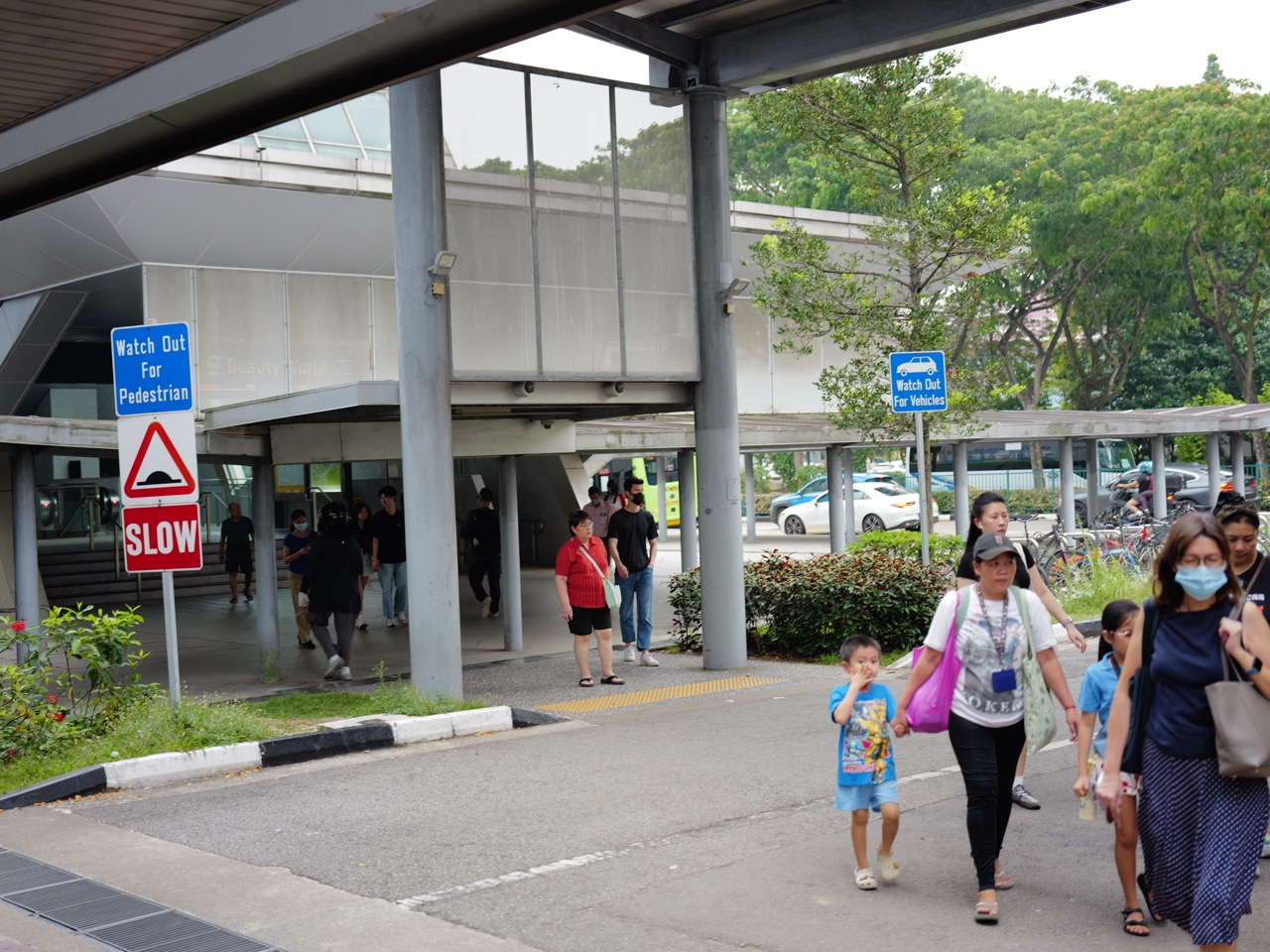
Updated 24 October 2026. The featured photograph shows families near Beauty World MRT in Bukit Timah, not a school registration event. For admission decisions, use the current MOE regulations, official distance checks and actual published vacancy figures.
Continue exploring the Future of Bukit Timah: Beauty World transport hub · Turf City grandstands and heritage · First SEC examinations in 2027. Earlier coverage: Turf City homes and 2027 · Cross Island Line works · Market and community building · Holland Plain and wetlands.