
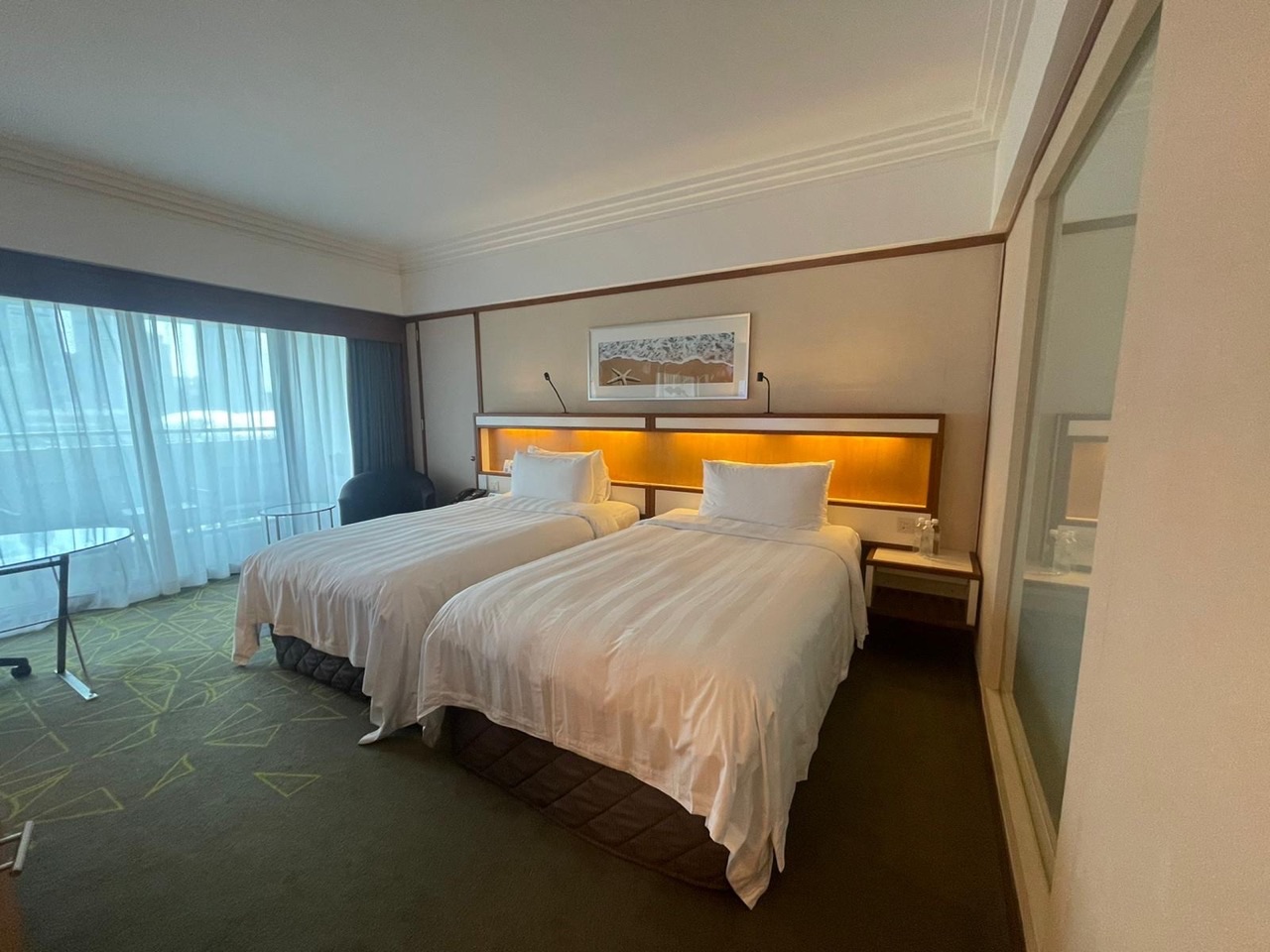
Before paying for a hotel booking, check the exact property address, arrival and departure dates, room type, number of guests, total price, what is included, who charges your card and the cancellation deadline. After booking, read the confirmation again: a reserved room is not the same as an early check-in guarantee, a card pre-authorisation is not necessarily a completed payment, and free cancellation may stop being free after a stated time. If a stranger asks for an urgent payment through a new link, verify the request through the accommodation provider or booking platform’s independently accessed official channels.
Why translate hotel booking confirmations? International travellers may book in English and read their confirmation in Mandarin, Malay, Japanese or another language. People searching for ‘hotel cancellation policy’, ‘hotel deposit meaning’, ‘non-refundable booking’, ‘hotel booking confirmation translation’, ‘early check-in’ or ‘no-show charge’ want to know exactly what they bought and what happens if plans change. A wrong time zone can make a cancellation costly; a mistaken room category can send a family to a property that cannot accommodate them; a vague ‘taxes included’ sentence can hide genuine additional charges. Translation should preserve the real choice and conditions, not simply sound welcoming.
Booking.com’s official FAQs explain that cancellation terms and fees depend on the property and the actual booking policy, and distinguish prepayment from temporary card pre-authorisation. The U.S. Federal Trade Commission warns that scammers imitate hotels and travel platforms and recommends verifying sites and fees before paying. This guide explains how to read hotel confirmations, keep their fields accurate, make reasonable requests and prevent misleading multilingual checkout flows. Legal rights vary by market and transaction, so no worldwide free-cancellation or refund promise should be invented.
The hotel confirmation checklist: read this before travelling
Property and booking identity
Match the hotel’s official name, full address, stay dates, booking reference and main guest. A name on a marketplace listing might differ from the operating property’s registered or branded name; verify the actual venue independently if uncertain. Do not assume a similarly named hotel in another district is your destination.
Room and occupancy
Read whether the confirmation is for a standard room, twin room, double room, family room, suite or another specific category. Confirm beds, maximum occupancy, included children and any extra-bed conditions from the property. Room-category labels may differ by hotel and are not universal guarantees about physical beds.
Check-in and check-out
Keep the arrival date and the property’s check-in window separate from guaranteed early access to the room. A request for early check-in or late check-out may still require approval and a fee. Contact the hotel before arriving if you need something outside the published arrangements.
Final price and taxes
Review nightly rates, number of nights, taxes, service charges, resort or destination fees and refundable deposits. The confirmation may show the amount paid now and the amount due at the property separately. The final obligation cannot be determined from one attractive ‘from’ price alone.
Cancellation deadline
Identify the exact local time and date until which cancellation is free, plus fees after that point. Cancellation rules can differ among room-rate plans at the same hotel. Save the applicable terms as displayed before booking and in the confirmation.
Payment status
Distinguish reservation secured by a card, temporary authorisation hold, non-refundable prepayment, deposit and remaining hotel balance. A card hold can reduce available spending power without being the same as a completed purchase. Check who processes the charge and when.
Changes and special requests
A room preference, early check-in request, accessibility request, pet permission or adjoining-room request may not be confirmed merely because it appears in a note. Read whether the hotel accepted it, declined it or has yet to respond.
Contact and verification
Use official booking-app messages or a hotel number independently verified from the property’s genuine website when changing plans. Do not send banking passwords or one-time codes to a payment link from an unexpected message.
The concepts that a hotel translation must preserve
Booking confirmed does not mean every request was accepted
A hotel confirmation generally indicates a reservation exists for a particular room-rate product and stay, but additional preferences may remain unconfirmed. The notes field can mention upper floor, king bed, quiet room, adjoining rooms, extra cot, wheelchair access, late arrival or early check-in. Translating ‘requested’ as ‘guaranteed’ can mislead travellers with medical, mobility or family needs. Keep the room category included in the confirmed booking separate from optional requests awaiting a hotel response. When a feature is essential to the traveller, contact the property directly through an official channel and seek an explicit written confirmation. A polite message that the staff will try is not the same as an agreed arrangement.
Night count and check-out date determine the stay
A reservation arriving on Friday and checking out Monday is generally three nights, not four, but a translation can blur calendar dates and billed nights. Preserve check-in date, check-out date, room-night count, local time and any overnight arrival special condition. A late flight that arrives just after midnight can make the travel date ambiguous relative to the intended hotel night. If the guest needs access to a room immediately after an early-morning arrival, the property must clarify the actual booking and any additional night or early check-in service. Do not invent a free extra night because the traveller calls the arrival ‘Friday night’ colloquially.
Twin, double, king and family rooms are not interchangeable
Hotels use room labels in ways that can vary by market and property. A twin room commonly suggests two separate beds while a double may mean one larger bed, but the exact configuration should be confirmed in the actual room details. A translation of double room as two beds can create a problem for unrelated colleagues travelling together. A family room may have occupancy limits or sofa beds rather than several permanent beds. Preserve the source’s bed type, room category, number of registered guests and any rollaway or cot request as distinct terms. Where the hotel’s content is unclear, ask the property instead of applying a universal dictionary equivalence that may be wrong for that room product.
Children and extra guests can change price and eligibility
A listing may show base occupancy for two adults with separate rules for children, ages, extra bedding and additional guests. A translation that says ‘children stay free’ without age or bedding conditions can generate unexpected charges. Keep the child’s age conditions, actual guest count, maximum occupancy, any extra-bed pricing and whether breakfast is included. A booking confirmation for one person does not automatically authorise five people to occupy the room merely because an email mentions family travel. Travellers should clarify important occupancy requirements with the hotel, especially when local safety or registration rules apply. The translator should preserve existing conditions without deciding whether a hotel can lawfully exceed them.
Free cancellation applies only within its actual window
Booking.com’s official FAQs explain that whether a cancellation is free depends on the individual property’s terms and the rate booked. A room may be cancellable without fee before a precise deadline, then become partly or fully chargeable. A translation should preserve cancellation permitted, free cancellation, partial refund, non-refundable, deadline and local clock time as separate concepts. A banner promising flexible booking is not a substitute for the full schedule. Do not call a non-refundable rate cancellable without penalty simply because the hotel has another flexible rate available. Travellers should save the terms and verify the current booking status before assuming their money can be recovered.
The cancellation deadline may be local to the property
A Singapore traveller viewing a hotel in Europe may see a deadline written in the hotel’s local clock time rather than Singapore time. The source needs to identify which date and zone actually govern. Converting a time without knowing the applicable time zone can move the cancellation deadline several hours and sometimes into another calendar day. Keep absolute dates and hotel location attached to the condition. Where the source omits a timezone, ask the property or booking platform to clarify rather than guess. A target-language user should not lose a free cancellation choice because the translator interpreted ‘midnight’ according to their own device settings.
Non-refundable does not always mean no legal question can ever arise
A non-refundable hotel rate may carry a contractual cancellation fee if the guest changes plans, but it should not be used to make blanket claims about fraud, a property failing to provide the booked room or other disputes. Consumer law and remedies depend on applicable facts and jurisdiction. Booking.com’s FAQ explains rate-specific non-refundable policies, and its terms identify individual service provider rules. The translator should not invent a universal right to cancel any room, nor claim every no-refund label extinguishes all legal protection regardless of what the provider does. Preserve the source policy and allow actual disputes to be evaluated through the relevant booking channel or competent authority.
No-show differs from a cancellation
A guest may cancel according to the policy, notify the hotel they will arrive late, or simply fail to arrive. The booking provider can treat a no-show according to specific terms, and a room may not remain available indefinitely after an unannounced late arrival. Booking.com’s terms advise travellers to contact the provider when they expect to arrive late. Translating ‘please inform the hotel of late arrival’ as ‘the hotel has already agreed to hold your room until any hour’ removes an important step. Preserve the reporting route, the applicable deadline and any real hotel confirmation. A traveller should know whether they have cancelled, are still booked or risk a no-show classification.
Pre-authorisation is different from prepayment
Booking.com’s help distinguishes a temporary card pre-authorisation used to verify funds from an actual deposit or prepayment. A hold can temporarily affect available card balance without constituting a final charge for the stay. Translating pre-authorised as charged in full may cause confusion, while describing a non-refundable prepayment as only a reversible hold can mislead a budget-conscious traveller. Keep the actual payment type, amount, responsible charging party and cancellation treatment. If a customer’s statement shows an unexpected transaction, the property or payment provider can clarify it through secure channels. The translator should not determine that every pending entry is a fraud or a refund.
Damage deposits differ from room deposits
Some accommodations take a security or damage deposit against certain property obligations, while a booking deposit prepays a portion of the stay. These are different purposes and can have different refund conditions. Preserve the amount, currency, authorised collection route, release or accounting process, and what the deposit covers. A translated message that calls a damage hold a compulsory non-refundable booking fee changes the financial meaning. Equally, a source that describes a non-refundable reservation amount should not be presented as a fully returnable security. Travellers should check both the room price and any separate incidental or security holds before committing funds.
Taxes, mandatory fees and optional services need separate lines
A listing price may exclude local taxes or additional required charges depending on the market and applicable consumer rules. Breakfast, parking, airport transfers and late checkout can be optional services, while some fees are compulsory for the selected product. The FTC’s travel guidance tells consumers to obtain the full details of an offer and explains U.S. transparency expectations for required short-term lodging fees. A translator should not describe an optional breakfast package as included in every rate or hide a mandatory fee inside a vague on-arrival supplement. Preserve each line’s amount, currency, status and jurisdiction. A clear total-price breakdown helps the traveller compare actual offers rather than attractive partial rates.
Currency conversion is not the hotel’s original charge
A hotel may price in its local currency while a booking platform shows an approximate amount in the guest’s preferred currency. The bank can use a different exchange rate or charge card fees under its terms. A translation should preserve the property’s actual charging currency and distinguish platform estimates from amounts guaranteed by the provider. A traveller should not be promised an exact Singapore-dollar debit if the source says currency conversion is indicative. In the booking confirmation, keep amount due now, at the property and refundable holds separate. Financial accuracy means knowing which party charges what, not replacing every foreign value with a new calculator result.
Accessibility requests need explicit confirmation
A traveller may need step-free entry, an accessible bathroom, wheelchair-compatible room or other support. A translated note saying ‘accessible room requested’ should not become ‘fully accessible accommodation guaranteed’. Properties differ in features, and vague accessibility labels may not answer a person’s actual needs. Preserve the specific requested feature and what the hotel has truly confirmed. Travellers should ask targeted questions through an authorised channel and retain the response. The language process must not remove disability-related requirements or treat them as a courtesy that can be ignored. A room category that works for one guest is not necessarily suitable for every traveller.
The person selling the room may differ from the hotel
Online bookings can involve a platform, travel agent, wholesaler or service provider that operates the property. Booking.com’s terms distinguish its platform from the provider whose policies may control cancellation or deposits. A translation should identify the booking reference, hotel reference where available and which party manages payment and cancellation. A guest cannot assume a hotel receptionist can reverse a charge controlled by an external agent, nor that the platform can promise services the property has not agreed. A good confirmation explains where the customer can initiate changes and whom to contact if the displayed hotel details disagree with the official record.
Scam links can appear to come from genuine booking channels
The FTC warns that criminals copy hotel and travel branding, create look-alike websites and pressure travellers to pay. A target-language message saying ‘urgent verification needed’ can still be fraudulent even when it repeats a real booking number. Do not send passwords or one-time codes to unverified links. Open the known booking app or hotel website independently, then check whether any payment request appears there. A translator should preserve genuine payment instructions but cannot authenticate a new bank account or domain simply because its branding looks convincing. Security is part of communication accuracy, especially for unexpected requests made shortly before travel.
An amended reservation requires current source control
A guest may change dates, occupancy or room category after the first confirmation. An old translated email can remain in the traveller’s phone while the property system records new terms. Keep each source version, modification date, updated price, cancellation window and payment consequences traceable. Do not combine the new dates with the old room rate without approval. A request for modification is not the same as an accepted amendment, and a new confirmation should state what the provider actually agreed. Travellers can verify their live reservation before arriving rather than rely on an outdated screenshot or an unsourced change message.
A hotel cancellation and a separate travel insurance claim differ
A hotel may charge a non-refundable amount under the booked terms, while a traveller’s insurance policy could cover certain losses only if a named insured event and its conditions apply. Translation should not promise that insurance automatically pays every non-refundable hotel cancellation. Preserve the accommodation cancellation terms and the insurance policy’s separate event, exclusions, limits and documentary requirements. An airline change is also not necessarily the same contract as the hotel booking. The customer needs to understand what is recoverable from each provider and which amounts have already been refunded, rather than assume one cancellation notice settles every element of a holiday.
The end-to-end booking journey must make one coherent promise
A hotel page can show flexible cancellation, the checkout can select a non-refundable promotional rate, and the target-language confirmation can revert to the earlier flexible label. Each page may have fluent words but the combined customer experience is contradictory. Use one approved rate-plan identifier and policy record through search, selection, checkout, confirmation, changes and cancellation. Test whether choosing each rate produces the correct displayed deadline and fee. A customer should never be forced to infer the real rule from inconsistent versions. Translation works when a person in any language can select the same product and understand the consequences of that selection.
Booking platform and travel safety sources
Booking.com guest FAQs on cancellation, prepayment and card holds and Booking.com documentation on cancellation schedules explain how rate terms can differ. The U.S. FTC travel scam prevention guide explains verifying property terms and payment channels. These provider and jurisdiction-specific sources do not establish one worldwide cancellation law.
Related learning guides
Airline cancellation notices and refunds, Travel insurance claims, and the Why Translate foundation provide other parts of travel communication.
Thirty-two hotel booking translation mistakes and how to avoid them
1. A booking request becomes confirmation
A traveller fills in a request form and receives a reference number. The target message says the hotel confirmed the room, although staff have not accepted the request. Preserve request received, availability checked, offered and booked as distinct states. A reference number helps follow up but does not necessarily reserve accommodation. The guest should verify confirmation through the genuine platform or property before assuming a room will be waiting on arrival. A language error about status can be more consequential than an awkward description of the room.
2. Check-in and check-out dates are reversed
The booking begins Friday and ends Sunday, but a translated calendar shows arrival Sunday and departure Friday. This could render the trip impossible. Preserve exact local dates and the room-night count together. Test the full itinerary rather than compare isolated date strings. If the traveller arrives after midnight, the intended paid hotel night must be explicit. An online reservation’s creation date is not a substitute for the stay date. A guest should confirm the actual booked period with the property before paying for a mistaken itinerary.
3. A twin room becomes one large bed
Two colleagues reserve a room with two separate beds. A translation describes a single double bed because twin and double look similar in the target language. Bed configuration is a practical product feature. Preserve the source category and actual bedding details, asking the hotel when labels remain ambiguous. Do not promise that an optional bedding request is guaranteed. A family or professional traveller should be able to choose accommodation based on the actual confirmed arrangement rather than a loose dictionary equivalence.
4. A double room becomes two guaranteed beds
A hotel markets a room for two occupants with one double bed, but the target booking lists two single beds. Capacity and bed count are different facts. Preserve the original description, sleeping arrangements and any extra-bed request separately. An unrelated adult guest may depend on this distinction. If a particular configuration is essential, obtain an authorised hotel confirmation instead of trusting a translation that generalises room labels. The policy can be reader-friendly without pretending all international hotels use exactly the same categories.
5. Family room is assumed to fit any family
A family selects a room category and the translation promises accommodation for five adults, although the published occupancy limit is lower. Preserve guest counts, ages and actual sleeping facilities. A child staying without an extra bed and an adult requiring a new bed may have different conditions. The hotel decides whether a proposed occupancy is permitted. A target-language page should state the same maximum and any added costs as the source, not turn family into an unlimited capacity guarantee.
6. One child is omitted from registration
A traveller’s reservation includes children, but a localisation error drops their ages from the booking details and the hotel sees fewer guests. Child and extra-bed policies may depend on age and count. Preserve each booked guest category without exposing more personal information than necessary. Verify whether the hotel confirmed the actual party size. The translator should not invent an age exemption or assume a young child has no effect on the room limit. Correcting this before travel is easier than discovering it during late-night check-in.
7. Free cancellation expires a day earlier in another language
A rate allows penalty-free cancellation until a stated hotel-local deadline, but the target-language interface converts it to the user’s time zone incorrectly. The guest may believe they can cancel later and lose money. Preserve the absolute date, local clock time and any applicable timezone. Save the rate-specific terms as displayed when booking. Do not assume midnight means midnight in the customer’s home country. A verified deadline is part of the contractual choice, not ordinary travel advice.
8. Non-refundable becomes fully refundable
A discounted rate is non-refundable from booking, but the translated headline says cancellations are free until check-in. The traveller may select the cheaper product because of a promise the property did not make. Preserve the actual rate plan and cancellation schedule. Booking.com explains that different room rates and properties can have different conditions. A merchant should not copy a flexible-rate banner onto a non-refundable rate without verifying the underlying booking product and conditions.
9. Flexible becomes non-refundable
A guest buys a flexible room but the translated confirmation labels it non-refundable. They may abandon a legitimate cancellation option. Keep the actual accepted policy and deadline attached to the reservation. A hotel may sell several plans for the same room, so the room category alone cannot establish the refund rules. The appropriate source is the specific rate selected in checkout and confirmed in the booking record.
10. One-night fee becomes the full stay
A property’s terms charge the first night’s price for cancellation after a deadline. The target summary says the entire booking is forfeited. That materially changes the claimed fee. Preserve how the charge is calculated and its effective time. Booking.com documentation describes varying cancellation schedules, including partial-fee models. Do not multiply a one-night fee by the whole stay merely because it sounds like a standard cancellation charge. Each reservation’s actual conditions govern.
11. A no-show fee is mistaken for a cancellation request
The traveller tells the hotel they may be late, and a target message says the reservation has been cancelled. Arriving late, cancelling and failing to appear are different actions with different possible consequences. Preserve the guest’s intention and any hotel’s actual confirmation. Booking.com’s terms recommend contacting the service provider if arrival will be late. A guest should not infer that writing one message guarantees the room is held indefinitely unless the property actually agrees.
12. Early check-in request becomes guaranteed access
A traveller asks to enter the room at 8 AM, before the published check-in window. The target message says 8 AM access is confirmed despite no approval. Requests and accepted services should use different labels. Travellers arriving overnight need to know whether they have actually booked an extra night or early arrival service. A hotel might offer accommodation if rooms are available, but a translator cannot promise it. Keep the normal check-in time and requested variation separately.
13. Late check-out becomes free extension
A hotel offers late checkout subject to availability and a possible charge, but the translation calls it complimentary and guaranteed. This can affect a traveller’s plans and the hotel’s room allocation. Preserve the actual service, approval stage, deadline and cost. A polite note that staff will try is not a binding promise. The guest can request confirmation from the hotel if late access is essential to their plans.
14. Pre-authorisation is called payment received
The property temporarily holds an amount on the guest’s card to verify available funds. The target confirmation states the stay was prepaid in full. Booking.com’s FAQ distinguishes temporary authorisation from actual prepayment. Keep card hold, deposit, charge and amount due at property separate. A bank statement can show a pending entry without proving the merchant settled it. Travellers should ask the responsible property or payment provider when the source is unclear rather than treat every hold as a payment or fraud.
15. A prepaid booking is called pay at property
The guest paid a non-refundable amount online, but the target hotel confirmation says nothing was charged and the entire price is due again at reception. This can cause confusion or double-payment concerns. Preserve payee, payment date, amount paid, remaining balance and rate type. A hotel booking platform may process funds differently from the property itself. Translation should make that relationship clear without inventing a second charge.
16. Damage deposit becomes room rate
A property requires a security hold against possible damage, separate from the accommodation price. A translated receipt adds the hold to the non-refundable room charge. The guest may think the whole amount is the final stay cost. Keep purpose, amount and release conditions of the hold visible. A damage deposit is not automatically refundable without any conditions, but it is also not necessarily a completed fee. The property’s actual policy determines its treatment.
17. Mandatory fee is hidden from the translated total
The rate includes a required additional charge disclosed in one language but not in another. Travellers comparing total costs are misled. Preserve taxes, service charges and mandatory fees according to the applicable sales context. The FTC advises travellers to obtain full price details and explains U.S. fee-transparency expectations. A price banner should not conceal charges that become unavoidable at checkout. Likewise, a purely optional service should not be described as a compulsory fee.
18. Breakfast is shown as included when optional
A room rate excludes meals, but the translated booking description lists buffet breakfast as part of every reservation. The guest may count on a service they did not purchase. Preserve meal plan, people covered, days and any separately charged breakfast option. A hotel restaurant’s marketing photograph is not proof that breakfast is included in a particular rate. The booking confirmation and actual plan selected control this promise.
19. Airport transfer is invented
The property offers an airport transfer at additional cost, but the target-language reservation says a complimentary vehicle will collect all guests. The traveller may arrive without safe transportation plans. Preserve whether transport was requested, quoted, paid for or confirmed, including pickup details when available. A generic hotel service listing should not be turned into an actual transfer booking. If a guest needs transport, contact the provider through an authorised channel to check the arrangement.
20. An accessible room request is silently removed
A wheelchair user requests specific access features, and the translated booking confirmation omits the request. They may arrive to find the room unsuitable. Preserve the exact features and whether the hotel explicitly confirmed them. A generic word such as accessible is often insufficient to answer individual needs; detailed questions can be directed to the property. A translator should not treat disability-related information as optional decoration or promise a facility not confirmed by the service provider.
21. A room upgrade is only proposed
The guest is offered a higher-category room subject to confirmation. The target message says the upgrade has already been applied to the booking. Preserve offered and accepted separately, along with any price difference. If the guest does not take the upgrade, the original booking should still be described correctly. Do not add a larger bed, ocean view or breakfast entitlement based on marketing images. The hotel’s actual current reservation record controls.
22. A room view guarantee is fabricated from a photo
The listing shows a waterfront photo of the hotel and a target-language caption calls every standard room an ocean-view room. The image may represent only one part of the property. Preserve the actual booked view category or absence of view guarantee. Visuals can help guests understand the location but should not substitute for contractual room attributes. The customer should be able to compare what was promised and what the hotel allocated using the real confirmation.
23. The card charge currency is silently changed
A hotel price is expressed in euros and a platform displays an approximate Singapore-dollar equivalent. Translation turns the estimate into an exact guaranteed bank charge. Exchange rates and card fees can differ. Preserve the contractual charging currency and distinguish any display conversion from final bank settlement. A guest can ask about actual payment currency and available options, but a translator should not calculate a new guaranteed total from a live market rate.
24. The booking agent becomes the operating hotel
An online travel agency issues a confirmation, but the target text makes it appear that the hotel itself promises every agency-specific payment or change service. The customer may contact the wrong organisation to cancel or obtain a refund. Preserve booking channel, actual property, charging party and authorised support route. Booking.com’s terms distinguish its platform from service-provider policies. The guest should know who can complete the required action under this particular reservation.
25. The refund has been requested but not issued
The traveller submits a cancellation request and receives a ticket number. The translated message states that the original card has already been refunded. Requested, accepted, processed and settled are distinct stages. Preserve any genuine fee and expected next step without promising a bank credit that has not occurred. A customer can retain evidence of submission and later refund confirmation rather than make financial decisions based on an inaccurate status label.
26. Scammer sends an ‘urgent payment validation’ link
A message contains a true booking reference but directs the guest to an unfamiliar website for urgent card verification. The target help message forwards the link as if it came from the hotel. The FTC warns that scammers copy travel companies and pressure consumers. Verify payment needs through the independently opened booking app or property’s genuine website. Do not share passwords or one-time codes in response to unsolicited demands. A credible-looking translation does not authenticate the sender or destination.
27. A paid night is lost to timezone confusion
A guest books an overnight stay after a long-haul flight, but the translated confirmation uses the departure city’s date rather than the local hotel check-in date. The expected room may not be available on arrival. Keep hotel-local arrival and checkout dates, room-night count and actual booking terms visible. A reader should not calculate stay dates from an unrelated flight itinerary without checking. When arriving just after midnight, clarify whether the reservation includes the previous night’s room access.
28. A cancellation confirmation is assumed without evidence
A traveller clicks cancel but the app displays a network error. The target-language screen says cancellation completed without an actual status update. The guest might stop trying and later face a no-show fee. Verify the booking record and official cancellation confirmation before treating it as finished. Booking.com’s FAQs advise checking for a cancellation email and contacting the property if necessary. A translated button label alone cannot prove the backend changed the reservation.
29. A changed reservation keeps old price terms
A traveller moves the stay to different dates and the platform recalculates the cost and cancellation conditions. The target email carries the new dates but old price and deadline. This is a mixed-version document. Preserve one coherent amended source with its issue time, rate plan and accepted changes. A confirmed modification may legitimately alter terms, so a customer needs the current approved record and a trace of what changed. A translation memory should not automatically apply stale rate conditions.
30. The booking lists two guests but one is denied check-in
A reservation is recorded for two adults in the source, but the target property record identifies one because a guest-count field failed during translation or synchronisation. The hotel may apply occupancy policies based on the actual booking. Protect number and category of guests as structured data. A family should check the full confirmation before arrival rather than assume every member appears because the email mentions a group trip. Correct a genuine mismatch through the service provider’s authorised channel.
31. A hotel policy is mistaken for universal law
A platform states one property’s non-refundable policy. A translated global blog says every traveller everywhere is bound by the same fee regardless of governing law or failure to provide service. Contractual terms and consumer law differ by jurisdiction and transaction. Preserve the actual provider’s terms and avoid blanket legal conclusions. A reader may need a competent consumer adviser for a disputed case, but a translation should first establish which reservation and terms are involved.
32. A hotel booking is treated as insured trip cancellation
A guest cancels an insured trip for a reason that may not be covered. The translated hotel help page promises the travel insurer will pay every non-refundable night. Insurance eligibility depends on the separate policy’s insured events, exclusions, dates and evidence. Keep the hotel’s cancellation charge and the insurer’s decision process distinct. A guest should not count on reimbursement simply because the booking was non-refundable. Accurate travel communication allows recovery questions to be assessed by the correct provider rather than bundled into one imaginary entitlement.
Five practical workflows for hotel confirmations
What to do before paying for a room
Identify the real hotel and booking provider, verify the address and read the exact room category and occupancy. Then compare refundable and non-refundable rate plans, including the deadline and hotel-local time. Record taxes, mandatory fees, optional breakfast, damage holds and who processes payments. Ask the provider to confirm any essential accessibility or bedding feature before committing. Save the pre-booking conditions and payment receipt, and avoid payment channels that appear only in unsolicited urgent messages. A strong translation makes the final price and cancellation decision equally understandable to every language group, rather than simply promising a low headline rate.
What to do after receiving confirmation
Check the booking reference, dates, number of nights, actual room, registered guests, amount paid and balance due. Confirm where the hotel is located and what arrival time it expects. If a special request is recorded but not guaranteed, contact the property through the official booking channel. Store the current confirmation where it is accessible offline during travel. If the airline changes your arrival, check the hotel policy and notify staff rather than assume that late arrival is automatically harmless. A traveller should be able to answer what is booked, what is still optional and which next step the property genuinely expects.
What to do when cancelling a hotel
Open the official live reservation and review the applicable rate policy, including free cancellation cutoff, any later fee and who controls the cancellation. Compare the current hotel-local time with the deadline before clicking. Confirm whether the request was accepted and keep the dated cancellation confirmation, not just the button screen. If a refundable payment or deposit is involved, distinguish the property or platform’s processing stage from funds actually received in your account. If the booking was non-refundable, do not assume insurance covers the loss without checking that separate policy. A dispute should refer to the actual accepted terms and evidence.
How hotels and booking platforms should localise
Maintain one product record containing room type, bedding, occupancy, stay dates, rate plan, included services, payment split and cancellation schedule. Translate the labels in context but protect structured identifiers and clock values. Before release, test rate selection, checkout, confirmation, changes, cancellation and refund processing in every target language. Compare visible button labels with the backend actions they trigger. A source change to a policy or deposit amount should propagate to all languages while preserving the historic terms of earlier bookings where relevant. The language team can flag inconsistencies but should not invent property policy or manually grant an upgrade.
A four-week learning sequence
In week one, use fictional hotel listings to separate room category, bed configuration and occupancy. In week two, translate two different cancellation rates for the same room and check deadlines in hotel-local time. In week three, compare pre-authorisation, deposit, prepayment and on-arrival balance with an illustrative card statement. In week four, test a mock booking portal containing a wrong guest count, stale cancellation policy and a refund button that triggers a voucher. Learners should correct the source relationship rather than simply produce smoother prose. This method helps translators understand the real customer decisions that hotel language supports.
Frequently asked questions
Does a hotel booking confirmation guarantee early check-in?
No. Early arrival may be a request or separate paid arrangement unless the hotel has explicitly confirmed it.
Is free cancellation available for every hotel rate?
No. It depends on the specific property and rate’s schedule, deadline and terms.
Does a non-refundable rate mean I cannot cancel at all?
You may be able to cancel while incurring a fee; the actual rate policy and legal context determine the consequences.
Is a card pre-authorisation a final charge?
Not necessarily. Booking.com distinguishes a temporary card hold from a deposit or completed prepayment.
Are taxes and service charges always included?
No. Review the complete booking price, taxes, mandatory charges and optional services in the relevant jurisdiction.
Does booking a double room always mean two beds?
No. Bed configuration can differ. Confirm the actual hotel’s room description and any request.
Can an agent and the hotel have different payment roles?
Yes. Identify the booking platform, property and actual party charging or processing a refund.
How can I avoid a fake hotel payment request?
Open the known booking app or hotel website independently, verify details and avoid unsolicited requests for passwords or one-time codes.
Is a late check-out request guaranteed?
Not unless the property confirmed that service and any relevant charge.
Does travel insurance cover every non-refundable hotel loss?
No. Check the separate insurance policy’s covered event, exclusions, limits and claim requirements.
The larger lesson
Hotel confirmation translation matters because travellers need to know the room and rate they bought, the dates they can use it, the deadline for changing their minds and the real payment consequences. A booking request is not confirmation, a pre-authorisation is not necessarily payment, and optional services are not guarantees. Reliable, updated language connects the traveller’s actual choice to the property’s terms and verified contact details so that different languages lead to the same practical understanding.