
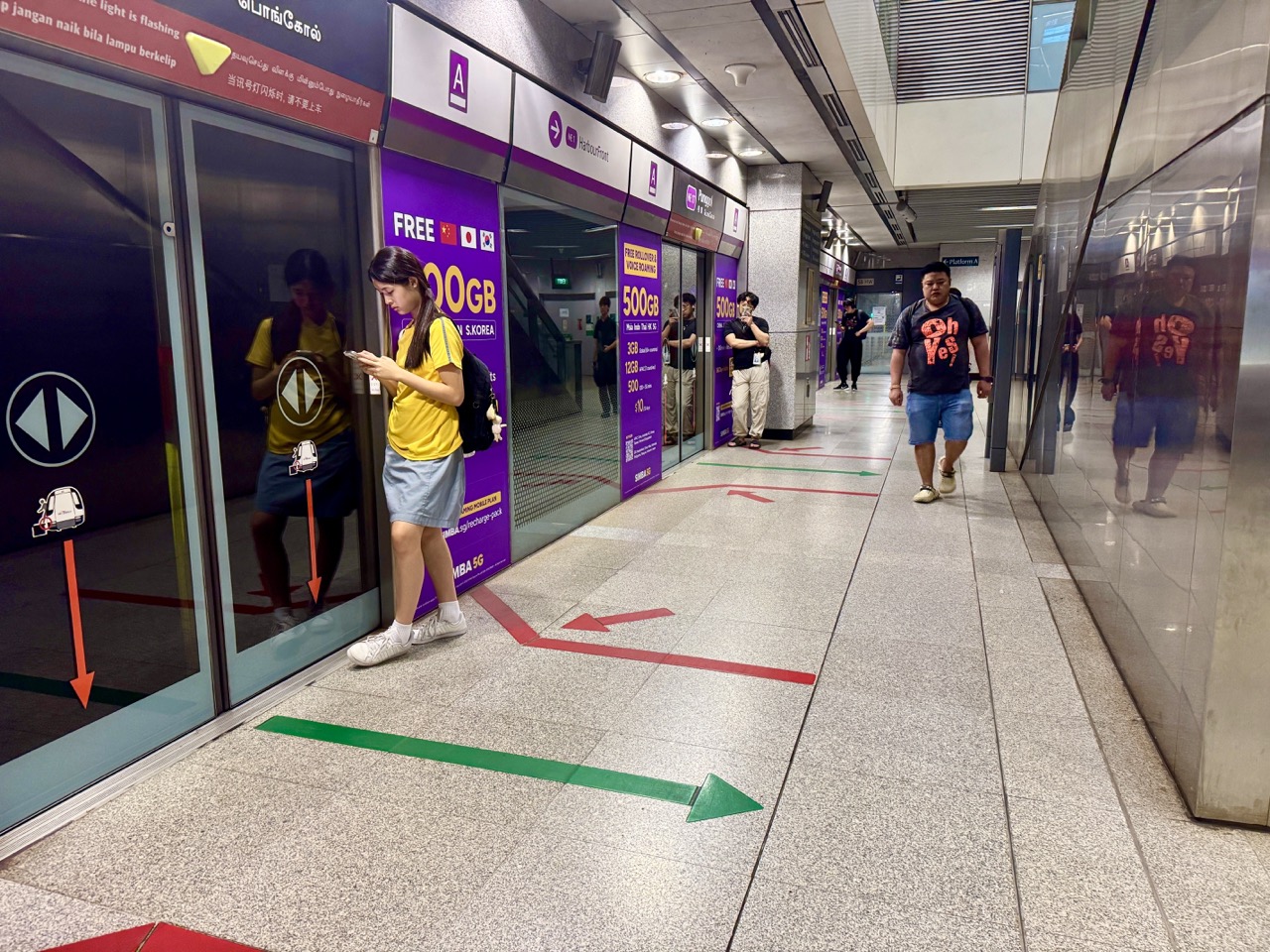
If you hear that your MRT or LRT line is disrupted, check the official current LTA train-service status and the operator’s verified updates before deciding whether to wait, transfer or use an alternative. Identify the affected line, exact station segment, direction and current service level. If bridging buses or free regular bus boarding are activated, follow the official station signage and staff instructions for the actual boarding point; they are not automatically available or free on every bus route in Singapore.
Why translate public transport disruption notices? Commuters and visitors search for MRT disruption today, train delay Singapore, replacement bus service, shuttle bus boarding point, bus stop relocated, station closed and public transport alternative route because they need a quick decision. A multilingual message that says ‘the line is closed’ when only one segment is affected can needlessly divert people, while saying ‘services resumed’ when only partial operations returned can cause missed connections. Accurate language carries current route, direction, stop, time and a practical alternative without turning a live estimate into a guarantee.
LTA’s 2026 rail-reliability initiatives place special emphasis on clear commuter guidance, digital signs, bridging-bus stop wayfinding and live rail status. In December 2025, LTA introduced a central train status page at mytransport.sg/trainstatus, with colour-coded information. Its public service announcements also list planned train adjustments, new bus services and temporary stop changes. This guide explains how those notices should work across languages, including accessibility and incident updates. It is an evergreen interpretation guide, not a claim about which line is disrupted at the instant you read it.
MRT disruption in Singapore: the immediate travel checklist
Confirm the actual affected section
Open the LTA’s official real-time rail status and compare it with the station’s display and verified operator messages. A whole line, one segment and one direction can have different operating arrangements.
Check when the update was issued
Train delay estimates, fault investigation and service restoration can change quickly. A screenshot without a timestamp should not override a newer official advisory.
Read the alternative journey correctly
Find which unaffected MRT/LRT line, station interchange, normal bus service or special bridging bus the official notice identifies. Do not assume the best route is the same for every commuter.
Verify where to board a bus
A free bridging bus may use a designated boarding point different from a normal public bus stop. Follow the current physical signs, station staff and operator guidance.
Allow for accessibility needs
If you use a wheelchair, have limited mobility, need a lift or require language support, ask station staff or an authorised transport ambassador about an actually usable alternative.
Update your plan if service changes
An announcement that trains have begun moving does not necessarily mean normal frequency or crowding. Check the most recent stage before treating the journey as fully restored.
How the transport network’s messages create usable decisions
Line name, segment and direction are separate facts
An MRT service advisory may identify a line, a stretch of stations, one direction or both directions. A translator who says the entire North East Line is unavailable when the source identifies only selected stations can send unaffected commuters on unnecessary detours. Conversely, a notice that omits which direction is affected can leave passengers waiting at the wrong platform. Preserve station codes, line names and the exact affected boundary. A public network map should use the same route identity as the original operator message. When a station acts as an interchange, one line can remain available while another is disrupted. Translating the station name alone is insufficient for a journey decision.
Train delay, reduced service and full suspension differ
A fault can cause slower trains, increased headways, suspended service along a stretch or complete closure. These are different operating states. A notice describing delays should not be translated as a total line shutdown, and the word resumed should not automatically mean normal service frequency. LTA’s 2025 status announcement described minor and major delay categories, with official advisories guiding passengers about whether to remain on trains or use alternatives. Keep the current status and source date, because the live operator’s instructions may change. A commuter should know whether the immediate next step is to wait, transfer, leave the affected section or seek a boarding point for replacement transport.
Colour-coded status needs an accessible explanation
LTA’s status framework described yellow minor delays and orange major delays based on estimated delay duration and other operational factors, not a simple binary guarantee. A multilingual display should preserve the official category, line segment and commuter action, with text labels that do not rely entirely on colour. A colour-blind or low-vision traveller should still be able to understand which route is affected and where help is available. Do not replace a status label with an emotional word such as safe or dangerous unless the source actually says that. The estimated delay category may be revised as more information arrives. A source-faithful translation communicates the official interpretation without inventing a prediction.
Fault reported is not cause confirmed
A rail operator may initially report a train or signalling fault while engineers investigate. The final technical cause may be established only later. A translation should distinguish observed interruption, suspected issue, confirmed fault and completed root-cause analysis. An unfamiliar technical term can be explained neutrally without naming a component the source did not identify. If trains have stopped moving, the commuter’s immediate need is the status and alternative, not a speculative engineering diagnosis. LTA’s historical incident releases illustrate how preliminary assessment and later investigation can be reported separately. Avoid making a social-media guess appear to be an official technical finding.
Bridging buses and regular buses are not one category
During some disruptions, operators activate bridging buses to serve affected rail sections, while selected existing public bus services may also provide alternatives. LTA’s 2026 joint exercises describe free bridging buses and other arrangements activated for particular rail incidents. A dedicated bridging route may use a different stop from a normal public bus service. Translating ‘free boarding at designated stations’ into ‘all buses in Singapore are free’ creates a false fare promise. Likewise, regular routes are not automatically special express shuttles, and some may have intermediate stops. Preserve service name, boarding point, available direction, affected stations and any official fare treatment. A traveller should follow the live notice for the specific incident rather than assume arrangements from a previous disruption apply today.
Boarding point is more important than the familiar station name
A large interchange can have several exits, bus interchanges, roadside stops and temporary assembly points. A message saying ‘use shuttle bus at Serangoon’ is incomplete if the designated stop is not obvious. LTA’s January 2026 measures include digital screens, guiding lights and QR codes designed to help people reach alternative travel options during a rail disruption. Translate exit numbers, direction arrows, bus stop codes and location descriptions in context with the current physical signage. Do not invent a stop because an older map shows one nearby. The instruction should take a reader from their actual platform or concourse to the correct authorised boarding place, including a usable route for travellers with mobility needs.
Rail replacement and alternative rail transfers differ
A passenger might remain on an unaffected part of a line, change to another rail route or take a bridging bus. The appropriate alternative depends on destination, operating network and the specific incident. A translated message should not send every passenger to the same stop irrespective of their journey. LTA’s disruption planning emphasises alternative transport and commuter-centric advice, with actual operators and staff coordinating routing. A change at an interchange is different from replacing a suspended segment by bus. Preserve departure point, destination and any advised transfer stations. A route map may show an available connection without guaranteeing that it is the fastest or least crowded for every person.
Temporary suspension is not permanent route deletion
Planned engineering work, short emergency closures and permanent network changes have different time horizons. A translator should distinguish an MRT section unavailable for a defined weekend from a permanently discontinued service. LTA’s public announcements list train service adjustments and bus or bus stop changes with implementation dates. A message can be correct for one period and irrelevant later. Include start, end or review date as the source states, with any expected resumption clearly labelled as planned rather than guaranteed. A route guide that omits the period can mislead a commuter weeks after the event. Version control matters because travel information is only useful within the conditions it actually describes.
Bus stop relocation is not a bus route cancellation
A bus service may continue operating while one stop is temporarily suspended or moved. A target-language headline saying the entire bus route has stopped can cause passengers to abandon a viable journey. Preserve service number, stop name or code, street side, relocation date and the alternative boarding location. A relocated stop can serve the same routes at a different roadside position; the exact physical location matters more than the short title. LTA publishes stop and service change notices so commuters can plan. Do not infer today’s location from an old map, especially where roadworks or station redevelopment have changed access.
Route numbers and letter suffixes are identifying data
Some bus services have suffixes, variants, short-trip routes or directional loops. A translator who removes M, A, B or another route suffix may direct a commuter to a different service. Preserve official route numbers and destination labels exactly, and use a plain-language explanation only as additional context. LTA’s October 2026 announcement page lists new services such as 873/873M and other time-specific route changes, illustrating why numbers and suffixes matter. A route’s identifier is not an adjective to simplify for style. The correct boarding information should match current operator displays and published stops, not a generic numeric label copied from a similar neighbourhood.
Free service commitments need the actual incident scope
During specific rail disruptions, LTA and operators may provide free bridging buses, and sometimes free travel on designated regular bus routes or sectors. The word free should stay attached to its source, time, service and geographical scope. A target message that says ‘free shuttle bus at Station X’ should not lead a commuter to assume private taxis or every public bus elsewhere will be reimbursed. Some travellers may have ordinary fare transactions, travel card records or transfer conditions that are unrelated to the incident’s temporary support. If there is a disputed fare, use the relevant transport payment operator’s actual enquiry route. A translator should not invent compensation or refund rights based on one historical disruption.
Resumption can be gradual
After a track, power or signalling problem is addressed, trains may resume on part of the line, with increased intervals or temporary crowding. LTA’s incident updates have described progressive restoration of service after faults. A translation that changes ‘services are gradually resuming’ to ‘all trains now operate normally’ can lead passengers into an unexpectedly congested interchange. Preserve the affected sector, service frequency qualification and update time. Another station or train announcement may supersede the earlier notice as operators restore normal headways. The final source of truth is the current official operator and LTA information, not a screenshot from the moment trains first restarted.
Timestamps anchor relative language such as now and shortly
A station announcement may say the next advisory will follow shortly, or a social-media message may state that disruption began thirty minutes ago. Once translated and forwarded, words such as now, today and shortly can become meaningless without an issue time. Preserve absolute dates, clock times, local time zone and source whenever possible. Do not recalculate an old relative estimate as though it had just been published. A live display can give an updated message, but a static article cannot honestly claim current service status. Readers should be able to see when a statement was true and where to check a newer one. This is especially important during morning and evening peak journeys.
Accessibility includes route feasibility, not only translation
A replacement travel plan may involve stairs, a crowded roadside boarding area, longer walking distances or a boarding arrangement that is difficult for some commuters. LTA’s 2026 recovery measures include trained Transport Ambassadors and staff support for vulnerable commuters. A text notice should identify an authorised help point and preserve any available accessible boarding or alternative route information without promising that every temporary service has identical features. If a person cannot use the suggested path, they should be able to seek advice from station staff or the operating provider. A successful language version conveys the real available option rather than merely translating the words ‘take bus’.
Visual alerts and spoken announcements must agree
During disruptions, information can appear on concourse screens, platform announcements, mobile apps, social media and directional signs. A target-language spoken warning that names another line from the displayed map can create confusion. Coordinate each version from a single source status, then check arrows, colour labels, station names and service numbers in the actual rendered context. LTA’s 2026 initiative uses screens, flashing cues and guidance to bus points to help travellers move safely. A translation should work with those physical systems, not contradict them. A traveller unfamiliar with local geography needs the same route and direction from every channel used.
Commuter estimates and guarantees should be distinguished
A train delay estimate reflects the latest available assessment, not a promise that a fault will be repaired at one precise minute. Translating ‘estimated delay of thirty minutes’ into ‘train guaranteed in thirty minutes’ can mislead people with medical, work or school commitments. Conversely, an official message giving an expected service restart should not be softened into completely unknowable delay if the source includes useful information. Preserve estimation, time of assessment and any advice to use alternative routes. A person can make a better decision when they understand uncertainty honestly. The actual operator updates the estimate as conditions change; a translator should never invent one.
Ticketing and fare questions belong to their actual systems
A disrupted journey may involve fare gates, travel cards, mobile payment, transfer arrangements or boarding free support services. A translation should distinguish a customer asking about a normal fare adjustment from a transport operator’s temporary incident policy. No article should promise automatic compensation for every delay in Singapore or instruct travellers to submit bank details through a random link. Preserve any current official fare or alternative-travel instruction and refer unexplained charges to the genuine transport payment provider. If someone has to exit a station unexpectedly, staff guidance and applicable ticketing arrangements matter more than a generic overseas refund rule.
School, work and medical destination communications have separate authority
A late train can affect a student’s examination, an employee’s shift or a patient’s appointment. LTA can communicate the transport situation, but it does not automatically decide whether a school grants an examination arrangement, an employer excuses lateness or a clinic reschedules a consultation. Translation should not invent such promises. A person can retain official disruption information and contact the appropriate school, workplace or healthcare institution about their own arrangements. The rail notice should preserve actual disruption facts; the receiving institution remains responsible for its own policies. Separating these voices avoids making one public transport announcement an unsupported legal excuse for every other obligation.
The status page and announcement calendar are different resources
LTA operates a real-time train status page for current incidents and a public announcements page describing planned rail adjustments, new bus services and stop changes. A translator should not treat the latter as a continuously updated record of every unplanned fault. Likewise, a historic event notice should be labelled as history. The current destination of a live status link and the announcement’s last-updated date help readers select the correct source. The planned change may still matter for travel on a future date even when all lines are currently operating normally. One word such as upcoming versus ongoing can prevent a wrong journey decision.
Follow-up communications require correction without concealing history
A service can progress from a reported fault to major delay, bridging buses, partial recovery and normal service. A multilingual publication system should update each language from the same authorised incident record while retaining relevant time labels. An old advisory that was accurate at 8 AM should not be republished as current at 10 AM after a route changes. If a previous translation sent travellers to the wrong stop, issue a clear correction and update the physical and digital signs involved. A reliable route notice records source, affected segment, intended action and revision rather than smoothly erasing the difference. Transparent changes strengthen trust and help staff explain what travellers should do next.
Thirty-two transport disruption translation mistakes
1. One station disruption is described as whole-line shutdown
The source says service is unavailable between two stations. The translation says the entire MRT line is closed. Commuters who could still use unaffected trains may be sent on long detours. Preserve line, affected endpoints and direction exactly. A whole-line label is not a substitute for the actual segment.
2. Minor delay becomes total cancellation
LTA’s live framework can indicate a minor delay under current criteria. The target notice instead announces no trains running. That changes the travel decision. Keep the status category, time and source guidance rather than infer total suspension from the word disruption. A commuter might reasonably continue by rail if the operator advises that option.
3. Major delay becomes normal service
A source warning indicates a major delay and advises alternative transport. Its translation calls the line operating normally because trains are still moving on some sections. Moving trains and normal frequency are different. Preserve the estimated delay class and affected span, with access to current official information.
4. A fault is presented as confirmed sabotage
A technical cause has not yet been determined, but the target social post asserts deliberate damage. This invents an allegation. Preserve observed operational effect, official stated cause and investigation status separately. The commuter needs a travel alternative, not unsupported blame for an incident still being assessed.
5. Yellow and orange status meanings are swapped
A translated line-status legend describes the more serious category as minor and vice versa. This can encourage travellers to remain on a heavily affected route. Test the final visual and textual labels against LTA’s actual current official definitions. Accessible status wording must not rely on colours alone.
6. Direction toward Punggol becomes toward HarbourFront
An advisory identifies one direction of travel but the target reverses it. A commuter may wait at the wrong platform. Preserve direction labels and station endpoints exactly, checking route maps and interchange context. Named directions are data within a transport network, not arbitrary stylistic phrases.
7. Bridging bus becomes regular bus with ordinary fare
The source announces a free bridging bus at a designated point. Translation tells travellers to pay the standard fare on a normal route with a similar destination. The service categories and boarding locations differ. Preserve the actual activated service, fare treatment and official location. Do not invent a new fare based on a familiar bus.
8. Every bus is described as free
A notice says free boarding is available on designated regular bus services at affected stations. The target claims all Singapore public buses and private taxis are free for the rest of the day. That grossly expands the offer. Keep exact qualifying services, stations, time and current official source.
9. Free bus point moves to the wrong exit
A temporary boarding area is near one station exit, but the target directional sign points to another side of the interchange. Travellers may be pushed into congestion or miss the service. Verify exit identifiers, arrows and stop codes against official current physical signage. A familiar station name alone is not enough.
10. A replacement bus runs in the opposite direction
The source display names a bus service toward the next affected stations, but translation labels its opposite destination. A passenger may make progress away from the intended journey. Preserve route direction, endpoints and any relevant stop sequence, with trained staff or operator clarification for uncertain wording.
11. A planned closure becomes a fault happening today
LTA announces a future engineering service adjustment. A translated news card removes the implementation date and labels it a sudden unplanned incident. A traveller may abandon today’s normal journey. Preserve future start, date and planned purpose, and distinguish scheduled changes from live faults.
12. A historic adjustment is presented as still ongoing
An old Sengkang LRT engineering notice is republished after the adjustment period without its date. The target version implies the loop remains closed. Keep original validity dates and link to the current LTA service announcements. A source can be historically accurate and still unsuitable as today’s travel status.
13. Bus stop relocation becomes cancelled route
A bus service still operates but one stop has moved temporarily. The target notice says the entire bus is discontinued. Preserve route number and new or alternate stop location. A traveller should know whether to walk to another boarding point rather than conclude no service exists.
14. Bus service variant suffix is dropped
Service 873 and 873M appear with distinct identifiers in official announcements. A translator removes the M from every line, potentially obscuring route variant information. Keep service number and suffix exactly. The destination and route should be confirmed from current operator guidance rather than inferred from similar numbers.
15. One side of a road is confused with another
A bus stop is temporarily shifted to the opposite side of the street, but a translated map says across from instead of outside. The difference can change direction of travel. Preserve stop code, road side, arrows and named landmarks as they appear in the approved source. Test the actual route for a reader unfamiliar with the neighbourhood.
16. Next train estimate is given as guaranteed departure
A live estimate shows the train may arrive after a delay, but the target screen labels it a fixed departure appointment. These are different levels of certainty. Preserve estimated wording, timestamp and any continuing disruption qualifier. A dynamic prediction can change when service conditions change.
17. Service resumed becomes headways normal
The operator announces progressive resumption, while target-language push notification states normal frequency has fully returned. Passengers may underestimate wait time or congestion. Keep partial or progressive restoration with its real segment and status. Recheck the live page when making an onward journey decision.
18. The last update’s time zone disappears
A travel app caches a message issued earlier in Singapore local time. Its translation says ‘just now’ whenever opened. Readers may treat stale information as current. Show the actual issue time and date. If a live update is unavailable, do not manufacture recency through wording.
19. Affected station list is sorted out of route order
A notice lists stations in travel sequence, but the translated table alphabetises them and implies that is the shuttle stopping order. Keep route sequence linked to the actual service and show a separate alphabetical index only if it cannot confuse travel order. A stop list is operational information.
20. An interchange line is mistakenly marked closed
A station serves two lines but only one has the fault. The target notice describes both as unavailable. Passengers lose a potentially useful alternative route. Preserve line-specific statuses and any actual restrictions on station access. A functioning interchange can be important during recovery.
21. A station exit closure is called station closure
One exit is temporarily unavailable, while the station and trains still operate. The translation says the entire station is shut. Preserve the affected exit and available alternatives from official station signage. Navigational specificity matters especially for people unfamiliar with several similar exits.
22. Accessible route is replaced with stairs-only instruction
A person using a wheelchair receives a target-language guide that directs all passengers through a stair-only exit although the source identifies support. Accessibility requires a real usable route, not an attractive translation. Preserve actual assistance options and ask station staff or transport ambassadors when the disruption changes.
23. Transport Ambassador becomes a ticket inspector
LTA’s 2026 measures describe volunteers helping passengers navigate disruptions. A translation labels them staff who can issue fines and enforce fare changes. That assigns authority they were not given. Preserve the actual support role and how commuters can identify help without inventing regulatory powers.
24. Another operator’s alert is attributed to LTA
A social account makes a speculative claim, and a target article presents it as an LTA official directive. Keep source names and verified links. Commuters need to know whether a message is from a train operator, regulator, journalist or passenger. Attribution supports trust and correction.
25. A QR code points to an old document
Station signage offers QR access to live disruption updates, but the target artwork prints a link to an old timetable. A person may act on obsolete information. Test the destination of every language’s QR code and verify it supports current status. LTA’s 2026 measures specifically use QR access and digital signs to improve disruption communication.
26. An unverified fare refund is promised
A translated notification promises cash to every delayed commuter without a source-specific policy. LTA’s free bridging arrangements do not automatically create universal compensation. Preserve only actual official fare concessions and route choices. A customer disputing a charge should use the responsible payment provider’s verified process.
27. School lateness policy is invented from train delay
A station advisory says one rail segment is delayed. A translation adds that every school must excuse late students without question. Education authorities and individual schools control their own processes. Preserve the transport facts and encourage direct discussion with the school, not an invented entitlement.
28. A doctor’s appointment is said to be rescheduled automatically
A patient experiences a disruption on the way to hospital. The target rail app says their clinic booking has already been moved, even though the operator cannot control the hospital calendar. Keep transport and healthcare messages separate. The patient can contact the clinic using its actual official procedure.
29. A blocked concourse is confused with an evacuation order
Staff temporarily redirect pedestrian flow while repairing a system fault. A translated sign calls it an immediate evacuation of the entire station. Safety and operational instructions have different urgency. Preserve the source’s exact instruction and follow current staff directions, without inventing a major emergency.
30. A genuine evacuation warning is softened into advice
A source instructs travellers to leave a specified area. The translation says they may wish to move when convenient. That changes safety meaning. Preserve imperative, location and any conditions. Translation should not alter emergency orders for politeness. Staff and the relevant authority control the actual evacuation.
31. An old map supersedes new staff direction
A saved translated route map suggests a boarding stop that was moved after the incident began. The commuter treats it as more authoritative than the live signs. Show a clear update time and route to official current instructions. A static graphic cannot promise to remain correct during an evolving disruption.
32. A person mistakes technical repair for service restart
A statement says engineers restored power to equipment but passenger trains are still undergoing checks. The target notice calls the line open to riders. Equipment restoration, safety verification and public service resumption are distinct states. Preserve the actual passenger-facing status and rely on the official operator’s confirmation rather than infer it from a technical milestone.
Practical multilingual disruption workflows
A commuter’s quick decision method
Find the live official LTA status for your intended line and read its affected station range and direction. Note when the information was updated. Consider whether an unaffected rail line, official bridging bus, designated free regular bus or another route can serve your destination. Verify the actual boarding point through station signage or staff rather than assume it is the normal bus stop. If mobility or accessibility needs affect your options, seek the current available support before moving to an unsuitable route. Recheck status after making a change because trains may resume progressively. A translated notice should help you identify a genuine next action, not promise that a particular journey time is guaranteed.
A rail operator’s source-of-truth workflow
Create one incident record with line, segment, direction, status category, onset time, latest update, approved travel alternatives, designated boarding locations and any service-restoration qualification. Link all passenger languages to that same record rather than letting a localiser publish an independent route estimate. Mark names, station codes, bus service numbers and time fields as protected. Release updates across station screens, in-train announcements, mobile pages, signs and staff scripts in coordination. Test whether a reader can move from the named platform to the correct alternative boarding location using only the target language. When the source changes, mark the older message as superseded rather than leaving it as apparently live guidance.
A bus diversion notice for a neighbourhood
A bus stop can move while the service continues, and the affected routes may include variants or short-trip services. Publish the implementation date, exact stop name and code, alternative location, road side and each affected service identifier. Translate why the stop changed only as supported by the transport authority. A concise map can help, but arrows must agree with the real street layout. Review from both directions of travel, because a translated phrase like opposite mall can be interpreted ambiguously. Keep temporary and permanent adjustments distinct and identify where commuters can check the latest notice. This helps visitors and regular commuters adjust without believing the entire bus route has vanished.
A review checklist for translation teams
First check attribution: does the message originate with LTA, the operating company or a third-party report? Then verify the affected line, stations, direction, status, update time and intended action. Review all numbers, suffixes, stop codes and time units. Inspect status colours, screen-reader labels, flashing cues, arrows and live links in the actual rendered context. Have a bilingual reviewer unfamiliar with the source-language message describe where they would travel and board. If that action differs from the authorised advice, correct the target before release. A technically correct paragraph is insufficient when an incorrect stop arrow would send people the wrong way.
A four-week learning exercise
Week one distinguishes normal, minor delay, major delay and suspended service on fictional Singapore rail segments, linking each to the specific official instruction. Week two studies bridging buses versus ordinary public buses, marking which temporary fare arrangements are verified. Week three uses a fictional bus stop relocation to test route suffixes, stop codes, road side and implementation dates. Week four introduces a sequence of three timestamped incident updates, including partial restoration, and asks learners to keep four language versions consistent without turning estimates into guarantees. The exercise builds practical translation and wayfinding judgment rather than authorising anyone to operate transport services.
Frequently asked questions
Where can I check live Singapore MRT or LRT disruptions?
LTA maintains the official rail status page at mytransport.sg/trainstatus, with current line information.
Does minor delay mean no trains are running?
No. LTA’s status categories distinguish delay severity and the available service; read the actual advisory.
Are bridging buses always free?
Free bridging or selected regular bus arrangements can be activated for particular disruptions; check the current incident’s official instructions.
Where do I board a bridging bus?
Use the designated boarding point shown in the current station signage or operator advice, not necessarily the normal bus stop.
Does resumed service mean normal frequency?
Not necessarily. Restoration may be progressive, so consult the latest status.
Is every rail line closed if one interchange is affected?
No. Different lines and directions can have distinct operating conditions.
Can I claim automatic compensation for any late train?
No universal entitlement should be inferred from this guide; use the relevant current official transport policy.
Are all bus stop changes permanent?
No. LTA publishes both temporary and permanent changes with implementation dates.
How can commuters with mobility needs seek help?
Ask current station staff or authorised transport ambassadors about usable alternative routes and assistance.
Can a translated screenshot be trusted hours later?
It may be outdated. Check the source timestamp and latest official live status.
Official Singapore transport sources
LTA live rail status provides current MRT/LRT operating advisories. The LTA public transport announcements page lists planned train adjustments and bus service or stop changes. LTA’s January 2026 disruption-recovery announcement describes digital signs, bus point wayfinding and assistance. LTA’s December 2025 rail-status announcement explains its colour-coded categories. Check the current live information for a real journey.
Related eduKateSG translation topics
Rail and public transport translation, airline cancellation notices, power outage notices, and why translation matters offer related guidance.
The larger lesson
Public transport disruption notices work only when commuters understand the same active segment, direction, status, alternative journey, boarding point and time. One altered route suffix, misplaced arrow or missing word such as estimated can change real travel behaviour. The most useful translation is precise enough to help a visitor or resident take a safe, informed next step and honest enough to acknowledge that service conditions evolve. Verified live LTA and operator messages remain the source for any actual journey.