
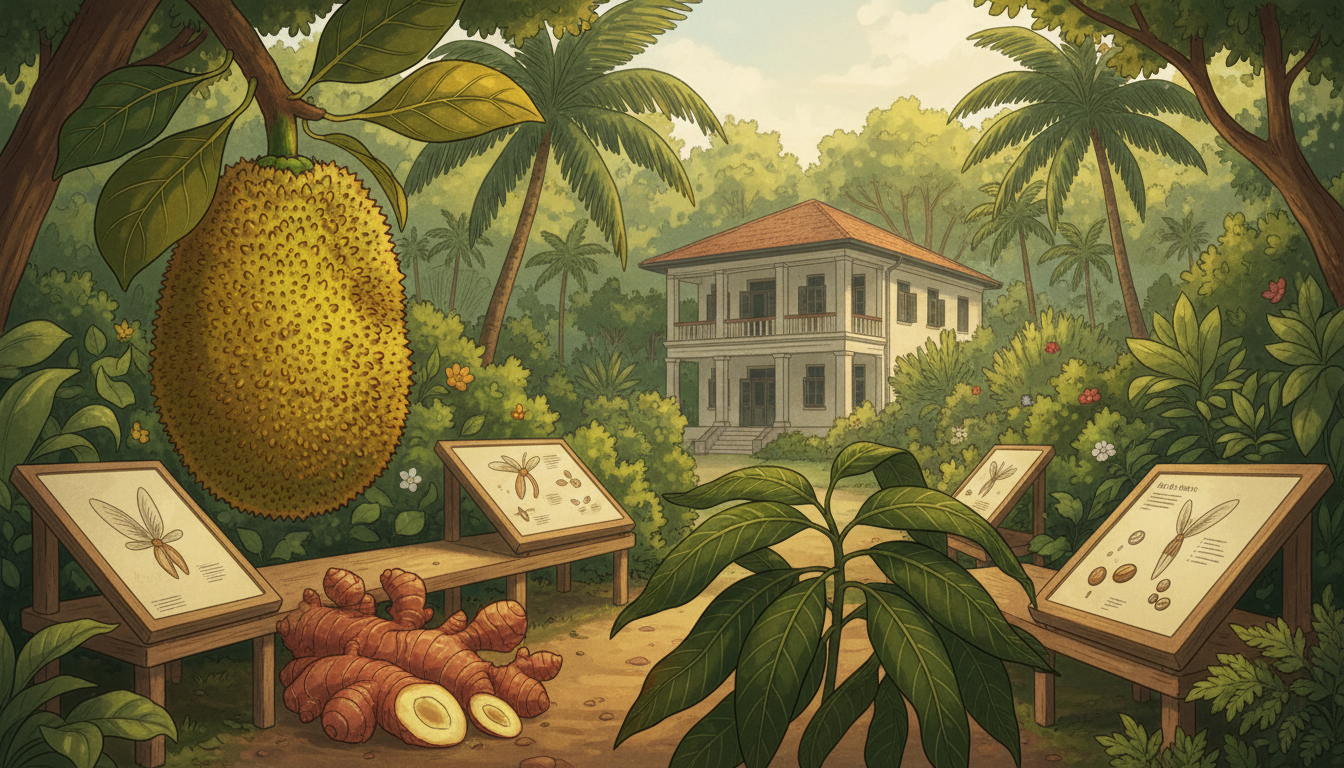
Did you know? Behind the Bukit Timah Entrance of Singapore Botanic Gardens is a place that works on the future of plants—one seed at a time. The Singapore Botanic Gardens Seed Bank stores material from more than 300 plant species and has the capacity to hold 75,000 seed collections. Even better for curious families: its interpretive gallery is already open to visitors.
The distinction matters for 2026 and 2027. The Gardens’ Public Reference Library is temporarily closed for digitisation, but the Seed Bank has a different role, address and operating timetable. You do not have to wait for the library to reopen to learn about plant conservation.
Quick answers for a Seed Bank visit
- Place: Singapore Botanic Gardens Seed Bank, near the Bukit Timah Gate.
- Visitor hours: 9am–6pm daily under the published Gardens schedule, subject to individual maintenance or access notices.
- Admission: entry to Singapore Botanic Gardens is free; the National Orchid Garden is a separately ticketed attraction.
- What visitors can explore: an interpretive gallery, views into parts of the seed-banking process and an outdoor Seed Dispersal Garden.
- When established: 2019, for long-term conservation of plant genetic diversity from Singapore and the Southeast Asian region.
- 2027 status: the Seed Bank is an operating facility, not a new attraction scheduled to open in 2027. Check scientific-programme and visitor notices for changes.
Why store seeds if forests already contain plants?
A forest is alive, and that is part of what makes it vulnerable. Trees can be affected by land changes, diseases, extreme weather and other pressures. Conserving seeds creates an additional source of genetic material that may help researchers understand, propagate and conserve species.
Seed collections are not a substitute for protecting forests. They are a backup and a research resource. A seed kept in controlled conditions can be studied or, where methods succeed, germinated for conservation work. That makes the connection between a living habitat and a research collection important.
NParks says the Seed Bank has capacity for about 75,000 collections across approximately 25,000 species. That is storage capacity, not a claim that all those shelves have already been filled. Its current reported holdings represent over 300 species, including more than 100 native Singapore species, many of them threatened.
What happens to a seed before it is stored?
The process can include identifying the collected material, documenting provenance, cleaning or removing fruit pulp, checking quality, drying where appropriate, and using carefully controlled storage conditions. Researchers may also test germination to understand whether seeds remain viable.
A seed that is properly labelled carries more scientific value than an unlabelled bag of seeds. Where it came from, when it was collected and which species it belongs to can all matter to conservation planning.
The gallery uses interactive displays and windows looking towards laboratories to explain steps along that journey. Visitors can appreciate what happens behind the scenes without expecting unrestricted access to research rooms.
The complication: not all tropical seeds survive freezing
Some plant seeds tolerate drying and cold storage well. Others—often described as recalcitrant seeds—are sensitive to being dried or frozen and may be damaged by conventional seed-banking methods.
NParks explains that many tropical native species have this difficulty. Its researchers therefore study other methods of preserving plant germplasm. That is a useful first-principles lesson: one conservation technique cannot be applied indiscriminately to every organism.
When a child asks why the Seed Bank cannot simply freeze every seed, invite them to think about the water inside living cells and what freezing or drying can do to delicate tissues. Real research begins with understanding those differences.
A short walk through the Seed Dispersal Garden
Outside the building is a living garden devoted to the ways seeds move. Some plants use wind or water; some rely on animals, hooks or attractive fruits; others expel seeds mechanically. The differences are adaptations to the environments in which plants reproduce.
NParks also highlights a living double coconut palm, associated with the world’s largest seed, as a specimen visitors can learn about. Do not attempt to pick or handle seeds on display. Observe them as part of a conserved living collection.
A family observation exercise is simple: choose three examples of seed dispersal, explain what moves each seed, then ask what might happen if the dispersal mechanism no longer works in a changing habitat.
How to find the gallery from Bukit Timah
Use Botanic Gardens MRT, served by the Downtown and Circle Lines, and approach the Gardens through the Bukit Timah Entrance. NParks identifies Bukit Timah Gate as the closest entrance to the Seed Bank.
The Seed Bank occupies a refurbished conserved building that was once part of Raffles College, established in 1928. The history of the building is part of the outing, but the interpretive gallery focuses on plant science and conservation rather than a tour of the entire former college.
Our Seed Bank opening-hours and entrance guide covers the basic visitor route. For a contrasting experience, the Forest Discovery Centre at the Gallop Extension explains whole habitats rather than stored plant material. The sites are in different parts of the Gardens, so plan your walking distance.
What is expected from now through 2027?
The Seed Bank opened years before 2027. No official source checked in October 2026 promises a complete new visitor attraction next year. What could evolve are the collections, conservation research, educational programmes and visiting arrangements.
It is easy to confuse it with the separate Botanic Gardens Public Reference Library closure through 2027. That library is undergoing digitisation of herbarium and archive holdings; its closure does not automatically shut the Seed Bank gallery.
For any 2027 visit, check the Gardens’ current attraction list and notices shortly before travelling. Regular opening hours are helpful, but temporary maintenance, severe weather or special programmes can change access.
Frequently asked questions
Is the Singapore Botanic Gardens Seed Bank open now?
Yes. NParks lists a public interpretive gallery with normal 9am–6pm opening hours. Confirm any special notices for your chosen date.
Does the bank already hold 75,000 seed collections?
No such claim is made. That figure is its stated capacity. Current holdings cover seeds from more than 300 plant species.
Can I enter the laboratories?
The gallery provides interpretive information and views into part of the work. Research facilities should not be treated as unrestricted public spaces.
Will it close until the library reopens in 2027?
The Public Reference Library and Seed Bank are separate facilities. The published library closure does not establish a closure of the Seed Bank gallery.
Official sources
Information checked 25 October 2026. Sources: Singapore Botanic Gardens Seed Bank visitor information, NParks’ 2026 seed-banking conservation overview, official Gardens map and admission information and current attraction notices.