
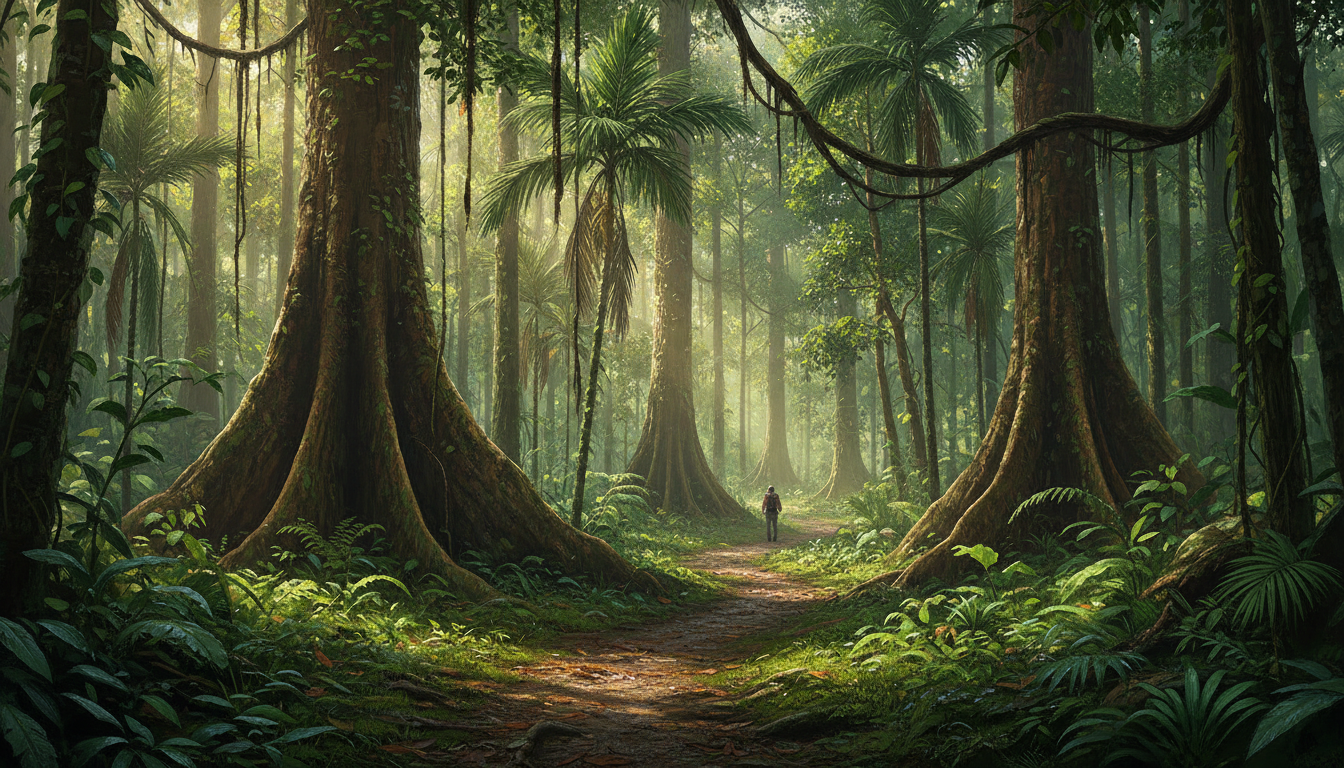
Did you know? You can walk through a surviving piece of primary tropical rainforest at Singapore Botanic Gardens in just 600 metres. The official self-guided Rain Forest Trail takes roughly 30 to 40 minutes, but its gates do not follow the Gardens’ longer midnight schedule: the Rain Forest is open 7am–7pm, and it may close during stormy weather until safety checks are completed.
This makes the trail a useful 2026–2027 nature outing for families and students, especially those who want an introduction to rainforest layers without climbing Bukit Timah Hill. The key is to respect the difference between a protected six-hectare forest, a longer botanical-park stroll and an unrestricted hiking route.
The 600-metre Rain Forest Trail: quick facts
- Location: Singapore Botanic Gardens, within its central botanical landscape.
- Trail distance: 600 metres, with NParks estimating 30–40 minutes for a self-guided visit.
- Habitat: approximately six hectares of protected primary rainforest within the larger Gardens.
- Opening hours: 7am–7pm daily, subject to weather and safety notices.
- Admission: free, like general entry to Singapore Botanic Gardens.
- During storms: NParks may close the Rain Forest. Reopening follows inspection confirming conditions are safe, not merely the end of visible rain.
- Visitor rules: stay on the designated trail, leave plants and animals undisturbed, and do not bring pets into the Rain Forest.
- 2027 status: already open in 2026. No new opening date is announced for the trail.
How can a six-hectare forest be so important?
Singapore Botanic Gardens protects a remnant of rainforest dating from before many of the surrounding roads and buildings. A forest that survives within a modern city can preserve complex relationships among trees, fungi, insects, birds, other animals and the soil.
The six-hectare Rain Forest is not the same as Singapore’s much larger Bukit Timah Nature Reserve, which protects about 163 hectares and contains the island’s highest natural hill. Both are important, but they give visitors different experiences.
The Botanic Gardens trail offers a shorter route where the focus can remain on the structure of a rainforest. You do not need to finish a steep summit climb to learn about dense vegetation, layers of light, decomposition and how animals use different parts of the forest.
Four layers to notice along the route
A tropical forest is not a flat carpet of trees. Plants compete for sunlight and occupy different heights, creating habitats for other organisms.
- Emergent and taller trees: a few trees reach higher than much of the surrounding canopy. Look upwards only when stopped safely along the path.
- Canopy: crowns of neighbouring trees form much of the green ceiling. It changes how much sunlight reaches the ground.
- Understorey: smaller trees, palms and shrubs grow in filtered light and can have distinctive leaf shapes.
- Forest floor: leaf litter, fungi and other decomposers play a role in recycling organic material and making nutrients available again.
These labels are simplified for teaching. The real vegetation is more irregular than a tidy four-storey diagram. The useful lesson is to notice how light, water and plant shape vary with height and position.
What can you learn without touching the forest?
Start by listening. The sounds of insects or birds may differ from the nearby open lawns. Then observe a fallen leaf from the path without removing it. Notice its colour, shape and signs of breakdown. What might happen to this material over time?
Look for vines, roots and differences in foliage. A climbing plant may depend on another tree for support without necessarily taking its nutrients. Large roots can support tall trees in difficult soil conditions, though the function of any individual structure should be explained from evidence rather than guesswork.
You might notice animals moving through the vegetation, but the trail is not a zoo where sightings are guaranteed. Keep a respectful distance, avoid flash or loud noises where they could disturb wildlife and do not feed birds, squirrels or macaques.
Why 30–40 minutes is more than enough for learning
Walking slowly makes it easier to notice details that are missed in a hurry. NParks’ estimate is 30 to 40 minutes for a 600 m self-guided route. That does not mean every group will finish in precisely that time. Children’s questions, wet ground, visitors’ mobility and stops can all change the duration.
Try the simple ‘three observations’ method: name one feature in the canopy, one on the forest floor and one sign of living interaction, such as a leaf showing insect damage. The point is to describe evidence without disturbing the ecosystem.
For older students, turn those observations into explanations: why is the light weaker near the ground? Why is decomposing litter necessary in a healthy forest? Why would building a footpath through sensitive habitat require limits on where people walk?
What happens after heavy rain or a thunderstorm?
NParks’ August 2026 self-guided visitor page explicitly states that attractions such as the Rain Forest may close in inclement weather. More importantly, a closed area reopens only after inspection confirms it is safe. So a stop in rainfall does not automatically mean the trail immediately becomes accessible.
Branches can fall, surfaces can become slippery and thunderstorms can return. If a closure is displayed at the entrance, respect it. Do not climb over signs or follow another walker into the forest.
A flexible alternative is to enjoy an open public section of the Gardens or choose an indoor gallery with its own operating hours, such as the Centre for Ethnobotany. But check that the gallery is actually open; it has a monthly maintenance closure and is not an always-open rainy-day refuge.
How do you reach the Rain Forest from Bukit Timah?
Botanic Gardens MRT on the Downtown and Circle Lines serves the Bukit Timah Entrance of Singapore Botanic Gardens. From there, use the official Gardens map to identify the Rain Forest Trail in the central part of the grounds and walk along designated public paths.
The Gardens also has a Tanglin Entrance near Napier MRT, but the best route depends on your starting point and what else you plan to visit. The Rain Forest is not immediately outside every gate.
NParks’ self-guided walks page includes a trail map to help plan your approach. Do not confuse the 600 m forest-trail length with the extra distance from the MRT entrance or the return journey.
How does it compare with Bukit Timah Nature Reserve?
The two names sound similar to visitors because both refer to tropical rainforest around Bukit Timah. The Botanic Gardens’ six-hectare remnant offers a compact, self-guided learning walk. Bukit Timah Nature Reserve is much larger, with steep summit routes and different access points near Beauty World MRT.
If the group includes young children, someone unaccustomed to hiking or a person who wants a shorter forest experience, the Botanic Gardens may be easier to plan than a hill climb. But do not infer that a short natural trail is completely flat or wheelchair accessible just from its length.
For the reserve’s conservation and current visitor rules, consult NParks’ Bukit Timah Nature Reserve page. For another nearby educational gallery, our Forest Discovery Centre guide explains different Singapore forest habitats with indoor displays.
A mini field journal for parents and tutors
- Before entering: ask students to predict whether the forest will feel cooler or darker than a nearby open lawn.
- At the first suitable stop: sketch the outline of the canopy without blocking the path.
- In the middle: compare two leaf shapes and explain what is actually observed, not merely guessed.
- Near the end: describe how plant litter might return nutrients to the system.
- Afterwards: write one question that could be studied scientifically and one rule that protects the habitat.
These activities are optional ideas, not a licensed guiding programme or an invitation to collect samples. Keep group size and supervision appropriate for the public path. For organised activities in the Gardens, check permits and other NParks rules where relevant.
What will visitors need to check during 2027?
The Rain Forest Trail is established and operating in 2026. It is not a new 2027 development, and no separate 2027 reopening date is confirmed in NParks’ current pages.
The real changes to watch are day-to-day weather closures, any maintenance to specific paths, temporary visitor notices and any newly scheduled guided activities. Always use the latest signs rather than relying on a route description written months earlier.
The main Gardens’ 5am–midnight schedule does not extend the Rain Forest’s hours. If you want an evening garden walk instead, choose a permitted main path and avoid restricted conservation areas after 7pm.
Frequently asked questions
How long is the Singapore Botanic Gardens Rain Forest Trail?
NParks lists 600 metres and an estimated 30–40 minutes for a self-guided walk, excluding any approach from the MRT or another entrance.
Is it free?
Yes. The Rain Forest Trail is free to visit as part of the Singapore Botanic Gardens.
Can I walk it at 9pm because the Gardens stays open until midnight?
No. The Rain Forest’s published access hours are 7am–7pm, unlike the general Gardens’ longer operating hours.
Will the trail reopen as soon as rain stops?
Not necessarily. NParks says weather-affected attractions reopen after safety inspections, so follow the gate notice.
Are dogs permitted?
No. NParks lists the Rain Forest among its designated no-pets areas.
Is it the same as climbing Bukit Timah Hill?
No. The six-hectare Botanic Gardens forest trail is a different place and activity from the much larger Bukit Timah Nature Reserve summit hike.
Official sources and update
Checked 25 October 2026. References: NParks self-guided walking details and wet-weather guidance, Singapore Botanic Gardens hours and map, latest conservation-area closure notices and Bukit Timah Nature Reserve’s separate visitor information. For an overview of the established route, see our earlier Botanic Gardens 600 m Rain Forest Trail article.