
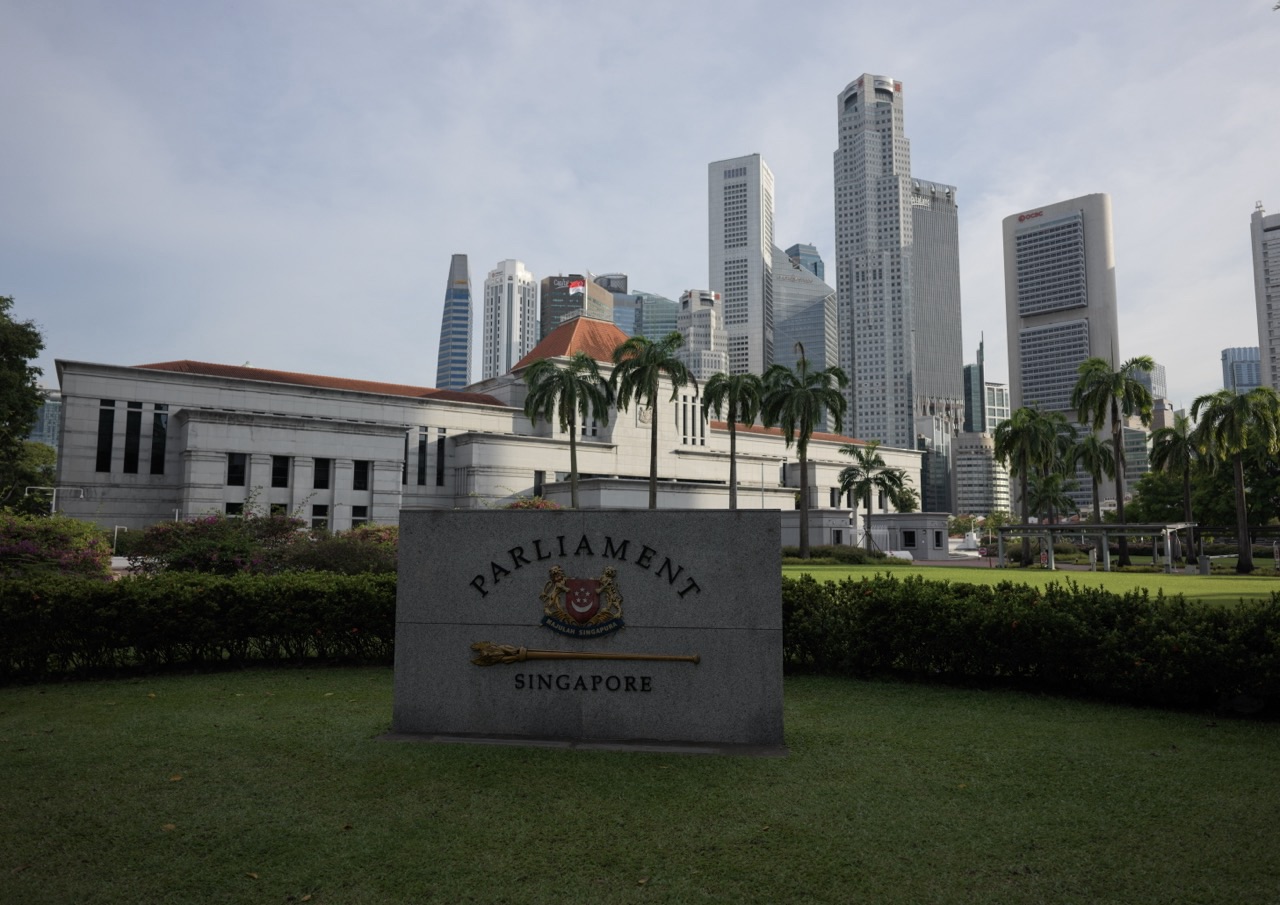
A Singapore child hears on the news that a new Bill has been introduced in Parliament. They may immediately say, “Singapore has a new law today.” That sounds plausible, but the words Bill, debate, Reading, amendment, Act and commencement describe different stages. A proposal is not necessarily an approved law; even a passed Bill does not mean every provision starts operating that afternoon. Learning the distinctions helps children read public information truthfully.
A child may first discuss fairness, rules and decisions in English, Mandarin, Malay, Tamil or another home language. A family conversation about why a school has a rule provides a bridge to more specialised English civic words. But a classroom rule is not a law of Singapore, and a class vote is not a substitute for Parliament’s procedures. The adult should present an analogy as a learning aid, not an identical process.
This forty-ninth article in Singapore Children Vocabulary focuses on the role of Parliament, the stages between Bill and law, and how people can discuss public issues respectfully. It is intended mainly for Primary 4–6 learners. The writing is non-partisan and describes procedures rather than advocating a political position. It differs from Fairness and Shared Decisions, which teaches everyday group decisions, and Public-Service Enquiries, which explains administrative assistance. The present topic is the formal legislative process in Singapore.
Quick answer: a Bill is a proposed law, not yet an Act
The child’s learning sequence is identify what has been proposed → read the stage → recognise who examines and debates it → check whether it passed → distinguish Presidential assent from commencement. A headline about a First Reading does not establish that Parliament has approved the Bill. A Second Reading debate is not the same as the text of the final Act. The legal status and any specified commencement date must be checked.
Singapore’s Parliament Educational Resources explains how Bills move through First Reading, Second Reading, committee consideration and Third Reading before relevant post-passage steps. The official From Bill to Law guide provides a visual summary. Children need not memorise legislation; they should know enough to ask “What stage has actually been reached?”
- Learning outcome: explain Bill versus Act, debate versus vote, and passed versus commenced.
- Language bridge: establish the sequence in the familiar first language, then practise accurate official English terms.
- Age boundary: this is basic civic education, not a request for children to campaign, lobby, join a political party or make personal voting decisions.
- Evidence practice: prefer Parliament’s official educational pages, verified proceedings and Singapore Statutes Online for actual legislation.
Singapore’s Parliament, Executive and Courts have different roles
The Parliament’s System of Government page describes three branches. The Legislature comprises the President and Parliament and makes laws. The Executive is headed by the Prime Minister and Cabinet and administers the law. The Judiciary interprets the law through the Courts. Children should not use “Parliament,” “Government” and “court” as interchangeable institutions.
Singapore has a unicameral Parliament, meaning one House rather than two separate parliamentary chambers. The Members of Parliament page explains that MPs include elected, Non-Constituency and Nominated Members. Most are elected to represent either Single Member Constituencies or Group Representation Constituencies; different kinds of MPs have different appointment or selection arrangements.
The Sitting of Parliament page explains that a sitting’s Order Paper identifies business for consideration. MPs may ask Ministers questions, submit proposed amendments, introduce Bills and debate matters. An MP may introduce a Private Member’s Bill; it would be inaccurate to say that only Ministers can propose legislation.
Parliament also approves the Government Budget and scrutinises Government policies. This article concentrates on the legislative sequence because children first need a clear distinction between an institution’s purpose and the procedure for making a law.
From Bill to Act: the main stages
The official parliamentary educational guide explains that at First Reading, the Bill is introduced and its title is read. There is no substantive debate at this stage. The Bill is made available for MPs to examine.
At Second Reading, MPs debate the general merits and principles of the proposed law. The Bill’s progress depends on Parliament’s applicable procedures and support. A media report describing this debate is an account of consideration, not necessarily a final enacted rule.
At the Committee Stage, Parliament examines details and possible amendments. A Bill may be considered by the Committee of the whole Parliament or, in selected circumstances, referred to a Select Committee. Parliament’s Select Committees page explains that such committees can call witnesses and examine information relevant to their work. Not every Bill goes to a separate Select Committee.
At Third Reading, the Bill undergoes the relevant final consideration and vote, with debate generally limited after earlier detailed scrutiny. Parliamentary approval is an important stage, but it should not be confused with every later legal step.
Singapore’s Presidential Council for Minority Rights (PCMR) examines most Bills for differentiating measures that could affect racial or religious communities. There are specified constitutional exceptions; the official Parliament glossary explains its scope. A child should not claim every Bill is reviewed in exactly the same way.
Following the applicable post-passage steps, Presidential assent is involved before a Bill becomes an Act. The law’s operation may then begin on the specified commencement date. Some legislation or provisions may commence later, rather than automatically on the day Parliament votes. Singapore Statutes Online, maintained by the Attorney-General’s Chambers, provides the text and version history of legislation.
This is an age-appropriate overview rather than a complete legal analysis. Special constitutional and procedural cases exist. For a real legal question, families should read the current official provision and obtain qualified assistance where necessary.
Twenty civic vocabulary words for reading parliamentary news
The definitions below are original child-level explanations based on official Singapore sources. They are not a substitute for parliamentary Standing Orders, constitutional law or an official legal glossary.
- 1. Parliament: the institution that debates and makes laws as part of Singapore’s Legislature. “Parliament examines proposed laws.”
- 2. Legislature: the branch with responsibility for making laws. “The Legislature differs from the Courts.”
- 3. Member of Parliament: a person belonging to Parliament under the relevant elected or appointed arrangements. “An MP can ask questions and debate Bills.”
- 4. Constituency: an electoral area associated with the election of representatives. “Elected MPs may represent constituencies.”
- 5. Bill: a formal proposal for a law. “The Bill has been introduced but is not yet an Act.”
- 6. First Reading: the introduction stage at which a Bill’s title is read. “First Reading does not involve substantive debate.”
- 7. Second Reading: a stage for debate about a Bill’s general principles. “MPs discuss the proposed law at Second Reading.”
- 8. Committee: a group or parliamentary stage examining specified matters in detail. “The Committee Stage examines clauses.”
- 9. Amendment: a proposed or approved change to a text. “An amendment may change wording in a Bill.”
- 10. Third Reading: the later parliamentary stage for final consideration and vote. “Third Reading follows earlier scrutiny.”
- 11. Debate: structured discussion of competing arguments or questions. “Debate is different from an automatic final decision.”
- 12. Vote: an expression of decision on a question under applicable rules. “MPs may vote on a Bill.”
- 13. Majority: more than half of a specified group under the relevant decision rule. “The required majority depends on the matter.”
- 14. Scrutiny: careful examination to identify issues or weaknesses. “A Bill undergoes parliamentary scrutiny.”
- 15. Assent: formal approval by the President under the legislative process. “Presidential assent is not identical to First Reading.”
- 16. Act: legislation enacted through the applicable law-making process. “An Act differs from a proposed Bill.”
- 17. Gazette: an official government publication carrying notices or laws. “A notice may state a commencement date in the Gazette.”
- 18. Commencement: the date or event when a legal provision begins operating. “Commencement may happen after assent.”
- 19. Hansard: the official record of parliamentary debates and proceedings. “Hansard records what was said in Parliament.”
- 20. Accountability: the duty to answer for decisions and actions to the appropriate institutions or people. “Parliamentary questions support public accountability.”
A Bill is not a passed Act. A debate is not a law. A vote may concern a particular amendment rather than the final Bill. Hansard records speech; the final legal wording appears in the enacted law. The word majority must also be read in context, especially where constitutional procedures require a different threshold from an ordinary vote.
Worked case one: a First Reading headline
A child reads, “A Bill on a public issue was introduced in Parliament today,” then tells a relative the new law came into force immediately.
Parent: “Which stage does the headline describe?”
Child: “First Reading.”
Parent: “Is the Bill already an Act because its title was read?”
Child: “No.”
Parent: “What is a more accurate summary?”
Child: “A proposed law has been introduced for the parliamentary process.”
This distinction prevents a common mistake in news interpretation. Introduction is important, but the stages ahead may involve debate, detailed scrutiny and decisions. A child does not need to support or oppose the actual proposal to learn the vocabulary.
Worked case two: the Second Reading debate does not prove the result
A fictional class listens to a short, adult-selected summary of a parliamentary debate. Two speakers express different views. The child assumes the louder speaker must have won and the Bill is settled.
Teacher: “What does the debate show?”
Child: “Different arguments about the proposed law.”
Teacher: “Does speaking longer automatically determine the formal decision?”
Child: “No.”
Teacher: “What would we check next?”
Child: “The recorded proceedings and applicable vote or later stage.”
This example is about process, not about which viewpoint is correct. Parliamentary debate permits reasoned disagreement. An adult should select neutral, age-appropriate material and not require children to adopt a political party’s position.
Worked case three: the committee changes a clause
A teacher uses a hypothetical “community reading-corner proposal” to represent a draft rule. A group identifies a clause that would prevent younger pupils from accessing books and proposes a revised version.
Teacher: “What are we doing to the text?”
Child: “Proposing an amendment.”
Teacher: “Why examine the details?”
Child: “Because particular wording can change how the rule works.”
Teacher: “Is this classroom exercise a real parliamentary Committee?”
Child: “No. It is an analogy for careful clause-by-clause examination.”
The analogy teaches scrutiny without pretending that a school club can create Singapore legislation. Parliament’s actual procedures and authorities are described in its official educational resources. A child can learn to ask “Which clause changed?” rather than assume every proposal remains identical from introduction to enactment.
Worked case four: an Act’s date does not automatically match its commencement
A fictional notice states that a Bill passed through Parliament and later received Presidential assent, but a particular provision will begin on a future date. The child says it must already be in force.
Parent: “What has happened?”
Child: “The Bill passed and received the relevant assent.”
Parent: “What does the notice say about commencement?”
Child: “The provision begins on a later stated date.”
Parent: “Which sentence is careful?”
Child: “The Act exists, but this provision is not yet in operation.”
This is why legal status requires more than one date. Children should not attempt to determine an individual’s legal rights or obligations from a classroom summary. For a real issue, adults consult current legislation and obtain qualified advice.
Worked case five: the PCMR is not a second Parliament
A learner reads that the Presidential Council for Minority Rights scrutinises most Bills for provisions differentiating by race or religion. They announce that the PCMR is a second elected parliamentary chamber with the same functions as Parliament.
Teacher: “Does Singapore have one House or two?”
Child: “One House. Parliament is unicameral.”
Teacher: “What special scrutiny does PCMR provide?”
Child: “It considers differentiating measures affecting racial or religious communities within its statutory scope.”
Teacher: “Does it review all Bills without exceptions?”
Child: “No. The Constitution provides exceptions.”
The institutional role matters because public discussion should name the correct body and its actual function. A child can learn the basic protection and scope without being asked to litigate a constitutional issue.
Worked case six: the record of a speech is not the legal text
A child reads a quotation from a parliamentary speech and says the quote itself must be the exact wording of the enacted law.
Parent: “What does Hansard record?”
Child: “Parliamentary debates and proceedings.”
Parent: “Where should we check the enacted text?”
Child: “An official legal publication such as Singapore Statutes Online.”
Parent: “Could a speech explain a proposal without matching every line of the final Act?”
Child: “Yes.”
The Parliamentary Hansard glossary explains the Official Report. Different records answer different questions: Hansard helps establish what was said; the enacted text defines the law. A child should not substitute one for the other.
Worked case seven: an MP is not necessarily a Minister
A student sees a Member of Parliament asking a Minister a question and assumes the two titles mean exactly the same thing.
Teacher: “What is an MP?”
Child: “A member of Parliament under the relevant membership arrangements.”
Teacher: “What is a Minister’s role?”
Child: “A member of the Executive with particular responsibilities.”
Teacher: “Does every MP hold a ministerial position?”
Child: “No.”
Singapore’s system includes ministers who are MPs and other MPs who are not ministers. It also includes different categories of MP. Precise institutional terms help children understand public questions without attaching assumptions to a particular individual.
Worked case eight: respectful disagreement is not silence
A fictional school group discusses whether its library should stay open longer. One pupil supports the change and another raises staffing and safety concerns. The first pupil says disagreement is unpatriotic.
Teacher: “Can people have different views about a practical proposal?”
Child: “Yes.”
Teacher: “What makes a discussion constructive?”
Child: “Evidence, respectful language, listening and clear reasons.”
Teacher: “Does disagreement mean either pupil is disloyal?”
Child: “No.”
The lesson models reasoning, not political persuasion. A school decision is not a parliamentary vote, but it can teach children to separate an argument’s content from personal insults. Readers should not be asked to campaign for a particular legal position as part of the vocabulary exercise.
First principles: rules, proposals and authority are different
Start with a harmless classroom analogy. A class suggests a new reading-corner routine. Before the suggestion is approved, it is a proposal. The class may discuss it, revise it and then ask the teacher to decide whether it is appropriate under school rules. That sequence teaches the concepts of proposal, consideration and authority.
But a school rule is not an Act of Parliament. Parliament acts within Singapore’s constitutional framework, with MPs and specified legislative stages. A child should be told clearly where the analogy stops. The goal is to build meaning, then attach the correct public institutions.
Next distinguish three sources of information: a news report about a debate, an official parliamentary record of the debate, and the enacted legislation. Each can be useful, but they answer different questions. The adult helps the learner choose the source that supports the intended claim.
A precise student statement might be: “The Bill was introduced at First Reading; the actual legal text and commencement date still need checking.” That is more useful than a confident statement that a headline alone established a new national law.
The Fencing Method: study neighbouring legal terms in groups
The first cluster is proposal → Bill → Reading → committee → amendment. A proposal is an idea; a Bill is a formal proposed law; Readings and committee consideration are stages; an amendment changes wording. A child should be able to explain which stage a headline identifies.
The second cluster is debate → vote → assent → Act → commencement. A debate considers reasons, a vote records a decision under applicable rules, assent is a later formal approval, an Act is legislation, and commencement refers to when the law or provision becomes operative. Those words create a time sequence but do not mean every case follows an identical calendar.
The third cluster is Parliament → MP → Minister → PCMR → Court. Each refers to a different kind of role or institution. The distinction is not about which person is “better”; it is about accurate descriptions of public responsibilities.
This applies eduKate’s Fencing Method to civics. Students retrieve one contrast at a time and then test it on a fresh, neutral scenario. A pupil who can distinguish Bill from Act in a home language has already grasped the conceptual foundation; the English vocabulary can then be practised.
A ten-minute paper law-making sequence
Prepare fictional cards titled First Reading, Second Reading, Committee Stage, Third Reading, PCMR Scrutiny Where Applicable, Presidential Assent and Commencement. Tell the class clearly that the cards simplify a formal process and that some Bills have special procedures.
Ask children to place the broad stages in order. Then show a fictional headline: “Bill introduced.” Ask what is known. The correct answer is that an introduction occurred, not that the Bill automatically became law.
Next show a pretend amendment to a community reading-corner proposal. The children distinguish discussion from an approved textual change. They should not claim the school exercise has any legal effect.
Add two imaginary dates: the date an Act receives assent and the later date a provision commences. The child explains why a legal-status question needs both when the dates differ.
Finally show a speech quotation and an Act heading. Ask which is relevant to “What was said?” and which to “What is the enacted wording?” A correct answer chooses Hansard for proceedings and the official Act for law, without using a political stance as a shortcut.
No schoolchild needs to submit a real Bill, contact a Member of Parliament or participate in political campaigning for this exercise.
Three differentiated learning pathways
Repair pathway
Teach Parliament, MP, Bill, law and debate. Use a simple card sequence and distinguish public institutions from familiar school groups. Establish the concept in the first language before introducing official English terms.
Stabilisation pathway
Teach First Reading, Second Reading, committee, amendment and Third Reading. A child who knows a Bill has stages but changes their order can practise the actual sequence in an official diagram.
Extension pathway
Teach scrutiny, assent, Act, Hansard and commencement. Ask which source answers which question, and why an Act’s operative date may not match the parliamentary vote.
These pathways are tailored to the missing skill. A fluent reader might still treat an MP’s speech as law. Another learner may understand the institutional distinction in Malay but lack the English phrase. Both can improve through one carefully chosen contrast.
Four weeks of Singapore Parliament vocabulary
- Week 1 — know the institutions: Parliament, Legislature, MP, constituency and accountability. Explain the difference between a representative and a ministerial role.
- Week 2 — recognise consideration: Bill, First Reading, Second Reading, debate and vote. Distinguish introduction from a formal decision.
- Week 3 — understand scrutiny: committee, amendment, Third Reading, majority and scrutiny. Use a fictional clause to see why wording matters.
- Week 4 — check the legal outcome: assent, Act, Gazette, commencement and Hansard. Contrast the record of debate with the text and starting date of law.
Revisit earlier terms in later weeks instead of memorising all twenty once. Ask the child to explain a new headline using the actual named stage. “Not confirmed by this source” is a strong answer when the evidence stops at a proposal.
Progress can be recorded through four questions: “What institution is involved?”, “What stage has been reached?”, “What record supports the claim?” and “What is still unknown about the legal outcome?” These are useful questions across other public-information topics.
Common parliamentary vocabulary mistakes
“A Bill introduced at First Reading is already law.” No. Introduction starts a parliamentary process.
“Second Reading is the same as the final Act.” No. It concerns debate on the Bill’s general merits and principles.
“Every Bill goes to a separate Select Committee.” No. Committee of the whole Parliament and Select Committee arrangements differ.
“Every Bill is scrutinised by PCMR without exception.” No. The Constitution provides specified exceptions.
“All MPs are Ministers.” No. Minister and MP are different roles, even though ministers may be MPs.
“A debate quotation is the text of the Act.” No. Hansard records proceedings; the enacted legislation is a separate official legal record.
“Assent proves every provision began immediately.” Not necessarily. Check the applicable commencement.
“Respectful disagreement means everybody must reach the same opinion.” No. A constructive discussion can involve different conclusions, evidence and reasons.
Frequently asked questions
What does Singapore’s Parliament do?
Parliament legislates, scrutinises Government policies and the Budget, and provides a forum for questions and debate within Singapore’s constitutional system.
What is a Bill?
A formal proposed law considered through the relevant legislative process. It is not automatically an Act simply because it is introduced.
What happens at First Reading?
The Bill is formally introduced and its title read, without substantive debate at that stage.
What happens at Second Reading?
The Bill’s general principles and merits are debated under the applicable procedures.
Does every Bill go to a Select Committee?
No. Bills are considered in Committee of the whole Parliament or, in specified circumstances, a Select Committee.
What is the Presidential Council for Minority Rights?
A body that scrutinises legislation within its constitutional scope for provisions affecting racial or religious communities. Exceptions apply.
Is Hansard the same as an Act?
No. Hansard records parliamentary debates; Acts contain enacted legal text. Use Singapore Statutes Online to check legislation.
Can children learn this civics vocabulary in a first language before English?
Yes. Begin with understandable comparisons and then practise accurate English institutional and procedural terms, while keeping personal political preferences separate from factual descriptions.
A neutral civic lesson in shared institutions
Public debate and law-making depend on named institutions, records and rules. Singapore’s legislative system has several stages to allow proposed laws to be considered and scrutinised. Different viewpoints may be expressed, and an accurate description should not be confused with advocacy for a particular party or policy.
The Parliament Educational Resources, System of Government, Sitting of Parliament and Hansard glossary are the basis for this factual explanation. Classroom examples are fictional and make no legal or political recommendation.
The child-level contribution is the ability to say, “This is a proposed Bill at a named stage; the final wording and commencement require an official check.” Those words protect truthfulness and improve respectful civic conversation in a multilingual society.
Connected Singapore Children Vocabulary reading
Begin with Fairness, Shared Decisions and Civic Trust for everyday reasoning, Public-Service Enquiries for administrative processes, and National Symbols and the Pledge for civic language rather than legislation.
For regional institutions, see ASEAN Members and Cooperation. ASEAN dialogue and Singapore’s Parliament are different institutional processes. The Singapore Children Vocabulary hub connects this branch to its other nation-building themes.
Use the Vocabulary Learning Hub, Vocabulary Development and Bilingual Education for the broader teaching methods.
One five-minute family question
Print three fictional cards—“Bill introduced,” “Bill passed,” and “Provision commenced.” Ask your child whether they mean the same thing. Let the child explain in their strongest home language first, then produce one accurate English sentence for each. The aim is clear public-information literacy, not requiring any political opinion or action.
Prepared for Singapore families on 25 October 2026 from Parliament of Singapore and Singapore Statutes Online official materials. All sample proposals and classroom dialogues are fictional and are not legal advice.